Gran Canaria Beaches: A Practical Guide to Where to Swim
Plan a beach day in Gran Canaria: southern resort sands, sheltered south-west coves and breezy east-coast snorkelling, plus sunbed rates and busy days.
On this page
Gran Canaria rewards anyone who treats beach choice as a decision rather than a default. The southern resorts offer long, broad sands backed by bars and watersports, while the south-west coves and the east coast trade convenience for shelter, cooler coral sand or a breeze. Match the beach to your group and the day works; pick blindly and you may end up beside a cement works or on a stretch built for jet skis.
The island carries a subtropical climate with sea temperatures generally between 18°C and 22°C through the year, according to Purple Travel's Canaries beach guide. That makes swimming plausible well outside a British summer, though the air can be fierce in midsummer and the busiest days arrive when Canarian families head for the coast at weekends.
Southern resort beaches: Maspalomas and Playa del Inglés
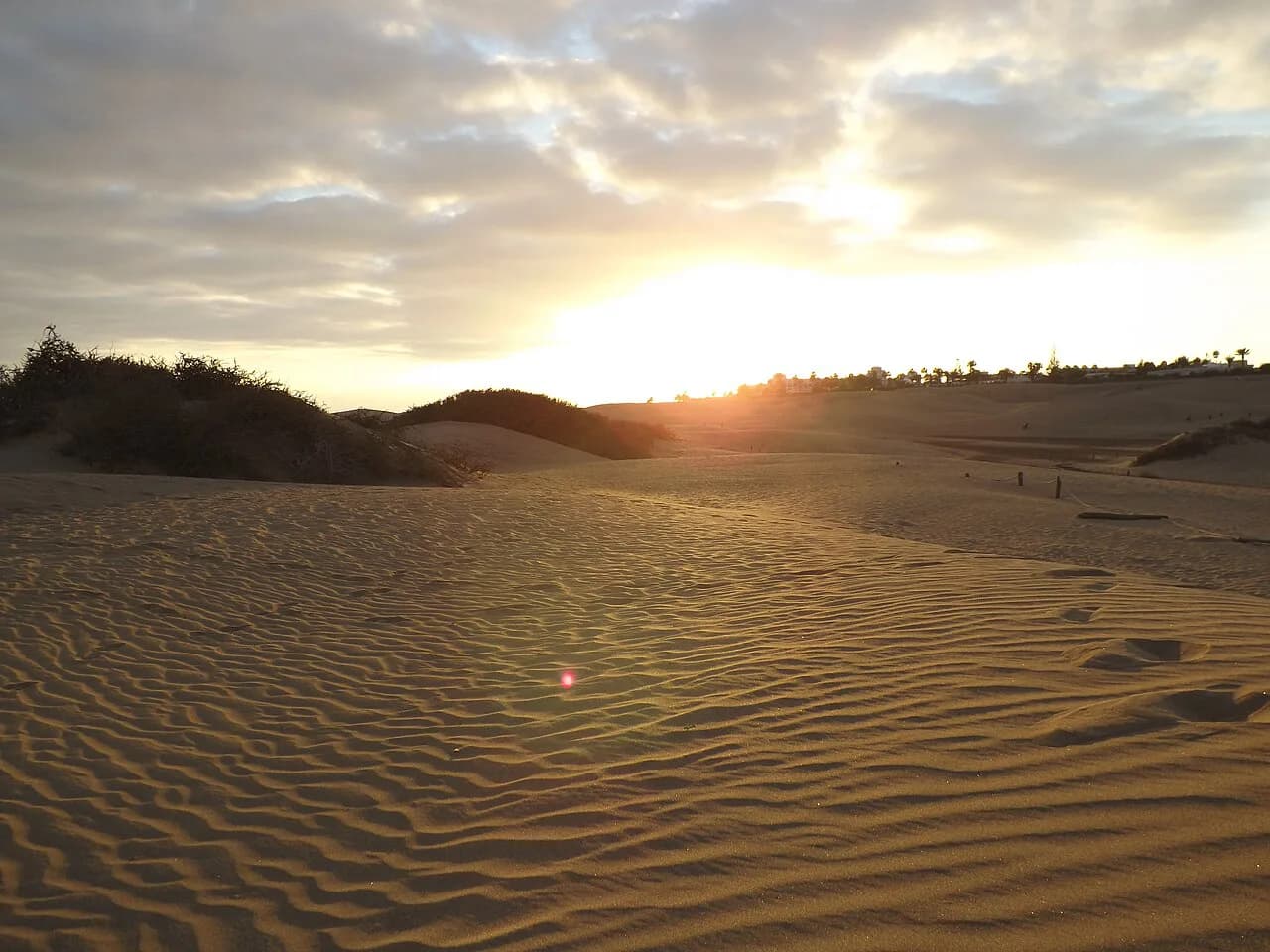
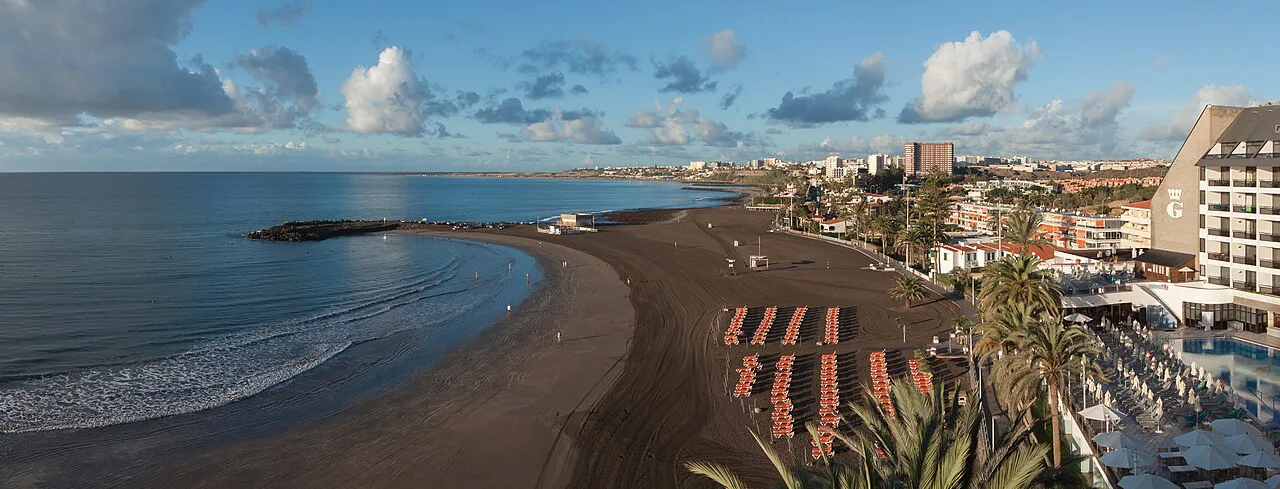
Maspalomas is the island's signature beach: roughly four miles of pale sand running into dunes, popular enough to absorb families, quiet sunbathers and nudists on different stretches. The scale is the point, because you can walk away from the busiest access points and still find room. It suits anyone who wants a long barefoot walk, space for children to dig and the option of a resort lunch afterwards.
Playa del Ingles continues that same sweep of sand and swings livelier, with water skiing, jet skiing and windsurfing on offer and the Paseo Maritimo behind the beach lined with restaurants, bars and shops. Choose it over Maspalomas if you want activities and a promenade stroll rather than solitude.
The dunes behind the resort are worth an early or late walk rather than a midday one, when the sand radiates heat. Bring more water than you think you need and plan shade around a beach bar or your own umbrella.
Playa de Puerto Rico and Amadores: sheltered crescents
Playa de Puerto Rico is a crescent of Sahara sand set in what Purple Travel describes as Gran Canaria's sunniest spot, backed by a resort with heavy watersports activity including dolphin safaris. It works for travellers who want sunbeds, operators and easy meals within a short walk, and less well for anyone craving an undeveloped shoreline.
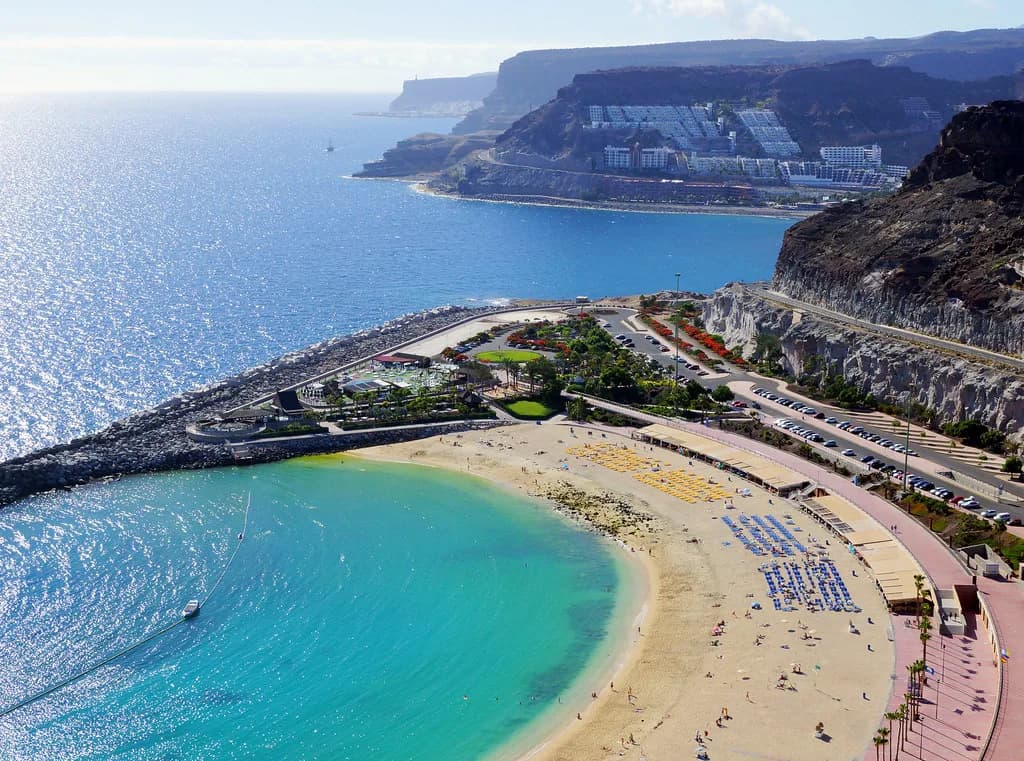
Amadores, about 20 minutes from Puerto Rico, is a protected cove built around 2002 with crushed coral sand imported from the Caribbean. That coral sand stays cool enough to walk on barefoot even on hot days, unlike the Sahara and volcanic sands elsewhere on the island, which is a genuine advantage for small children. Its half-mile curve and clear water make it the better pick for a relaxed family day.
Expect busy weekends at both, because Saturdays draw locals in numbers and Sundays are busier still. Arrive early or come midweek if you want a front-row position.
Anfi and Patalavaca: coral sand on the south-west coast
Anfi is the lazy option done well, with Caribbean sand that does not burn your feet and everything you need within a short walk of the water, which the Canary Forum guide singles out as its favourite spot on the island for an easy day. It suits travellers staying in the south-west who want a polished beach day without driving far. Patalavaca sits nearby and provides an alternative when the main beach is crowded.
Aquamarina, tucked next to an apartment complex with sand laid over a concrete base and sunbeds on the adjacent jetty, stays very quiet during the week, according to the Canary Forum guide. Treat it as a fallback for a short, unfussy swim rather than a destination in itself.
Playa de Mogán and the harbour bay
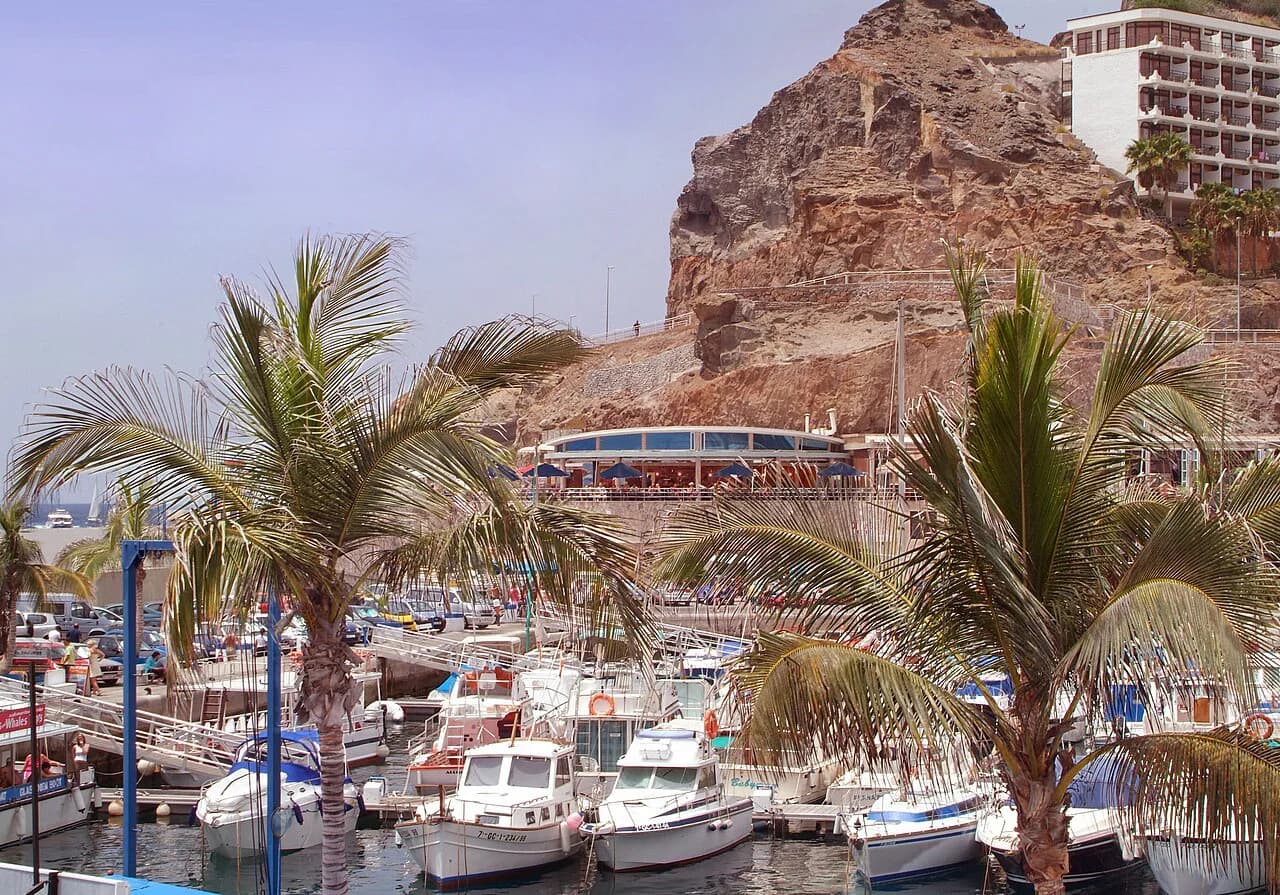
Playa de Mogán combines a sheltered bay with a working harbour and resort streets, which makes it a good choice for mixed groups where not everyone wants to lie down all day. The water sits calm behind the harbour arm, so swimmers and paddlers get an easier ride than on the open southern beaches.
The beach is one of three on the island, alongside Puerto Rico and Amadores, where smoking is restricted to designated zones and swimming after dark is not permitted. If you are a smoker, look for the marked area rather than lighting up on the sand.
El Cabrón: east-coast snorkelling and wind
El Cabrón lies halfway up the east coast, roughly a 20-minute drive from either the south or the north, which makes it a viable half-day trip from most bases. A breeze is almost constant here, and July and August bring a lot of wind, but the beach has pockets sheltered from it if you pick your spot carefully. That combination suits snorkellers and travellers who prefer rocky interest to flat sand.
Bring reef shoes and your own mask, and set up behind a rock outcrop rather than in the open if the wind picks up. Because conditions shift with the breeze, treat this as a beach for confident swimmers rather than a paddling spot for toddlers.
Rules and practicalities
Every beach on the island is public, even where a hotel has paid to improve it, so access cannot be closed off by a resort, according to the Canary Forum guide. Ball games are supposed to be played 100 metres back from the shoreline, camping and barbecues are not allowed, and the police can enforce these rules on quieter stretches. Stubbing a cigarette out on the sand carries a substantial fine.
A sunbed costs between €2.50 and €3.00 for the day depending on the beach, with an umbrella charged at the same rate as a separate item. Budget for both if you want shade, since the imported and volcanic sands can become uncomfortably hot by early afternoon.
Facilities and beach bars
Developed beaches in the resorts come with sunbeds, umbrellas and beach bars, and Maspalomas has kiosks lining the sand. The more secluded west-coast beaches have far less, so carry water, food and shade with you. If a lido, shower block or accessible entry matters to your group, ring the beach bar or the local tourist office before you travel.
Getting around without a car
The south-coast resorts sit close enough together that buses, taxis and resort transfers cover most beach days, and Amadores is only about 20 minutes from Puerto Rico. For El Cabrón and the west-coast coves, a car gives you far more flexibility because the drives cross the island rather than following the coast. Whichever you choose, allow for weekend traffic heading to the sand.
Best time to go
Sea temperatures generally sit between 18°C and 22°C throughout the year, so winter swims are possible with a little determination and summer water is warm rather than bracing. July and August bring the busiest conditions and the strongest wind on exposed east-coast beaches. Aim for weekday mornings in peak season, and keep in mind that Saturdays and especially Sundays fill up with local families. That weekend pattern is the single biggest factor in how crowded a beach feels.
Naturist and long-established clothing-optional stretches
Maspalomas has long accommodated nudists alongside families and quiet sunbathers on different parts of its four-mile sweep. The etiquette is straightforward: keep to the established areas, keep photographs pointed away from people, and cover up when you leave the sand for the promenade. If you want a conventional resort beach instead, Playa del Inglés next door fits that brief.
Nearby beaches to combine on the same day
Puerto Rico and Amadores pair naturally, with a 20-minute hop between them, so you can swim in the morning and move for lunch. Maspalomas and Playa del Inglés form a single continuous stretch, letting you walk from quiet sand into the resort bustle. In the north, Las Canteras beach in Las Palmas offers a city beach with a promenade and calmer water behind its reef, a complete change from the southern resorts.
Who each beach suits
Families with small children should head for Amadores or Anfi, where the imported coral sand stays cool and the coves are sheltered. Swimmers and snorkellers get more from El Cabrón in settled weather, while anyone wanting space should walk north along Maspalomas away from the main access. Playa del Inglés suits active travellers and groups who want bars and watersports on the doorstep, and Playa de Mogán works for mixed groups combining a harbour wander with a swim. If you are weighing up other island breaks with the same family-versus-resort trade-off, compare these options with the Alicante beaches before booking.
Beaches on Gran Canaria where dogs are welcome
If you are travelling with a dog, the first thing to understand is that Gran Canaria's beaches are not a single category. The island has more than 80 beaches, and more than 100 if all the smaller, rocky coves are included, and many of them are golden sand, dark volcanic sand or pebbles. All beaches are public: if a hotel decides to spend a small fortune improving one of the beaches, it still has to remain accessible to the public. That public character is the starting point for anyone planning a day at the sand with a dog, because it means the shoreline is shared space rather than hotel property. See the full beach list at Canary Forum.
The rules that shape a dog-friendly visit are the same ones that apply to every beach user. Saturdays get much busier than normal as many locals use them, and Sundays they get very, very busy as most locals are using them, so a quieter weekday is easier to manage with a dog on a lead. All ball games should be played 100 meters back from the shoreline; if you are playing by the sea and someone complains, they are right and you are wrong. No camping or BBQ is allowed on any beach, and on some more secluded beaches this rule is often broken but should the police come along there will be problems.
Some beaches carry extra restrictions that matter if you are walking a dog along the sand. Puerto Rico, Amadores and Mogán beaches are mainly non-smoking, each with its own smoking zone, and on these beaches swimming after dark is not permitted. Sun beds cost 2.50 or 3.00 euros for the day and an umbrella is another 2.50 or 3.00 euros, depending on which beach you are on, which is worth knowing if you plan to settle somewhere with shade rather than walk the whole stretch. Amadores, for example, is a big and busy man-made beach built around 2002 with crushed coral sand imported from the Caribbean, sand that stays comfortable underfoot even on hot days.
Plan Your Beach Day
Decide what the day is for before you choose the sand: cool coral shallows for toddlers, a breezy east-coast cove for snorkelling, or a long resort beach with everything within walking distance. Then pick your day carefully, since weekends are when the island's own families arrive.
Take your own shade and water to the quieter beaches, pay for a sunbed and umbrella where you want convenience, and respect the smoking zones and after-dark swimming rules at Puerto Rico, Amadores and Mogán.
Explore more Gran Canaria beaches
- Playa del Inglés
- Amadores Beach
- Las Canteras Beach
- Maspalomas Beach
- Maspalomas Dunes
- Playa de Mogán
- Puerto Rico Beach, Gran Canaria
- San Agustin Beach, Gran Canaria
- Anfi del Mar Beach
- Gran Canaria Beach Clubs
- Gran Canaria Sea Temperature
- Güigüí Beach, Gran Canaria
- Las Alcaravaneras
- Playa de Tauro
- Sardina del Norte
Frequently Asked Questions
Which Gran Canaria beach is best for families with small children?
Amadores and Anfi are the strongest choices, because their imported Caribbean coral sand stays cool underfoot even on hot days, and both sit in sheltered coves. Amadores has a half-mile curve of clear water; Anfi puts everything within a short walk. Both get very busy on Sundays, so go midweek or arrive early for a good spot.
Do you need a car to reach the beaches in Gran Canaria?
No for the southern resorts, where buses, taxis and resort transfers link Maspalomas, Playa del Inglés, Puerto Rico and Amadores; the last pair are about 20 minutes apart. A car helps for El Cabrón on the east coast and the quieter west-coast coves, where the drives cross the island and a vehicle gives you far more flexibility.
When is the sea warm enough to swim in Gran Canaria?
Sea temperatures generally sit between 18°C and 22°C throughout the year, so swimming is possible in every season, with the warmest water in late summer. Air temperatures peak in July and August, when exposed east-coast beaches such as El Cabrón also get a lot of wind. Weekday mornings are calmer and quieter than weekends.
Which Gran Canaria beaches have smoking restrictions?
Puerto Rico, Amadores and Mogán restrict smoking to designated zones on the beach. The same three beaches also prohibit swimming after dark. If you smoke, look for the marked area rather than lighting up on the open sand, and keep the after-dark rule in mind if you plan an evening stroll.
Sources
Beach notes for your next trip
Optional updates when we add or revise beach guides.
You might also like
Continue reading
More guides you'll find useful