Maspalomas Beach, Gran Canaria: Dunes & Getting There
Plan a day at Maspalomas beach on Gran Canaria: the dunes setting, sand and seabed, when the sea is warmest and which nearby beaches to combine.
On this page
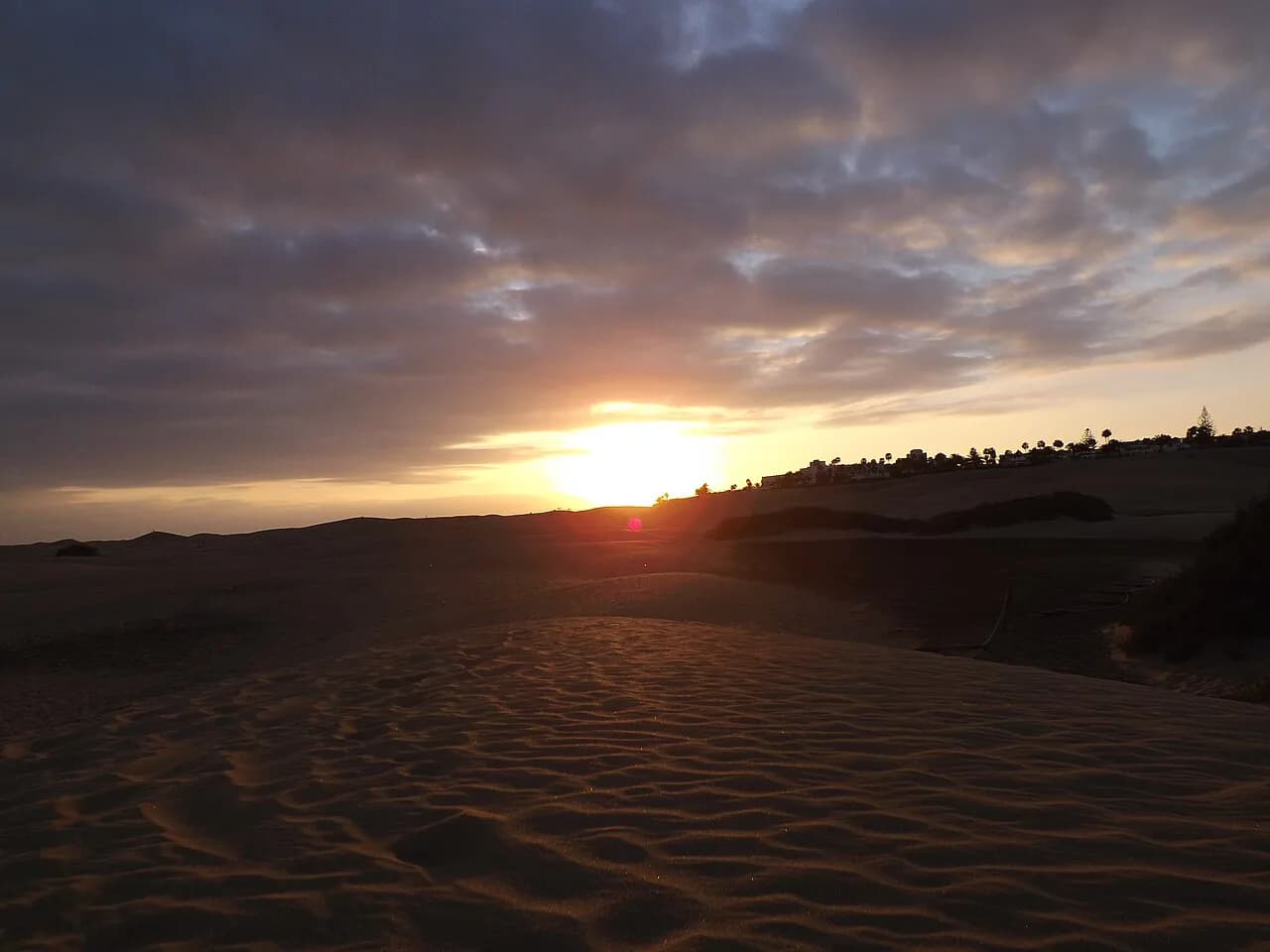
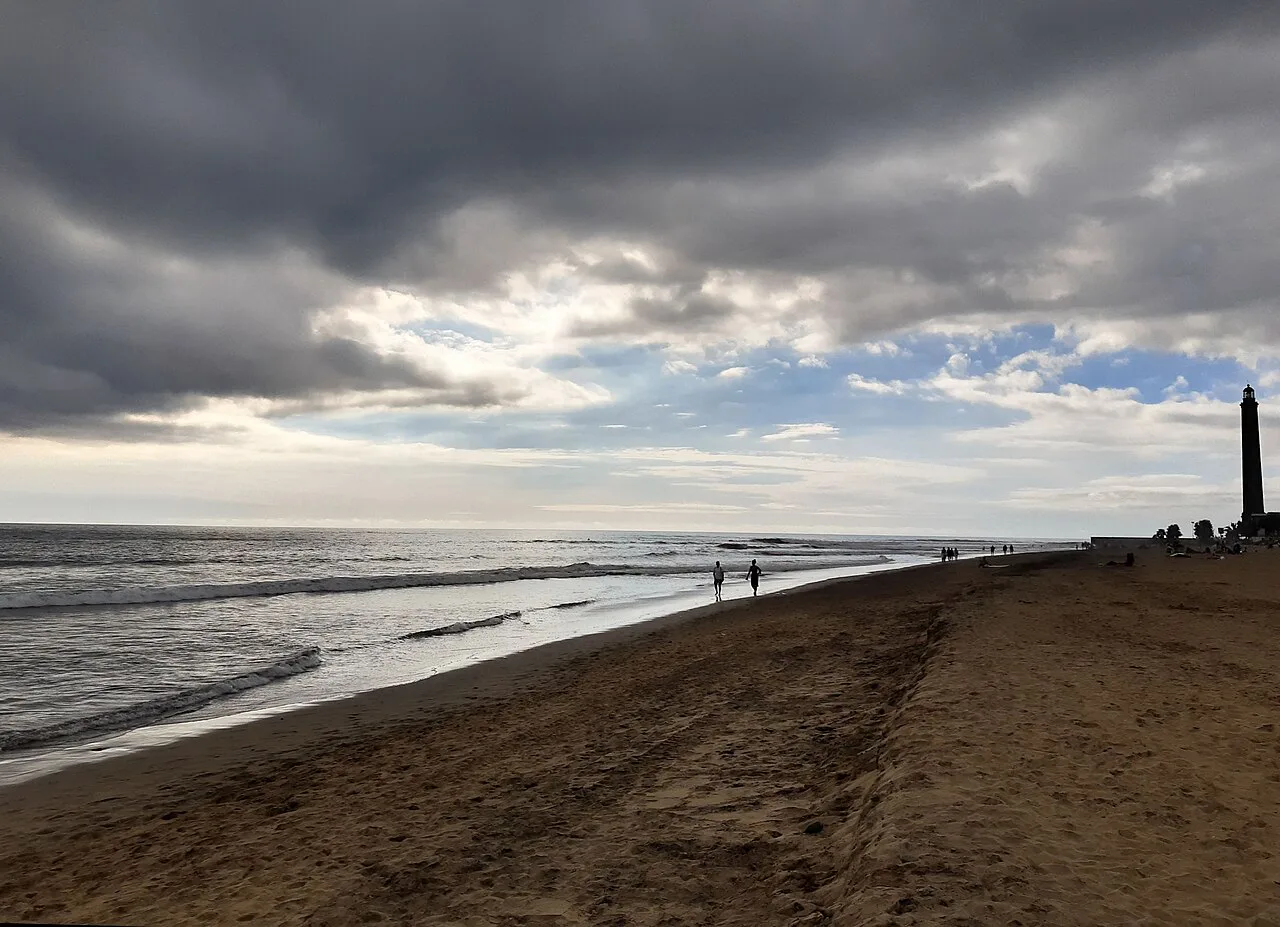
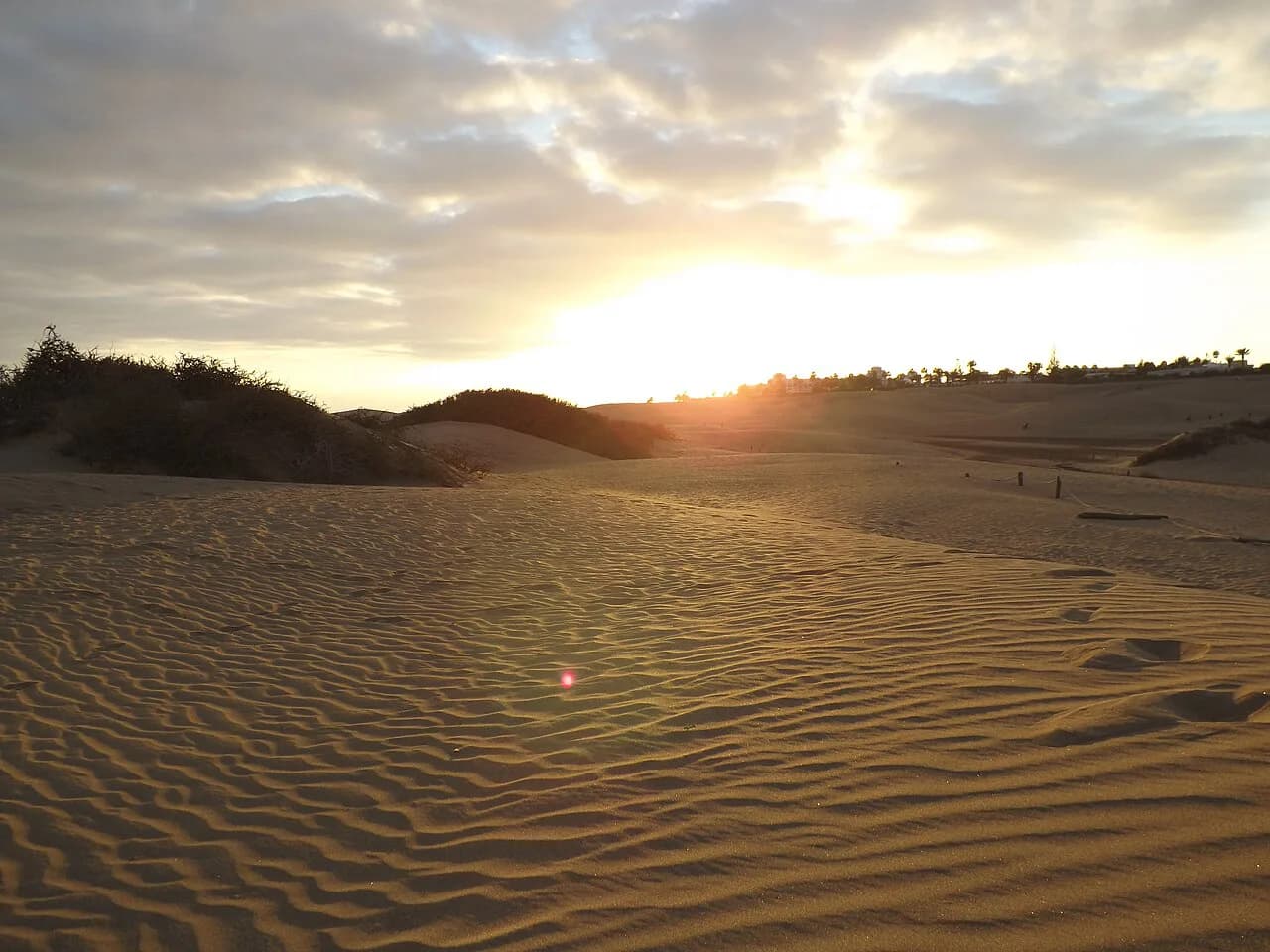
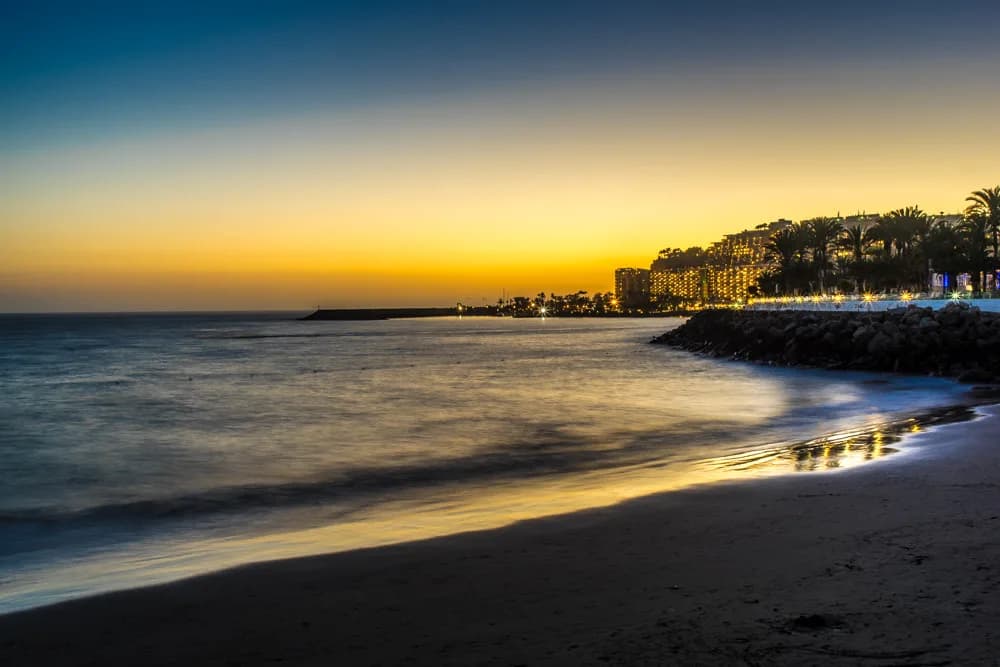
Maspalomas beach is the south-coast shoreline at Maspalomas on Gran Canaria, with a wide field of sand dunes running behind it and a long, open sweep of sand in front. It rewards a full day rather than an hour: you come for the space, the walking and the unusual sight of dunes meeting the sea.
It suits walkers and dune-watchers first, and families who want room to spread out rather than a compact cove. Swimmers should read it as an exposed Atlantic shore, with sand underfoot and a shoreline that invites long paddles rather than a quick dip.
Where the beach sits
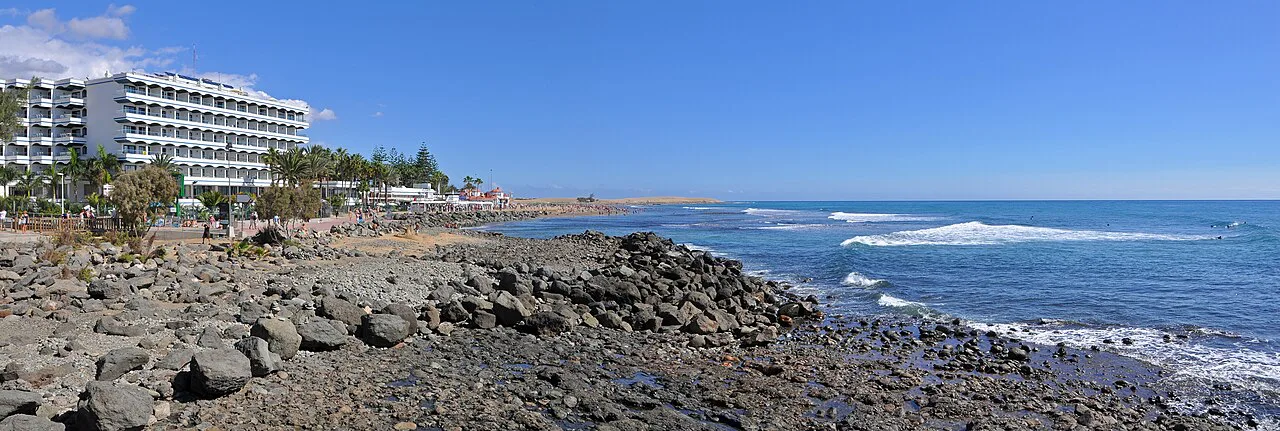
Maspalomas lies at the southern end of Gran Canaria, with the dune field directly behind the beach and the resort of Playa del Inglés immediately to the north-east. That geography matters when you plan a day: the beach and dunes form one continuous landscape, so you can walk the sand and then follow the shoreline towards the neighbouring resort without moving the car.
Because the beach runs alongside the resort rather than sitting in an isolated cove, you get a long shoreline for strolling and a promenade behind it. Treat the beach as a walking-and-space destination, and pick your spot based on whether you want the open dune-backed stretch or the busier resort end.
Getting there
Fly into Gran Canaria Airport, also called Las Palmas Airport, and continue by taxi to the beach. That is the straightforward route for a day trip with beach kit, and it drops you at the resort rather than at the far end of the sand, so plan on a short walk to reach the shoreline.
If you are staying in the south of the island, the beach is reachable on foot from the resort behind it, with the promenade acting as the spine for walking between Maspalomas and Playa del Inglés.
Getting around on foot
The shoreline promenade is the practical way to move between the beach and the resort. People walk the promenade along the shoreline even when the sand itself is quiet, which makes it the obvious route for an evening stroll or for scouting a spot before settling down.
Distances along the sand are longer than they look from the water's edge, so pick your entry point deliberately. If you want the dune-backed quiet, walk further from the resort buildings; if you want to be near the bars and hotels, stay at the Playa del Inglés end.
The sand and the water
The shore is sand and the seabed is sand too, which makes for easy wading and a comfortable surface underfoot for children and less confident swimmers. With no rocks to navigate at the water's edge, the main consideration is how far out you want to go on an open Atlantic shore.
Sand seabeds shelve gradually in places and more steeply in others, so watch how the water behaves where you set up: the gradient shifts along the beach. Families with small children generally do best close to the promenade end, where the resort is within easy reach.
Shelter, wind and shade
This is an open, dune-backed shoreline rather than a sheltered cove, so breezy days are felt on the sand. The dunes behind the beach give you a retreat when the wind picks up, and the promenade provides a walking alternative when the beach itself turns blustery.
Shade is limited on the open sand, so bring your own sun cover or plan around the dunes and the resort buildings behind the beach. On a hot day the difference between the exposed shoreline and the shaded side of the dunes is considerable.
Who it suits
Walkers and dune-watchers get the most from Maspalomas: the combination of a long shoreline and a dune field directly behind it is what makes the beach distinctive on the island. Families who want space rather than a crowded strip of lidos will also find the scale works in their favour.
Swimmers should plan for an exposed Atlantic shore and pick their moment rather than expecting a sheltered bay. If you want a compact, resort-style beach day instead, compare the alternatives on the island through the wider set of Gran Canaria beaches, or look at La Palma beaches for a black-sand contrast to Gran Canaria's golden dunes.
Facilities and the resort behind the beach
The resort behind the beach is where you find the practical infrastructure for a beach day, and Playa del Inglés in particular has a large selection of budget hotels, which makes it the obvious base if you want to walk to the sand each morning.
Set your expectations around the resort rather than the sand: you are staying in a built-up holiday area with the beach and dunes as the draw, not a remote shoreline. That trade-off buys you easy access and a choice of accommodation within walking distance.
The naturist section
Maspalomas has a long-established nudist area that visitors ask about when planning a trip, and it sits within the wider beach rather than being a separate destination. If you plan to use it, treat it as a designated stretch of the main beach and follow the same courtesies you would on any Spanish beach.
For everyone else, the main beach is ordinary textile sand, so the two coexist along the same shoreline. Choose your stretch according to which area you want to be in and walk on rather than expecting a hard boundary.
Crowds and timing
August brings the warmest sea of the year, which makes it the obvious month for swimming if warmth matters more to you than elbow room. September keeps the sea warm enough for comfortable swimming while the summer crowds have thinned, which is the better trade-off for most travellers.
Even in high season the beach itself tends to be quieter than you might expect, with most people walking the promenade rather than filling the sand. That makes Maspalomas unusually forgiving for a well-known beach: you can usually find space if you are willing to walk a little.
Nearby beaches to combine
Playa del Inglés is the closest alternative at roughly 2.1 km to the north-east, and it is the natural companion to a Maspalomas day if you want a resort beach with more going on behind it. Further west, Anfi sits about 12 km away and offers a different, more enclosed setting.
Sotavento on Fuerteventura is around 140 km to the east and needs a ferry crossing, so treat it as a separate trip rather than a same-day add-on. Closer to home, the wider guide to Gran Canaria beaches covers the island's other options in comparable detail.
Where to stay
Playa del Inglés is the practical base for a Maspalomas beach holiday, with the largest concentration of budget hotels in the area and the beach within walking distance. Staying there puts the promenade, the resort and the dunes all on your doorstep.
If you would rather base yourself somewhere with a different character, the island's other resorts are worth comparing before you book, since the south-coast geography makes some combinations easier than others.
Practical kit and trade-offs
Bring your own shade, water and footwear for the hot sand, because the open dune-backed shoreline offers little natural cover. A light windbreak earns its place on breezy days, and a bag that keeps sand out makes the walk back to the resort more pleasant.
The main trade-off is space versus convenience: the quietest sand is furthest from the resort, while the easiest access puts you among the hotels and the promenade. Decide which matters more before you set off, and you will spend less of the day walking between the two.
Travelling to Maspalomas with a dog
For owners bringing a dog to Gran Canaria, the first thing worth knowing is that the island is reached by air, landing at Gran Canaria Airport (Las Palmas Airport), known by its code LPA, and that from there the usual onward step to Maspalomas is a taxi. That is the route the beach itself is described by, so a dog owner planning a day at Maspalomas should treat the airport transfer as part of the trip rather than an afterthought. Nothing in the published guidance on the beach sets out a separate canine route, which is the honest starting point for anyone weighing up how to arrive with an animal in tow.
At the beach end, the material describes sand underfoot on the shore and seabed, a shoreline that people promenade along, and a stretch that is usually not crowded on the beach itself even though there is always someone walking the waterline. That speaks to the sort of open, firm walking surface a dog would find easy, but it is all the source actually says; it makes no claim about dogs being permitted, about leads, or about any area set aside for them. Owners should read the description as a picture of the setting rather than as permission, and should not build a plan around assumptions the guide never states.
Timing is the one practical lever the source does address, and it applies to a dog walker as much as to anyone else. August is when the sea is warmest, while September still has warm-enough water but without the summer crowds. For someone walking a dog along the shore rather than swimming, the quieter September pattern is the more relevant detail, since it matches the description of a beach where the sand itself is generally uncrowded. The naturist section of the beach is separately noted, which is a reminder that different stretches carry different expectations and that a dog on a lead near other people needs more care than an empty beach does.
Beyond that, the sources are thin. There is a large selection of budget hotels in Maspalomas, especially around Playa del Ingles, but no source says which of them accept dogs, so the resort's accommodation picture is available while the canine side of it is not. What the published material can support is modest and worth stating plainly: fly into LPA, take a taxi onward, expect sand and a shoreline walk, and favour the post-summer weeks. Everything past that, from where a dog may go to where it may sleep, remains outside what the guide records.
Dog-friendly practicalities around Playa del Inglés and San Agustín
If your base is at the eastern end of the Maspalomas–Playa del Inglés stretch, the two resorts to weigh up are Playa del Inglés itself and San Agustín. The official Gran Canaria tourism site describes Playa del Inglés as one of the most visited and crowded beaches in Gran Canaria, with clearly marked out areas for youngsters and a curve where the secluded nudist area begins that is given over to surfers. San Agustín, by contrast, is presented by Thomas Cook as a tranquil resort and a much more low-key alternative to Playa del Inglés, great for beach lovers and swimmers and long popular with holidaymakers; its laid-back feel makes it perfect for couples who simply want to relax on the dazzling golden beaches.
That difference matters when you are walking a dog rather than sunbathing. A beach described as the meeting place of surfers, running enthusiasts, capoeira freaks, smiling beach workers, calendar girls and groups of friends diving under the waves is not the quietest stretch for an animal on a lead, whereas the San Agustín profile points to a calmer atmosphere. For getting between the two without a car, Thomas Cook notes that San Agustín is well served by bus routes, with regular services to Las Palmas, Maspalomas and Playa del Inglés, so hiring a car is not essential; taxis serve all areas of Gran Canaria, although you should agree the fare before you set off.
Weather shapes the daily routine more than anything else. Thomas Cook advises booking San Agustín holidays from around May to October for decent beach weather, adding that even in winter and early spring it is still pleasantly warm most of the time, and that winter and spring are ideal times for sightseeing and making the most of the island's hiking routes. For a dog, that translates into early starts in high summer and a genuinely usable walking season outside it. Note too the Thomas Cook caution that from April to September it gets very hot with strong sun, so remember to slap on the sun cream regularly during the day — and carry water for the dog on the same principle.
Arrival logistics are straightforward: fly to Gran Canaria International Airport, which Thomas Cook puts at approximately 27km or 20 minutes from San Agustín, on a flight time from the UK of about 4 hours and 35 minutes. The local time is the same as the UK and the currency is the euro. English is spoken in most tourist venues like hotels and restaurants, though the locals always appreciate any attempt to speak Spanish.
Plan Your Visit
Maspalomas rewards planning around the shape of the place: a long sand shoreline, dunes behind it, and a resort within walking distance. Base yourself in Playa del Inglés, arrive by taxi from the airport, and treat the beach as a walking day rather than a quick swim stop.
Aim for September if you want warm water without the August peak, and walk away from the main access points if you want quiet sand. For the rest of the island's coastline, work through the full Gran Canaria beaches guide before you commit.
Frequently Asked Questions
What is Maspalomas known for?
Maspalomas is known for its wide sand beach backed by a dune field at the southern end of Gran Canaria. The beach and dunes form one continuous landscape, which is why it draws walkers and dune-watchers as much as swimmers.
Are there any naturist beaches in Gran Canaria?
Maspalomas has a long-established nudist area within the wider beach. It sits alongside the main textile beach rather than being a separate destination, so choose your stretch of sand accordingly and follow ordinary Spanish beach courtesies.
Can you still walk on the dunes in Maspalomas?
The dunes are the defining feature behind the beach and people come specifically for the dune landscape. Access arrangements can vary, so ask at the Maspalomas tourist office about current walking routes before setting out across the sand.
How do you get to Maspalomas beach from Gran Canaria Airport?
Fly into Gran Canaria Airport, also called Las Palmas Airport, and continue by taxi to the resort. From there the beach is a short walk via the promenade, which runs along the shoreline between Maspalomas and Playa del Inglés.
When is the sea warmest at Maspalomas?
August brings the warmest sea of the year, and September stays warm enough for comfortable swimming with fewer summer crowds. That makes early autumn the better balance for most travellers who want warm water without the peak.
Where should you stay for Maspalomas beach?
Playa del Inglés is the practical base, with the largest concentration of budget hotels and the beach within walking distance. Staying there keeps the promenade, the resort and the dunes close at hand for a full beach day.
Sources
Beach notes for your next trip
Optional updates when we add or revise beach guides.
You might also like
Continue reading
More guides you'll find useful