Menorca Beaches: Where to Swim on the North and South Coasts
Menorca's beaches split into sheltered sandy calas in the south and wilder, rockier coves in the north. Here's how to choose, get there and time your day.
On this page
Menorca rewards a simple decision made the night before: which coast to drive to. The south is a chain of pine-backed calas with fine white sand and shallow water, while the north is redder, rockier, deeper and more exposed to wind. Get that choice right and the rest of the day follows.
Most of the island's famous coves sit at the end of a walk, a controlled car park or a summer bus route, so access shapes the trip as much as the sand does. The island is a UNESCO Biosphere Reserve, declared on 8 October 1993, which is why the coastline still looks largely undeveloped.
South coast: the sheltered sandy calas
The southern coast is where Menorca's beaches behave best. The calas are cut into soft limestone, sheltered from the Tramuntana wind, and filled with sand that stays pale and fine. Water shelves gently for metres, which is why this side carries most of the family resorts and the easiest swimming.
Wind direction is the practical rule for planning. When the north wind blows, head south; when a southerly sets in, the northern bays come into their own. Jellyfish are a recurring summer presence around the island rather than a rare event, so a look at the wind and any local advisory before setting off is worth the two minutes.
Cala Galdana: the horseshoe bay that works hardest for families
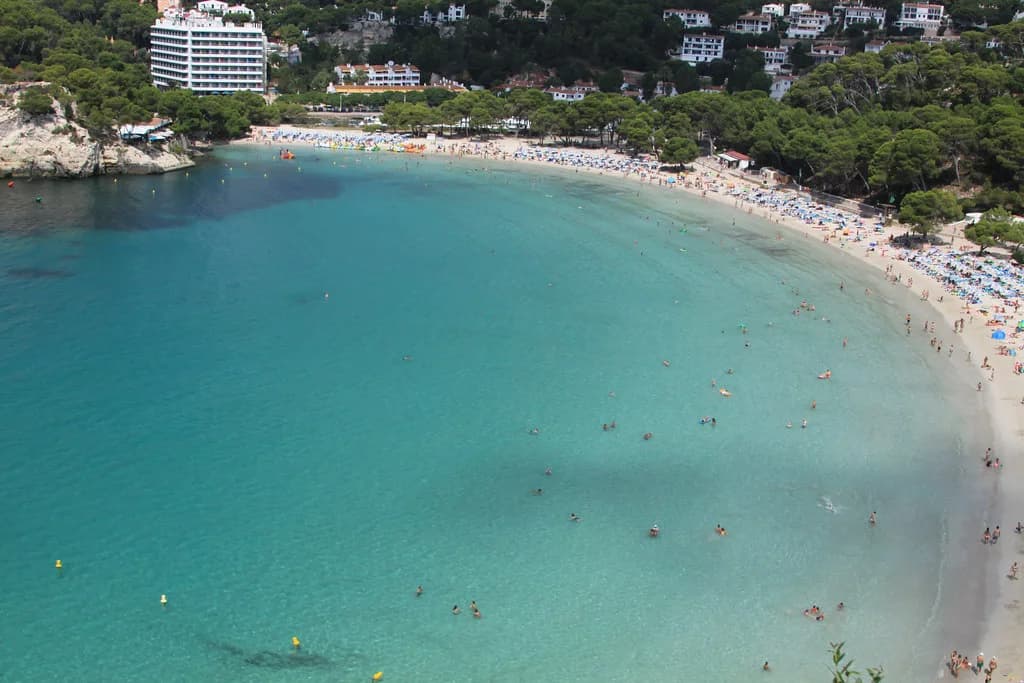
Cala Galdana is a wide horseshoe bay backed by pines and closed in by tall cliffs, with a resort behind the sand. The shelter means surf is unusual, the water is shallow and clear a long way out, and there are lifeguards on duty in season. Kayaks and pedalos can be rented from the beach, and restaurants and shops sit within a short walk of the sand.
It is also a trailhead. The Camí de Cavalls runs east towards Cala Mitjana and west towards Macarella, and short sections between two calas make the best walking with children because there is a swim at the end. The bay's own car park fills early in high season, so arriving before mid-morning is the difference between parking at the beach and parking at the edge of the resort.
Cala Macarella and Cala Macarelleta: the postcard coves and their summer access rules
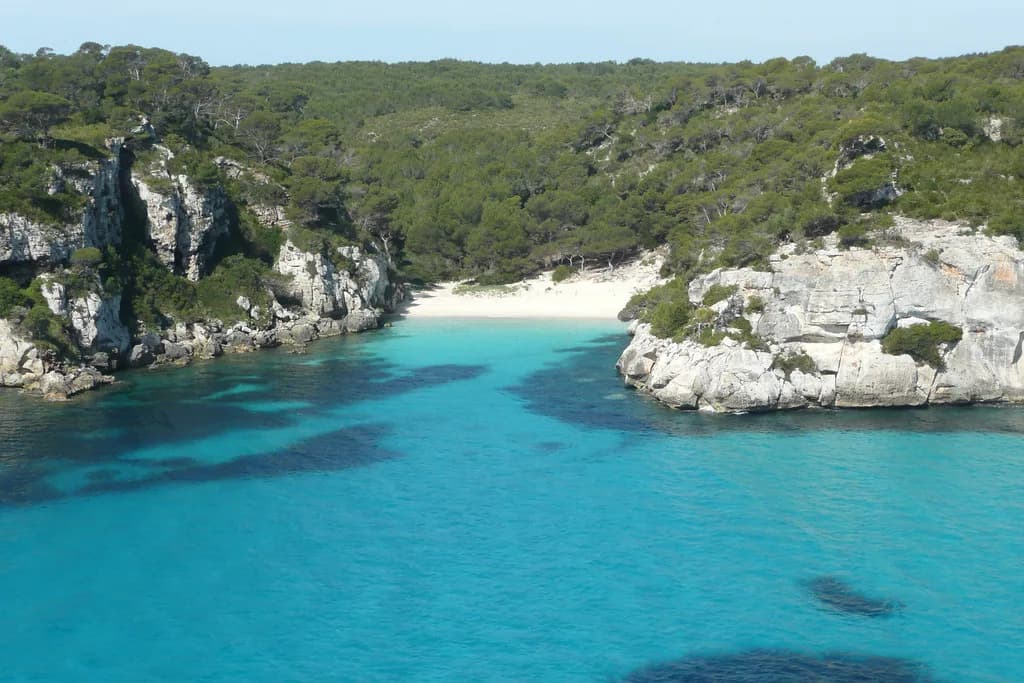
Cala Macarella is the beach on every Menorca postcard: white sand, turquoise water, cliffs and pines, with plenty of shade and enough width to find a spot for your towel. A short trail with steep steps leads west to Cala Macarelleta, a small cove long established as a nudist beach. Stay off the dunes behind it.
Access is the catch. The Macarella car park is physically closed from 1 June through the summer season, and cars and motorbikes cannot enter at all. A bus runs from Ciutadella from about 08:25 to 20:20 with extra services in July and August, and walking or cycling remains allowed, including the roughly 2 km walk from Cala Galdana along the Camí de Cavalls.
Cala Turqueta and Cala Mitjana: controlled car parks and pine-backed sand
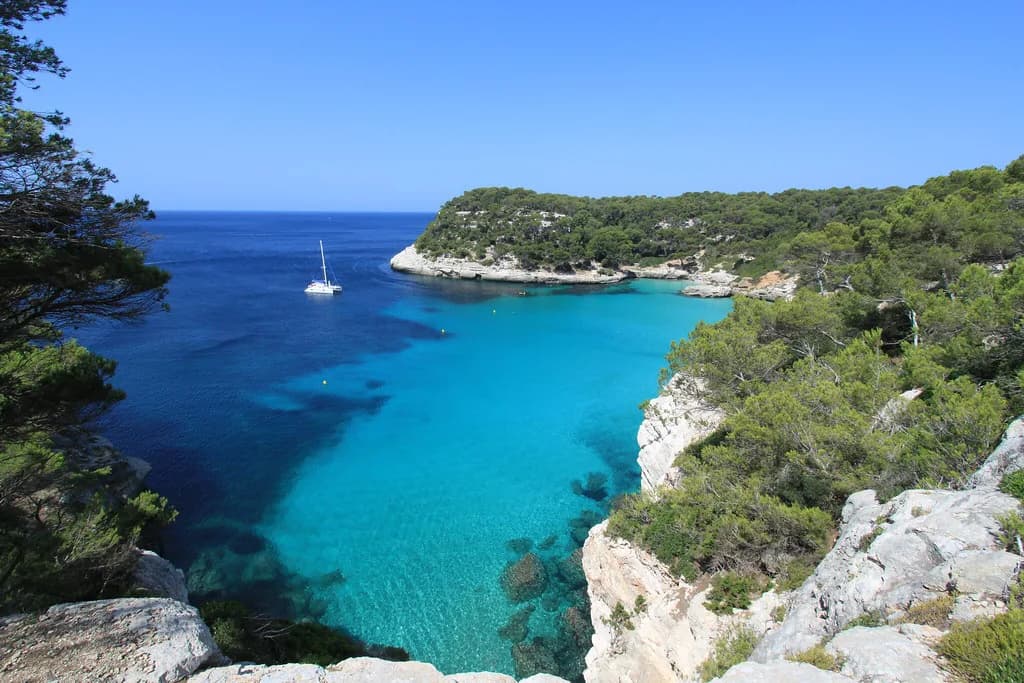
Cala Turqueta is a small, untouched cove of white sand and turquoise water, split into two parts, with the larger section next to a small stream that keeps the sand wet underfoot. Pine forest gives shade at the back and rocks at the edges make it a popular snorkelling spot. The car park sits a 10 to 15 minute walk above the beach, with a downhill approach and an uphill return, and the access road closes once the car park fills.
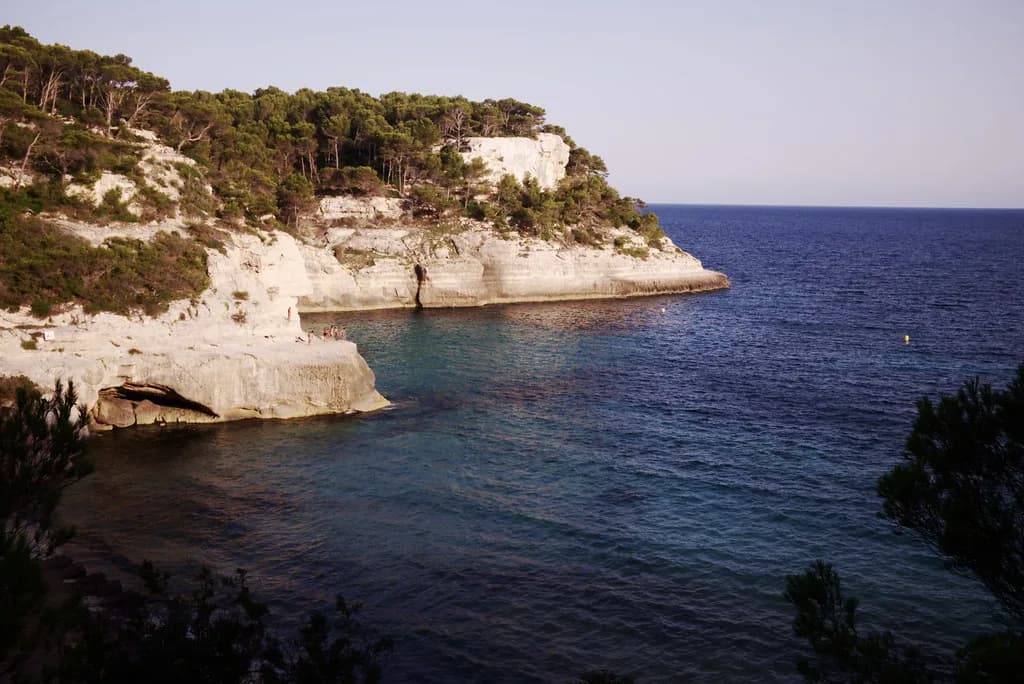
Cala Mitjana is the quieter neighbour: a steep-cliffed cove of white sand and clear water with a 15 minute walk from its car park, partly in shade and partly uphill on the way back. Steps connect it to Cala Mitjaneta, a tiny cove that sometimes has no sand at all. Both are reached by car, but their controlled car parks can fill by mid-morning in July and August.
Son Bou and Santo Tomás: long, shallow and easy with a car
Son Bou runs for nearly 3 km, the longest sandy shoreline on the island, with a gentle slope into the water that suits young children. Beach bars and restaurants are spread along the sand, sun loungers and parasols can be hired, and a protected wetland behind the beach brings birds. It holds Blue Flag status in 2026.
Santo Tomás, next door, is the easiest beach on the island with a car: a long narrow strip of soft white sand, rocky in places, with the car park about 20 metres from the sand. That short carry matters when you are hauling a cool bag, a parasol and two children. The beach at Binigaus, reached on foot from Sant Tomàs in about 10 minutes, is broader and shallower still, with a nudist section in its smaller coves.
Cala en Porter, Punta Prima and Cala Blanca: small resorts with sand on the doorstep
Cala en Porter works like a natural swimming pool: a deep cove with services on one side and untouched cliff on the other, and facilities aimed at children. It is one of four Menorca beaches holding Blue Flag status in 2026, alongside Son Bou, Binibèquer Nou and Punta Prima.
Punta Prima Beach, Menorca is small, golden and fronted by bars and restaurants you can step onto the sand from, with views across to Illa de l'Aire and its lighthouse. It sits about 15 minutes from the airport, which makes it the obvious last-morning swim before a flight. Cala Blanca, just south of Ciutadella, is smaller again: white sand, water that stays shallow for roughly 10 metres, full facilities and rarely crowded.
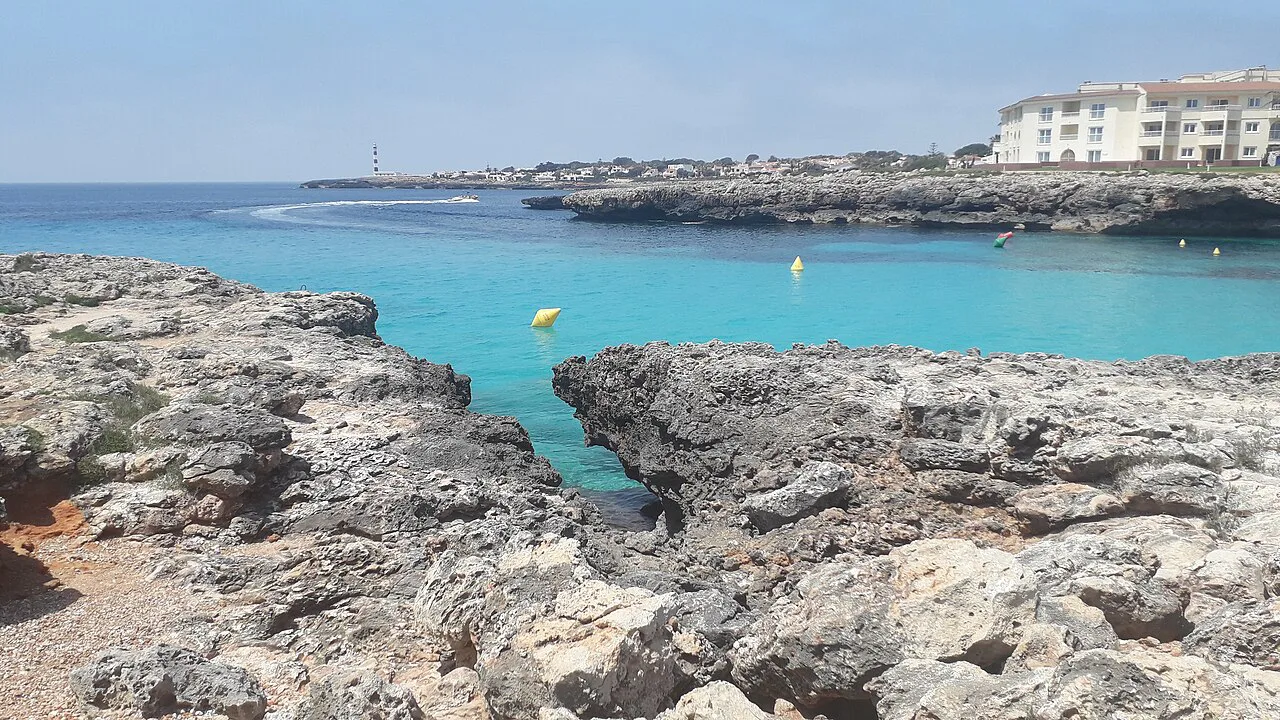
North coast: red sand, dunes and deeper water
The north is a different island. Beaches here carry reddish sand, sit behind dunes or bare rock, and drop into deeper water more quickly, with real exposure to northern winds and currents. Many northern beaches have no facilities at all, so you carry in water and food and carry out your rubbish.
This is the coast for confident swimmers and walkers rather than toddlers. The landscape is more dramatic, the crowds thinner and the sense of space greater, but the trade-off is a longer day: more driving, more walking and a closer eye on the forecast. Visiting the north for a day and sleeping in the south is the pattern that suits most first trips. If you are weighing up a different island altogether, the Alcudia beaches guide covers a similar north-coast-versus-sheltered-bay decision in Mallorca.
Cala Pregonda and Binimel·là: the walk-in beaches
Cala Pregonda is the north coast at its most distinctive: red sand, clear water and extraordinary rock formations offshore that draw snorkellers. The water is shallow close to the beach, which makes it a reasonable choice for children who are steady on their feet. It is reached on foot along the Camí de Cavalls from parking near Binimel·là, a walk of 30 to 45 minutes with no shade at all, so the beach fills later than the southern calas.
Arrive late and you may park well back from the start of the trail, adding distance in both directions. Bring water, hats and footwear that copes with hot ground; the swim at the end is the reward, and the walk back uphill is the price.
Cala Cavalleria: the big northern bay and its exposure to wind
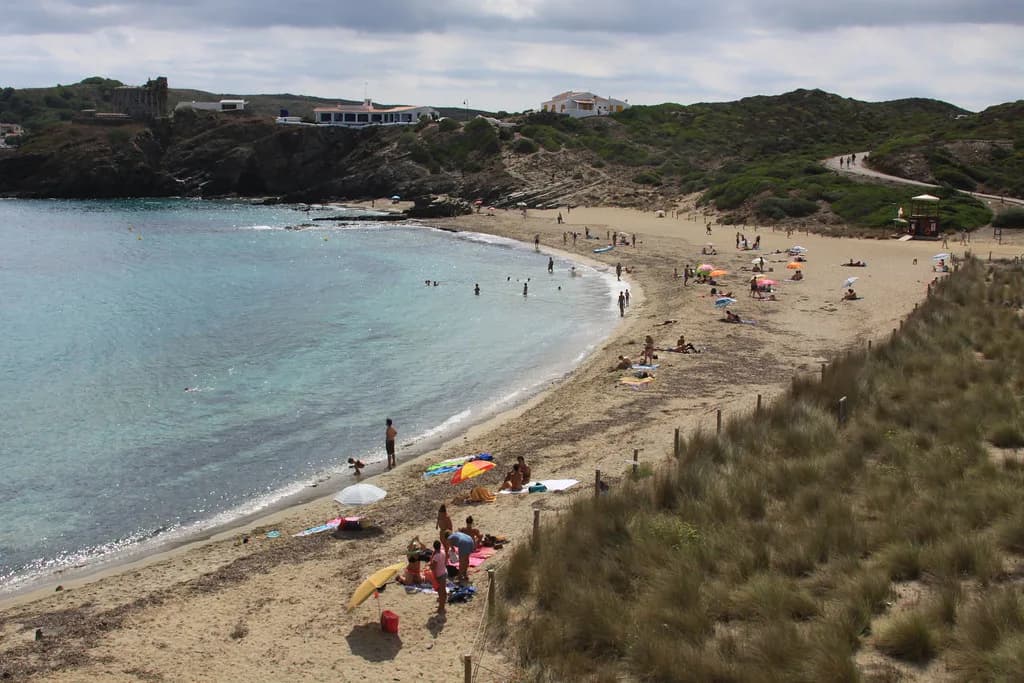
Cala Cavalleria is one of the largest bays on the north coast, around 500 metres long and split in two by a small shoal, with coarse sand that brushes off your skin. Parking sits close to the beach, five minutes away down a flight of steps. Because it is some distance from any settlement, it stays quieter than southern equivalents.
It is also the most exposed beach in this guide. Northern winds push in swell and can create dangerous currents, and the water deepens more sharply than in the south. Watch the flags and swim within your depth, and treat a windy day here as a walking day rather than a swimming one.
Algaiarens and Cala Pilar: dunes, pine forest and quieter sand
The Algaiarens beaches sit in a protected nature reserve on the north coast, two coves divided by a rocky shoal. Playa des Tancat is the larger and closer to the car park; Playa des Bot is a smaller cove about 1 km along a path, long established as a nudist beach. There are no shops or cafes, which is part of why it stays quiet and clean, so bring your own supplies and take everything away.
Cala Pilar is wilder again: dunes, a pine forest behind the sand and a position inside the marine reserve of the north, with long-established nudist use. The car park is a couple of kilometres from the beach and the walk back is uphill and takes about 45 minutes, which keeps numbers low. Both beaches are exposed to northern winds and deserve a forecast check before you commit.
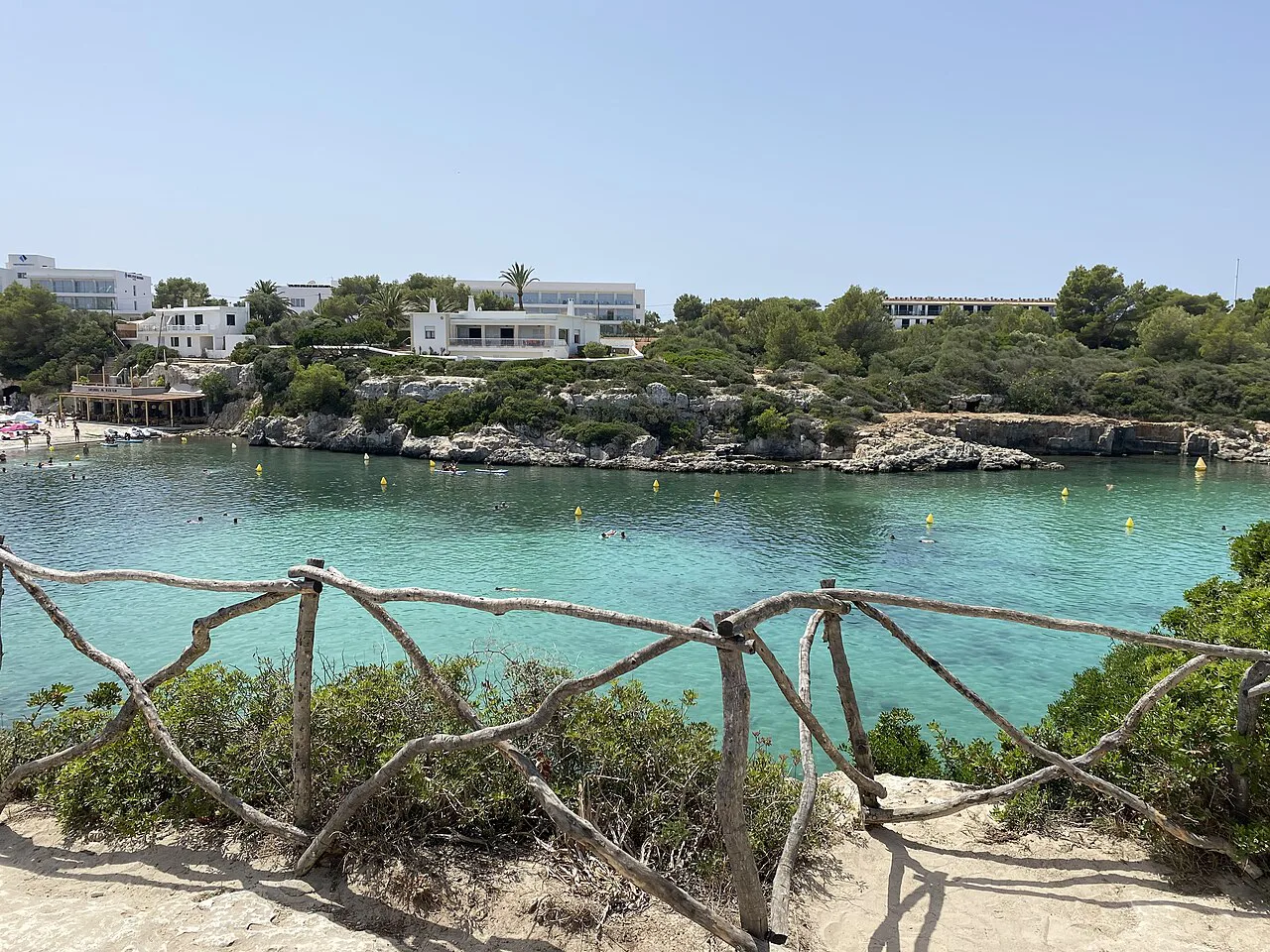
Getting around: car, bus and the Camí de Cavalls
A car is the practical choice for Menorca's beaches. Most of the best calas sit at the end of a single narrow road, well away from bus routes, and several have controlled car parks that close their access road once full. The Camí de Cavalls, waymarked as the GR 223 and 185 km long, links many of them on foot and gives you a one-way walk between two beaches if you arrange a pickup or use the bus.
Two summer rules matter most. The Macarella car park closes to cars and motorbikes from 1 June through the season, with the Ciutadella bus running from about 08:25 to 20:20. The road to Cap de Favàritx is also closed to private cars through the summer, from 15 May in 2026, with bus line L43 from Maó at €3.65 single, roughly 25 minutes, twelve departures a day, tickets sold on the bus.
Facilities, Blue Flag beaches and what to bring
Facilities cluster on the south coast and in the resort bays. Cala Galdana, Son Bou, Cala en Porter, Punta Prima and Cala Blanca all have restaurants, bars or shops within easy reach of the sand, and several rent sun loungers, parasols, kayaks or pedalos. Accessible paths and boardwalks exist at the busier beaches, but sand and steps dominate the smaller calas.
Menorca's four Blue Flag beaches in 2026 are Cala en Porter, Son Bou, Binibèquer Nou and Punta Prima. Cala Galdana lost its flag in 2025 over occasional river discharges and did not reapply, although it remains the island's most practical family bay. The flag indicates facilities and water management on the day it is awarded; it is not a guarantee of calm water or lifeguard cover, so read the flags on the sand.
Pack for a walk whatever beach you choose: water, hats, shade and reef-safe sun cream, plus shoes for rocky entries at Turqueta and Pregonda. At beaches with no facilities, carry out everything you bring in.
When to go: sea temperatures, crowds and parking timing
The sea is comfortably warm from late June through September, with August the hottest and busiest month and car parks at the popular calas full by mid-morning. Late September and June offer warm water with far more room on the sand. Whatever the month, the earlier you arrive at a controlled car park, the better your day.
If you only have one day on the north coast, pick a forecast with light or southerly wind so the bays are less exposed. On the south, the opposite applies: a northerly wind leaves the calas glassy while the north coast churns. Sunrise and an early start remain the simplest way to see the famous coves without the crowd.
Nearby beaches to combine into one day
The Camí de Cavalls makes natural pairings. Walk from Cala Galdana west to Macarella and Macarelleta, or east to Cala Mitjana; from Cala Mitjana's car park, a path heads south to Cala Trebalúger in about 45 minutes. Cala Turqueta sits close enough to combine with Macarella if you start early and park at the first car park with space.
In the south-east, pair Punta Prima Menorca with Binibeca and Cala en Porter for a short resort hop with easy parking. On the north, Binimel·là and Cala Pregonda combine naturally because you park once and walk to the sand, and Cala Cavalleria fits into the same day if the wind allows.
Plan Your Visit
Choose the coast first, then the beach. South for toddlers, easy lunches and shallow water; north for red sand, rock formations and a proper walk, with the wind forecast in hand. If you are staying near Ciutadella, Cala Galdana Beach, Menorca and Cala Turqueta make a natural first day, while Punta Prima, Menorca suits a final morning before the airport.
Book beach days around the access rules rather than the map: Macarella's car park is closed to cars in summer, Turqueta and Mitjana close their roads when full, and northern trails have no shade. The Macarella closure and bus, and the Favàritx road closure and L43 bus, are set annually, so confirm the current season's dates and fares with the island's tourist office before you drive out.
Explore more Menorca beaches
- Cala en Porter Beach, Menorca
- Cala Galdana Beach, Menorca
- Cala Macarella and Cala Macarelleta
- Cala Mitjana, Menorca
- Punta Prima Beach, Menorca
- Beaches Near Ciutadella
- Binibeca Beach
- Cala Morell
- Cala Pregonda
- Cala Turqueta, Menorca
- Menorca Beach Clubs
- Menorca Nude Beaches
- Son Bou Beach, Menorca
- Cala Mesquida, Menorca
- Menorca Beaches Map
- Menorca Sea Temperature
- Son Saura Beach, Menorca
Frequently Asked Questions
Which side of Menorca has the best beaches?
Neither coast wins outright. The south has sheltered, sandy calas with shallow water that suit families and easy swimming, while the north has redder sand, dunes, rock formations and deeper water that reward confident swimmers and walkers. Wind direction decides the day: a northerly sends you south, a southerly makes the northern bays calmer.
Can you still drive to Cala Macarella in summer?
No. The Macarella car park closes to cars and motorbikes from 1 June through the summer season, and it is a physical closure rather than a full car park. A bus runs from Ciutadella through the day with extra services in July and August, and you can also walk or cycle in, including the roughly 2 km from Cala Galdana along the Camí de Cavalls.
Which Menorca beaches are easiest with small children?
Cala Galdana is the standout: a wide horseshoe bay with shallow, sheltered water, lifeguards in season and a resort with food and shade behind the sand. Cala Blanca near Ciutadella stays shallow for roughly 10 metres and is rarely crowded, and Son Bou offers nearly 3 km of gently sloping sand with bars and sunbed hire along it.
Which Menorca beaches have a Blue Flag?
Four beaches hold Blue Flag status in 2026: Cala en Porter, Son Bou, Binibèquer Nou and Punta Prima. Cala Galdana lost its flag in 2025 over occasional river discharges and did not reapply. A flag reflects facilities and water management at the time of award, so read the flags on the sand rather than treating it as a guarantee of calm water.
Sources
Beach notes for your next trip
Optional updates when we add or revise beach guides.
You might also like
Continue reading
More guides you'll find useful