Maspalomas Dunes: Beach Guide for Gran Canaria
Plan a day at the Maspalomas Dunes in Gran Canaria: the beach behind the sand, walking routes, buses and which section suits families or quiet sunbathing.
On this page
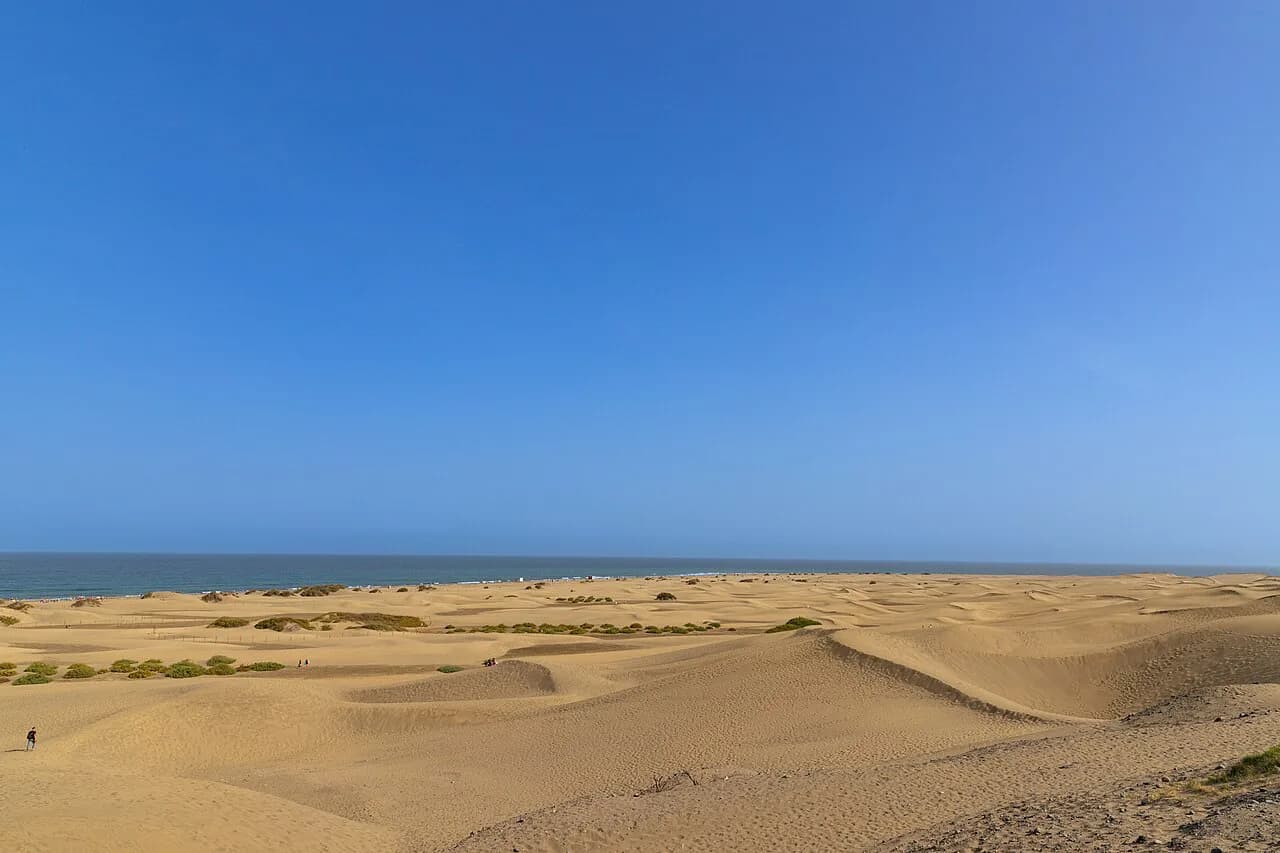
The Maspalomas Dunes are the reason to choose this stretch of Gran Canaria over a plainer resort beach: a 400-hectare sand sheet that runs inland from the sea and gives the beach behind it an unusually wild backdrop for a resort area. A morning here works for families who want shallow, wide sand and for walkers who want a proper landscape rather than a promenade. The trade is that you are never far from hotels and crowds, so the section you pick matters more than on a small cove.
Where the dunes sit
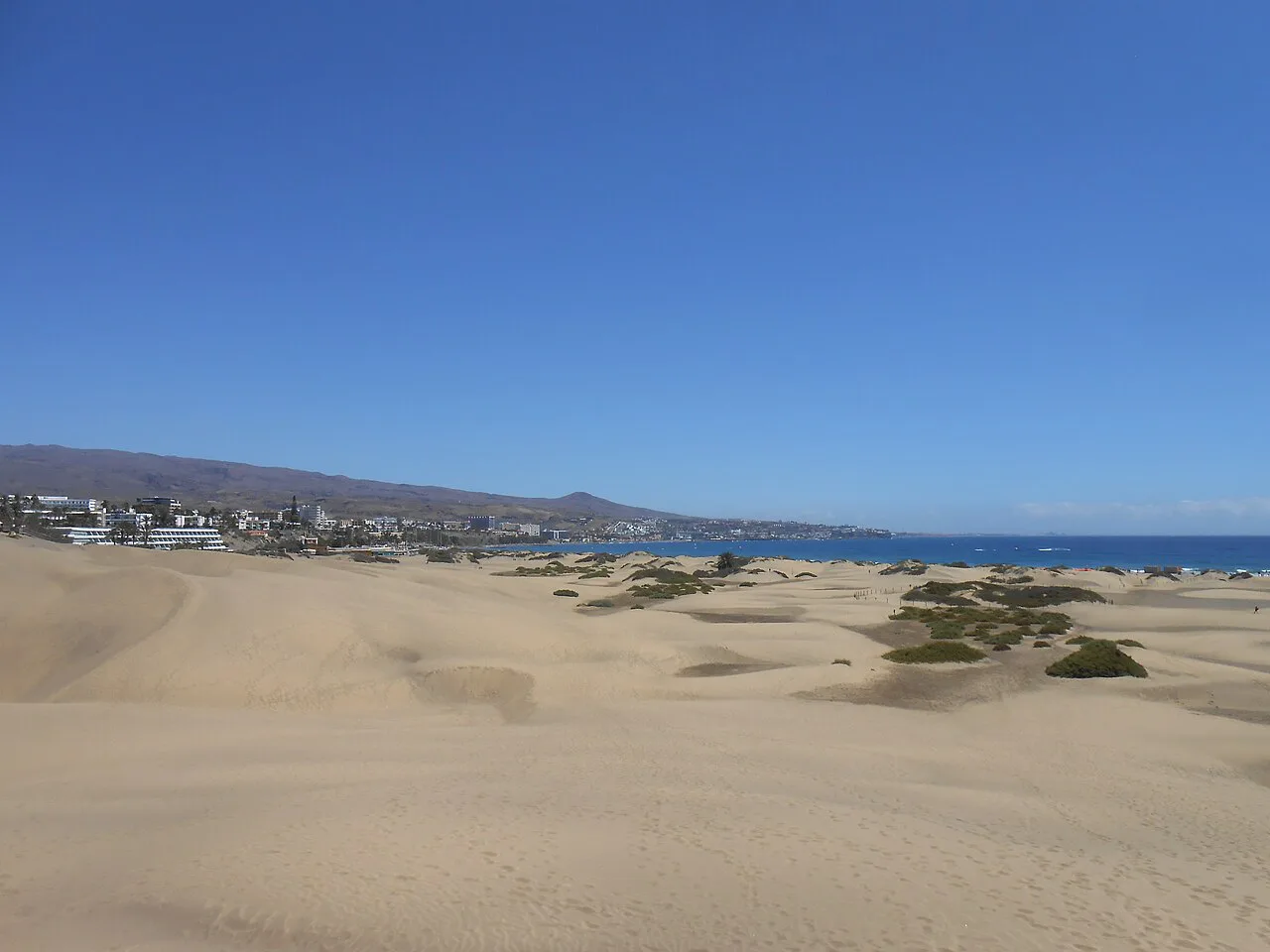
The dunes occupy the land between the built-up resort and the sea, sitting behind the long beaches of Maspalomas and Playa del Inglés. The official tourism board describes Playa del Inglés as the start of an unending land of dunes, with the beach stretching to the foot of hotels that seem to lean towards the ocean. Treat the sand and the beach as one landform: the beach is the seaward edge of the dune field, not a separate strip.
That geography shapes your day. Walking inland takes you into dry, open sand where the wind moves freely, while walking towards the water brings you to the firm, level beach. Most visitors get the best of both by crossing the dunes once in the morning and spending the rest of the day on the sand by the sea.
Getting there
By road, the southern resorts are reached on the GC-1 corridor from Las Palmas de Gran Canaria and the airport, with the GC-500 running along the coast through the Mogán municipality. From the far north, the official tourism board describes the GC-2 north road towards Agaete, with a signed turning for Gáldar about 18 kilometres along, which keeps the island's northern and southern coasts on separate driving routes.
Public buses serve Playa del Inglés and Maspalomas, and the Spain.info entry for Puerto Rico notes that buses to that resort stop by the beach, so the southern bus network plainly connects resort beaches along this coast. Fares and timetables are not something to guess at: the island's transport operator publishes routes and prices, and the tourist office in Maspalomas can confirm which line suits your accommodation.
If you drive, park once and walk. The developed ends of Playa del Inglés have the most parking pressure in high season, while the Maspalomas lighthouse end gives you a landmark to navigate back to after a dune crossing. Carry water for the walk between car and beach, because the sand route is longer than it looks on a map.
The beach behind the sand
The beach runs as one long stretch from Maspalomas, at the lighthouse end, to Playa del Inglés, where the hotels come right down to the sand. The official tourism board calls Playa del Inglés very wide, with protected areas, and describes it as one of the most visited and crowded beaches on the island. That width is the practical point: even on a busy day there is room to spread out if you are willing to walk a few minutes from the nearest access.
Where the dunes meet the beach, the sand is backed by open desert rather than bars, so the atmosphere changes within a short walk. The developed Playa del Inglés end suits anyone who wants shops and amenities within a couple of minutes; the dune-backed stretch suits anyone who would rather hear wind than music. Choose your end before you set out, because the walk between them is long enough to be a decision rather than a detour.
The sand and the water
The beach is golden sand and the swimming is straightforward on the main sections, with the sea shelving gradually enough for most bathers to find their depth. The official tourism board for the island notes average annual temperatures of 18 to 25 °C, which is why swimming continues well outside the British summer. Water temperature lags air temperature, so late summer and early autumn are the most comfortable months for long swims, while winter swimming is for the hardy.
The official tourism board singles out the curve where the secluded nudist area begins as surfing country, which tells you the sea has more energy at that end of Playa del Inglés. Families with small children should therefore base themselves on the wide, developed sections rather than the curve, and watch the flags and heed lifeguards' advice, since the water is not uniformly calm along the whole beach.
Shelter and wind
The Canary Islands climate is driven by fresh, humid trade winds from the Azores anticyclone, and the island's mountains shape how those winds reach the coast. On an open dune-backed beach that means you will feel the breeze, and loose sand will move. A windbreak, a well-anchored parasol and a bag weighted down with a towel make the difference between a pleasant afternoon and a gritty one.
For shelter, look to the developed Playa del Inglés end, where hotel blocks stand close to the sand and take the edge off the wind at certain angles. The dune-backed stretch is the more exposed choice, which is exactly why it feels emptier. If the wind is up, walk the dunes early and move to the beach later, when you can judge conditions from the sand rather than from a car park.
The nudist section
At the Playa del Inglés end, the official tourism board describes a curve where a secluded nudist area begins, noted both as surfing country and as a place for those who wish to sunbathe on their own. It is a long-established part of the beach rather than a separate facility. Standard beach etiquette applies: keep your distance, keep cameras away, and treat it as you would any other section of sand.
Facilities
Playa del Inglés has a wide range of shops and amenities in the surrounding area, as the official tourism board notes, so food, drink and supplies are easy to find at that end. The Maspalomas and dune-backed sections are barer, and you should carry what you need rather than expect a kiosk at the sand's edge. Sunbed and shade rental is common on the developed sections of this coastline; the beach clubs set their own prices, so ask at the stand before you settle.
For a clear picture of what published beach facilities look like on this coast, the Spain.info entry for Puerto Rico lists sunbed and sunshade rental, showers, toilets, footwash and lifeguards with a Red Cross station. That is a neighbouring resort, not Maspalomas, so use it as a benchmark for what to look for rather than a description of this beach. On the day, the tourist office can tell you which services operate on the Maspalomas and Playa del Inglés sections.
Crowds and timing
Playa del Inglés is one of the most visited and crowded beaches in Gran Canaria, and the resort draws thousands of European visitors over decades, so expect company in the main holiday months. The dune-backed stretch absorbs crowds better than the hotel-front sections. Early morning is the quietest window for both the beach and the dunes, and it is also the coolest time to walk.
The island's mild climate keeps visitors coming almost all year, with air temperatures averaging 18 to 25 °C, so there is no dead season in the way there is in northern Europe. School holidays, Christmas and the shoulder weeks around them are the busiest. If you want space, aim for a weekday outside those windows and start before mid-morning.
Walking the dunes
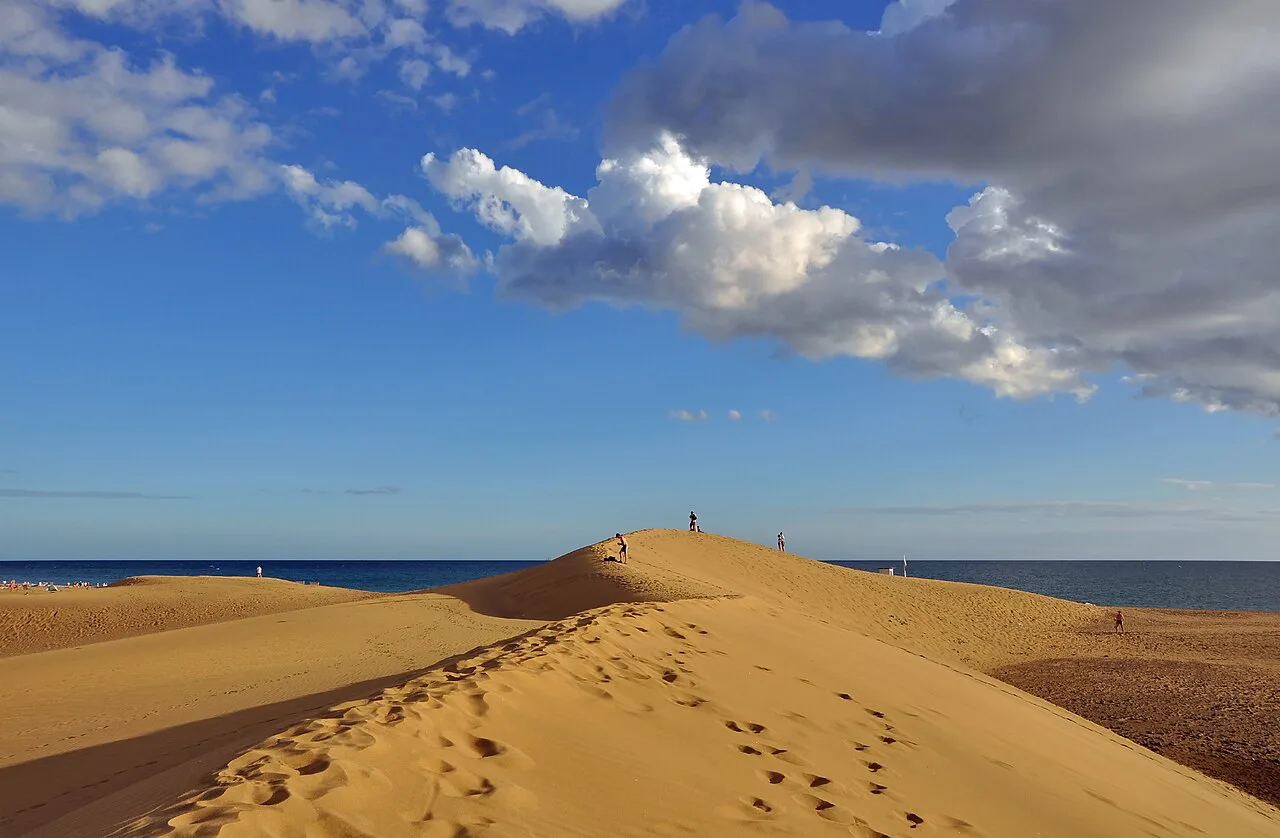
Walking into the dunes is the point of coming here, and it is a desert environment: open sand, strong sun and wind that erases footprints quickly. Carry more water than you think you need, wear footwear rather than flip-flops for the soft sand, and avoid the middle of the day in summer. A hat and high-factor sun cream are not optional.
Aim for a there-and-back route with a clear landmark at the far end, such as the Maspalomas lighthouse, rather than wandering without a target. The 400-hectare scale means the dunes are large enough to lose your bearings, and phone mapping is unreliable on shifting sand. Tell someone your plan, and turn back before you are tired rather than when you are.
Combining the day
Pair the dunes with the Maspalomas lighthouse end for a walk that ends at a recognisable landmark, then move along the beach for a swim. The Playa del Inglés end gives you restaurants, bars and shops for the evening, and the surrounding resort area has plenty of open-air bars. Build the day around one crossing of the sand and one long beach session rather than trying to cover both resorts.
Nearby beaches
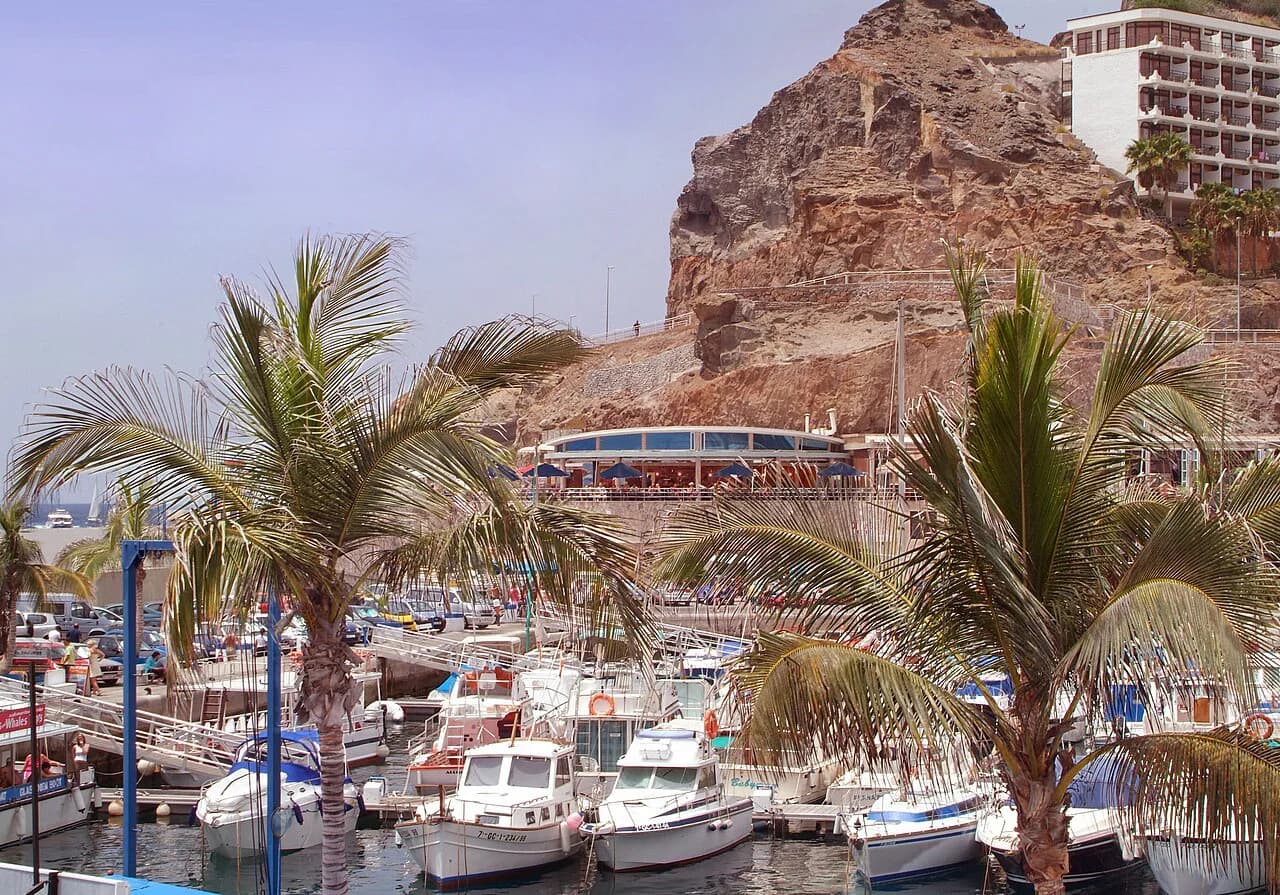
Puerto Rico, a short drive west along the GC-500, offers a different day: Spain.info describes calm, protected waters, golden sand, a 284-metre beach with sunbeds, showers and toilets, and a busy promenade of bars and restaurants. The same source notes buses to the resort stop at the beach, so it works without a car. Treat it as the easier, more sheltered alternative when the wind is up at Maspalomas.
Further west, Playa de Mogán and the smaller coves around it make a good second beach day, and the harbour village is a pleasant contrast to the dune resorts. If you are touring the island's beaches, Las Canteras in Las Palmas offers a city beach with a completely different character. Pick one per day rather than trying to link several, and if you island-hop beyond Gran Canaria, the black-sand beaches in La Palma make a striking contrast to these golden dunes.
Plan Your Visit
Base yourself in Maspalomas or Playa del Inglés, walk the dunes early, and spend the afternoon on the wide sand where it suits you best: the developed end for amenities, the dune-backed stretch for space, and the surfing curve for watching rather than swimming. Carry water and shade, and treat the wind as part of the plan rather than a nuisance.
Before you set out, the Maspalomas tourist office can confirm which beach services are operating and the island transport operator has the current bus routes and fares. Everything else you can decide from the sand: pick your end, walk one crossing, and leave the rest of the day to the beach.
Frequently Asked Questions
What is Maspalomas known for?
Maspalomas is known for its dune field, a 400-hectare sand sheet that runs behind the beaches of Maspalomas and Playa del Inglés, and for the long golden beach that fronts it. The official tourism board describes the Playa del Inglés end as very wide, with protected areas, shops and amenities nearby.
Can you still walk on the dunes in Maspalomas?
Walking the dunes is the main reason to come, and the sand is open desert terrain rather than a marked trail. Carry water, wear proper footwear for soft sand, avoid the middle of the day in summer, and pick a landmark such as the lighthouse so you can navigate back.
Which beach is behind the Maspalomas Dunes?
The beach behind the dunes is the long stretch running from Maspalomas at the lighthouse end to Playa del Inglés, where hotels come down to the sand. The dune-backed section is the wilder, more exposed part; the Playa del Inglés end has the shops and amenities.
Where does the nudist section of Playa del Inglés begin?
The official tourism board describes a curve where a secluded nudist area begins at the Playa del Inglés end of the beach, and notes the same curve as surfing country. It is a long-established section of beach; keep your distance and keep cameras away.
How do you get to the Maspalomas Dunes?
Buses serve Playa del Inglés and Maspalomas, and the coastal GC-500 runs through the Mogán municipality. Drivers park once and walk, with the Maspalomas lighthouse a useful landmark for the return leg. The island transport operator publishes current routes and fares.
When is the best time to visit the Maspalomas Dunes?
Average annual temperatures of 18 to 25 °C keep the coast mild almost all year, with late summer and early autumn the most comfortable for long swims. Early morning is the quietest and coolest time to walk the dunes, and school holidays are the busiest period.
Are there facilities on the beach at Maspalomas?
Playa del Inglés has a wide range of shops and amenities in the surrounding area, while the dune-backed stretch is barer, so carry what you need. Sunbed and shade rental is common on developed sections of this coast, with prices set by the operators; ask at the stand before you settle.
Which nearby beach makes a good alternative?
Puerto Rico, west along the GC-500, has calm, protected waters, golden sand, sunbeds, showers and toilets, and buses that stop by the beach. It is the easier, more sheltered option when the wind is up at Maspalomas.
Sources
Beach notes for your next trip
Optional updates when we add or revise beach guides.
You might also like
Continue reading
More guides you'll find useful