Playa del Inglés, Gran Canaria: Where to Stay & Eat
Playa del Inglés is Gran Canaria's broad, lively resort beach at the foot of Maspalomas' dunes. Here's who it suits, where to settle and how to plan a day.
On this page
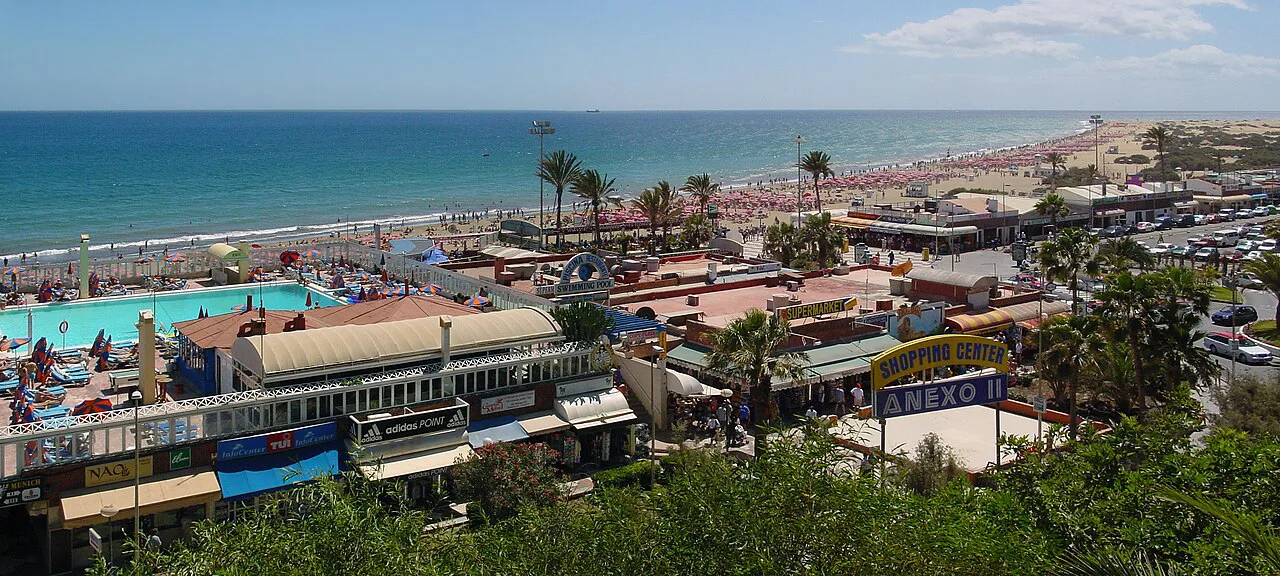
Playa del Inglés earns its place on a Gran Canaria beach shortlist through sheer scale: a wide sweep of sand that begins at the Maspalomas dunes and runs to the hotel front that gives the resort its name. The official island tourist board describes a beach that is very wide, with protected areas and clearly marked zones for children, all backed by shops and amenities. It suits families who want everything close at hand, active beachgoers who like a crowd, and anyone who values an easy walk from hotel to sand over a wild, remote shoreline.
The beach sits in the municipality of San Bartolomé de Tirajana, on the southern coast of the island, with Maspalomas immediately to the west and the resort strip of Playa del Inglés behind the eastern sand. Read it as one continuous stretch rather than a single pin on a map: the dune end, the central family sand and the quieter curve towards the naturist section each give a different day out.
Where the beach sits
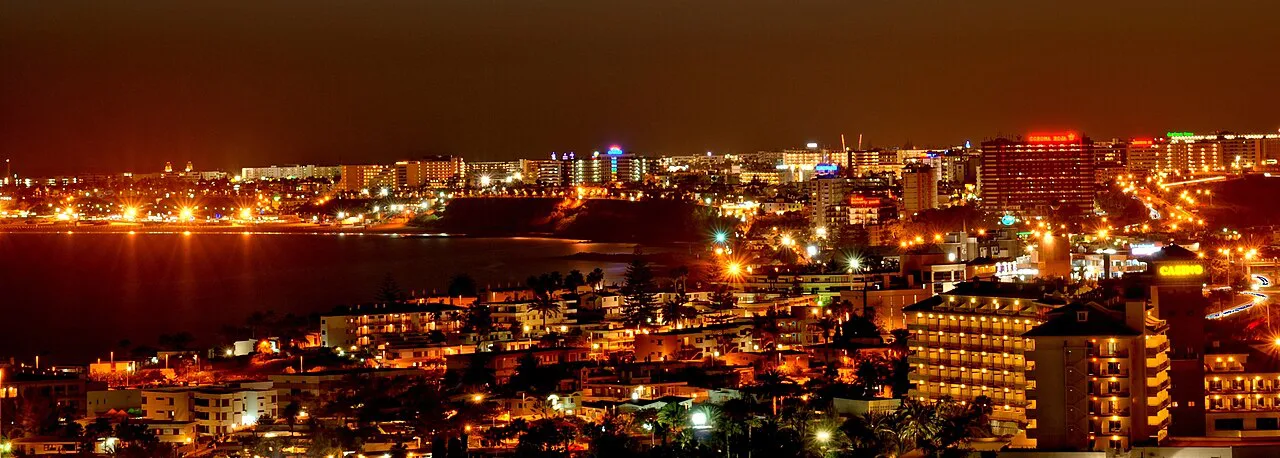
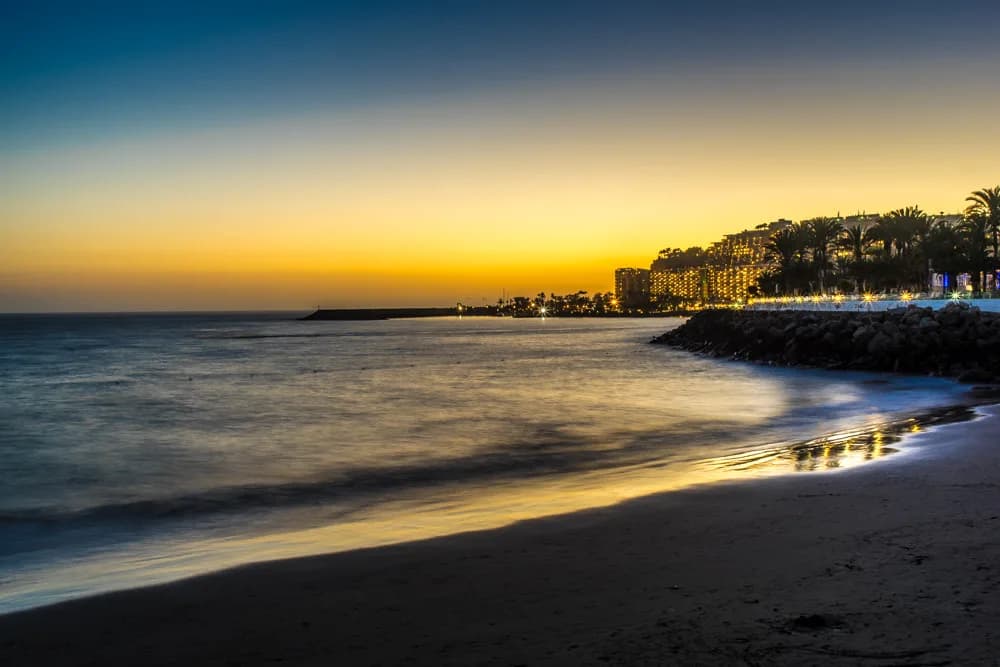
Playa del Inglés occupies the eastern end of the long beach that starts at Maspalomas and finishes at the foot of the resort hotels. The tourist board pictures those hotels as bending towards the ocean, a useful image for understanding the layout: the sand is backed by a dense strip of accommodation, restaurants and shops, and the dunes open out at the Maspalomas end. That means you can choose between a day with the dunes as a backdrop and a day with a café steps from your towel.
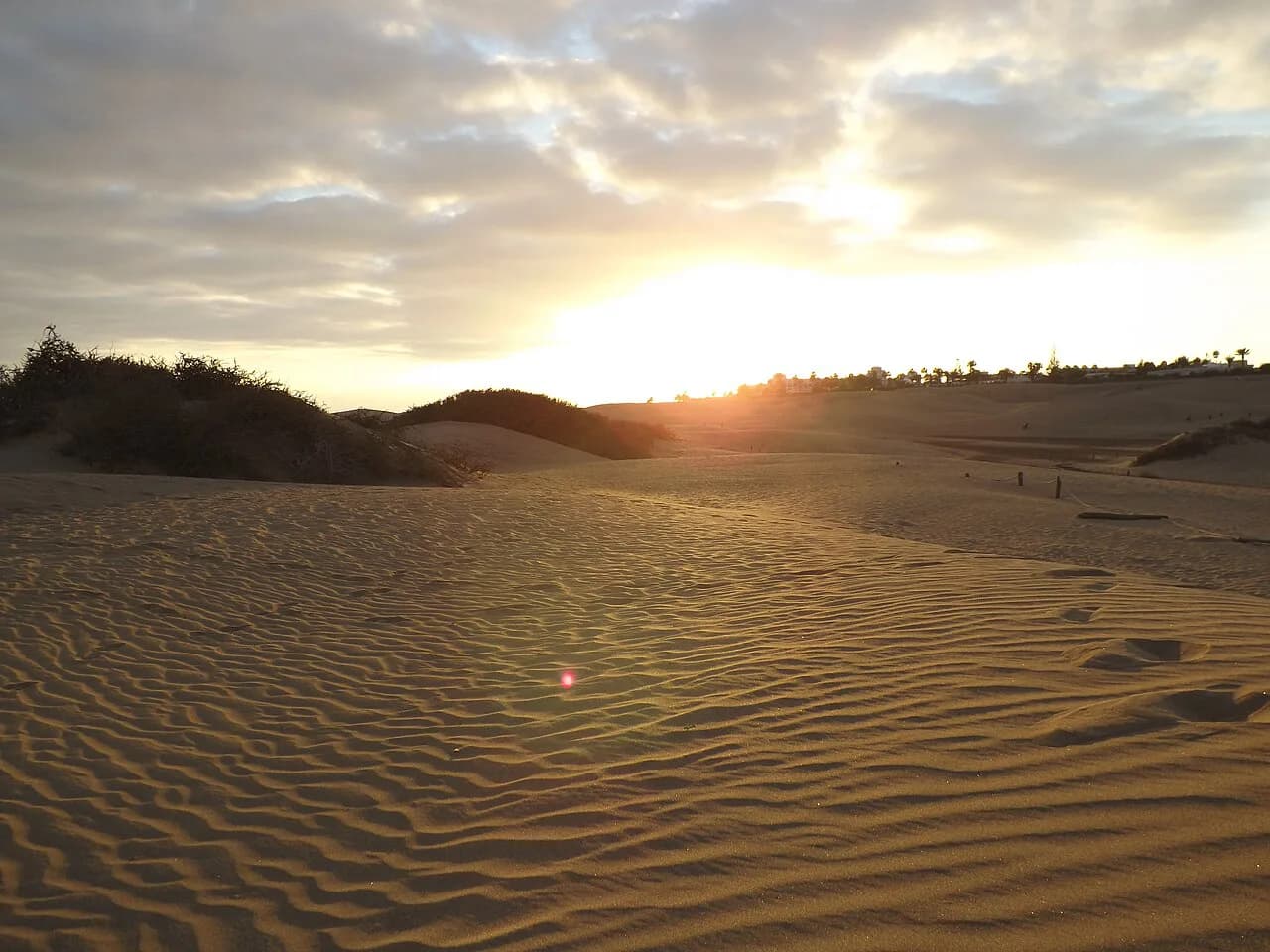
Because the beach forms part of a continuous shoreline, it is easy to combine with the Maspalomas dunes, which begin where the sand widens to the west. Walk west along the beach or the seafront and you move from the amenity-rich resort strip into a more open landscape within a single outing.
Getting there
Most visitors reach Playa del Inglés on foot from the resort itself. The beach runs directly behind the hotel strip, so anyone staying in the resort can walk to the sand in minutes; the tourist board describes shops and amenities in the surrounding area, which makes the approach straightforward. If you are staying elsewhere on the island, plan on arriving by road or coach and walking the last stretch to the seafront.
The beach is part of the municipality of San Bartolomé de Tirajana, in the south of Gran Canaria, and the resort is laid out around the sand rather than on top of it. Use the seafront promenade and the streets that run down to it as your reference points, and pick the section you want before you set out, because the beach is long enough that the wrong end means a considerable walk.
The sand and the water
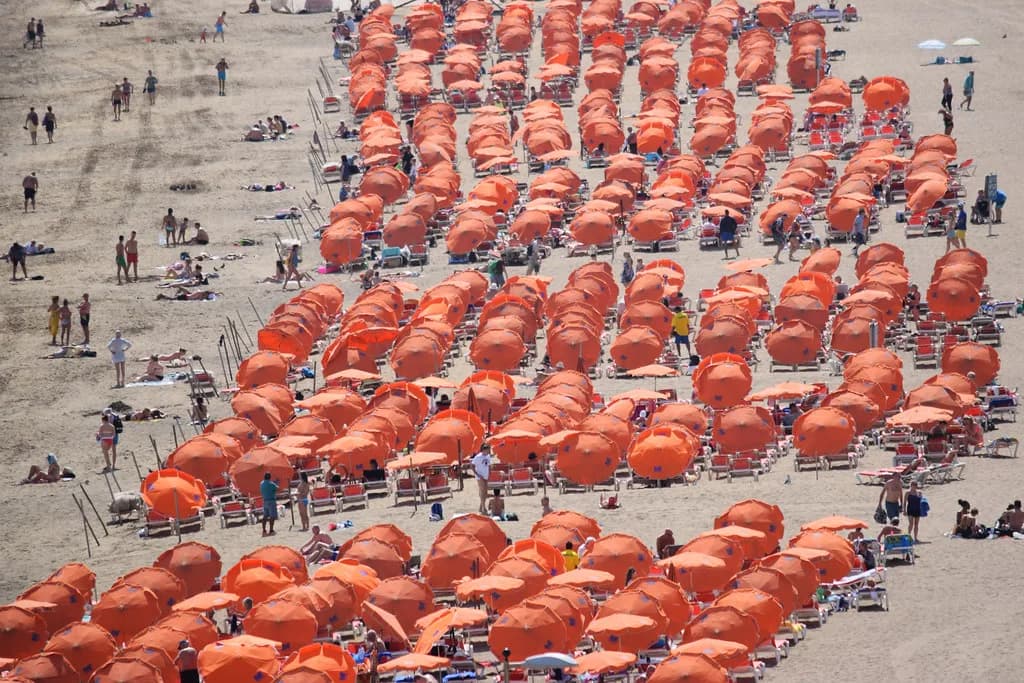
This is a genuinely wide beach, and the tourist board singles out that width as one of its strengths. The sand is backed by the dune field at the Maspalomas end and by the resort at the Playa del Inglés end, so the character of the shoreline changes as you walk. The bathing areas are arranged with clearly marked zones, which helps families find space even when the central beach is busy.
The tourist board describes Playa del Inglés as the kind of beach where different bathers can have very different days, from families with small children to runners and surfers. That variety is the point: you can settle on the wide central sand or walk towards the curve that leads to the quieter naturist section. Conditions vary with the swell and the wind, so read the flags on the day and swim in the marked areas.
Shelter and wind
The beach is set out along a long, open shoreline, so there is no single wind shadow to rely on. The official description emphasises the different options along the stretch: the busy central sand where the amenities are, and the curve where the secluded nudist area begins, which the tourist board describes as less visited and ideal for those who want to sunbathe on their own. If you want a quieter patch, head for that curve rather than the central hotel front.
Because the beach faces the open Atlantic, the breeze can pick up through the afternoon, which is welcome in summer and worth planning for in the cooler months. A windbreak and a jumper for the walk home make a difference, and the dunes end of the beach tends to feel more exposed than the hotel-backed stretch. The tourist board describes gentle sun nearly all year, so a light layer is more useful than heavy kit.
Families
Playa del Inglés is one of the most family-friendly beaches on the island in the tourist board's description. It highlights the beach as very wide, with protected areas and clearly marked zones for children, plus a wide range of shops and amenities in the surrounding area. That combination of space and backup makes it a sensible choice for a family day even when the resort is busy.
Settle near the marked family zones rather than at the furthest ends of the beach, so children have space to play without straying into the busier sections. Bring your own shade and water, and use the shops and amenities behind the beach for anything you have forgotten. The size of the beach means you can usually find room even in peak season if you walk a little away from the main hotel access points.
Surfers and active beachgoers
The tourist board describes Playa del Inglés as a meeting place for surfers, runners and groups of friends, and identifies the curve where the secluded nudist area begins as surfing country. That is where to head if you want to watch or join the activity rather than simply sunbathe. The central beach, by contrast, is where the marked-out areas for youngsters and the general beach life are concentrated.
Active beachgoers will find the length of the beach useful for running and walking, and the resort's shops and amenities make it easy to combine a session with a meal or a swim. If you prefer a calmer swimming beach, Las Canteras beach in Las Palmas is a different kind of day, with a sheltered city shoreline. The contrast is worth knowing when you plan a week on the island.
The naturist end
The tourist board describes a secluded nudist area beginning at the curve of the beach, beyond the main hotel front. It frames this section as less visited and suited to those who wish to sunbathe on their own, so treat it as a neutral, established area rather than a spectacle. If you walk through, keep your distance and respect the privacy of the people using it.
The same curve is described as surfing country, so the naturist section and the surf activity sit at the same end of the beach. That makes this end the place to go for quieter sunbathing and for watching the waves, while the central beach remains the hub for families and general beach life.
Facilities and the resort behind the beach
The tourist board highlights a wide range of shops and amenities in the area surrounding Playa del Inglés, which is one of the reasons the beach works so well for families. The resort strip behind the sand is dense with places to eat, drink and shop, so you can spend a full day without carrying everything with you. Check current opening details for individual shops and restaurants before you set out for a particular facility.
Because the beach is long, the services closest to you depend on which section you choose: the hotel front has the most immediate access to shops and restaurants, while the dune end is more open. Plan your day around the part of the beach you want, and walk back into the resort for lunch or supplies rather than expecting everything at the water's edge.
How busy it gets
The tourist board is candid about the crowds: Playa del Inglés is one of the most visited and crowded beaches in Gran Canaria. That is part of its appeal for some visitors and a reason to plan for others. The beach's width and marked zones help absorb the numbers, but the central hotel front is where the bustle concentrates.
If you want a quieter day, head for the curve towards the naturist section or the dune end of the beach, and arrive earlier in the day before the main rush. The resort's shops, restaurants and beach life make it a lively place by design, so set your expectations accordingly and choose your section to match the day you want.
Best time to go
The tourist board describes Playa del Inglés as enjoying gentle sun nearly all through the year, which makes it a realistic beach destination outside the British summer. The sea is at its most comfortable for long swims in the warmer months, while the resort is at its busiest in peak season. Use the quieter shoulder months if you want the same beach with more space.
Winter days can still be pleasant on the sand, but the breeze and shorter daylight hours mean you should plan your beach time for the middle of the day. In summer, the heat and the crowds both peak, so an early start and shade are worth arranging. The tourist board's description of near-year-round sun is a guide to the climate rather than a promise for any particular week.
Nearby beaches to combine
Playa del Inglés is the eastern end of a continuous beach that begins at Maspalomas, so the dunes are the most natural combination. Walk west along the sand or the seafront to reach the dune edge, where the landscape opens out and the resort feels further away. That gives you two different beach days from one base.
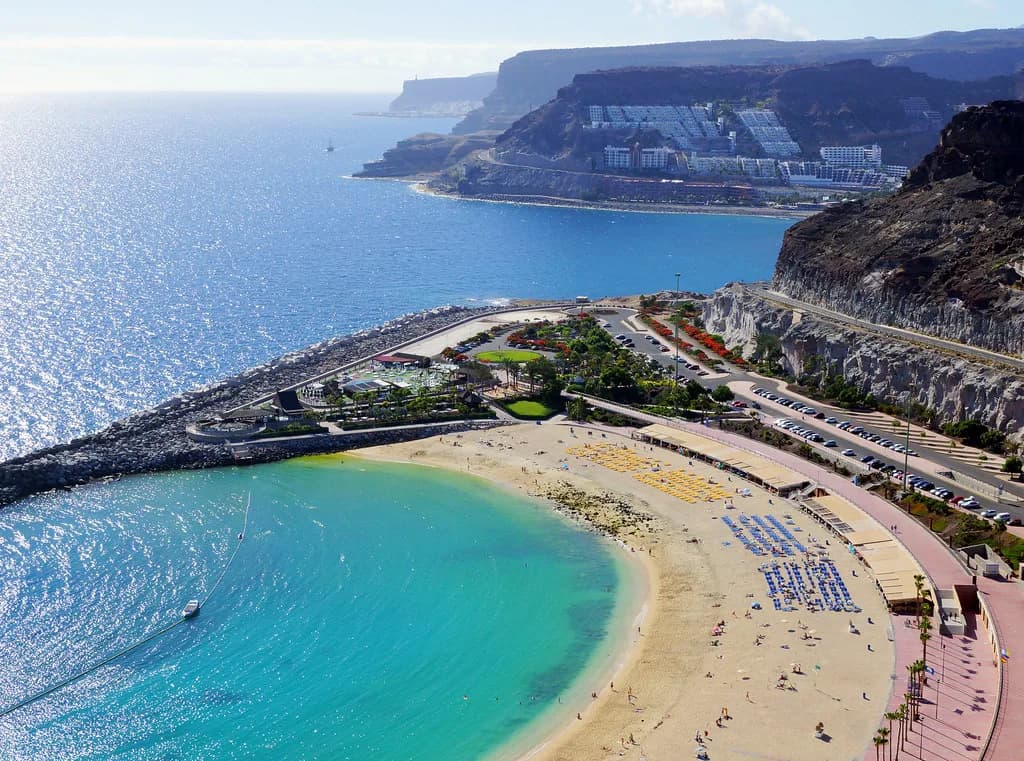
Further west along the southern coast, Amadores beach near Puerto Rico is a sheltered, curving bay that makes a contrast with the long, open sweep of Playa del Inglés. Playa de Mogán is another option for a day trip, with a different character again. Both are worth considering if you want to vary the week rather than stay on the same stretch of sand. If you are island-hopping, the beaches in La Palma offer black-sand bays that make yet another contrast with Gran Canaria's southern coast.
Practical kit and etiquette
For a resort beach day, pack for sun and wind: high-factor sunscreen, a hat, water and a light layer for the breeze. A windbreak is useful on the more exposed sections towards the dunes, and a mat or towel is enough for the sand. Bring cash or a card for the shops and restaurants behind the beach, and keep valuables close in the busy central area.
Respect the marked zones and the naturist section at the curve, and give other beachgoers space. If you are surfing, follow local practice and keep clear of swimmers in the marked bathing areas. The beach is shared by families, runners, surfers and sunbathers, so a little consideration keeps it working for everyone.
Plan Your Visit
Playa del Inglés is the beach to choose when you want space, amenities and a lively resort atmosphere in one place, with the Maspalomas dunes a walk away. Pick your section deliberately: the central hotel front for family zones and shops, the curve for surf and quieter sunbathing, and the dune end for a more open feel. For a different kind of day, compare it with Las Canteras beach in Las Palmas or the southern coves at Amadores and Playa de Mogán.
Check the official Gran Canaria tourism site for current beach information before you go, and ask your accommodation about the nearest access point to the section you want. Arrive earlier in the day if you want a quieter spot, and plan shade and water for the afternoon. That is enough to turn a busy resort beach into a good day out.
Frequently Asked Questions
Is Playa del Inglés a party town?
The resort has a lively, busy atmosphere, and the tourist board describes it as one of the most visited and crowded beaches in Gran Canaria. That does not make the beach itself a party venue: it is a broad stretch of sand with marked family zones, shops and amenities behind it. If you want a quieter day, head for the curve towards the naturist section or the dune end.
What is Playa del Inglés famous for?
It is known for its size and its setting: a wide beach that runs from the Maspalomas dunes to the hotel front, with gentle sun nearly all year according to the island tourist board. It is also known as a lively, family-friendly resort beach with plenty of shops and amenities nearby.
Is Playa del Inglés rowdy?
The tourist board describes it as one of the island's most visited and crowded beaches, with clearly marked areas for children and a mix of users from families to surfers and runners. The central hotel front is the busiest part, while the curve towards the naturist section is described as less visited. Choose your section to match the atmosphere you want.
Is it worth going to Playa del Inglés for a beach day?
Yes, if you want a wide beach with everything close by: the tourist board highlights its width, protected areas for children and the range of shops and amenities in the surrounding area. It is less suited to anyone seeking a wild, remote shoreline. For a quieter day, walk towards the dune end or the curve beyond the main hotel front.
Sources
Beach notes for your next trip
Optional updates when we add or revise beach guides.
You might also like
Continue reading
More guides you'll find useful