Gran Canaria Sea Temperature: Month-by-Month Swimming Guide
Gran Canaria sea temperatures by month, from around 19°C in January to the warmest water of late summer, with sheltered coves for cooler days.
On this page
Gran Canaria sells itself on sunshine, but the sea runs to its own calendar. Average air temperatures on the island sit between 18 and 25°C across the year, according to the island's tourist board, and that mild air is exactly why visitors arrive in February expecting warm water and find something brisker.
This guide separates air from sea, gives the winter water figures recorded for the main resorts, and points you to the stretches of coast where a swim feels most comfortable outside high summer. It suits anyone planning a beach-led winter sun trip, a spring walking-and-swimming break, or a family summer holiday where small children will spend more time in the shallows than in deep water.
How warm the sea gets around the island
The surrounding Atlantic is cooled by the same trade winds that keep the island's air pleasant, so water temperatures lag well behind the air. The tourist board describes a climate shaped by fresh, humid trade winds meeting a mountainous island, which gives the coast one of the mildest climates in Europe; the sea, however, stays distinctly Atlantic rather than Mediterranean.
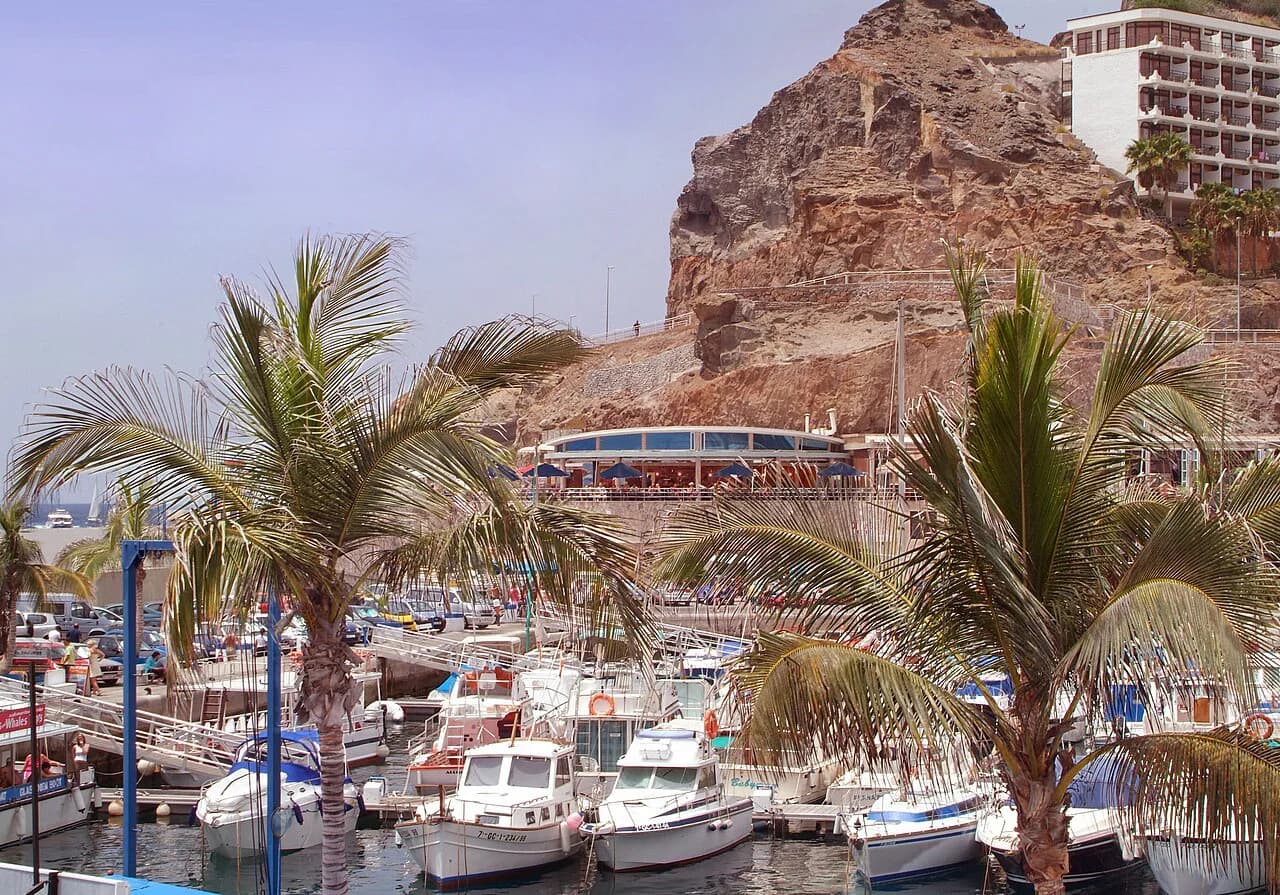
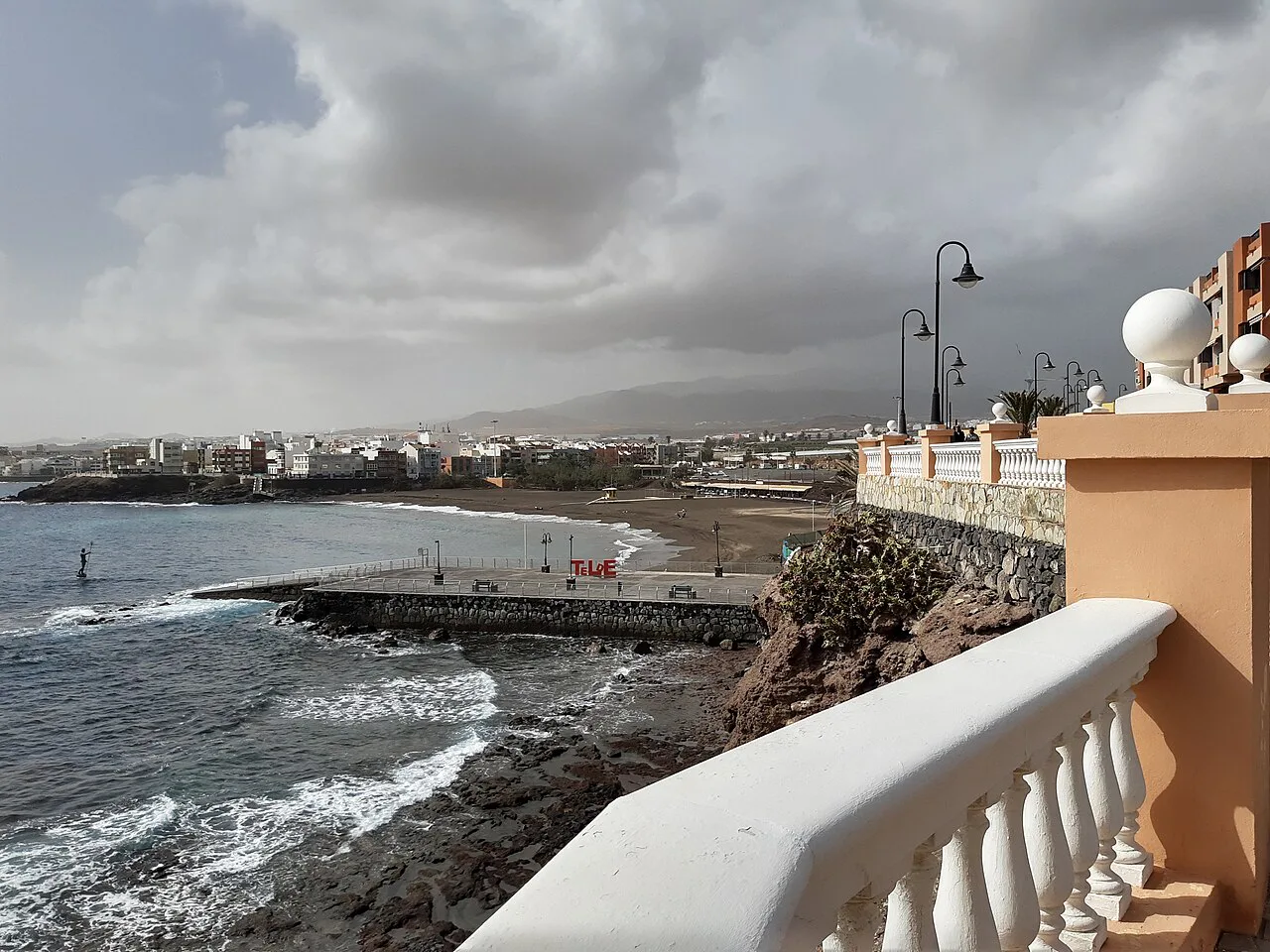
Geography matters as much as season. The south coast, from Maspalomas through Playa del Inglés and Puerto Rico to Puerto de Mogán, is the driest and most sheltered side of the island, with long sandy bays and calm mornings, while the north around Las Palmas takes more cloud and more swell. On a breezy day the difference between a south-coast cove and an exposed northern beach is the difference between a pleasant swim and a bracing one.
For orientation across the island's resorts before you pick a base, the full set of Gran Canaria beaches covers everything from the big holiday sands to small natural pools.
Winter: January and February
January is the coolest month for swimming. Across Gran Canaria the sea does not reach 20°C, and ten-year averages put the warmest water at about 19.9°C around Lomo Quiebre and 19.8°C at Puerto Rico and Patalavaca, with Las Palmas de Gran Canaria at the colder end at roughly 19.7°C.
February is similar, with the warmest averages around 19.2°C at Taurito, La Playa de Mogán, Puerto Rico and Amadores, and Arinaga the coolest of the named spots at about 18.9°C.
Those figures describe averages rather than daily conditions, and they explain why a sunny January afternoon on the sand can feel tropical while the first step into the water does not. Treat winter swims as short and purposeful: a quick dip, a proper towelling robe and a windproof layer for afterwards. Families with small children should plan on shallow paddling and plenty of sandcastle time rather than long immersion.
Spring: March to May
Spring is the island's most underrated swimming season. The air climbs steadily towards summer warmth while the sea responds more slowly, so March and early April feel cool on entry but perfectly bearable once you are moving. By May, with longer days and stronger sun, most adults settle into comfortable 20-to-30-minute swims without thinking about it.
This is the season to favour the south-coast bays, where the shelving sand at places such as Playa del Inglés lets you wade gradually and keep your shoulders out of the water until you are ready. Mornings are typically the calmest window, before the afternoon breeze picks up and puts a chop on the surface.
Spring also brings the island's best balance of quiet beaches and open facilities. Easter aside, you will not be queuing for a patch of sand, and the water is warming week by week.
Summer: June to August
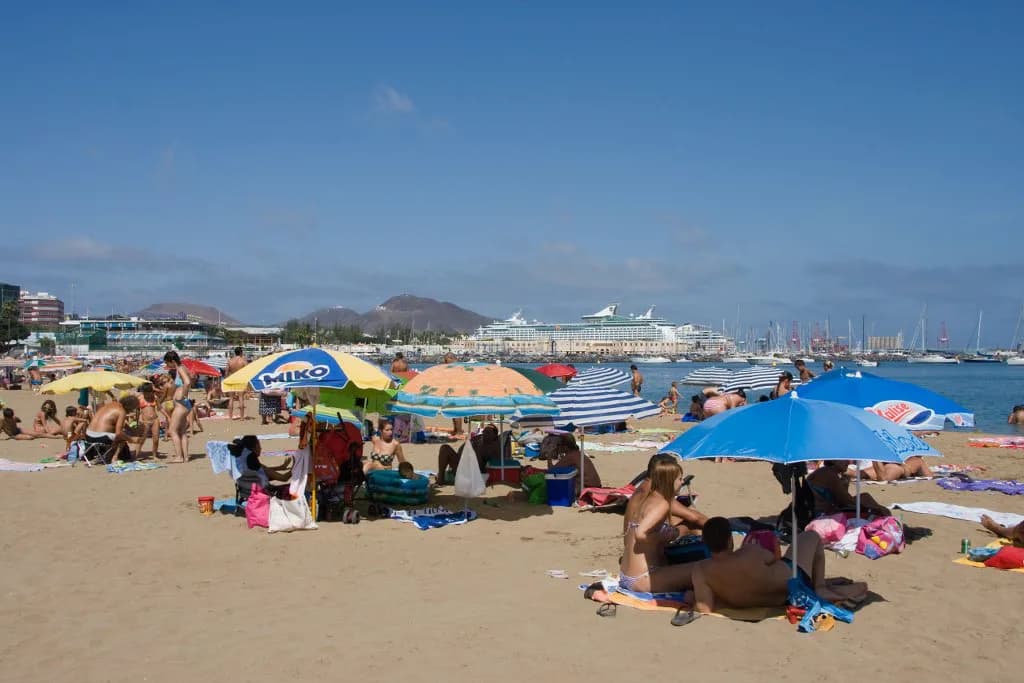
High summer delivers the warmest, easiest swimming of the year, and it is also when the coast is at its busiest. August in particular combines school holidays with the peak of the Spanish holiday season, so the big resorts fill up and sunbeds near the water's edge go early. If you want warm water without the crush, aim for late June or the first half of July.
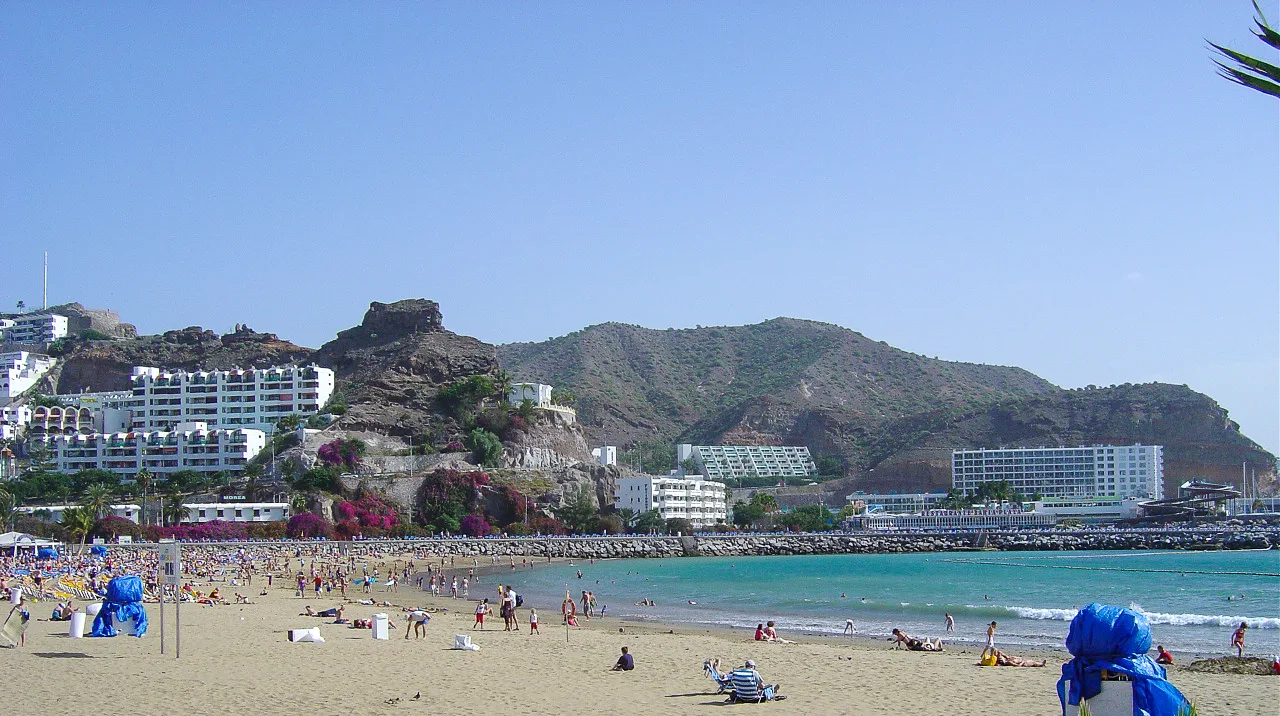
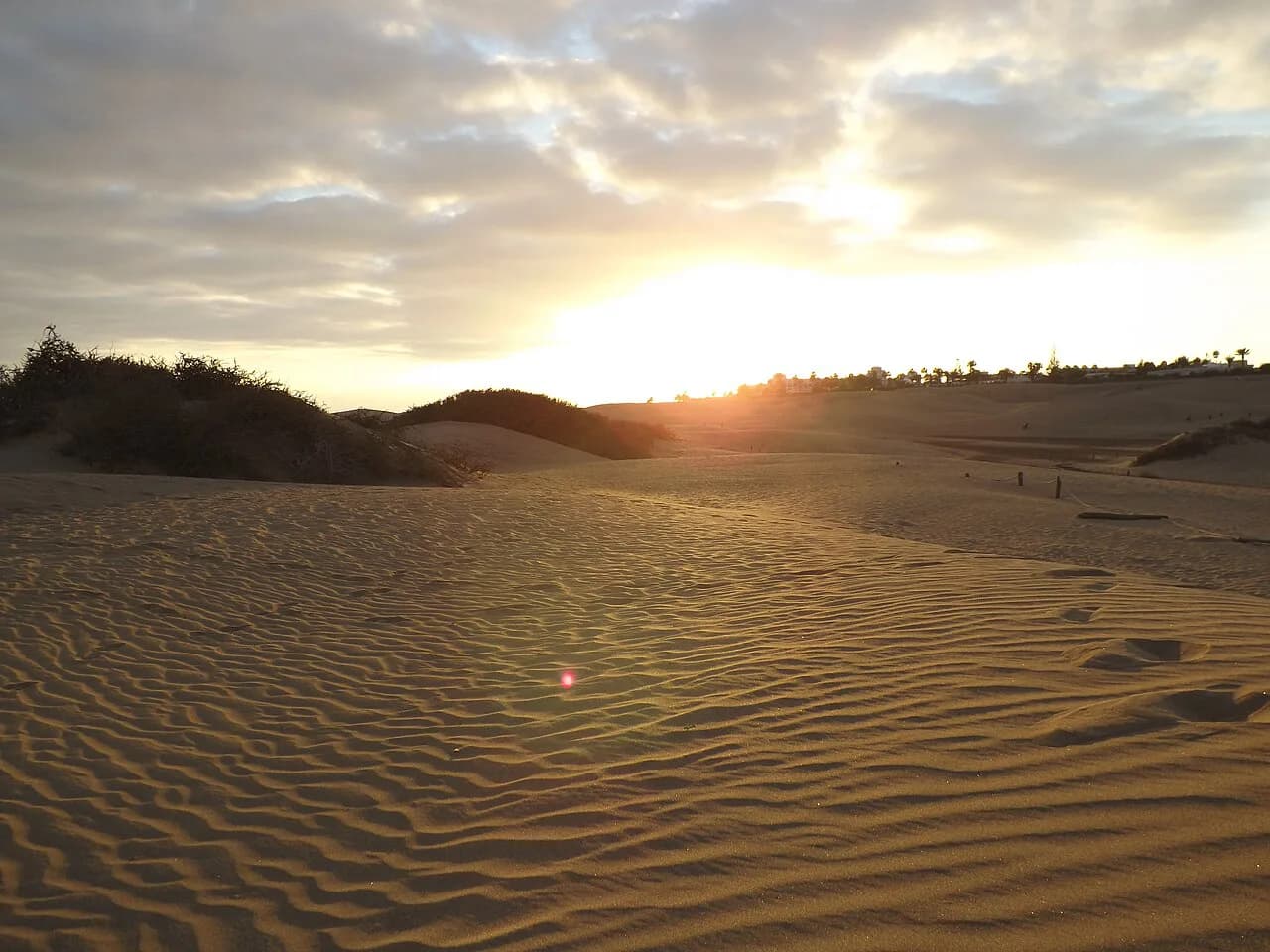
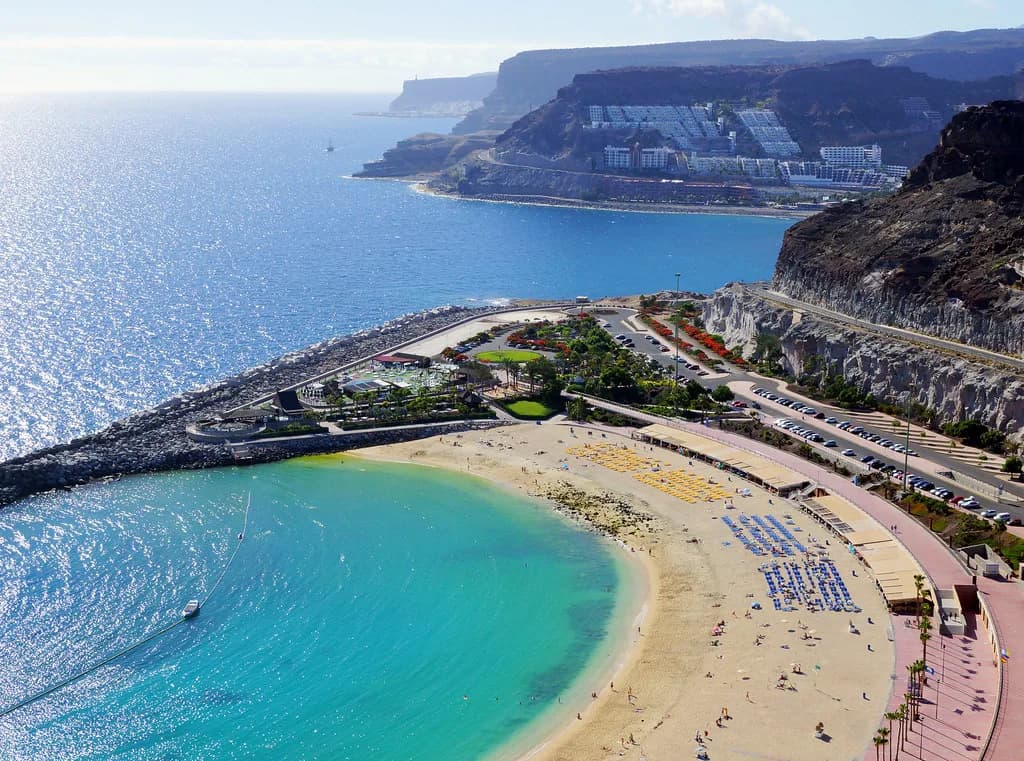
On the south coast, Maspalomas and Playa del Inglés offer the longest stretches of sand and the most facilities, with the Maspalomas dunes behind them for a change of scene when the beach gets crowded. A short drive west, Amadores beach near Puerto Rico is a sheltered, crescent-shaped bay that suits families and weaker swimmers, with the calmest water usually in the morning.
Heat on land is the bigger summer issue: inland temperatures climb well above the coastal average, so plan walks and excursions for early morning and keep the middle of the day for the water.
Autumn: September to November
Early autumn is the connoisseur's window. The sea holds the heat it absorbed through summer, so September and October often feel warmer than June, while the crowds thin out once the school holidays end. Air temperatures ease back towards the island's mild winter range, making long lazy beach days genuinely comfortable rather than a test of endurance.
November marks the transition: the water begins to cool and the first Atlantic swells of the season arrive, which is when the sheltered south-coast bays earn their reputation. Puerto de Mogán, with its small harbour and enclosed feel, and the coves around Puerto Rico are good choices when the open coast is choppy.
If you are weighing Gran Canaria against a mainland Spanish beach trip, note that the Canaries stay warmer later in the year than the Costa del Sol; comparing the Málaga Sea Temperature by Month shows how much earlier the Mediterranean cools in autumn.
Sheltered beaches for cooler-water days
When wind or swell takes the edge off the main beaches, head for the south-west. Puerto Rico and Amadores sit in a sheltered stretch of coast where the headlands break the worst of the swell, and the bays are small enough that you can usually find a corner out of the breeze. Puerto de Mogán, further west, has a compact beach tucked beside the marina.
Las Canteras beach in Las Palmas is the north-coast exception worth knowing: a long urban bay with a natural rock barrier offshore that takes energy out of the incoming swell and creates a calmer swimming zone at the western end. It is a city beach, so expect promenade traffic, but it works when the north coast is otherwise restless.
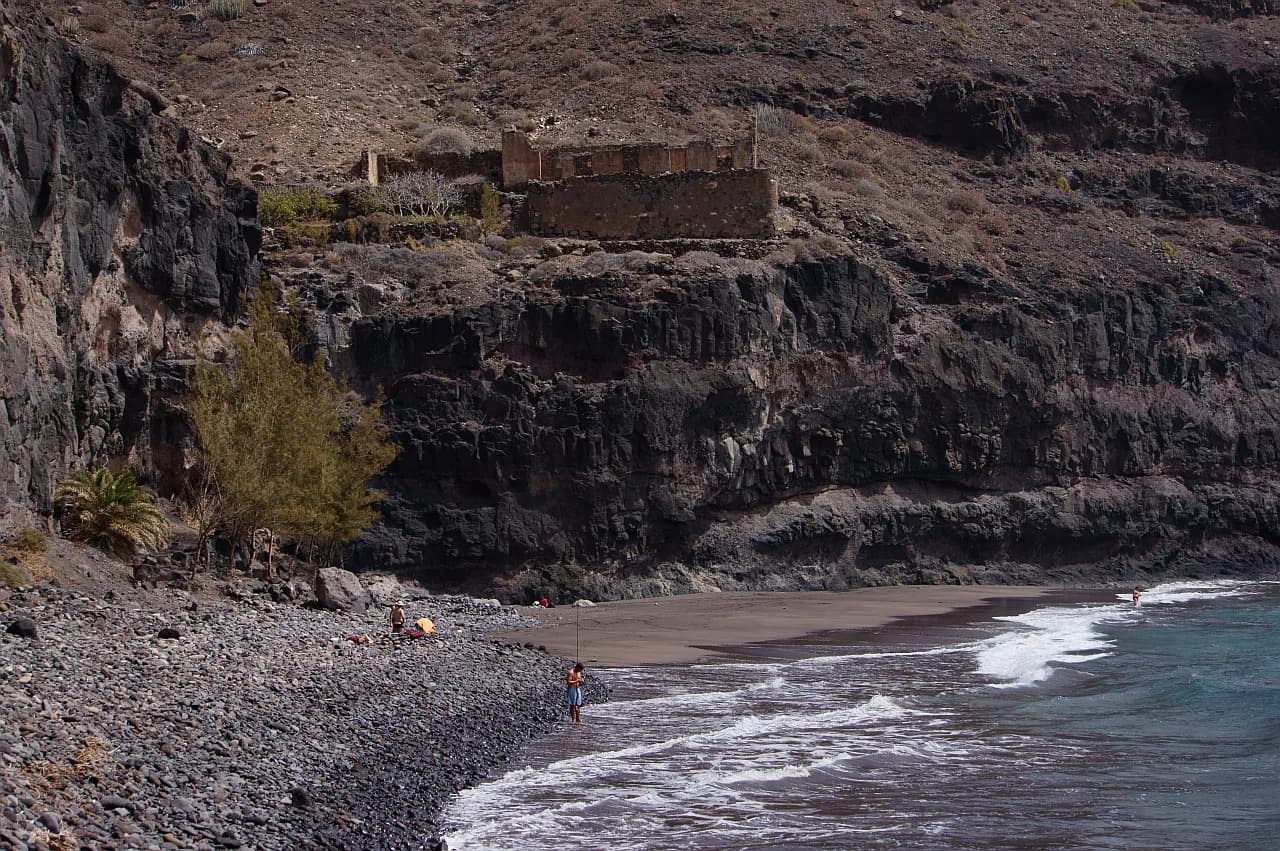
Natural pools are another option on rough days, particularly along the north and east coasts where volcanic rock has been adapted into tidal baths. They are worth asking about at the local tourist office, which can also tell you which are currently open.
Wind, currents and what to wear
The trade winds are a constant on Gran Canaria and can turn a flat sea into a choppy one within an hour, especially on exposed northern and eastern beaches. Read the flags before you swim and stay within your depth when the wind is offshore; if the lifeguard service is operating, follow its instructions without debate.
For long swims, snorkelling sessions and anything outside July and August, a 2–3 mm short wetsuit or a quality rash vest makes an enormous difference to comfort without restricting movement. In winter, add neoprene boots if you plan to spend time on rocky entries, and bring a warm layer and a flask for afterwards.
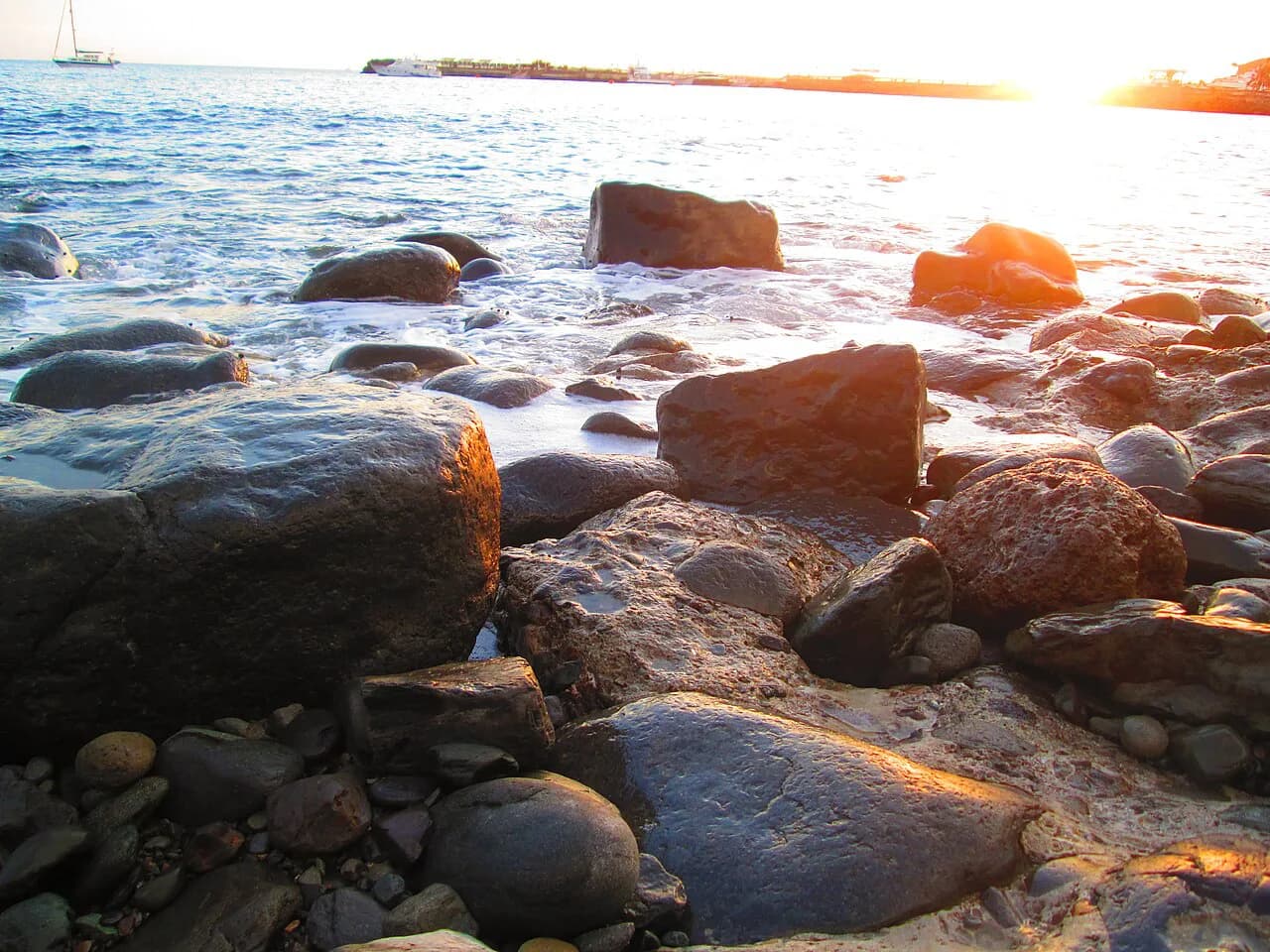
Reef shoes are the single most useful item for families: they protect against hot sand, pebbles and the occasional sea urchin around rocky coves. Snorkellers should watch for currents around headlands and swim with a buddy and a bright tow float.
How sea temperature tracks the island's climate
Gran Canaria's mild air and cool Atlantic water come from the same system. The island's climate is shaped by trade winds and its mountainous interior, which creates distinct microclimates from the dry south to the greener north; the sea stays moderate because the Canary Current carries cooler water southwards past the islands.
In practice, that means the air warms fast in spring and stays warm into November, while the sea peaks later and holds its heat into early autumn. Planning around the sea rather than the air is the key to a comfortable swimming holiday here.
Nearby beaches to combine with a swimming day
A good swimming day on the south coast can easily include two or three beaches. Start early at Playa del Inglés, Gran Canaria, for a long shallow swim, move to the Maspalomas dunes for a walk when the sun is high, then finish at Amadores for a late-afternoon dip in more sheltered water.
Alternatively, base yourself in Puerto Rico and use the resort as a launchpad for Puerto de Mogán and Taurito, both of which recorded some of the warmest February water on the island. For the north, pair Las Canteras Beach, Gran Canaria with a morning in the city's old town.
Plan Your Visit
Choose your dates around the sea rather than the air: late June to July for warm water with manageable crowds, September and October for the warmest swimming of the year in quieter conditions, and winter for short dips in the sheltered south-coast bays.
Pack a rash vest or short wetsuit for anything before June or after September, plan beach days around calm mornings, and keep an eye on the flags and the local forecast before committing to an exposed stretch of coast.
Frequently Asked Questions
What is the sea temperature in Gran Canaria in winter?
Ten-year averages put January water at roughly 19.7°C to 19.9°C around the island, with Puerto Rico, Patalavaca and Lomo Quiebre among the warmer spots. February averages are similar, near 19.2°C at Taurito, Puerto de Mogán, Puerto Rico and Amadores. These are averages rather than daily readings, so expect variation between weeks.
When is the sea warm enough to swim in Gran Canaria?
Most adults find the water comfortable from late June through October. Spring is perfectly swimmable for shorter dips, especially on the south coast, while winter suits brief, purposeful swims rather than long sessions.
Which part of Gran Canaria has the warmest sea?
The sheltered south and south-west coast, including Puerto Rico, Amadores, Taurito and Puerto de Mogán, records the warmest winter averages and also offers the calmest swimming when the trade winds pick up. The north coast around Las Palmas is slightly cooler.
Do you need a wetsuit to swim in Gran Canaria?
Not in high summer, when a swimsuit is enough. Outside July and August, a 2–3 mm short wetsuit or a good rash vest makes longer swims and snorkelling far more comfortable, and neoprene boots help on rocky entries.
Is the sea in Gran Canaria warmer than the Mediterranean?
Generally no. The Atlantic around the Canaries stays cooler than the Mediterranean in summer and holds its heat later into autumn, which is why September and October are such good swimming months here.
What should I bring for a beach day on Gran Canaria?
Reef shoes, a rash vest, high-factor sun cream, plenty of water and a windproof layer for the afternoon breeze. Add a tow float and mask if you plan to snorkel the rocky coves.
Sources
Beach notes for your next trip
Optional updates when we add or revise beach guides.
You might also like
Continue reading
More guides you'll find useful