Best Beaches in Costa Brava: Coves, Sand and Where to Swim
Plan a Costa Brava beach day with the best coves and sandy bays, how to reach each one, who it suits and which nearby beaches to combine in one trip.
On this page
Costa Brava packs an unusual variety into a short stretch of coast: broad family bays of golden sand, pebble coves framed by white fishermen's houses and bare rocky inlets where the pines give way to wind-shaped stone. Picking well comes down to matching the beach to your group, because a cove that suits confident swimmers can be hard work with a toddler and a buggy.
This guide covers the beaches between Begur and Cap de Creus that are worth building a day around, with access, seabed, shelter and who each one suits. For the wider regional picture, from Girona city down to the southern resorts, start with the Girona beaches guide and use this page to choose your shortlist.
Why Costa Brava beaches differ so much
The coast shifts character every few kilometres. Around Begur and Palafrugell you get small coves tucked between pine-covered headlands, while further north towards Cap de Creus the landscape turns bare, rocky and open to the wind. That means your footwear, your shade plan and how you get into the water all change from one bay to the next.
Sand, pebble and rock are the three basic surfaces you will meet, and each changes the day. Sandy bays are easiest for children and for planting a towel, pebble coves shelve more steeply underfoot and hold less sand for castle-building, and rocky inlets are best treated as swimming spots where you leave the towel on flat stone.
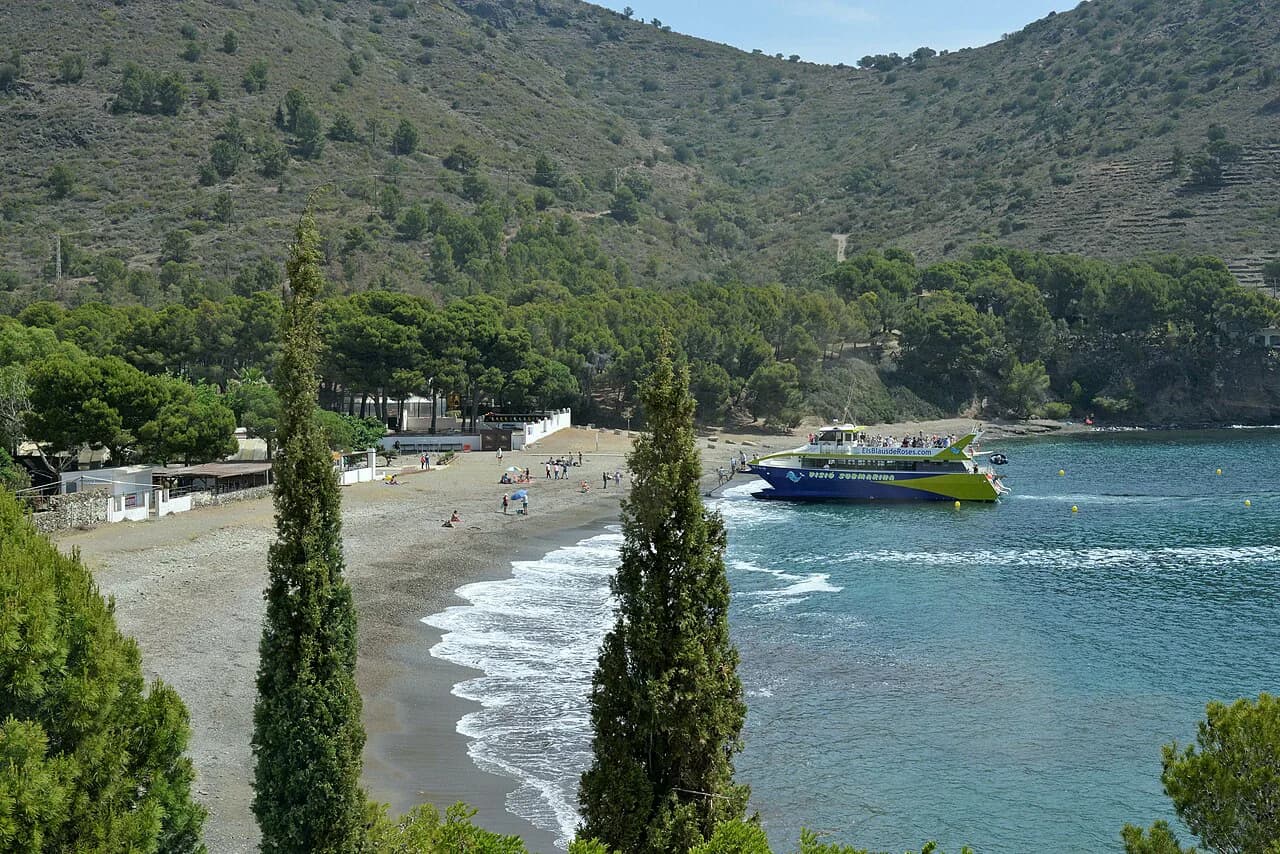
Access is the other divider. Some beaches are drive-up and level, others sit at the bottom of a short walk, and a few are best seen from the water. The Costa Brava rewards slow travel along the coastal paths rather than the main road, and arriving by boat into a cove gives you space when the sand is busy.
Aiguablava, Begur: turquoise sand and easy swimming
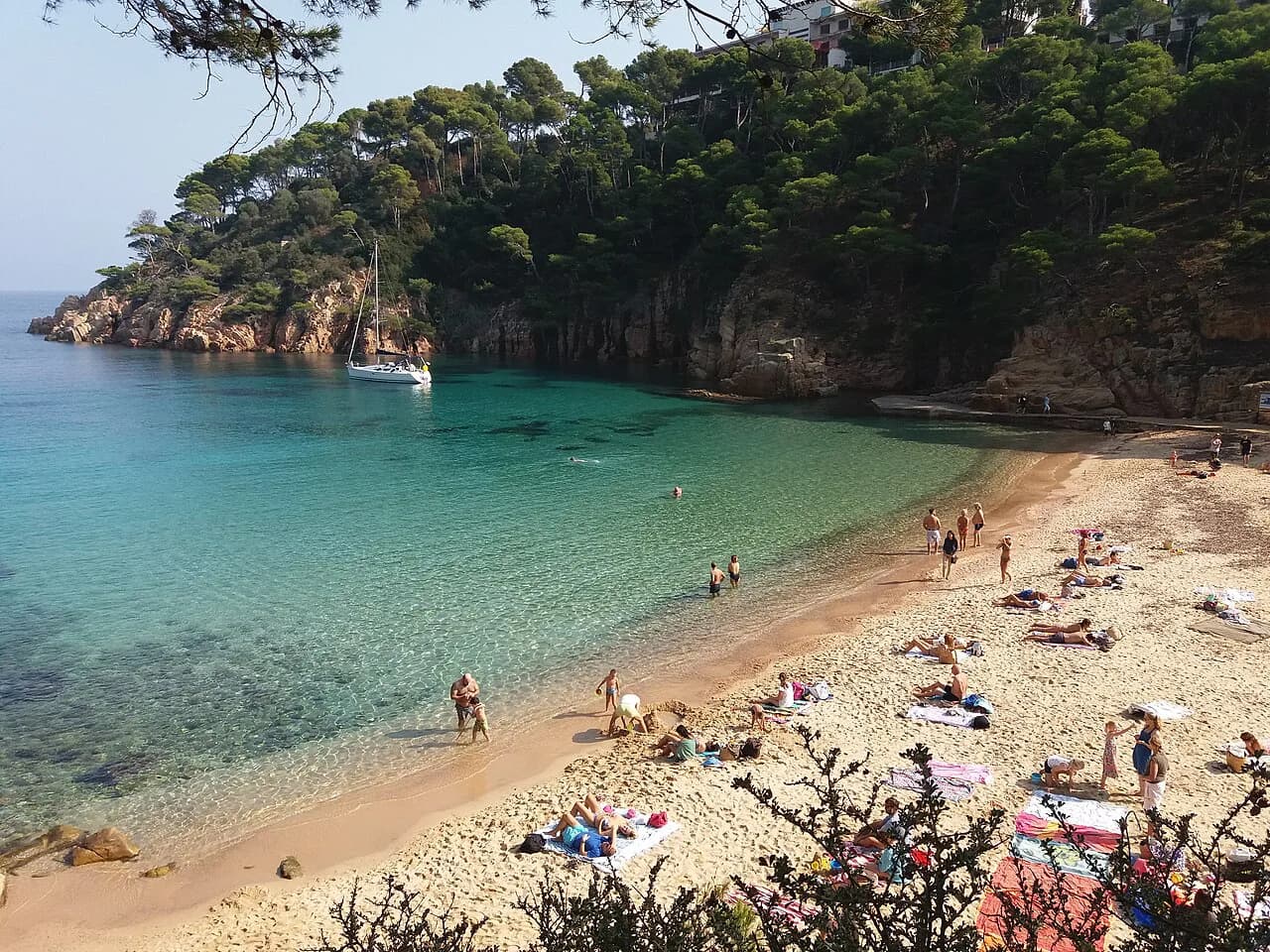
Aiguablava is the beach most people picture when they think of this coast. The cove sits near Begur, sheltered by pine trees, with a sandy seabed that gives the water its striking turquoise colour and makes it one of the best spots on this stretch for snorkelling. On a still morning the surface flattens to glass, which is when the colour is at its strongest.
Because the bay is sheltered, it is also a natural anchorage, so you may share the water with moored boats. Keep that in mind when swimming out: stay close to the shore end and keep children within the marked swimming area rather than heading towards the anchored hulls.
For families with small children this is the most straightforward pick in the Begur area: sand underfoot, a gentle entry over the sandy bottom and shade from the surrounding pines in the morning. Swimmers who want a proper length will find the cove small, so treat it as a place for a relaxed dip and a snorkel rather than a training swim.
Pair it with Sa Tuna, a few minutes away by road, for a contrast between sand and pebble in the same day. Go to Aiguablava early for the calm water, then move on once the car park fills.
Sa Tuna, Begur: a pebble cove best seen from the water
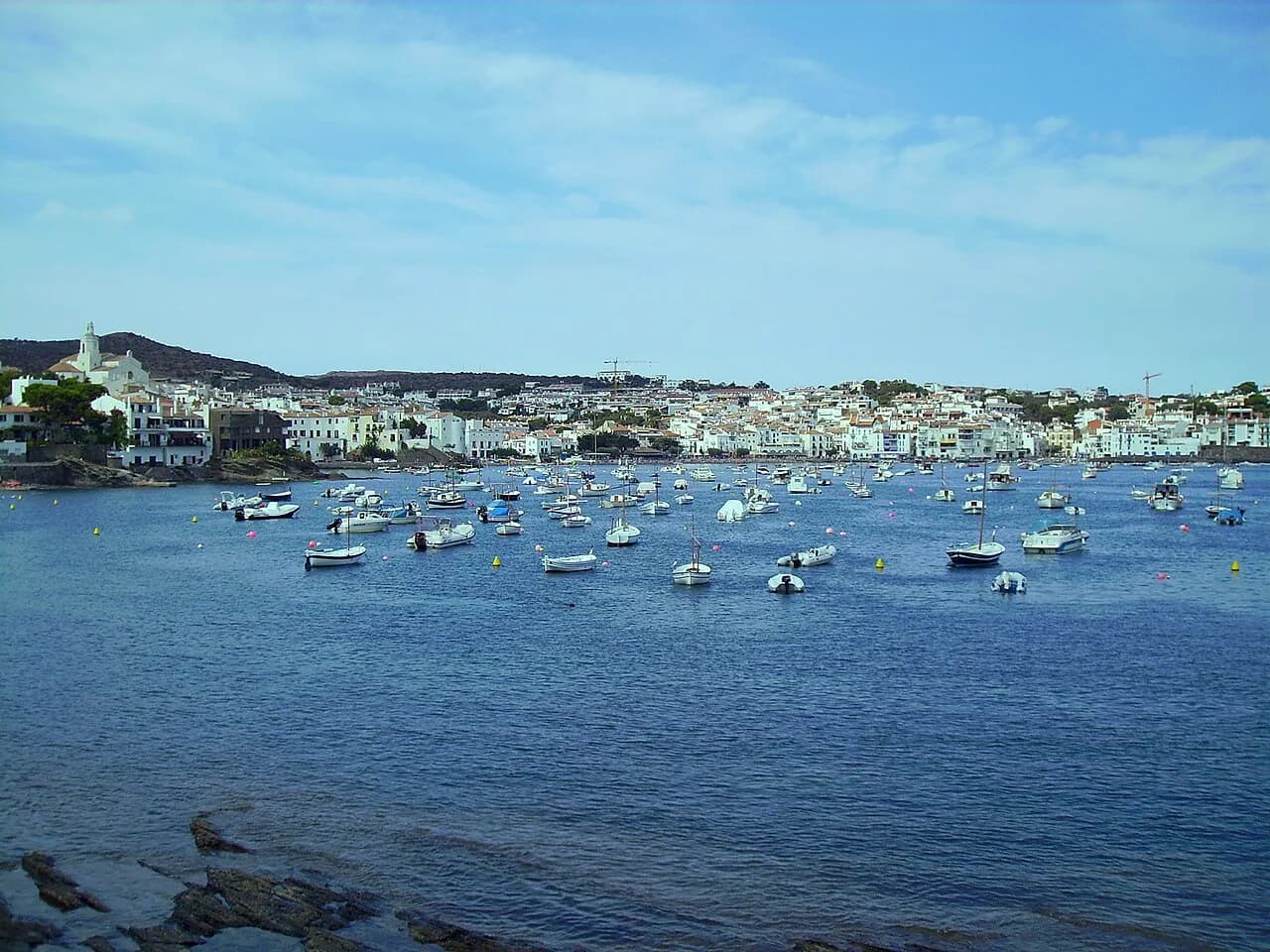
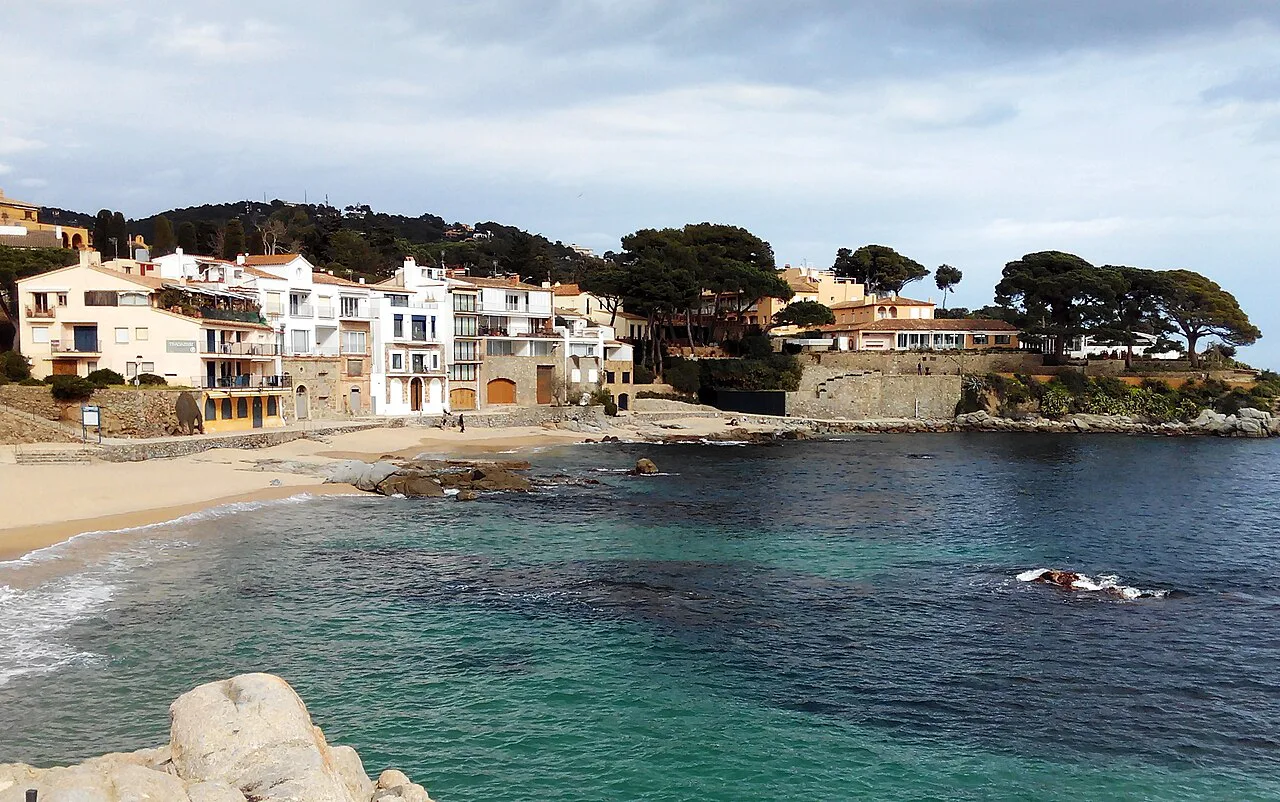
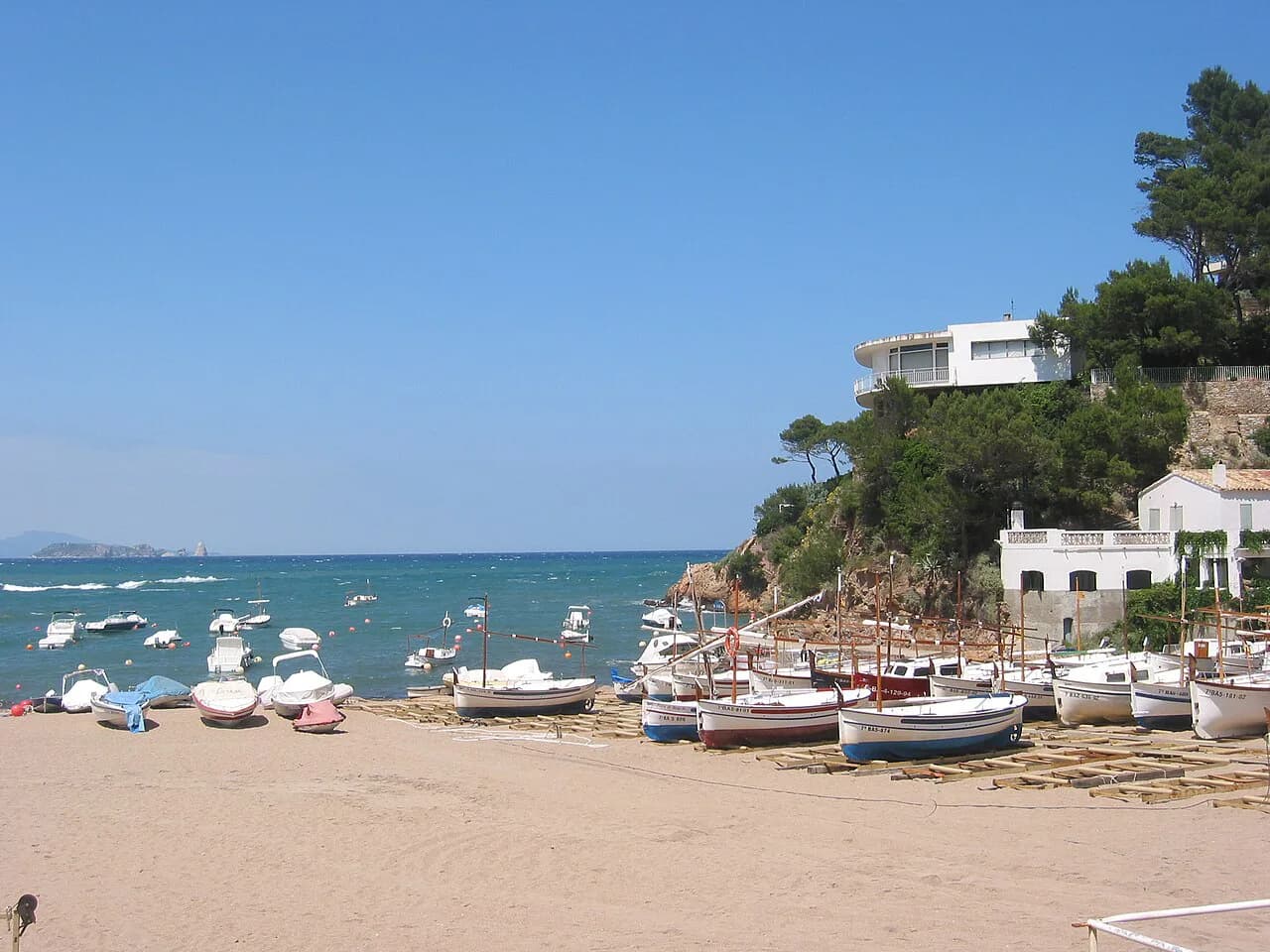
Sa Tuna is a small pebble beach wedged between rocks, with a row of traditional white fishermen's houses built hard against the dark cliff and a few old wooden boats resting on the shore. It is one of the most photographed corners of the Begur coast, and it earns the attention.
In peak summer the cove can feel crowded by midday, and because it is small the pressure shows quickly. Arrive in the morning or come late in the afternoon, and expect to walk a little from wherever you leave the car.
Seeing Sa Tuna from the sea is the better plan in high season: from a boat you get the full view of the white houses against dark rock with space around you, and you skip the squeeze on the pebbles. Bring water shoes for the pebble entry, and a mat rather than expecting soft sand.
Platja de Castell, Palamós: wide sand with nothing built on it
Castell is the antidote to the crowded cove. It is a wide arc of sand backed by green fields and low hills, with no buildings, no bars on the sand and no rows of sun loungers. What you notice first is what is not there.
That openness is deliberate. In the 1990s local residents passed a referendum to stop construction here, and the beach still looks and feels as it did decades ago. Treat it as a bring-your-own day: pack water, food and shade, because the developed facilities you would find in a resort bay are absent by design.
This is the best choice for quiet-seekers and for groups who want room to spread out. The wide sand suits families who do not mind carrying their kit, and the open setting gives a sense of escape that the small coves cannot match.
Castell sits just along the coast from La Fosca, so it combines naturally with the Palamós beaches. Use it as your main base for the day and walk the coastal path for a change of scene.
Cala de S'Alguer, Palamós: the painted fishermen's huts
Tucked between Castell and La Fosca, S'Alguer is a small rocky cove recognised as a cultural heritage site for its traditional white fishermen's huts. Their doors and windows are painted in bright, mismatched colours, which makes the cove one of the most photogenic stops on this coastline.
It takes a little more effort to find than the drive-up beaches, and the reward is a quiet, authentic feel with a stronger colour palette than Sa Tuna. Come for a short stop and a walk rather than a full beach day, and wear shoes that cope with rock.
Because it is rocky rather than sandy, it suits adults and older children who want to explore and take photographs. Pair it with Castell for the sand and S'Alguer for the walk, and you have a full day without moving the car far.
Cala Futadera, Tossa de Mar: the forest descent
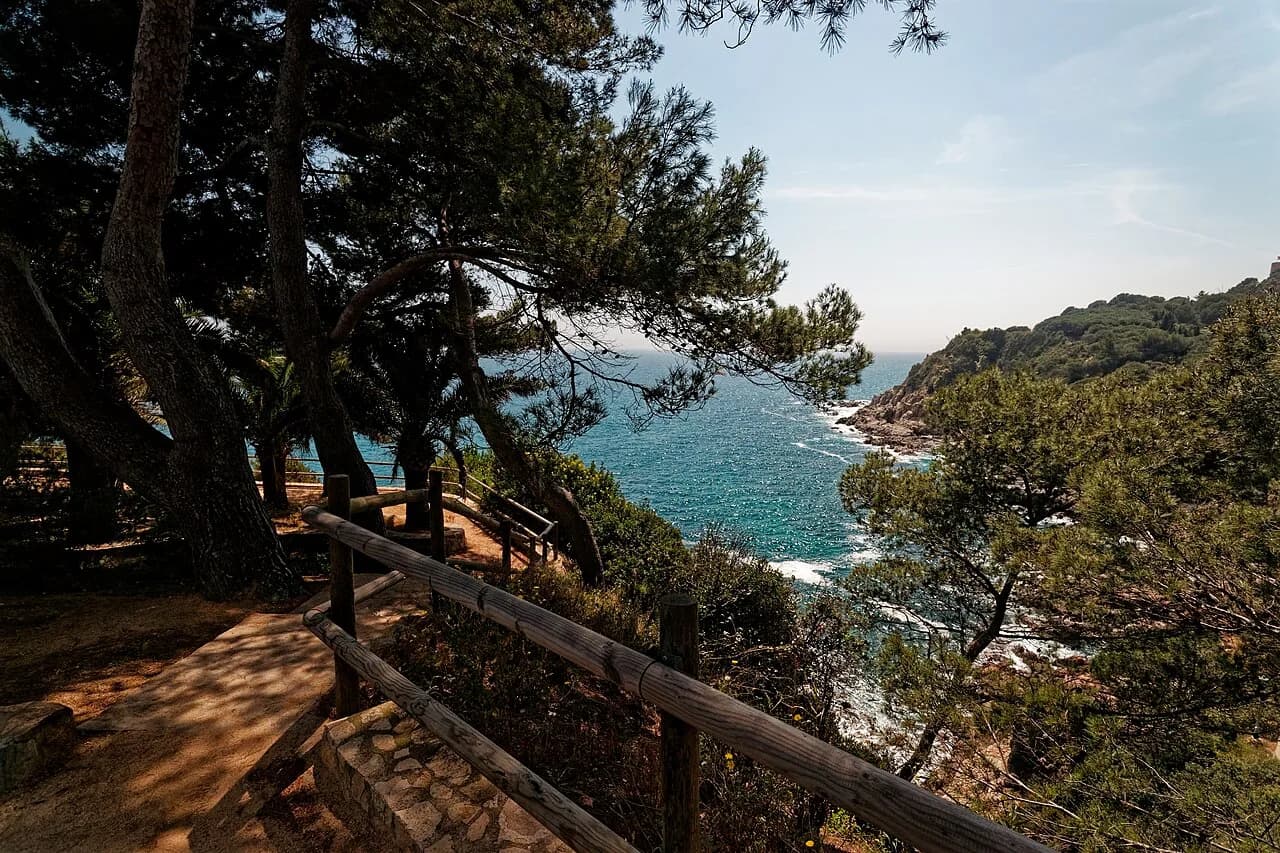
South of Tossa de Mar, a forest path leads down to Cala Futadera in about fifteen minutes on foot. The beach opens between high cliffs, with thick golden sand and deep water close to the shore, which makes it a favourite for swimmers and for jumping in from the rocks.
The bay's shape and depth suit confident swimmers and snorkellers, and the cliffs attract seabirds, with larger fish moving through the deeper water offshore. The same depth makes it less suitable for small children, who should stay close to the sand.
Bring everything you need: water, food, sun cream and something to sit on. The fifteen-minute walk in is easy to follow but you will not want to do it twice for a forgotten item, so pack once and properly.
Futadera pairs well with the beaches around Tossa de Mar, which offer more shelter and easier access for a second swim.
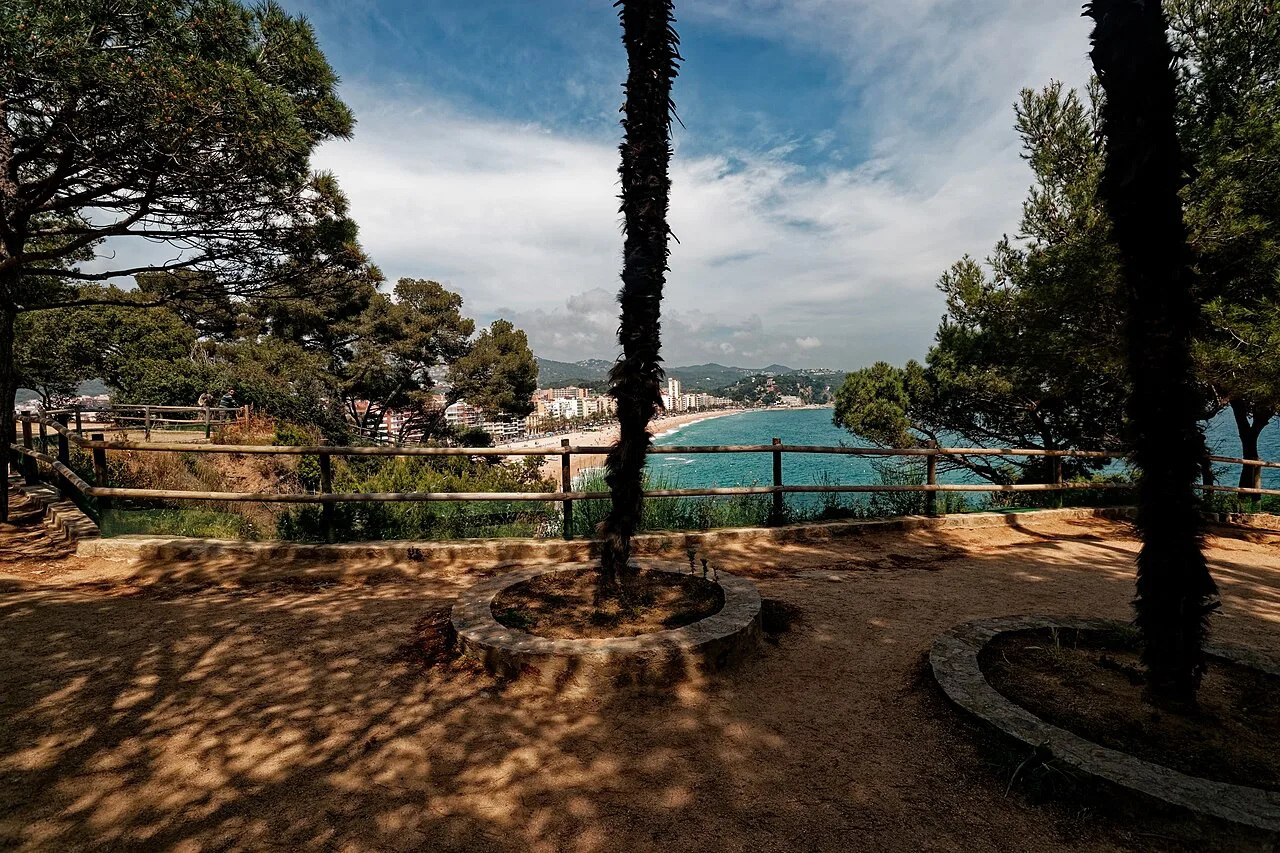
El Golfet, Calella de Palafrugell: snorkelling a short walk from the village
Most visitors to Calella de Palafrugell stay on the main beaches near the village centre. El Golfet is a short walk further south on an easy path, and that small distance makes a real difference to how busy it feels.
The rocky seabed attracts octopus, sea bream and small schools of fish, especially in the morning or late in the day when the water is clear. Bring a snorkel and mask and work along the rocks rather than heading straight out.
There are usually a few boats in the area, so it is also a pleasant place to see from the water. Plan your walk south from Calella de Palafrugell and follow the easy path to El Golfet.
Sa Caleta, Cap de Creus: bare rock at the edge of the land
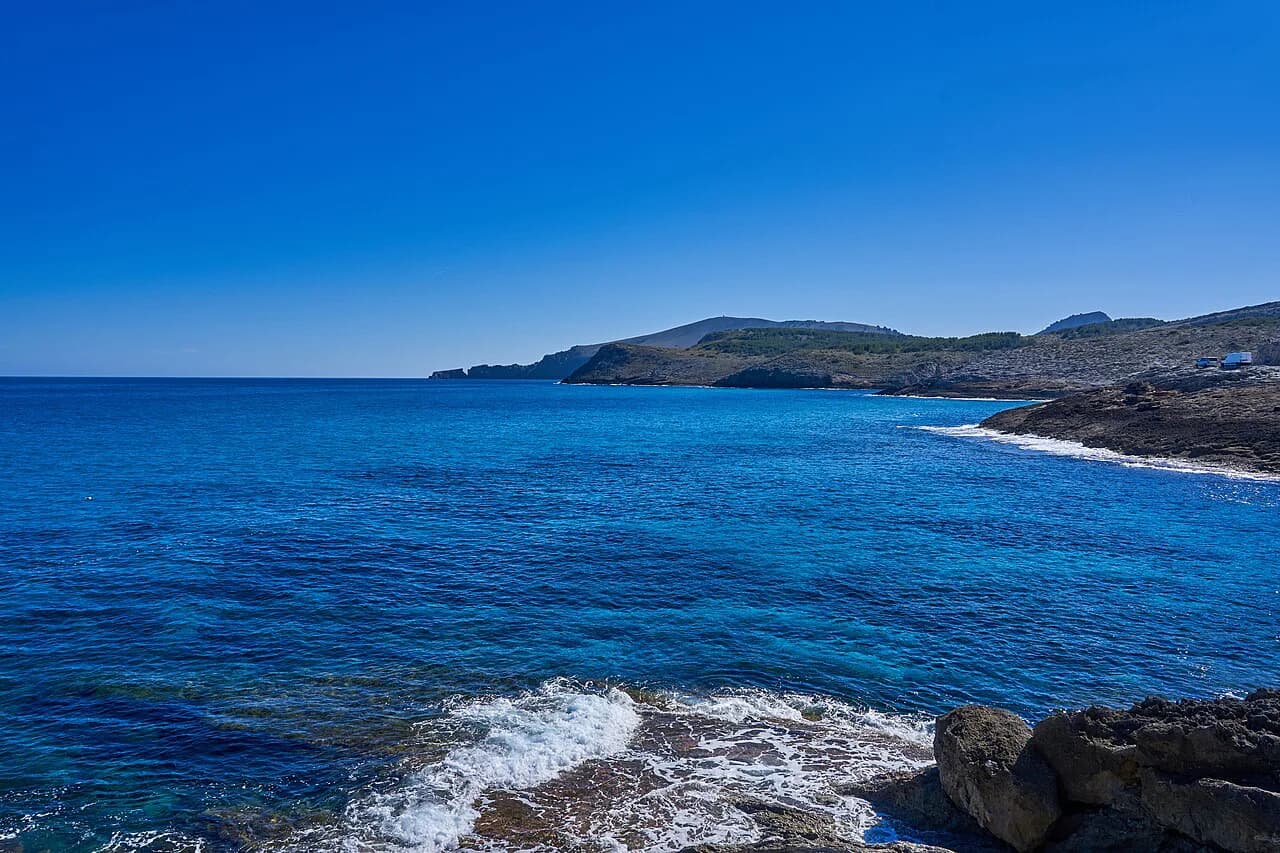
In the Cap de Creus Natural Park the landscape changes completely. The land is bare and open, shaped by wind, and Sa Caleta is a rocky bay reached by a short drive followed by a walk. There is nothing here but nature: open sky, golden stone and the smell of wild herbs.
This part of the coast is known for its marine life, and dolphins are sometimes seen further out. Treat the bay as a wild swimming and walking stop rather than a family beach: there is rock underfoot rather than sand, and the open position means wind and chop.
For a wider look at this end of the coast, the Cadaqués beaches guide covers the coves and access around the natural park.
The rocks below Far de Sant Sebastià, Llafranc
The best swim in this part of the coast is not a beach at all. Walkers admire the view from the Sant Sebastià lighthouse path above Llafranc and carry on, but the rocks below the lighthouse give access to the water's edge and a wide view south towards Palamós.
Treat it as a swim spot for confident adults: smooth rock underfoot, no sand to lie on and a scramble down from the path. Wear shoes with grip, carry your things in a bag you can manage on the rocks, and go with someone rather than alone.
Pair it with time in Llafranc and Calella de Palafrugell for a full day of swimming and walking rather than a sunbathing session.
How to choose by who you are with
Families with small children should head for Aiguablava for its sandy entry and pine shade, or Castell for wide sand and room to run. Both let you set up a base and stay put. Save the pebble and rock coves for days when the children are older or the group is all adults.
Confident swimmers and snorkellers have the richest options. Futadera offers depth close to the shore, El Golfet a rocky seabed full of life, and the rocks below Sant Sebastià a proper open-water dip. Swimmers who want distance should choose the wider bays where there is room.
Couples and quiet-seekers will get the most from Castell and S'Alguer, followed by an early or late visit to Sa Tuna. Photographers should put S'Alguer high on the list for its painted huts.
If you are also staying down towards the southern resorts, the Lloret de Mar beaches are a different proposition again, with longer sand and more development. Further down the same coast, the Sitges beaches offer another comparison between broad resort sand and small coves.
Getting around without a car
The small coves can be reached on foot along the coastal paths rather than by driving between car parks. Walking between Begur's beaches, or from Calella de Palafrugell south to El Golfet, gives you more of the coast than the main road ever does.
Travelling by boat is the other way to see the inaccessible corners. Sa Tuna in particular is better viewed from the water in high summer, and the coves along this stretch work well as an anchorage for a swimming stop.
Build your day around one walk or one boat trip rather than trying to tick off every cove. Distances between beaches on the map are short, but paths, car parks and midday heat eat into a day more than you expect.
Best time to go
Peak summer is busy, and the small Begur coves fill by midday. Go early or late and you get calmer water and more room. The source describes still mornings at Aiguablava as the best time to see the colour at its strongest.
Water clarity is at its best in the morning or late in the day, which matters if you plan to snorkel. Sea temperature, flags and any beach rules are published by the local tourist offices and the beach operators, so look those up once you have set your dates.
Shoulder-season visits give you the same beaches with fewer people, and a short walk in to Futadera or El Golfet is far more pleasant without the midday heat.
Nearby beaches to combine
Around Begur, pair Aiguablava with Sa Tuna for sand in the morning and pebbles in the afternoon. Around Palamós, combine Castell and S'Alguer in one walk along the coast towards La Fosca.
South of Tossa, Cala Futadera is the wilder option to pair with the more sheltered beaches in town. For the full set of options there, see the Tossa de Mar beaches page.
North, the Cap de Creus coves combine with the Cadaqués coastline for a day of walking and swimming. Around Calella de Palafrugell, El Golfet sits alongside the village beaches and the rocks below Sant Sebastià.
Facilities and access at a glance
Access ranges from drive-up at the wider bays to a fifteen-minute walk for Futadera and a scramble for the Sant Sebastià rocks. Match the effort to your group and pack so you only carry what you need.
Castell is the most basic of the main beaches in this guide, with no buildings, bars or sun loungers along the sand as reported. Elsewhere, expect a mix of amenities, and check with the Palamós and Begur tourist offices for what is operating on your dates.
Bring water shoes for the pebble coves, a mat instead of relying on sand, a snorkel for the rocky seabeds and your own shade if you are heading to a wilder bay. Those four items cover most of the coast between Begur and Cap de Creus.
Bringing a dog to the Costa Brava coves
Readers planning a trip with a dog often ask which of these coves they can share with their pet, and the honest answer is that the beach guides above say nothing about dogs at all. What they do make clear is how much the character of each cove varies, and that variation matters for anyone arriving with an animal. Platja de Castell, at Palamós, is described as a wide arc of sand with green fields and low hills behind it, and crucially no buildings, no bars on the sand and no sun loungers lined up in rows; in the 1990s local residents passed a referendum to prevent construction there and won, so it still looks and feels like it did decades ago. For a dog, that absence of development and the open fields behind the beach are the practical detail worth noting, since the sand itself is the only surface described.
At the other end of the scale, Cala Sa Tuna at Begur is a small pebble beach hidden between the rocks, lined with traditional white fishermen's houses built right against the dark cliff face, and it can feel crowded by midday in peak summer. A pebble cove that fills up is a harder place to manage a dog than an empty stretch of sand, and the guide's own suggestion for Sa Tuna is to see it from the sea by boat instead, which avoids the crowded shore altogether. Cala de S'Alguer, the small rocky cove between Castell and La Fosca, is recognised as a cultural heritage site for its traditional white fishermen's huts with brightly painted doors and windows, so it is a place to admire rather than somewhere to let an animal roam.
Some of the listed spots are reached by paths rather than by road, and that shapes what is realistic with a dog. Cala Futadera, south of Tossa de Mar, is reached by a forest path leading down, about a fifteen-minute walk, to a beach that doesn't normally appear in any guide, opening between high cliffs with thick golden sand and the deep sea right at the shore. El Golfet, near Calella de Palafrugell, is just a short walk farther south of the village centre along an easy-to-follow path. Sa Caleta, in the Cap de Creus Natural Park in the far north, is a rocky bay reached by a short drive and a walk, with nothing there but nature: open sky, golden stone and the smell of wild herbs. In each case the walk is part of the visit, so plan around the path and the heat rather than around facilities, because none are described.
Two entries on this list are not really beaches at all. The rocks below Far de Sant Sebastià at Llafranc are a swimming spot that most people walk right past, reached by finding a way down from the lighthouse path to the water's edge, with smooth rock beneath you and the shoreline stretching south towards Palamós. Aiguablava at Begur, by contrast, is a sheltered sandy cove surrounded by pine trees, with a sandy seabed and calm morning water, and it is also a natural anchorage where boats drop anchor. Between smooth rock, deep water at Futadera and anchored boats at Aiguablava, the swimming conditions described in this guide are the main thing to weigh when deciding whether a cove suits a dog that will be near the water.
Sa Riera, Begur: a sandy cove with access straight to the water
Sa Riera sits in Begur, and it is a useful counterpoint to the pebble and rock coves further along this stretch. The beach is sand, with golden sand underfoot and calm waters for swimming, and at 242 m long and 84 m wide it gives you more room to settle than the smallest inlets. The setting is urban rather than wild: beautiful houses surrounded by mountains and woods lie in the village right next to the pretty cove, and the local fishermen's boats are lined along the beach's sands. Occupancy is rated high, so it is a place to arrive early if you want space rather than a quiet discovery.
The facilities are what make it straightforward with children, older relatives or anyone who finds soft sand hard going. There is a wooden walkway for the disabled that reaches almost to the water's edge, and the list of services includes sunshade rental, sun lounger rental, water craft rental, toilets, a yacht club, showers, footwash, litter bins, a cleaning service, a telephone, a sports area and a children's play area. Access is on foot, easy, or by car, and the nearest motorway is the GIP-6532. For boats there is an area for dropping anchor, as well as nautical hire, and the nearest marina is the puerto deportivo de Fornells, 7 km away.
If you are working out how Sa Riera fits with the rest of the coast, treat it as the comfortable, well-serviced stop rather than the hidden one. Its calm waters and golden sand suit a long, easy day, while the coves described above reward the walk and the early start. The high occupancy rate is worth taking seriously in peak season, and the mix of sunshade rental, showers and footwash means you can plan a full day here without carrying everything on your back.
Plan Your Costa Brava Beach Day
Choose one beach as your base and one as a second stop. Aiguablava and Sa Tuna make a complete Begur day, Castell and S'Alguer cover Palamós, and Futadera pairs with the Tossa beaches for anyone travelling south.
Go early, pack for the surface you will meet and keep a snorkel handy for the rocky spots. For further afield, the beaches around Lloret de Mar offer longer sand and a different pace when you want a change from the coves.
Frequently Asked Questions
Are Costa Brava beaches sandy or pebbly?
Both, often within a few kilometres of each other. Aiguablava and Castell are sandy, Sa Tuna is pebble, and the coves around Cap de Creus and the Sant Sebastià rocks are rocky. That mix is why footwear and what you carry change from one beach to the next.
Which Costa Brava beaches are best for families with small children?
Aiguablava has a sandy seabed and pine shelter, and Castell offers wide open sand with room to run. The pebble coves and the rocky inlets suit older children and adults better, particularly where the water deepens close to the shore.
Can you reach Costa Brava coves without a car?
Several of the best spots are reached on foot, including El Golfet a short walk south of Calella de Palafrugell and Cala Futadera about fifteen minutes down a forest path south of Tossa de Mar. The rocks below the Sant Sebastià lighthouse are a walk from the path above Llafranc. Boats are the better route for seeing Sa Tuna in high summer.
When is the best time to swim in Costa Brava?
Mornings and late afternoons give calmer water, better clarity and fewer people, and the Begur coves fill by midday in peak summer. Check sea temperature, flags and local beach rules with the tourist office before you set your dates.
Which Costa Brava beach is quietest?
Platja de Castell is the widest open bay here, with no buildings, bars or sun loungers on the sand, a character protected by a residents' referendum in the 1990s. The small coves are quieter early and late, when the day-trippers have gone.
Sources
Beach notes for your next trip
Optional updates when we add or revise beach guides.
You might also like
Continue reading
More guides you'll find useful