Sitges Beaches Guide: Where to Swim and Escape Crowds
Plan a beach day in Sitges, from the town sands to quieter coves, with the train from Barcelona, the best months to swim and where to eat afterwards.
On this page
Sitges works as a beach base because the sand is part of the town rather than a trip away from it: a long seaside promenade, a compact old town of whitewashed lanes, and beaches within a short walk of the station. It suits travellers who want a proper swim and a restaurant lunch in the same afternoon, and couples or friends who would rather stroll between beaches than drive between them.
The town sits on the Costa del Garraf, the stretch of Catalonian coast that begins just south of Barcelona, and it is easily reached without a car. The trade-off is that the most convenient sand is also the busiest in high summer, so the trick is to choose your stretch by mood and time of day rather than defaulting to the first beach you reach.
Getting there from Barcelona
Take the R2 Sud line from either Passeig de Gràcia or Barcelona Sants station; trains run frequently and the journey takes about 40 minutes, with tickets bought at the station. That makes Sitges one of the simplest beach days out from the city, and it removes any need for a car or a parking hunt on arrival.
From Sitges station the beach is a flat, scenic walk of roughly 10 to 15 minutes, and the route through the old town's hanging plants and alleyways is worth taking slowly. If you are carrying a picnic and a towel, this is an easy walk rather than a hike, so a day bag is perfectly manageable.
Day-trippers should build the return leg around the train timetable rather than the last swim, because the station sits inland from the promenade. Leaving the beach with time to walk back, rinse off and find the platform turns a rushed afternoon into a relaxed one.
Orientation: how the beaches sit along the promenade
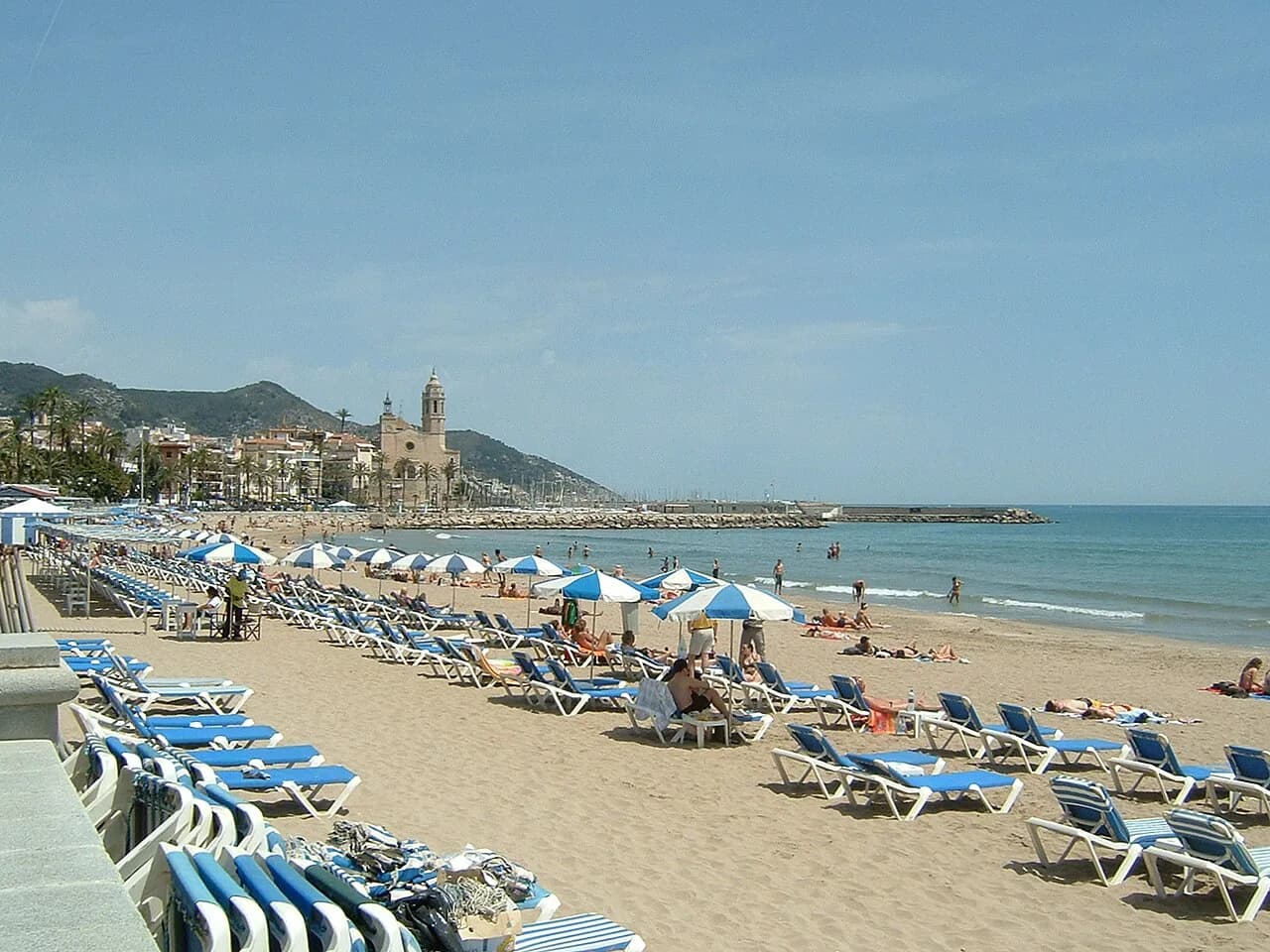
Sitges is best understood as a set of beaches along one seafront rather than a single destination, with the Passeig Marítim linking the town sands and the coves beyond. Walk the promenade first to see which stretch matches your day: the central beaches put bars and restaurants within steps of the towel, while the edges of town trade convenience for breathing room.
The town holds fifteen or so beaches by one regular visitor's count, ranging from small bays to longer town sands, so you can pick a different stretch each morning without repeating yourself. A useful rule is to head away from the station end for quieter sand and towards the centre when you want lunch, an ice cream or a shaded bench nearby.
Platja de Sant Sebastià
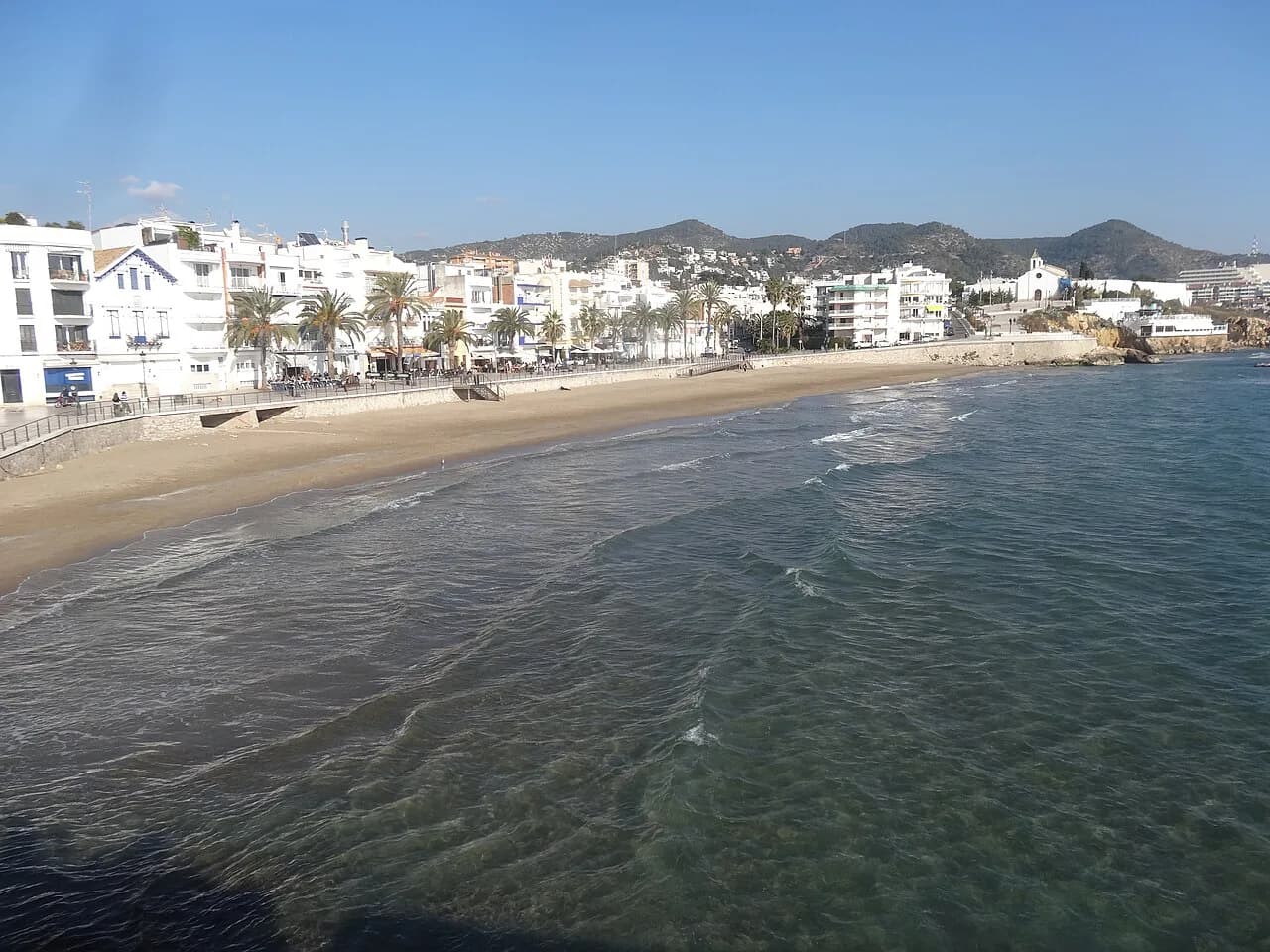
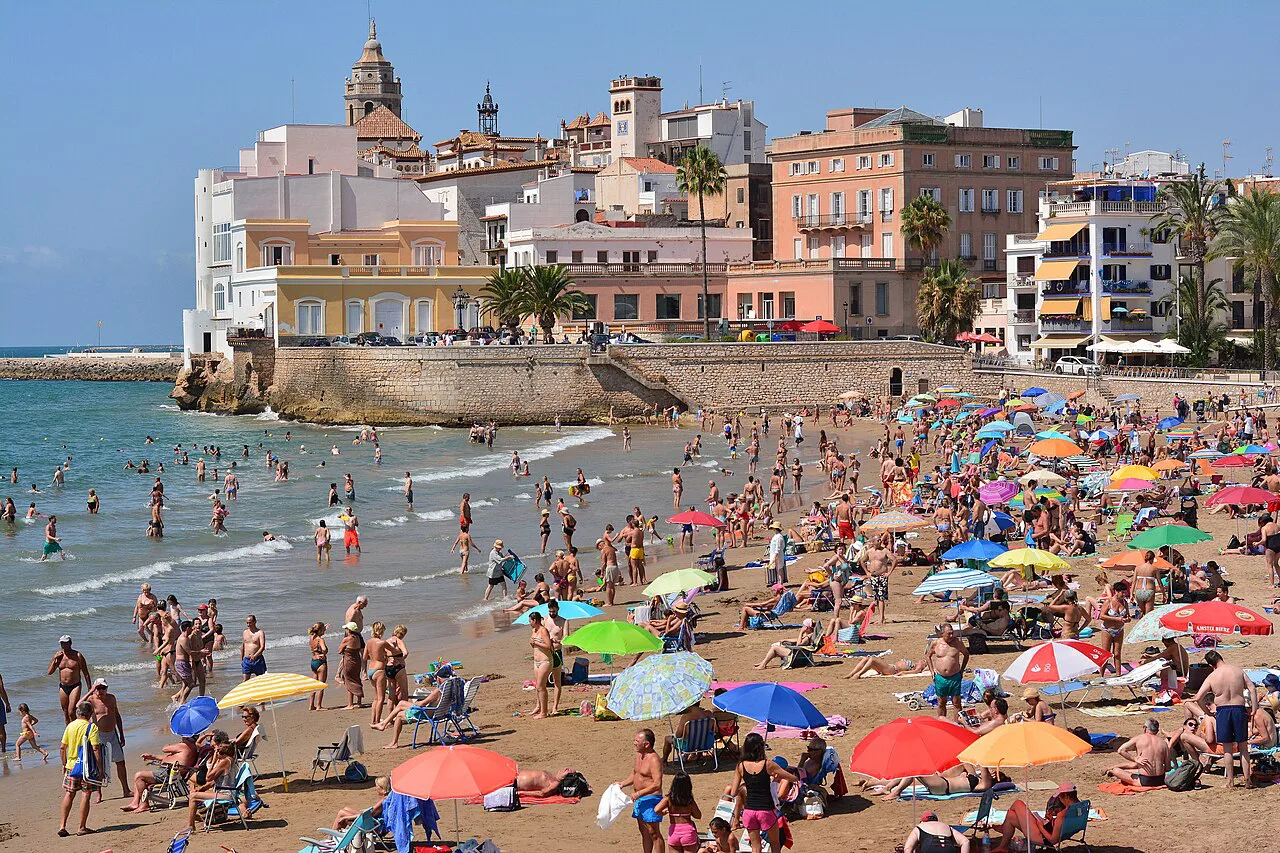
Platja de Sant Sebastià is the smaller, calmer alternative to Barcelona's Barceloneta, and it draws noticeably thinner crowds than the city beach. If you are comparing Costa Dorada options further south, our guide to Alicante beaches covers a similar town-and-sand setup. Closer to home, if you are weighing up other northern Spanish coastlines, Santander beaches offer another town-and-sand comparison. It sits below the promontory crowned by the Església de Sant Bartomeu i Santa Tecla, the 17th-century church that gives Sitges its signature silhouette above the water.
The combination of a small beach and a landmark directly above it makes this a good choice for a first visit: you can swim, dry off and walk up around the church in a single loop. Walk right around the promontory rather than only approaching it head-on, because the sea views change with every angle.
Families with small children tend to prefer a short walk from towel to town, and this beach delivers that with the old town's lanes just behind the seafront. Bring a picnic from a bakery in town and you have one of the cheapest and best lunches of the trip on the sand.
The central town beaches
The beaches in the heart of Sitges are where the lidos, beach bars and easiest access concentrate, so they fill first on hot weekends. They suit anyone who wants to alternate swimming with a coffee, a paper or a plate of paella without moving the car or repacking the bag.
Expect the central sands to be at their busiest in July and August, when peak summer crowds arrive and weekends bring locals escaping the city. On those days, arrive earlier in the morning to claim space and plan a late lunch once the sand thins out.
A practical rhythm for a town-beach day is a morning swim, a walk through the old town's winding streets while the sun is highest, then a second swim in the late afternoon. The whitewashed buildings, hanging plants and quiet corners reward slow walking, and they give you shade when the promenade has none.
Quieter sands and coves around Sitges
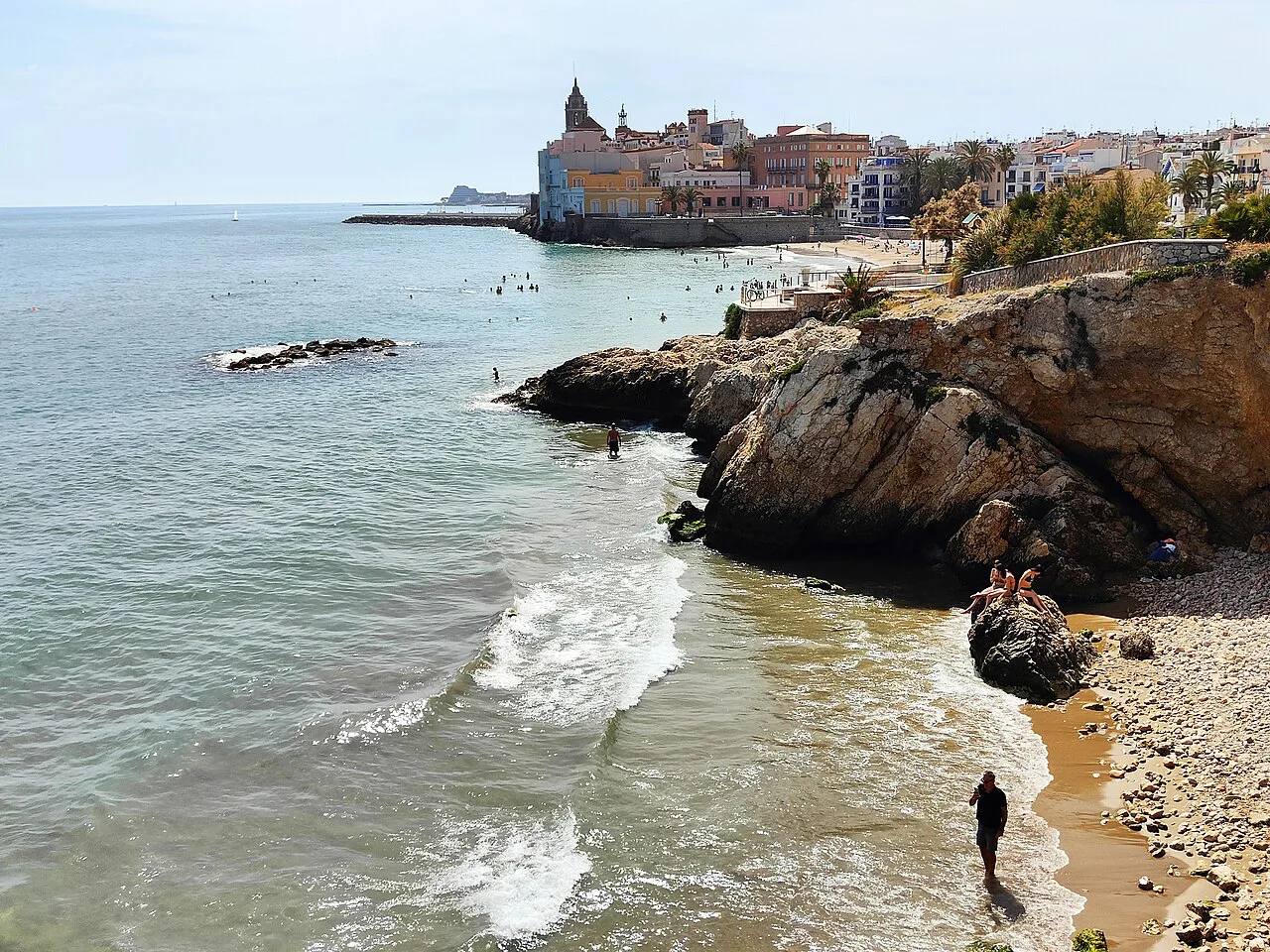
Away from the central stretch, the town's beaches become smaller and calmer, which is what makes Sitges work for quiet-seekers as well as for people who want a lively seafront. Choose a bay at the edge of town when you want to read, swim laps in peace, or simply hear the water rather than the promenade.
Pair a quieter beach with the Cala Fonda overlook, a short walk from the sand that gives panoramic views back along the coastline. It is the kind of viewpoint you stumble across and immediately want to keep to yourself, and it makes a good late-afternoon stop before dinner.
The tourist office publishes current beach conditions and a coves guide, including kayak routes for seeing the coast from the water. If you want to combine several small bays in one outing, that is the page to read before you set out.
The sand and the water
The Mediterranean here is warm enough for comfortable swimming into early autumn, and one visitor found the water still warm, the crowds gone and the food as good as in summer on a visit that included the Sitges Film Festival window. That makes the shoulder season a genuine swimming window rather than a compromise.
Surfers get their season when the weather turns: the waves improve in winter, and a few surfers head out closer to sunset even outside the coldest months. If surfing is the point of your trip, plan around the cooler months rather than midsummer.
For a calm-weather swim, morning is usually the steadier window, and the bays at the edge of town give you more room to swim away from the busiest sand. Take a mask if you like looking under the surface; the rocks at the edges of the bays are where the interest lies.
Facilities and practicalities
Sitges is a town beach destination, so facilities are clustered where the town meets the sand: bars and restaurants line the beachfront, with paella and sangria served with a sea view. The promenade also makes a good running or walking route, and it links the beaches so you can move between them without leaving the seafront.
Pack as you would for a town beach: a towel, water, sun cream and cash for smaller restaurants and shops, which is still useful in Spain. A picnic assembled from a bakery near your accommodation can be one of the best-value lunches of the trip.
The walk back into town is short from the central beaches, which makes it easy to rinse off, change and be at a restaurant table within minutes. Staying near the seafront or the old town puts almost everything within walking distance.
Best time to go
Late spring and early autumn are the sweet spot: warm enough to swim, uncrowded enough to actually enjoy the sand. A weekday in June or September is about as close to perfect as it gets, with the sea still inviting and the promenade not yet packed.
July and August bring peak summer crowds, and weekends in season are when locals arrive from the city, so weekdays are noticeably calmer. If your dates are fixed to high summer, plan beach time for early morning and late afternoon and use the middle of the day for the old town, the church and a long lunch.
Autumn has a bonus beyond the water: the town's cultural calendar fills up, with the Sitges International Fantastic Film Festival running in October alongside the wine fair on Plaça de La Fragata. Check the dates and programme through Sitges Anytime before you book, then build beach days around them.
Sitges for LGBTQ+ travellers
Sitges has a long-established LGBTQ+ scene, and the tourist office lists an LGTBIQ+ section alongside its beaches and nightlife guides. The town's compact layout means bars, restaurants and the seafront are all within an easy walk of each other.
The town also runs a Sitges Rainbow Tour, listed by the tourist office, which is a straightforward way to get oriented on a first visit. For the beaches themselves, our Sitges gay beach guide covers which stretches are traditionally associated with the scene and what to expect.
Clothing-optional bathing has its own long history on this coast, and the coves beyond the town centre are where you will find it. Etiquette is the usual Mediterranean one: keep to the designated stretch, keep your distance from other people's towels and treat it like any other beach.
Where to eat
Quality restaurants in town offer set lunches in the region of 10 to 12 euros, which makes a long midday meal a realistic part of a beach day rather than a splurge. Pair that with a picnic supper assembled from a deli or bakery and you keep the budget for boat trips and wine.
La Punta is a cosy, unpretentious tapas spot worth seeking out, while the restaurants lining the beach serve paella and sangria with a view. Choose La Punta for a casual evening and the beachfront for a lunch where the sea is the point.
Fill a bag with the Spanish essentials before you head for the sand: bread, cheese, olives, cured ham and a bottle of something cold. A balcony or a bench on the promenade turns that into a meal with a view.
Where to stay
Staying in Sitges itself is the simplest choice: the town is small enough that almost anywhere puts you within walking distance of both the beach and the old town. A couple of nights here lets you see the beaches at their quietest, early and late in the day.
Basing yourself in Barcelona's Eixample district instead keeps you close to Passeig de Gràcia station for an easy train to Sitges, which suits a city trip with beach days folded in. The trade-off is the journey each way, so plan a full beach day rather than a quick dip.
Self-catering apartments are plentiful in town, and they are a good fit for families or groups who want breakfast on a balcony and a fridge for beach supplies. Prices rise in peak season, so early autumn is the value window.
Nearby beaches to combine
The Costa del Garraf coastline continues north towards Barcelona, and Castelldefels beach makes an obvious second stop if you are travelling by train along this stretch. It gives you a longer, broader sweep of sand than the Sitges bays, and it works well as a change of scene on a longer trip.
Within Sitges itself, plan a kayak outing if you want to see the coves from the water; the tourist office publishes a kayaking guide to the town's small bays. From the sea, the sequence of beaches and headlands makes far more sense than it does from the promenade.
If you are building a wider Catalonia itinerary, keep Sitges as the beach half and Barcelona as the city half rather than trying to do both in one day. Two nights in Sitges and two in the city gives you the sea in the morning and the museums in the afternoon.
Plan Your Beach Day
Decide first what kind of day you want: town convenience on the central sands, quieter water at the edges of town, or the small beach beneath the church on the promontory. Then match it to the season, keeping late spring and early autumn for swimming without the peak crowds and midwinter for surf.
Book the train from Passeig de Gràcia or Barcelona Sants, pack a picnic and cash for smaller places, and leave enough time to walk back to the station calmly. One last look at Sitges Anytime for beach conditions before you go is all the planning you need.
Explore more Sitges beaches
Frequently Asked Questions
How do you get to Sitges from Barcelona without a car?
Take the R2 Sud line from Passeig de Gràcia or Barcelona Sants station; the journey takes about 40 minutes and tickets are bought at the station. From Sitges station the beach is a flat walk of roughly 10 to 15 minutes through the old town.
When is the best time to visit Sitges for the beach?
Late spring and early autumn give you a warm sea without the peak crowds, and a weekday in June or September is the calmest choice. July and August are busiest, with locals arriving from the city at weekends, so plan early mornings and late afternoons if those are your dates.
How warm is the sea in Sitges?
The Mediterranean stays warm enough for comfortable swimming into early autumn, with early October still inviting for many visitors. Summer is the obvious swimming season, while winter is when the surf picks up and the waves improve.
Which Sitges beach is quietest?
The smaller beaches at the edges of town are calmer than the central stretch, where the bars, lidos and easiest access concentrate. The town holds fifteen or so beaches by one regular visitor's count, so you can pick a different, quieter bay each morning.
Do you need a car to visit Sitges beaches?
No. The train from Barcelona plus the walk from the station covers the town beaches, and the promenade links them on foot. A car is only useful if you want to explore further along the Costa del Garraf, such as Castelldefels.
What is there to do in Sitges besides the beach?
Walk around the 17th-century Església de Sant Bartomeu i Santa Tecla on its promontory, wander the whitewashed old town lanes, and take in the Cala Fonda viewpoint near the beach. In autumn the film festival and the wine fair on Plaça de La Fragata add to the calendar.
Are there clothing-optional beaches in Sitges?
Yes. Clothing-optional bathing has a long history on this coast, and the coves beyond the town centre are where you will find it. Usual Mediterranean etiquette applies: keep to the designated stretch and give other people their space.
Where should you eat after a beach day in Sitges?
La Punta is a cosy tapas spot worth seeking out, while the beachfront restaurants serve paella and sangria with a sea view. Set lunches in town are a good-value option at midday.
Sources
Beach notes for your next trip
Optional updates when we add or revise beach guides.
You might also like
Continue reading
More guides you'll find useful