Calella de Palafrugell Beach Guide: Costa Brava Coves and the Coastal Path
Plan a beach day in Calella de Palafrugell, from the family sand of El Canadell to the fishing-village coves and the coastal path to Llafranc.
On this page
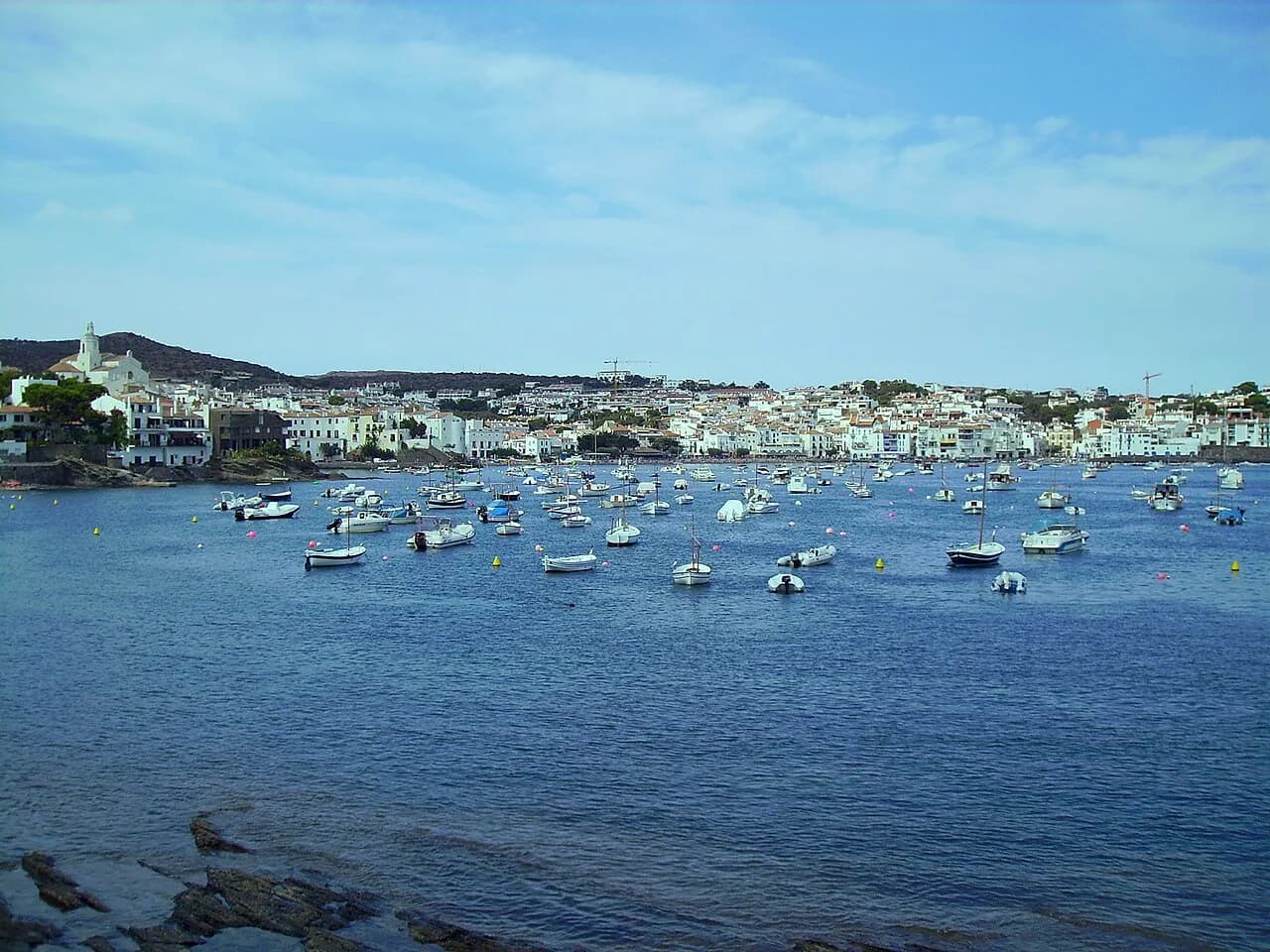
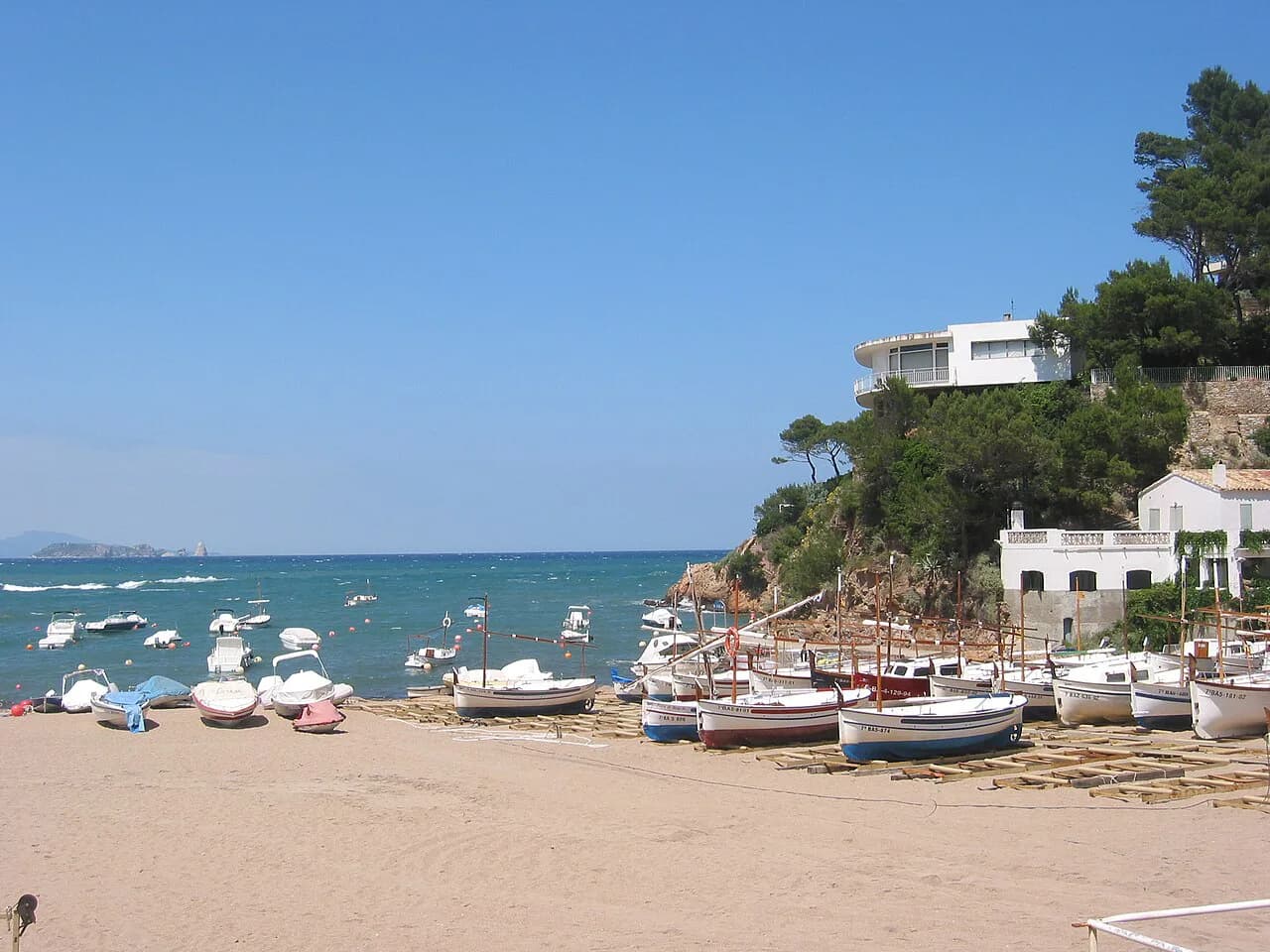
Calella de Palafrugell packs a whole beach holiday into one fishing village: a string of tiny coves among old fishermen's houses, a roomier main beach, and a cliff path to the next bay. Couples and photographers drift to the sheltered corners, while families with small children head for the widest sand.
The village sits at the heart of the Costa Brava in Catalonia, within the municipality of Palafrugell, with Cap Roig to the north and Llafranc around the headland. White façades line the seafront and narrow streets climb behind it, so almost everything worth reaching on foot is close together.
Where Calella sits between Cap Roig and Llafranc
The three coastal towns of the Palafrugell municipality are Calella de Palafrugell, Llafranc and Tamariu, all former fishing villages that have kept their narrow streets and white seafront houses. Calella is the busiest and most compact of the three, with the most beaches packed into the shortest stretch of coast.
North of the village, the coast climbs towards the Cap Roig gardens, about 20 hectares of terraced planting on a cliff with more than a thousand Mediterranean plant species. The gardens host a summer music festival in July and August, which shapes the evening crowds along this end of the coast.
South of the village, the bay of Llafranc opens up around the headland, with its own beach and a promenade lined with restaurants. Treat the two villages as one base: you can swim in Calella in the morning and eat in Llafranc in the evening without moving the car.
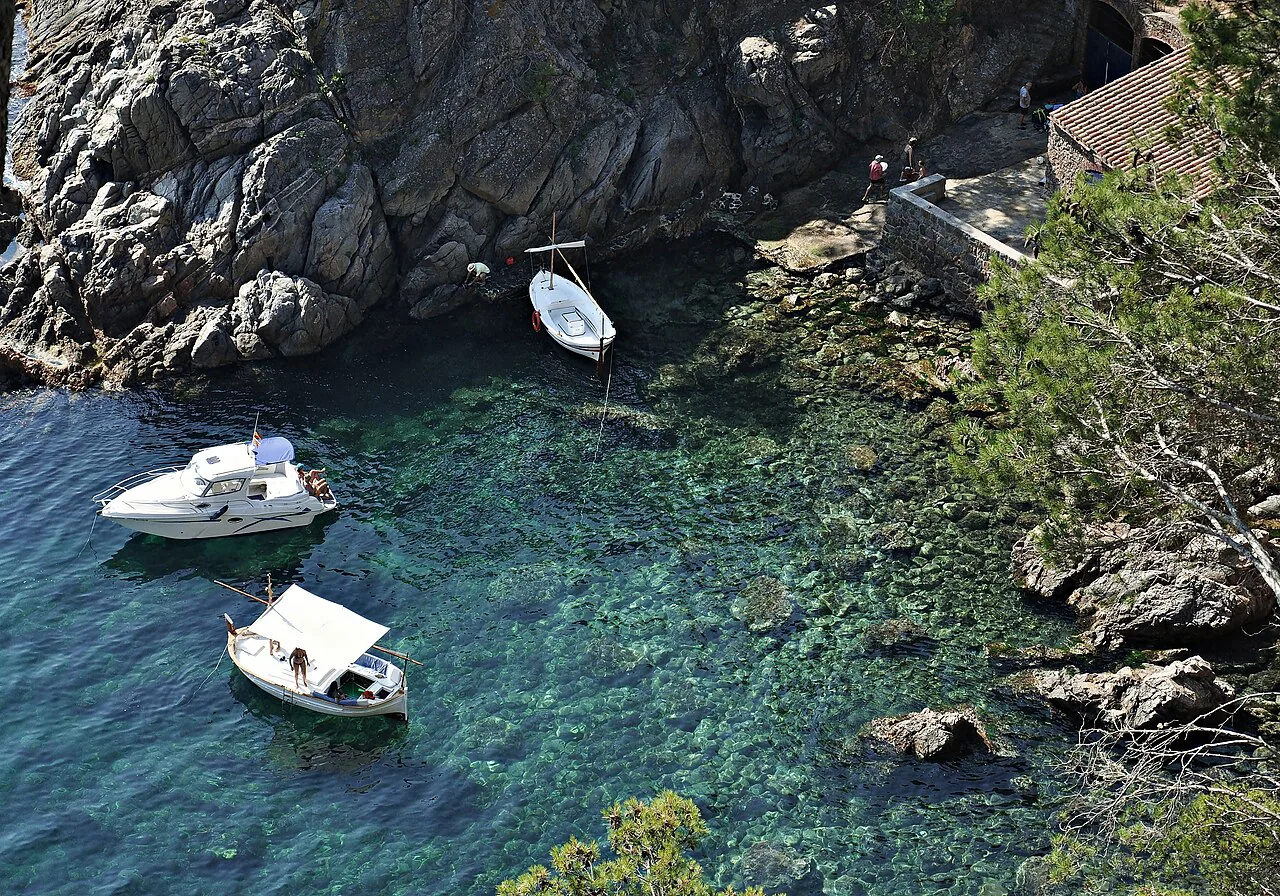
The coves in the village: Port Bo, Port Pelegrí, La Platgeta and Calau
Working south from the Cap Roig end, you pass Port Pelegrí, La Platgeta and Platja d'en Calau, small beaches and coves framed by old fishermen's houses. They are the kind of places where you lay a towel between boats and stone walls rather than spreading out, so arrive early in high summer if you want a spot on the sand.
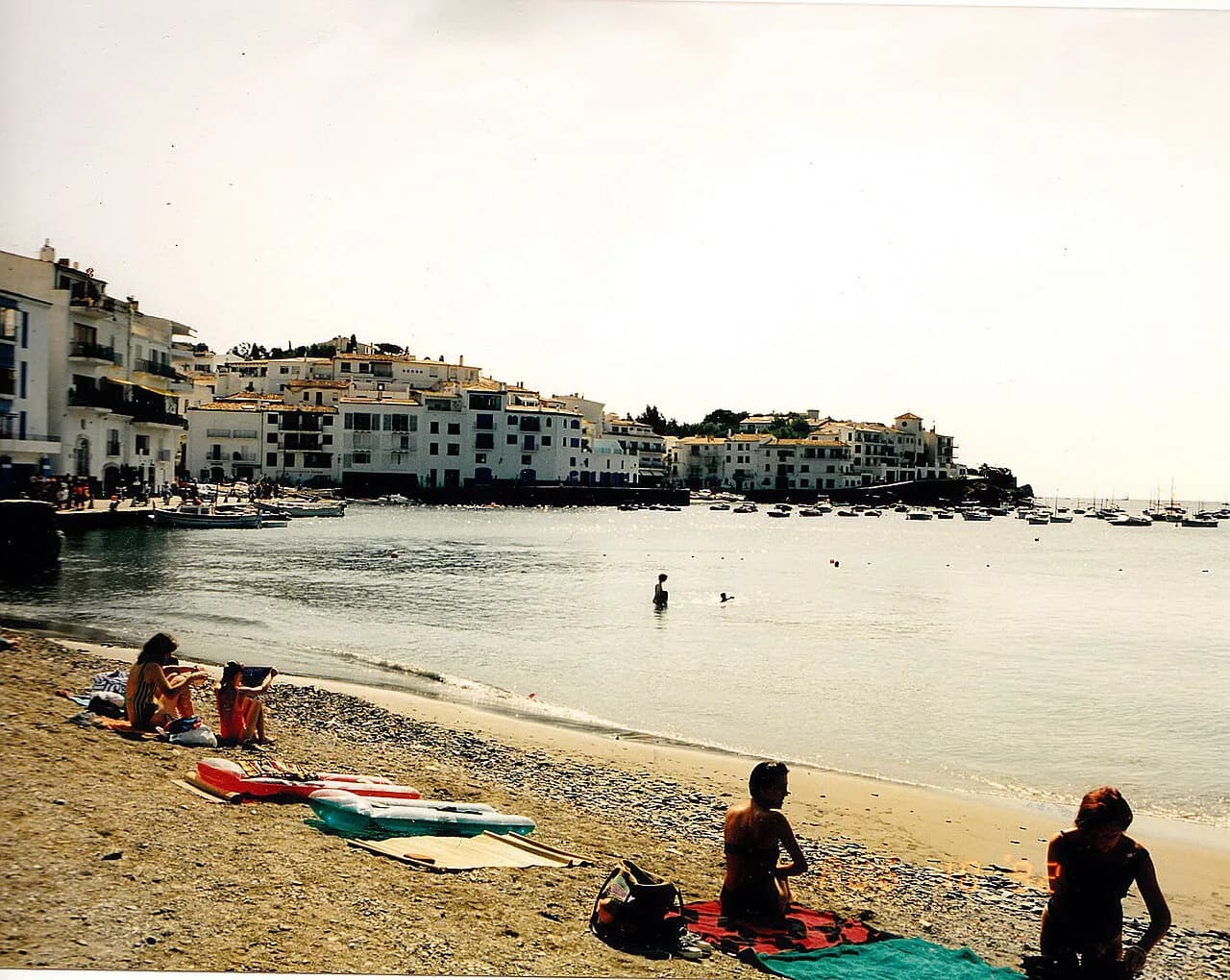
Platja de Port Bo, also called Platja de les Barques, is the village's most photographed corner, recognisable by the vaulted arcades of the buildings right beside the sand. It is also the stage for the Cantada d'Havaneres, held on the first Saturday of July, when the village fills for the havaneres singing.
These central coves suit couples, photographers and anyone who wants a swim followed by a drink at a seafront table. For a full day of sandcastles and paddling, walk a few minutes further to El Canadell instead.
Platja El Canadell: the village's roomiest sand
El Canadell is the largest beach in Calella, running about 100 metres long and 30 metres wide, and it sits at the southern edge of the village centre. The extra width matters in July and August, when the central coves are packed tight and families need room to spread out towels, buckets and a shade tent.
Because it marks the end of the seafront walk, El Canadell is also where the coastal path to Llafranc begins. That makes it a sensible base for a mixed day: swim and lunch on the sand, then walk off the meal along the cliffs.
The sand and the water
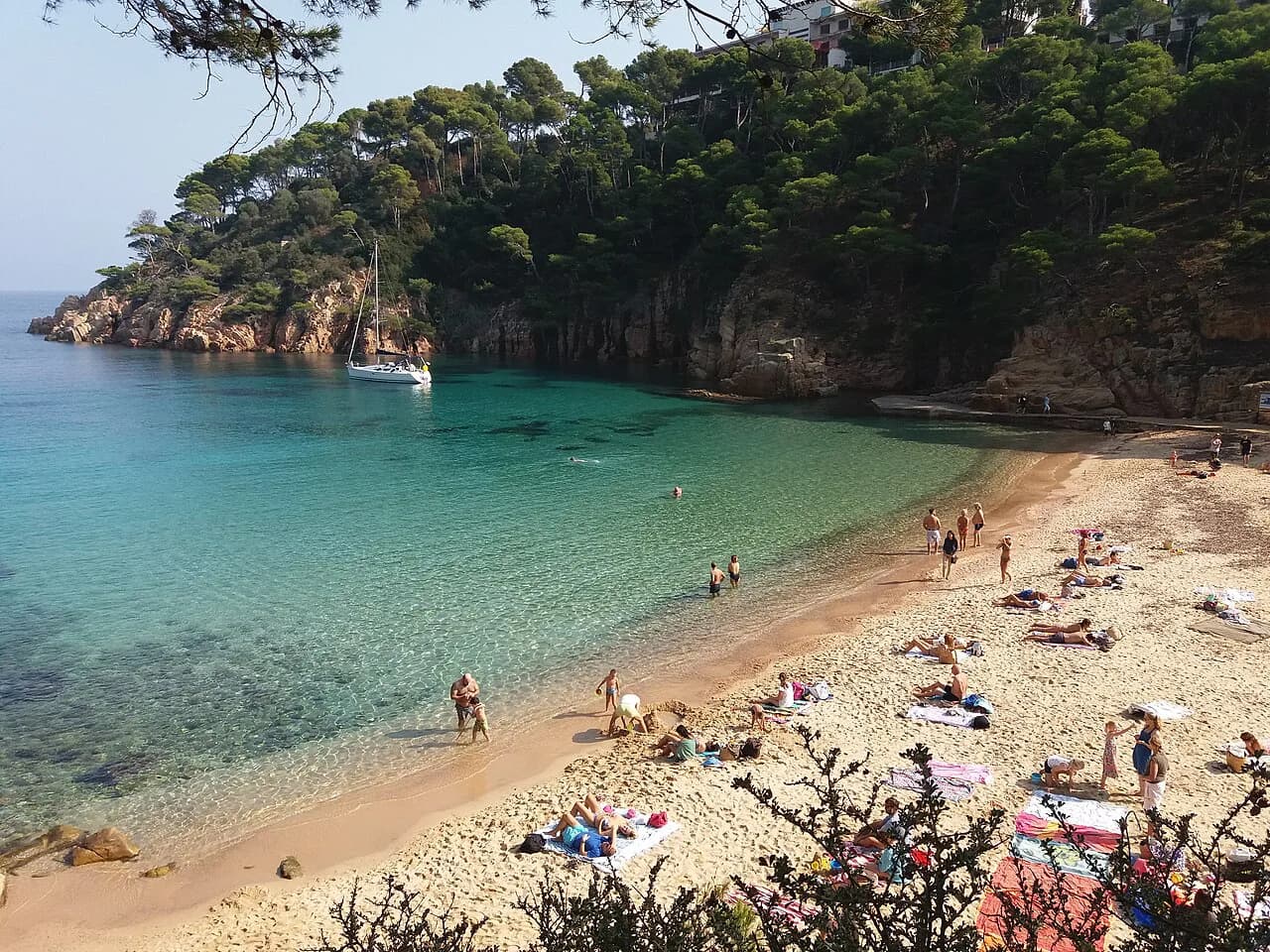
Calella's beaches are small, sheltered by the village itself and by the headlands on either side, which is what makes the water here feel so still on a normal summer day. The coves are shallow near the shoreline and deepen gradually, which is why the central beaches fill quickly with families and swimmers in the mornings.
Shelter works both ways: the cliffs and village buildings cut the wind on breezy days, but they also hold the heat, so the central coves can feel muggy in August. If you want a breeze and a longer swim, head to El Canadell or out along the coastal path to the more open coves.
Bring reef-safe sun cream, a sunshade and water shoes: the smaller coves mix sand with pebbles and rocks at the edges, and shade is limited once the village beach fills up. A dry bag is useful if you plan to swim between coves, and cash for a beach bar saves a walk back to the centre.
Getting there and getting around
Calella is reached by road from Palafrugell, the inland market town that gives the municipality its name, and the coastal road links it with Llafranc and Tamariu. The village itself is compact and pedestrian-friendly, so once you park, everything from Port Bo to El Canadell is a short walk.
Parking in the village centre is limited in summer, and the outlying streets fill first; arriving before mid-morning gives you the best choice. For current bus routes, timetables and parking arrangements, contact the Palafrugell tourist office directly, since services change with the season.
If you are touring the coast, base yourself in Palafrugell or one of the three coastal villages and use the camí de ronda on foot between them. The walking path connects Calella, Llafranc and the quieter coves, and it is the most reliable way to see several beaches in a day without moving the car.
The camí de ronda to Llafranc
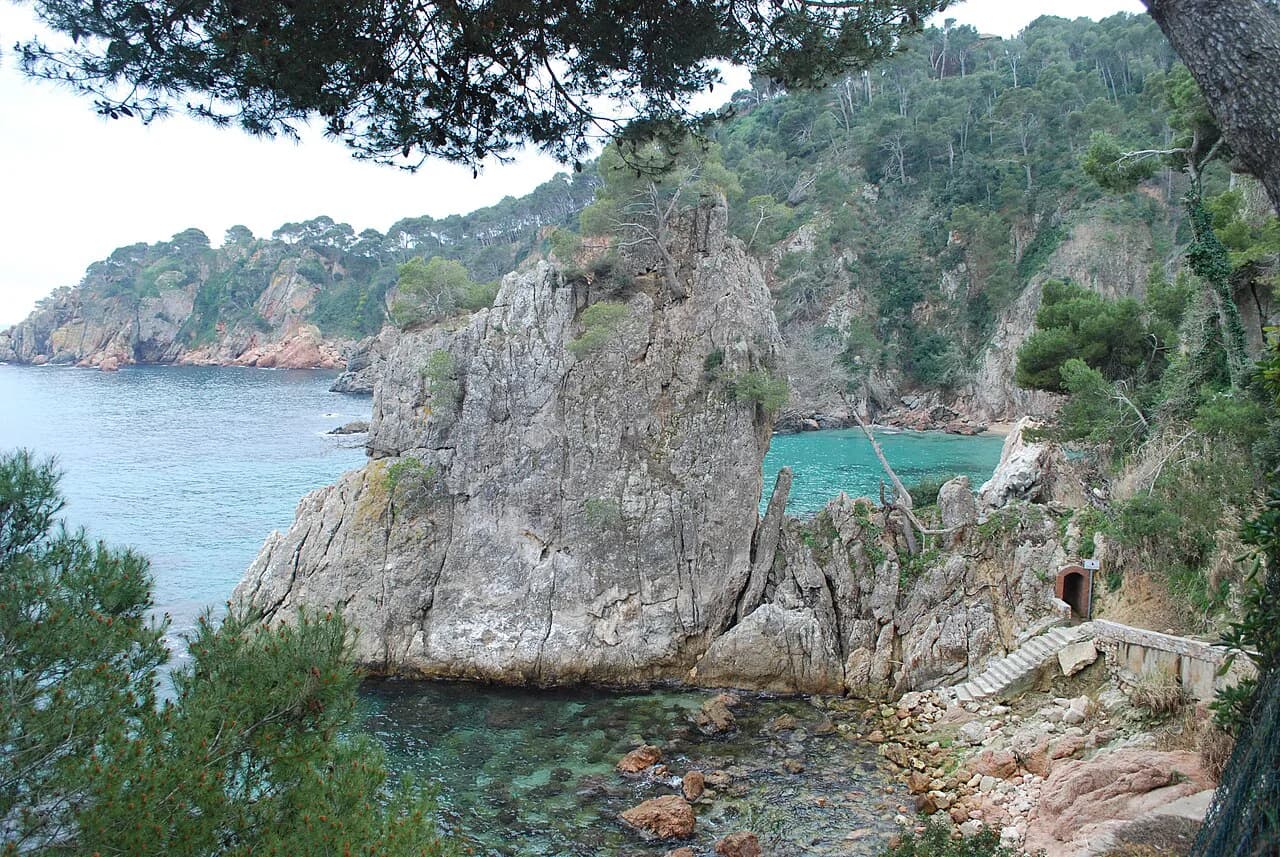
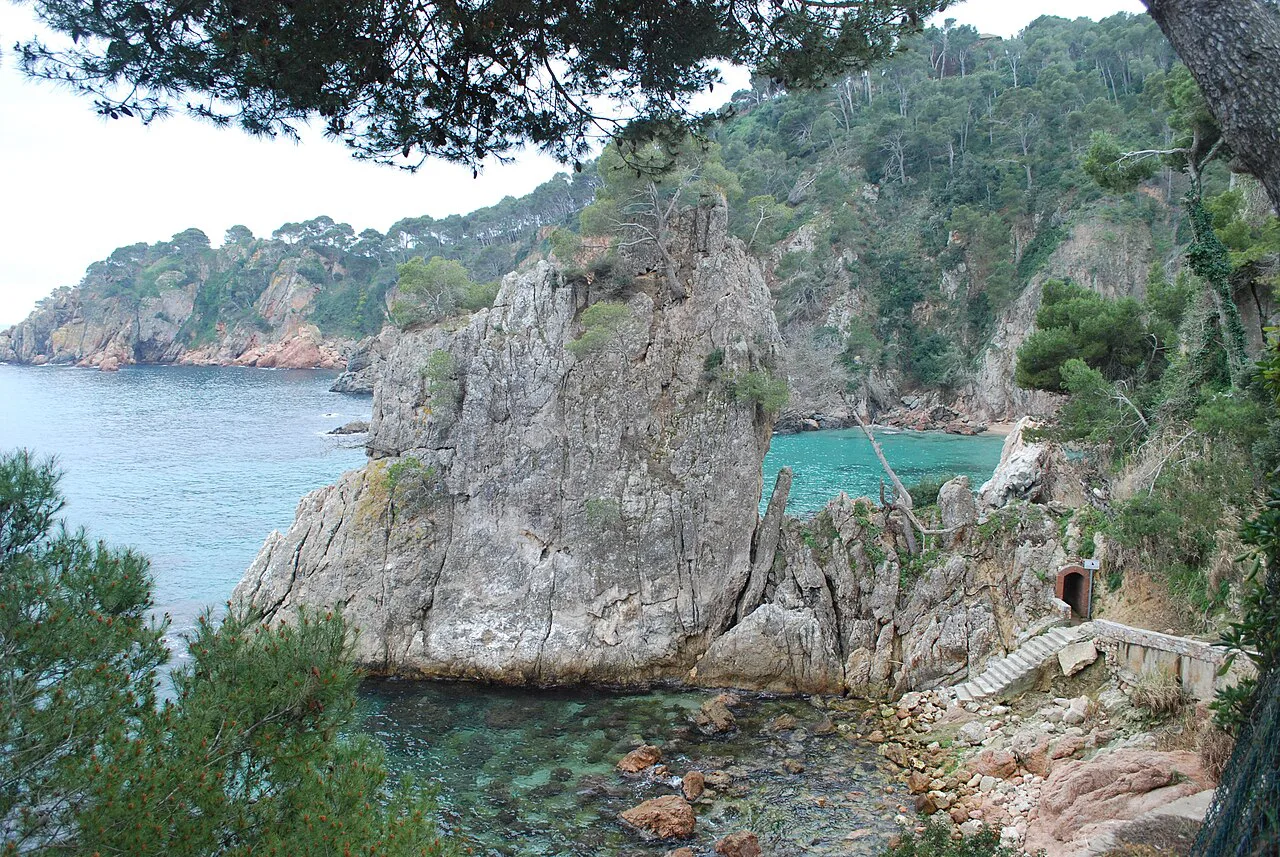
The coastal path starts at the southern end of El Canadell, where signs point the way to Llafranc. It skirts the cliffs with slopes and stairs along the way, but it can be walked without difficulty by the whole family, and the views over the sea and the bay of Llafranc are the reward.
Llafranc's beach is about 350 metres long, fronted by a promenade with plenty of places to eat, so the walk makes a natural lunch stop. Wear proper shoes rather than flip-flops for the steeper sections, and carry water, because the path is exposed in the middle of the day.
Above Llafranc, the Sant Sebastià lighthouse stands on a cliff 187 metres above the sea, reachable by car or on foot via stairs from the marina. The remains of an Iberian settlement from the sixth century BC sit on the same clifftop, making a worthwhile detour after the beach.
Facilities and the seafront
Calella's seafront is lined with bars and restaurants behind the sand, so you can move between a swim and a table without crossing the village. The promenade at Llafranc has a particularly strong choice of restaurants, and the terrace of the Hotel Sant Roc above Calella gives panoramic views over the bay.
For sunbeds, showers, toilets and seasonal lifeguard cover, ask at the beach bars or the tourist office on arrival: the arrangements are set locally and vary by cove. The central coves put you closest to cafés and ice cream, while El Canadell trades a few minutes' walk for space and quieter edges.
Platja del Golfet at the Cap Roig end
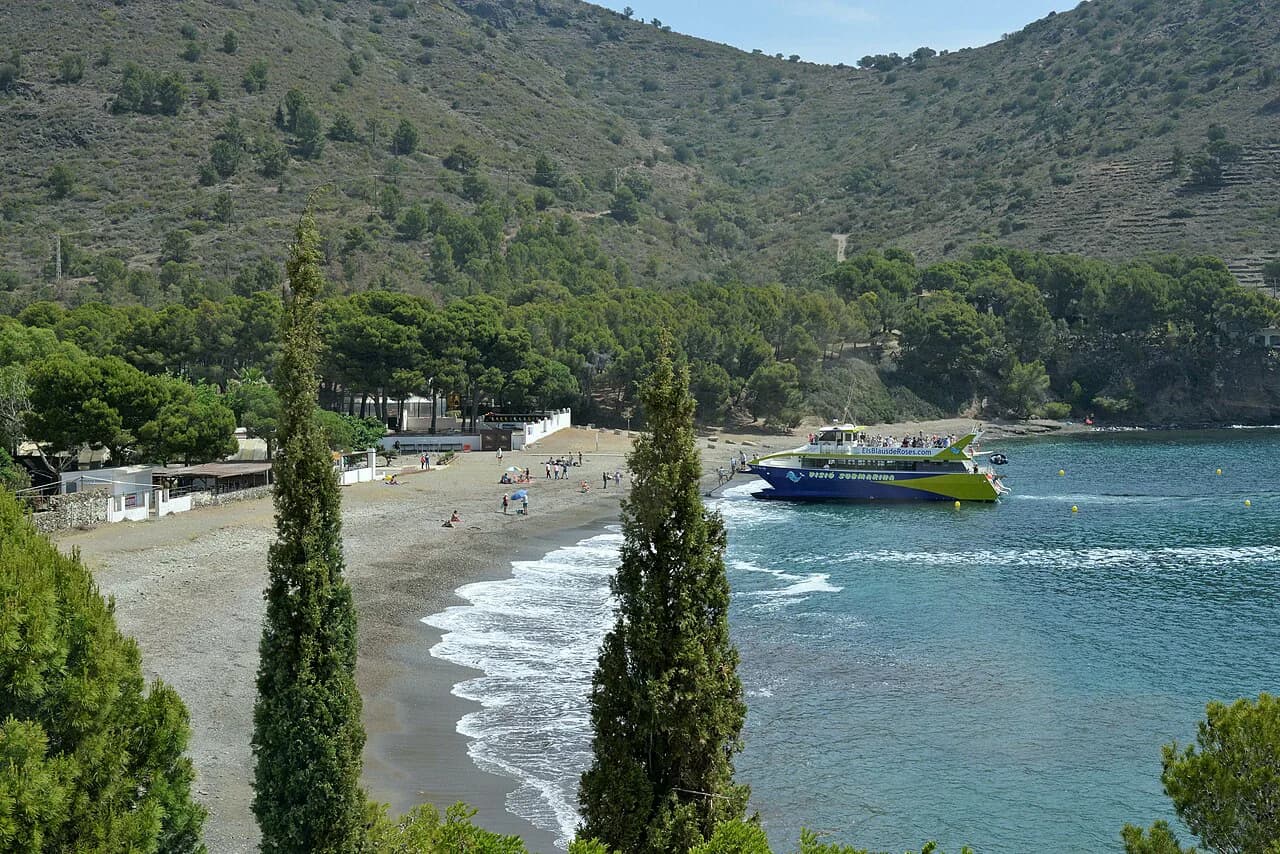
Platja del Golfet is a small cove north of the Cap Roig gardens, reached only on foot along the coastal path. That access keeps it quieter than the village beaches, and it suits walkers who want a swim at the end of a cliff-top stroll rather than a full day of facilities.
Combine it with a visit to the Cap Roig gardens: see the terraced planting in the cooler morning, then walk down to the cove for a swim before the afternoon heat. Carry everything you need, because the cove has no village behind it.
Best time to go
The busiest weeks in Calella are late July and August, when the village fills for the beach season and the Cap Roig festival brings evening crowds. The first Saturday of July, when the Cantada d'Havaneres takes over Port Bo, is another day when the centre is thronged from afternoon onwards, so plan around it if you want a quiet swim.
June and September give you warm sea and a calmer village, with the coastal path at its most pleasant. Whatever the month, start early: the central coves are small, and the best spots on Port Bo and El Canadell go in the morning.
Nearby beaches to combine
Llafranc is the obvious pairing, a short walk around the headland with a longer beach and a strong restaurant promenade. Add the clifftop lighthouse above the marina for the best view on this stretch of coast.
Tamariu is the smallest and quietest of the three Palafrugell coastal villages, with whitewashed houses and a wilder shoreline of coves. Cala Pedrosa, Aiguadolça, Aigua Xelida and Cala Marquesa are among its best-known inlets, and some can only be reached by kayak, which makes Tamariu a good day for a boat or paddle rather than a sunbed.
Further afield, Aiguablava Beach, Costa Brava is another Begur-coast favourite worth a half-day if you are driving the coast, and Sa Tuna suits anyone wanting a smaller cove with a hamlet behind it. Compare these with the Calella beaches using our Girona beaches guide before you commit your days. If you are weighing a different stretch of the Catalan coast altogether, our guide to the best beaches in Tarragona covers a comparable choice of coves and long sands.
Walking the Camí de Ronda North from Calella with a Dog
If you are staying in Calella de Palafrugell with a dog, the coastline north of the village gives you a way to keep walking once the sand gets busy. The camí de ronda or coastal path towards Llafranc starts right at the end of Platja El Canadell, where signs indicate the direction of Llafranc. The path skirts the coast and has different slopes and stairs, but it can be done without difficulty and with the whole family, so a leashed dog can join the walk.
Keep going past the village beaches and you reach Platja del Golfet, a small cove that can only be accessed on foot from the coastal path. Because there is no road down to the sand, the walk in is part of the visit, and you can decide at the top whether the cove suits your dog on the day. The cliffs and terraces along this stretch are what make the path worth the detour even without a swim.
The path continues around the bay to Llafranc, where the beach is about 350 meters long and a promenade runs along the seafront with a great gastronomic offer. If you want a longer outing, the stairs from the Llafranc marina climb to the Sant Sebastià Lighthouse, on a cliff 187 meters above the sea, with one of the best views of the Costa Brava. Plan the climb for a cool part of the day, since the steps are exposed.
For a shorter alternative, stay closer to Calella and walk the seafront between Port Bo and El Canadell, where the vaults beside the sand at Platja de Port Bo mark the most photographed corner of the village.
Other Palafrugell Coast Villages to Visit with a Dog
Palafrugell's coastline is not limited to Calella: the municipality also includes Llafranc and Tamariu, the three coastal towns described as old fishing villages that still conserve their essence and warmth with their narrow streets and white façades by the seafront. Beyond Calella's own coves, Llafranc has a beach of about 350 meters in length and a promenade with a great gastronomic offer, so a dog-friendly walk can combine seafront strolling with a stop at one of the terraces along the way rather than a single stretch of sand. Tamariu, which the same source calls the smallest coastal town in Palafrugell, is characterised by whitewashed houses, narrow streets and a tranquility that you will find in few places on the Costa Brava, and it still has a wild character, surrounded by nature.
The coves around Tamariu are worth planning around if your dog walks well on rough ground. Some of the best coves and beaches in Tamariu named in the source are Cala Pedrosa, Aiguadolça, Aigua Xelida and Cala Marquesa, and Tamariu is described as surrounded by small coves that are difficult to access, some of which can only be reached by sea on a kayak. On foot with a dog, that means choosing the stretches you can actually reach along the coast rather than assuming every cove is a simple stroll from the village; the kayak-only ones are not walking destinations. For a viewpoint rather than a beach, the Sant Sebastià Lighthouse sits on a cliff 187 meters above the sea, and you can go all the way to the top by car or on foot by the stairs that start from the Llafranc marina itself.
If you want a longer day out with the dog on the same stretch of coast, the Cap Roig Gardens lie on a cliff with about 20 hectares of land, distributed in different terraces with exceptional views over the sea, and hold more than 1000 species of plants from all the Mediterranean climate regions of the world; the gardens were created by the Woevodsky couple, he an architect and she a garden designer, in 1927, and construction was completed in 1974, the year in which the castle was finished. Note that in the same gardens the summer music festival Festival Jardins de Cap Roig is held during the months of July and August, so those weeks bring crowds to the Cap Roig end of the coast. Between the villages, the Platja del Golfet is a small cove that can only be accessed on foot from the coastal path, which keeps it quiet but also means no drive-up drop-off.
Cap Roig and the Coastal Path Beyond Golfet
If you are walking the coast with a dog, the stretch north of Calella toward Cap Roig is worth planning around the gardens rather than treating them as a stop-in. The Botanical Garden of Cap Roig was created by the Woevodsky couple, an architect and a garden designer, in 1927, and its construction was completed in 1974, the year in which the castle was finished. The gardens occupy a cliff with about 20 hectares of land, laid out in different terraces with exceptional views over the sea, and hold more than 1000 species of plants from all the Mediterranean climate regions of the world. During July and August the same grounds host the Festival Jardins de Cap Roig, one of the best summer festivals on the Costa Brava.
The approach to this end of the coast on foot runs through Platja del Golfet, a small cove reachable only on foot from the coastal path, which sits just after the Cap Roig gardens when you are heading north from Calella. From there the path continues toward the centre of Calella, where a pause on the terrace of the Hotel Sant Roc gives panoramic views of Calella de Palafrugell and the Mediterranean. Carrying on, the route passes the small beaches and coves ringed by old fishermen's houses — Port Pelegrí, La Platgeta and Platja d'en Calau — before reaching Platja de Port Bo, also called Platja de les Barques, recognisable by the vaults of the buildings beside the sand and the setting for La Cantada d'Havaneres on the first Saturday of July.
Bordering the sea, the walk arrives at Platja El Canadell, the largest beach in Calella at 100 metres long and 30 metres wide, and the camí de ronda to Llafranc begins right at the end of that sand, where signs point the direction of Llafranc. That path skirts the coast with different slopes and stairs but can be done without difficulty and with the whole family, with views of the sea and the bay of Llafranc; at the centre of Llafranc a beach of about 350 metres and a promenade with a broad gastronomic offer await. If you want more height, the Sant Sebastià Lighthouse stands on a cliff 187 metres above the sea, reachable all the way to the top by car or on foot via the stairs that start from the Llafranc marina, with a Japanese restaurant, the restaurant and hotel El Far, and the remains of an Iberian archaeological site from the 6th century BC at the top.
Where a dog can and cannot join you on the Palafrugell coast
The published sources describe the beaches of Calella de Palafrugell, Llafranc and Tamariu largely as swimming and sunbathing places, and none of them set out a dog-access rule for any of the sands. On this stretch of coast the coves are small and, in summer, crowded: Platja El Canadell, the largest beach in Calella, is 100 metres long and 30 metres wide, while the beach at Llafranc is about 350 metres in length and 330 metres by another measure. Platja del Golfet, the little cove north of Calella beyond the Cap Roig gardens, can only be reached on foot from the coastal path. A dog therefore changes how you use these places rather than whether you can reach them.
The camí de ronda is the practical answer. The path from Calella to Llafranc is a short route of approximately 1.5 kilometres, or 20 minutes on foot, and walkers describe it as a comfortable, easy coastal walk, although it is a dirt track with different slopes and stairs. Continuing north past Calella and the Cap Roig gardens brings you to Platja del Golfet, and the same path can be followed as far as Tamariu, the smallest coastal town in Palafrugell, where several coves can only be reached by sea in a kayak. Water is scarce along the route, so carry your own.
For the rest of the day, the seafront at Llafranc has a promenade with a broad gastronomic offer, and Calella has beachside restaurants with terraces above the sand; most restaurants close outside the main season. Parking is usually in high demand in Calella in summer, and Llafranc can be reached on foot, by car or by public transport, with parking on the streets behind the beach. The Cap Roig Botanical Garden, created by the Woevodsky couple in 1927 and completed in 1974, spreads over about 20 hectares of cliffside terraces with more than 1000 species of plants from Mediterranean climates.
Plan Your Calella Beach Day
Choose El Canadell for space and family swimming, the central coves of Port Bo and Port Pelegrí for atmosphere and photographs, and Golfet or the Tamariu inlets for a quieter swim reached on foot or by kayak. Walk the camí de ronda to Llafranc for lunch, and you have seen the best of the Palafrugell coast in a day.
Arrive early, carry water and proper shoes for the coastal path, and confirm bus times, parking and beach facilities with the Palafrugell tourist office before you travel, since summer arrangements change from year to year.
Frequently Asked Questions
What is the main beach in Calella de Palafrugell?
Platja El Canadell is the largest beach in the village, about 100 metres long and 30 metres wide, at the southern end of the seafront. The central coves of Port Bo, Port Pelegrí, La Platgeta and Platja d'en Calau are smaller but closer to the bars and restaurants.
Is Calella de Palafrugell good for families?
Yes: El Canadell gives families room to spread out, and the central coves are small and sheltered by the village and headlands. The camí de ronda to Llafranc has slopes and stairs along the way, which most families manage with proper shoes and water.
How do you walk from Calella de Palafrugell to Llafranc?
Follow the camí de ronda, which starts at the southern end of El Canadell where signs point to Llafranc. The path follows the cliffs with some slopes and stairs, and it ends at Llafranc's beach and its promenade of restaurants.
When is Calella de Palafrugell busiest?
Late July and August are the busiest weeks, with the Cap Roig festival adding evening crowds to the coast. The first Saturday of July, when the Cantada d'Havaneres is held at Port Bo, also fills the village centre, so plan your swim for the morning.
Which coves near Calella can you reach on foot?
You can walk to all the village coves, to Platja del Golfet along the coastal path past Cap Roig, and around the headland to Llafranc. Some of the Tamariu inlets are only reachable by sea, by kayak or boat.
What should I take to the beach?
Take sun cream, a sunshade, water and shoes suitable for the coastal path, plus a dry bag if you plan to move between coves. Cash for beach bars helps, and a towel that dries quickly is useful on the pebbly edges.
Sources
Beach notes for your next trip
Optional updates when we add or revise beach guides.
You might also like
Continue reading
More guides you'll find useful