Jávea Beaches: Coves, Sands and Pebble Bays for Your Day
Pick the right Jávea beach for your day, from sandy Arenal to the pebble coves of Granadella and Portitxol, with access, parking and crowd timing.
On this page
Jávea, or Xàbia in Valencian, sits on a stretch of the Costa Blanca where the coast alternates between a broad sandy bay and small pebble coves tucked beneath Cap de la Nau. That variety is the point: you can swim off shallow sand with a boulevard behind you in the morning and snorkel over pebbles in a sheltered inlet by afternoon.
The choice comes down to what you want from the day. Sandy Arenal suits families and anyone who wants restaurants, shops and easy walking; the southern coves suit snorkellers, kayakers and travellers willing to arrive early or take a summer shuttle.
How the Jávea coast divides
Think of Jávea in two halves. The northern side around the port and Arenal is the developed, sandy end, with promenades, restaurants and streets where you can usually park. South of Cap de la Nau the coast turns rugged, and the beaches are pebbles or bare rock reached down steep lanes.
That split shapes your planning more than any single beach. A sandy day needs little more than a towel and a parking space; a southern-cove day needs an early start, snorkelling gear and, at Granadella and Portitxol in high season, a plan for the road barrier or the shuttle.
Playa del Arenal: sand, shallows and a full boulevard
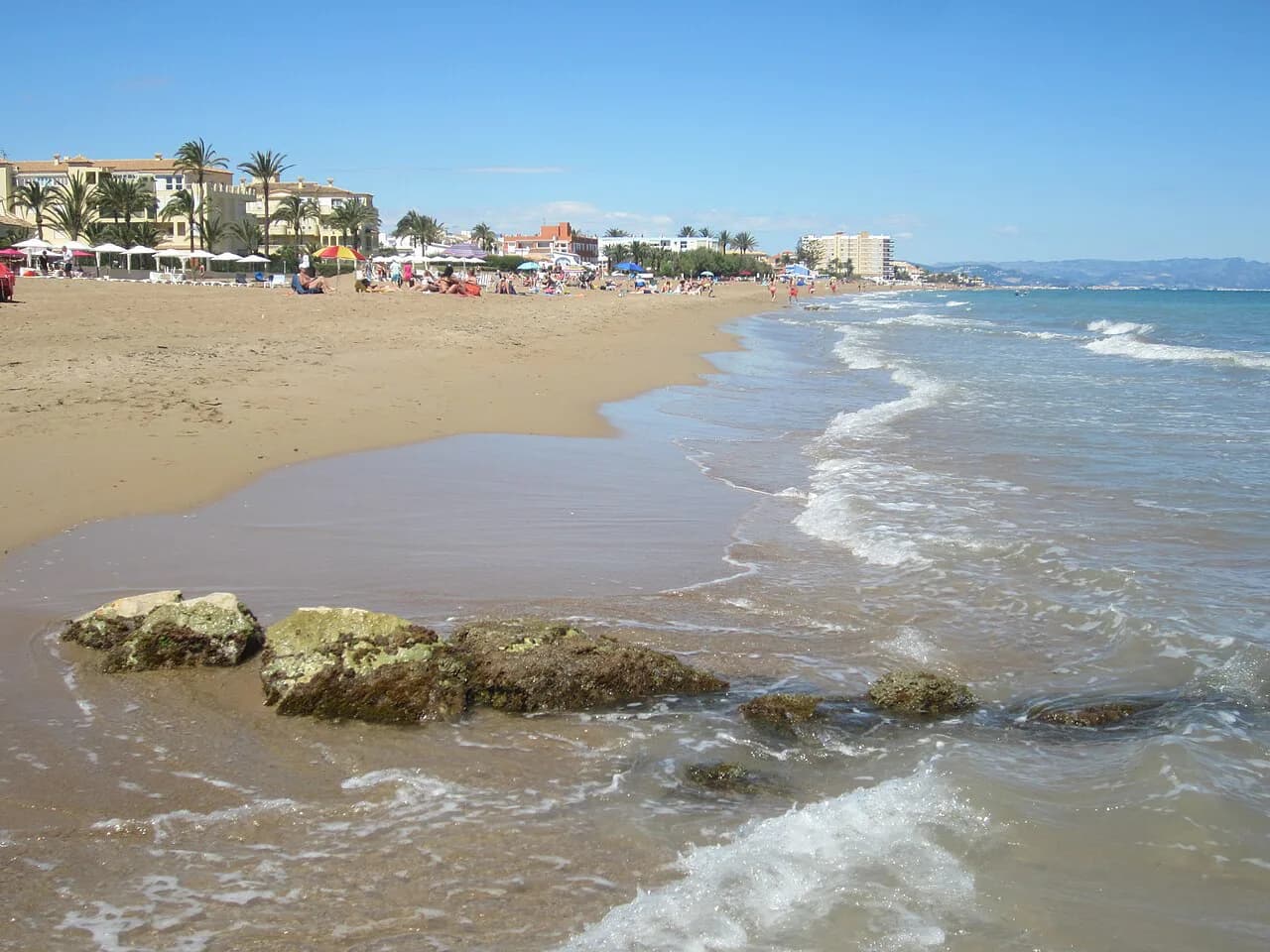
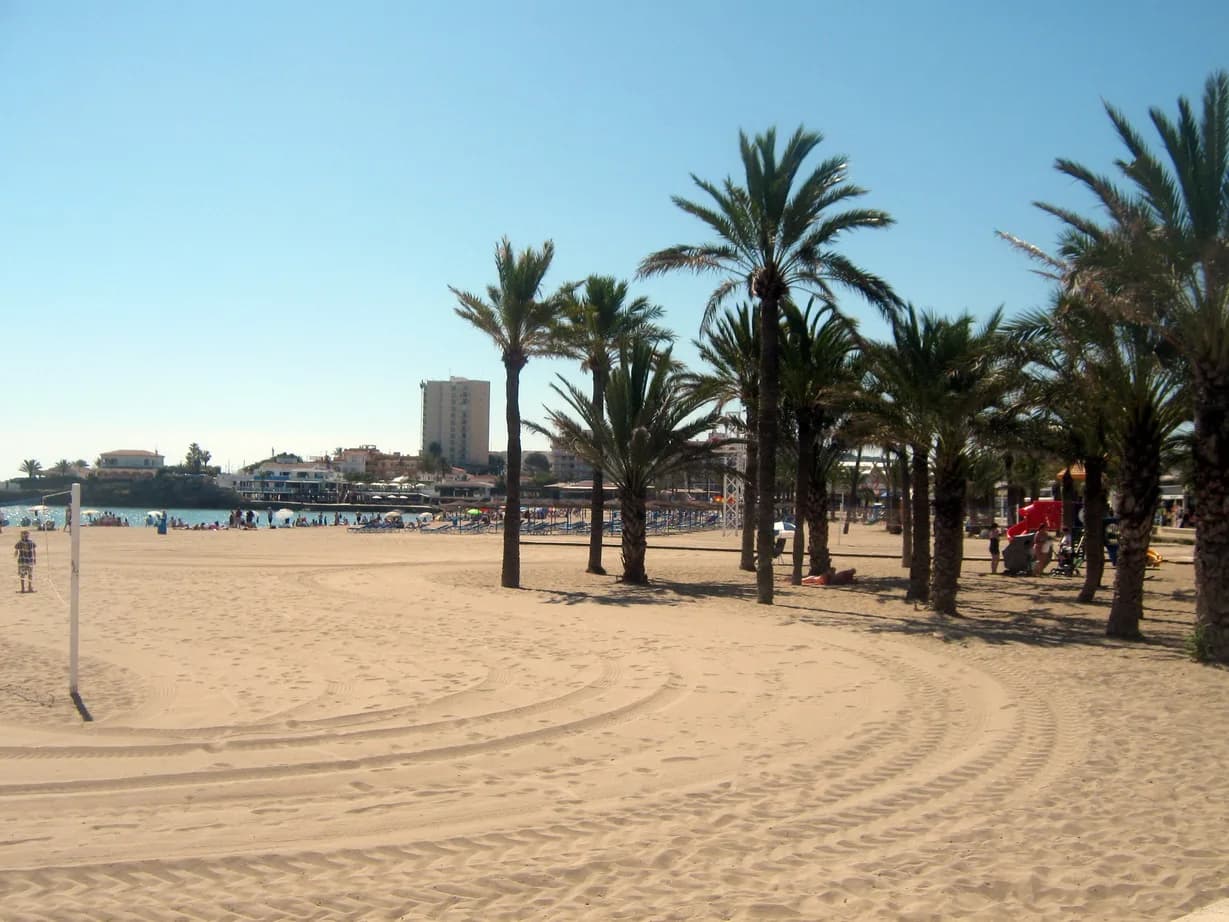
Arenal is Jávea's main sandy beach and the obvious family favourite, with shallow water and a lively boulevard lined with restaurants, cafés and shops. You can easily spend a whole day here without moving the car.
It is also the busiest and most commercial of the Jávea beaches, so treat it as the convenient option rather than the wild one. Come for a long lunch, a gentle swim and an easy walk back to the apartment; go south for the scenery.
Playa de la Grava: pebbles by the port
La Grava sits right beside Jávea's fishing port, a pebble beach that locals favour, with a promenade behind it and tapas bars such as Cala Bandida, A La Mar and a rooftop terrace nearby. It is a good compromise if you want a swim without driving to the coves.
The harbour end also has a diving school, Buceo Puerto Jávea, where you can rent a paddleboard by the hour without following a course first. Street parking nearby is free, including the car park on Calle Santísimo Cristo del M.
Primer Muntanyar and Benissero: the stony strip north of the port
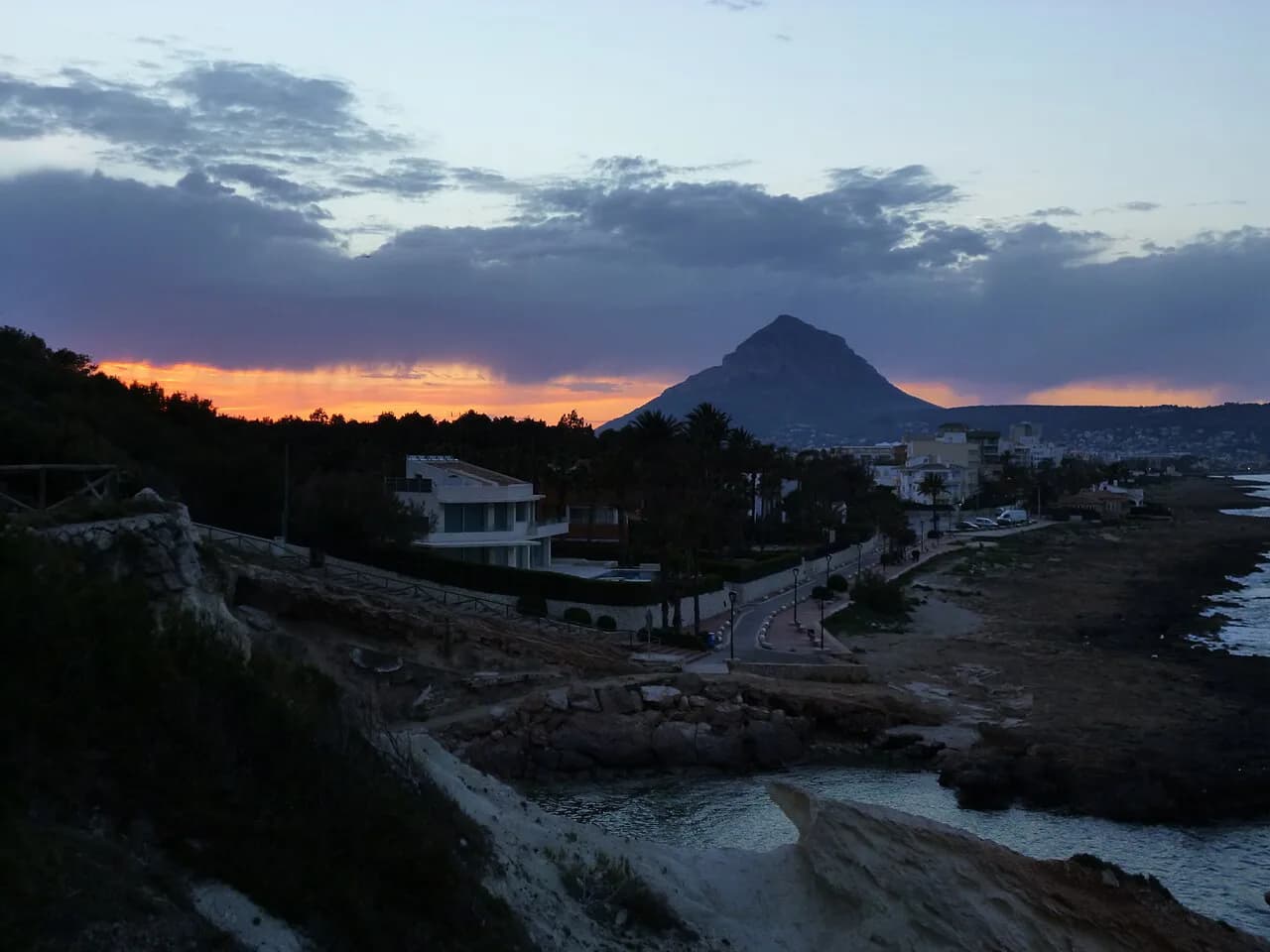
North of the port, Primer Muntanyar and Benissero form a long strip of small stones rather than sand, with restaurants such as La Siesta set just behind. It is the place for breakfast or lunch with a sea view, and for watching the sky turn red at sunset.
Bring shoes you don't mind on pebbles and settle in at a terrace rather than planning a full beach day. The appeal here is the walk, the food and the light, not a sandy pitch for children.
Cala Granadella: the headline pebble cove
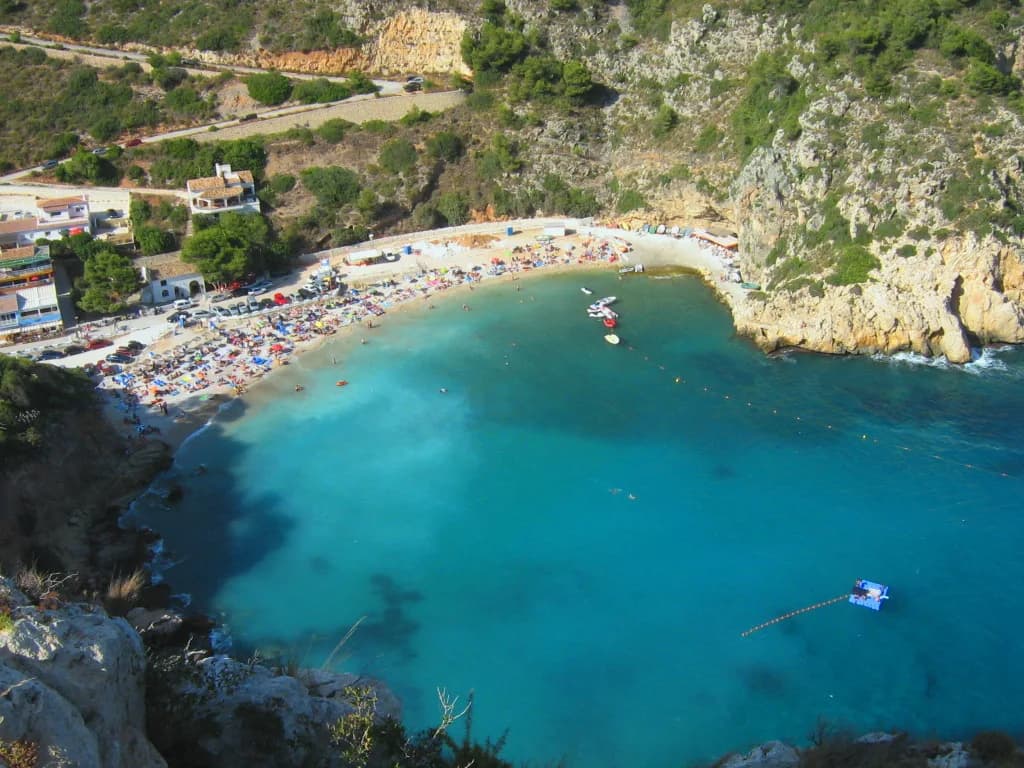
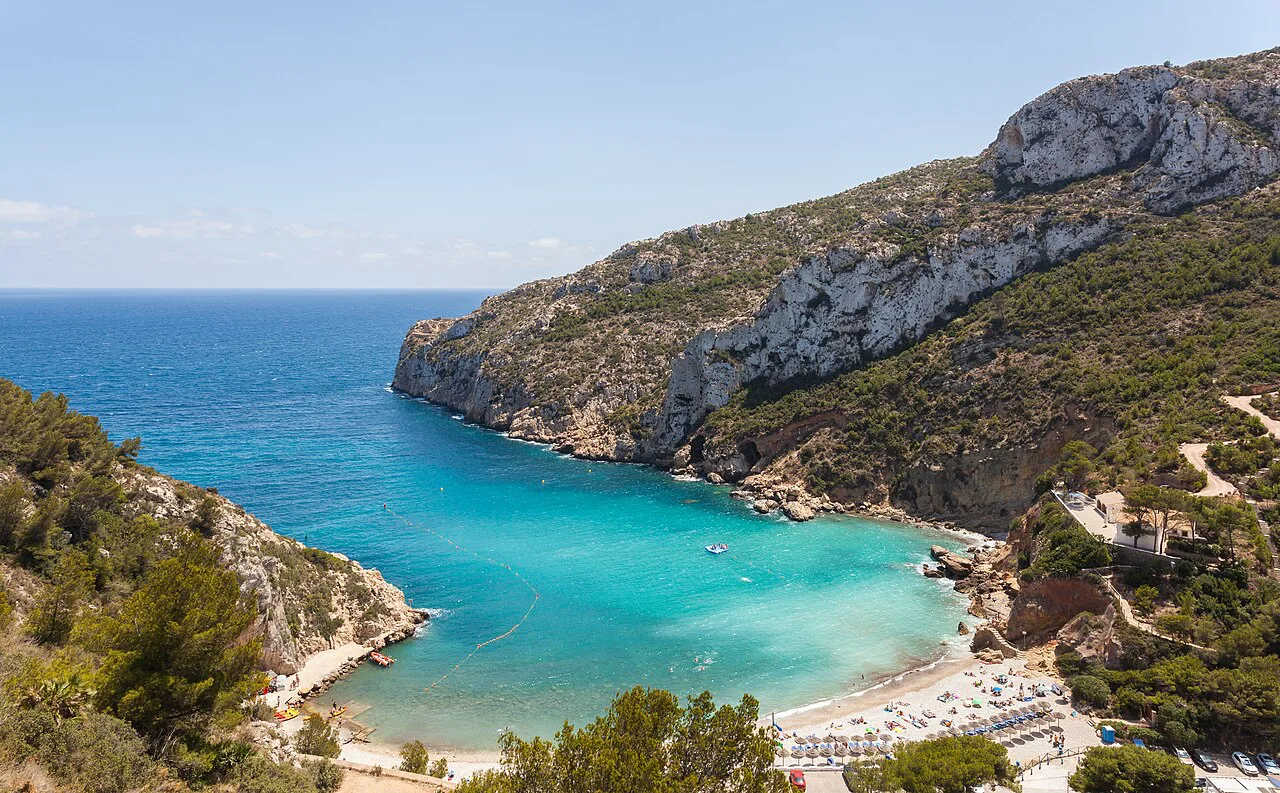
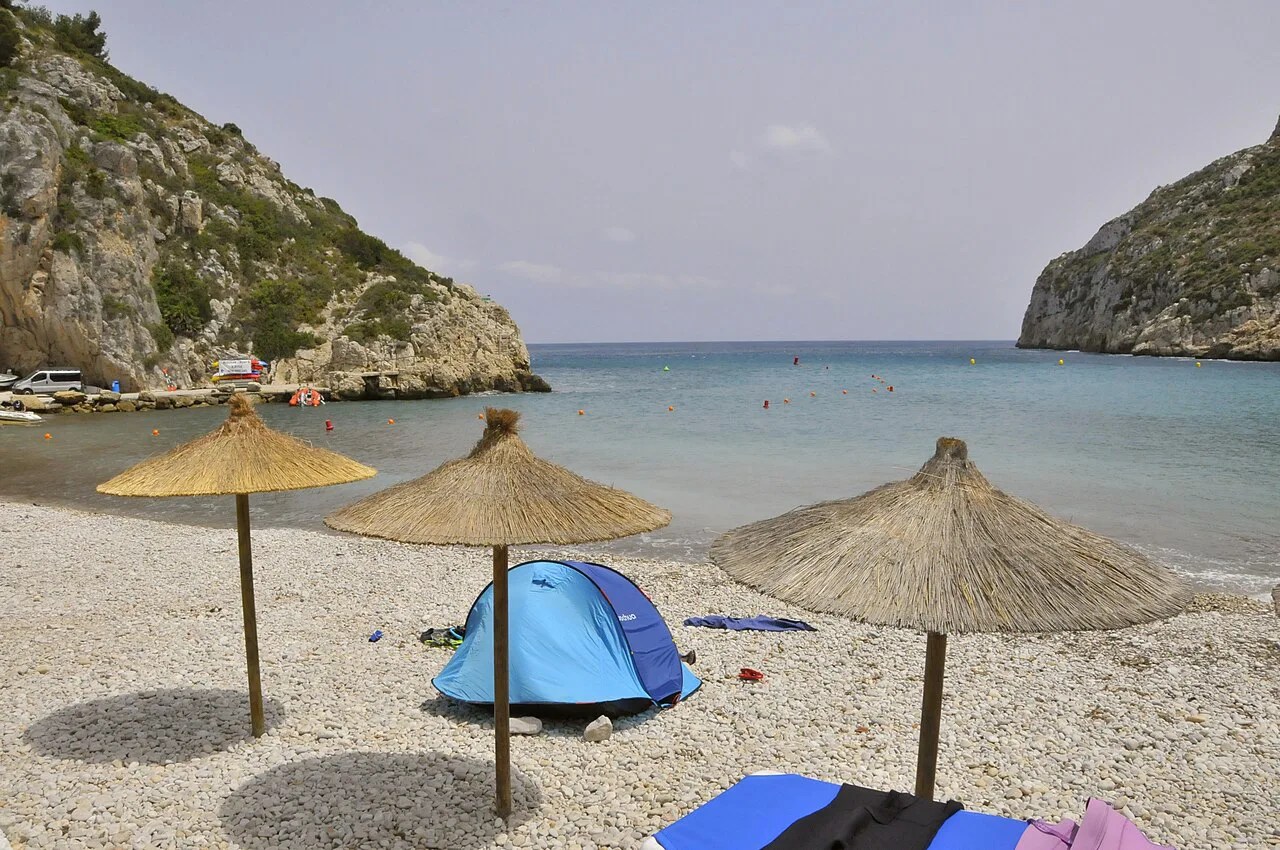
Granadella is frequently named one of Spain's most beautiful beaches, and it earns the reputation: a small pebble cove at the end of a wooded valley, with kayak tours launching from the beach and La Bandideta serving pizza above the water. It is small, so the car park fills quickly in summer.
In summer a free park-and-ride runs from Guardia Park, between Calle Cuereta and Carrer de la Falzia, roughly 4 km from the beach. The shuttle leaves about every 45 minutes, takes 10 to 15 minutes and operates only in summer up to and including 31 August.
Conditions in the cove vary with the weather. On a windy day the waves and current can be strong enough that smaller children should stay on the pebbles, so watch the water before you commit to a long swim.
Cala de Portitxol (Cala Barraca): fishermen's houses and two bay restaurants
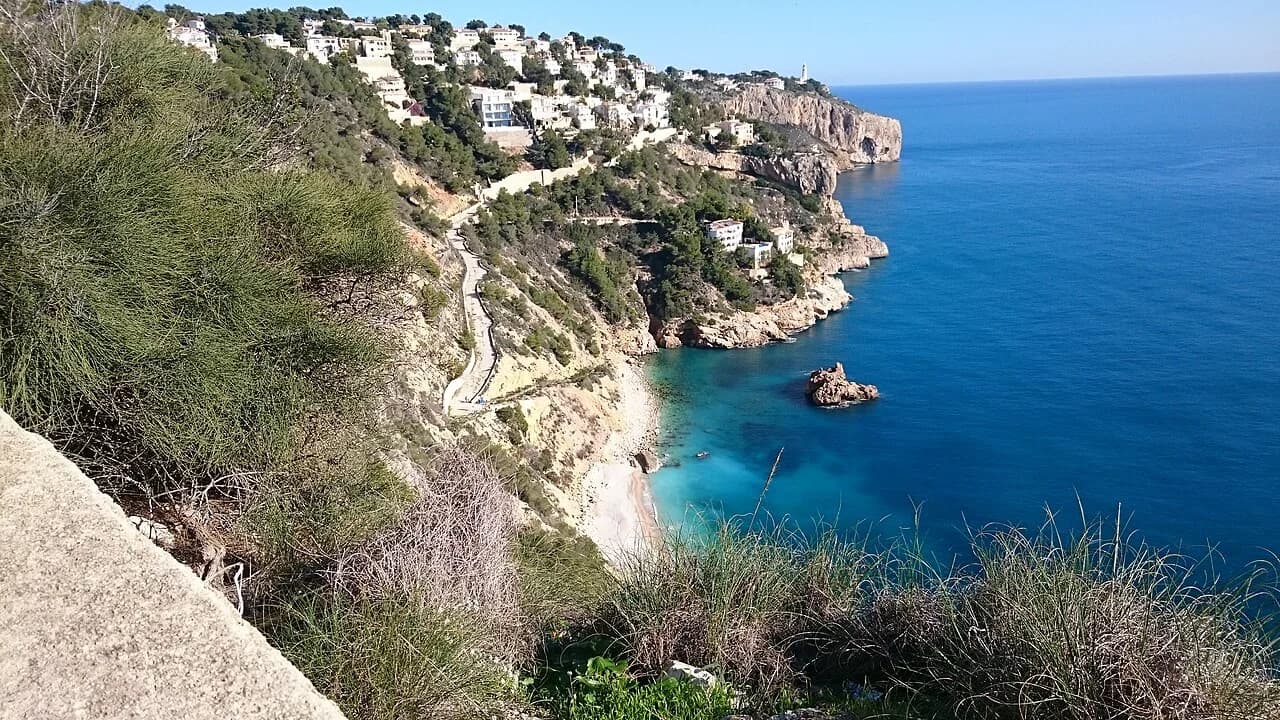
Portitxol, also called Cala Barraca, is a pebble beach in a hidden bay facing the uninhabited Illa del Portitxol, framed by white-and-blue fishermen's houses. Two restaurants, Cala Clémence and Bar la Barraca, sit above the water with views across the bay and the island.
Access is the catch. In high season the lanes at Calle Truita and Carrer de la Barraca close with a barrier from about 10:00 to 18:00, and the bay itself holds only around 60 parking spaces. Arrive before 10:00 or accept a long walk down.
Snorkellers do well here because the pebbles keep the water clear, and you can combine a swim with lunch at one of the bay restaurants. It is not the beach for a full day of sandcastles.
Cala Blanca and Caleta de Tues: rock platforms and a staircase entry
Cala Blanca is less a beach than a set of rock and cobble platforms with a bowl of clear water below, reached down a narrow back lane. Entry is via a staircase, the rocks at the edge are sharp, and a folding chair makes the sitting far more comfortable.
Parking is on Avinguda de l'Ultramar, where there is a small car park for around 60 cars. Caleta de Tues, or Caleta de Dins, lies a short walk further along an unpaved path, with a small peninsula sheltering the swimming area and a ledge that suits jumping.
Playa de Ambolo: the secluded cove below the mirador
Ambolo is a secluded cove of rock and sand below the Mirador de Ambolo, reached via Carrer Torre Ambolo. It has long been used for naturist sunbathing, and kayak groups occasionally land on the beach, so expect company rather than complete privacy.
Access has been affected by rockfall: the path down was closed when the cove was last assessed, and the walk from the upper streets was not possible. There is no published reopening date, so treat Ambolo as a viewpoint stop unless the town hall confirms the path is open.
Cala del Moraig and the Cova dels Arcs
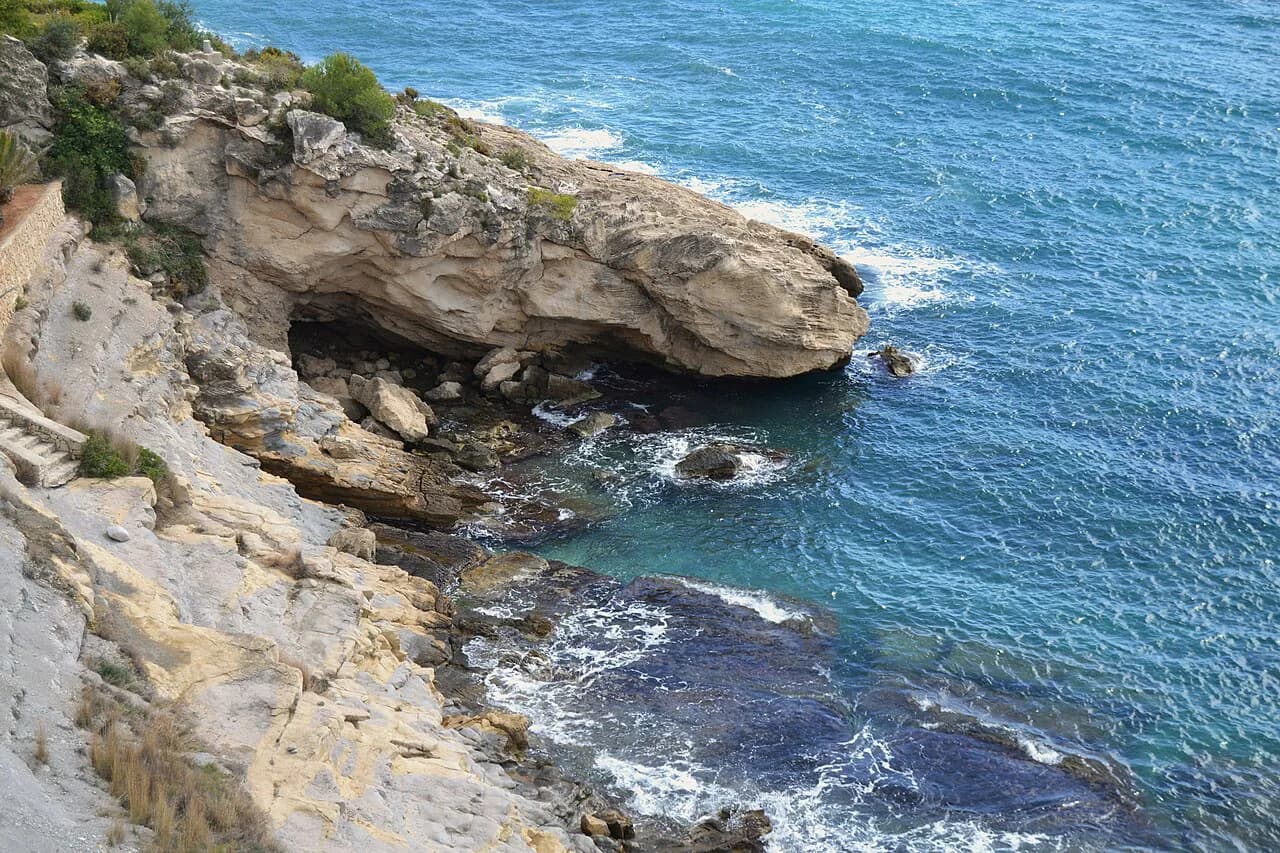
South of Jávea towards Moraira, Cala del Moraig is a dramatic rocky beach with little natural shade, so bring a parasol. On the right-hand side, the Cova dels Arcs sea cave opens off the water and is worth the swim if conditions allow.
This is the excursion to make when you want something wilder than the Jávea coves but still within a short drive. Combine it with a look at the beaches around Moraira, where the sand is easier and the water shallower.
Getting around without a car
Most of Jávea's southern coves assume a car or taxi, because the lanes are steep and the bus network does not reach every bay. The Granadella park-and-ride is the main exception, and it only runs in summer.
For Portitxol, a taxi to the barrier and a walk down is the simplest car-free option, or you can arrive by kayak from Granadella. Boat trips along the coast also pass the coves, though landing depends on the boat company and the sea. Check current prices and dates with the company before you set out, since high-season restrictions and schedules can shift.
When to go
Summer is the busiest period and the one with the tightest logistics. Across the Jávea beaches, aim to arrive around 10:00 or after 16:00 for a parking space, and expect the southern coves to fill first. In August even the more accessible beaches can be crowded by mid-morning.
For the warmest sea, look at July through September, when the Mediterranean holds its heat into the evening. Late spring and October give quieter beaches and cooler water, which suits walkers and snorkellers more than families planning long swims.
Facilities at a glance
Arenal has the fullest infrastructure: restaurants, cafés and shops along the boulevard, plus shallow water for children. La Grava and the port area have promenade bars and a diving school, while Primer Muntanyar's draw is its restaurants.
Granadella and Portitxol each have a small cluster of restaurants above the beach, and Portitxol has a toilet attached to Cala Clémence. Cala Blanca and Caleta de Tues offer no facilities, so carry water and shade.
Nearby beaches to combine
Moraira is about half an hour's drive from Jávea and has easier sandy beaches that children enjoy, making it a good second day if the coves feel like hard work. Playa de l'Ampolla and El Portet are the obvious pairings. If you'd rather compare a wider spread of sandy options, the beaches in Alicante north of here offer a similar family-friendly contrast.
South towards Dénia, the Les Rotes coast is a sequence of rocky swimming spots and small pebble beaches with clear water, about 10 km from Jávea. It makes a quieter alternative when the Jávea coves are packed.
Who each beach suits
Families with small children should head to Arenal, where the water is shallow and everything you need is on the doorstep. Swimmers and snorkellers get more from Granadella, Portitxol and Cala Blanca, where pebbles and rocks keep the water clear.
Quiet-seekers should try Caleta de Tues or the Les Rotes rocks, accepting a walk and no facilities in return. Walkers can link the miradors above Ambolo and the path towards the Cova dels Arcs with a swim at Moraig.
Plan Your Jávea Beach Day
Choose one anchor beach per day rather than trying to tick off the whole coast. Arenal for sand and family ease, La Grava for a swim with tapas, Granadella or Portitxol for pebbles and clear water, and Moraig when you want drama.
Build the day around the logistics: an early start or the summer shuttle for Granadella, before 10:00 for Portitxol, and a parasol for the shadeless coves. Let the weather decide the rest.
Frequently Asked Questions
Which Jávea beach is best for families with small children?
Playa del Arenal is the easiest choice, with shallow water, a sandy beach and restaurants, cafés and shops along the boulevard behind it. The pebble coves are prettier but steeper to reach and offer little shade or flat sand for playing.
Do you need a car to reach Jávea's coves?
A car or taxi makes the southern coves far simpler, because the lanes are steep and not every bay is served by bus. The main car-free option is the summer park-and-ride for Granadella, plus kayak tours that reach Portitxol and the smaller coves from the water.
How does the Granadella shuttle work in summer?
You park free at Guardia Park, between Calle Cuereta and Carrer de la Falzia, roughly 4 km from the beach. The shuttle leaves about every 45 minutes, takes 10 to 15 minutes, and runs only in summer up to and including 31 August.
Is Cala Granadella sand or pebbles?
Granadella is a pebble beach, so bring shoes or mats rather than expecting sand. The pebbles help keep the water clear for snorkelling, and the cove is small enough that it fills quickly in high season.
Where can you snorkel in Jávea?
The pebble and rock beaches give the clearest water: Granadella, Portitxol, Cala Blanca and Caleta de Tues are the usual choices. Bring your own mask and fins, and check conditions on the day, because wind can stir up waves and current.
Which Jávea beaches have bars and restaurants?
Arenal has the widest choice along its boulevard, La Grava and the port have promenade bars, and Primer Muntanyar has terraces such as La Siesta. In the southern coves, Granadella has La Bandideta and Portitxol has Cala Clémence and Bar la Barraca.
When is the sea warm enough to swim in Jávea?
The Mediterranean is at its warmest from July through September, when swimming is comfortable well into the evening. Late spring and October are quieter but cooler, which suits short dips and snorkelling more than long family swims.
Which beach near Jávea is nude-friendly?
Playa de Ambolo has long been used for naturist sunbathing, although the path down has been affected by rockfall and access has been restricted. Further south, part of Cala de Aigua Dolç near Les Rotes is also used as a nude beach.
Sources
Beach notes for your next trip
Optional updates when we add or revise beach guides.
You might also like
Continue reading
More guides you'll find useful