Aiguablava Beach, Costa Brava: Sand, Access and Facilities
Aiguablava is a small, sheltered cove of fine sand south of Begur, with shallow water, a dive centre and paid summer parking beside the Parador.
On this page
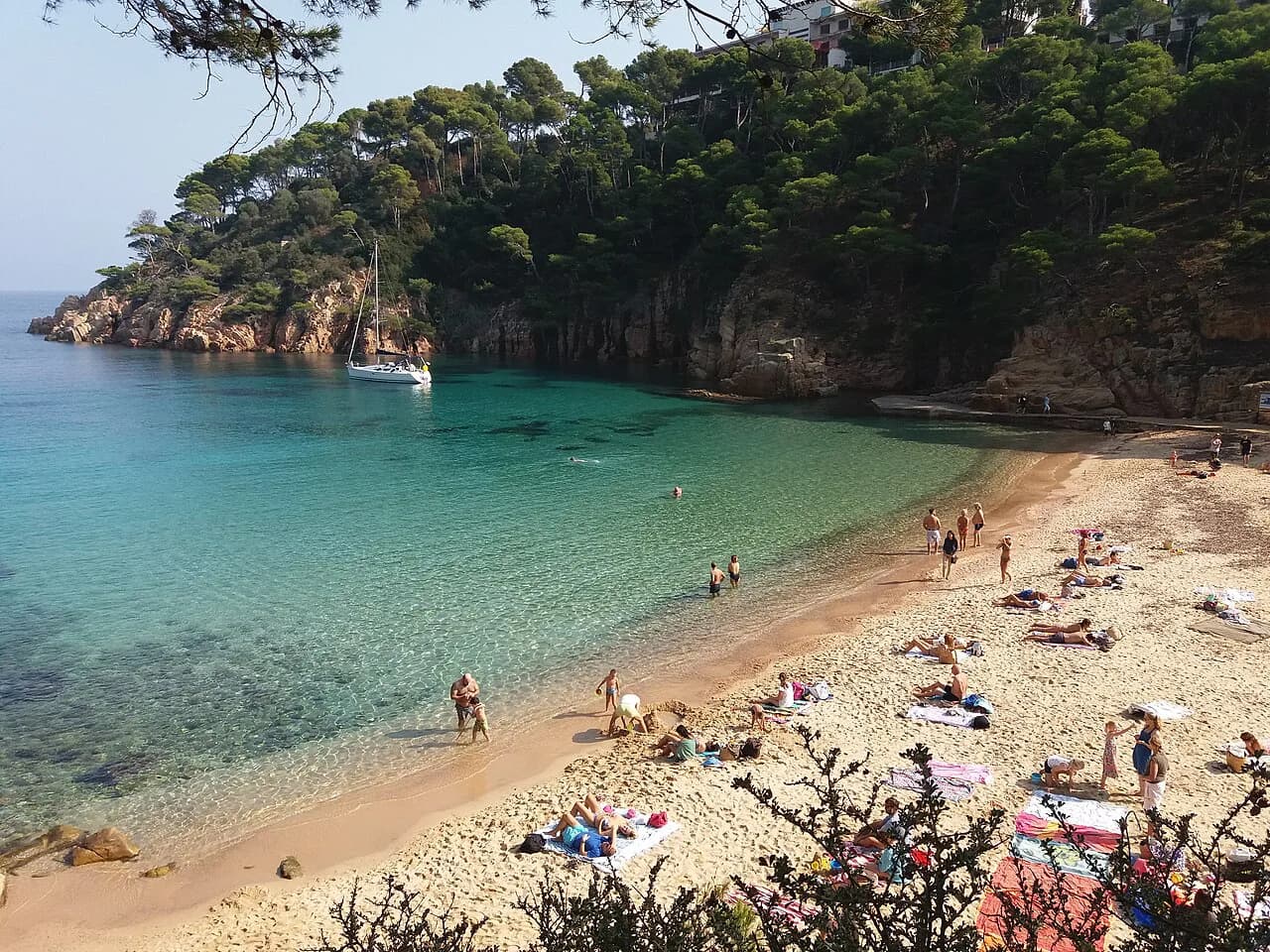
Aiguablava earns its place on a Costa Brava beach day through its shape: a small, south-facing pocket of fine sand tucked beneath the Parador clifftop, where the water stays shallow close to the shoreline and the shops and restaurants of the surrounding streets are a short walk from the sand. It suits families with young children and casual swimmers who want services within reach rather than a wild, walk-in cove. Divers and snorkellers use it as a base too, because a dive centre sits on the beach itself.
Where Aiguablava sits
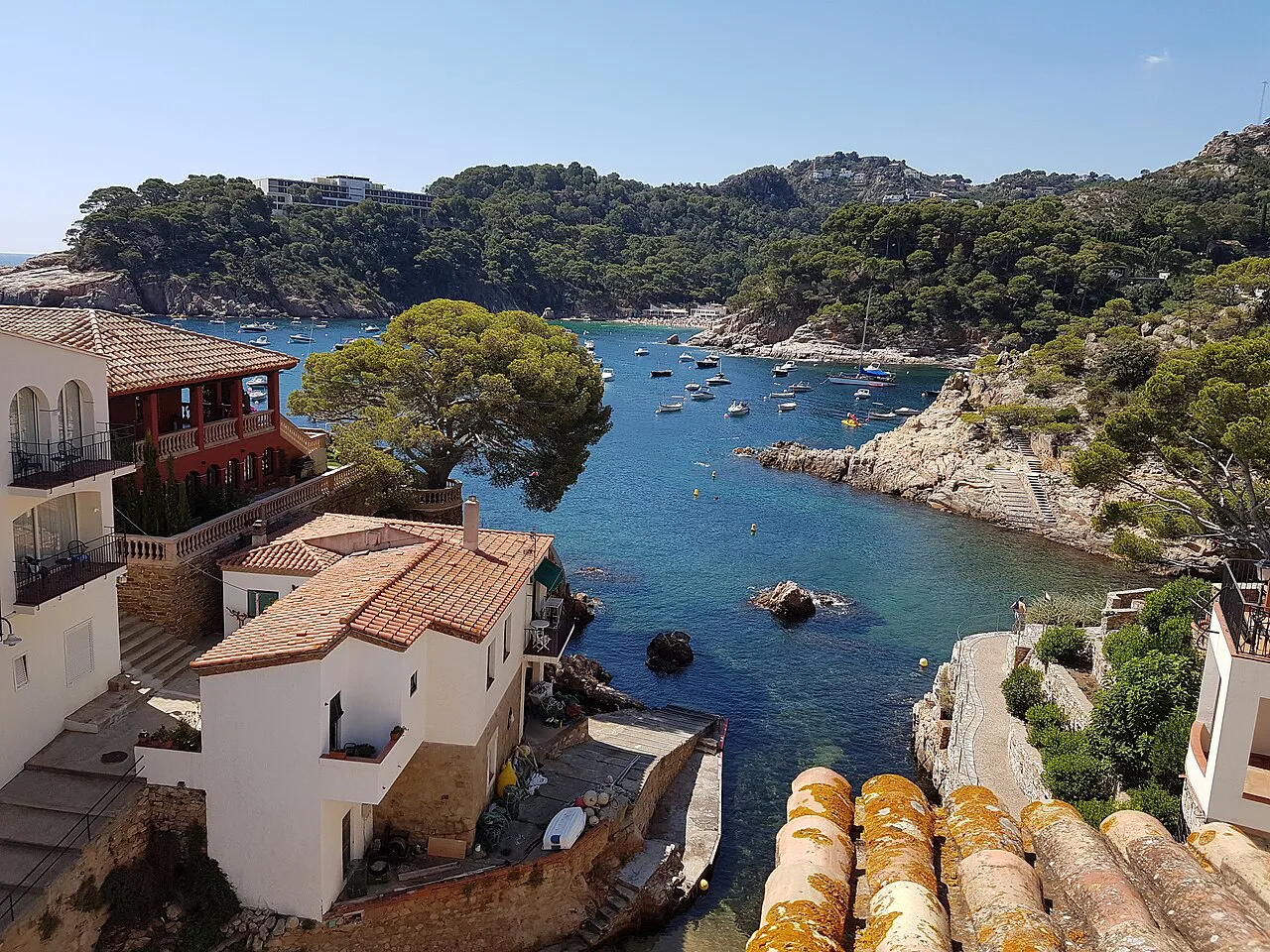
Aiguablava is the most southerly beach of Begur, in the Baix Empordà, set in a residential pocket of low streets that runs down to the cove. The Parador de Aiguablava occupies the clifftop directly above and beside the beach, and its signposts are the landmark most drivers follow on the approach. Facing roughly south, the cove looks out across open water rather than along a long stretch of coast, which is why it feels enclosed rather than exposed.
Getting there by car
Drivers simply follow the repeated signs to the Aiguablava Parador, which stands on the headland next to the beach. There is a car park immediately beside the cove, and in summer it requires payment; rates are set on site, so read the tariff board on entry rather than budgeting from memory. In high season the small number of spaces fills early, and arriving before mid-morning gives you a far better chance of walking straight onto the sand.
If the beach car park is full, the sensible fallback is to park in Begur and travel the last few kilometres without the car. The lanes around the cove are residential and narrow, with little room for casual stopping, so treating the car park as the only driving endpoint saves a lot of circling.
Getting there without a car
The tourist board lists access to Aiguablava by car, bus, on foot and by boat, so a car is not essential. Bus services from Begur and the surrounding area cover the approach, and boats on the coast call in during the season. Line numbers, timetables and boat fares change with the season, so ask the Begur Tourist Information Office on Avinguda de l'Onze de Setembre or the boat operator for the current timetable before you set out.
Walkers reach the cove on footpaths from the surrounding residential roads, with the Parador as a reliable landmark for the final descent. The approach is short but includes a fall away to the beach, so carry bags in hands rather than on wheels. If you are combining coves, the coastal path between Begur's beaches is the walking route to plan around rather than a road walk.
The sand and the water
The beach is fine sand, roughly 40 metres long and 80 metres wide, so it is almost twice as wide as it is long and reads as a broad pocket rather than a long strip. The published description notes shallow, calm water close to the edge, which is the reason families gravitate here. That same shallowness means swimmers who want depth need to wade out some distance before the bottom drops away.
Because the cove is small and enclosed by the headland and the Parador above, it tends to sit out of the strongest sweep of wind compared with open stretches of coast, and the water near the shore reflects the turquoise colour the area is known for. Pick the end furthest from the busiest entry point if you want a little more space around your towels. Bring mats or a low chair: the sand is soft and fine, so it holds its shape but offers little natural back support.
Who it suits
Families with small children are the clearest fit: the entry is shallow, the beach is compact enough to keep an eye on everyone, and toilets and adapted showers sit close by. Casual swimmers and paddlers will be happy, and anyone who wants lunch or an ice cream without leaving the sand for long will appreciate the restaurants and shops in the immediate surrounding streets. Divers and snorkellers have a different reason to come, with a dive centre based at the beach.
Quiet-seekers should think about timing rather than location, because the cove's size works against it once the car park fills. Come early in the morning or out of peak season and the same beach feels considerably more relaxed.
Facilities
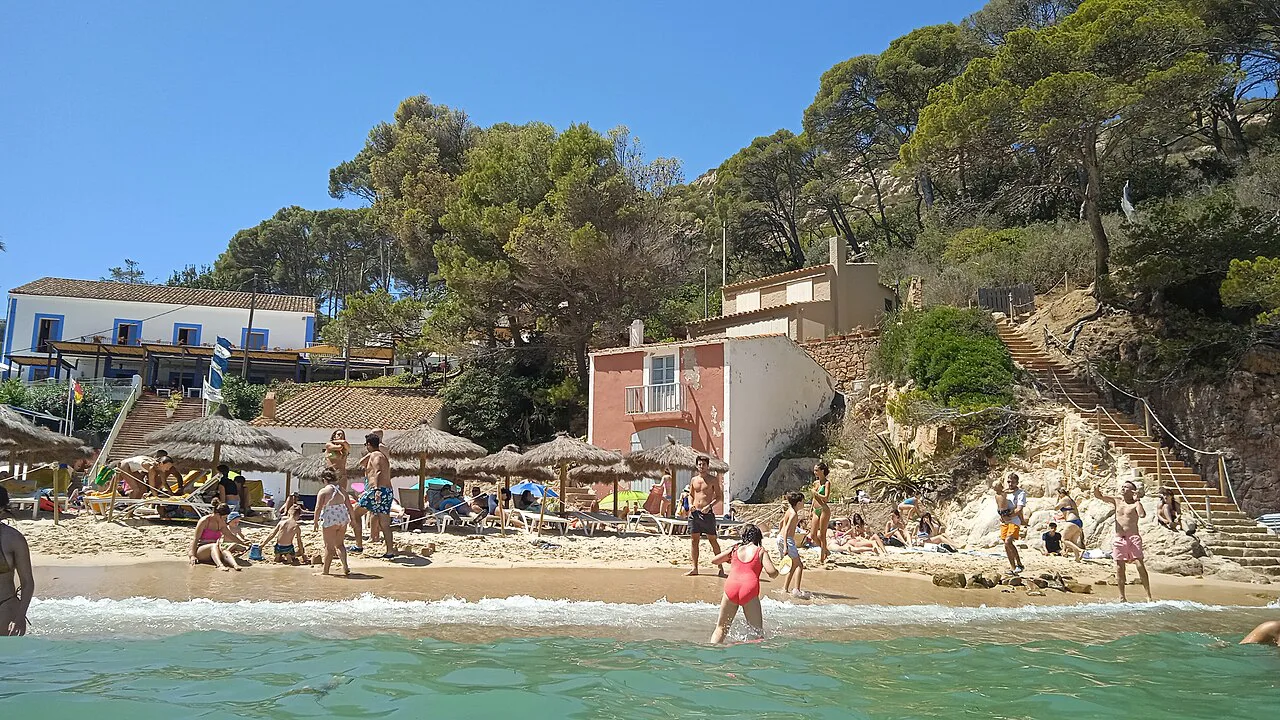
The beach has toilets and adapted showers, and a dive centre operates from the sand for those booking a session or hiring kit. Restaurants and shops are within a short walk of the beach in the surrounding residential area, so you can move between swimming and lunch without a drive. The tourist board tags Aiguablava for couples, families and hikers, which reflects how the cove functions: short visits, easy logistics and a mix of swimmers and walkers.
Sunbeds and shades are arranged by operators on the sand, so settle the rate with the attendant before you sit down. Beyond the published toilets and adapted showers, plan on bringing your own water, shade and picnic kit if you intend to stay through the middle of the day.
Water sports and diving
The dive centre at the back of the beach is the practical route into the water for anyone wanting to go beyond snorkelling. Book a session in advance in high season, since a single centre running from a small cove has limited spaces on any given day. Snorkellers working the rocks at the edges of the cove should stay aware of boat traffic entering and leaving, and follow any marker buoys in place.
Shelter and conditions through the day
The Parador headland shelters the cove from one side and the residential buildings from the other, so the beach holds its shape through the day rather than being scoured by cross-shore wind. In practice, the end closest to the dive centre is the busier, more serviced part of the beach, while the far end gives more room for families spreading out. Natural shade is limited on a beach this size, so a parasol or a shaded spot on the terrace of a nearby restaurant is worth planning for.
Watch the flags and any notices posted at the water's edge, and treat the shallow entry as a convenience rather than a guarantee: conditions change with swell and wind direction, and children should stay within arm's reach whatever the forecast says.
How busy it gets
Aiguablava's 40 by 80 metre footprint, matched to a single car park that charges in summer, sets a natural ceiling on how crowded the sand gets. In July and August expect the beach to fill by late morning, with the car park as the first thing to go. In the shoulder months the same cove can feel almost empty on a weekday, which is the best argument for shifting a Begur beach day into June or September.
Best time to go
July and August deliver the warmest sea and the fullest beach, and that is when the car park charge applies. June and September give comfortable swimming water with far more room on the sand, and the light at either end of the day is better for the cove's turquoise water. Whatever month you choose, aim to arrive before mid-morning: on a beach this size, an early start is worth more than any other tactic.
Nearby beaches to combine
Begur's coastline holds several other coves within a short drive, which makes Aiguablava an obvious first or second stop on a coves day rather than a standalone trip. Sa Tuna and Cala Estreta sit further along the same coast and suit a second swim or an afternoon walk when Aiguablava fills up. Further north, Calella de Palafrugell offers a larger, more developed base with a beach to match. If you are weighing up the wider region, the beaches in Tarragona make a useful comparison for a longer Costa Daurada stay.
Practical kit and a simple day plan
Pack light but deliberately: water, a parasol or beach tent for shade, reef-safe sunscreen and cash or a card for the car park tariff and any sunbed you take. Arrive by mid-morning, park beside the beach, and claim a spot at the quieter end before setting up. Keep lunch simple by walking to the surrounding streets rather than moving the car.
If you are combining coves, treat Aiguablava as a morning stop and move on to a second cove after lunch, when the sand is at its busiest. Check the Begur tourist office or your transport operator for current bus times and boat departures before committing to a car-free version of the day.
Plan Your Visit
Aiguablava is the Costa Brava cove to choose when you want fine sand, shallow water, toilets and adapted showers, restaurants a short walk away and a dive centre on the beach, all in one compact package beneath the Parador. Go early, park beside the cove, and keep an afternoon free for a second Begur beach once the sand fills up.
Frequently Asked Questions
How do you get to Aiguablava beach?
The tourist board lists access by car, bus, on foot and by boat. Drivers follow the signs to the Aiguablava Parador, which stands on the clifftop beside the beach, and walkers reach it along the residential roads and coastal paths. For current bus lines and boat departures, ask the Begur Tourist Information Office.
Is there parking at Aiguablava and do you pay in summer?
Yes. A car park sits immediately beside the beach, and it requires payment in summer. Rates are set on site, so read the tariff board as you enter, and arrive before mid-morning in high season because the spaces are limited.
Is Aiguablava beach good for families with small children?
It is one of the better Begur choices for young families: fine sand, shallow water close to the shore, toilets and adapted showers, and restaurants and shops within a short walk of the sand. The beach is compact, so it is easy to keep everyone in sight.
What facilities are on Aiguablava beach?
Toilets, adapted showers, a dive centre on the sand, and restaurants and shops in the surrounding streets. Sunbeds and shades are set out by operators, and you settle the rate with the attendant.
Can you dive or snorkel at Aiguablava?
Yes. A dive centre operates from the beach and is the practical way to book a session, and snorkellers can work the rocks at the edges of the cove. Book ahead in high season, since a small cove supports only limited places each day.
When is the best time to visit Aiguablava?
July and August bring the warmest sea but also the fullest beach and the summer car park charge. June and September give comfortable swimming with far more room on the sand, and in any month arriving before mid-morning makes the biggest difference.
Which beaches near Begur can you combine with Aiguablava?
Sa Tuna and Cala Estreta sit along the same Begur coast and work well as a second swim or an afternoon walk. Calella de Palafrugell, further north, offers a larger, more developed beach for the end of the day.
Sources
Beach notes for your next trip
Optional updates when we add or revise beach guides.
You might also like
Continue reading
More guides you'll find useful