Tossa de Mar Beaches: Platja Gran, Mar Menuda and the Coves
A practical guide to Tossa de Mar's beaches, from busy Platja Gran below the old town walls to quieter Mar Menuda and the coves along the Camí de Ronda.
On this page
Tossa de Mar gives you a swim under a walled medieval town, and that alone puts it ahead of most beach stops on this stretch of coast. The main bay sits directly below Vila Vella, the fortified old town on the headland, so you can alternate sand with cobbled lanes and a clifftop view. It suits travellers who want something to look at as well as somewhere to lie down.
The town also holds two very different alternatives within walking distance. Mar Menuda, around the far side of the headland, is the quieter, clearer-water option for snorkelling, while the coves to the north reward anyone willing to walk or drive a little further. Choosing between them is the main decision of a Tossa beach day.
Where Tossa's beaches sit in the town
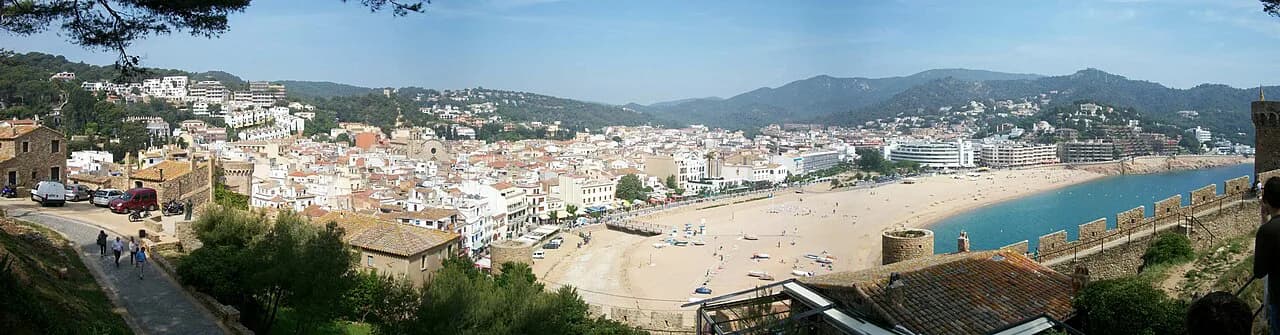
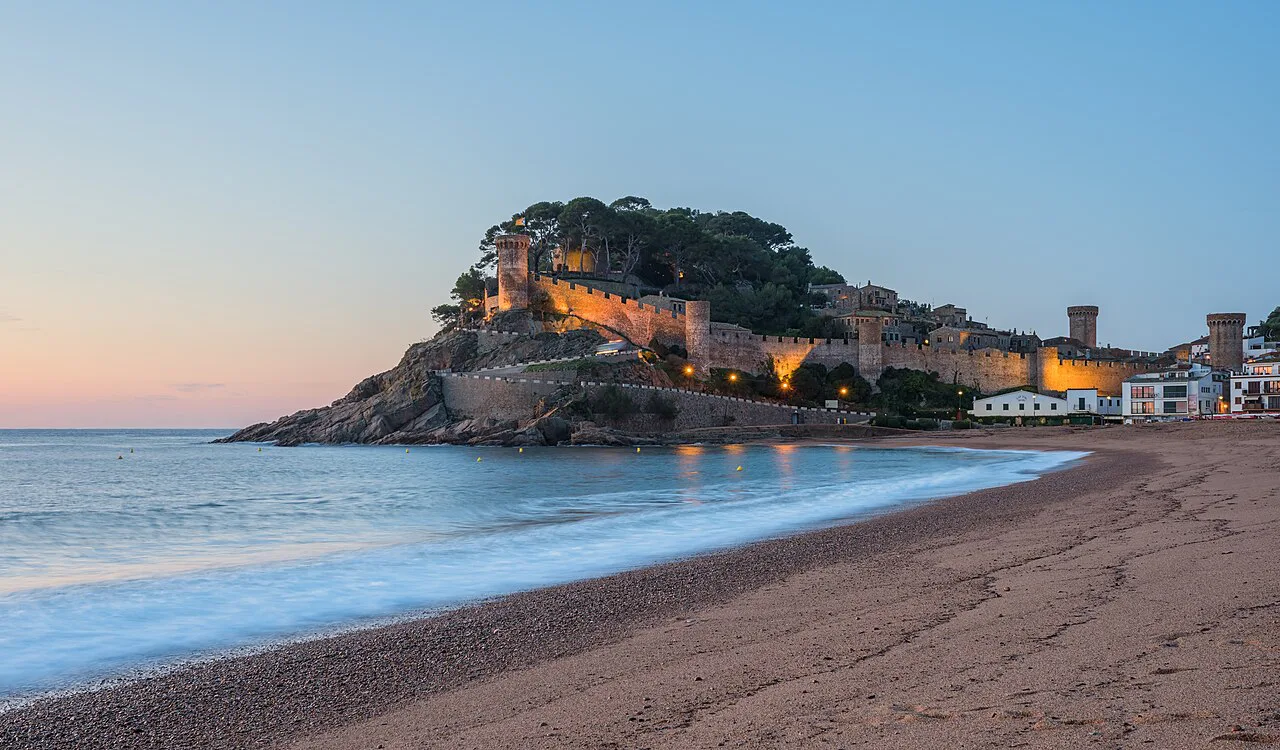
Platja Gran is the town's front room: a wide crescent directly below the old town walls, with the promenade running along the back of the sand and linking the beach to Vila Vella. The tourism board calls it an urban beach, with the bus station roughly a ten-minute walk away. That combination makes it the default choice for anyone arriving by coach.
Vila Vella occupies the headland at the southern end of the bay, and its walls and towers frame the beach in almost every photograph of Tossa. Walking into the old town is straightforward from the beach end, though the lanes are steep and cobbled. Mar Menuda lies around the other side of that headland, which is why it feels removed from the main seafront despite being close.
Platja Gran: the main bay below the walls
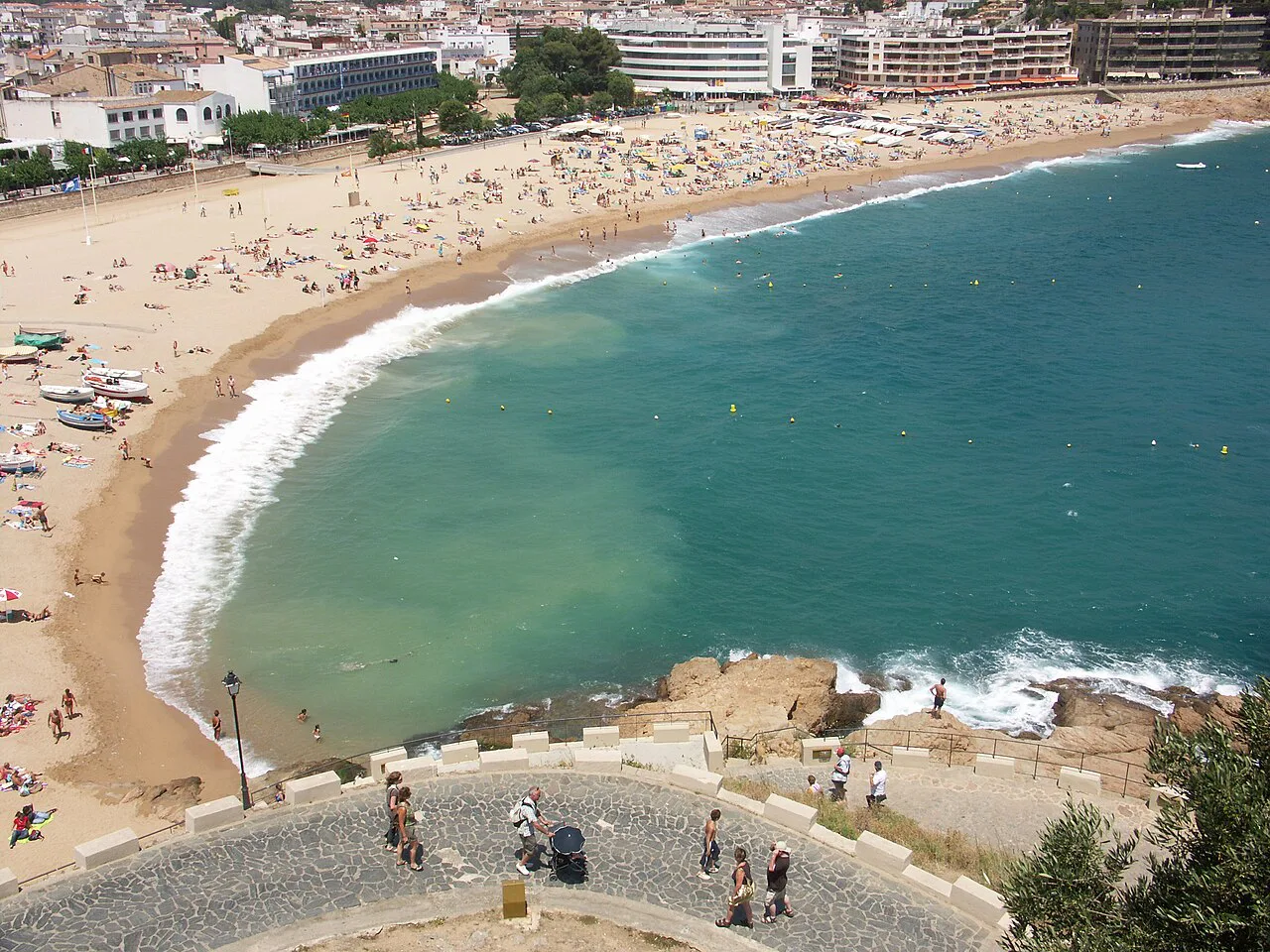
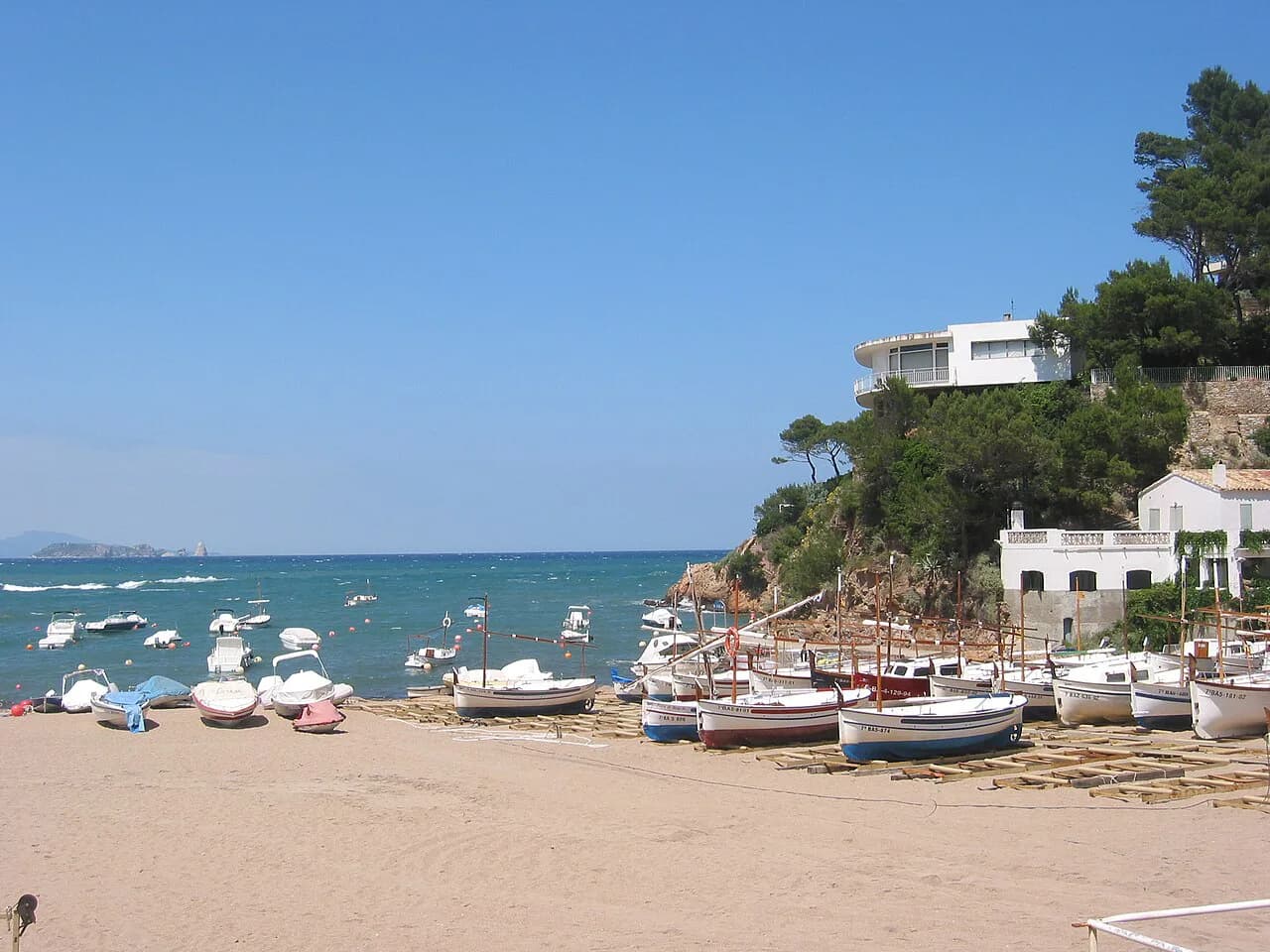
This is the beach most visitors picture: a crescent of coarse sand with the fortified old town rising at one end. The Costa Brava tourism board lists it as 345 metres long and 85 metres wide, and the scale matters, because it means there is room for swimmers, beach services and small boats drawn up on the sand. Other descriptions put the bay at closer to 380 to 400 metres, so treat the length as approximate and the generous width as the reliable point.
Its setting has earned outside attention as well as crowds. The tourism board notes that National Geographic ranked Platja Gran among the 25 best beaches in the world in its 2013 classification, a useful reminder of why August afternoons here are busy. If you want the view without the squeeze, come early or visit outside the peak weeks.
The sand and the water at Platja Gran
The sand is coarse rather than fine, mixed with small pebbles, so sandals help on the walk down to the waterline. More importantly for families, the tourism board reports significant depth within a few metres of the shoreline. That is good news for confident swimmers who dislike wading out, and a reason to keep small children close and choose your spot deliberately instead of counting on a gentle shelf.
The bay sits within the town, so it offers shelter in the sense of services and easy exits rather than guaranteed calm water. Read the flag on the day and judge conditions from the shoreline. For a gentler introduction to the sea, the shallower edges at the far ends of the crescent are usually the better bet, and the smaller coves north of town are an alternative when the main bay is choppy.
Facilities and the promenade behind Platja Gran
Everything you need for a full day sits behind the sand: the promenade connects the length of the beach and gives direct access to the old town, and the tourism board lists a Blue Flag for the beach. Chiringuitos along Platja Gran and restaurants through the old town cover everything from a quick lunch to a long seafood dinner. The town's layout means you are never far from a cafe, a shop or a loo.
The trade-off is that convenience attracts people. The tourism board notes that parking close by is no easy task in summer, so arriving by coach or on foot removes the main stress of the day. Bring your own masks and snorkels if you plan to explore the rocks, because hiring kit on the sand is not something to rely on.
Mar Menuda: the second beach and its snorkelling
Mar Menuda sits around the far side of the headland from Platja Gran, close enough to walk to but far enough to feel like a different resort. It is generally quieter than the main bay, and the water is clearer, which is why it draws snorkellers rather than families with buckets and spades. If your priority is swimming over rocks rather than having a lido behind you, this is the beach to head for.
The rocks below the castle headland and around the smaller coves north of town are the places to get in with a mask, and the water around Tossa is clear enough to make it worth carrying your own kit. Take masks and snorkels with you, go in from the rocky edges rather than the busiest sand, and pick your moment when the water is clear rather than after a blow.
The coves north of town: Cala Bona, Cala Pola and Cala Giverola
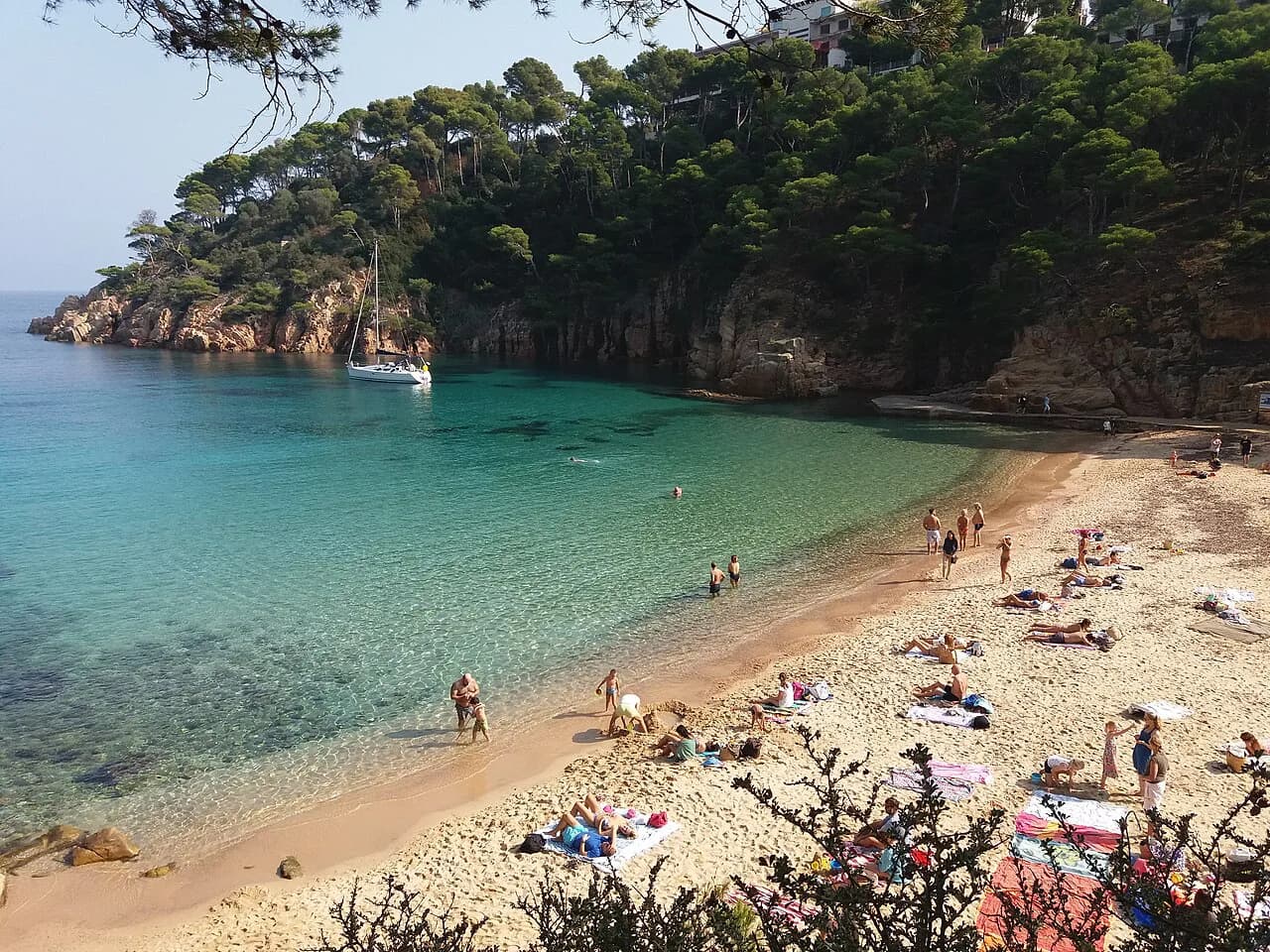
North of Tossa the coast breaks into a string of small coves, with Cala Bona, Cala Pola and Cala Giverola the names to know. They are reachable by the coastal road or, better, on foot along the Camí de Ronda, the clifftop path that runs along this whole coast. Each is small, so they fill quickly in high season and offer little in the way of shade beyond what the land provides.
The principle here is simple and worth building your day around: walk past the first beach and you get space. Set out along the path with water, footwear that grips and a plan to turn back when you find a cove you like, rather than committing to a fixed target. For a wider choice of coves and cliff paths along this stretch of the Costa Brava, the regional beach guides cover the coast north and south of Tossa.
Getting there: coach from Barcelona Nord, car, and the road from Blanes
The single most useful fact about Tossa is that it has no railway station. The Costa Brava rail line ends at Blanes, about 12 km away down a winding coast road, so the realistic options are a direct coach from Barcelona Nord or driving. By car from Barcelona takes roughly an hour, and the last stretch from Lloret is narrow and slow in summer traffic.
The coach is the practical choice for a car-free beach day, running direct from Barcelona Nord to the town, with the bus station about ten minutes' walk from Platja Gran. If your heart is set on a train-based day out, Pineda de Mar on the R1 line is far easier, though Tossa is the better town once you are there. Timetables and fares change with the season, so confirm them with the coach operator or the Tossa tourist office before you travel.
Parking in and around Tossa
Parking is the part of a Tossa day trip that decides your mood. The general rule on this coast is to arrive before 10am in July and August or accept a paid car park, and by midday in August everything within walking distance of the beach is full. Free options exist within walking distance of Platja Gran, and they are the strongest practical argument for choosing Tossa over other towns on this coast.
Outside high summer the pressure eases considerably, and a spot near the seafront becomes realistic at ordinary hours. Charges at paid car parks vary by operator and season and are not something to budget from memory, so look at the signs on arrival or ask at the tourist office.
Walking the Camí de Ronda between beaches
The Camí de Ronda is the clifftop path that links Tossa's beaches with the coves to the north, and it is the best way to move between them. Walking it turns a single beach day into a series of swims, with each cove offering a different character and a natural reason to stop. The path is also at its best in cool weather, when the walking is comfortable and the seafront is quiet.
Wear shoes with grip rather than flip-flops, carry water, and treat distances honestly: the path undulates along the cliffs rather than following the shoreline. Doing the walk in one direction and returning by the coastal road or a local bus keeps the day flexible.
Snorkelling: where the rocks are and what to bring
Tossa is one of the better snorkelling spots within reach of Barcelona, and the water here is clearer than along the Maresme coast to the south. The rocks below the castle headland and around the smaller coves north of the town are where to go. Take your own mask and snorkel, since that is the reliable way to have kit that fits.
Go in from rocky edges rather than through crowds of swimmers, and pick a day when the water is clear rather than after rough weather. Mar Menuda is the natural base for this, with the coves offering more solitude for the same kind of ground. Never assume the sea will be calm or that cover will be in place; read the conditions and the flags on the day.
Best time to go: June and September versus July and August
June and September are the months that make Tossa work best: warm water, open restaurants and parking that is actually findable. July and August deliver the fullest version of the town, with the tourism board noting an entertainment programme in August, but you should arrive before 10am and expect the place to be packed. Out of season the old town is still there and still free to walk around, the coast path is better in cool weather, and much of the seafront shuts down.
Build your day around the light and the crowds rather than around a fixed itinerary. An early swim at Platja Gran, a late-morning climb into Vila Vella and an afternoon at Mar Menuda spreads the pressure and gives you the best of all three.
Tossa with children: which beach and the climb to the castle
Children tend to take to Tossa because Vila Vella is a real castle they can walk around rather than a museum, which makes it an easier sell than almost any ticketed attraction. The climb from the beach is short but steep and cobbled, so a carrier beats a pushchair. Ava Gardner filmed Pandora and the Flying Dutchman here in 1951, and a statue of her looks out from the walls, which older children find more interesting once they hear about the film crew in a fishing village.
For the swimming itself, Platja Gran has the facilities and the easy exits but also deepens quickly a few metres out, so keep small children within reach. Mar Menuda rewards older children who want to snorkel over rocks, and the coves give space to run about if you are willing to walk. Mixing a beach morning with the old town in the afternoon keeps everyone happier than a full day on the sand.
Combining Tossa with other Costa Brava beach days
Tossa works well as one day in a longer run along this coast. Lloret de Mar is the nearest large resort and the natural pair for a second beach day, with a very different, busier character. Further options include Pineda de Mar, which is on the R1 train line and far easier without a car, and Platja d'Aro, which has more beaches, playgrounds and restaurants for a week with children. If you are weighing a different base entirely, the Sitges beaches offer the same urban-beach-beneath-an-old-town trade-off further down the Catalan coast.
If you only do one beach town in this part of Catalonia, choose Tossa, because it is the only one here with a reason to be there beyond the sand. Pick elsewhere if you have no car and no appetite for a coach, or if you want a quiet week rather than a day out.
Plan Your Visit
Decide first what kind of day you want: the wide, convenient bay beneath the walls, the clearer water and rocks at Mar Menuda, or the small coves up the Camí de Ronda. Then match your transport to it, because the coach from Barcelona Nord and the winding drive from Blanes lead to very different arrival times and parking prospects. Arriving before 10am in high summer is the single habit that makes the rest of the day easy.
Pack masks, grippy shoes for the old town and the coast path, and enough water for the walk between coves. Check current coach times and any beach rules with the Tossa tourist office before you set out, then give the day enough room for a swim, a climb and a long lunch.
Frequently Asked Questions
Which is the best beach in Tossa de Mar?
Platja Gran is the main beach, directly below the old town walls, with coarse sand, a wide expanse and full facilities behind it. Mar Menuda, around the headland, is usually quieter and has better water for snorkelling. The coves north of town, including Cala Bona, Cala Pola and Cala Giverola, are quieter again and reachable by road or on foot along the Camí de Ronda.
Is Tossa de Mar good for snorkelling?
Yes. The water is clearer than along the Maresme coast, and the rocks below the castle headland and around the smaller coves north of town are the places to go. Take your own mask and snorkel, and enter from rocky edges rather than through crowds of swimmers.
How do you get to Tossa de Mar from Barcelona?
By car or coach, since Tossa has no railway station and the rail line ends at Blanes about 12 km away. Direct coaches run from Barcelona Nord, and the drive takes roughly an hour, with a slow, winding final stretch from Lloret in summer. Confirm times and fares with the coach operator before travelling.
Is Tossa de Mar good with children?
It works well because there is more to do than lie on the sand. Vila Vella is a real castle children can walk around, though the climb is steep and cobbled, so a carrier is easier than a pushchair. Platja Gran has the facilities but deepens quickly a few metres out, so keep small children close; older children will enjoy snorkelling at Mar Menuda.
When is the best time to visit Tossa de Mar?
June and September give warm water, open restaurants and findable parking. July and August are the busiest, so arrive before 10am and expect the town to be full. Out of season the old town remains free to walk around and the coast path is better in cool weather, though much of the seafront shuts.
How long is Platja Gran?
The Costa Brava tourism board lists Platja Gran at 345 metres long and 85 metres wide, while other descriptions put the bay at close to 380 to 400 metres. Its width is the reliable point: there is room for swimmers, services and small boats drawn up on the sand.
Do you need a car for a Tossa de Mar beach day?
Not necessarily. Direct coaches run from Barcelona Nord, and the bus station is about ten minutes' walk from Platja Gran. A car gives more flexibility for the coves north of town, but parking close to the beach is difficult in summer and free spaces fill before 10am in July and August.
Sources
Beach notes for your next trip
Optional updates when we add or revise beach guides.
You might also like
Continue reading
More guides you'll find useful