Tamariu Beach, Costa Brava: A Family Cove Guide
Tamariu beach on the Costa Brava is a small sandy bay framed by white houses and a promenade, handy for young children. Here is how to reach it and when to go.
On this page
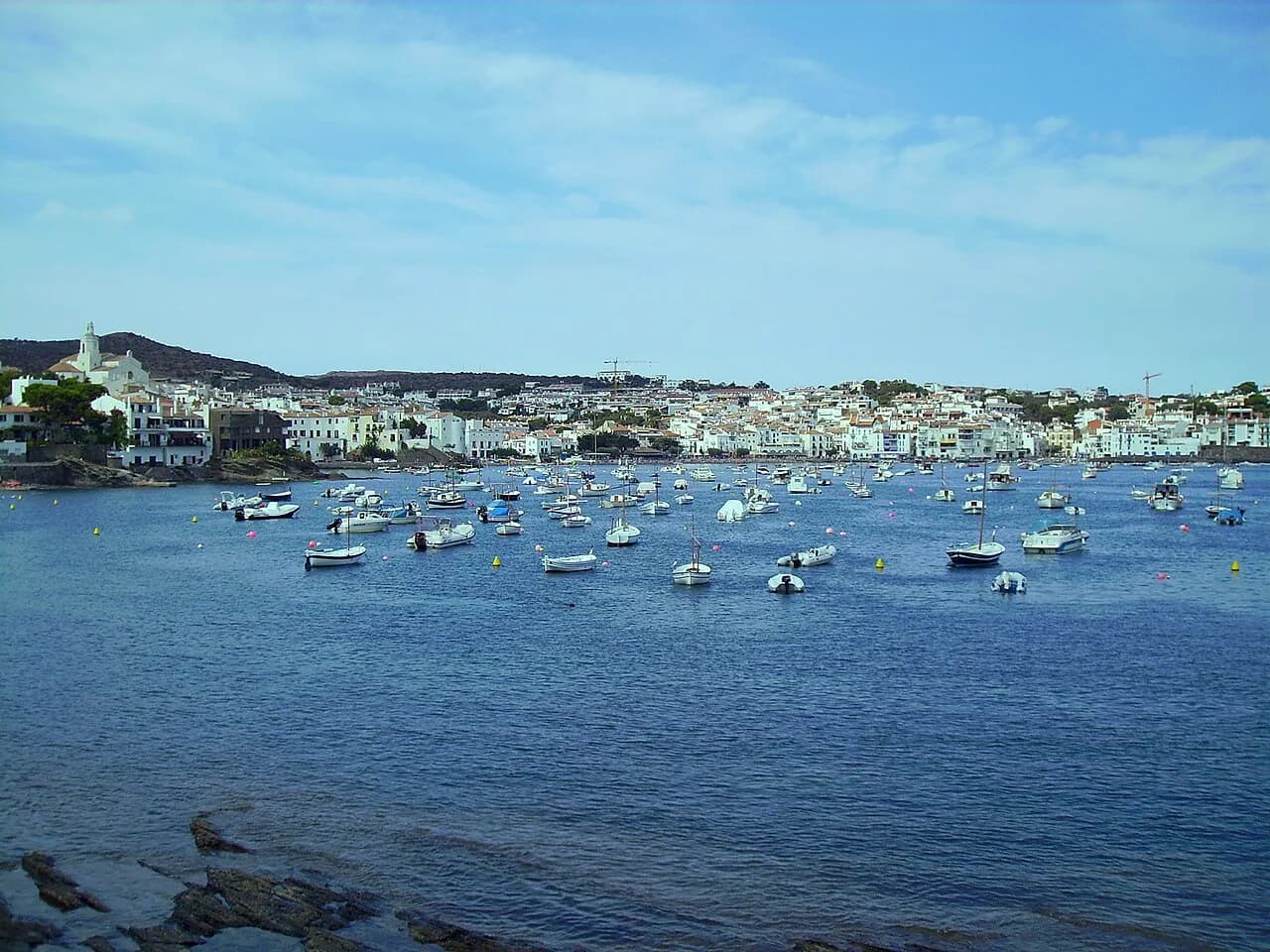
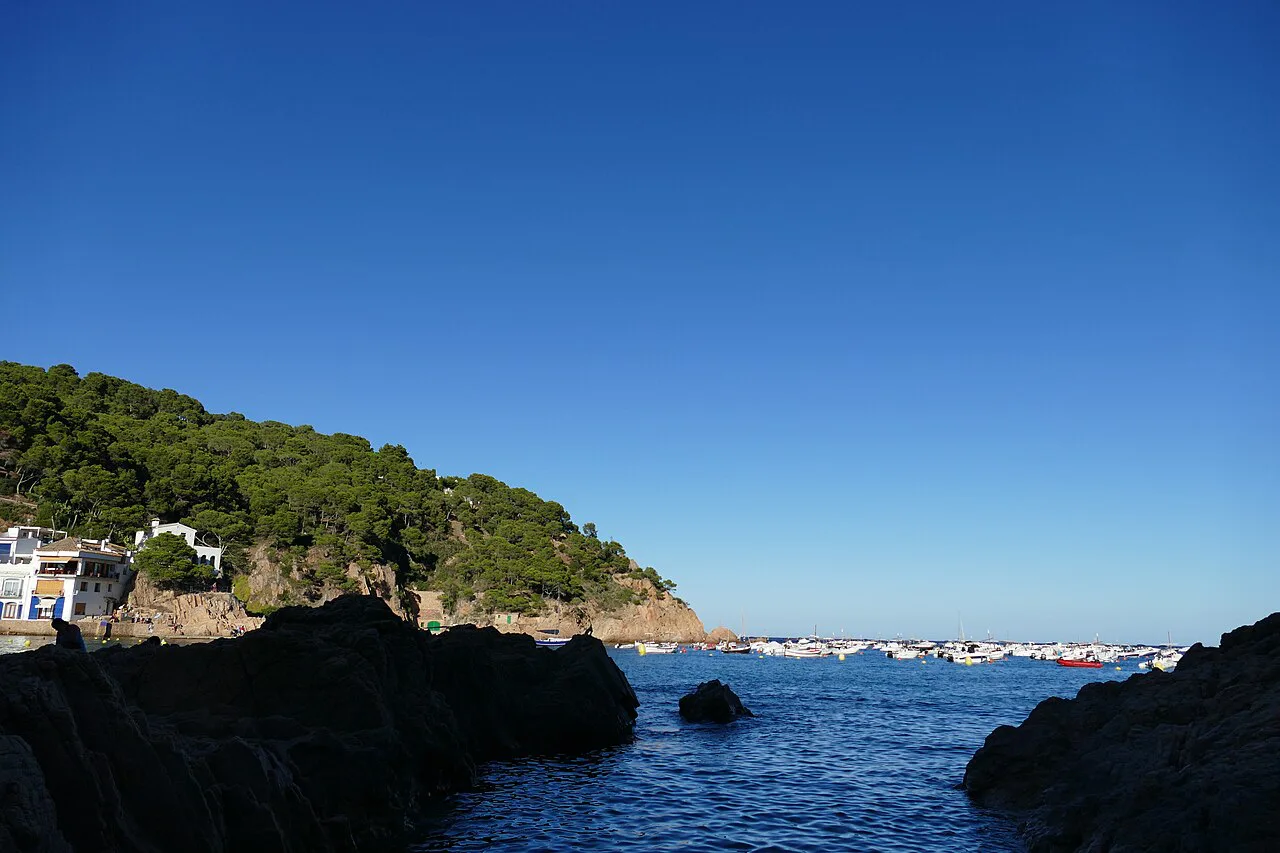
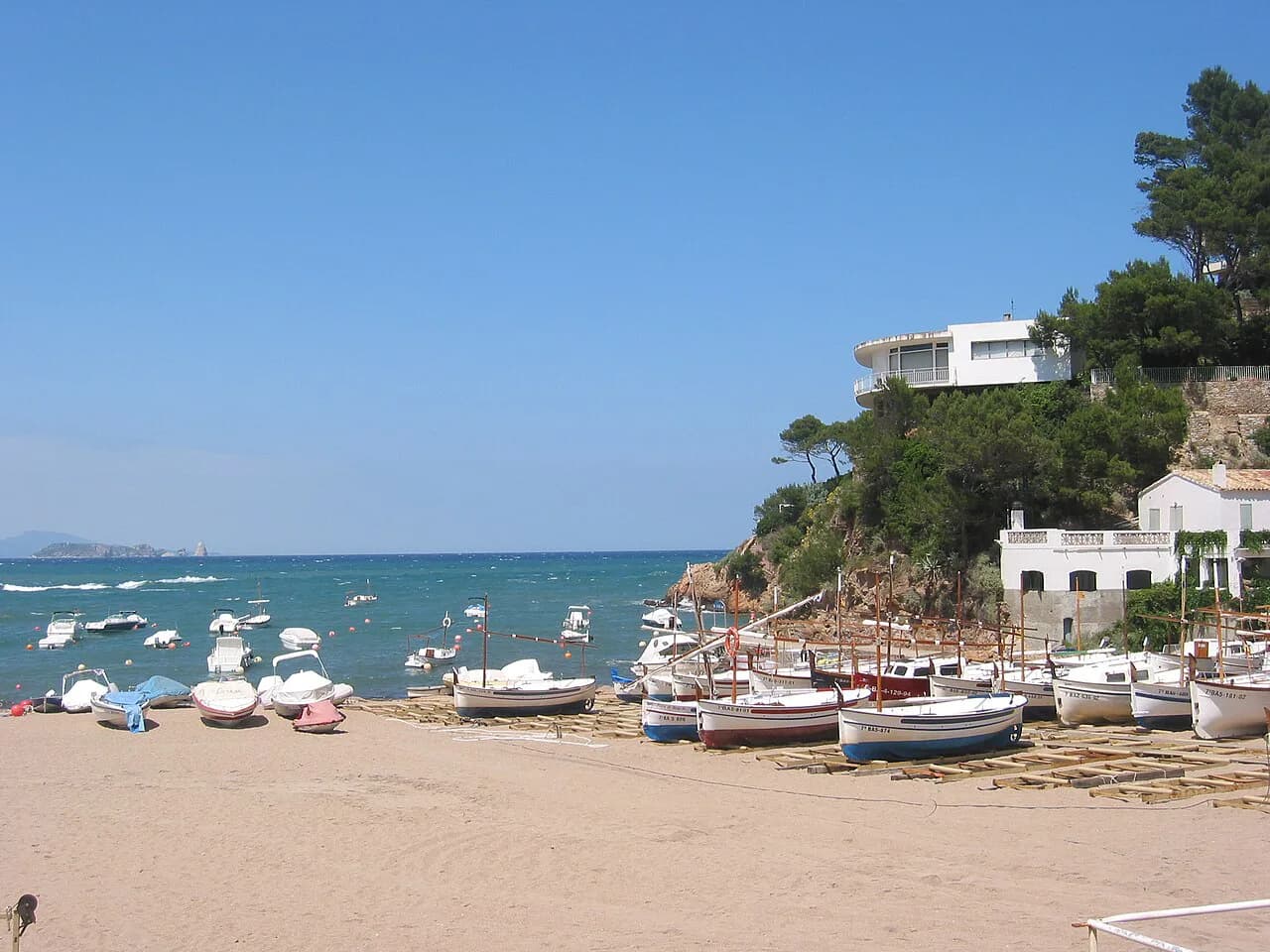
Tamariu beach puts the sand directly at the bottom of the village, so you walk out of the lanes and onto Platja Gran rather than driving to a car park behind the dunes. The bay is small and sheltered, framed by white houses and tamarisks along the promenade, and it draws families who want a short stroll from breakfast to swimming.
It is a village beach rather than a resort strip: the appeal is the compact scale and the coves within walking distance on either side. If you want a wide, busy strand with rows of beach bars, look elsewhere on the coast; if you want a bay you can cross in a few minutes, this is the one.
Where Tamariu sits on the Costa Brava
Tamariu is a district of Palafrugell, tucked between wooded hills and the coast roughly 55 km from Girona and 140 km from Barcelona. The neighbouring bases are close: Llafranc is about 3 km away, Calella de Palafrugell about 5 km and Begur about 7 km, which makes the village a practical base for a week of cove-hopping.
The name comes from the tamarisks that line the promenade, and the village keeps its original character of white houses, small paths and a seafront framed by fishing houses. That low-rise layout is why the beach feels like part of the town rather than a separate destination.
Getting there
Access is by road, with Girona-Costa Brava airport about 55 km away and Barcelona-El Prat about 140 km, and the surrounding coast sits within a short drive of the village. Once in Tamariu, arrival at the beach is on foot through the lanes, so park or drop off and walk the last stretch rather than expecting to pull up beside the sand.
Travellers without a car should plan around the Palafrugell bus and coach connections, since the village sits off the main coast road. Bus operators and the Palafrugell tourist office publish current lines and timetables.
The sand and the water
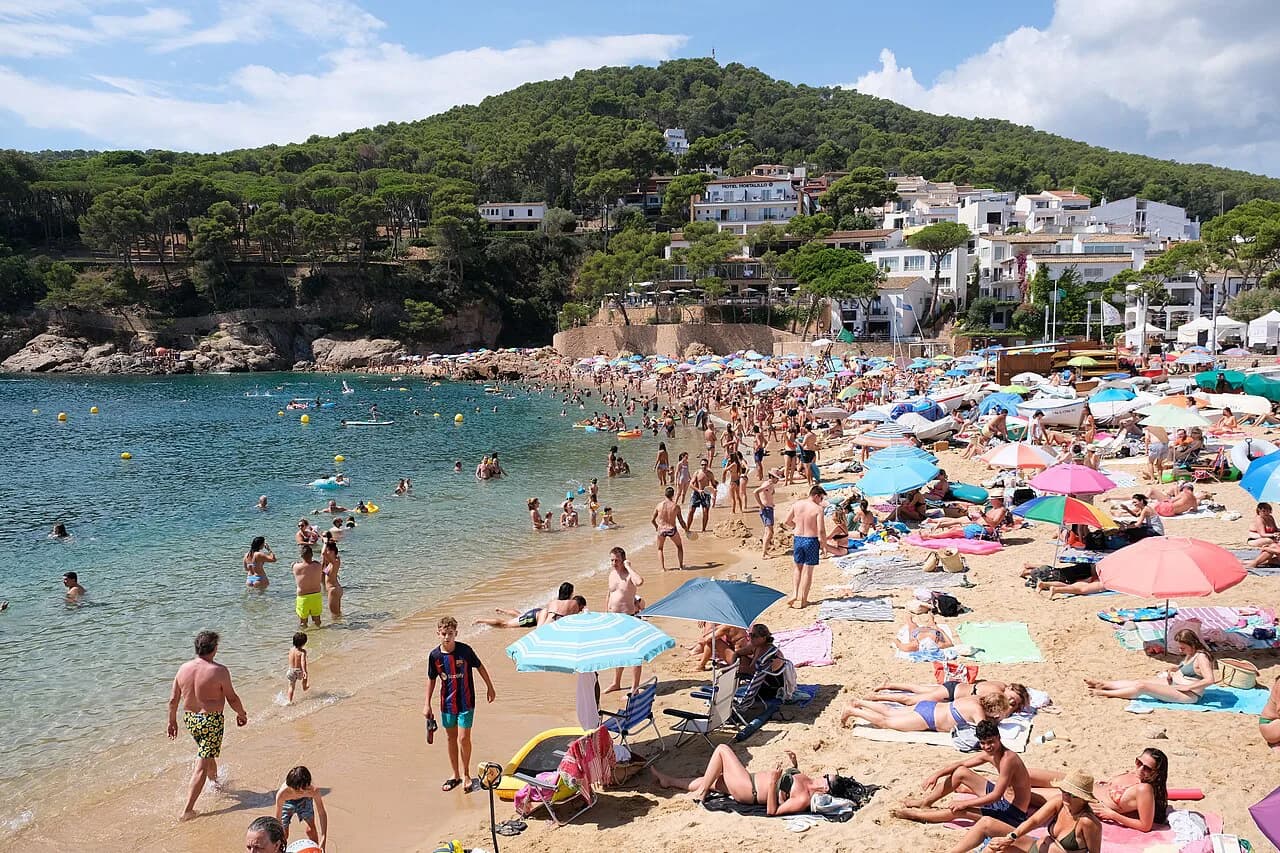
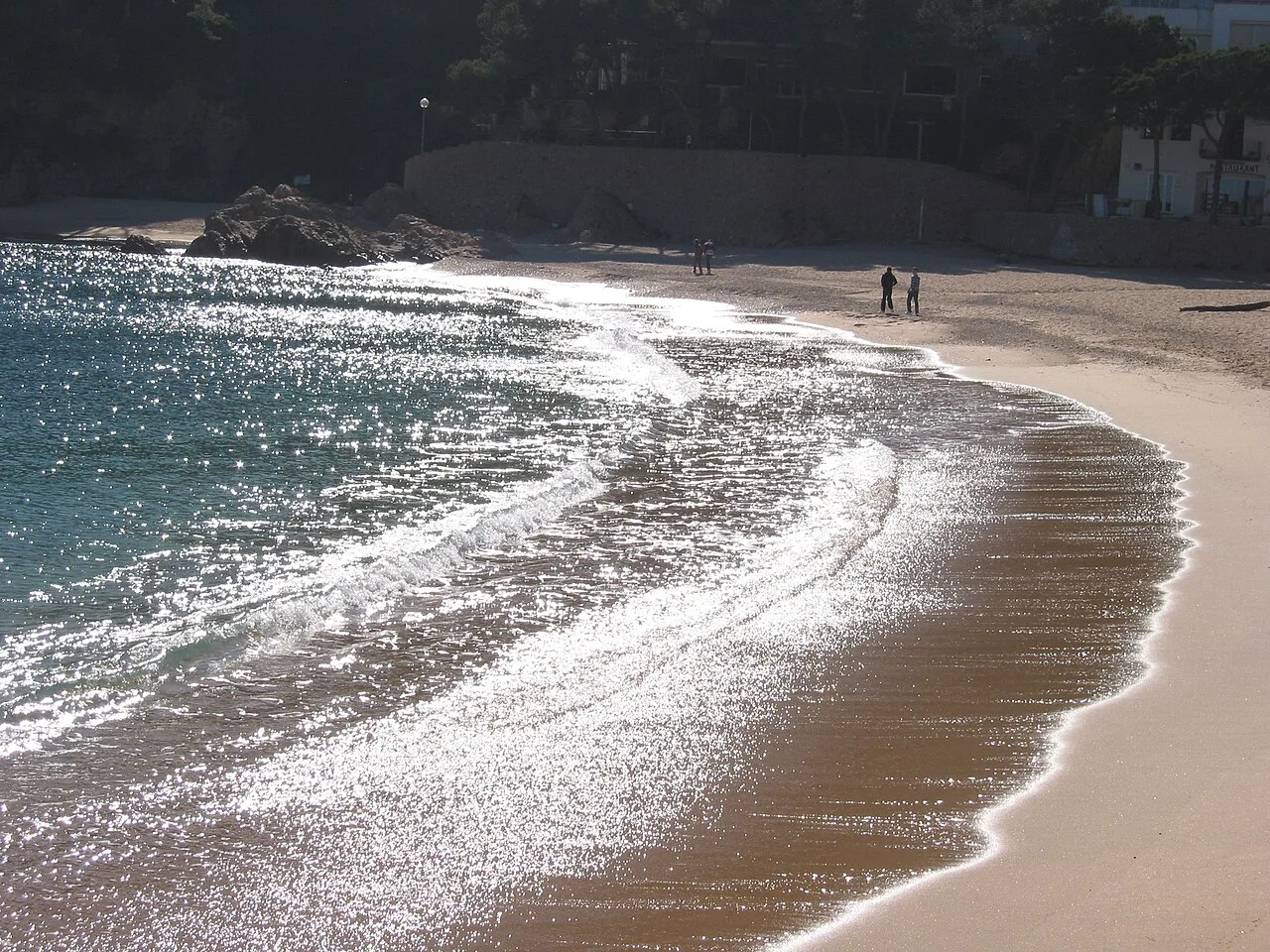
Platja Gran, the main beach, is soft sand with clear water, and the bay is small enough that you can see the whole curve from the promenade. The bay generally stays calm through the summer, which is the main reason families with small children choose it over the longer strands nearby.
Treat that calm as a summer pattern rather than a guarantee: the bay opens to the sea, so watch the flag on the day and keep young children within reach. On busy August days the compact size works against you, because the sand fills quickly and the waterline gets crowded by mid-morning.
Who it suits
Families with young children, sunbathers who want the village on the doorstep and swimmers who prefer a short crossing to an open-water slog all fit here. The trade-off is space: a compact bay means less room to spread out, so arrive early in July and August and set up at the quieter end away from the busiest stretch near the village centre.
Snorkellers should head for the rocky coves either side of the main beach rather than the sandy bay itself, where there is little to see under the water. Bring reef shoes for the cove paths, since the entrances mix rock and sand.
Facilities on the seafront
Restaurants serving regional and international food, cafés and small shops line the seafront and the village lanes, so food and drink are a short walk from the sand rather than a drive. The seafront is framed by white houses, fishermen's huts and the tamarisk-lined promenade, which gives the bay its village character.
Sunbed and parasol hire on Platja Gran is arranged by the concession holders working the beach, and any charge is set locally each season, so ask at the kiosk on the day. The same applies to any boat trips from the village quay.
The coves either side
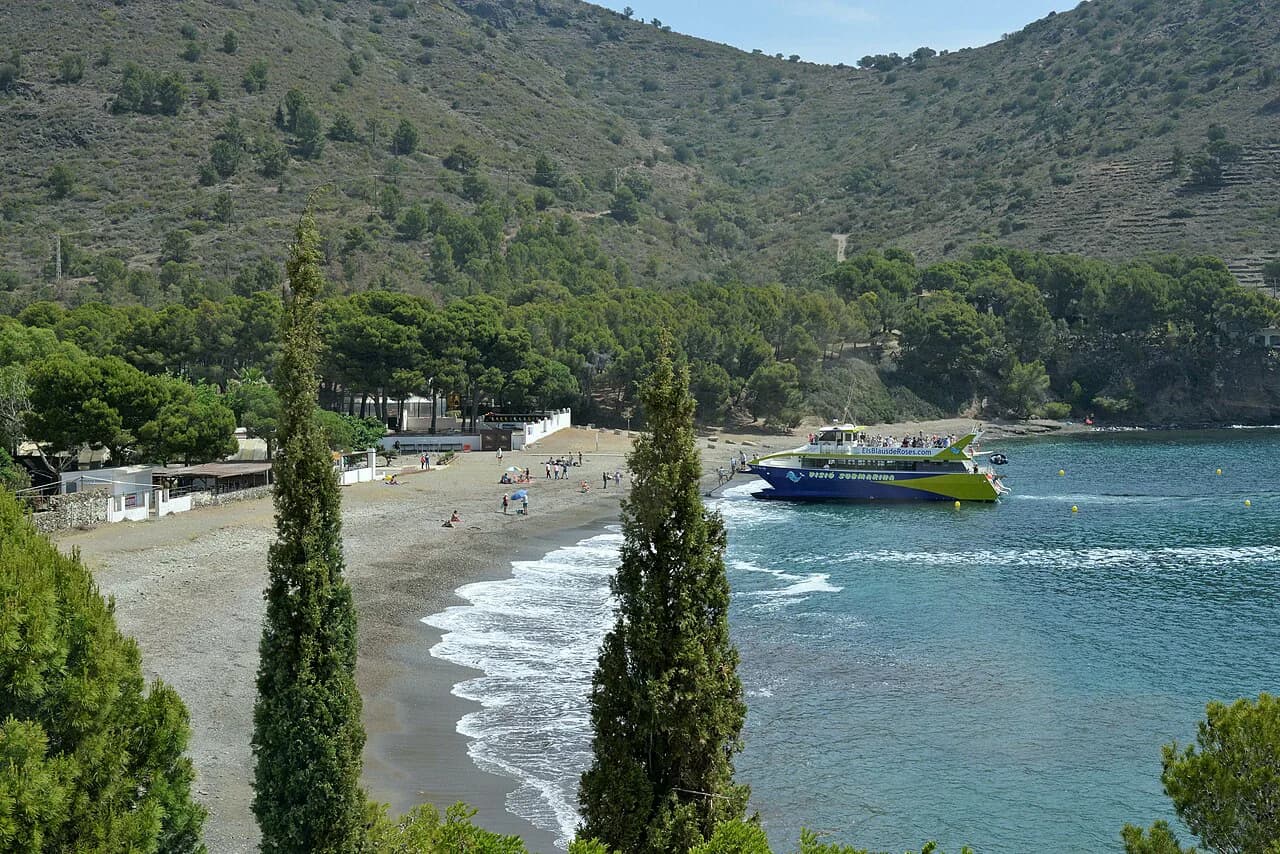
To the south, Lliris is a historic cove with a traditional fishermen's hut, and Cala Pedrosa sits along the coastal path with fishing houses in picturesque surroundings. Cala d'Aigua Dolça, the secluded rocky cove, lies to the north, so the southern pair makes an easy half-day loop with a swim at each stop.
To the north, the secluded rocky Cala d'Aigua Dolça is the simple option, while the untouched Cala d'Aigua Xelida is reached by water only, so plan it around a boat rather than a walk. Further up the coast, Sa Tuna and Aiguablava make worthwhile additions if you are touring the Begur headlands by car.
Best time to go
The swim season runs through the summer, with July and August the busiest weeks and the sand at its most crowded. June and September give warm sea with more room on the beach, and the coastal paths are more comfortable to walk outside the hottest part of the day.
The cultural highlight is the Cantada d'Havaneres, a sea shanty concert held on Platja Gran on the first Saturday of September, which brings visitors in from across the region. If you want the beach to yourself, plan around that weekend rather than through it.
Nearby beaches to combine
Llafranc, about 3 km away, has a promenade and a sandy beach, and Calella de Palafrugell, about 5 km, offers idyllic coves with a Mediterranean feel. Both work as a change of scene for an afternoon, and the Calella de Palafrugell Beach Guide covers the village beach in detail; the Girona beaches guide sets out the wider choices along this stretch. If you want to weigh up resort-scale strands against these small coves, the Sitges beaches offer a useful comparison further down the Catalan coast.
Begur, about 7 km inland, is the gateway to a cluster of coves including Sa Tuna and Aiguablava, and makes a full day out by car. For a wilder walk, Cala Estreta and Platja de Castell further north reward the drive with longer, less developed shorelines.
Dog-friendly considerations at Tamariu and the surrounding coves
Readers travelling with a dog often ask how the Tamariu setting works for animals, and the sources describe a resort built around outdoor movement rather than enclosed spaces. Tamariu is a picturesque district of the Catalan town of Palafrugell, nestled between wooded hills and the crystal-clear Costa Brava coastline, and the name comes from the tamarisks lining the promenade. The combination of white houses, sandy beaches and Mediterranean vegetation creates a welcoming atmosphere, and numerous small paths between the houses and beaches invite leisurely strolls, which gives a dog plenty of shaded, walkable ground away from the crowded sand. The coastal path along the shore also passes the charming Cala Pedrosa with picturesque surroundings and additional historic fishing houses.
The layout of the bay and coves matters for planning a dog walk. The main beach, Platja Gran, features soft sand and clear waters, and to the south lies the historic cove Lliris with a traditional fishermen's hut, while the secluded rocky cove Cala d'Aigua Dolça in the north invites relaxation. Only accessible by water, the untouched Cala d'Aigua Xelida is a true Costa Brava gem. Travel with a dog therefore centres on the paths, the promenade and the rocky stretches rather than on reaching every cove, since some of the most secluded spots cannot be reached on foot at all.
For longer days out, the area around Tamariu offers varied ground within easy reach. Llafranc is 3 km away, a charming coastal town with promenade and sandy beach; Calella de Palafrugell is 5 km away with idyllic coves and Mediterranean flair; Begur is 7 km away, a picturesque village with coves, beaches and historic centre; and Girona, 55 km away, is a historic city with old town, museums and restaurants. The area offers a variety of restaurants serving regional and international cuisine, cozy cafés, small shops and a high level of safety, which is ideal for families and independent travelers. In terms of access, Tamariu is easily accessible by road, with the nearest airports at Girona-Costa Brava, approximately 55 km away, and Barcelona-El Prat, approximately 140 km away.
Timing a visit around local events helps if you want quiet walks with a dog. A cultural highlight is the annual Cantada d'Havaneres on the first Saturday of September, a traditional sea shanty event on Platja Gran that brings maritime traditions to life and attracts visitors from across the region, so the seafront is busier then. Outside such dates, the resort keeps its authentic character, just like the nearby coastal towns of Llafranc and Calella de Palafrugell, despite modern influences, and it remains a destination for those seeking peace, nature and the unspoiled beauty of the Costa Brava.
Walking the camí de ronda from Tamariu with a dog
If you want to stretch a beach day into a coastal walk, the camí de ronda is the path to plan around, and the stretch between Calella de Palafrugell and Llafranc is described as skirting the coast with different slopes and stairs, doable without difficulty and with the whole family. The route starts right at the end of Platja El Canadell, where signs point the way to Llafranc, and in Llafranc itself you reach a beach of about 350 meters in length backed by a promenade with a great gastronomic offer. Tamariu is the smallest of the three coastal towns of the municipality of Palafrugell, alongside Calella de Palafrugell and Llafranc, all old fishing villages that still keep their narrow streets and white façades by the seafront.
From the Llafranc side you can add a climb to the Sant Sebastià Lighthouse, set on a cliff 187 meters above the sea, reached all the way to the top by car or on foot by the stairs that start from the Llafranc marina itself; at the top are a Japanese restaurant, the restaurant and hotel El Far, and the remains of an Iberian archaeological site from the 6th century BC. For a shorter outing around Tamariu, the village is surrounded by nature and small coves that are difficult to access, some of which can only be reached by sea on a kayak, and the best-known ones are Cala Pedrosa, Aiguadolça, Aigua Xelida and Cala Marquesa.
Time your walk around the heat rather than the map: the region's famous beaches and coves, Tamariu Beach among them, tend to be quite crowded, particularly during summer, so it is best to go earlier in the morning or late in the afternoon. For a quieter objective, hidden and less accessible coves such as Cala Estreta, Cala d'Aigua Xèlida and Platja Fonda are named as calm spots to sunbathe and dive peacefully, and the Platja del Golfet, north of the Cap Roig Gardens, is a small cove that can only be accessed on foot from the coastal path.
Plan Your Visit
Base yourself in Tamariu if you want the beach at the end of the street, or in Palafrugell or Calella de Palafrugell if you want more choice of restaurants and a shorter transfer from the bus network. Book accommodation early for the first weekend of September and the peak August weeks.
Pack reef shoes for the coves, cash or a card for the beach kiosks, and a sun shade for the midday hours when the compact bay offers little natural cover. The Palafrugell tourist office can confirm current boat trips, sunbed hire and event arrangements.
Frequently Asked Questions
Is Tamariu beach good for young children?
The bay is small and generally stays calm through the summer, which is why families with small children choose it, and the sand is soft with clear water. It still opens to the sea, so watch the flag on the day. Because the beach is compact, it fills quickly in August and an early arrival makes a real difference with pushchairs and buckets and spades.
How do you get to Tamariu beach?
Tamariu is reached by road, roughly 55 km from Girona-Costa Brava airport and 140 km from Barcelona-El Prat, and once you are in the village the beach is a short walk through the lanes. Drivers park or drop off and walk the last stretch rather than pulling up beside the sand. Without a car, plan around Palafrugell bus and coach connections and the local taxi rank.
What is the nearest airport to Tamariu?
Girona-Costa Brava airport is the closer of the two, about 55 km away, while Barcelona-El Prat is around 140 km. Girona suits a short transfer and a hire car, and Barcelona gives more flight choice at the cost of a longer drive. Allow for the winding final approach through the wooded hills into the village.
When is the best time to visit Tamariu beach?
June and September give warm sea with more room on the sand, while July and August are the busiest weeks and the compact bay crowds by mid-morning. The first Saturday of September brings the Cantada d'Havaneres sea shanty concert to Platja Gran, so plan around that weekend if you want quiet swimming.
Which coves are near Tamariu beach?
Lliris and Cala Pedrosa sit to the south along the coastal path, both with traditional fishing huts, and the rocky Cala d'Aigua Dolça is to the north. Cala d'Aigua Xelida is reached by water only, so pair it with a boat trip rather than a walk. Reef shoes help on the mixed rock and sand approaches.
Is Tamariu worth visiting on the Costa Brava?
Yes if you want a village beach where the sand meets the promenade, with white houses, tamarisks and coves within walking distance. Choose it for a family base or a half-day stop between Llafranc and Calella de Palafrugell. If you want a long resort strand with rows of beach bars, another Costa Brava town will suit better.
Sources
Beach notes for your next trip
Optional updates when we add or revise beach guides.
You might also like
Continue reading
More guides you'll find useful