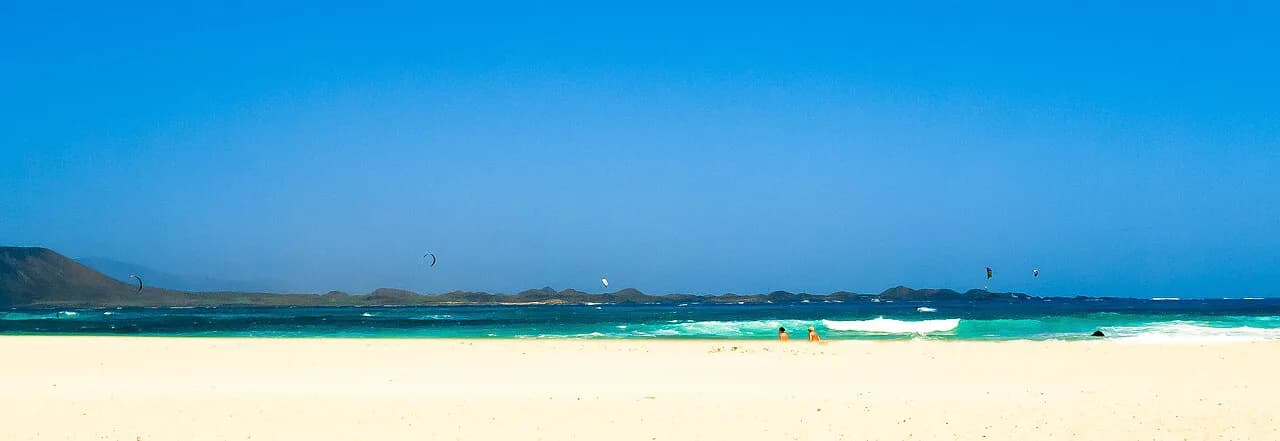
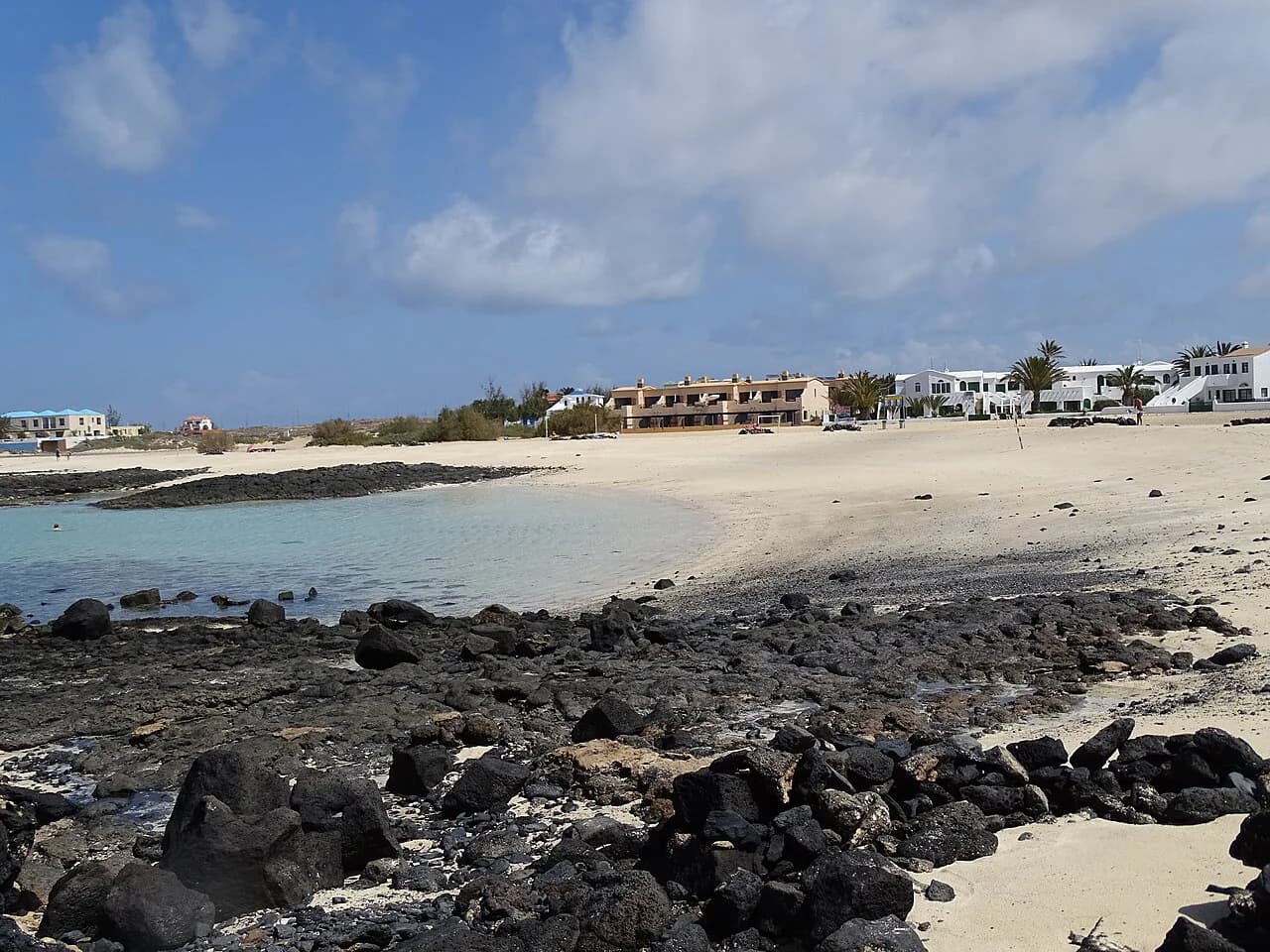
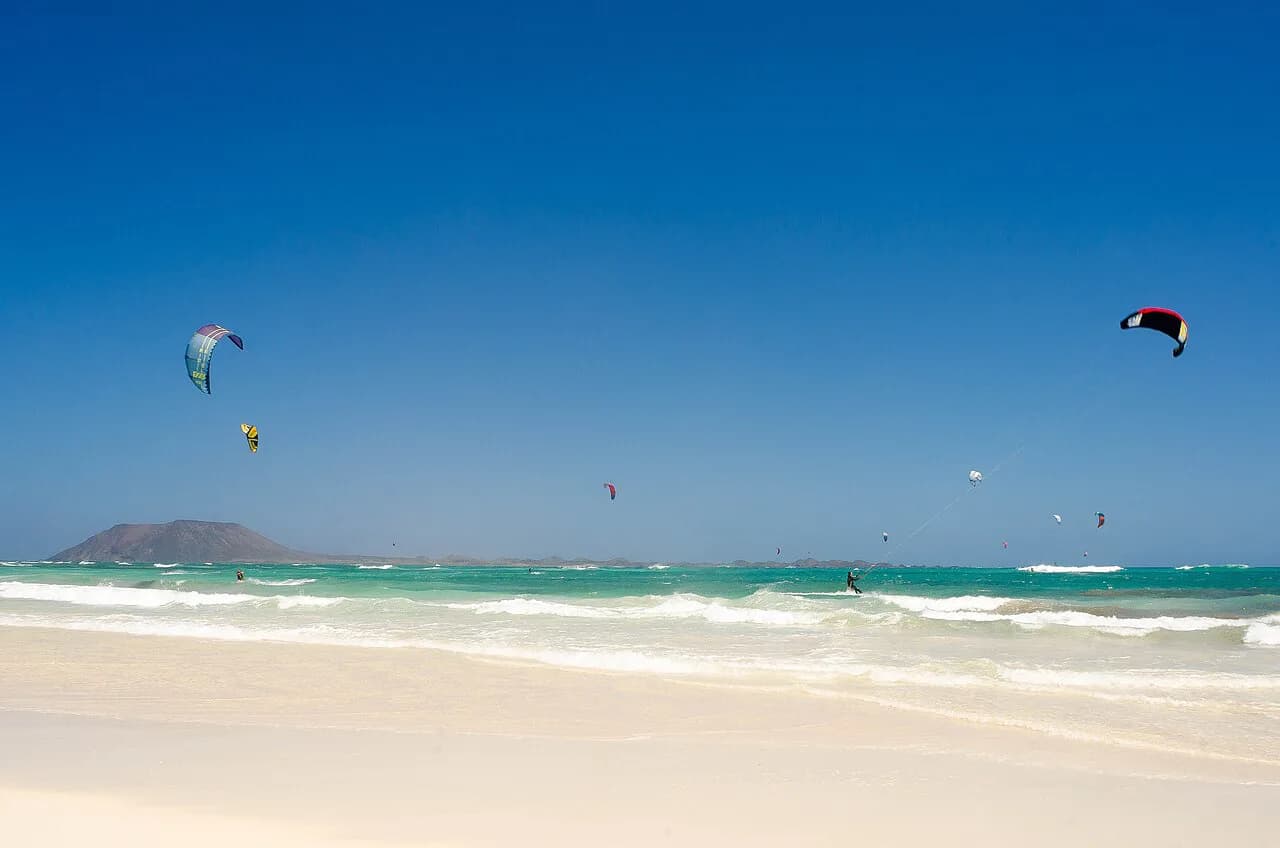
Sotavento Beach Guide: Plan Your Corralejo Beach Days
Plan a day at Sotavento beach in Fuerteventura, from the Costa Calma approach to the tidal lagoon, wind and surf, plus nearby beaches to combine.
On this page
Sotavento is the long, open beach of Fuerteventura's Jandía peninsula, the kind of place where the day you get depends on the wind. Surfers and windsurfers treat it as one of the island's best summer venues, while families and gentle swimmers gravitate to the wide, shallow lagoon water that the tides leave behind. It suits anyone who wants space and a big horizon more than a neatly serviced resort beach.
The nearest base is Costa Calma, with the closest hotels standing about 2.5 km north of the sand, roughly half an hour on foot. Coming from Corralejo at the northern tip of the island is a far longer proposition than the map suggests, so it pays to plan Sotavento as a full day out rather than a quick dip between other stops.
What Sotavento Beach Is and Who It Suits
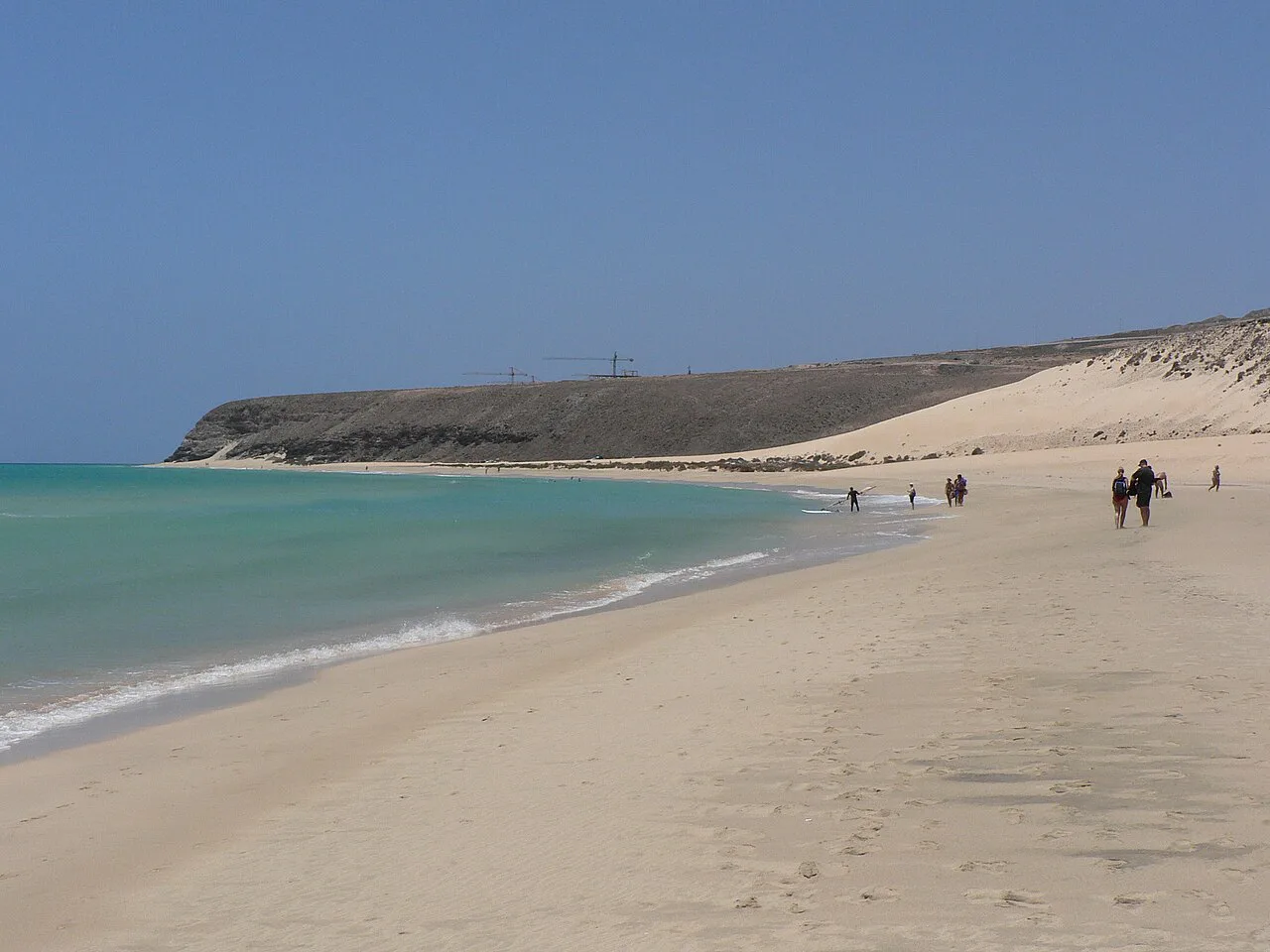
This is a big, exposed Atlantic beach with sand underfoot and no trees along the coast, so shade is something you carry in rather than find. The shoreline shifts with the tide, and the wide, shallow lagoon water that forms at low tide is the reason families with small children and nervous swimmers give it a look. Bring a parasol, a windbreak and plenty of water, because the sun and breeze together dry you out quickly.
Two very different beach days happen here. On a calm morning it is a swimming and paddling beach; once the trades fill in it belongs to kite and wind surfers, and anyone hoping for glassy water will be disappointed. Decide which of those days you want before you set out, because the same stretch of sand delivers one or the other rather than both at once, and the wide, shallow lagoon is the reliable choice when the breeze picks up.
Where It Sits on the Jandía Peninsula
Sotavento runs along the coast of the Jandía peninsula in southern Fuerteventura, with Costa Calma as the nearest town and the nearest hotels set back about 2.5 km to the north. Nothing is built directly against the sand, which is why the beach feels so open and why you should arrive with everything you need for the day. The resort strip gives you shops and places to eat before you walk out to the shore.
Treat the peninsula as a single outing rather than a series of quick hops. Playa de Sotavento de Jandía and the beaches around Costa Calma merge into one another along this stretch, so pick your access point and settle rather than chasing a better patch further along.
Getting There from the Costa Calma Side
From Costa Calma the simplest approach is on foot or by car down to the beach access points, then a short walk over the sand to find your spot. Walkers based in the resort should allow around half an hour from the nearest hotels, which is comfortable in the morning cool and a slog in the afternoon heat. Bring water for the return leg, as there is no tree cover along the coast.
If you are driving, park where the access tracks meet the coast and carry everything from the car in one trip; the soft sand makes repeated journeys tiring. Local bus services run along the Costa Calma and Jandía corridor, and the tourist office in Costa Calma can point you to the current stop and timetable for the beach access nearest your accommodation.
Arriving from Corralejo and the Airport
Fuerteventura Airport sits roughly 60 km north of Sotavento, a drive or bus ride south that takes the best part of an hour once you are clear of the airport roads. Hiring a car gives you the most flexibility for a beach this far from the northern resorts, and lets you combine the day with stops along the way.
From Corralejo in the north, Sotavento is a long haul down the island rather than a nearby beach, so build it into a southern day out or a change of base rather than a morning spur. If you are staying in the north, the beaches around Corralejo and the dunes are far closer at hand, and the northern beaches make an easier default for short trips.
The Sand and the Tidal Lagoon
The beach is sand from the waterline inland, and the tide reshapes it through the day, leaving broad shallow water in the lagoon behind the main shoreline. That lagoon is the beach's great gift to families: children can paddle in water that stays shallow over a wide area while the adults keep watch from the sand. Water shoes help on the walk out across the flats, and the lagoon warms quickly in the sun.
Beyond the lagoon the Atlantic deepens and the surf picks up, which is where the swimmers and board riders separate. Strong swimmers can enjoy the open water on a calm day, but the same stretch becomes a surf zone when the wind rises, so watch the flags and follow the lifeguards' positioning rather than striking out on your own.
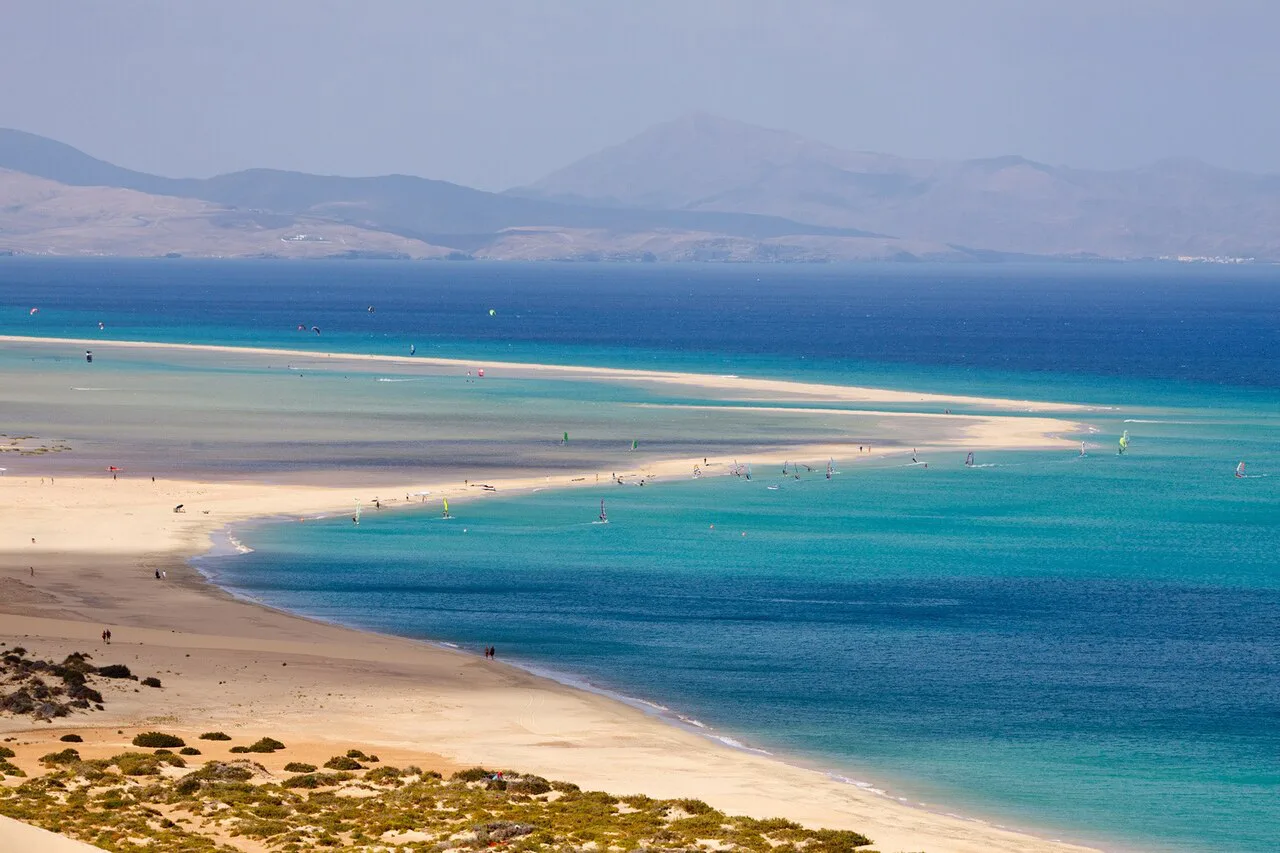
Wind, Waves and Shelter
Sotavento is a windy beach by reputation, and the steadiest winds arrive from June to August, which is exactly when windsurfers and kite surfers want it. That pattern also tells swimmers what to expect: early mornings tend to be the softest window, with the breeze building through the afternoon. A low windbreak makes the sand far more comfortable on those breezy days.
There is little natural shelter along this coast, so plan your setup around the wind rather than hunting for shade that is not there. Settle slightly back from the waterline on the landward side of the lagoon for a calmer base, and keep bags weighted down. Surf schools and windsurf schools use sections of the beach, so give them room and keep clear of launched boards.
Swimming and Watersports
The lagoon is the place for a relaxed swim, with the open Atlantic reserved for stronger swimmers and board riders on the right day. Surfing, windsurfing and kite surfing are all part of the beach's summer character, and the reliable June-to-August wind is what draws the schools here. If you want a lesson, the windsurf and kite schools working from the beach will tell you the meeting point and the level they teach at, and it is worth checking current prices and dates before you travel.
For anyone who prefers a straightforward swim without a board, the sensible plan is to arrive early, use the lagoon, and be out of the water before the afternoon wind builds. Keep an eye on children at the edge of the lagoon as the tide turns, since the water moves faster than it looks across the flats.
Facilities and What to Bring
There are no trees along the coast, so bring your own shade, and carry in what you need for the day rather than relying on finding it at the sand. The resort at Costa Calma, about 2.5 km north, is where you stock up on food, drink and supplies before walking out. A parasol or beach tent, a windbreak and plenty of water cover the essentials.
Because Sotavento is a big, open beach with schools and mixed use along the sand, it pays to travel light and keep valuables with you rather than leaving them unattended while you swim. Bring a dry bag for phones and keys, and wear shoes you can slip off for the lagoon. Anything you might want for the day is best bought before you leave the resort.
Nudist Use and Beach Etiquette
Sotavento is also long established as a beach where naturists sunbathe, and mixed use is simply part of how this stretch works. Share the sand politely, keep photography to your own group, and do not stare: the etiquette is the same as anywhere on a busy European beach. If you prefer a more clothed patch, the busier sections near the main access points are the easy choice.
Surf schools, families and naturists all share the same coastline, so a little thought about where you settle goes a long way. Facilities and the beach's layout vary along its length, so the tourist office in Costa Calma is the reliable place for current local guidance.
Best Time to Go
August and September are the busiest months across the Canary Islands, with crowds everywhere, and they are also the height of the beach-holiday season. For the warmest sea and the liveliest atmosphere that is the window to choose, provided you accept busy access roads and full car parks. The wind is steadiest from June to August, which makes those same months the ones surfers and windsurfers plan around.
Outside high summer, the beach is quieter and the water cooler, and the wind is less relentless. Spring and autumn give you the best odds of a calm morning for swimming, along with easier parking and more space on the sand. If your trip is built around lessons or board hire, go in the windy summer months and accept the crowds.
Nearby Beaches to Combine
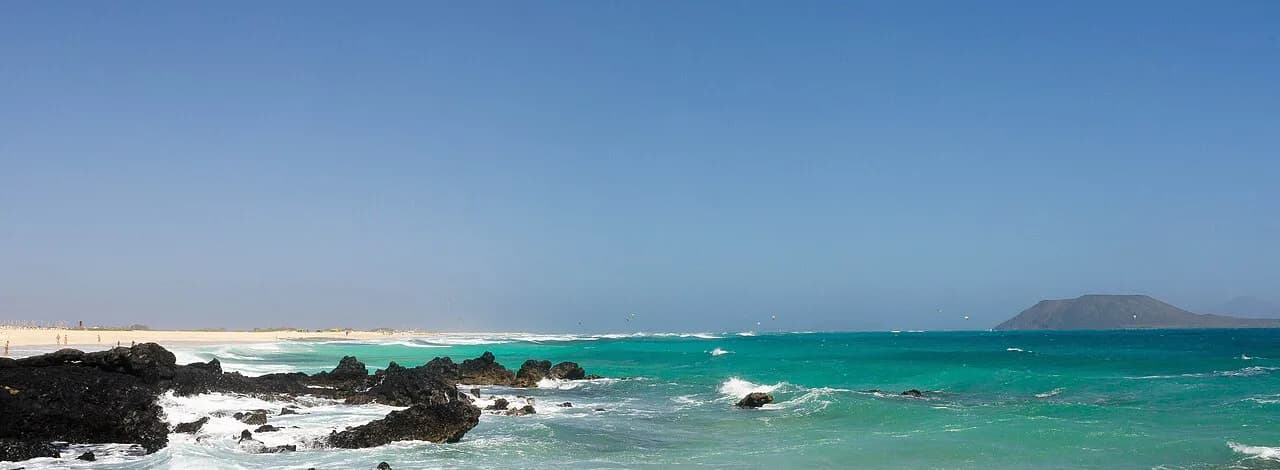
The northern end of the island gives you a completely different beach day, with the dunes and long sands of the Parque Natural de Corralejo and the crossing to Lobos island for a quieter, wilder outing. The dunes and the Corralejo beaches are close to each other and easy to pair, and a boat to the Isla de Lobos makes a fine half-day add-on.
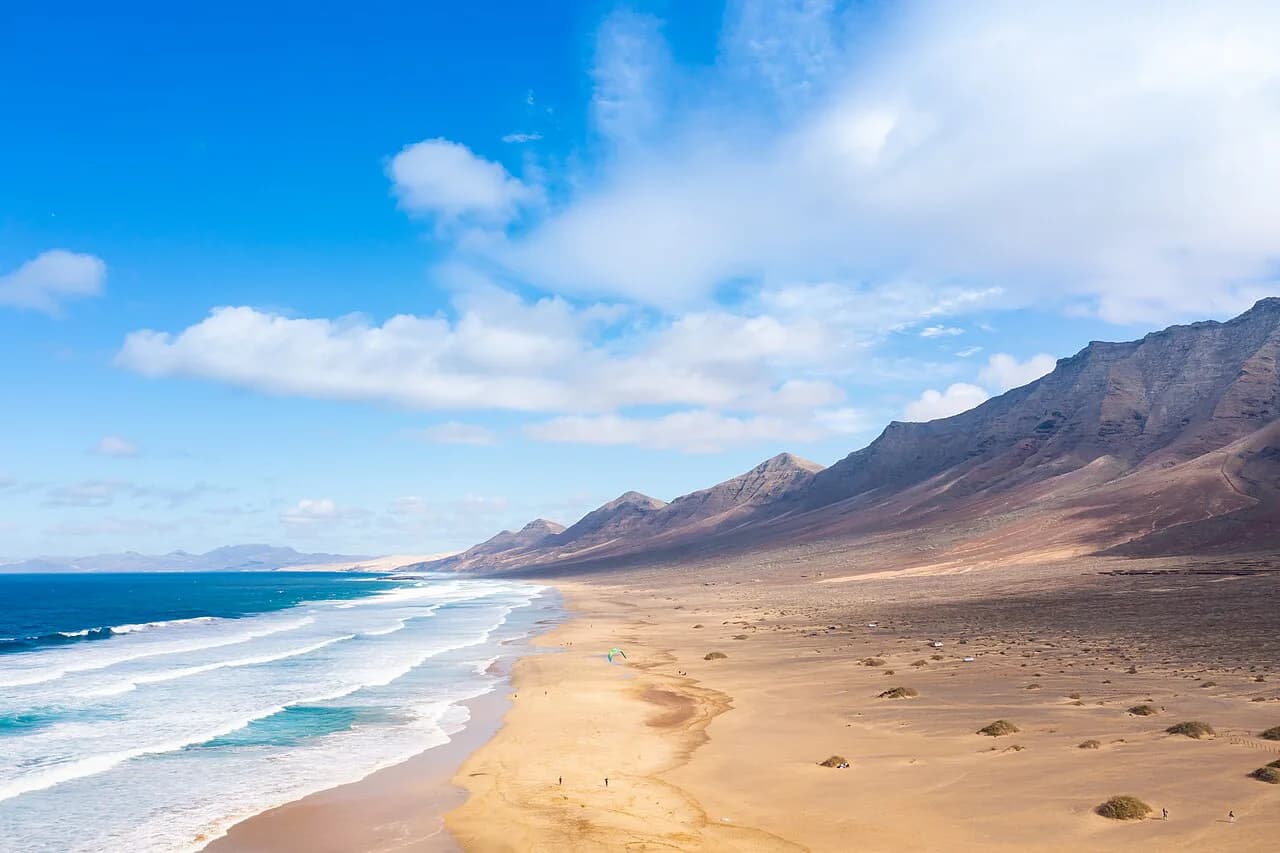
Further afield, the guide's wider Canaries coverage pairs Sotavento with Playa del Inglés and Maspalomas on Gran Canaria and with Las Teresitas in Tenerife for travellers touring the islands. If you want a dramatic beach day on Fuerteventura itself, Cofete beach on the far side of the Jandía peninsula is a spectacular contrast to Sotavento's wide sand, and for an island-by-island comparison of black and golden sand the best beaches in Gran Canaria make a natural next stop.
Where Dogs Are and Aren't Permitted at Sotavento
Sotavento is described as a perfect surfer beach and also good for swimming when it is not windy, and its shore and seabed are sand throughout. The beach is frequented by surfers and also by nudists, and the sand changes with the tides, so a dog walked here shares the shoreline with both groups and with water that shifts through the day. The sources for this beach note no dog-specific rule, so nothing in them establishes that dogs are permitted on the sand or in the water.
Because Sotavento is a Jandía beach rather than a Corralejo one, a dog-friendly plan built around it has to account for distance as well as access. Beach-on-Map lists Sotavento among beaches near Corralejo, 76 km to the north-east of Sotavento, and there are no hotels directly next to the beach, with the nearest hotels 2.5 km north of it, about half an hour of walking. That walk, on top of the drive, is worth weighing if the dog is coming along.
There are no trees near the coast, so bring a parasol with you: shade for the dog has to be carried in rather than found, and the tidal lagoon, wide shallow turquoise waters that you can walk through, offers no cover of its own at the times it is exposed. The best time for a beach holiday in the Canary Islands is given as August-September, when there are crowds everywhere in summer, while the strongest wind is usually from June to August.
Travelling to Sotavento with a Dog from Corralejo
The trip from Corralejo to Sotavento is a long one, and the distances involved matter when a dog is in the car. The southern beach is around 60 km from Fuerteventura Airport (FUE), which is the airport serving the Corralejo side of the island. From the Costa Calma side, where the nearest town to the beach is Costa Calma, the beach is still a further drive, and there are no hotels directly next to the beach, so there is no obvious shaded base to leave a dog while you walk the sand. The nearest hotels are located 2.5 km north of the beach, about half an hour of walking, which gives a sense of how exposed and spread out the approach is.
At the beach itself, the practical problem for a dog owner is that there are no trees near the coast, so bring a parasol with you. That advice is aimed at people, but it applies just as much to an animal that has no way of escaping the sun: the shore and seabed are sand, and the wide, shallow, turquoise waters of the tidal lagoon offer no cover either. Water is essential. The same source warns that a long walk inland through the dunes can be hard going and dehydrating, and that you should take water with you; the dunes stretch for almost 2 miles inland, and for most of it you are likely to be totally on your own, which is pleasant for a dog but means no facilities and no help if something goes wrong.
Timing the drive matters as much as packing for it. Sotavento is a perfect surfer beach and is also good for swimming when it's not windy. The beach is very windy and frequented by surfers and also by nudists. For a dog, the wind and the open sand are the main considerations, and the busiest period, August-September, is when there are crowds everywhere in summer. Outside those months the beach is calmer, but the lagoon changes based on the tides, so the shape of the shoreline you arrive to is not the one you may have seen in photographs. The five kilometres of beach give plenty of room to spread out, but the section near the main access points is where most people congregate.
One further point about the journey: getting there is easiest by car, and the drive from Morro Jable takes about 20 minutes, while driving from Corralejo is a much longer haul across the island. Public transport exists on the island, with routes and bus schedules available on the official TIADHE website, but a dog and a long beach day are simpler to manage with your own vehicle and a supply of water in the boot. Whatever route you take, plan the day around the heat and the wind rather than around a fixed timetable, and treat the absence of trees, bars and changing facilities near the sand as the defining feature of a visit here with an animal.
Plan Your Day at Sotavento
Pick your day around the wind: an early, calm morning for the lagoon and a swim, or a summer afternoon for the surf and the spectacle. Base yourself at Costa Calma for the easiest walk to the sand, and make the journey south from Corralejo or the airport a full day out rather than a quick detour. Pack shade, water and a windbreak, and you will have the beach on its own terms.
For a wider island plan, pair the beach with the dunes and crossing to Lobos island in the north, and ask the Costa Calma tourist office for current bus times and local guidance on the day.
Frequently Asked Questions
Is Sotavento beach a nudist beach?
Sotavento has long been used by naturists, and mixed use is part of the beach's character. Clothed and unclothed bathers share the sand, so the usual etiquette applies: keep to your own group, no photography of strangers and no staring. The busier sections near the main access points tend to draw a more clothed crowd if that suits you better.
How do you get to Sotavento beach from Costa Calma?
The nearest hotels sit about 2.5 km north of the sand, which is roughly half an hour on foot. Drivers can follow the access tracks down to the coast and carry everything in one trip. Buses run along the Costa Calma and Jandía corridor, and the tourist office in Costa Calma can give you the current stop and timetable.
When is it too windy to swim at Sotavento?
The steadiest winds arrive from June to August, so expect the surf to build through a summer afternoon. Calm mornings give the best swimming, especially in the tidal lagoon. If the flags are up and the surf zone is busy with boards, stay in the shallow lagoon or on the sand.
What is the tidal lagoon at Sotavento like?
The tide leaves a broad, shallow lagoon behind the main shoreline, with warm water that is ideal for children and nervous swimmers. Watch the edge of the lagoon as the tide turns, because the water moves across the flats faster than it looks. Water shoes make the walk out more comfortable.
Which beaches near Sotavento are worth combining?
In the north, the dunes of the Parque Natural de Corralejo and the boat crossing to Lobos island make a fine contrast. On the Jandía peninsula itself, Cofete beach offers a wilder, more dramatic shoreline. Treat Sotavento and the northern beaches as separate days rather than trying to fit both together.
When is the best time to visit Sotavento beach?
August and September are the busiest months, with the warmest sea and the liveliest atmosphere. June to August brings the steadiest wind, which is when surfers and windsurfers turn up. Spring and autumn give you a better chance of calm mornings for swimming and more room on the sand.
Sources
Beach notes for your next trip
Optional updates when we add or revise beach guides.
You might also like

Continue reading
More guides you'll find useful