El Cotillo Beaches: Lagoons, La Concha and the Lighthouse Coves
Plan a day on the El Cotillo beaches, from the sheltered lagoon of La Concha to the white-sand coves by the Tostón lighthouse and the surfing beach beyond.
On this page
The coast at El Cotillo packs several very different beaches into a short stretch of shoreline, which is why it earns a full day out rather than a quick stop. Families gravitate to the sheltered lagoon at La Concha, swimmers and photographers drift north towards the lighthouse coves, and surfers head for the open swell beyond the village. If you are based in Corralejo, this is the counterweight to the dunes: a low-key fishing village instead of a resort strip.
Where El Cotillo sits and how the coast is laid out
El Cotillo occupies the north-west corner of Fuerteventura, well away from the airport resorts on the east coast. The beach line reads almost as a sequence: the lagoon coves begin at the northern edge of the village, then run on past the Tostón lighthouse, with the surfing beach sitting outside the village on the same coast. Understanding that order helps you decide where to park and how far you want to walk.
Getting there from Corralejo
The straightforward route from Corralejo is the FV-1, which also serves the dunes and continues south; motorists on this road need to watch for pedestrians and shifting sand, and parking runs for kilometres along the roadside near the dunes rather than in formal bays. For El Cotillo itself, the village end of the beach gives the easiest access, with parking right by the sand at La Concha, while the lighthouse coves sit further along the coast road.
Wildlife and park rules shape how you use this stretch of coast: the dunes form part of a protected natural park where driving off the FV-1 is forbidden, so treat any sandy track as off limits and keep to the road.
The lagoons at the village edge
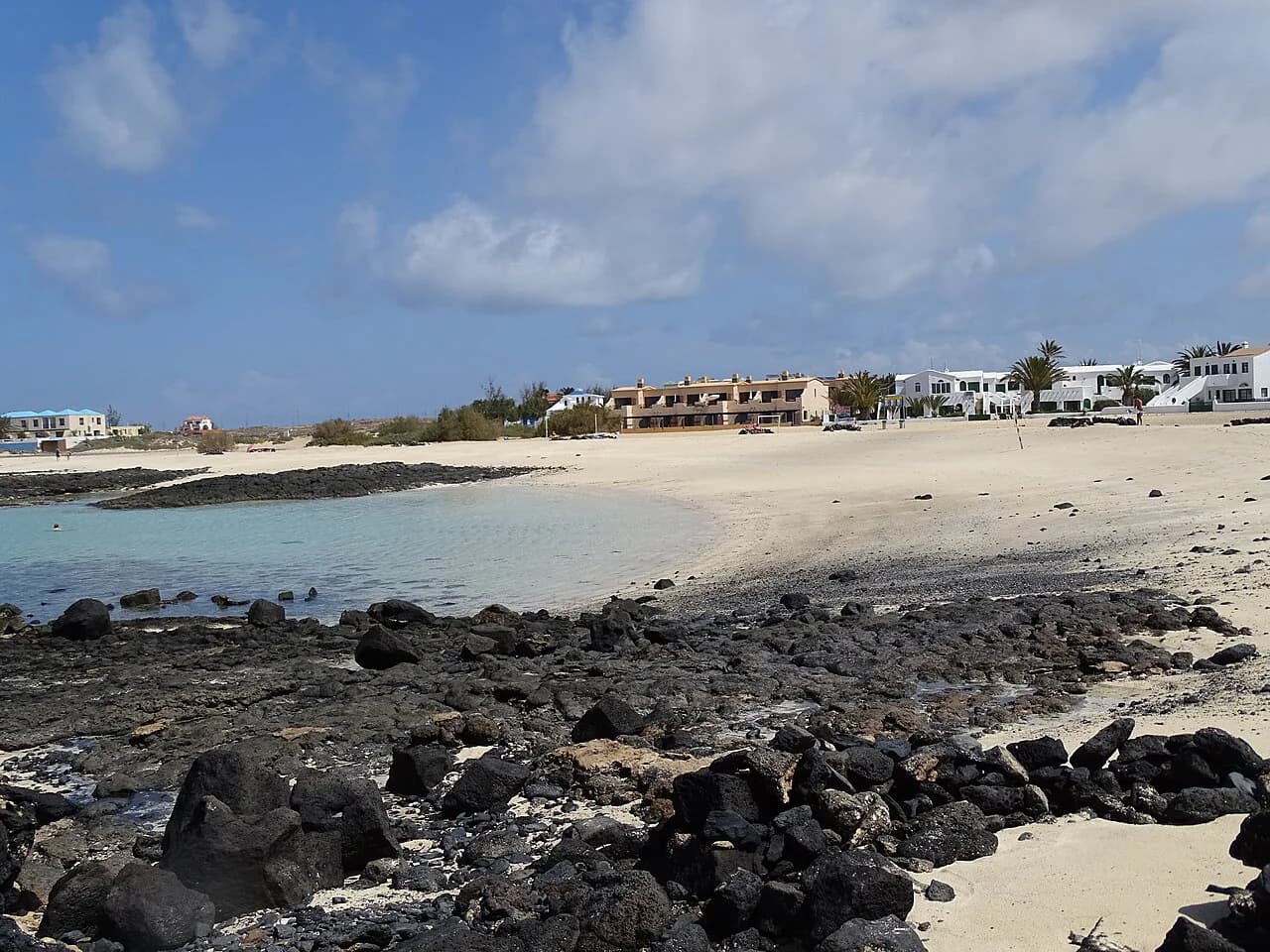
The lagoon beaches start at the northern edge of El Cotillo and are the first thing you meet coming into the village. The first few coves are generally used by clothed bathers, though that shifts with the day. The pools here are shallow and clear, which is why they work so well for snorkelling and for children splashing about, and the rock shelves around them make water shoes a sensible addition to your bag.
La Concha: the horseshoe reef
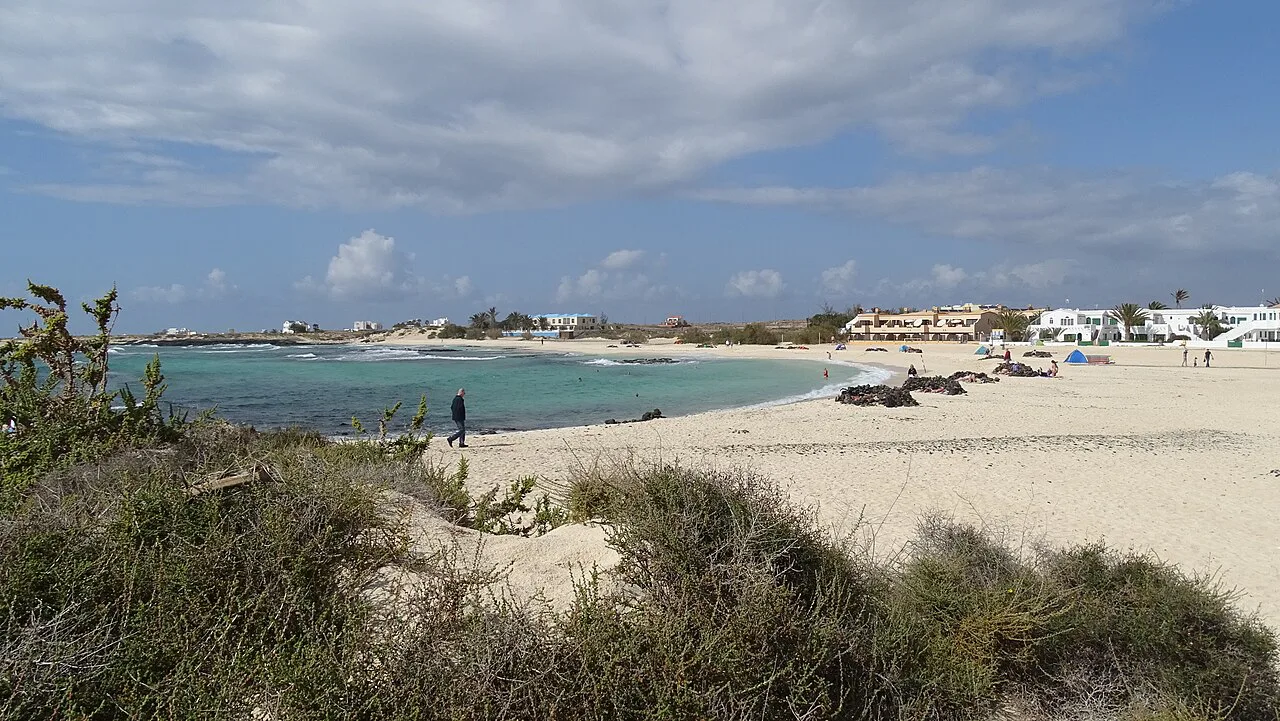
La Concha, also called Playa Chica, is the standout family beach on this coast. A natural horseshoe-shaped reef wraps around it and holds back the ocean swell, creating a broad pool of turquoise water over fine white sand, with a lifeguard posted and restaurants a short walk away in the village. Occupancy runs medium to high, so arrive earlier if you want space near the water.
The reef shelter is the whole point: it makes this the most pool-like swim on the El Cotillo coast, and the fine white sand is comfortable underfoot in a way the rockier coves are not. The trade-off is popularity, and the beach fills as the day goes on. Staying until sunset is worthwhile, because the village restaurants facing the water look straight out over the Atlantic.
Steps Beach and the naturist stretches
Beyond La Concha the coves continue towards the lighthouse, and one of the nicest is Steps Beach, or Playa del Aguila, reached down a few flights of renovated stairs. The effort keeps numbers down and naturists gather on the sand away from the steps in either direction. Clothing-optional use is long established along this part of the coast rather than confined to a signed zone, and mixed groups share the coves without much fuss.
Etiquette here is straightforward: give other people room, keep cameras pointed at the sea rather than at people, and carry a sarong or shirt for the walk back up to the road and any stop at a bar. Naturism is legal in Spain in natural places, and the coves north of the village are treated as part of that tradition.
Piedra Playa and the surfing stretch
Piedra Playa, known locally as the surfer's beach, is the exposed side of El Cotillo, where the swell arrives unimpeded and wind sports rule. Naturists tend to occupy the far southern end of the beach, while the rest is given over to boards and watching. Come here to admire the riding rather than to swim, and keep clear of the line-up if you are not surfing.
The coves by the Tostón lighthouse
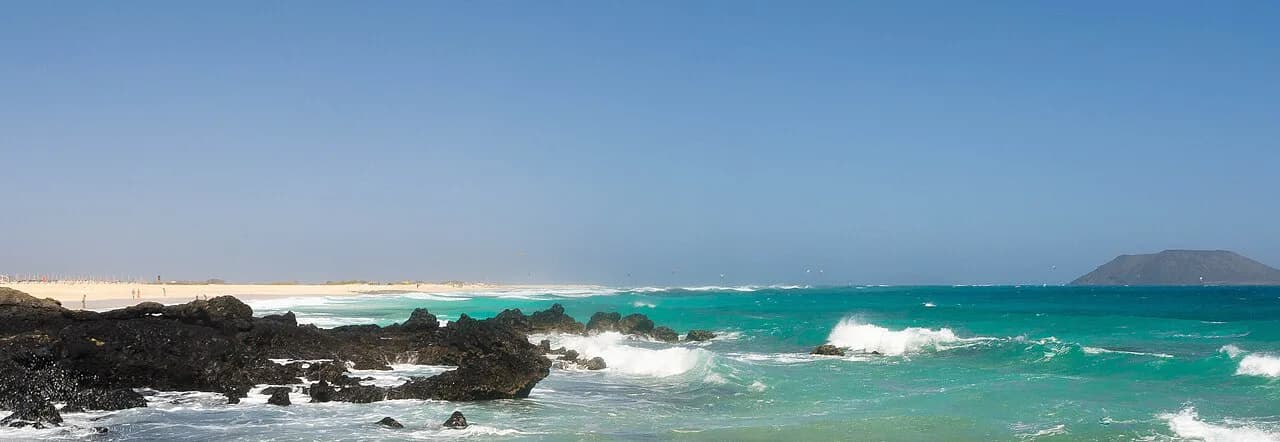
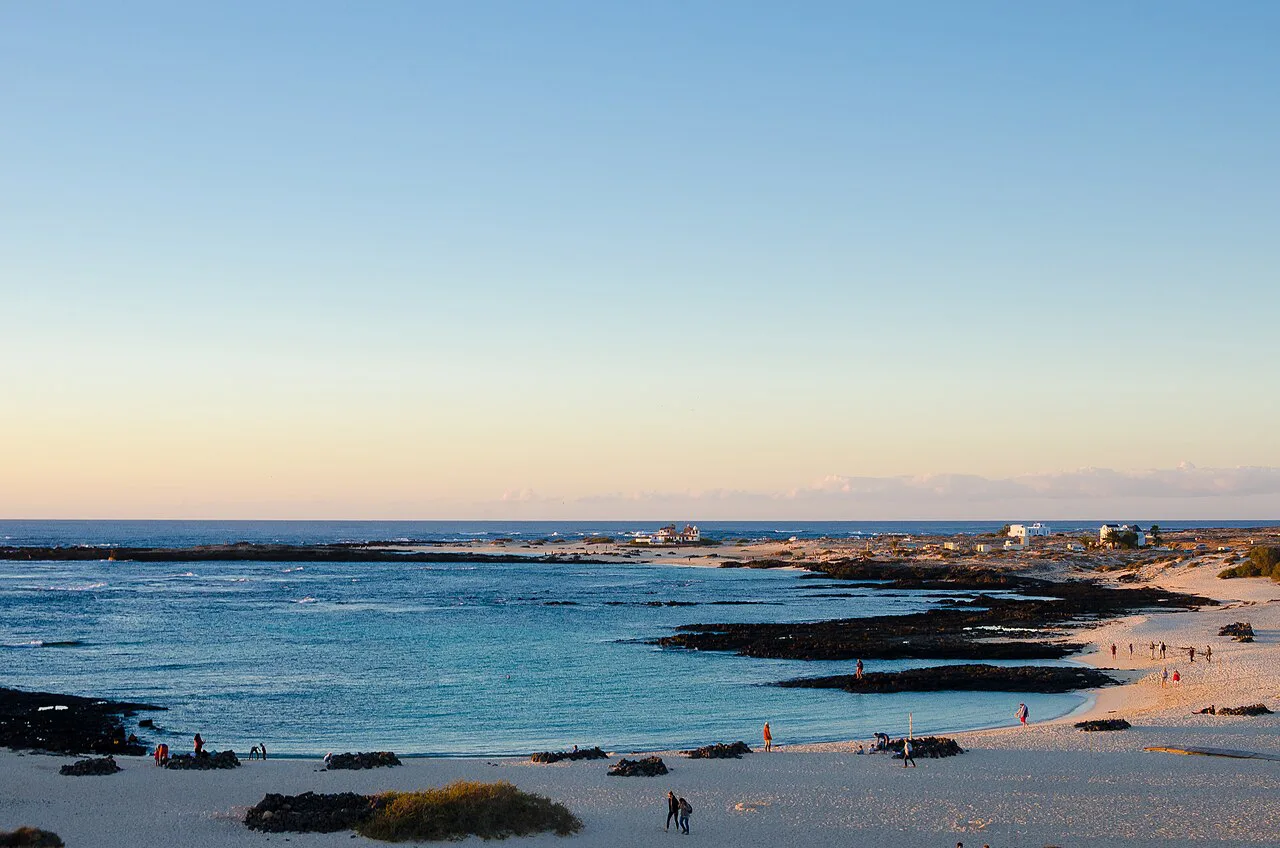
Los Charcos, next to the Tostón lighthouse road, is a cluster of three small coves where very white sand sits against black volcanic rock. The water is shallow and pool-like, low in occupancy, and easy to reach from the lighthouse road. Bring water shoes if your feet are sensitive, because parts of the entry are rocky.
These coves reward a slow wander rather than a full beach day: the colour contrast between white sand and dark rock is at its strongest around midday, and the shallow water suits a quick dip between photographs. The stretch between the village and the lighthouse also holds plenty of small beaches and stone circles, so you can keep walking until you find an empty patch.
The sand and the water
The El Cotillo beaches change character with the tide. The lagoons behind the reef sit fullest at high water and drain back to rock shelves and shallow pools as the tide falls, so a tide table is more useful here than almost anywhere else on the island. Fuerteventura's trade winds are a constant on this coast, and a windbreak or a spot tucked behind the rocks makes the difference between a comfortable afternoon and a sandy one.
Facilities
El Cotillo village itself supplies the eating and drinking, with restaurants facing the water at La Concha and a handful of options around the harbour end. La Concha has a lifeguard posted and restaurants within a short walk. Away from the village, the coves towards the lighthouse have little in the way of facilities, so carry your own water and snacks.
Best time to go
Late spring to early autumn, roughly May to October, brings the warmest air and the longest hours of sunshine, and the sea is at its most comfortable for long swims in late summer. July and August are the windiest months, which suits windsurfers and kite surfers but can make lying on an exposed beach hard work. August also brings Spanish families onto the El Cotillo coast in numbers, and the naturist coves are less reliably clothing-optional during that month.
Nearby beaches to combine
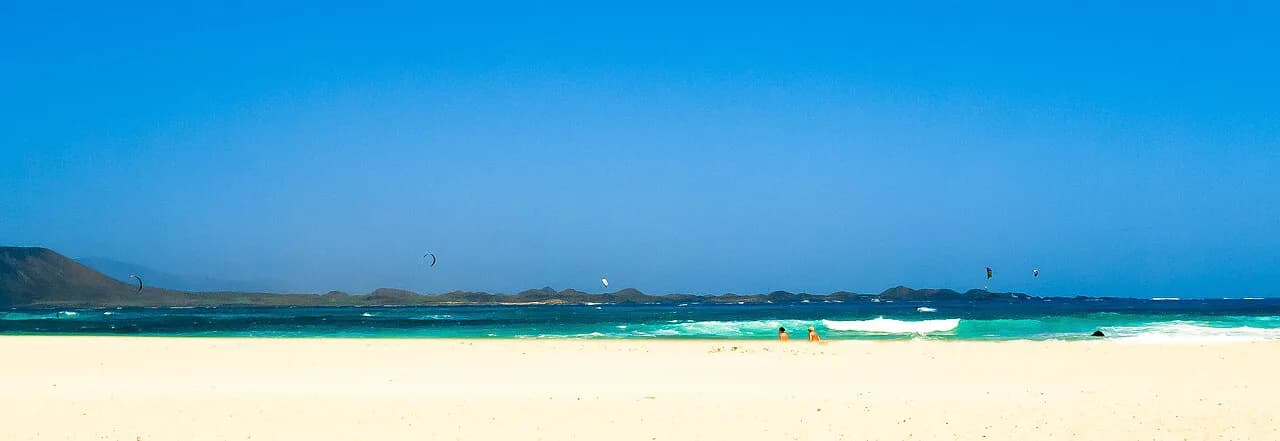
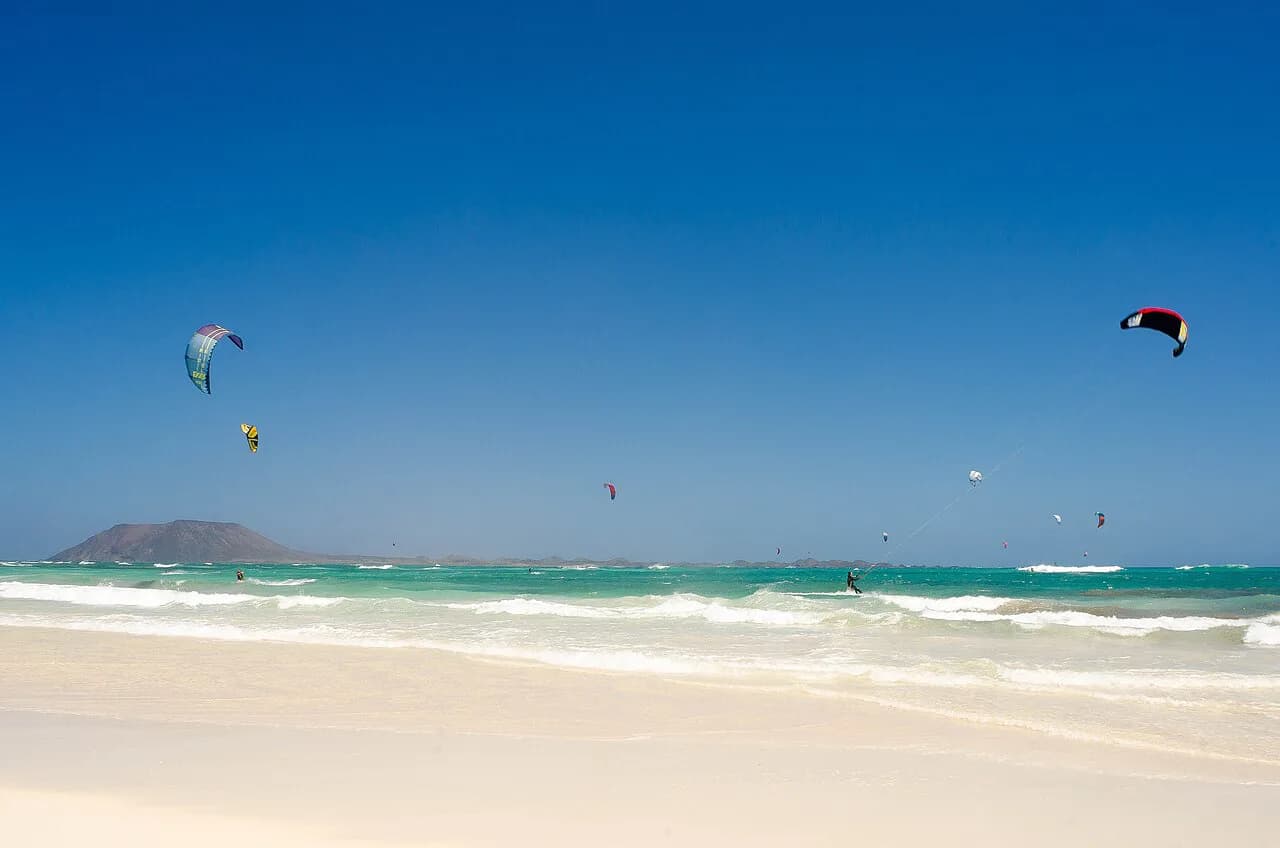
A day at El Cotillo pairs naturally with the dunes: the beaches of the Dunas de Corralejo Natural Park run for about 10 kilometres, made up of smaller pale-sand beaches with few rocks and clear water, plus beach bars and toilets in places. Swimming is not the strength here, since the park's coast carries strong currents and rip tides and lifeguard cover is thin, so treat it as a walking and kite-watching stop.
Between Corralejo and El Cotillo, Majanicho is a small fishing village with a mixed sand-and-rock beach and a wave sought out by experienced surfers, worth a stop for the atmosphere. From Corralejo you can also take a boat across to Isla de Lobos, where a small cove and a short path to the lighthouse make a different kind of beach day.
If you are touring the island's beaches more widely, the long southern strands around Jandía and the wild sweep of the Jandía peninsula make a sensible second day. Island-hoppers weighing up other Canary coastlines can compare options with these Gran Canaria beaches before settling on an itinerary.
Practical kit
Pack water shoes for the rocky entries at Los Charcos and the lagoon shelves, a windbreak or light layer for the breeze, high-factor sun cream for the long days, and a sarong or shirt if you plan to walk between the clothing-optional coves and the village. A refillable water bottle matters more than you might expect, because the wind and sun dehydrate you quickly and the coves away from the village have no bars.
Plan Your Day at El Cotillo
Choose La Concha for a family swim with a lifeguard and lunch within walking distance, the lighthouse coves for quiet photographs and shallow paddling, and Piedra Playa if you want to watch surfers work the swell. Build the day around the tide and leave room for a sunset on the village side.
Frequently Asked Questions
What are the beaches like at El Cotillo?
They run from shallow lagoon pools at the village edge to white-sand coves against black rock near the Tostón lighthouse, plus an exposed surfing beach on the open coast. La Concha is the sheltered, family-friendly standout, with a horseshoe reef holding back the swell.
Is La Concha beach good for children?
Yes. The natural reef curves around the beach and creates a broad pool of calm turquoise water over fine white sand, and a lifeguard is posted. It is the most popular beach on this coast, so come earlier if you want space near the water.
Can you swim in the lagoons at El Cotillo?
The lagoon pools are shallow and clear, and they are used for swimming and snorkelling. They fill and drain with the tide, so time your visit around high water if you want the fullest pools.
How do you get to El Cotillo from Corralejo?
The drive follows the FV-1, the same road that runs past the Corralejo dunes. Parking by the beach at La Concha makes the village end easiest, while the lighthouse coves are reached along the coast road further north.
Are El Cotillo beaches naturist?
Clothing-optional use is long established along this coast, particularly in the coves away from the village and at Steps Beach, rather than in a signed zone. Naturism is legal in Spain in natural places, and mixed groups share the sand.
Which El Cotillo beach is best for surfing?
Piedra Playa, known as the surfer's beach, takes the open swell on the exposed side of the village. It is a spot for riding and watching rather than for a family swim.
Is El Cotillo quieter than Corralejo?
El Cotillo is a low-key fishing village rather than a resort strip, so it feels calmer than Corralejo, though La Concha draws a crowd in season. The coves towards the lighthouse stay quiet even when the village beach is busy.
What should I bring to the El Cotillo beaches?
Water shoes for the rocky entries and lagoon shelves, water and snacks for the coves away from the village, sun cream, and a windbreak or light layer against the trade winds. A sarong or shirt helps when walking between the clothing-optional coves and the village.
Sources
Beach notes for your next trip
Optional updates when we add or revise beach guides.
You might also like

Continue reading
More guides you'll find useful