Flag Beach Corralejo: Windsurfing and Getting There
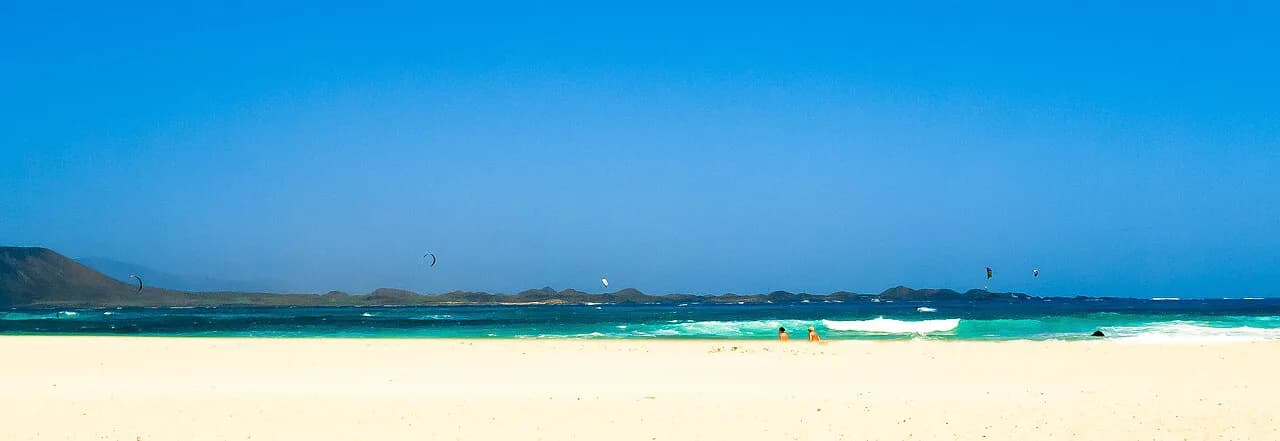
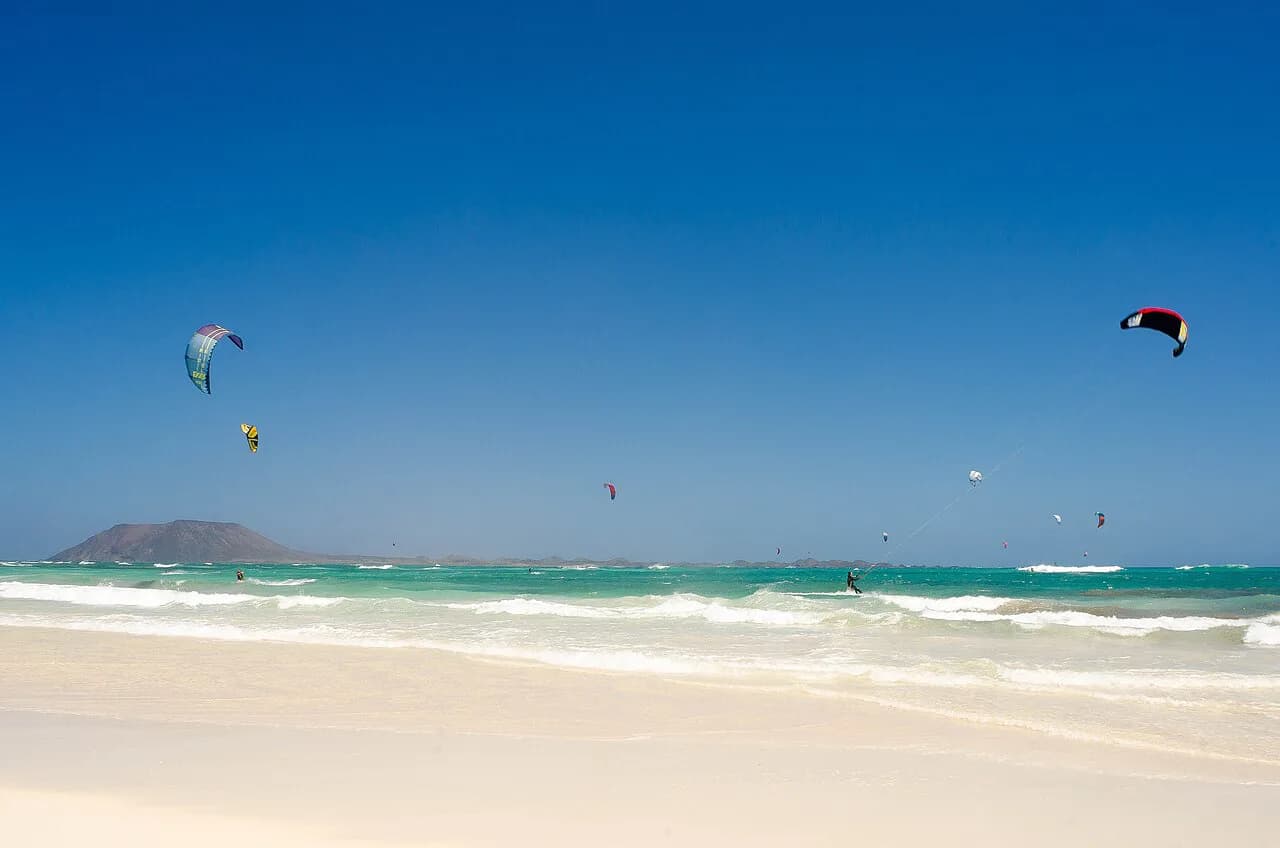
Flag Beach near Corralejo is a long sandy stretch with steady onshore wind, built for kitesurfing, windsurfing and surf courses rather than quiet sunbathing.
On this page
Flag Beach is the stretch of sand on the northern shore of Corralejo where Fuerteventura turns its wind into a sport. It suits travellers who want to be on the water with a board under them — kitesurfing, windsurfing, surfing, wing foil or paddleboarding — rather than those hunting a sheltered cove for a float and a nap.
The beach works because of a simple match: a long sandy shoreline and steady onshore wind that the local schools build their days around. If your idea of a beach day involves a packed lunch and a book on a towel, plan around the wind rather than against it.
What Flag Beach is and who it suits
This is a working watersports beach first and a sunbathing beach second. A commercial watersports centre sits at its heart, running courses and rentals across kitesurfing, surfing, windsurfing, wing foil and paddleboarding, so the sand fills with boards, rigs and people changing in and out of wetsuits.
That focus makes Flag Beach a strong pick for beginners booking a first course, improvers chasing consistent wind, and anyone who would rather spend two hours learning something than lying flat. Families with small children and swimmers who want glassy water are better served by one of the calmer beaches near Corralejo town.
The trade-off is straightforward: you get space, reliable wind and an established school on site, but you give up the stillness that makes easy swimming. Choose it deliberately for the sport and it delivers.
Where it sits relative to Corralejo
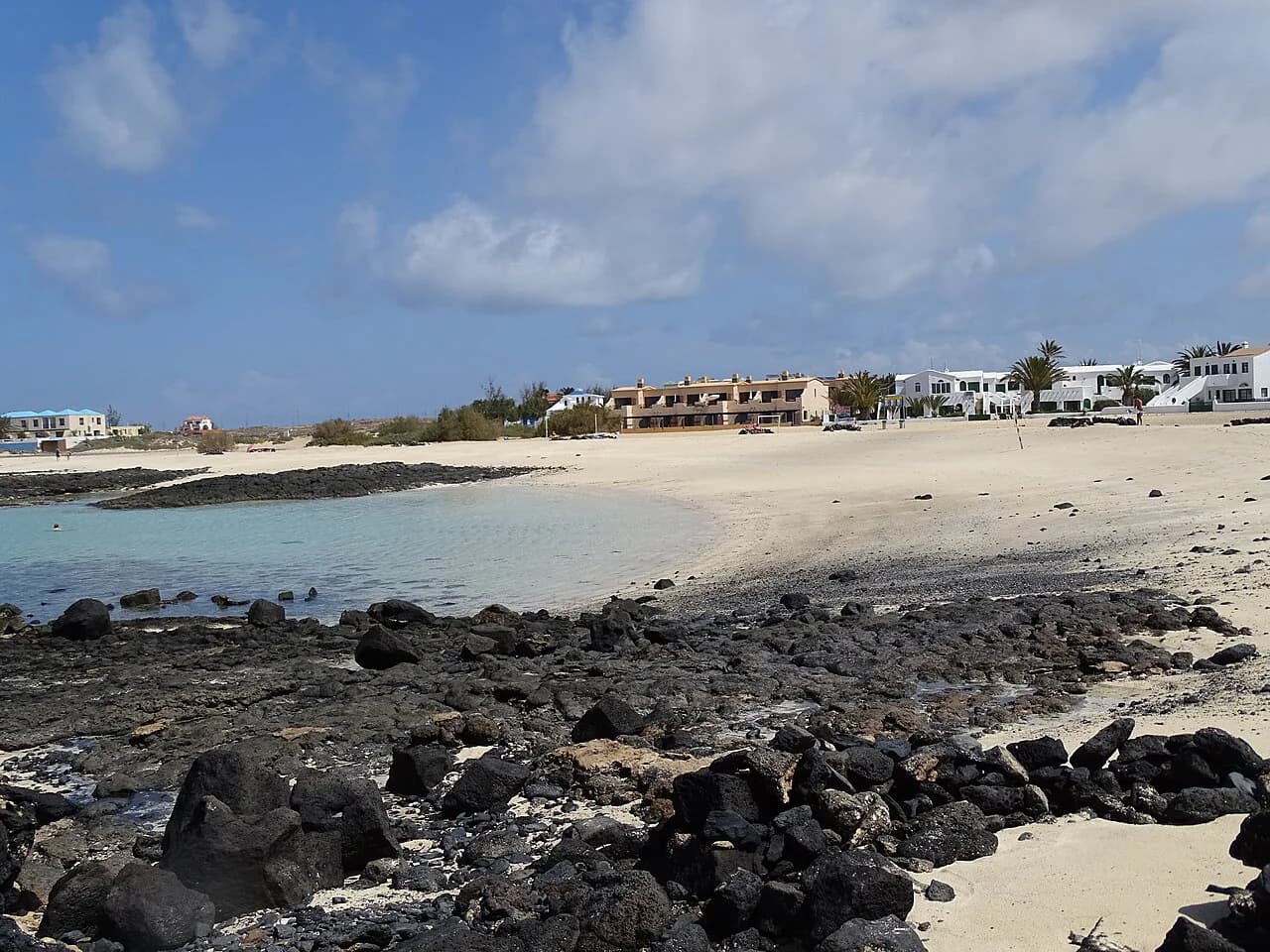
Flag Beach lies on the northern shore of Corralejo, in the north-east of Fuerteventura. The town is the natural base: it has the accommodation, the shops and the road network you need, and the beach is reached by heading out of town towards the north shore rather than through the busier centre.
Much of the appeal is the setting — long sand backed by the open north-shore landscape, with the Corralejo dunes running nearby along the coast. That means little shade and plenty of exposure, so pack accordingly even on a mild day.
If you are building a beach-hopping itinerary, treat Flag Beach as the active half of the day and the sheltered town beaches as the recovery half. The contrast is the point.
Getting there
Flag Beach sits outside the town centre on the northern shore, so the simplest approach is your own transport or a taxi out from Corralejo. Parking arrangements and any charges are handled locally, and the watersports centre can tell you where its clients leave cars when you book a course.
Public transport in Corralejo is geared to the town and the wider island rather than this specific stretch of coast, so if you are relying on buses, ask the tourist office in Corralejo which service comes closest before you set out. Walking from town is possible but adds distance to a day already spent on the water.
If you are carrying your own kit, arrange transport before you go: rigs, boards and foils are awkward on foot and impractical on a crowded bus.
The sand and the water
Flag Beach is a long sandy shoreline, not a pocket cove. That length matters: it spreads out the school groups and gives kite and windsurf students room to launch, land and practise without crowding each other.
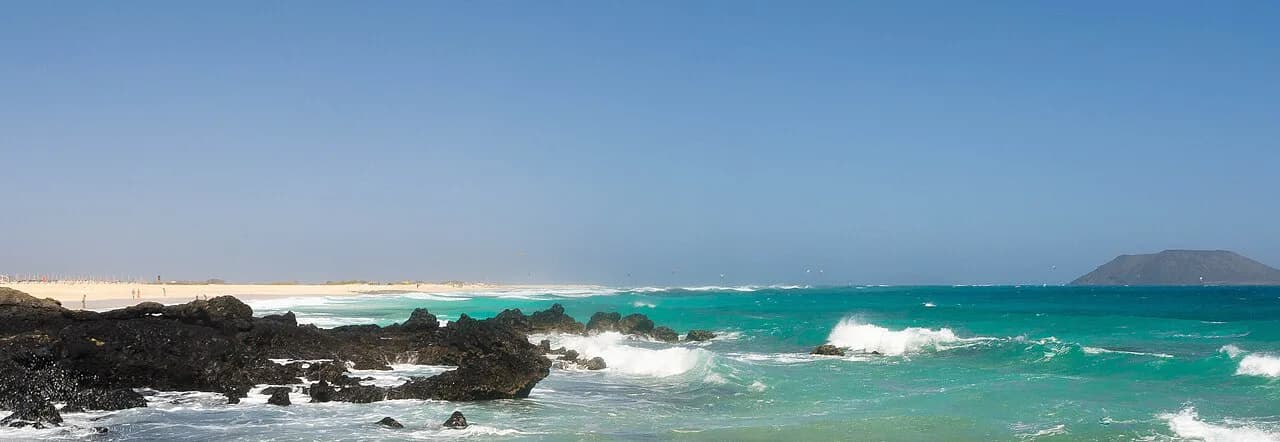
The wind is the defining feature. Onshore conditions push air and chop towards the sand, which is exactly what kiters and windsurfers want and exactly what makes a relaxed swim harder to find. Stronger days produce livelier water; gentler days are the ones to target if you mainly want to paddle.
Sand is also the practical detail: it blows, it gets into everything, and it makes a windbreak and a dry bag worth the luggage space. Watch flags and follow whatever instructions the schools on the beach give, and take local advice on conditions on the day.
Shelter and wind
There is little natural shelter here, because the beach faces the wind that gives it its purpose. On blowy days the sand moves, umbrellas are a losing battle and shade is something you bring rather than find — a windbreak, a long-sleeved layer and a cap do more than a parasol.
The trade-off is that the same exposure delivers the conditions the schools work with. Flat-water days suit first lessons and wing foil; livelier days suit more experienced riders. If you are booking a course, tell the school your level and let them place you on the right day rather than turning up and hoping.
Travellers who feel the cold should note that wind on the beach makes it feel cooler than the thermometer suggests, so a light shell earns its place in the bag even in summer.
Watersports on the beach
The centre at Flag Beach runs courses and rental across the main disciplines: kitesurfing, surfing, windsurfing, wing foil and stand-up paddleboarding. That range means you can try one sport, decide it is not for you and switch to another on the same trip without relocating to a different beach.
Courses are sold as individual sessions and as packages, with equipment rental alongside. The centre publishes its current course list, package options and rental terms on its own site, which is the place to compare what each discipline includes.
Book before you travel if you want a specific sport in a specific week, particularly in the busier months. The centre also handles rental insurance, so read the terms before you sign for gear.
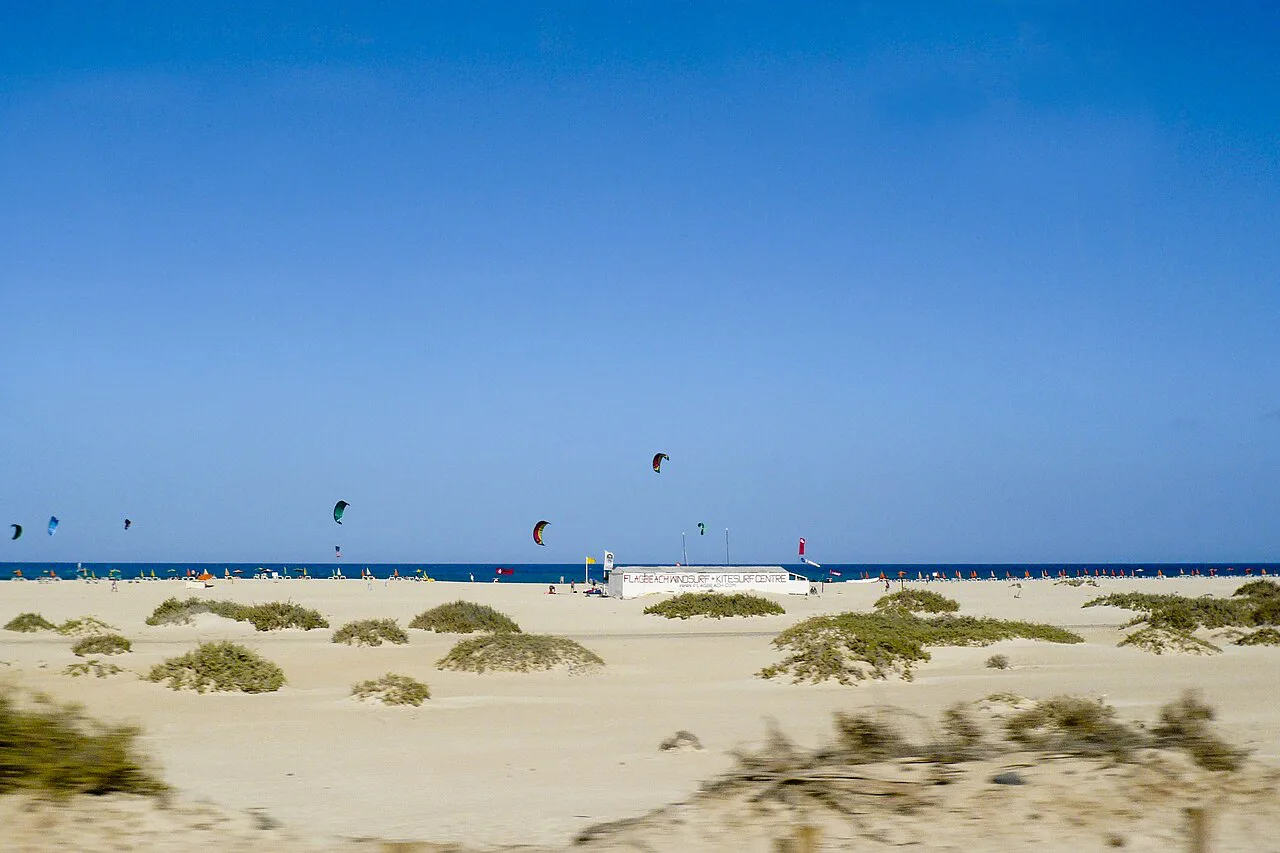
Windsurfing season
Flag Beach has its best windsurfing conditions from March to September, according to the watersports centre. That is the window to aim for if windsurfing is the reason for your trip.
Winter brings more challenging winds, which the centre describes as suited to advanced sailors rather than beginners. If you are learning, plan around the spring-to-autumn window; if you are experienced, the winter months offer a different kind of day and you should judge them against your own level.
Sea temperatures, the busiest weeks and any seasonal closures vary year to year, so match those against your own travel dates before booking flights.
Surfing at Flag Beach
Surfing here is built around beginners. The centre's surf camp has run for more than a decade and teaches people who have never stood on a board, which shapes the atmosphere on the water: lots of soft boards, lots of instruction, plenty of people in the same position as you.
Lessons cater to complete beginners and to surfers who want coached progression, and equipment is available to rent if you would rather not travel with a board. The centre also runs surf packages alongside its course programme.
The appeal for a first-timer is the low barrier to entry: you turn up, you are kitted out, and you are in the water with someone telling you what to do. Check the centre's current surf course options directly when you plan.
Crowds and timing
School traffic shapes the day. Course groups tend to run in set blocks, so the beach is busiest when lessons launch and land, and quieter between sessions. If you are renting rather than learning, asking the centre when its groups go out helps you pick a calmer slot.
Because the beach is long, crowds spread out. You are unlikely to be squeezed against a stranger's towel, but the launching areas will feel busier than the far stretches of sand.
The most popular months for courses fill first, so book ahead if your dates are fixed, and expect the shoulder months to be easier to arrange at short notice.
Facilities
Flag Beach Watersports Centre is the practical hub: it takes course bookings, rents equipment and provides the changing and kit-handling base for its clients. Its own site sets out what each course and package includes, so read the Flag Beach course pages to see what gear is included rather than counting on it being bundled in.
Beyond the centre's operation, plan on bringing what you need for a day on open sand — water, sun protection, a windproof layer and something to sit on. Showers, toilets, sunbed rental and accessible access are not something the beach's published information sets out, so ask the centre about your specific needs when you book.
If you are travelling with non-riders who will wait on the beach, a windbreak and a book make the difference between a pleasant morning and a long one.
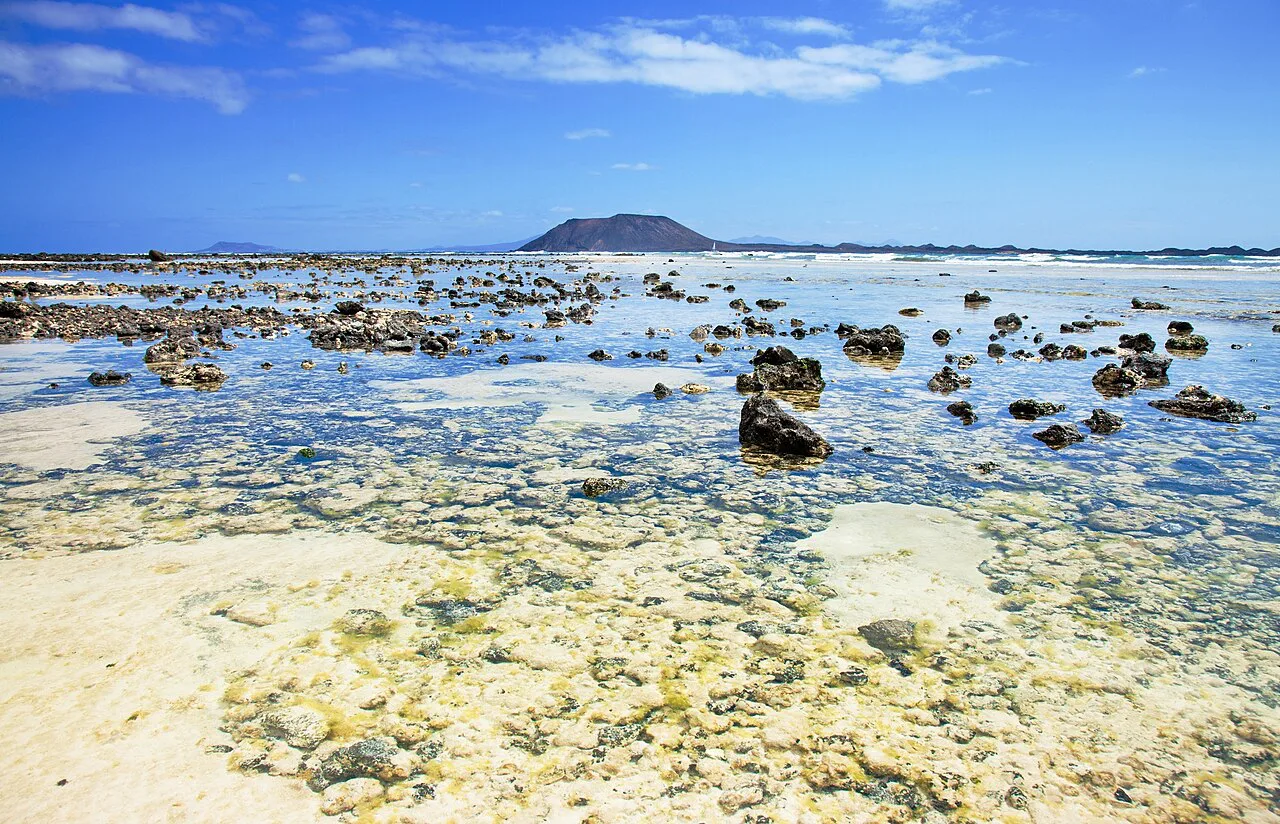
Staying near the beach
The centre runs its own accommodation, which is the obvious option if you are building a trip around lessons. Listed properties include Villa Timfay, Las Tinajas, Surfer's Retreat, Monte Rojo, Arena Blanca and El Caleton, and they can be booked alongside courses and packages.
Staying on site removes the daily logistics of getting to the beach with kit, and it puts you closest to early sessions. The trade-off is that you are away from Corralejo town, so evening restaurants and shops take more planning.
Compare the accommodation options and what each includes on the centre's site before booking, and check whether your dates align with the course week you want.
Nearby beaches to combine
Corralejo is well placed for beach-hopping. The town's other beaches offer calmer water for swimming and sunbathing, which makes a sensible pairing with a windy morning at Flag Beach. The dunes behind the north shore are worth an hour on their own.
A short boat trip from Corralejo reaches Isla de Lobos, a small island with its own beaches and walking, and it makes a good full-day change from the wind. Book the crossing through the ferry companies running from the harbour in Corralejo.
Further south, Playa de Sotavento de Jandía on the Jandía peninsula is Fuerteventura's other great wind beach and hosts major windsurfing events. It is a long drive from Corralejo, so treat it as a separate trip rather than a same-day add-on. If you are weighing up other island coastlines for a wind-and-water holiday, our guide to the best beaches in Gran Canaria covers a comparable set of choices.
Who should choose a different Corralejo beach
If your priority is calm water for small children, a sunbed and a short walk to lunch, Flag Beach is the wrong beach. The onshore wind that makes it excellent for boards makes it awkward for paddling toddlers and readers who want a still swim.
Likewise, if you want a quiet sunbathing day within easy reach of town, head for one of the calmer town beaches near Corralejo instead. Keep Flag Beach for the days you are actually on the water.
Come here for the wind and the sport, and the beach rewards you with space and a working school on site. Come for stillness and you will spend the day fighting the sand.
Bringing a dog to Flag Beach
The sources here describe Flag Beach as a beach and watersports centre on the northern shore of Corralejo, known for its long sandy shoreline and steady onshore wind, with the kitesurfing spot sitting in the town of Corralejo in the north-east of Fuerteventura. It is also the base for Flag Beach Watersports Centre, whose activities include kitesurf, surf, windsurf, wing foil and SUP, with courses, packages and equipment rental offered across those sports. Readers planning to walk over with a dog should bear in mind that this is a working watersports beach rather than a quiet stretch of coast: the same open shoreline and steady onshore wind that make it a recognised kitesurfing spot are what draw the kite, windsurf and surf activity described in the guide.
The published material summarised here does not set out any dog-specific rules for Flag Beach, so nothing in these sources states where, or whether, a dog may be walked on the sand or in the water, or whether any seasonal restriction applies. What the sources do establish is the character of the place: a long sandy shoreline with steady onshore wind, a beach and watersports centre on the northern shore of Corralejo, and a kitesurfing spot in the town of Corralejo in the north-east of Fuerteventura. Anyone deciding how to combine a dog walk with a visit should treat that description as the reliable part of the picture and plan around the beach as a busy, wind-exposed watersports venue rather than assume an unfenced, unrestricted space.
Because the sources give no dog policy, the practical question of timing is best answered from what they do say about activity on the beach. Flag Beach Watersports Centre runs kitesurf, surf, windsurf, wing foil and SUP courses, packages and equipment rental, and its windsurfing conditions are described as perfect from March till September, with some more challenging winds for the advanced sailor in the winter months. That means the beach is used for teaching and rental across a long stretch of the year, with the strongest windsurf season running from March to September. A dog walker sharing the sand with kite lines, boards, rigs and groups of beginners is the scenario these sources support, and it is the one worth planning around.
For a reader visiting Corralejo with a dog, the honest summary from these sources is that Flag Beach is documented as a long sandy shoreline on the northern shore of Corralejo with steady onshore wind, a beach and watersports centre, and a kitesurfing spot suited to beginners — and that its watersports operation covers kitesurf, surf, windsurf, wing foil and SUP with courses, packages and rental, with windsurfing conditions perfect from March till September. Nothing in the sources addresses dogs directly, so the section offers no invented permission or prohibition; it simply sets out what the beach is and how heavily it is used for watersports, so that a dog owner can judge how to approach a visit.
Plan Your Visit
Flag Beach is a purposeful choice: a long sandy north-shore stretch in Corralejo where the wind does the work and the watersports centre supplies the coaching, gear and — if you want it — the bed for the night. Pick your sport, then pick your month around the March-to-September windsurfing season if wind is the point.
Pair it with the calmer Corralejo town beaches when you want a swim, and keep the watersports centre's site handy for course options, packages and accommodation. Confirm current course availability, windsurfing conditions and local transport with Flag Beach Watersports Centre before you book.
Frequently Asked Questions
Which is the nicest beach in Corralejo?
There is no single answer, because the beaches do different jobs. Flag Beach is the best choice for windsurfing, kitesurfing and surf courses, with a long sandy shoreline and reliable onshore wind. For calm swimming and a shorter walk to town, choose one of the calmer beaches near the centre of Corralejo.
Is Flag Beach good for beginners?
Yes for board sports. The beach is described as an ideal spot for beginner kitesurfers, and the watersports centre runs beginner surf courses and lessons across kitesurfing, windsurfing, wing foil and paddleboarding. It is not a beginner swimming spot, because the onshore wind and chop make still water hard to find.
When is the windsurfing season at Flag Beach?
The watersports centre gives March to September as the period of best windsurfing conditions, with more challenging winds in the winter months that suit advanced sailors. Beginners should plan around the spring-to-autumn window; experienced riders can weigh the winter winds against their own level.
Can you swim at Flag Beach?
Swimming is possible, but the onshore wind and resulting chop make it less comfortable than the calmer town beaches nearby. Watch the flags and follow the local schools' advice on conditions, and treat Flag Beach as a board-sport day rather than a gentle float.
What watersports can you do at Flag Beach?
The centre runs kitesurfing, surfing, windsurfing, wing foil and stand-up paddleboarding, offered as courses, packages and equipment rental. You can try one discipline and switch to another on the same trip without moving to a different beach.
Where is Flag Beach in relation to Corralejo town?
Flag Beach sits on the northern shore of Corralejo, in the north-east of Fuerteventura, outside the immediate town centre. Most visitors reach it by road, and the watersports centre can advise on where to leave a car when you book a course.
Do you need to book watersports in advance at Flag Beach?
Booking ahead is sensible if your dates are fixed or you want a particular sport in a particular week, since course groups fill first in the popular months. The centre publishes its current course, package and rental options on its own site, and rental insurance terms are set out there too.
Sources
Beach notes for your next trip
Optional updates when we add or revise beach guides.
You might also like

Continue reading
More guides you'll find useful