Seitan Limania Beach, Chania: Road or Boat Access Guide
Seitan Limania's fjord-like cove near Chania rewards the scramble down or a boat from the port. Here's how to reach it, what to bring and when to swim.
On this page
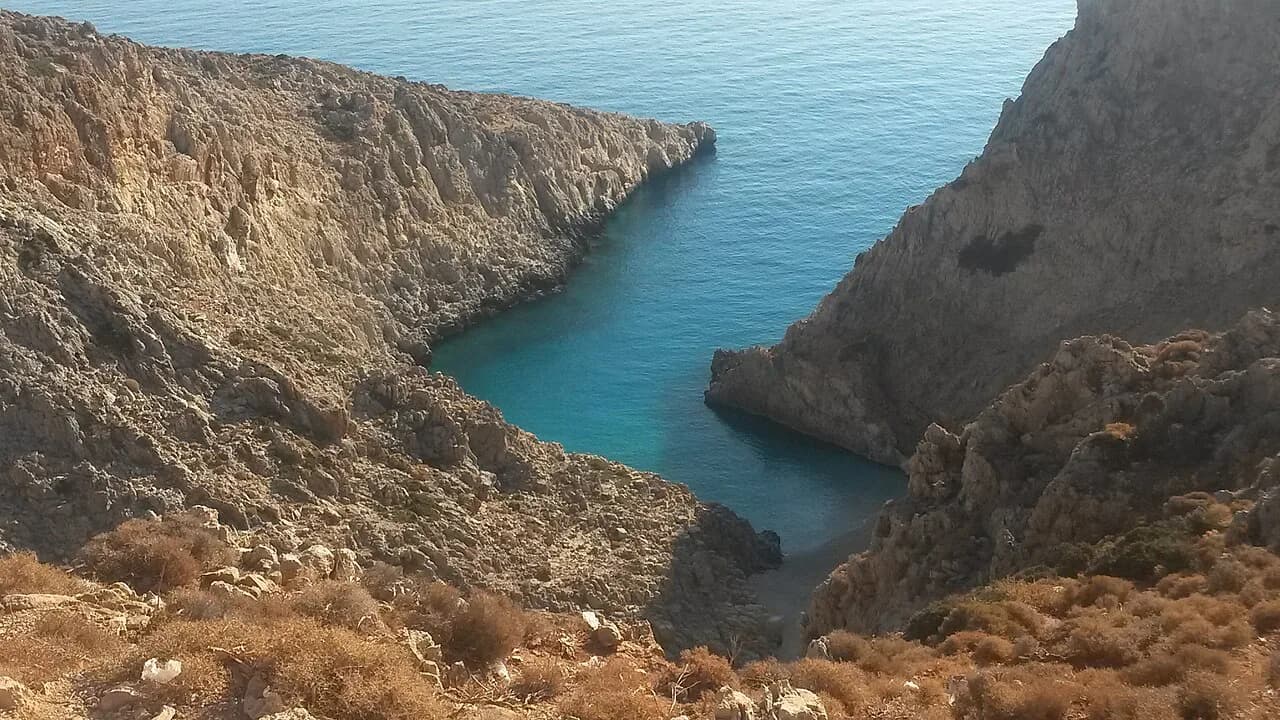
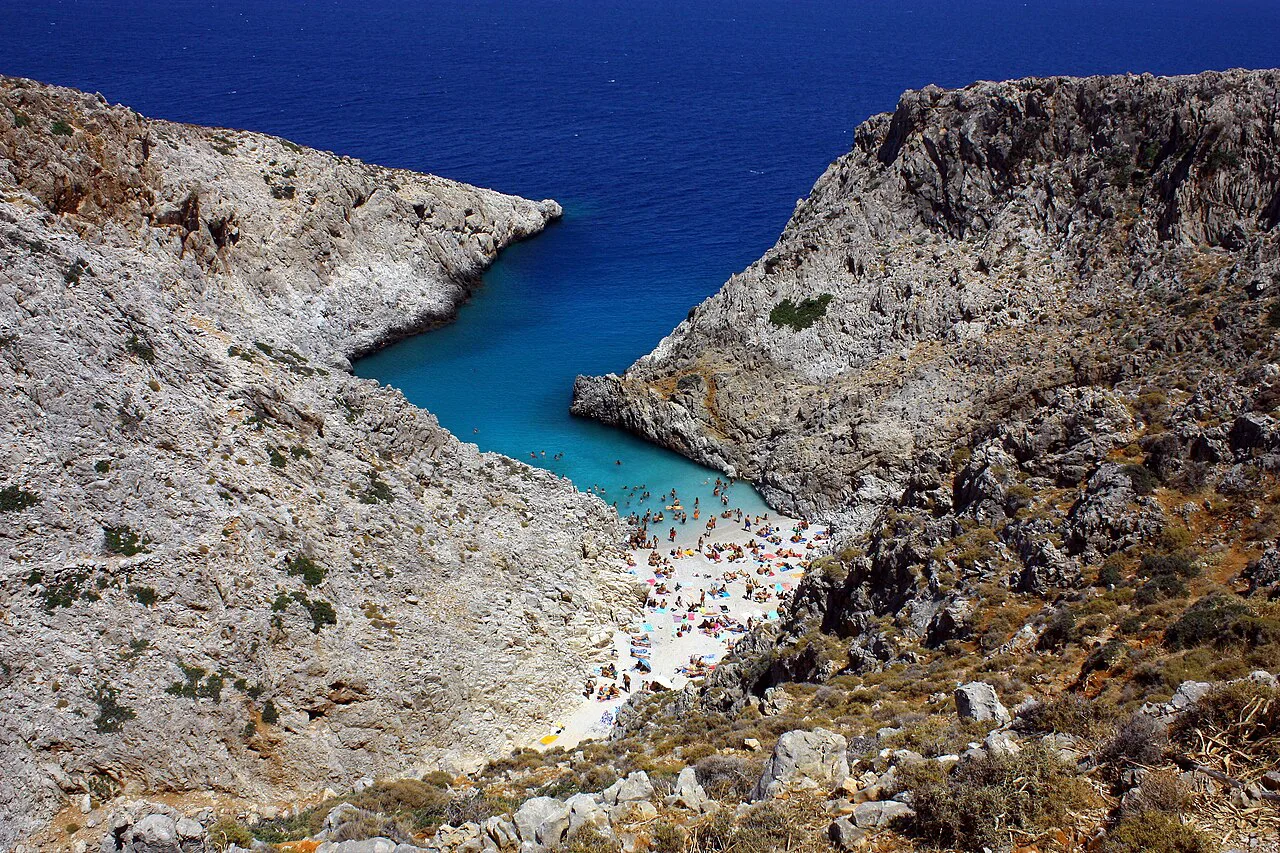
Seitan Limania is the beach you have seen photographed a hundred times without knowing its name: a fjord-like slit in the limestone of the Akrotiri Peninsula, roughly 22 km northeast of Chania, where two rock walls funnel a strip of fine pebbles and deep blue water. Locals also call it Stefanou Beach, and it sits about 2 km east of the village of Chordaki. It suits confident swimmers who want drama rather than deckchairs, and boat passengers who would rather skip the climb.
Where Seitan Limania is
The cove cuts into the east side of the Akrotiri Peninsula, one of three parallel inlets carved into the same stretch of limestone. The name is Ottoman-era Turkish: seitan for devil, limania for harbours, and you will understand it the moment you see the walls. Chania is the natural base, with the drive quoted at 30 to 40 minutes from the city.
Getting there by road
Drive towards the Akrotiri Peninsula, follow the signs for Chordaki and keep going until the coast appears. The last stretch tightens into narrow hairpins with loose stone at the roadside, so treat it as a slow road rather than a scenic shortcut. There is no public bus to the cove; the alternatives are a rental car, a private transfer, a taxi from Chania quoted at roughly €30 to €40 one way, or arriving by sea.
Parking is on the clifftop and fills quickly: expect the area to be busy by 9am in July, and in August you may be circling for a space. Arriving early buys you both a parking spot and shade on the beach, which disappears by late morning. The tight final bends are perfectly drivable, but loose stone and limited passing space mean you should not rush them.
The descent
From the clifftop car park a path drops to the water in 10 to 15 minutes, and calling it a path is generous: some sections are bare rock you scramble over, with long drops beside you. A fixed chain helps on the steepest stretch, and people regularly lose the trail on the way back up. Wear closed shoes with real grip, carry a backpack rather than a shoulder bag and keep your hands free.
Chania Sea, which runs boat trips into the cove, advises against carrying very young children down the path, describing a toddler on that loose rock as the riskiest part of the day; confident teenagers manage it without trouble. The climb back up often feels easier than the descent, but the return route is where walkers stray, so note landmarks on the way down. If the scramble does not suit your group, Stavros and Marathi are the easy-reach alternatives.
Getting there by boat
Boats from Chania reach Seitan Limania from open water, so there is no parking, no descent and no climb back up: you swim in from the deck. Half-day routes from Chania run about four hours and pair the cove with Katholiko gorge and the caves at Macherida, while a full-day private trip loops out as far as Marathi. A skipper makes the call on the day, and when the wind is up the cove may be swapped for a more sheltered alternative.
Land versus sea
Take the road if you have a car, start early and your group is comfortable on rough ground; the drive is 30 to 40 minutes and the reward is arriving on your own schedule. Take a boat if you are travelling with small children, if anyone in the party is unsteady on rock, or if you want the cove combined with other inlets that have no road access at all. Both routes give you the same water; they give you very different days.
The sand and the water
The beach itself is fine pebbles and sand, squeezed between sheer rock walls that drop straight into deep blue water. The northern cove is well sheltered from waves, but the wider coast is known for strong currents funnelling between the cliffs, so treat the open water beyond the inlet with respect and swim where you can see the bottom. The water deepens quickly, which makes it a good spot for strong swimmers and a poor one for paddling toddlers.
Facilities and what to bring
There is no canteen and no sunbeds on the beach, and almost no shade after 11am, so everything you need for the day comes down the cliff with you. Pack water, snacks, sunscreen, a hat and shoes you can climb in. Keep food zipped away: the wild goats on the Akrotiri coast will investigate an unattended food bag, so leave someone with your things while you swim.
Crowds and timing
In July and August the beach is shoulder to shoulder between mid-morning and late afternoon, so the working strategy is to arrive before 9am or come after 5pm. In high summer the clifftop car park fills around the earlier of those times, which settles the question of when to leave Chania. Early June and September bring warm water without the 11am crush.
Best time to go
April to October is the swimming season as the local operators frame it, with late spring and early autumn the sweet spot for water temperature and elbow room. Midday in July and August is best avoided: shade vanishes by late morning and the cove is at its busiest. On windy days, check the marine forecast before committing to the drive, because an exposed cove is no fun in a swell.
Nearby beaches
Boat routes from Chania pair Seitan Limania with Katholiko gorge, the Macherida caves and Camarela, reaching inlets that cannot be walked into. By road, Stavros and Marathi are the family-friendly alternatives on the Akrotiri Peninsula, with easier access and proper sand. If you are building a wider beach itinerary from the city, Elafonissi beach and Balos lagoon sit further west and are usually done as separate days.
Can You Bring a Dog to Seitan Limania?
Seitan Limania has no canteen, no sunbeds, and almost no shade after 11 AM, which shapes what a visit with a dog actually involves. The cove itself is sheltered from waves, but the wider coast is known for strong currents funneling between the cliffs. The only two ways in are the winding hairpin road to the clifftop parking area and the fixed-chain scramble down to the water, or arrival by boat from open water. Whatever route you choose, the descent of 10 to 15 minutes over loose rock is the part that needs thought: no dog can be carried safely down that path while you keep both hands free for the chain, and the climb back up is when people regularly lose the trail.
If you come by road, the clifftop parking area fills fast, by 9 AM in July, and August means circling; leaving a dog in a parked car while you tackle the path is not a plan the beach supports, since there is no shade on the cliff top and no facilities at the water. The boat route removes the climb entirely: you step off toward the water with no parking and no scramble, and half-day routes from Chania run about four hours. Note that when the wind is up, the cove may be swapped for a sheltered alternative, so a day booked around Seitan Limania may not end there.
On the beach itself, pack water, snacks, and a hat, and keep your food bag attended: Cretan wild goats will investigate it without permission, so someone should stay with your things. Timing helps on the animal front as much as the human one. April to October is the swimming season, and September and early June bring warm water without the 11 AM crush; in July and August the beach is shoulder to shoulder between those hours, so arriving before 9 AM or after 5 PM is the quieter option for a dog.
How do you get a dog down to Seitan Limania?
The climb down to Seitan Limania is the point where a dog changes the day. The descent is ten to fifteen minutes over loose rock, with a fixed chain to hold on to on the steepest stretch and long drops beside the path, and visitors are consistently advised not to bring very young children down on foot because carrying a child over that ground is dangerous. The cove has no canteen, no sunbeds and almost no shade after 11 AM, so a dog would have to be watered and shaded entirely from what you carry. The descent is not a place where you can keep both hands free for a lead and a backpack at once, so the route matters more than the destination.
Arriving from the water removes the cliff altogether. Boats reach the cove directly, so there is no parking and no scramble, and you swim straight in from the deck. The half-day private boat trip from Chania runs four hours for up to eight people, pairing Katholiko, Seitan Limania and Macherida, while the full-day private trip runs seven hours for up to seven people and also calls at Camarela and Obrosgialos. Because that sea route exists, a dog stays on board rather than on the path, which sidesteps the whole question of a lead on wet rock.
Other dog-friendly beaches near Chania
If the coves at Seitan Limania are not right for your dog, the guide's own comparison notes that Stavros and Marathi are beaches that are quite easy to reach. Both are kids-friendly beaches. Marathi is also one of the stops on longer boat loops: a full-day private boat trip from Chania runs to Camarela, Katholiko, Seitan Limania, Obrosgialos, Macherida and Marathi before returning after seven hours, and a half-day route of about four hours pairs Katholiko, Seitan Limania and Macherida.
Closer to town, Nea Chora is a sandy beach just 1km west of Chania's city center, reachable on foot in 15 minutes from the old harbor. The beach offers a mix of sand and rocks, with sunbeds and a string of cafes, restaurants and snack bars nearby, plus the annual Sardine Festival with traditional music, dances and free fish for visitors.
Further afield, Menies is reached from Chania by passing Rodopos and then driving a 23 km dirt road that is bumpy and challenging, with about two hours needed to arrive, so starting very early and having a full tank of fuel matter. The beach is not organized at all and there is no natural shade, only a few scattered bushes. Camping in a tent is possible there.
Plan Your Visit
Decide first how you are arriving, because that choice shapes the whole day: the car gives you freedom and a scramble, the boat gives you the cove without the cliff. Either way, come early or late, bring everything you need and wear shoes that grip wet rock. For the rest of the coastline around the city, work through the wider guide to Chania beaches before you fix your itinerary, and if you are weighing up another island for a later leg of the trip, compare it with the best beaches in Naxos or the best beaches in Rhodes.
Frequently Asked Questions
How long is the walk down to Seitan Limania?
About 10 to 15 minutes each way from the clifftop car park, over bare rock and loose sections with a fixed chain on the steepest part. Closed shoes with good grip and a backpack make the descent far more comfortable, and the climb back up often feels easier than the way down.
Can you reach Seitan Limania by bus?
There is no public bus to the cove. Your options are a rental car, a taxi from Chania, a private transfer or a boat trip from the port that arrives directly in the water. Ask the boat operator or the Chania tourist office about current departure points if you are going by sea.
Is Seitan Limania safe for children?
The cove is sheltered and fine for swimming, but the access path is steep, loose and unfenced. The local boat operator advises against carrying very young children down it, while confident teenagers generally manage well. Arriving by boat removes the descent entirely.
When is the best time to swim at Seitan Limania?
The swimming season runs from April to October. Early June and September offer warm water without the high-season crush, and in July and August you should aim to be on the beach before 9am or after 5pm, when the cove is quieter and shade is still available.
Is Seitan Limania worth visiting?
Yes, if you want the drama of a limestone inlet and are prepared for the access. It rewards early risers and boat passengers with deep blue water between sheer walls. Travellers who prefer sunbeds, shade and easy steps will be happier at Stavros, Marathi or the beaches closer to Chania Town.
How does reaching Seitan Limania compare with Balos?
Balos also involves a walk down, but on a longer and gentler wide track rather than a chained scramble over loose rock. Seitan Limania is the shorter, sharper access, while Balos is the bigger expedition. Both are best done early in high summer.
Sources
Beach notes for your next trip
Optional updates when we add or revise beach guides.
You might also like
Continue reading
More guides you'll find useful