Cofete Beach Guide: Corralejo Trip Planning Tips
Cofete Beach is a 12-kilometre sweep of wild Atlantic sand in the Jandía Natural Park. Here's how to reach it from Morro Jable and what to expect when you do.
On this page
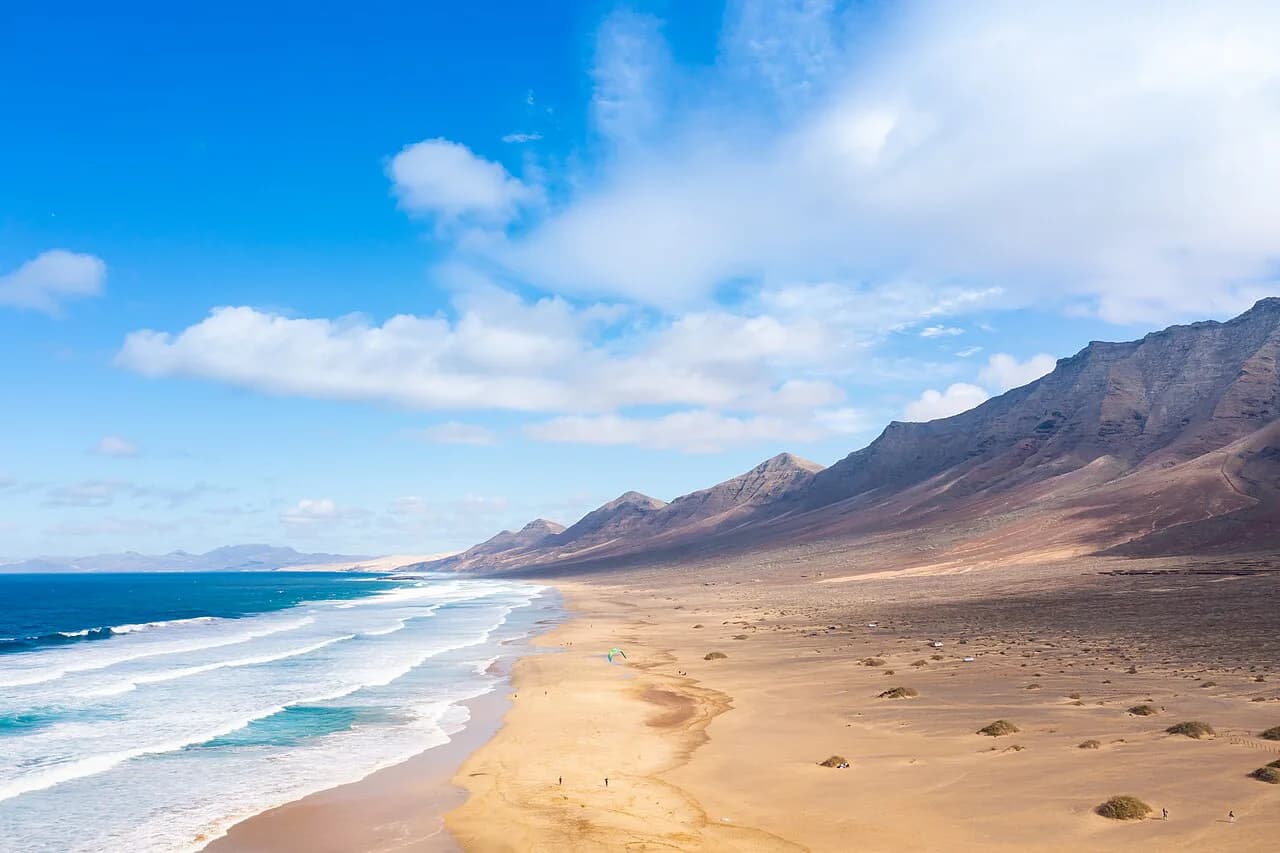
Cofete Beach is the beach you cross an island for: more than 12 kilometres of Atlantic sand backed by the 800-metre cliffs of the Jandía Natural Park, with no town, no promenade and no crowd in sight. Its scale and its awkward access are the same thing, and they are exactly why it suits travellers who want a wild day out rather than a resort beach.
It works best as an excursion. From your base you commit to a long drive south, a slow unmade track over the mountains and a day of walking on soft sand, and in return you get one of the most dramatic shorelines in the Canary Islands. Treat the beach as the centrepiece and the journey as part of the day.
Where Cofete sits on the Jandía Peninsula
Cofete lies on the windward, western side of the Jandía Peninsula, the 200-square-kilometre southern lobe of Fuerteventura that is separated from the rest of the island by the narrow La Pared isthmus. The beach runs from the Siete Viudas islet in the north to Roque del Morro in the south, with the mountain range dropping abruptly to the sand behind it.
That position on the barlovento side is what shapes the day. You are facing open Atlantic water on an exposed coast, so the sea here is often livelier than on the sheltered east coast of the island, and the wind can pick up sand along the length of the beach.
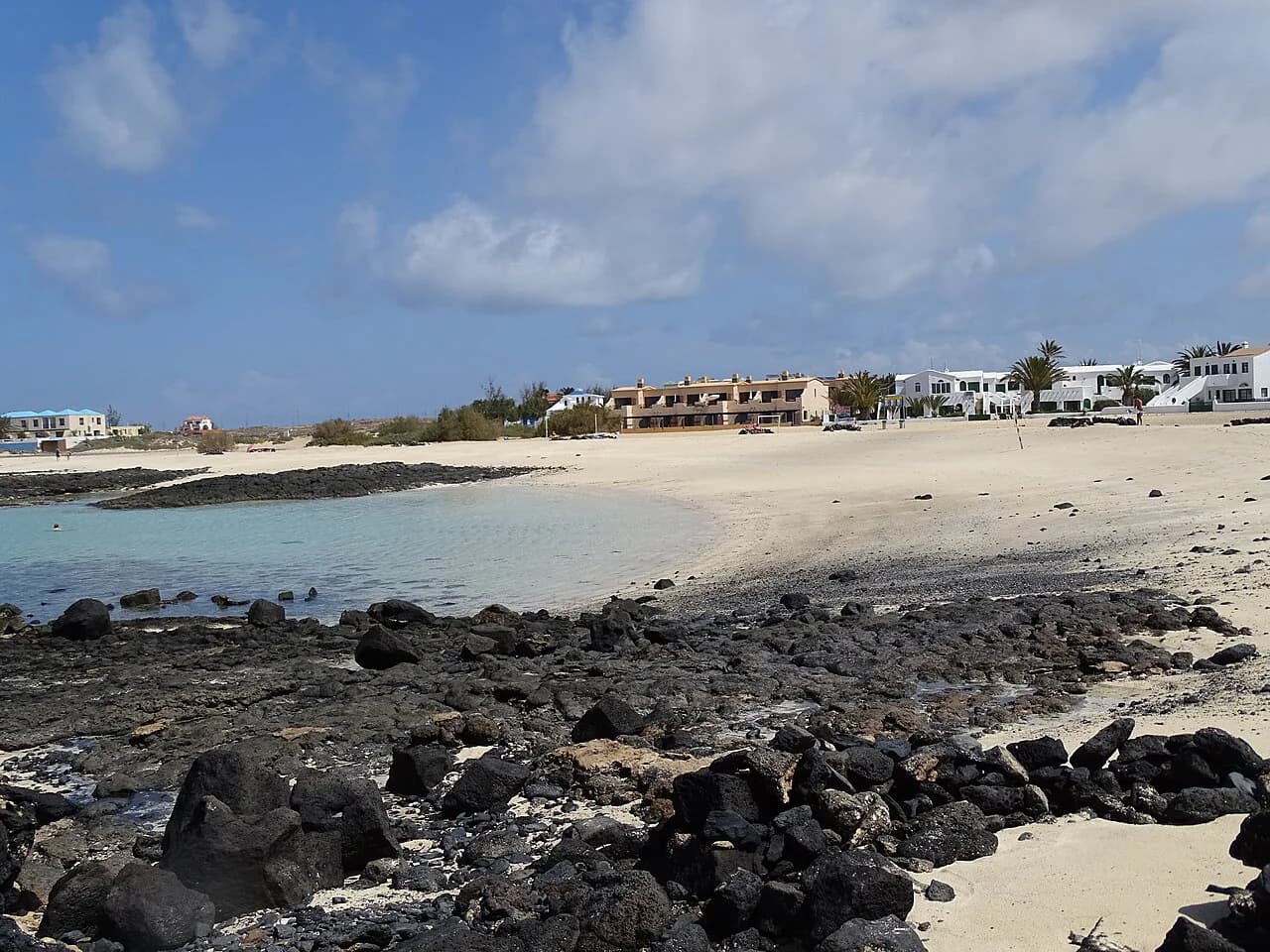
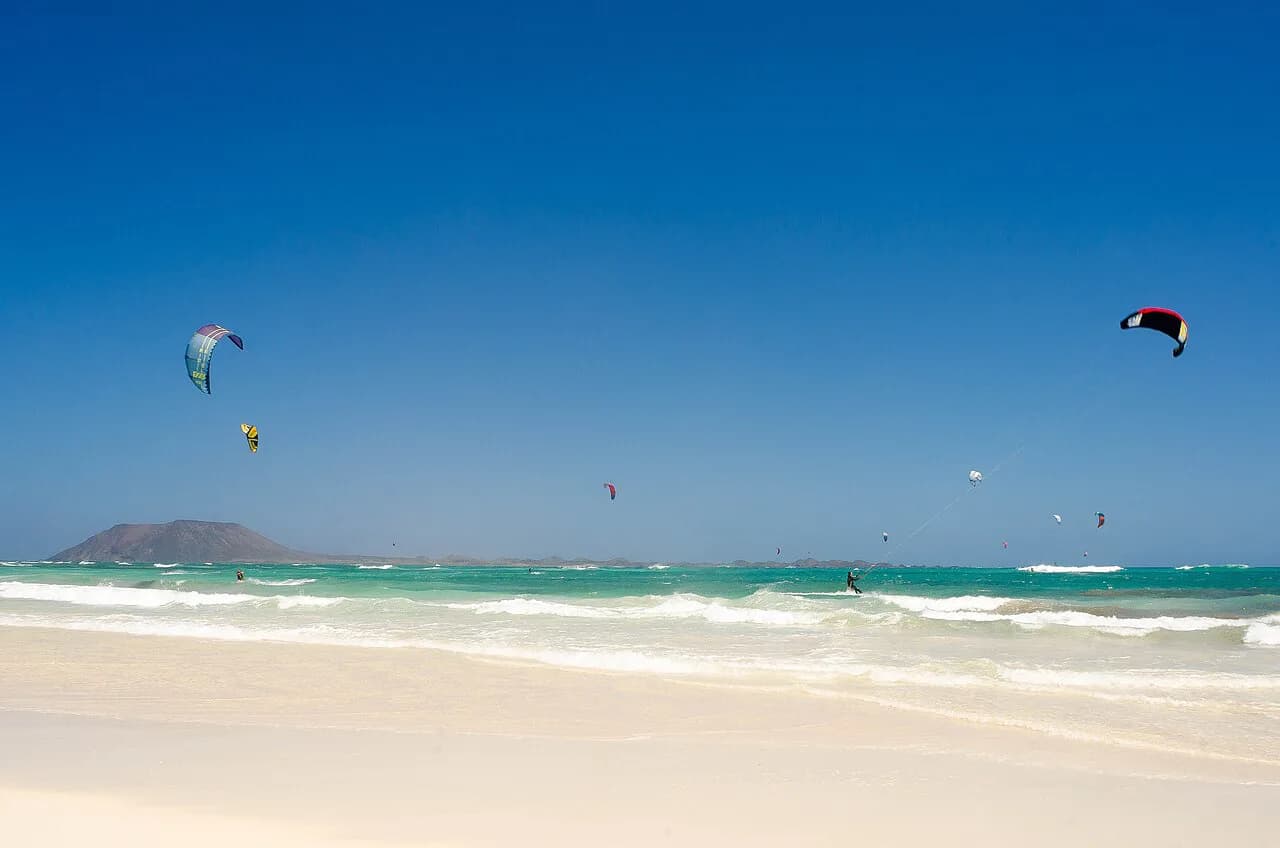
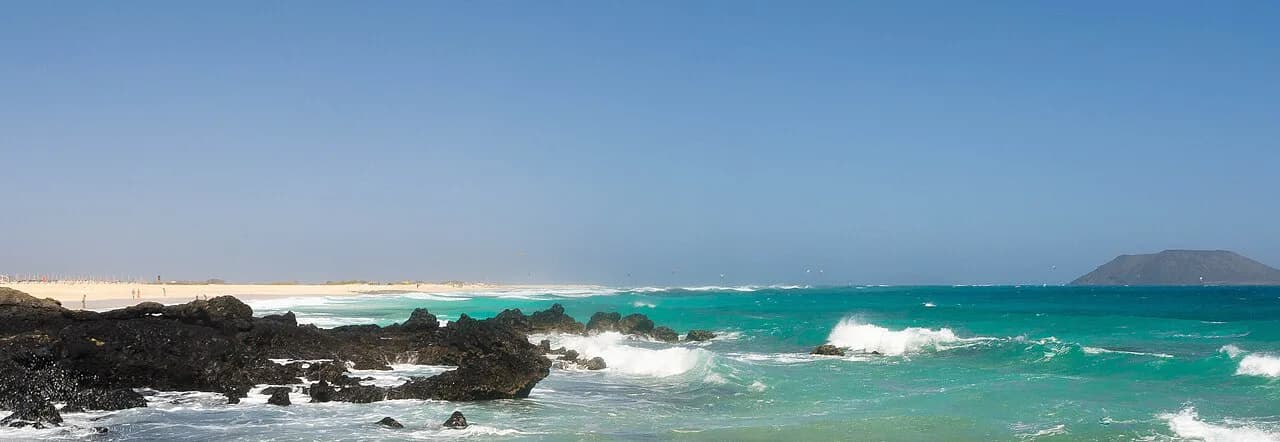
If you are staying in the north of the island, the contrast with the beaches on your doorstep is part of the appeal. The Corralejo beaches and the dunes of the Dunas de Corralejo Natural Park give you calm, easy sand; Cofete gives you the opposite, and it is worth planning both into a Fuerteventura trip. If you are island-hopping across the Canaries, the black-sand La Palma beaches offer a similarly wild contrast on a neighbouring island.
Getting there: the track from Morro Jable
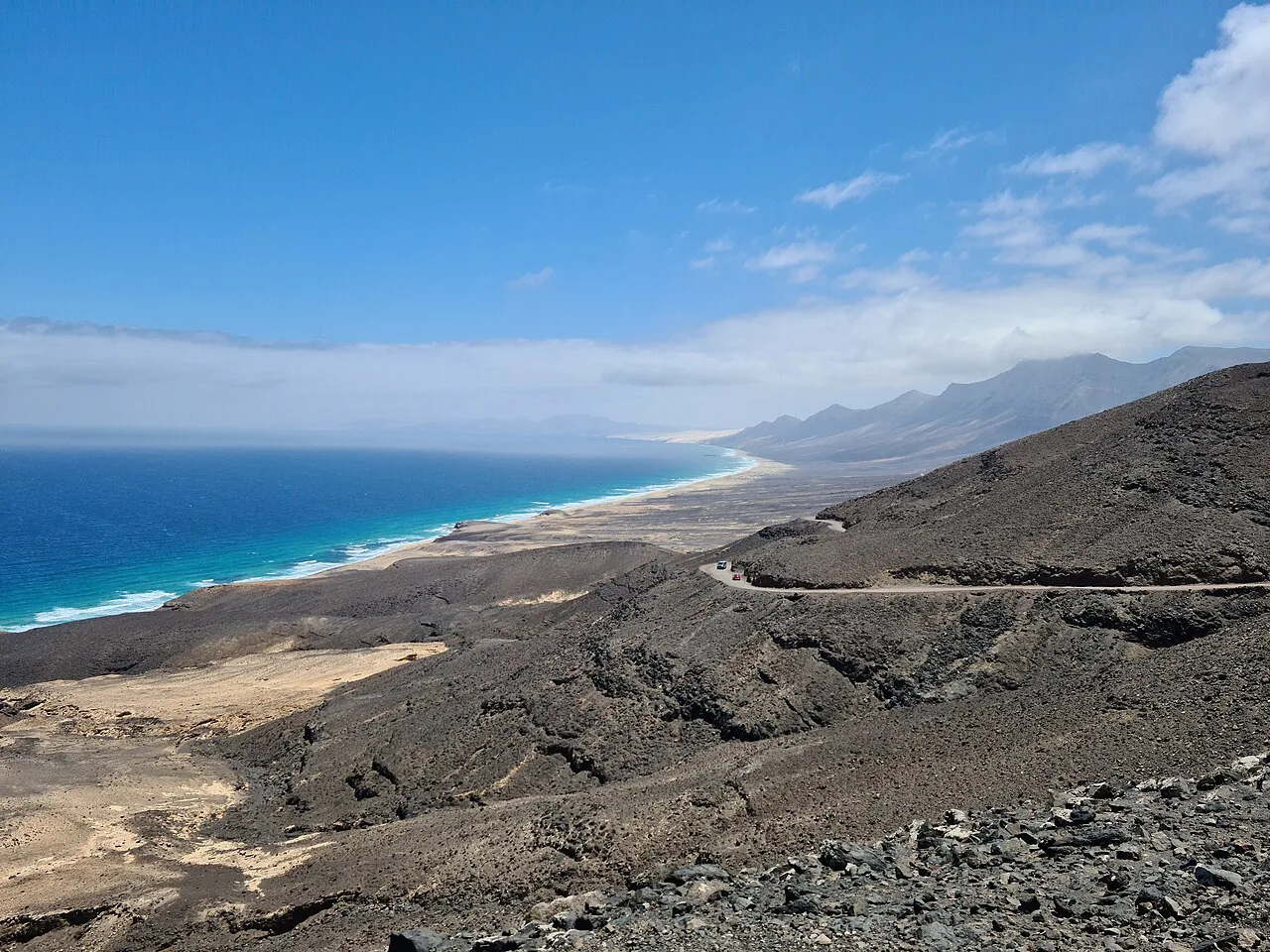
The approach begins about 8.5 kilometres outside Morro Jable, where the turn-off for Cofete marks the start of an unmade forest trail through the mountain range. From there the track climbs past the Mirador del Barranco Agua Oveja viewpoint, roughly two kilometres along, which opens onto a panoramic view over the whole beach before the route winds down into the village.
Allow around 50 minutes for the 25-kilometre journey from Morro Jable to the sand. It is a slow, twisting descent with tight corners and loose surfaces, so it is not a route to rush, and the drive is the reason Cofete has stayed as quiet as it has.
The village of Cofete sits about half a kilometre before the beach car park, a small cluster of houses founded in the early nineteenth century by families living in near-total isolation. Passing through it on the way to the car park gives you a sense of how remote this coast has always been.
Driving, parking and the condition of the road
The track is unpaved and cut into the mountainside, and the source that documents it describes the beach as reachable only by vehicles suited to forest trails and non-tarmacked roads. A standard hire car can be driven carefully, but check your rental agreement before you commit, because many policies exclude unmade roads and damage there may not be covered.
Parking sits in the middle of the beach near the cemetery, and from there you choose your direction on foot rather than moving the car. Arrive early in the day to give yourself room to manoeuvre and to walk before the sand heats up.
Bring water, food and sun protection for the whole day. Nothing along the track or at the car park is described as a place to stock up, and the nearest full range of shops and services is back in Morro Jable.
Organised tours and 4x4 transfers
If you are based in Corralejo, at the far north of the island, the drive south to Morro Jable plus the mountain track makes a long day, and an organised tour removes the driving and the vehicle question in one go. Guided excursions to Cofete, including 4x4 trips into the Jandía Natural Park, are sold as day tours.
Compare what each tour includes before booking: the tour descriptions set out the route and stops, and that is where the difference between a simple transfer and a fuller day with time at the village, cemetery and Villa Winter becomes clear.
The sand and the water
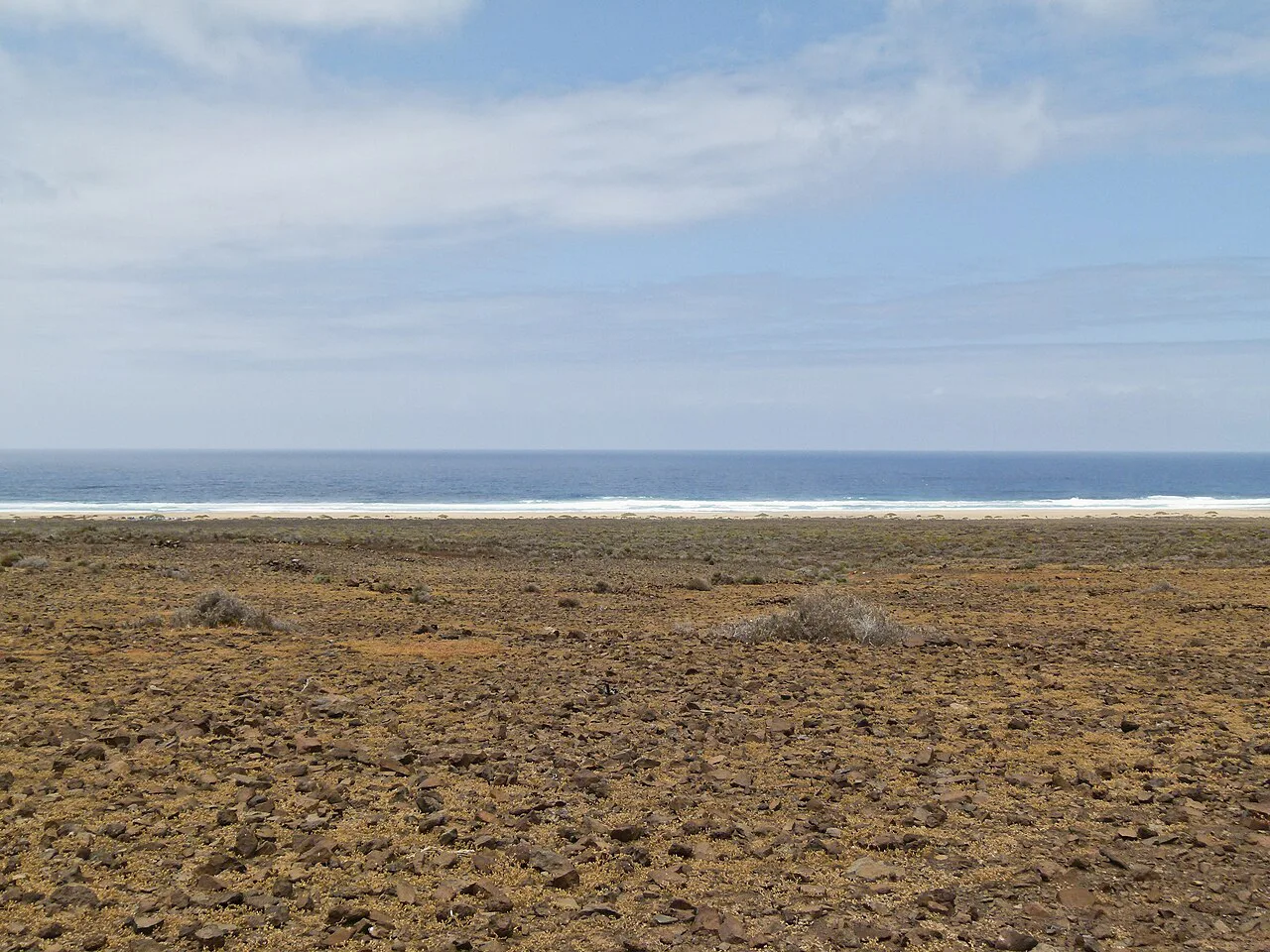
This is a broad, open Atlantic beach of pale sand stretching more than 12 kilometres, backed by cliffs and fronted by ocean. There is no sheltering headland or reef to take the energy out of the swell, so read the water before you go in and keep children close at the edge.
Because Cofete faces the windward side of the peninsula, wind is a constant feature of the day. That keeps temperatures bearable in summer but also lifts sand, so a windbreak, a light long-sleeved layer and something to anchor your towel make the day more comfortable.
Swimmers who like a bracing plunge will find plenty of space; families with small children and anyone wanting gentle, supervised water will be happier on the calmer east-coast beaches of the island.
Which end of the beach to choose
From the car park the beach splits into two very different walks: about five kilometres north towards the Siete Viudas islet, or 2.7 kilometres south towards Roque del Morro. The northern direction gives you the longer, emptier sweep with the islet as a marker, while the southern walk is shorter and ends at the dramatic rock of Roque del Morro.
For a first visit with limited time, the southern route is the better trade-off: less walking on soft sand, a clear objective and an easy return. Walkers who want solitude should head north and accept that the distance back is longer than it looks.
Whichever way you go, note landmarks on the cliffs behind you. The scale of the beach flattens perspective, and the car park and cemetery are the only reliable reference points on the sand.
Crowds and the best time to go
The size of the beach and the difficulty of the access keep visitor numbers low, and the source describing it calls it relatively uncrowded. Even so, the car park is the pinch point, so arriving in the morning gives you a simpler start and cooler walking.
The sea is at its most comfortable from late spring through early autumn, and the island's school holidays and European peak weeks bring the most traffic to the track. Spring and autumn give you warm water with lighter traffic on the descent.
Winter days can be bright and pleasant for walking but the wind is sharper, so pack a layer even when the sun is out. Whenever you go, build the day around the drive rather than squeezing Cofete into an afternoon.
Facilities and what to bring
Plan on Cofete being a bring-everything beach day. There is no resort strip behind the sand, so carry drinking water, food, shade and a towel that will not blow away, and treat the car as your base.
Footwear matters more than usual here. The sand is soft and the walks to either end are measured in kilometres, so trainers or sandals you can walk in will serve you better than flip-flops once you leave the car park.
The village, the cemetery and Villa Winter
The cemetery near the car park is one of the most striking sights on the coast: a simple walled plot built by locals in the nineteenth century so the dead would not have to be carried 40 kilometres by camel to Pájara. Hundreds of wooden crosses stand inside a low wall that the sand constantly spills over.
About a kilometre outside the village stands Villa Winter, the mansion built in the 1940s by the German engineer Gustav Winter, its white tower and wartime associations feeding decades of speculation. It gives the day a second purpose if the sea is too rough for swimming.
Nearby beaches to combine with Cofete
On the sheltered east side of the Jandía Peninsula, Playa de Sotavento de Jandía offers long, wide sand and flatter water, making an easy contrast to Cofete on the drive back towards Morro Jable. It suits families and windsurfers in a way that the windward coast does not.
Back in the north, Isla de Lobos is a short ferry hop from Corralejo and gives you a completely different beach day, with small coves and clear water in a protected setting. It pairs well with the dunes and the Corralejo beaches for travellers basing themselves in the north.
If you are touring the west coast, the El Cotillo beaches offer another change of mood, with their own village, restaurants and sunsets over the Atlantic.
The Cofete access rules and the 8.70 EUR toll
Only one road leads to Cofete, and it costs 8.70 EUR each way. The 25-kilometre journey from Morro Jable takes around 50 minutes, and the turn-off for Cofete comes about 8.5 kilometres outside Morro Jable, where the forest trail begins and pierces the mountain range that splits the Jandía Peninsula into barlovento (windward) and sotavento (leeward). The Mirador del Barranco Agua Oveja viewpoint sits around two kilometres along this track, offering a panoramic view over the entire beach before the constantly winding route descends into the small village of Cofete, half a kilometre before the beach car park.
Because the access is this difficult, the beach can only be reached in specialised vehicles capable of navigating forest trails and non-tarmacked roads, so any visit should be treated as an excursion rather than a quick dip. The reward is a stretch of sand running from the Siete Viudas islet in the north to the Roque del Morro in the south, more than 12 kilometres long, backed by the 800-metre-high cliff face of the Jandía Natural Park mountain range and fronted by the Atlantic.
At the car park you have a choice: head 5 kilometres northwards in the direction of the islet, or 2.7 kilometres southwards toward the impressive Roque del Morro. Given the scale of the beach and its complicated access, it stays relatively uncrowded, and the sheer size underlines a strange sensation of solitude. The village itself is a small scattering of houses constructed in the early nineteenth century by peasants who lived drastically isolated from the rest of the island, sustaining themselves on fishing, shell fishing, goat farming and collection.
Plan Your Visit
Cofete is the day you build a Fuerteventura trip around when you want scale, wind and ocean rather than a lido. Drive the track from Morro Jable with a suitable vehicle and full tank, or book a guided 4x4 tour from the north, and give the beach the whole day.
Leave with water, food, shade and sturdy footwear, pick north or south at the car park before you set off, and keep the cemetery and Villa Winter for the cooler part of the day.
Frequently Asked Questions
How do you get to Cofete Beach?
Cofete is reached by an unmade track that turns off about 8.5 kilometres outside Morro Jable and climbs through the Jandía mountains before descending to the village and the beach car park. The published drive time is around 50 minutes for the 25-kilometre route, and guided 4x4 tours are also sold as day trips.
Can you drive to Cofete Beach in a normal hire car?
The track is a forest trail over non-tarmacked ground, and the beach has been described as reachable only by vehicles capable of handling it. A normal hire car can manage at low speed, but check your rental agreement, because many policies exclude unmade roads and damage there may not be covered.
Is Cofete Beach good for swimming?
Cofete faces the open Atlantic on the windward side of the Jandía Peninsula, so the water is typically more energetic than on the sheltered east coast. Strong swimmers who like a bracing plunge will enjoy it, but families with small children should choose calmer beaches near Corralejo.
Are there facilities at Cofete Beach?
Cofete is a bring-everything beach: plan to carry your own water, food and shade for the day, and treat the car as your base. Stock up in Morro Jable before you set off on the track.
What else is there to see near Cofete Beach?
Beyond the sand, the village of Cofete, the walled cemetery near the car park and Villa Winter, the 1940s mansion built by Gustav Winter about a kilometre outside the village, all make the trip worthwhile. Mirador del Barranco Agua Oveja on the track gives you a panoramic view over the whole beach.
When is the best time to visit Cofete Beach?
The sea is most comfortable from late spring through early autumn, and arriving in the morning gives you a simpler start at the car park and cooler walking. Spring and autumn combine warm water with lighter traffic on the descent.
Is Cofete Beach busy?
Its size and difficult access keep it relatively uncrowded, and the beach has been described that way in published guides. The car park is the one place where numbers concentrate, so an early arrival makes the day easier.
Sources
Beach notes for your next trip
Optional updates when we add or revise beach guides.
You might also like

Continue reading
More guides you'll find useful