Stavros Beach, Chania: Crete's Akrotiri Peninsula Guide
Stavros Beach near Chania is a sandy horseshoe cove on the Akrotiri peninsula, with a small fishing port, tavernas and nearby Kalathas and Marathi beaches.
On this page
Stavros Beach is the reason many travellers based in Chania drive east onto the Akrotiri peninsula: a curved sandy bay with a small working fishing port at one end and a sheltered inner lagoon at the other. It suits families who want a short journey from town, swimmers who like a choice between still water and open sea, and anyone who would rather spend the afternoon at a taverna table than on a sunbed.
The bay is compact enough to walk end to end, so you can arrive without a fixed plan and still find the side that fits the day's wind. This guide sets out the drive, the two faces of the cove, the facilities around the harbour and the peninsula beaches worth adding to the same outing.
Where Stavros Beach sits on the Akrotiri peninsula
Stavros sits on the north coast of the Akrotiri peninsula, the headland east of Chania that locals sometimes call the Holy Mountain of Crete because of its monasteries. The approach runs through Kounoupidiana and then Xorafakia before the road descends to the beach, so the journey is a short hop out of the city rather than a cross-island expedition.
Because the peninsula is small, Stavros works as a base as well as a day trip: the fishing port, the tavernas and the beach are all within a few minutes of each other. The wider Akrotiri coast holds several more coves, which makes the area a practical alternative to staying in the city itself.
Getting there from Chania
By road, head east from Chania through Kounoupidiana and Xorafakia and follow the signs down to Stavros; the route ends almost at the sand, with parking around the beach and the fishing port. Coming early in the morning makes finding a space easier in high summer, when the bay fills with day-trippers from Chania and the west of the island.
If you are relying on public transport, ask the tourist office in Chania or your accommodation which current bus service serves the Akrotiri peninsula, as timetables change between seasons. A car gives you the flexibility to combine Stavros with the other coves on the same day, which is harder to do on a fixed schedule.
The sand and the water
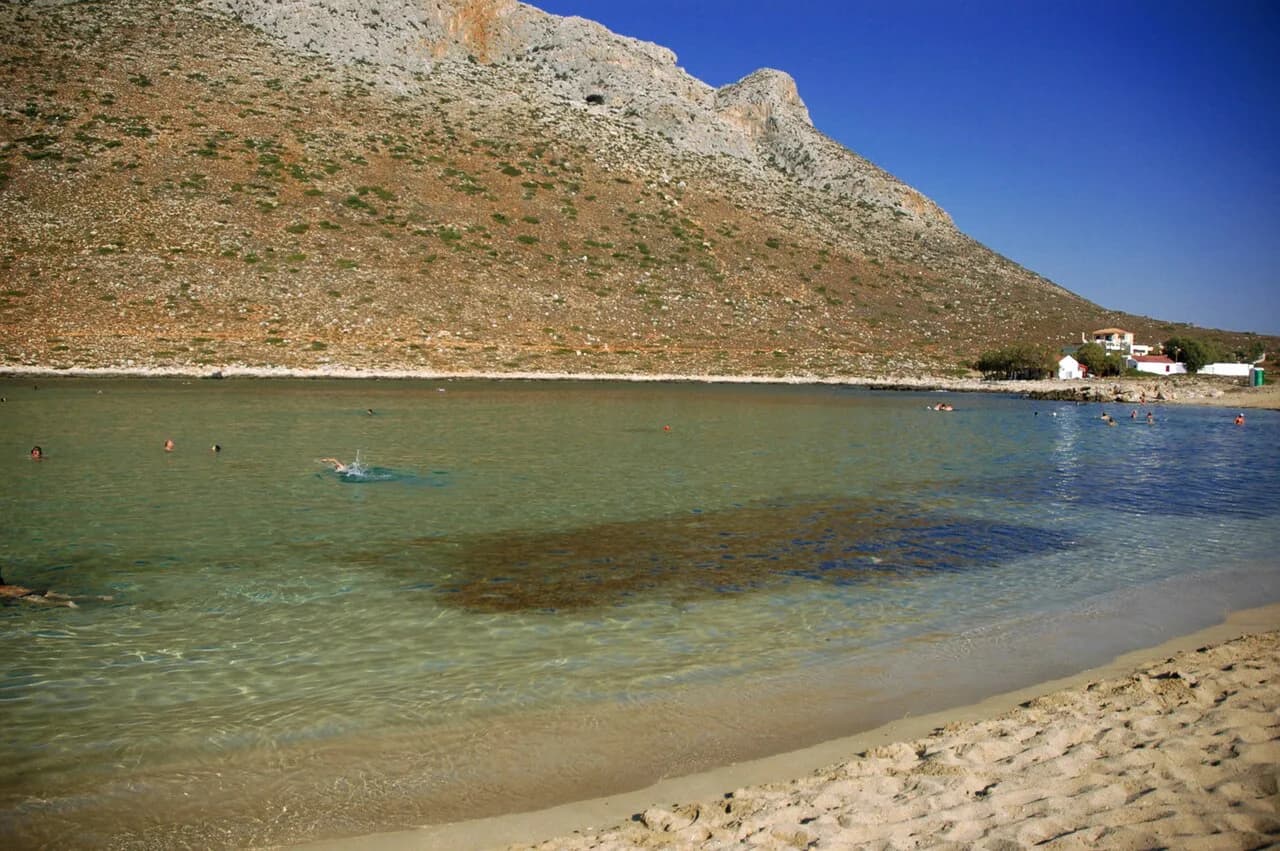
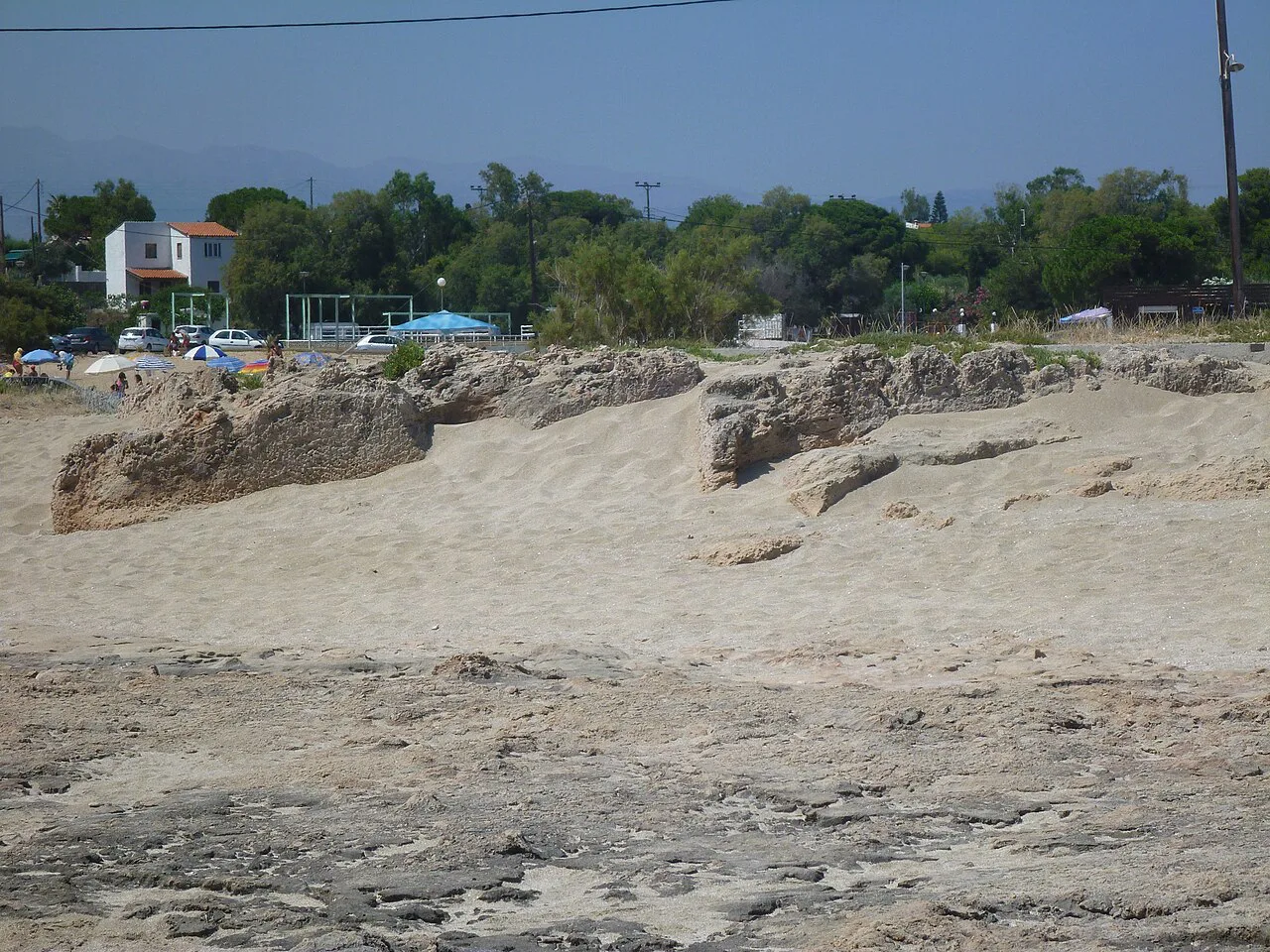
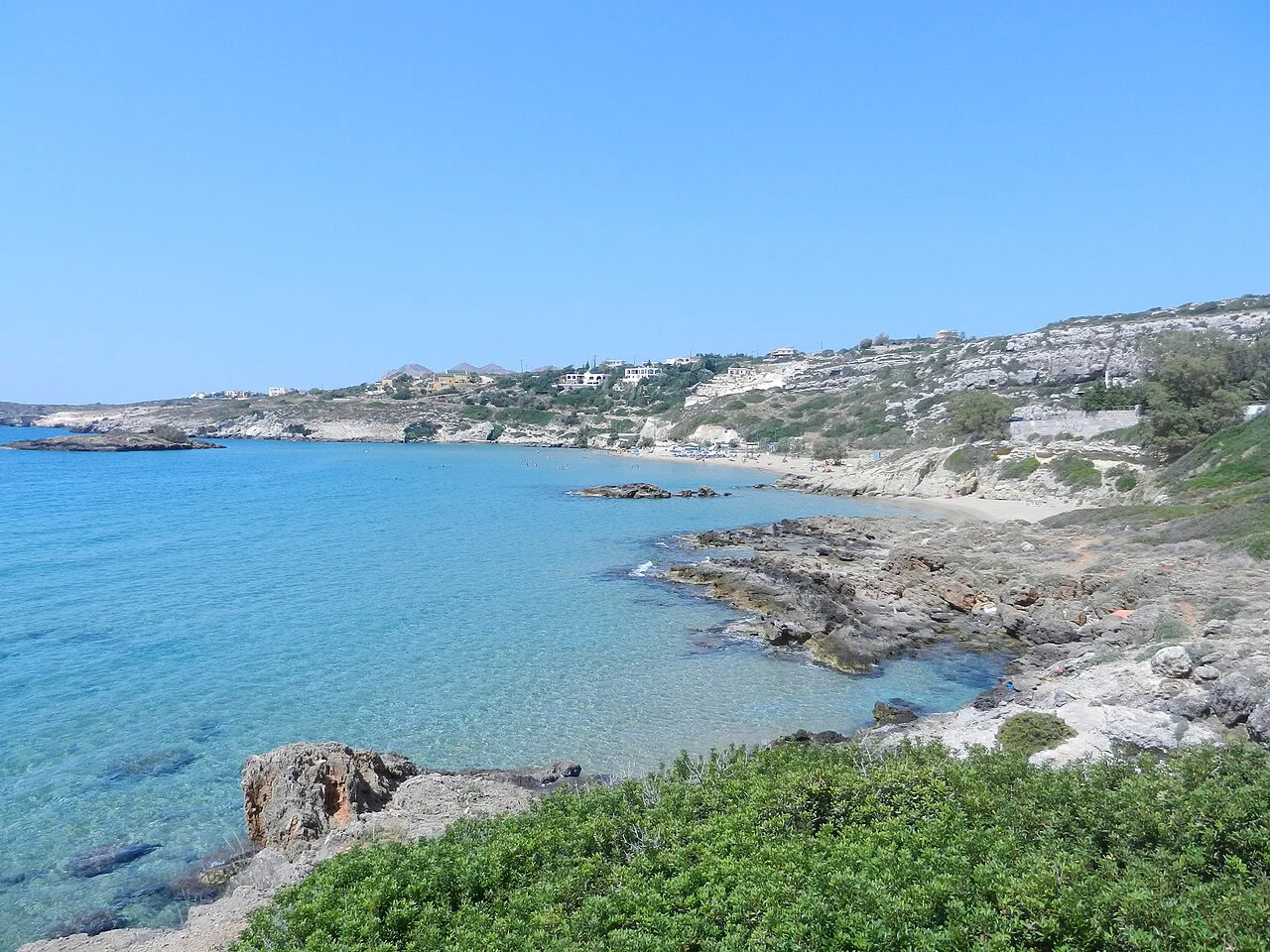
The beach forms a horseshoe around a shallow, almost enclosed lagoon, with a narrow mouth to open water and a long curve of sand on the outer side. The sand is coarse and warm-toned rather than powder-white, and the seabed shelves gently inside the cove before deepening beyond the mouth.
That geography gives you two swims in one place: the lagoon side for gentle paddling and long, easy lengths, and the outer beach for a proper sea swim with more movement in the water. The curve of the bay means you can usually see most of the beach from wherever you settle.
Shelter and wind
When the meltemi blows from the north, the inner lagoon side of the cove is the more comfortable choice, because the land and the harbour break the wind. On calmer days the outer beach gives you more space and a cleaner view along the coast towards the headland. Sheltering from the meltemi is a common thread across the Aegean, and the same wind-logic shapes the best beaches in Naxos.
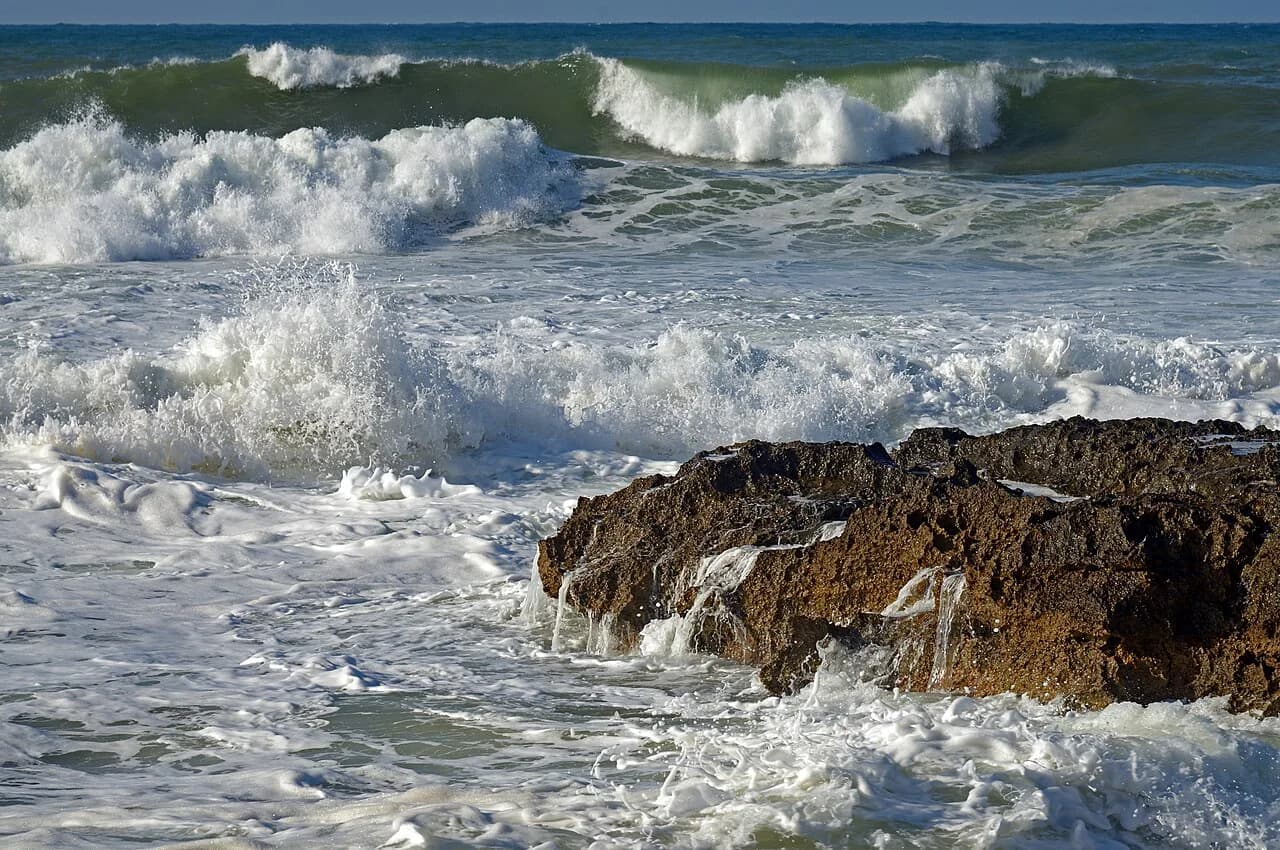
Treat the bay as shelter rather than guaranteed calm: the mouth of the cove lets swell through when conditions are rough, so pick your spot by watching the water for a few minutes before you unpack. Wind direction changes through the day on the peninsula, and moving a hundred metres around the curve often makes more difference than any other decision.
The fishing port and tavernas
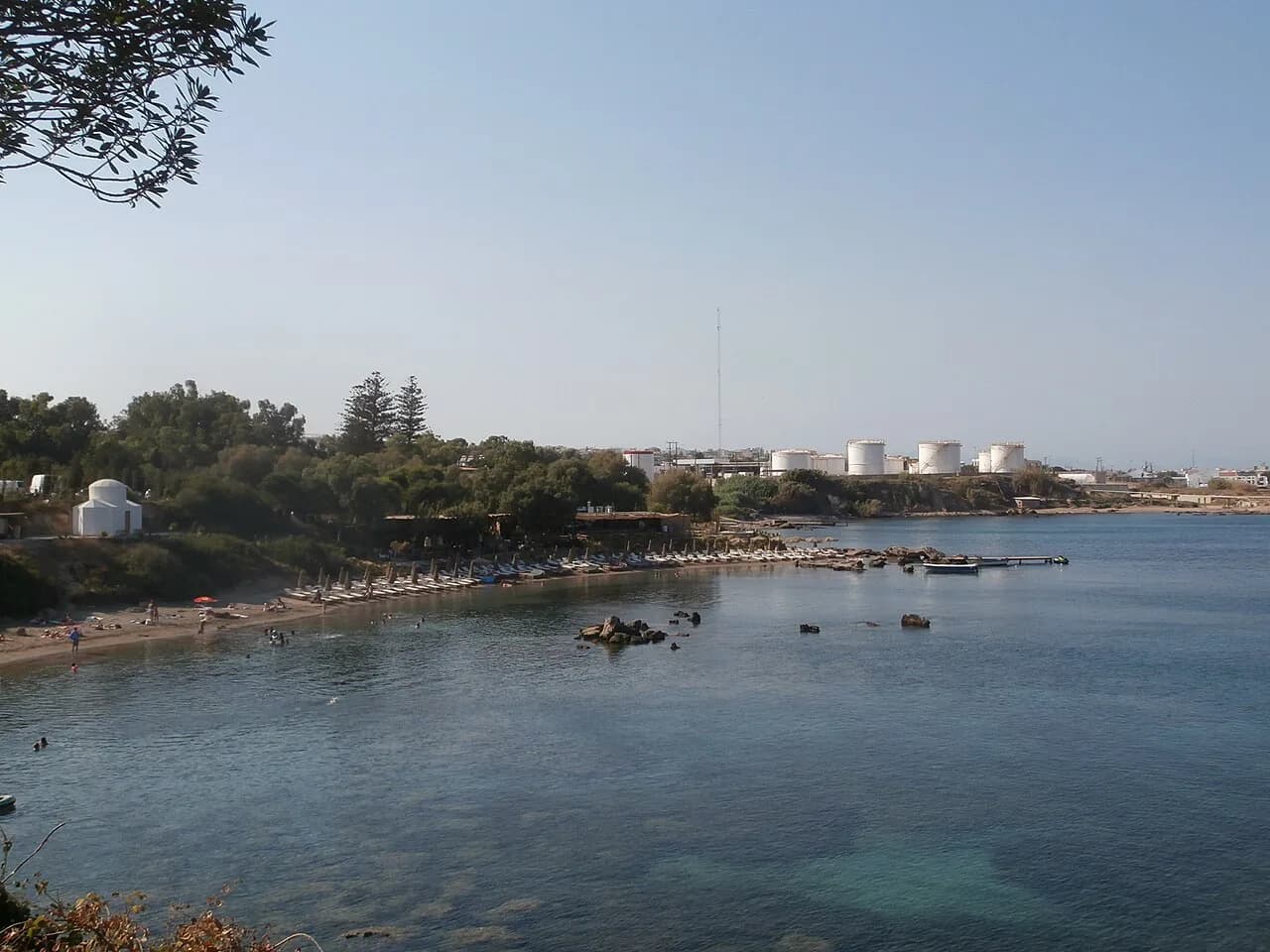
Stavros is a working harbour, not a resort strip: small boats tie up beside the beach and the catch goes to the local tavernas, which line the waterfront behind the sand. That gives the day a different rhythm from the organised beaches further west, with lunch as the centrepiece rather than watersports.
Fish is the thing to order, and the tavernas sit close enough to the water that you can eat and then walk straight back onto the sand. Book ahead for a late lunch in August, when the bay is at its busiest and the tables fill quickly.
Facilities and organisation
The beach has the setup of a well-used local bay rather than a big lido: organised sections with sunbeds and shades, beach bars within easy reach, and the harbour facilities a short walk away. Ask at your accommodation or of the sunbed attendants on the sand about current sunbed hire and seasonal opening, since these arrangements change from year to year.
Bring the basics that make a long day work: cash for small purchases, water, and reef-safe sun protection for the hours when the bay has little natural shade. If you plan to split the day between the beach and the monasteries inland, pack a cover-up and sturdy shoes as well as swimwear.
Crowds and the best time to go
The swim season on this coast runs from late spring into early autumn, with the sea at its warmest in the second half of summer and the busiest weeks falling in August. June and September give you similar water temperatures with noticeably lighter crowds on the sand and at the tavernas.
Arrive before mid-morning in high season to claim a spot on the lagoon side, and expect the harbour area to be liveliest at lunchtime. Out of season the bay empties out and the drive from Chania becomes quick, but not every taverna stays open.
Who Stavros suits
Families with small children tend to settle on the lagoon side, where the water is shallow and the beach is easy to supervise from a single spot. Swimmers and snorkellers do better on the outer curve, where the seabed drops away and there is more to see along the rocks at the mouth of the cove.
Quiet-seekers should treat Stavros as a daytime beach and stay elsewhere: the appeal here is the harbour, the tavernas and the walk around the bay, not nightlife. Anyone wanting a full resort infrastructure of pools, watersports and beach clubs will find more of that on the coast west of Chania.
Nearby beaches to combine
Kalathas beach lies about 3.5 km away and Marathi about 8.5 km, both on the same peninsula and easy to add to a Stavros day if you have a car. Marathi in particular is a good second stop for a late-afternoon swim and a change of scene from the harbour.
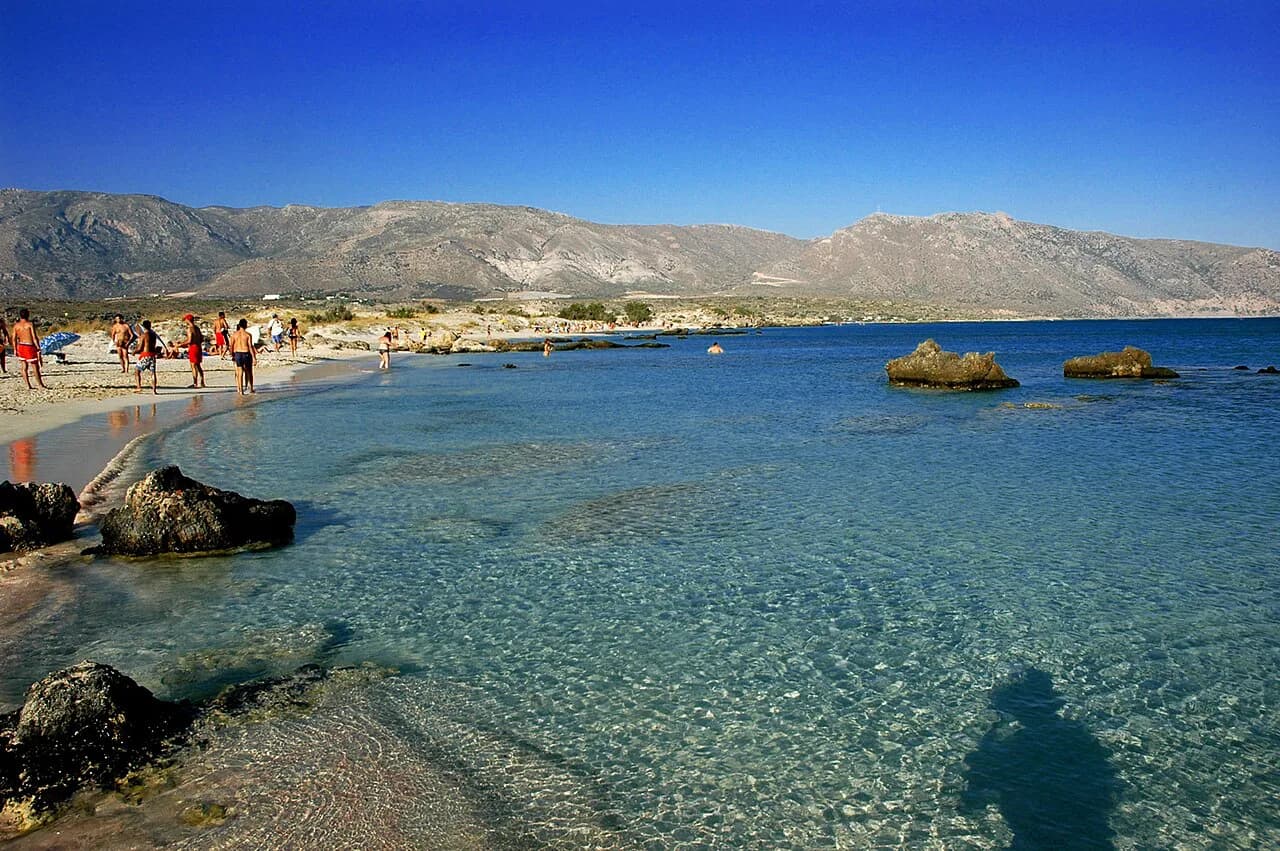
For a longer beach-hopping itinerary from Chania, the famous sands of the south-west coast are a full day out rather than an add-on, with Elafonissi Beach, Crete drawing the biggest crowds and the longest drives. If you would rather stay close to town, Nea Chora beach is the city's own sandy strip and makes an easy evening alternative.
Monasteries and caves around Stavros
The Akrotiri peninsula holds several historic monasteries within a short drive of the beach, including Gouverneto and Agia Triada, which makes a mixed day possible when not everyone wants to sit on sand. The hills near Stavros are also known for caves with stalactites and stalagmites, some of which feature in the film history of the area.
Monasteries are working religious sites, so cover shoulders and legs and keep voices low; opening hours vary and are worth confirming with the tourist office before you set out. Pairing a morning visit with an afternoon swim at Stavros keeps the driving short.
Taking a dog to Stavros Beach and the Akrotiri peninsula
For a visitor travelling with a dog, the geography of Stavros is the first thing to understand: the beach lies on the route from Chania through Kounoupidiana to Xorafakia, on the Akrotiri peninsula. The sandy beach itself has a famous circular outline and is described as wonderfully unspoiled, an area of natural beauty and tranquillity, with a small fishermen's port where fresh fish is available every day for the local tavernas and restaurants. The peninsula around it is sometimes called the Holy Mountain, the Mount Athos, of Crete.
The beaches you might combine with a Stavros outing are close together: Kalatha beach is 3,5 km away and Marathi is 8,5 km away. If you want to add the historical monasteries of the area to a day out, the monastery of Youverneto, Agia Triada, Ayios Ioannis and Kaloyreon are all reachable from Stavros. Near Stavros, in the mountains, there are lots of caves with wonderful stalactites and stalagmites, and visitors from all over Crete and Greece come to Akrotiri to see these caves as well as the sun-drenched beaches.
What that means in practice is a compact day: the beach, the small port with its daily fresh fish for the tavernas and restaurants, and then, if you have the time, one of the nearby beaches or a monastery. The area's natural beauty and tranquillity, together with the caves in the mountains near Stavros, give you plenty of ground to cover on foot without long drives between stops.
Seitan Limania and the coastal inlets with a dog in mind
For anyone based near Stavros and wondering how far the rougher, wilder side of the Akrotiri coast is, Seitan Limania sits at the far end of the same peninsula, roughly 22 km northeast of Chania and about 2 km east of the village of Chordaki. Readers researching it by road will find the drive described in a guide to how to get to Seitan Limania Beach, which puts the journey at 30-40 minutes from Chania once you head toward Akrotiri, follow signs for Chordaki and keep going to the coast. The last stretch narrows into tight, high hairpins with loose stone at the roadside.
The same source is blunt about what happens after the car stops: from the clifftop parking area a path drops 10 to 15 minutes to the water, with some sections of bare rock to scramble over, a fixed chain on the steepest stretch, long drops beside the route and people regularly losing the trail on the way back up. Closed shoes with good grip are advised and hands should stay free. Visitors are consistently advised against bringing very young children down on foot. Those details are worth weighing before deciding whether the cove belongs in a day out with a dog, since the descent is the obstacle rather than the swimming.
The clifftop parking area fills fast, by 9 AM in July according to the same guide, and in August you will be circling; in high season the advice is to arrive before 9 AM or after 5 PM, because between those hours the beach is shoulder to shoulder. There is no canteen, no sunbeds and almost no shade after 11 AM, so equipment and amenities have to be brought in. Cretan wild goats will investigate a food bag without permission, and the guide suggests someone stays at the beach to watch over things while others swim. If the descent does not suit the group, Stavros and Marathi are described as kids-friendly beaches quite easy to reach; Stavros beach, with its small fishermen's port and sandy shoreline, is the gentler coastal stop on the peninsula.
Plan Your Visit
Stavros rewards a simple plan: drive out from Chania through Kounoupidiana and Xorafakia, park by the harbour, and choose your side of the cove once you see which way the wind is blowing. Spend the morning in the lagoon, eat fish at a taverna, and add Kalathas or Marathi if you still have energy in the afternoon.
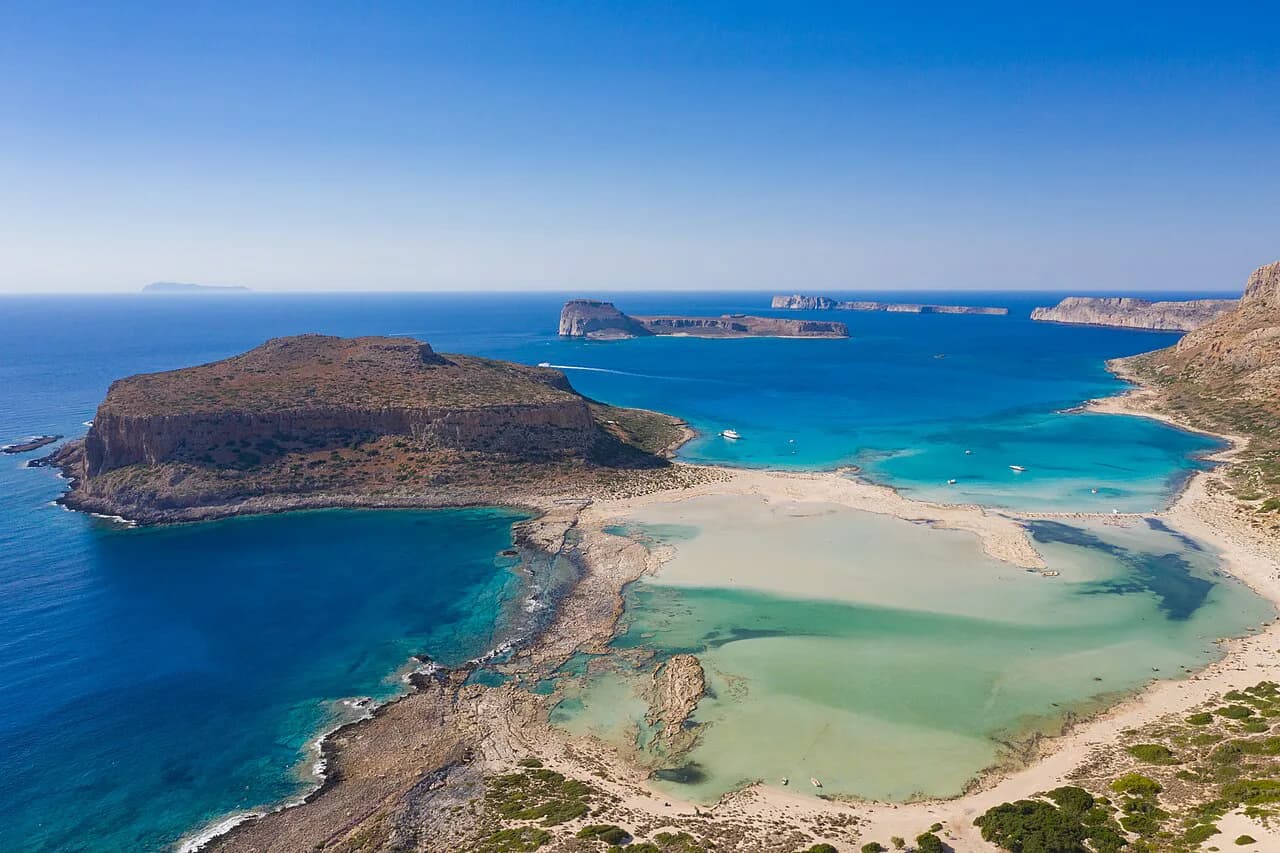
Compare it with the rest of the region before you commit your days: the Chania beaches guide covers the organised strips to the west and the wilder south coast, while Elafonissi beach and Balos beach suit travellers willing to trade a longer journey for a more dramatic setting.
Frequently Asked Questions
How far is Stavros Beach from Chania?
Stavros sits on the Akrotiri peninsula east of Chania, reached by road through Kounoupidiana and Xorafakia. The drive is short enough for a half-day trip, though exact timing depends on traffic leaving the city; the local tourist office can confirm the current route and any bus service.
Is Stavros Beach good for children?
The inner lagoon side of the cove is shallow and enclosed, which makes it the easier choice for families with small children. Conditions change with the wind and swell, so watch the water before you settle and keep an eye on the mouth of the cove, where the sea is more open.
Are there sunbeds and tavernas at Stavros Beach?
The bay has organised sections with sunbeds and shades along the sand, and tavernas line the waterfront behind the fishing port, serving the local catch. Hire arrangements and seasonal opening vary, so ask on the beach or your accommodation for current details.
Which beaches are near Stavros on the Akrotiri peninsula?
Kalathas beach is about 3.5 km away and Marathi about 8.5 km, both easy to reach by car from Stavros. Combining two or three of these coves makes a good peninsula day without the longer drive to the south-west coast.
When is the best time to swim at Stavros Beach?
The sea is at its warmest from mid-summer into early autumn, with August the busiest month on the sand. June and September offer similar water temperatures with fewer people, while out-of-season visits are quieter but come with reduced taverna opening.
Can I pair Stavros Beach with Chania Old Town?
Yes. Stavros is close enough to Chania to swim in the morning and return to the Old Town for the evening, which suits travellers basing themselves in the city. Check bus times or drive times with the tourist office if you are not using a car.
Sources
Beach notes for your next trip
Optional updates when we add or revise beach guides.
You might also like
Continue reading
More guides you'll find useful