Murcia Beaches: Costa Cálida and Mar Menor Beach Day Picks
Plan a beach day in Murcia: Cala Cortina near Cartagena, the shallow Mar Menor beaches at Los Alcázares, and how to choose between the two coasts.
On this page
Murcia's coastline sets two swimming experiences side by side, and that is what makes a beach day here worth planning rather than improvising. On the Mediterranean side you get a compact cove within easy reach of a major city; on the Mar Menor you get a saltwater lagoon with shallows that stretch a long way out. This guide picks a beach for the day you actually want, whether that is a city-based paddle at Cala Cortina or a slow family morning in Los Alcázares.
Two coasts, two swimming experiences
The Mediterranean shore south of Cartagena is open water: waves build, the sea deepens quickly and the wind shapes the day. The Mar Menor behaves differently, because the lagoon is separated from the Mediterranean by the long strip of La Manga, leaving a body of water with a very gentle profile. That contrast is the single most useful thing to know when you pick a beach.
For an untethered swim and a sense of open sea, head for the cove at Cala Cortina. For small children, nervous swimmers and anyone who wants to stand up in waist-deep water, the western shore of the lagoon around Los Alcázares makes the stronger case. Splitting the day between the two is impractical, so choose one coast and settle in.
Cala Cortina, Cartagena: the sheltered cove four kilometres from the city
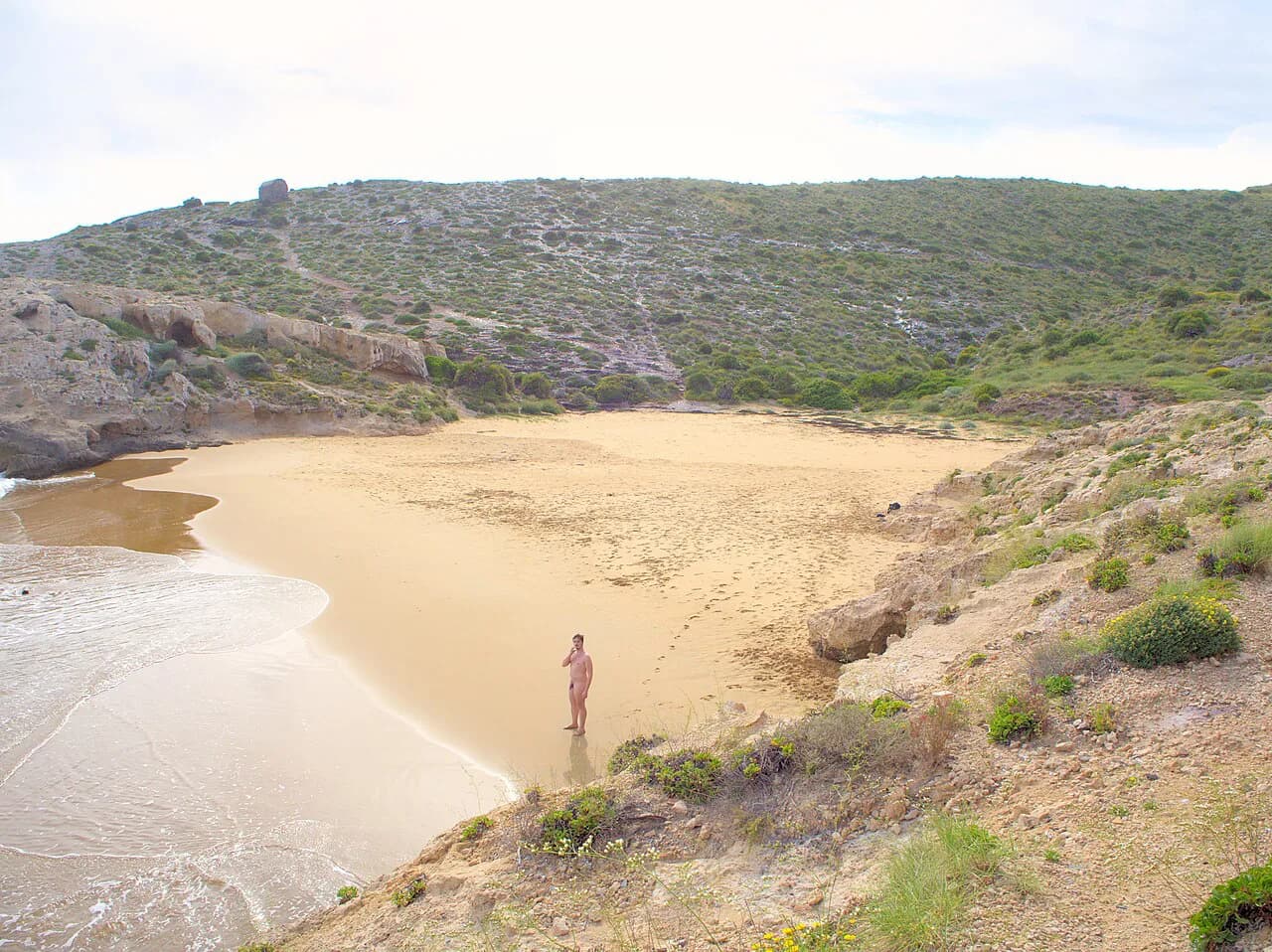
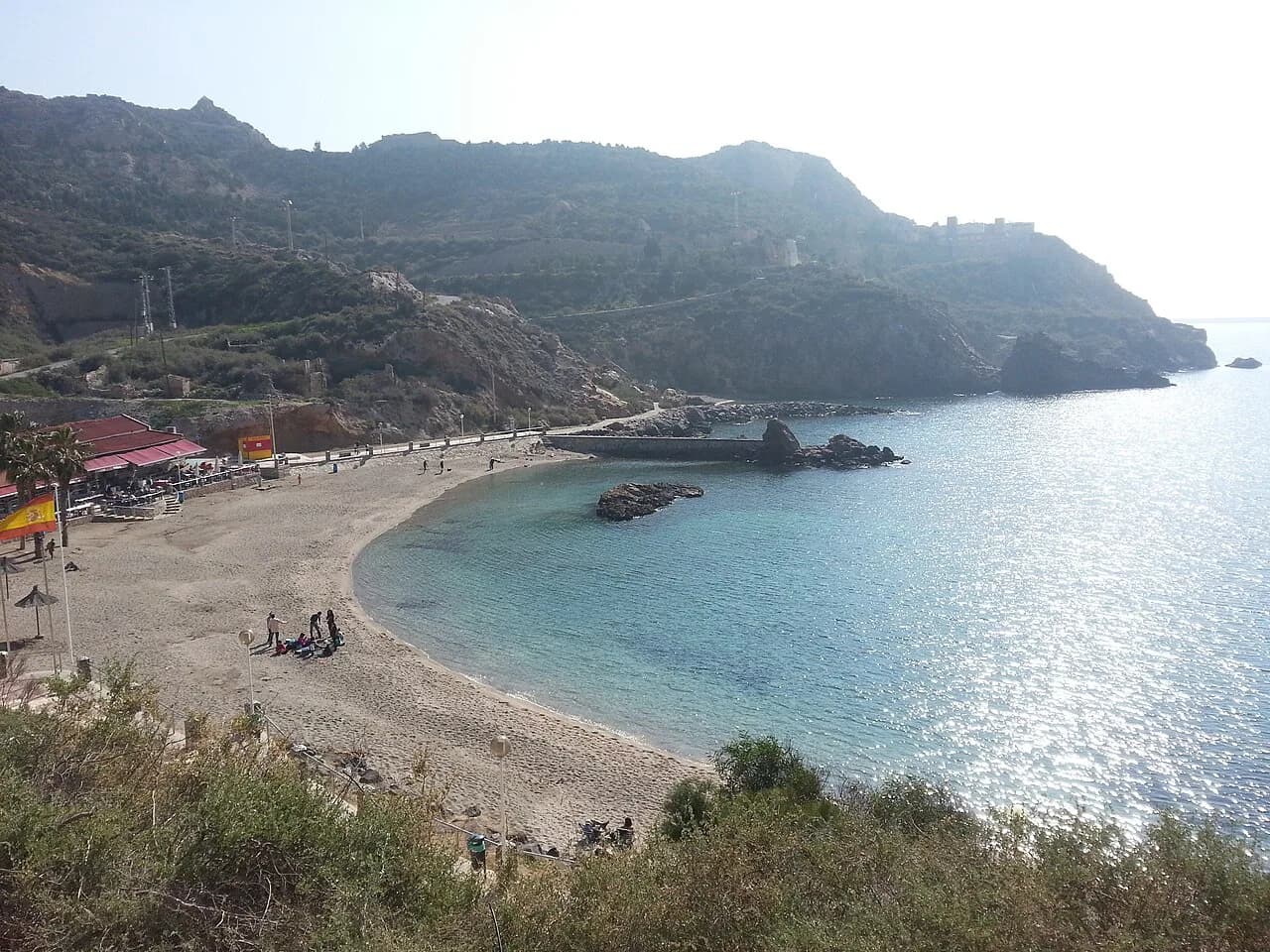
Cala Cortina sits four kilometres from Cartagena, tucked below cliffs that frame the natural harbour, and it measures 210 metres long by 20 metres wide. Spain's official tourism site describes a mix of golden gravel and sand with moderate waves, and rates occupancy as high. Because it is so close to the city, it draws a loyal local crowd rather than a resort following.
Access is listed as easy on foot, with car and boat also given as ways in. The footpath is a genuine part of the outing: it runs above the harbour with views of the cliffs before dropping to the sand, so the walk suits anyone staying in Cartagena without a car. Boats reach the cove from the water side, which turns a swim stop into a short excursion.
San Javier and the Mar Menor edge
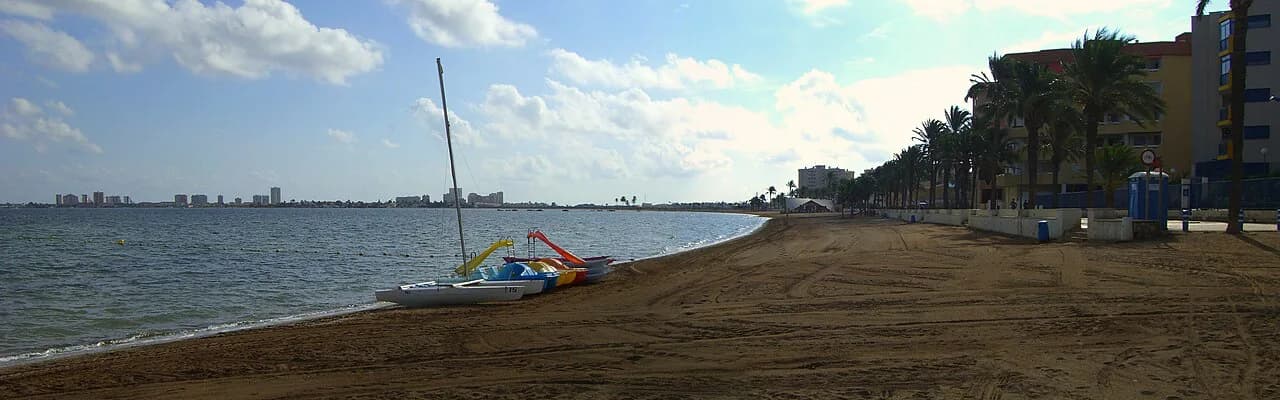
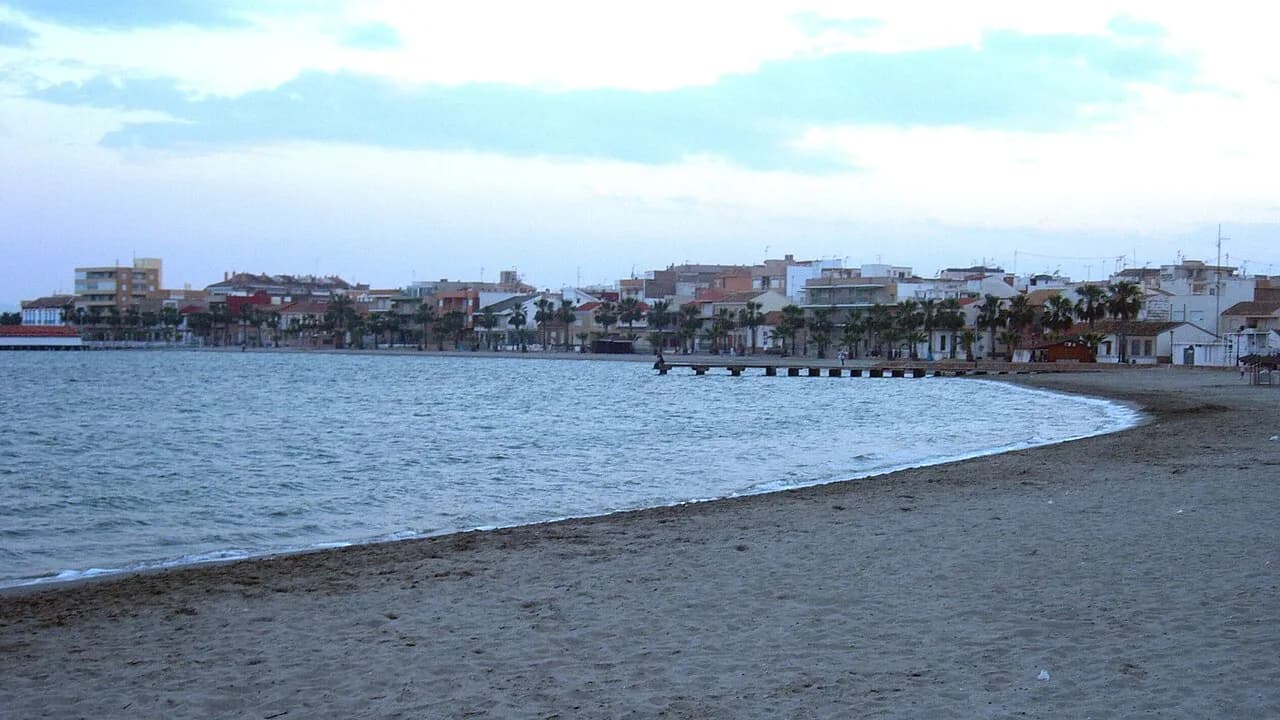
Los Alcázares strings seven kilometres of fine sandy beaches along the landward shore of the Mar Menor, from Playa de La Concha in the south to Playa Las Salinas in the north at Los Narejos. A paved promenade links them all, which means you can walk between beaches instead of driving.
Playa de La Concha anchors the southern end beside the Club Náutico, and Playa Carrión, Playa Manzanares, Playa del Espejo and Playa Las Palmeras follow north through the town. Playa del Espejo alone carries 1,200 metres of sand and is the liveliest for watersports, while Playa Las Palmeras opens out into a wide sweep on the seafront. For a first visit, base yourself on the stretch nearest your parking and let the promenade do the rest.
Los Narejos and Las Salinas: the northern Los Alcázares beaches
North of the town centre, Playa Los Narejos is the beach to pick if anyone in your group wants to try windsurfing or kitesurfing, since it is popular with watersports enthusiasts. Playa Las Salinas at the far north is semi-urban, running along the perimeter of the old San Javier airport, and tends to feel quieter than the central beaches.
The promenade behind them is used by walkers, joggers and cyclists, with shops, bars, restaurants, shade and seating spread along its length. That makes the northern beaches easy to combine with a lunch stop or an evening stroll rather than a single fixed spot on the sand.
The sand and the water
At Cala Cortina expect a golden mix of gravel and sand underfoot and moderate waves at the shoreline, so water shoes help children and anyone unsteady on pebbles. The cove is small, so it fills visibly at busy times; arrive earlier in the day if you want room to spread out.
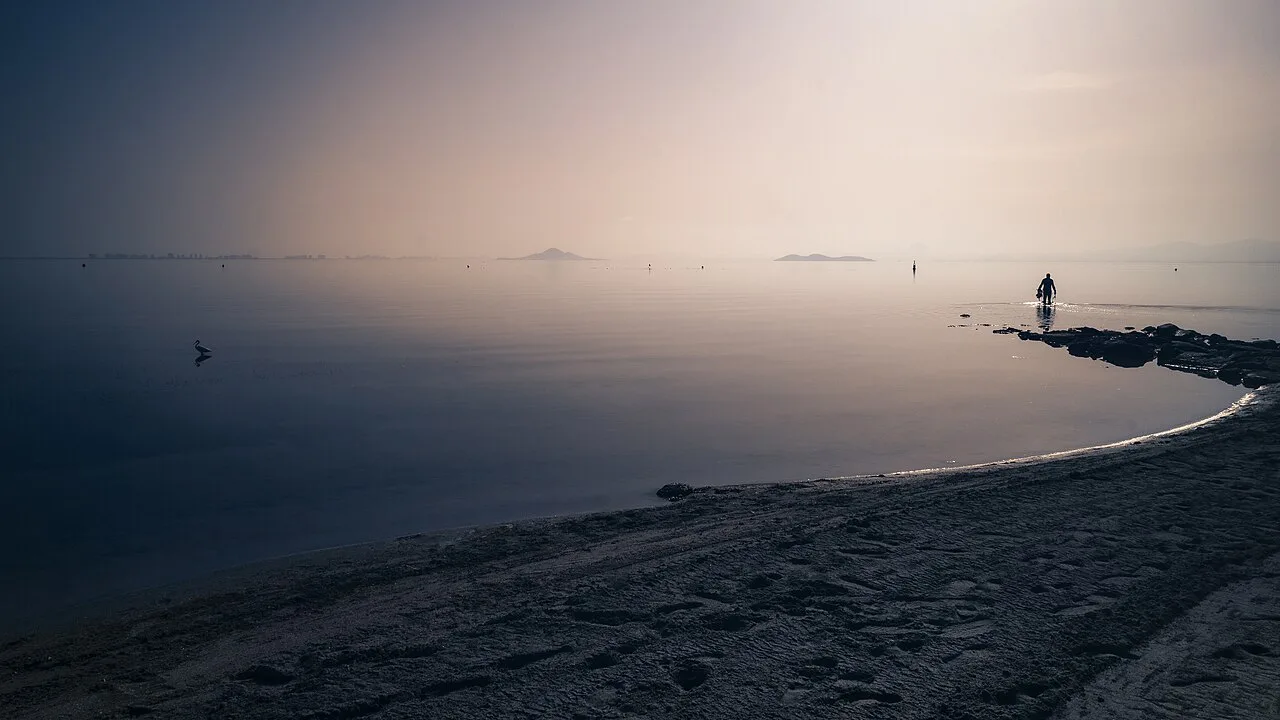
The Mar Menor is not tidal, and its shoreline slopes very gently: you can wade a long way out and still be waist deep, which is why the Los Alcázares beaches work so well for young families and first-time swimmers. Windsurfers and sailors value the same lagoon for steady conditions and a thermal afternoon breeze. Treat the shallows as a place to supervise children closely rather than a guarantee of calm water.
Facilities
Cala Cortina's published services are toilets, a footwash, litter bins, a cleaning service, a telephone and a children's play area. There is no beach bar or sunbed operation listed, so bring water, shade and snacks with you.
In Los Alcázares the beaches are served in summer with lifeguard and medical cover, beach bars, footwashes, wooden walkways, bins and toilets, with disabled bathing chairs and relatively easy access for disabled bathers. All of the beaches are groomed sand with facilities behind them.
Families travelling with young children can use the Region of Murcia's own beach finder to filter the coast by services, accessibility and family suitability before committing to a base. It covers the whole Murcian coastline, from the Mar Menor to the Mediterranean coves.
Getting there
Cala Cortina is reached on foot, by car or by boat, and the walking route from Cartagena is described as easy, following the harbour and cliffs. If you are staying in the city without a car, this is the simplest Mediterranean swim on the list.
For Los Alcázares, parking is the constraint in high summer, when the town's population swells from around 19,000 to as many as 100,000. Spaces sometimes turn up in the streets behind the beach, and there is underground parking near the Town Hall. Drivers arriving in summer are advised to park at either end of town, close to Playa Las Salinas in the north or Playa de La Concha in the south, then walk the promenade.
Best time to go
The Region of Murcia is the warmest mainland region in Spain, and the Mar Menor's shallows warm faster than the open Mediterranean, especially around the edges. Spain's official tourism site gives a water temperature of 23°C for Cala Cortina on its beach page, which is a useful benchmark for comfortable swimming on the Mediterranean side rather than a fixed reading for your dates.
Expect the Los Alcázares beaches to be at medium to high occupancy through summer, with the busiest weeks falling in the peak holiday months when the resort population peaks. Late spring and early autumn give you warm water with far more room on the sand, and the promenade remains a pleasant walk outside the height of the season.
Who each beach suits
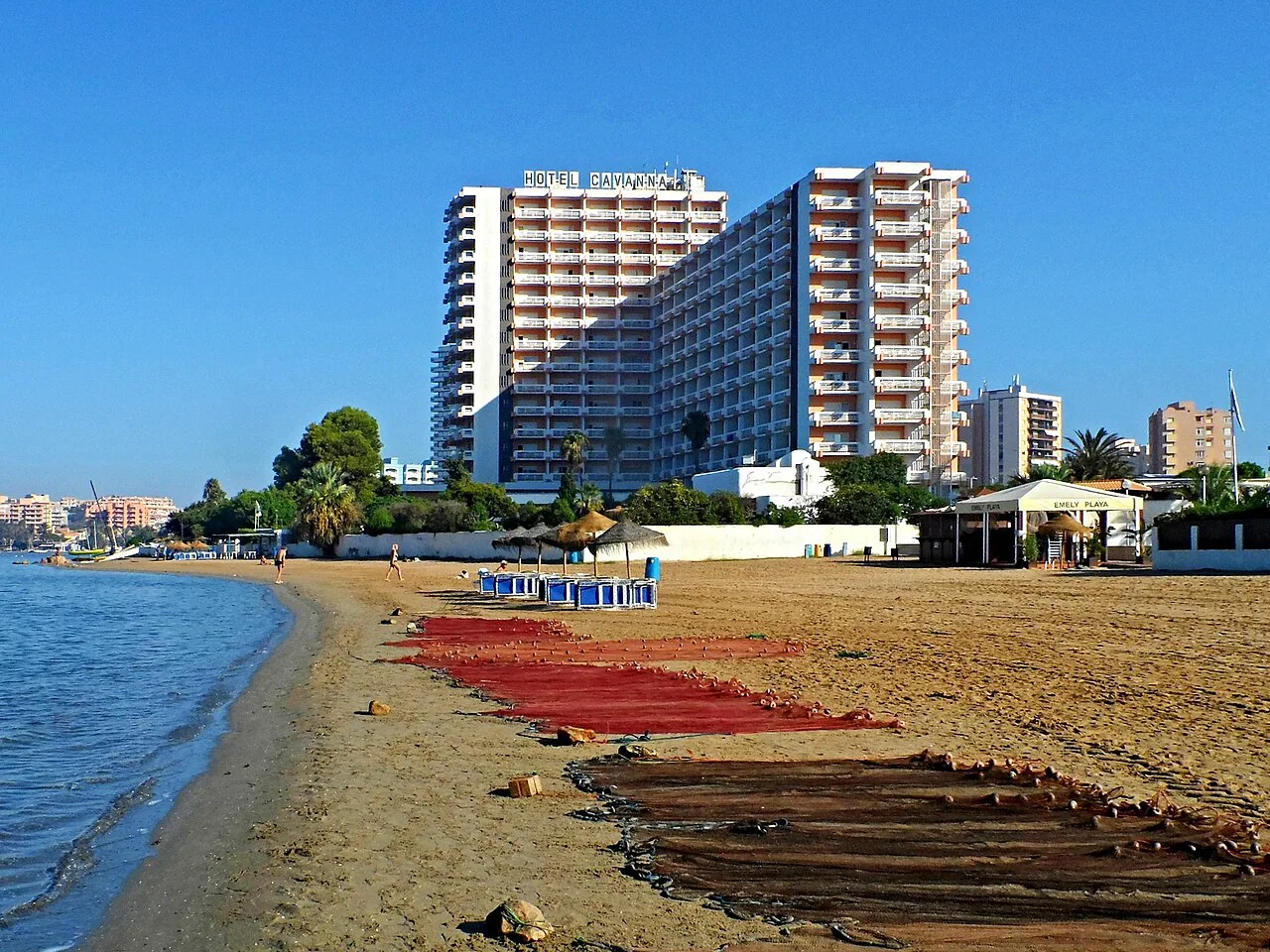
Families with small children should head for the gently sloping Mar Menor shore at Los Alcázares, where the shallow fringe lets children play within easy reach and the beaches offer children's play areas and summer lifeguard cover. Swimmers who want depth and open water will find the Mediterranean cove at Cala Cortina more satisfying.
Watersports beginners are best served around Playa del Espejo and Los Narejos, where the lagoon's sheltered profile and steady breeze suit windsurfing, sailing and kitesurfing tuition. Quiet-seekers should favour Playa Las Salinas at the northern end, and walkers get the best of both coasts by taking the Cala Cortina footpath one day and the Los Alcázares promenade the next.
Nearby beaches to combine
La Manga del Mar Menor closes the lagoon off from the Mediterranean, and its beaches give you the open-sea version of the same trip. Combining a Los Alcázares morning with a La Manga afternoon means seeing both faces of the Mar Menor in a single day. If this two-coast comparison is the kind of choice you enjoy making, the same decision between a city cove and a long open shore plays out among the Alicante beaches.
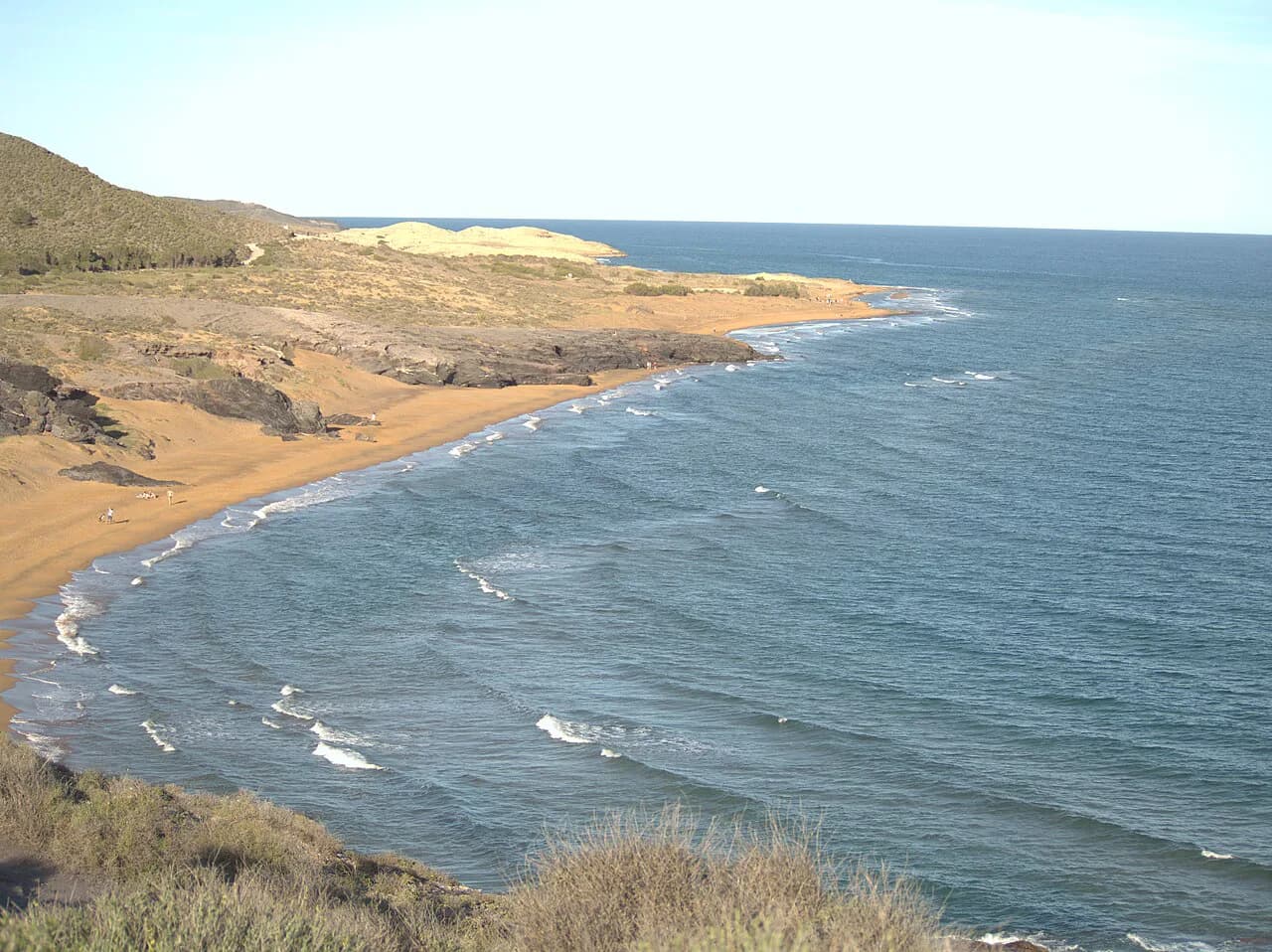
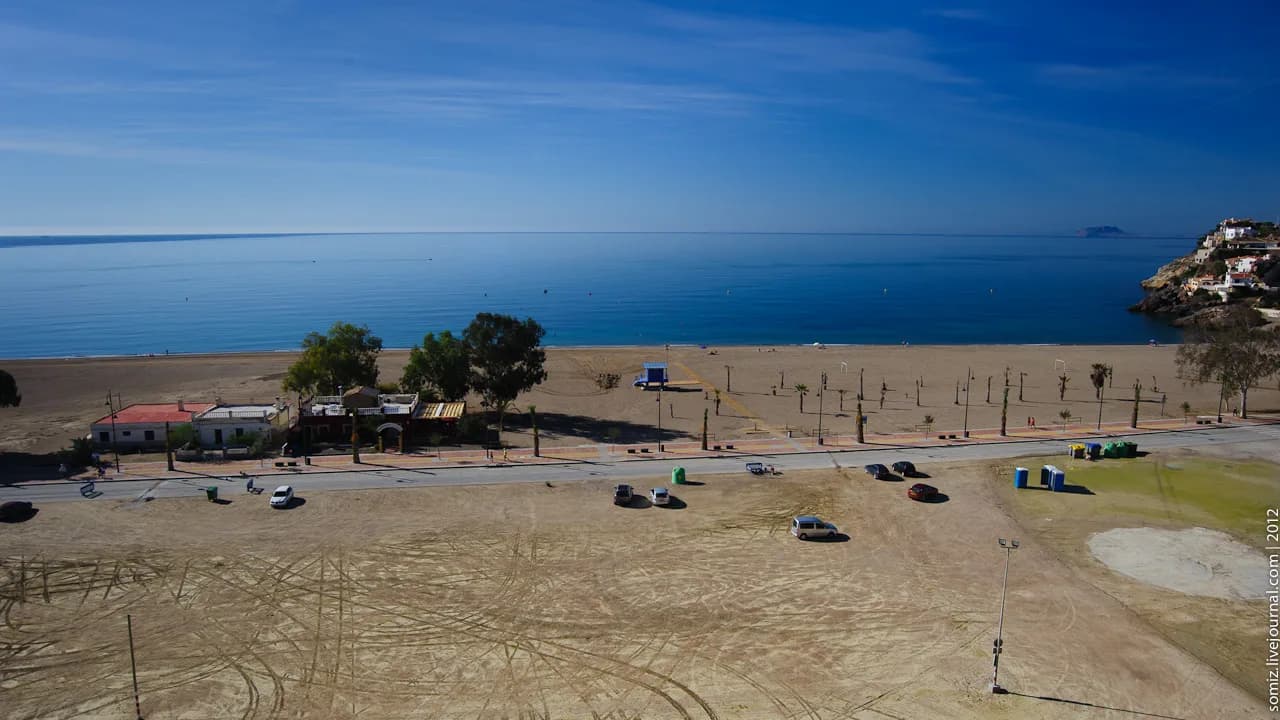
South of Cartagena, the undeveloped dunes and quiet coves of the Calblanque Regional Park offer a wilder alternative to the city cove for anyone with a car. Further west, Bolnuevo beach near Mazarrón adds another stop on a coastal drive along the Costa Cálida.
Taking your dog to the beaches of Murcia
The official Region of Murcia tourism site has a dedicated search tool with a “Para mascotas” filter, so you can narrow the Murcian coast down to the beaches that welcome a dog rather than guessing at each one. The same site places the Region's coastline at more than 250 kilometres, spanning the calm waters of the Mar Menor and the unspoilt coves of the Mediterranean, so the pet-friendly options sit within a very varied stretch of shore.
Cartagena is one of the destinations listed in that municipality-by-municipality beach search, alongside Águilas, La Manga del Mar Menor, La Unión, Lorca, Los Alcázares, Mazarrón, San Javier and San Pedro del Pinatar. If you are using Cala Cortina as your base, the cove itself is four kilometres from Cartagena, reached on foot, by car or by boat, with a footpath leading directly to the beach and giving a pleasant stroll with views of the natural harbour and the cliffs around it. It is 210 m long and 20 m wide, with gravel and golden sand, moderate waves, a high occupancy rate and a degree of urban development described as isolated.
For the Mar Menor side, Los Alcázares is worth knowing before you set out with a dog, because its seven kilometres of fine sandy beaches are linked together via a paved promenade which runs from the Playa de La Concha close to the historic hydroplane air base in the south to the Playa Las Salinas in the adjoining district of Los Narejos in the north. A promenade gives you a continuous walk along the shore rather than a series of separate stops, though the town's beaches are not described in terms of dog access in the sources here.
Plan Your Beach Day
Choose Cala Cortina if you want a short walk from Cartagena to a sheltered Mediterranean cove with toilets and a footwash, and accept a smaller beach that fills up. Choose Los Alcázares if shallow water, summer lifeguard cover and a long promenade matter more than open-sea swimming, and park at the northern or southern end of town to avoid the worst of the summer crush.
Explore more Murcia beaches
Frequently Asked Questions
How far is Cala Cortina from Cartagena?
Cala Cortina is four kilometres from Cartagena. You can reach it on foot by an easy path with views over the natural harbour and cliffs, or arrive by car or boat.
Are the Mar Menor beaches good for small children?
The Mar Menor is not tidal and its shoreline slopes very gently, so children can wade out a long way and stay shallow. The Los Alcázares beaches add children's play areas and summer lifeguard and medical cover, and adults should still supervise closely.
Which Los Alcázares beach should I pick?
Playa de La Concha and the central beaches around Playa Carrión and Playa Las Palmeras put you close to bars and restaurants along the promenade. Playa Los Narejos suits watersports beginners, and Playa Las Salinas at the northern end is quieter.
Is Murcia a coastal city?
Murcia city itself is inland, but the region has more than 250 kilometres of coastline. Cartagena, on the Mediterranean, is the nearest city base for Cala Cortina, while Los Alcázares sits on the Mar Menor lagoon.
What is the best beach in Cartagena for a swim?
Cala Cortina is the closest proper beach to Cartagena, with golden gravel and sand, moderate waves and calm, clear water described by the national tourist board. Its 210-metre length means it gets busy, so go early in summer.
Do I need to book a spot on the beach?
No numbered-entry or booking system is in place for Cala Cortina or the Los Alcázares beaches. Arrive early in peak summer, especially at the small cove, and use the promenade to move between Los Alcázares beaches if your first choice is crowded.
Sources
Beach notes for your next trip
Optional updates when we add or revise beach guides.
You might also like
Continue reading
More guides you'll find useful