Águilas Beaches: Which Murcia Cove Is Right for You?
Plan a beach day in Águilas with a clear run-down of the town beaches, the Cuatro Calas coves and the wild Cabo de Cope coastline.
On this page
Águilas rewards travellers who treat the beach as the point of the trip rather than an afterthought: the municipality strings 36 beaches along 28 kilometres of coastline, so a single day can move from busy town sand to a wild cove with nothing behind it but dunes. The range is the appeal, because families, swimmers and quiet-seekers can each find their own stretch within a short drive of the centre.
The town itself sits at the heart of the coast, with broad urban beaches on its doorstep and progressively wilder shoreline running west towards the Andalusian border and east towards Calabardina and the Cabo de Cope headland. Use this guide to pick a zone first, then a beach, and to know which stretches come with full facilities and which demand that you carry everything in.
How the Águilas coastline breaks down
Think of the municipality in four zones. The western end, on the road towards Andalucía, holds the Cuatro Calas group and a cluster of semi-wild coves; the town centre holds the big serviced urban beaches; Calabardina, east of town, offers a village base with its own sandy bay; and beyond it the Cabo de Cope plain delivers the wildest, least occupied coastline.
That structure matters because access changes sharply between zones. The town beaches sit on the doorstep of hotels and apartments, while several western coves are reached only on foot and a run of beaches east of Calabardina is served by a sandy coastal track rather than a road.
If you are staying elsewhere in the region, Águilas makes a full day out rather than a quick stop, so pair it with the calmer, enclosed water of the Mar Menor only if you have a car and an early start. Most visitors base themselves in Águilas or Calabardina and work outwards from there.
The town beaches: Poniente, La Colonia, Las Delicias and Levante
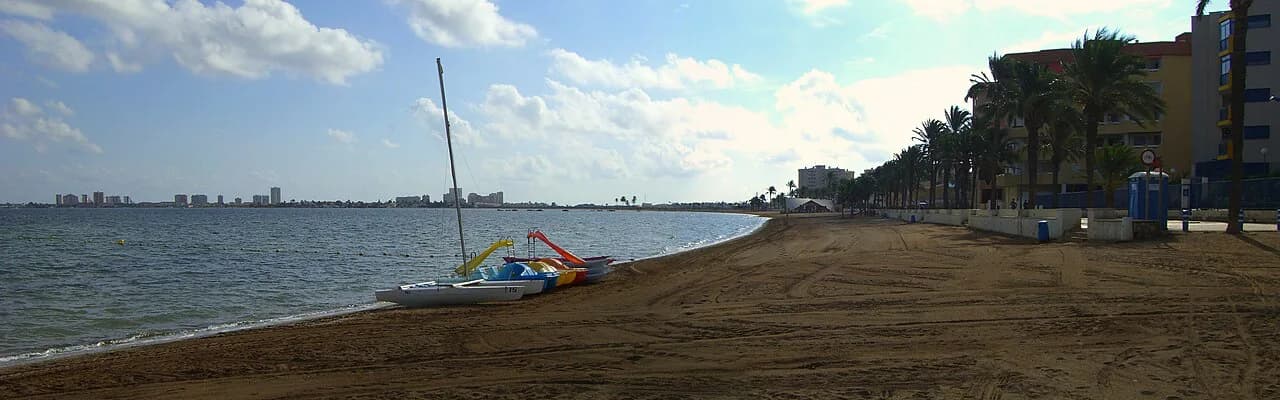
Playa de Poniente is the first of the main urban beaches and one of the most complete, a wide expanse of sand with a full range of services and both Blue Flag and Q for Quality recognition. It suits anyone who wants a straightforward beach day without planning: step out of town, lay a towel down and have everything within reach.
Playa de La Colonia sits beneath the castle, another Blue Flag beach with soft sand and full facilities, and its position close to the urban centre makes it the busiest of the central options in high summer. Las Delicias, in front of the auditorium, is a long curving swathe that is spacious enough to absorb heavy summer use despite its popularity.
Levante is the odd one out: a narrow urban beach running between the marina and the main harbour, it draws fewer sunbathers and is used mainly for evening bathing. That makes it a good choice for a late dip after dinner rather than a full day under an umbrella.
Cuatro Calas: La Carolina, La Higuerica and Calarreona
The Cuatro Calas series anchors the western end of the coast, and each beach has a distinct character. Playa de La Carolina is a sandy beach with calm bathing conditions and views back towards Águilas, and it holds Blue Flag status; La Higuerica is a stretch of golden sand flanked by vegetation and dunes, also Blue Flag, and its out-of-town feel plus available parking makes it a favourite with camper vans.
Calarreona is the widest and most fully equipped of the group, with full facilities, a Q for Quality flag and a Youth Centre on site. For families with small children who want sand underfoot and amenities close by, it is the most practical base on this stretch.
Around these four beaches cluster smaller coves that reward a little effort. Playa de la Tortuga, also known as Los Cocedores, is a small rocky and sandy cove close to Calarreona reached only by a clifftop path, so footwear matters more than a beach trolley here.
Walks to the small coves: La Tortuga and Cueva de las Palomas
Playa de la Cueva de las Palomas, also called Calamijo, is a sheltered cove on the headland between Matalentisco and Calarreona, best accessed on foot. The nearest facilities are 500 metres away, so this is a beach to visit with water, shade and everything else already in your bag.
The walk-in coves suit travellers who value emptiness over convenience. If you are carrying a cool bag, a sun shade and children, weigh the clifftop path against a serviced beach nearby; if you are travelling light and want rock pools and quiet, the trade-off goes the other way.
Snorkelling and quiet: Cañada del Negro, Playa Amarilla and the western rocks
Playa de la Cañada del Negro is 150 metres of natural, unspoilt rocky beach on the western outskirts of Águilas, popular with snorkellers and the only beach in the municipality where dogs can run off the lead. The rocky ground is the draw, so bring reef shoes and go in expecting to explore rather than to stretch out on open sand.
Further out, Playa Amarilla is an isolated wild beach in a spectacular setting, described as ideal for snorkelling and suited to those who want tranquillity away from the town. Matalentisco, another Blue Flag beach on this western run, is a fairly wild natural beach backed by the lentiso bushes that give it its name.
These western beaches are not the place for a pram or a full beach set-up. Treat them as half-day excursions with a packed lunch, and keep an eye on the ground underfoot where the shoreline turns rocky.
Calabardina and Cabo de Cope: a village base for the headland
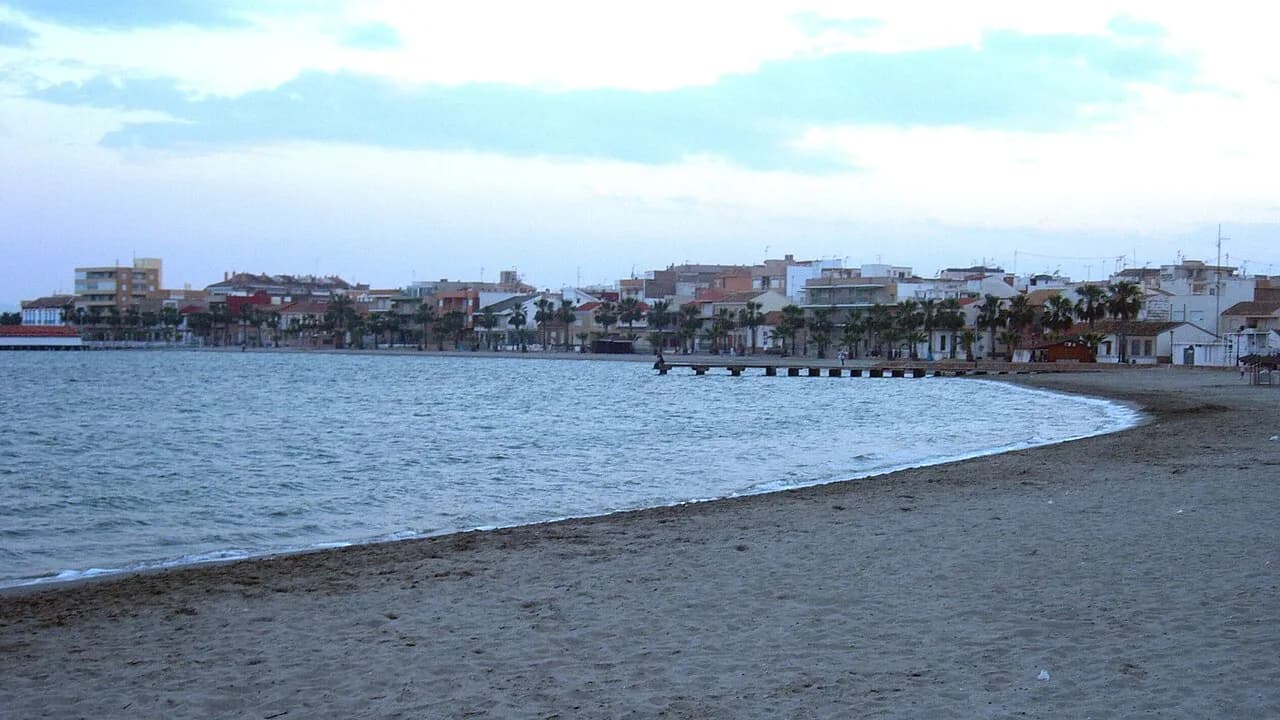
Calabardina makes a quieter base than Águilas town, with a fully serviced sandy urban beach beneath Cabo de Cope that ranks among the most popular in the area. Playa de La Cola leads into the village as a long, narrow strip barely 10 metres wide but more than a kilometre long, so there is room to spread out even when it is busy.
Playa Canalicas adds a sandy cove within the village itself, useful for a short swim without committing to a full beach day. Between Águilas and Calabardina, Playa del Arroz is an attractive wild beach with soft sand and good parking access that draws camper vans.
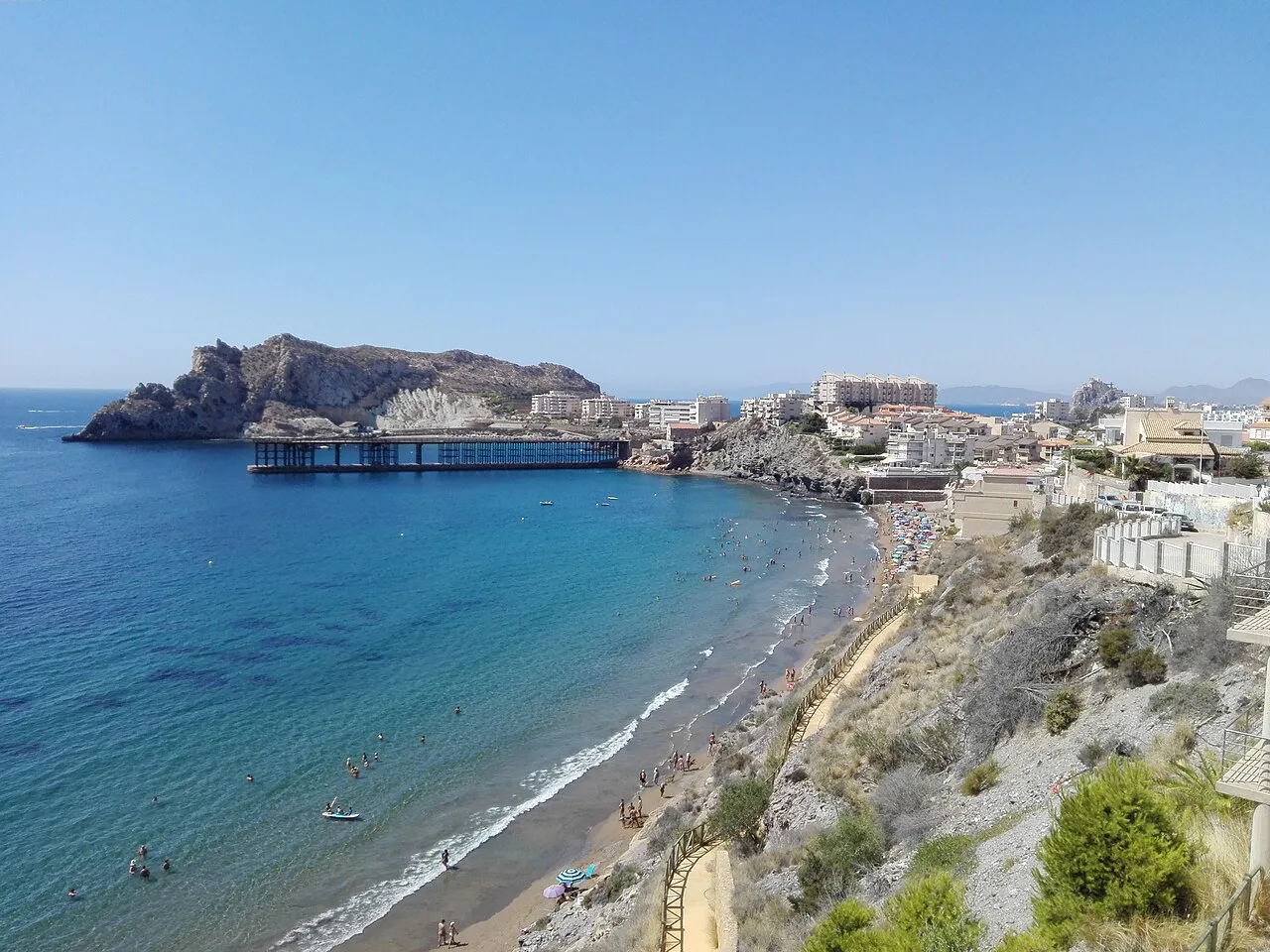
The Cabo de Cope track: a walking plan for wild coves
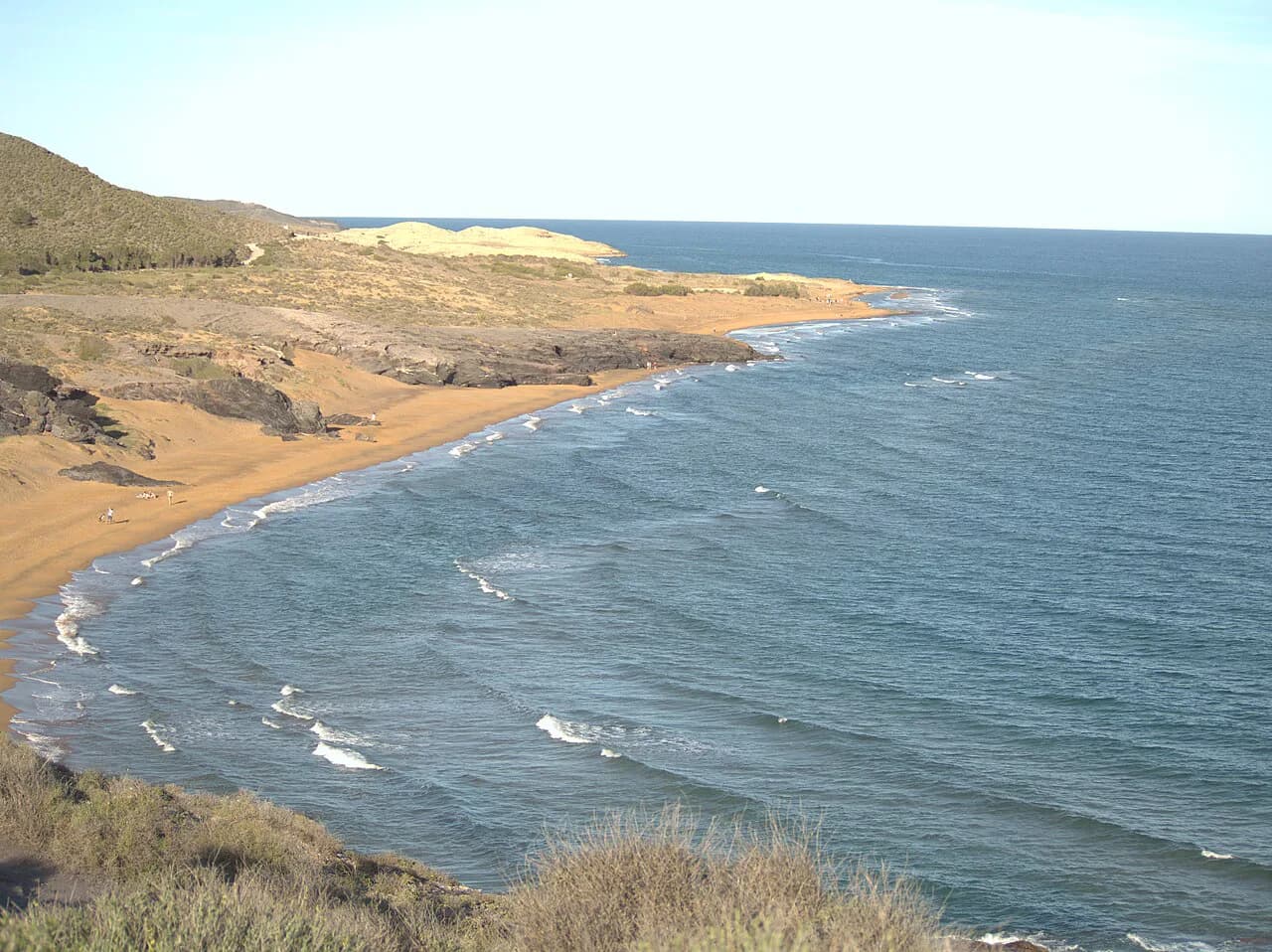
Past Calabardina the land flattens into a plain where the beaches are reached along a sandy coastal track. The mouth of the Rambla de Elena opens into a wide sandy area that serves as the best access point for the wild beaches beyond, so park or start your walk there and head out on foot.
Along the track you pass a mixture of sand and shingle coves: El Charco is a sandy cove about 160 metres long, El Saladar runs some 200 metres of sand and pebbles, and Playa del Pozo and Pocico del Animal are small curved bays. Plan for a there-and-back walk with no services, and take everything you need for the day.
This is the stretch for travellers who want solitude without a boat. The trade-off is real: no bars, no shade structures, and a walk back in the afternoon heat, so an early start and plenty of water make the day.
Playa del Rafal: the designated nudist beach
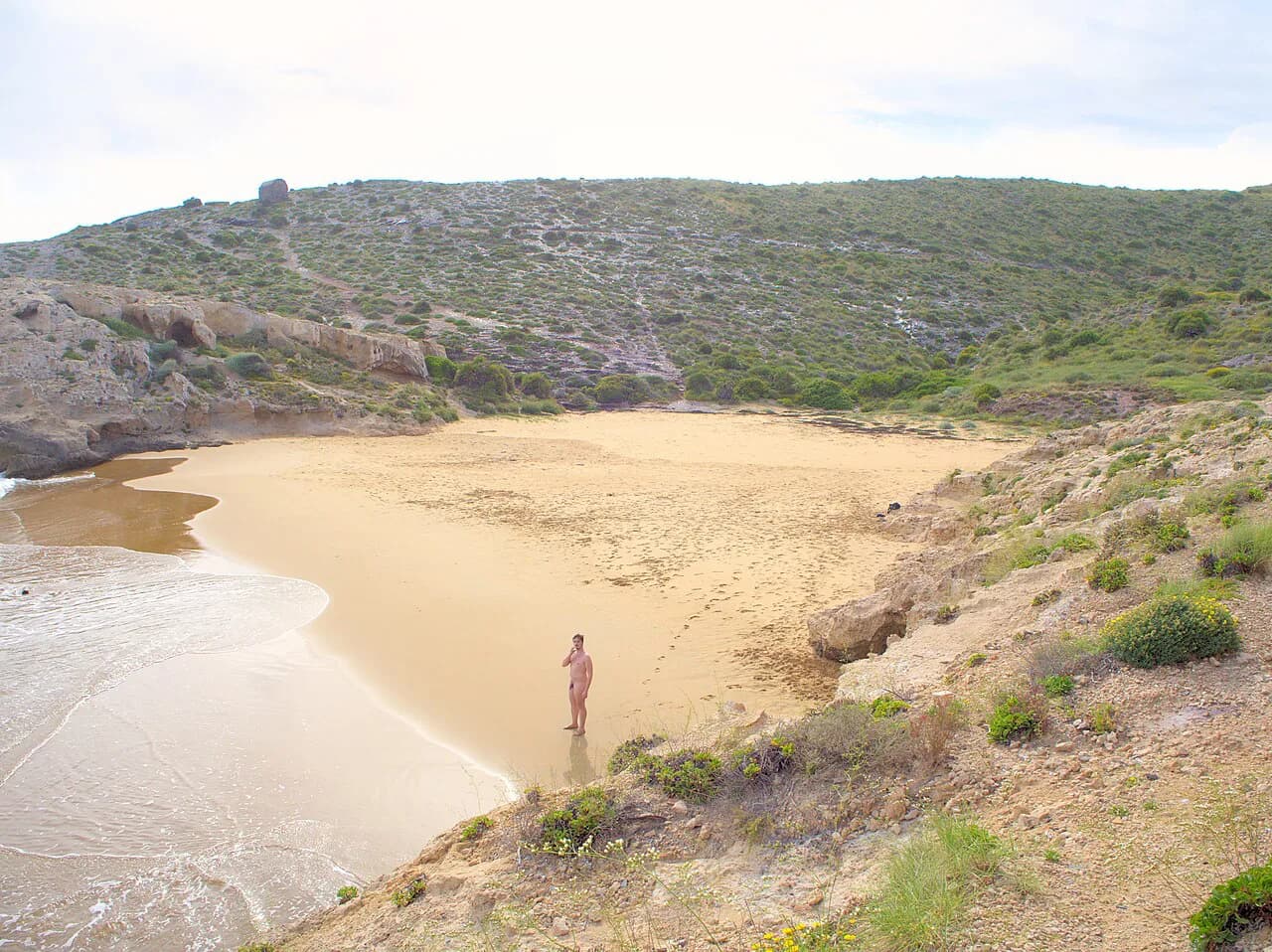
Playa del Rafal is the only dedicated nudist beach in the municipality, a wide curving sandy cove that is described as easily accessed. Naturist use is long established here, and the usual etiquette applies: ask before photographing, keep to your own space and treat it like any other beach.
Because it sits within the wilder Cope section, combine it with a walk along the coastal track rather than a separate trip. Bring your own shade and water, as you would for the neighbouring coves.
Choosing a beach by trip type
For small children, Calarreona and Poniente are the obvious picks: wide sand, full facilities and easy access from town. Swimmers who want a proper workout and space to move should head for Las Delicias, whose length copes with summer crowds, or La Cola at Calabardina, which runs for over a kilometre.
Snorkellers do best on the rocky western beaches, with Cañada del Negro and Playa Amarilla the standouts, while quiet-seekers should aim for the Cope track and the walk-in coves around Calarreona. Dog owners have a clear option at Cañada del Negro, the one municipal beach where dogs can run off the lead.
Camper-van travellers tend to gravitate towards La Higuerica and Playa del Arroz, both noted for parking and out-of-town positions. If you are weighing the wider region, the sheltered water of the Mar Menor makes a useful contrast on a windy day.
Facilities and Blue Flag beaches
The serviced beaches cluster around Águilas town and Calabardina: Poniente, La Colonia, Las Delicias, Calarreona and Calabardina all offer full facilities, and several hold Blue Flag status, with La Casica Verde listed as a Blue Flag beach in 2018. La Carolina, La Higuerica, Matalentisco, Levante and Las Delicias also appear on the Blue Flag list in the same source, so treat the awards as a snapshot rather than a guarantee for your travel dates.
The wild beaches come with nothing at all: Cueva de las Palomas has its nearest facilities 500 metres away, Herradura has no facilities, and the Cope-track coves have no services. Pack shade, water and food accordingly, and remember that a beach with no facilities is also a beach with no bins, so carry your rubbish out.
Best time to go
High summer concentrates crowds on the urban beaches, and Las Delicias is specifically noted as spacious enough to cope with heavy summer use, which tells you how busy the central sands get. Levante, used mainly for evening bathing, is a sensible choice when the afternoon heat peaks.
The wild western coves and the Cope track absorb visitors far better because few people make the walk. If you want solitude in July and August, head out early and accept that the best swimming spots come with a hike rather than a car park.
Nearby beaches to combine
Águilas sits at the south-western edge of the Costa Cálida, so it pairs naturally with a wider tour of the region's beaches. Calblanque Regional Park, further east along the coast, offers another wild-coast day with a very different landscape. It is much the same decision you face on Almería beaches further down the coast, where serviced sand and wild coves sit side by side.
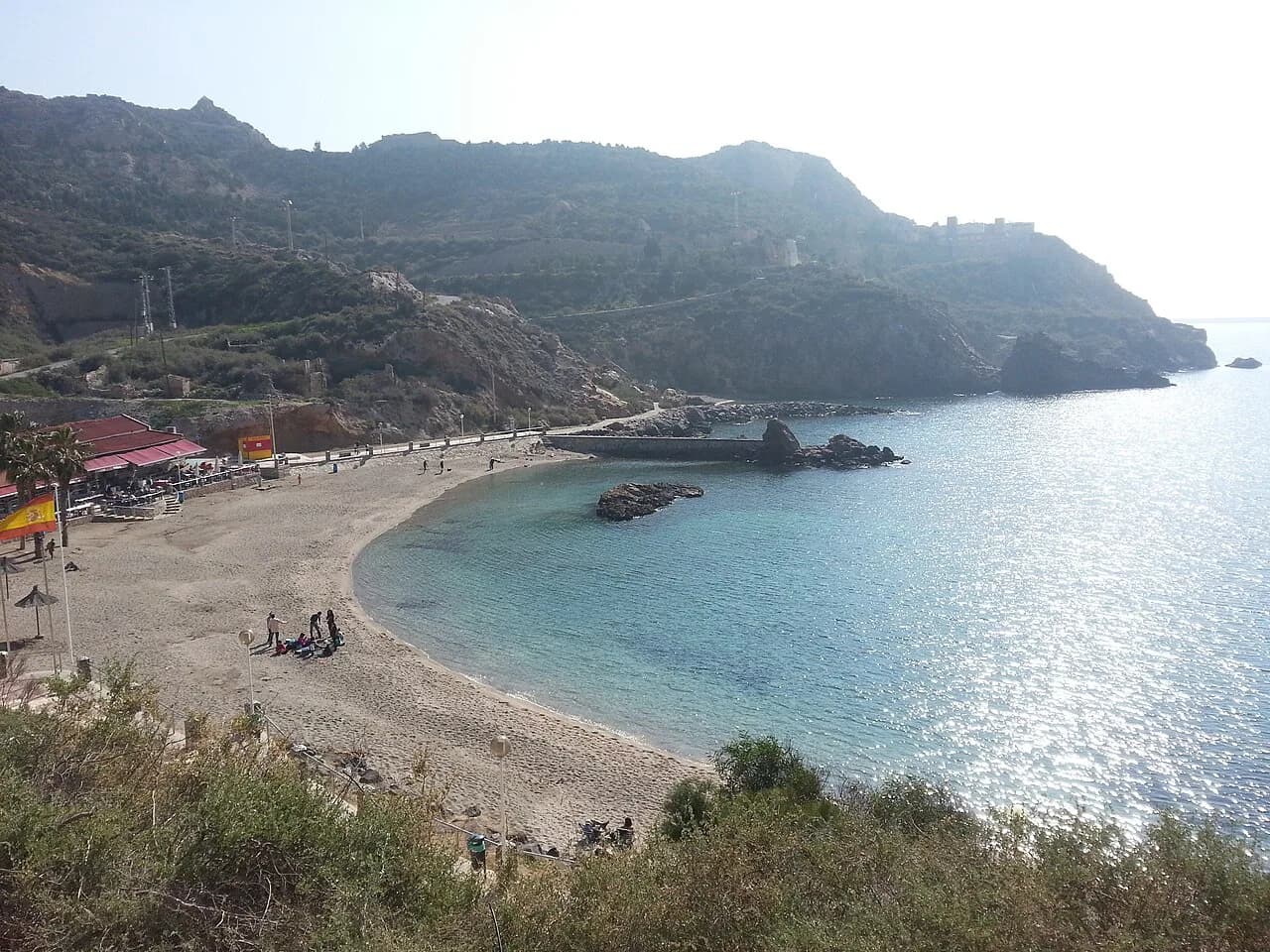
If you are based near Cartagena, Cala Cortina makes an easy half-day alternative with a sheltered bay setting. Closer to Águilas, combining a town beach morning with a Calabardina afternoon gives you both serviced sand and a village atmosphere without a long drive.
Getting around Águilas and Calabardina without a car
The town beaches are the easiest to reach on foot: Poniente, La Colonia, Levante and Las Delicias all sit within or on the edge of the urban centre, so a base in Águilas town removes the need for transport entirely. Calabardina is a separate village along the coast, and the wild beaches beyond it are best treated as a walking day.
For the western Cuatro Calas beaches and the Cope track, a car or a taxi opens up far more of the coast, and camper vans are specifically noted at La Higuerica and Playa del Arroz. Local bus services and seasonal timetables are best confirmed with the Águilas tourist office before you rely on them.
Taking a dog to the beaches around Águilas and Calabardina
If you are travelling with a dog, the practical question is not which cove is prettiest but which stretch of the 28 kilometres of coastline in Águilas you can reasonably walk. The municipality has 36 beaches along that coast, and several of the places covered above are reached on foot rather than by car: the small coves on the walks to La Tortuga and Cueva de las Palomas, the western rocks near Cañada del Negro and Playa Amarilla, and the wild coves along the Cabo de Cope track beyond Calabardina. These are approach routes rather than promenades, so a dog used to rough ground will cope far better than one that only walks on paving.
Plan around water and shade rather than around a single beach. The town beaches — Poniente, La Colonia, Las Delicias and Levante — sit directly against the built-up seafront, so they suit a short lead walk in the cool of the day, while Cuatro Calas, made up of La Carolina, La Higuerica and Calarreona, gives you a longer stretch to cover on foot. Calabardina works as a village base for the headland, which means you can leave the dog resting indoors and walk to the Cabo de Cope track without needing the car.
Two specific cautions follow from the layout. Playa del Rafal is the designated nudist beach, so it is not the place to let a dog run loose among people who are undressed and settled on the sand. And the Blue Flag beaches are the busiest, most serviced sands in the municipality; those are the last places to take a dog in high season. Instead, use the quieter coves listed above and treat the named beaches as landmarks to pass rather than destinations to stop at.
Plan Your Águilas Beach Day
Start by deciding which zone matches your day: town sand with full facilities, the Cuatro Calas coves with their mix of serviced and walk-in beaches, the Calabardina village stretch, or the wild Cope plain. Then pack for that choice, because the serviced beaches and the wild ones ask for very different kit.
Whichever you pick, go early in high summer, carry water and shade to the coves with no services, and leave the camper van at La Higuerica or Playa del Arroz if you want sand and parking in the same place. Confirm seasonal bus times and any current beach information with the Águilas tourist office before you travel.
Frequently Asked Questions
Is Águilas worth a visit for beaches?
Yes, if you want variety within a short drive. The municipality has 36 beaches along 28 kilometres of coast, ranging from fully serviced town beaches such as Poniente and Las Delicias to wild coves reached only on foot near Calarreona and along the Cabo de Cope track.
What is the nicest beach in Águilas?
It depends what you want. Calarreona is the strongest all-round choice for families, with wide sand and full facilities. For scenery and quiet, the walk-in coves around Calarreona and the Cope-track beaches are more rewarding, though they have no services.
Are there quiet, wild beaches near Águilas?
Yes. The coastline east of Calabardina flattens into a plain where beaches are reached along a sandy coastal track, including El Charco, El Saladar and Playa del Pozo. They have no facilities, so take everything you need and plan to walk back.
Which Águilas beaches are good for snorkelling?
Playa de la Cañada del Negro is a rocky beach popular with snorkellers, and Playa Amarilla is described as an isolated wild beach ideal for snorkelling. Both reward reef shoes and a packed lunch rather than a full beach set-up.
Are there dog-friendly beaches in Águilas?
Playa de la Cañada del Negro is the one municipal beach where dogs can run off the lead, according to the local beach listing. Other beaches may have seasonal restrictions, so ask the Águilas tourist office before bringing a dog.
Is there a nudist beach in Águilas?
Yes. Playa del Rafal is the municipality's dedicated nudist beach, a wide curving sandy cove that is easily accessed. Standard naturist etiquette applies, and you should bring your own shade and water as there are no services.
Sources
Beach notes for your next trip
Optional updates when we add or revise beach guides.
You might also like
Continue reading
More guides you'll find useful