Naxos Beaches Guide: Where to Swim and Stay All Day
Plan a Naxos beach day with our coast-by-coast guide to the island's best sands, from town beaches to quiet southwest dunes and windsurfing bays.
On this page
Naxos rewards travellers who build the day around the beach rather than squeezing in a swim. The largest Cycladic island has a west coast strung with sand from the town edge southwards, a rugged southwest where the road runs out, and a quieter northeast centred on the village of Apollonas. Choosing well comes down to three things: how far you want to drive, how much shelter you need from the meltemi, and whether you want a lounger and a taverna or a towel and a set of dunes.
One island, two coasts and a dozen distinct beaches
The beaches most travellers use run in a near-continuous line south of Chora, the island's main town: Agios Georgios, Agios Prokopios, Agia Anna, Plaka, Mikri Vigla, Kastraki and on to Pyrgaki. Beyond that the character changes sharply, with long mountain drives to Hawaii Beach and Panermos in the south and to Apollonas in the northeast. The reward for the extra distance is space, and often a backdrop of cedar trees and dunes rather than umbrellas.
Treat the island as two trips rather than one. The west-coast chain suits days when you want flexibility: arrive late, move along the sand if one stretch is crowded, and eat at a beachfront taverna afterwards. The outlying beaches suit a full day planned around a single swim, a picnic and the drive back before dark, so set off in the morning and carry water and shade.
How the meltemi shapes your choice
The meltemi is the summer wind that defines beach days across the Cyclades, and on Naxos it splits the coast into sheltered and exposed stretches. Mikri Vigla is the clearest example: a granite cape divides two beaches, with the southern section protected from northerly winds in summer and the northern section, often called Parthena Bay, exposed and used for windsurfing and kitesurfing. Plaka, Kastraki and Pyrgaki sit further from the cape's wind funnel and tend to be more sheltered from northerlies.
Offshore wave models put typical open-water heights at about 1.10 m in July and 1.11 m in August, dropping to 0.97 m in September and 0.88 m in June, which makes June the calmest month of the season. These are offshore figures averaged across eight beaches, not a forecast for a particular cove, so a bay behind a headland can be calmer than the numbers suggest. Check live wind and wave conditions for the specific beach on the morning you go, and treat a sheltered cove as a better bet than a long open strand when the wind is up.
Naxos Town beaches: Agios Georgios and Grotta
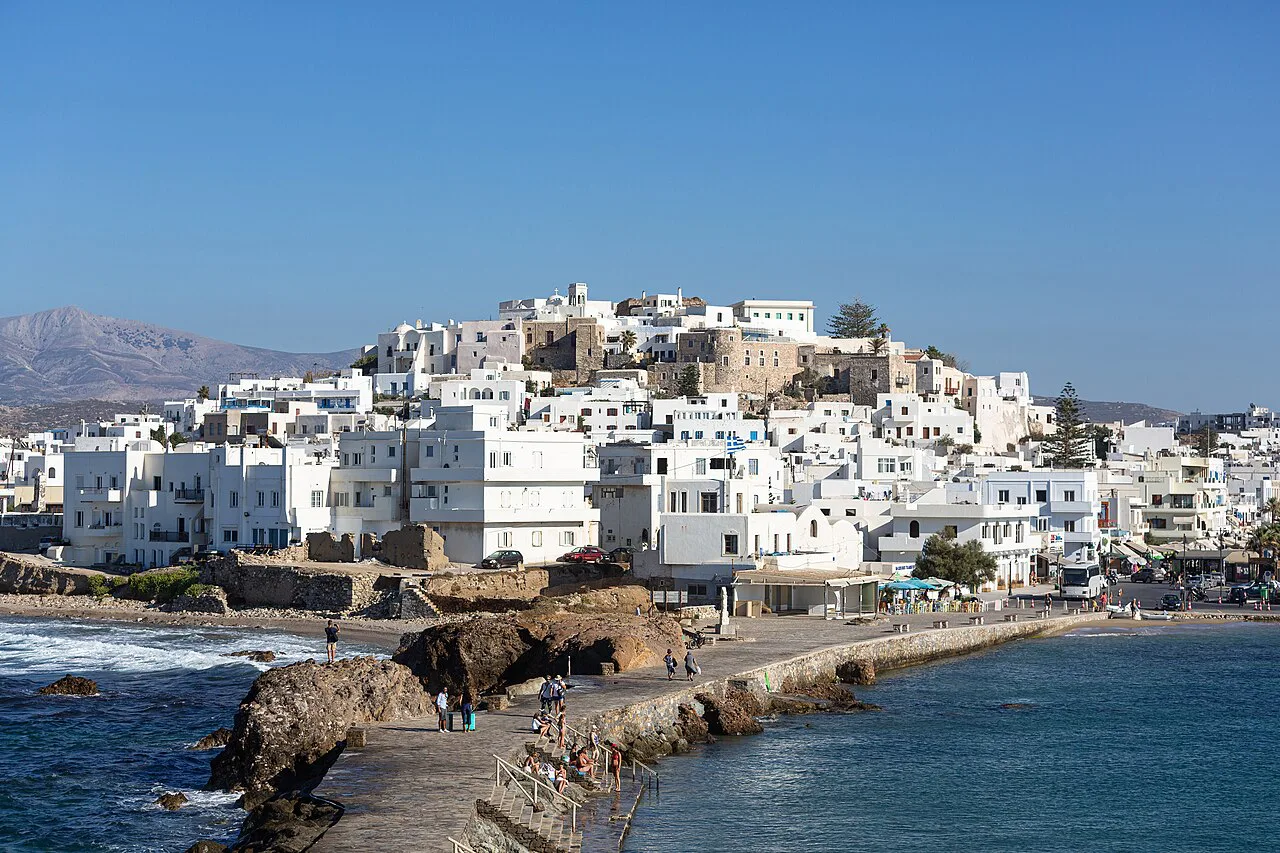
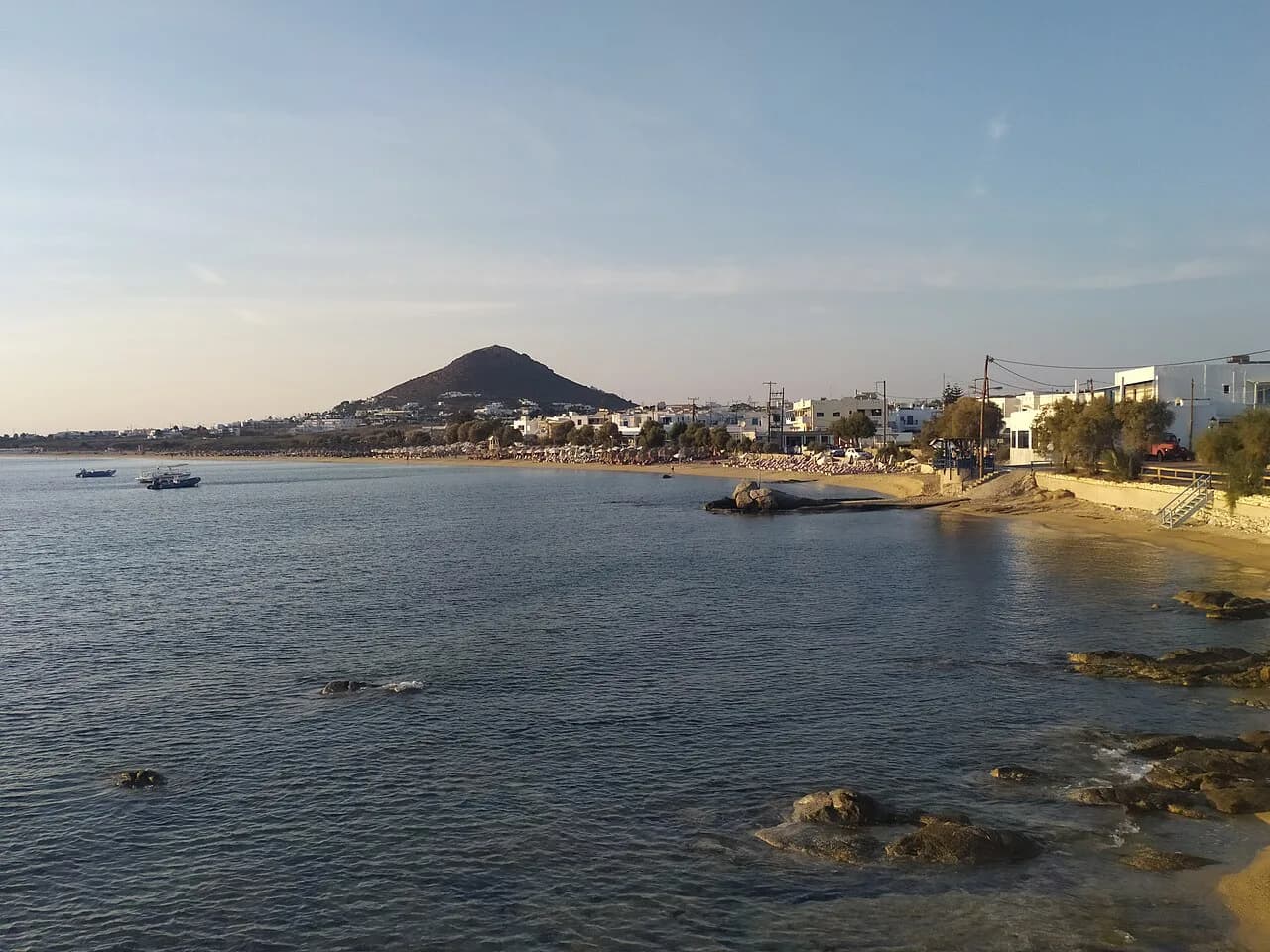
Agios Georgios (St George Beach) is the closest sandy beach to Naxos Town, roughly a ten-minute walk from the centre, wide and about two-thirds of a mile long. Its northern end, nearest town, is the busiest and most developed, with umbrellas, loungers, lifeguards, beach bars and sea-view restaurants; the southern end is quieter but has more powerful waves and is used for windsurfing. The shallow water in the north makes it the obvious pick for families with young children staying in Chora.
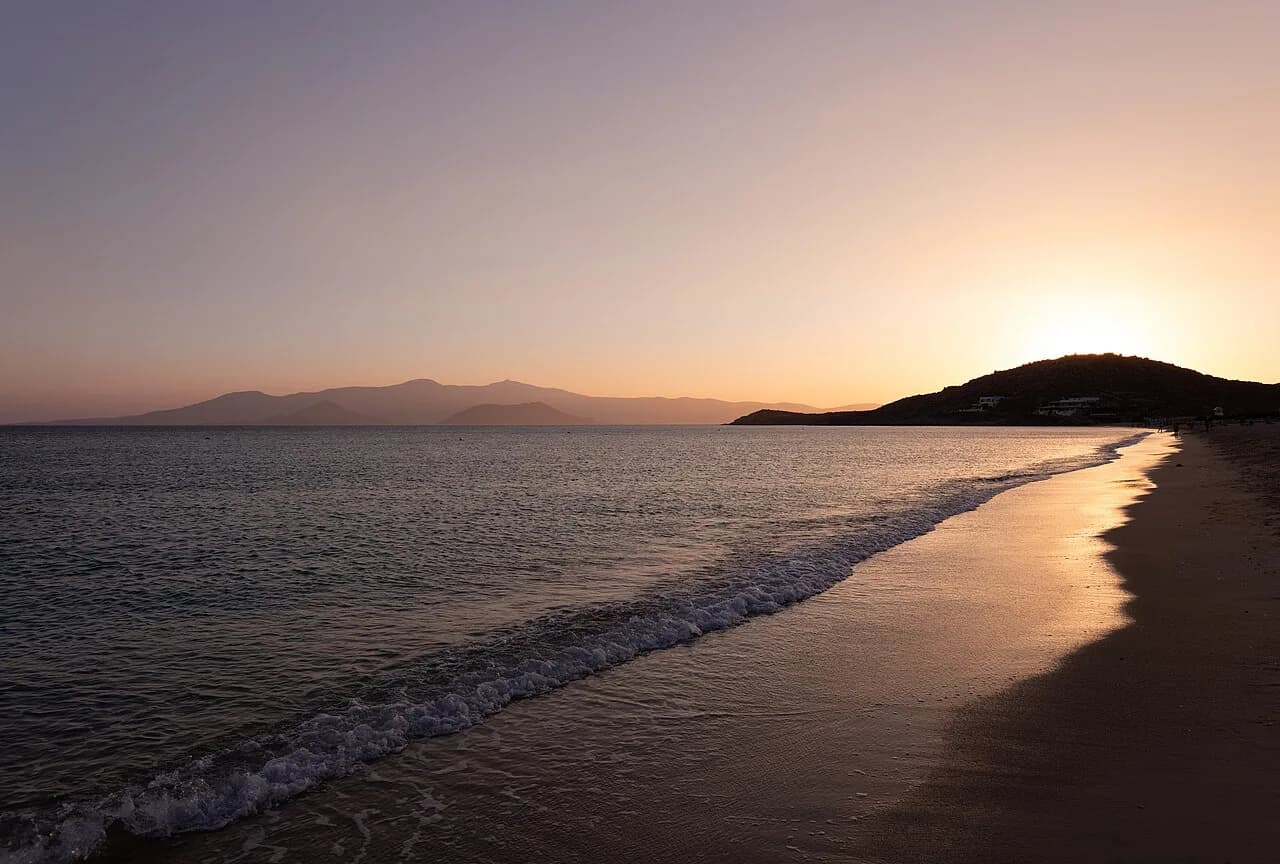
Grotta Beach is the nearest swimming spot to the ferry terminal, about five minutes away, and is pebbly rather than sandy. On a calm day it works for swimming and snorkelling, with the ruins of a submerged ancient city visible below the surface for confident snorkellers. Above it, the hill by the Portara gives sunset views over the channel, which makes it a sensible late-afternoon stop before dinner in town.
The Stelida and Agios Prokopios chain
Agios Prokopios lies about three miles south of Naxos Town and offers roughly 1.5 km of soft golden sand with turquoise shallows, one of the island's most popular and organised beaches. Its sheltered position keeps the water clear, which makes it a good choice for snorkelling and diving as well as for families who want easy road access. It does get busy in high summer, with beach bars, restaurants and watersports along the front.
Agia Anna continues directly from Agios Prokopios, so you can walk between the two. The southern end is the less developed half, a wide shallow cove with fishing boats and rocky outcrops near the Spilia Restaurant where snorkellers see parrotfish, wrasse and octopus. The northern end has the tavernas, casual bars and shops, which makes Agia Anna a good base for a long lunch with a swim either side.
Plaka: dunes, space and beach clubs
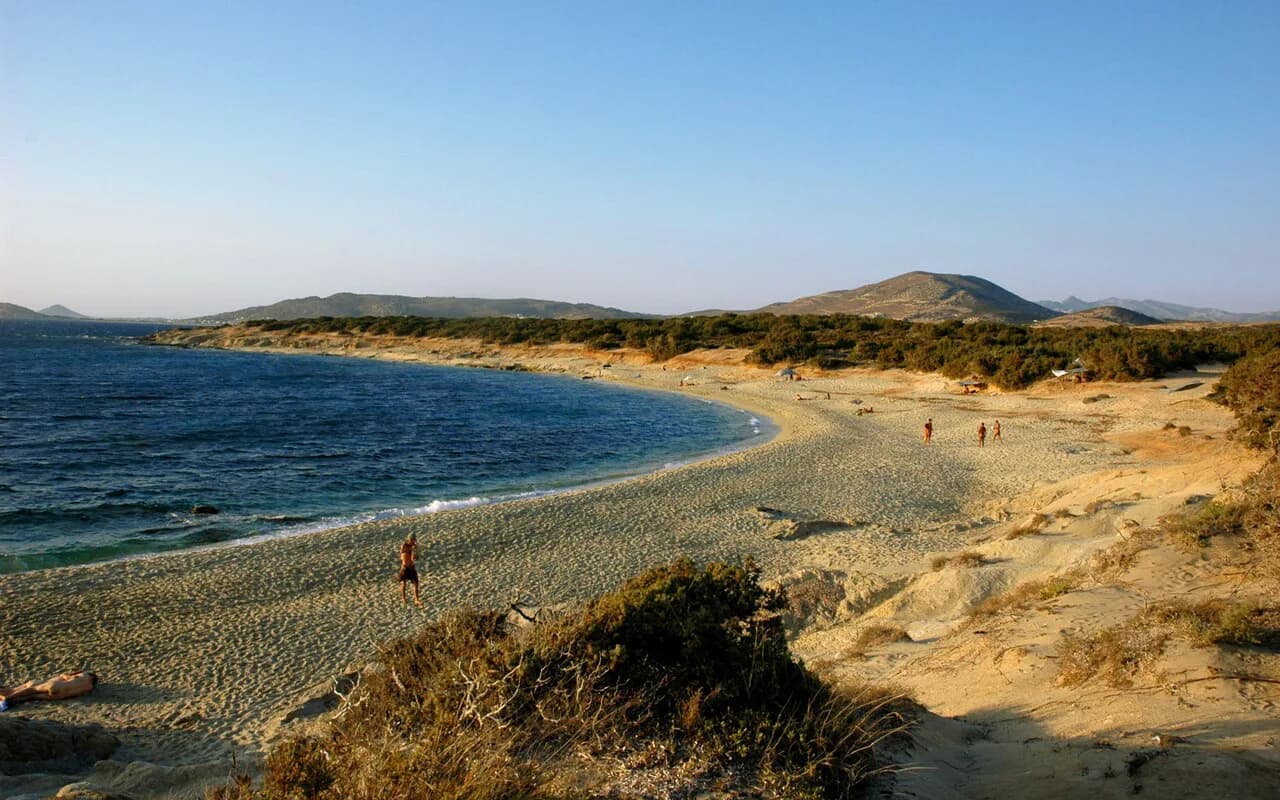
Plaka is the island's longest uninterrupted beach, a stretch of roughly four kilometres of soft white-gold sand backed by dunes and sea cedars, running south from Agia Anna. Even at the height of summer there is room to spread out, and the southern end is the emptiest, with long open sand and no development. Most of the beach clubs, restaurants and hotels sit at the northern end, where you will find cabanas, umbrellas, loungers and watersports including sea bikes and banana boats.
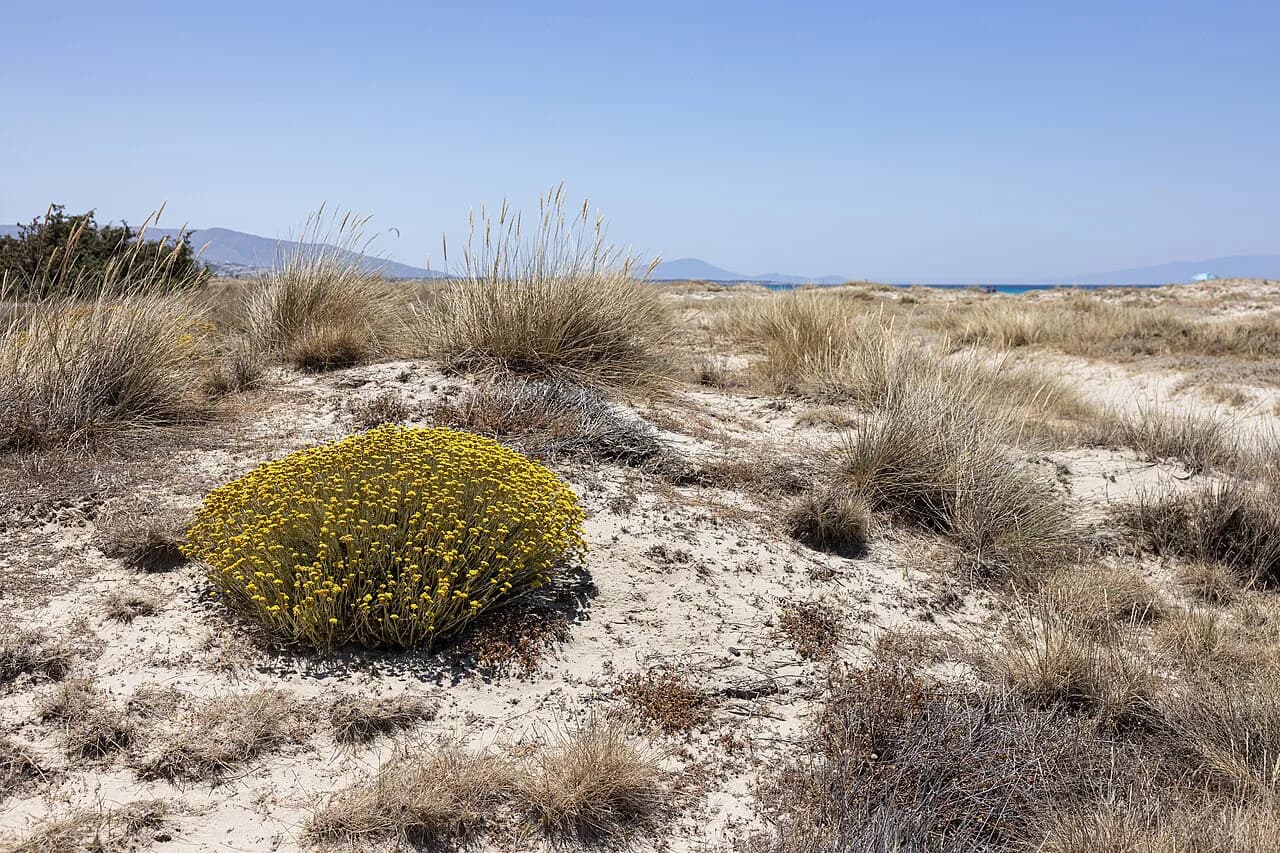
If you want a lounger and a bar within a few steps, book yourself into the northern end; if you want quiet, walk south with your own shade and water. July and August are the busiest months, though Plaka stays noticeably calmer than the beaches closer to Chora. The dunes behind the sand are fragile, so keep to the paths between them.
Mikri Vigla: two beaches around a granite cape
Mikri Vigla is about a twenty-minute drive from Naxos Town and feels far less built up than the Agios Prokopios chain, with villa and apartment rentals rather than large resorts. The southern beach, sheltered from summer northerlies, has calm aquamarine water that suits swimming and snorkelling, especially around the reef just to the west. The northern beach, Parthena Bay, catches the strong meltemi and is one of the island's premier windsurfing and kitesurfing spots.
Pick your side by the day's wind: for a family swim or a relaxed snorkel, head south; for watching boards and sails, or joining them, head north. There are no beach clubs here, just a few tavernas and beach bars along the shore, so bring what you need for a full day. The two beaches are close enough to combine, with lunch between them.
Kastraki and Alyko: the quiet west coast
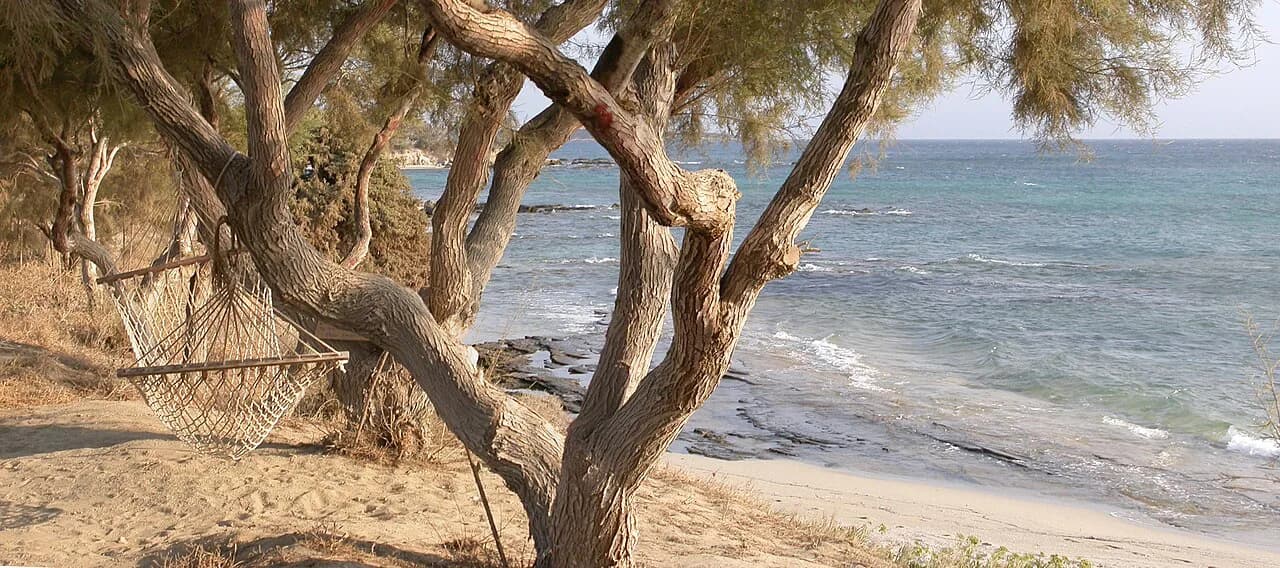
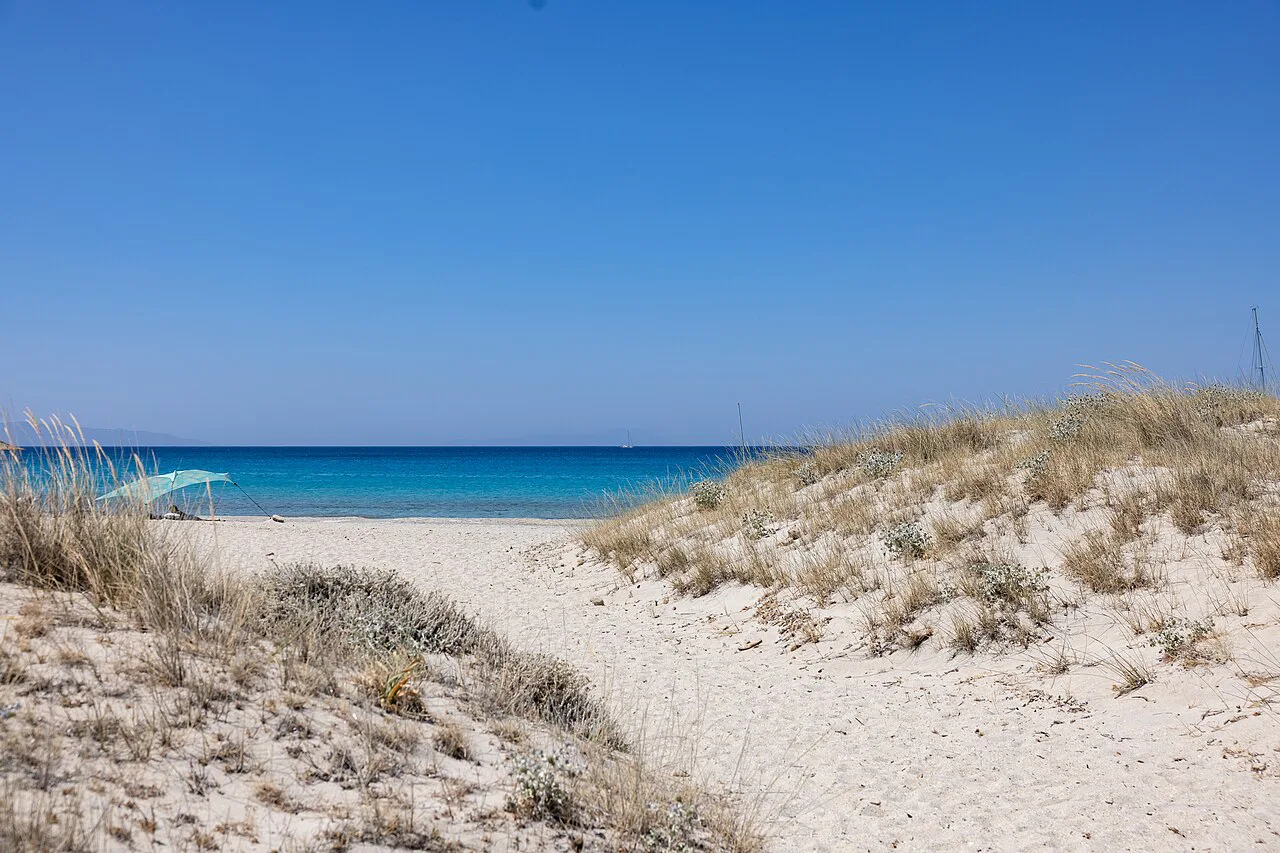
Kastraki continues south from Mikri Vigla as a long ribbon of fine sand, nearly two miles of it, backed by dunes, cedar and juniper. It shares the same sea as Agios Prokopios with far fewer people, and the north end has a handful of eateries and small hotels while the south end is close to unspoiled. The clear water, which shifts from sapphire to turquoise to emerald, is good for snorkelling on calm days; when the wind builds, kitesurfers and windsurfers move in.
Beyond Kastraki the coast turns wilder towards Alyko, where the ruins of the old Alyko Hotel have become an open-air gallery for street artists. Access to the beach here is via a short, steep walk down sandy cliffs, so wear proper shoes and carry everything you need. This is the stretch to choose when you want a near-empty beach and do not mind bringing your own shade, food and drink.
Hawaii Beach and Pyrgaki: the far southwest
Hawaii Beach sits about thirty minutes and 11.5 miles from Naxos Town and is the quietest of the west-coast beaches, tucked among cedar trees with rugged cliffs streaked with tangerine behind the sand. There are no amenities, so bring shade, food and water and take everything away with you. On calm days the translucent water is good for swimming and snorkelling; on windy days it is a place for walking rather than swimming.
Pyrgaki, just south of Hawaii, is the last organised beach on the west coast before the road turns inland. It is a wide stretch of pale golden sand protected from northern winds by ancient cedars and dunes, with a few hotels and traditional tavernas plus some umbrellas and loungers. Come here for long walks and a quiet swim, and accept that facilities are thin compared with Plaka.
Panormos and the southeast
Panermos, usually written Panormos, sits in the island's southeast corner and takes about ninety minutes to reach from Naxos Town, much of the drive winding through mountain villages such as Apeiranthos. The beach is a mostly undeveloped bay fringed with palms, with calm water that suits paddleboarding, snorkelling and floating. A beach bar serves drinks and light bites, and you can rent paddleboards or join a boat trip from the jetty to sea caves and hidden swimming holes.
This is a full-day outing rather than an afternoon: leave early, combine the drive with a stop in Apeiranthos, and plan to be back before dark. On windy days the open bay is less appealing than the sheltered west-coast coves, so keep it for a calm forecast.
Apollonas in the northeast
Apollonas sits on the northeast coast in a working fishing village, about 20 miles from Naxos Town, and combines a sandy and pebbly shoreline with deep, clear blue water. It is best on a calm day, when the swimming is straightforward, and the seafront tavernas serve fresh fish, seafood and spit-roasted lamb. Late June brings the village's Fisherman's Festival, with traditional music and local food.
Sea temperatures and when to go
Offshore sea temperatures across eight of the west-coast beaches average about 18.7 °C in May, 21.7 °C in June, 23.4 °C in July, 24.0 °C in August and 23.6 °C in September, falling to around 21.6 °C in October. Shallow bays generally run warmer than these offshore figures, so early-season swimming is more comfortable at Agios Georgios and Agia Anna than on an exposed strand. August is the warmest month and also the busiest, with July and August the peak for crowds on Plaka and the town beaches.
If you want warm water without the peak crowds, aim for late June or September: June is typically the calmest month for waves, and September remains warm while the summer rush eases. May suits walkers and sightseeing more than long swims, though the shallow northern end of Agios Georgios warms first.
Getting around the island
A car gives you the most freedom, because the best beaches are strung along the west coast and the outlying ones sit at the end of long mountain roads. Distances are modest on paper, but the drive to Panormos takes about ninety minutes and Apollonas is roughly 20 miles from town on the northeast coast. Parking at the west-coast beaches is generally roadside or in unpaved areas; the sources give no tariffs, so budget for the possibility and carry cash.
Without a car, base yourself in Chora or Agios Prokopios and use the town beaches and the Agios Prokopios to Agia Anna chain, which are walkable from each other. For Mikri Vigla, Kastraki and the southwest, arrange a taxi or a hire car for the day. Fares and timetables change, so check with the municipal tourist office in Chora before you rely on a particular service.
Facilities and organised beaches
Eight beaches on the island are listed as organised, with sunbeds, umbrellas and a beach bar or food nearby: Agios Prokopios, Plaka, Agia Anna, Panormos, Pyrgaki, Mikri Vigla, Agios Georgios and Kastraki. All have easy road access, which makes them the low-effort choices if you are travelling with children or older relatives.
For a beach with nothing but sand and dunes, head to Hawaii Beach or the southern end of Plaka and bring everything: shade, water, food and a bag for your rubbish. On organised beaches, sunbed and umbrella sets are usually rented from whichever beach bar or taverna runs that stretch; ask the attendant for the day's rate before you settle in.
Pairing beaches with the rest of the island
Build your days around the light: a morning swim on the west coast, lunch at a beachfront taverna, then back to Chora for the walk up to the Portara and the Venetian Kastro as the sun drops. Naxos is a farming island, and the food around the beaches leans on local cheese, vegetables and olive oil, which makes a long lunch a reasonable part of the plan rather than an interruption.
Inland, the marble village of Apeiranthos is worth a stop on the way to Panormos, and the hills of Stelida suit a walk or cycle when the wind is too strong for the beach. The marina at Chora also makes day trips to Paros, Antiparos and the Small Cyclades straightforward if you want to break up a beach-heavy week.
Naxos beaches compared
Families with small children should look first at the northern end of Agios Georgios and the shallow cove at Agia Anna, both of which have easy access and calm shallows in settled weather. Swimmers and snorkellers do well at Agios Prokopios, the southern beach at Mikri Vigla and the rocks near Spilia at Agia Anna. Windsurfers and kitesurfers head for Parthena Bay at Mikri Vigla or Kastraki when the meltemi is blowing.
Quiet-seekers should trade facilities for space: the southern end of Plaka, most of Kastraki, Hawaii Beach and Pyrgaki all reward a car and an early start. If you want a single long beach day with everything on hand, Plaka's northern end has the clubs, bars and watersports; if you want a remote adventure, Panormos and Apollonas are the day trips to plan around.
Bringing a dog to Naxos beaches
Naxos has nearly 100 miles of coastline and more than 20 named beaches in addition to countless smaller sandy stretches, and CalmBeach lists 8 organised beaches on the island: Agios Prokopios, Plaka, Agia Anna, Panormos, Pyrgaki, Mikri Vigla, Agios Georgios and Kastraki. Those eight are the stretches where sunbeds, umbrellas and a beach bar are the norm, so they are the ones where a dog will be sharing sand with rented loungers and other people's towels. Agios Georgios is described as fully organised and among the busiest of the group, while Plaka, at roughly 4 km the longest of the chain south of town, is noted as more sheltered from northerlies.
If you want room to yourself, the geography works in your favour. Plaka's beach clubs, restaurants and hotels cluster at the north end, with the south offering more empty, long expanses of sand, and Agios Georgios is busiest and most developed at the northern end closer to town, with a more peaceful atmosphere toward the south. Kastraki is a long ribbon of fine sand between Mikri Vigla and Alyko, the same sea as Agios Prokopios with far fewer people. Beyond the west coast, Panormos sits on the remote south-east corner off the axis of the tourist beaches, and Pyrgaki is the last organised beach on the west coast — past Alyko the road turns inland.
Water conditions matter as much as crowds when a dog is swimming beside you. Check live conditions on CalmBeach before you go, since facilities do not change the wind or waves, and an organised beach is not automatically a sheltered one. Agios Georgios has shallow, calm water in the north, ideal for families with young children, but its shallow, breezy southern end is a well-known windsurf-instruction spot and the waves are more powerful there — a consideration for a dog paddling off the lead.
Plan Your Visit
Naxos works best when you match the beach to the day rather than chasing a single best beach. Use the west-coast chain for easy, flexible days, the southern beaches at Mikri Vigla for sheltered swimming, and the far southwest or Panormos for a planned day out with everything you need in the boot. If you are island-hopping, apply the same coast-by-coast logic when you plan your days among the Kefalonia beaches. Build in a slow lunch and a Portara sunset, and the island's beaches will carry the rest of the holiday.
Explore more Naxos beaches
Frequently Asked Questions
Which Naxos beach is best for families with small children?
The northern end of Agios Georgios is the easiest choice, with shallow water, umbrellas, loungers, lifeguards, bars and restaurants within a ten-minute walk of Naxos Town. Agia Anna's southern cove offers wide shallows and fishing boats, with tavernas at the other end for lunch.
Where can you snorkel on Naxos?
Agios Prokopios has particularly clear water that suits snorkelling, and the southern beach at Mikri Vigla has calm water and a reef just to the west. At Agia Anna, the rocky outcrop near the Spilia Restaurant is home to parrotfish, wrasse and octopus. Grotta Beach near the ferry terminal lets confident snorkellers see the ruins of a submerged ancient city on a calm day.
Is Plaka Beach worth visiting?
Yes, if you want space. It is the island's longest uninterrupted beach, with dunes and sea cedars behind the sand, beach clubs and watersports at the northern end, and long empty stretches to the south. It is busiest in July and August but remains calmer than the town beaches.
Which Naxos beaches are sheltered from the wind?
The southern beach at Mikri Vigla is protected from summer northerlies, and Plaka, Kastraki and Pyrgaki all sit more sheltered than the exposed north side of the Mikri Vigla cape. Offshore wave models put typical July and August heights at around 1.10 m to 1.11 m, with June the calmest month, but a sheltered bay will usually be calmer than the open-water figures suggest.
How warm is the sea in Naxos in June and September?
Offshore sea temperatures average about 21.7 °C in June and 23.6 °C in September, against 24.0 °C in August. Shallow bays usually run warmer than the offshore data, so the first swim of the season is more comfortable at Agios Georgios or Agia Anna than on an exposed beach.
Do you need a car to reach the quieter Naxos beaches?
A car makes the quiet beaches practical: Kastraki, Hawaii Beach and Pyrgaki sit along the southwest coast, Panormos is about a ninety-minute drive from Chora, and Apollonas is roughly 32 km away on the northeast coast. Without a car, base yourself in Chora or Agios Prokopios for the walkable beaches, and hire a car or taxi for a day out.
Where can you swim within walking distance of Naxos Town?
Agios Georgios is the closest sandy beach, about a ten-minute walk from the centre, and Grotta Beach is roughly five minutes from the ferry terminal. Both make a swim easy before or after a meal in town.
Are there nudist beaches on Naxos?
The southern end of Plaka is the quietest stretch of the west coast, with long open sand and little development. Arrange sunbeds and shade on whichever stretch you choose before you settle in.
Sources
Beach notes for your next trip
Optional updates when we add or revise beach guides.
You might also like
Continue reading
More guides you'll find useful