Mazarrón Beaches: Where to Swim, Snorkel and Base Yourself
Plan a beach day in Mazarrón, Murcia: the sandbar to the island at Playa de la Isla, Nares in Puerto de Mazarrón, and the coves worth the detour.
On this page
Mazarrón earns its place on a beach-led holiday because you get two coasts in one municipality: a lively port with an urban beach on its doorstep and a run of undeveloped coves where the hills drop straight to the water.
Families tend to settle at Playa de la Isla or in Puerto de Mazarrón, swimmers who like a target appreciate the low-tide crossing to the island, and quiet-seekers should head east towards Cala Amarilla and the Parazuelos coves.
This guide gives each beach its own character, access and facilities, then explains how to pick between them for a family swim, a snorkelling session or an afternoon with nothing but rock and shade.
Why Mazarrón Suits a Beach-Led Holiday
Mazarrón spreads along a wide bay that opens onto the Mediterranean, with 35 km of coastline and two centres: the port on the water and the town capital about five kilometres inland. That means you can sleep in town, drive a short way and still reach a different beach each morning.
The regional tourist board groups the coast into urban beaches and natural coves, and notes that most of the urban beaches carry the Q for Quality distinction. Practical translation: the town beaches come with proper access and services, while the coves trade facilities for scenery.
The municipality also has a diving scene, with clubs running courses and expeditions to rocky seabeds and underwater caves around the bay. If your beach day usually includes a mask and fins, base yourself here rather than somewhere with only flat sand.
Playa de la Isla: The Sandbar Crossing and Calm Water
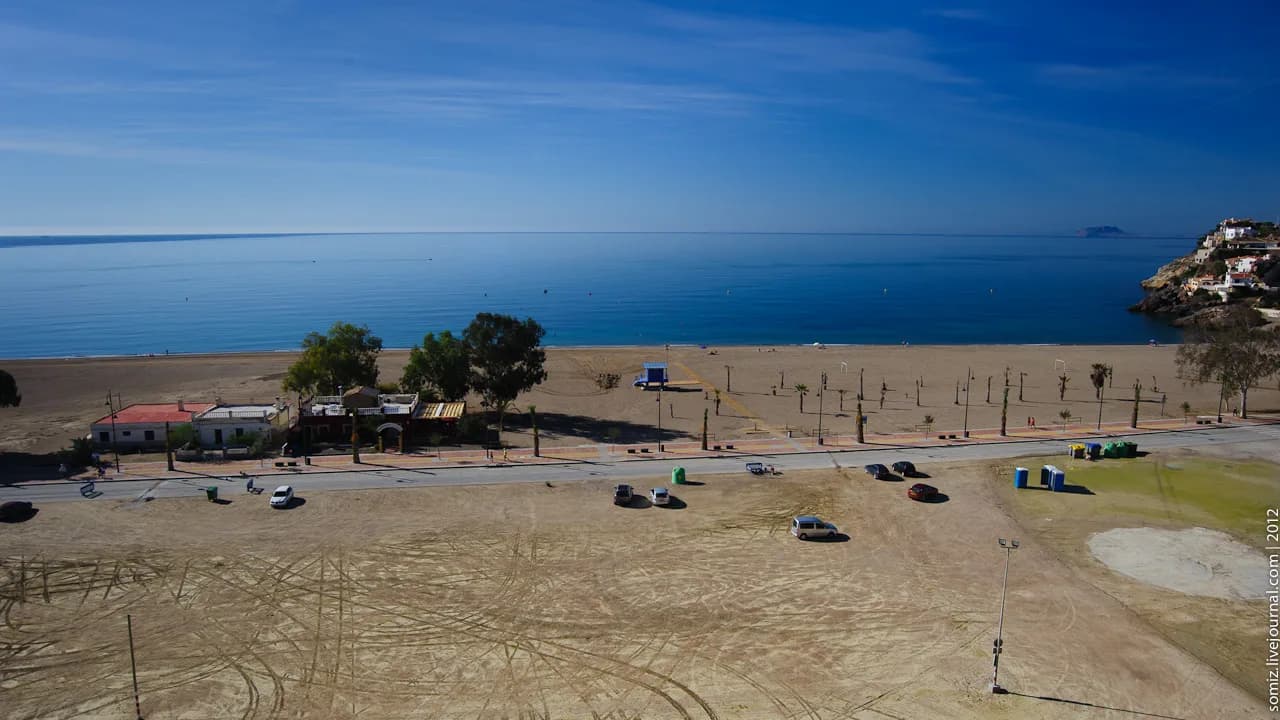
Playa de la Isla sits in the very heart of Mazarrón, a 600 m-long, 100 m-wide sweep of golden sand with calm water and an urban setting. The published occupancy rate is high, so treat it as a town beach rather than a secret.
Its signature is the island lying just offshore, which you can reach on foot when the tide is low. Go for the crossing early in the day when the sandbar is dry and you have the island's seagulls and unspoilt feel more or less to yourself; do not plan around it in the afternoon without knowing the tide.
Scuba-divers come to this beach to look at the sea bottom, which tells you the bottom is rocky in places rather than uniformly sandy—good for snorkelling near the edges, less good for bare feet. Bring reef shoes for children and anyone who likes to stand up in the shallows.
Families with small children get the easiest day here: the water is calm as published, the sand is golden rather than shingle, and there is a children's play area among the services. It is the obvious first beach if you have just arrived and want no logistics.
Puerto de Mazarrón and Playa de Nares
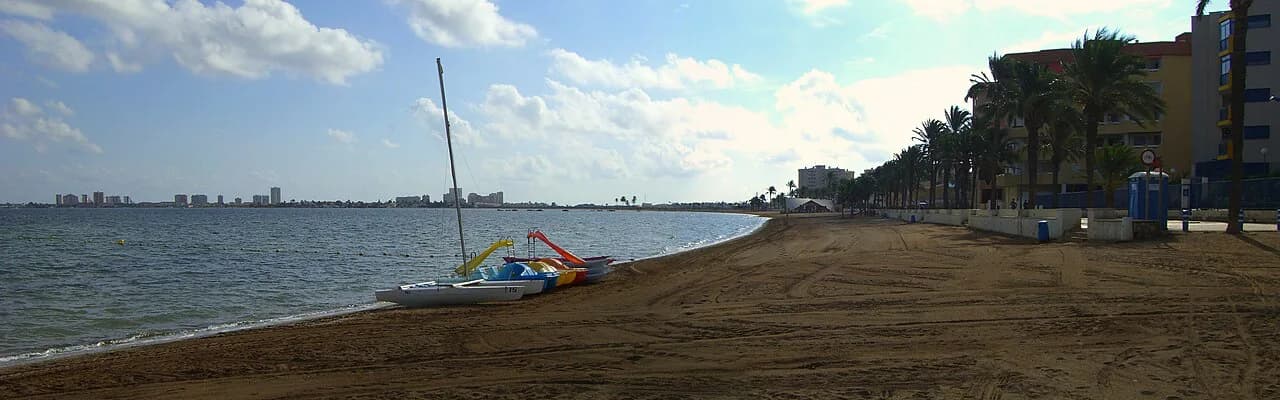
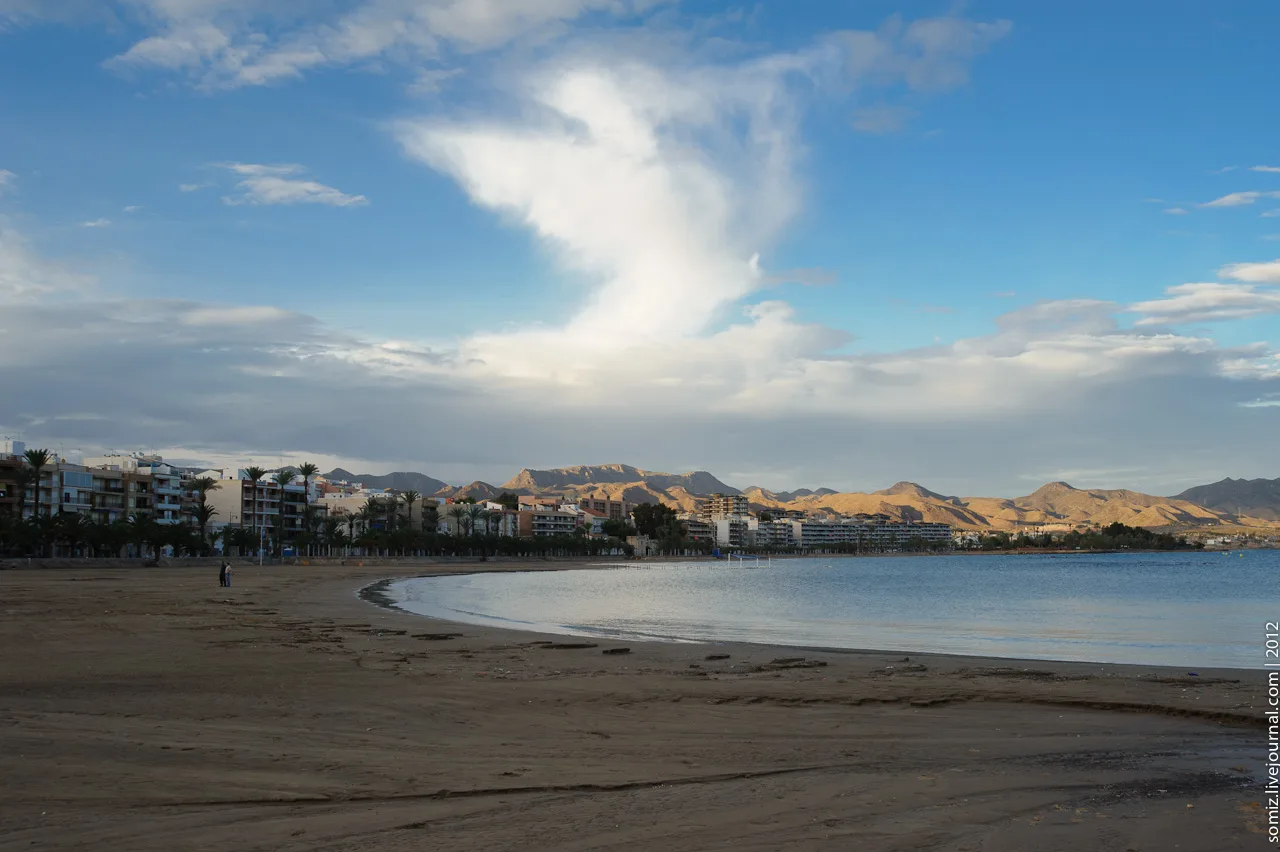
Puerto de Mazarrón is the practical base for a beach holiday: the marina, the fish market and the seafront are all in one place, with the port about 600 m from Playa de la Isla. You can walk from a hire apartment to the sand without moving the car.
Playa de Nares is the other accessible town beach in Puerto de Mazarrón, with a couple of beach bars close by and parking that is usually findable outside the peak. Visitors report that it only gets really busy in July and August, which makes it a sensible shoulder-season choice.
For a straightforward urban beach day—sand, a bar within reach, a short walk back to the apartment—Nares and La Isla between them cover it. For anything wilder, you need the coves further along the coast.
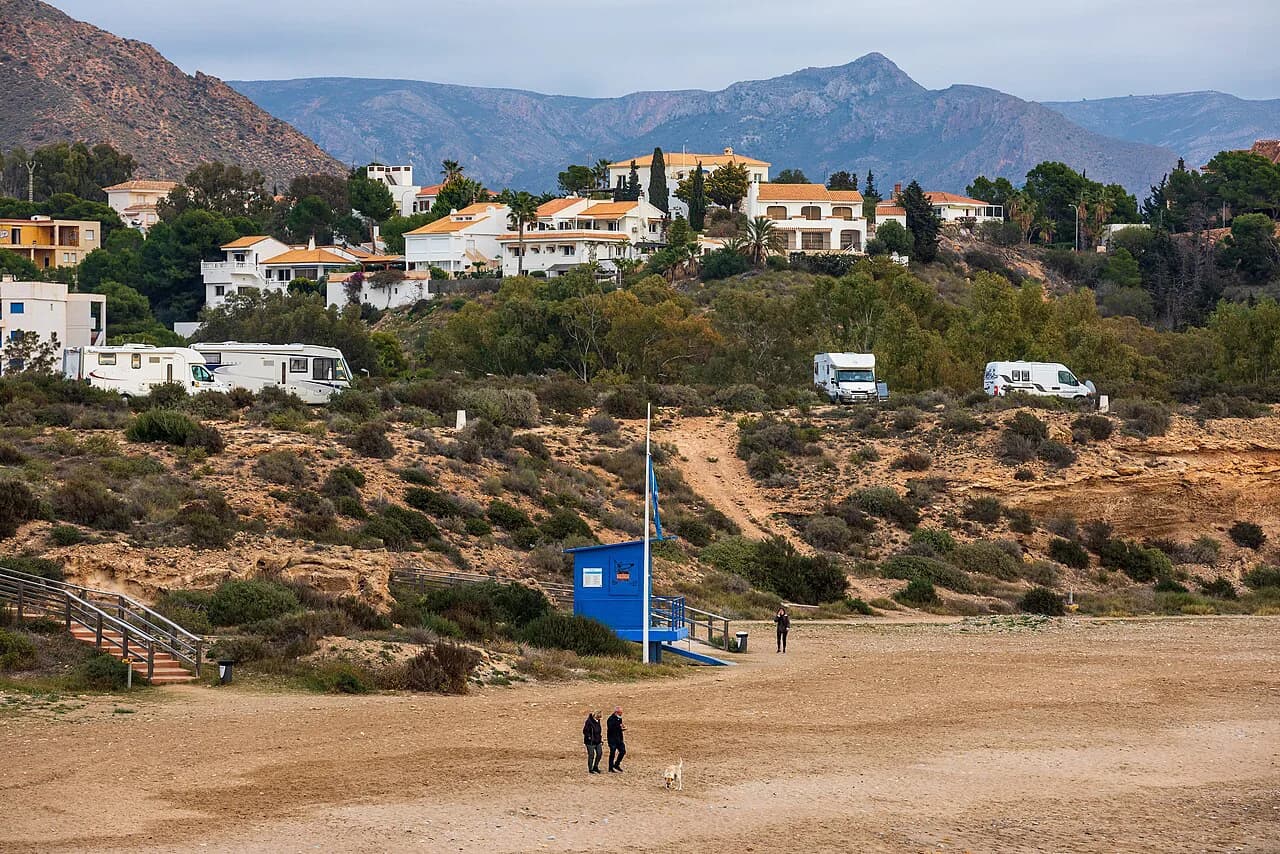
Bolnuevo: Sand and the Eroded Sandstone
Bolnuevo pairs a beach with one of the region's strangest landscapes: white sandstone carved by wind and water into the formations known as the Bolnuevo Erosions, directly opposite the beach. It is the one Mazarrón stop where non-swimmers get a proper sight.
Walk the sand, then cross to the rocks for photographs in the softer late-afternoon light. Bring trainers rather than flip-flops for the rock side, and keep an eye on children near the eroded edges.
Bolnuevo also sits within reach of the walking and cycling country behind the coast, including the Vía Verde and signposted trails, so it works as a half-day beach stop combined with a walk.
The Coves East and West of the Port
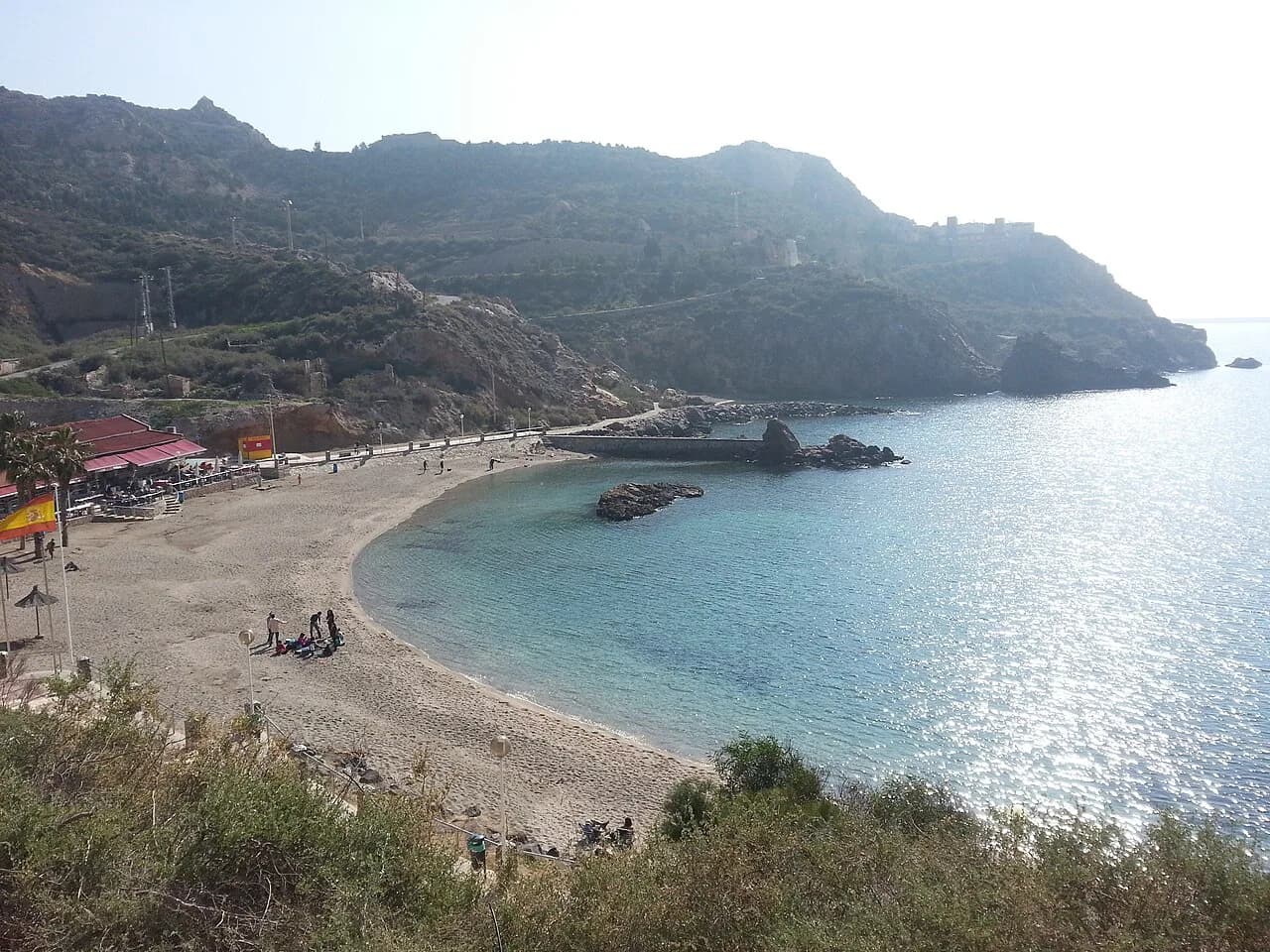
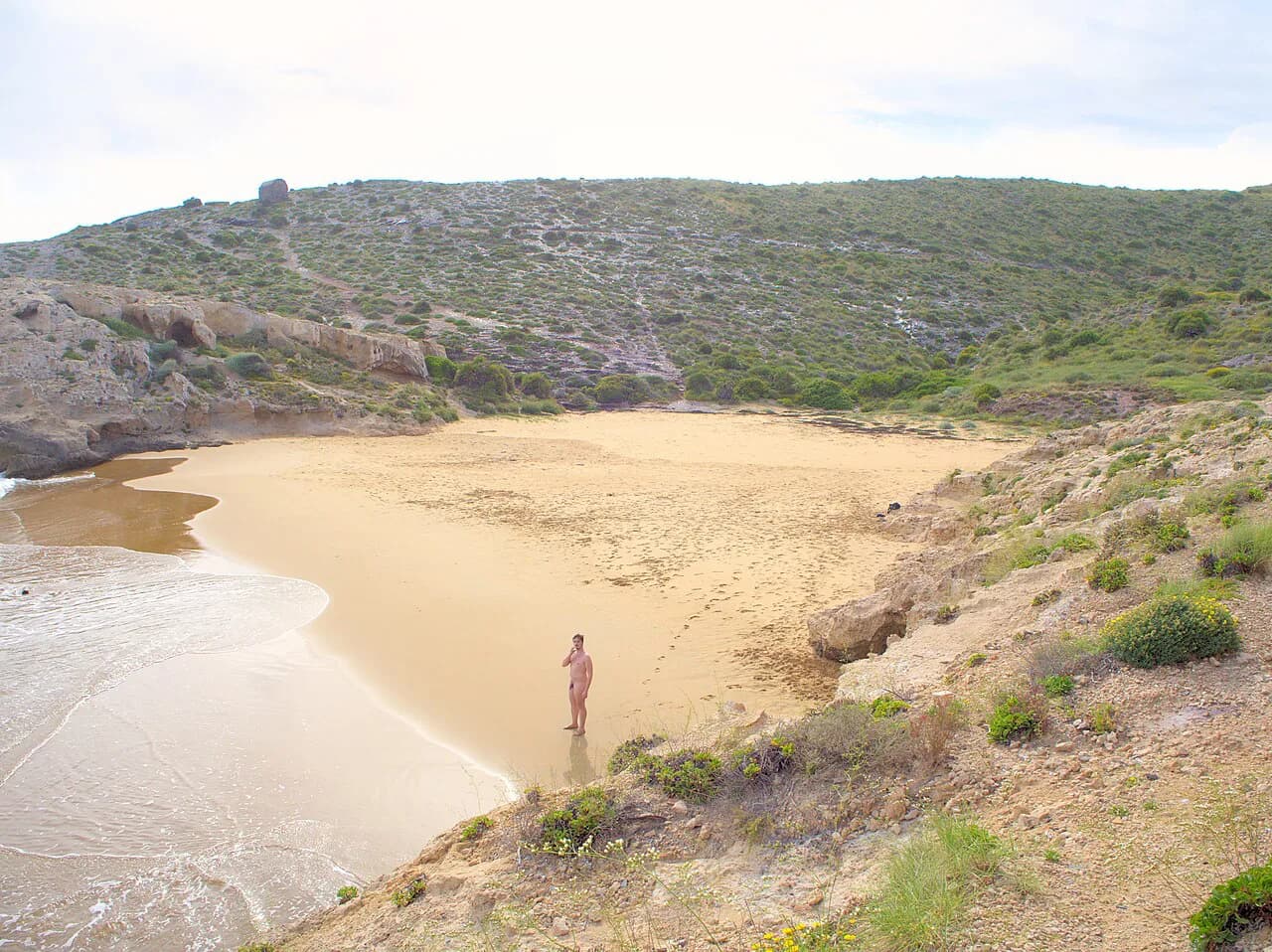
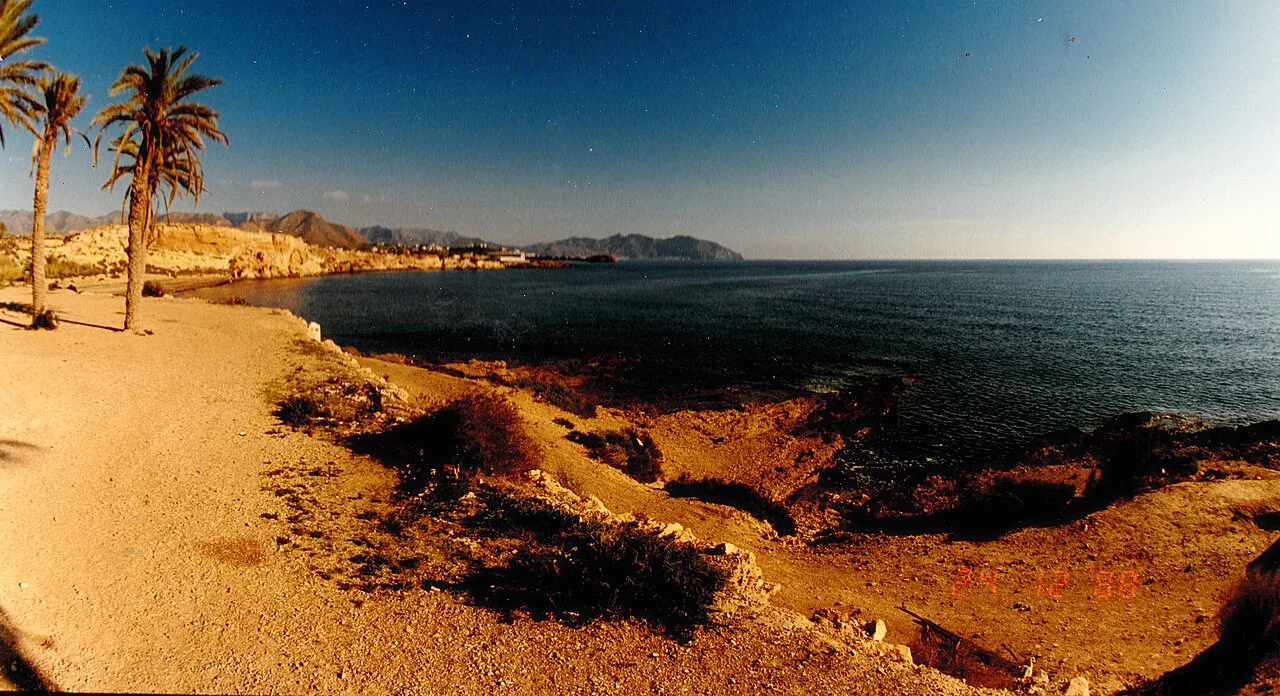
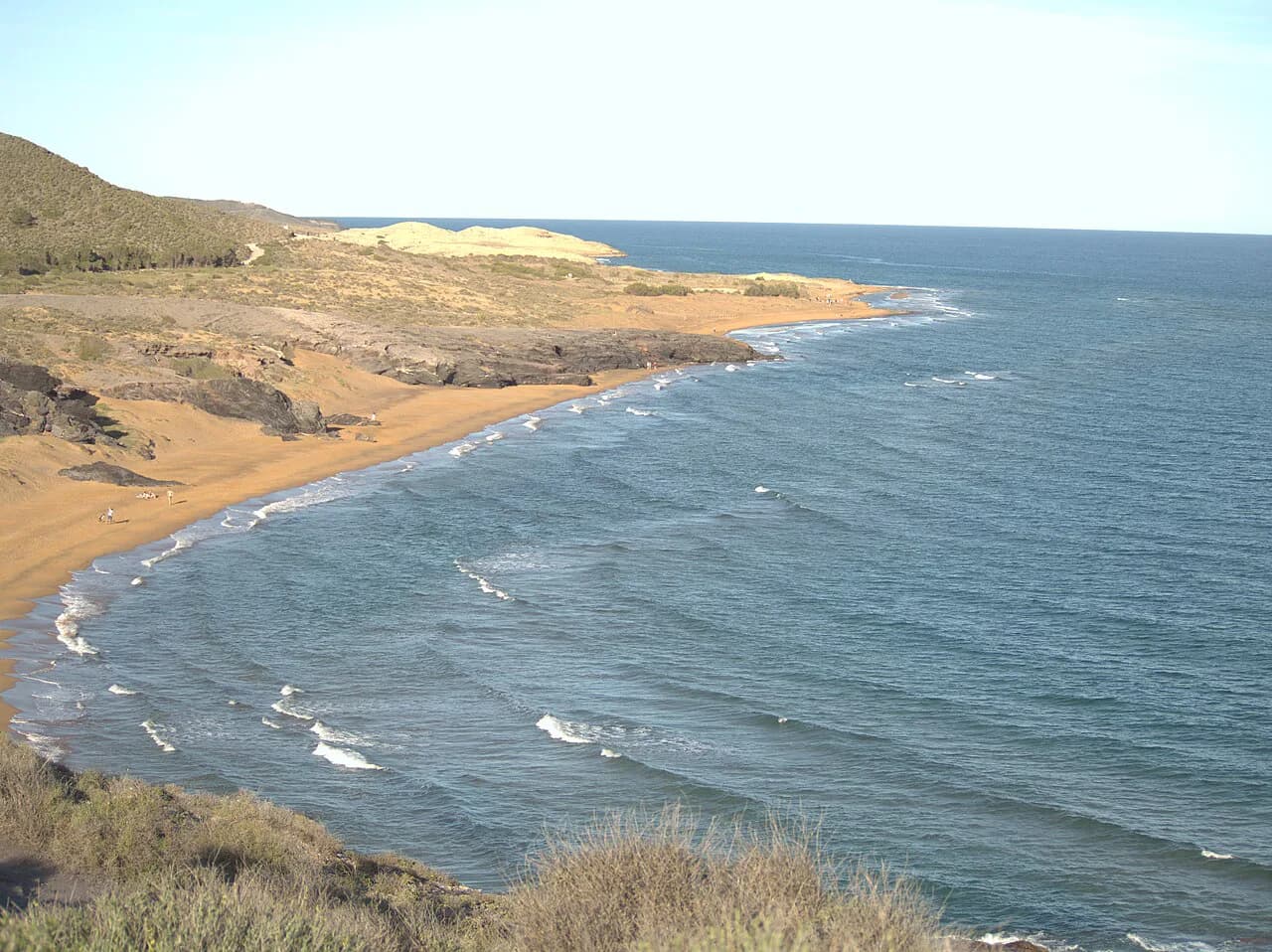
Beyond the urban beaches, the municipality lists a string of coves: Cala Amarilla, La Grúa, Parazuelos, Covaticas, Ballenato and Percheles, alongside La Reya, Bahía and El Castellar. These are the beaches for people who will trade a shower for a view and a crowd for a rock shelf.
Think of the coves in two groups. The ones closest to the port suit a short hop with a cool box; the further ones, towards Percheles and Parazuelos, reward an early start and a full day, with a chiringuito at Parazuelos as a lunch stop.
Snorkellers do best over the rocky edges of these coves, where the bottom drops away and the fish gather. Bring your own mask, fins and footwear, and carry water—services thin out as you move away from the port.
How to Choose Your Beach
Families with small children should start at Playa de la Isla: calm water, golden sand, a play area and a town centre behind it. Puerto de Mazarrón and Nares are the fallback when you want a bar, a promenade and an easy walk home.
Swimmers who like a target get the island crossing at La Isla, plus the longer open-water feel of the urban beaches. Snorkellers and divers should look to the rocky seabed at La Isla and the coves, not the flat town sand.
Quiet-seekers should drive past the port and take a cove, accepting fewer facilities and a rougher path down to the water. If you want a middle ground—undeveloped but with a known name and a path—Bolnuevo is the safest bet.
Getting There and Getting Around
The nearest motorway links to Mazarrón are the N-332, RM-3 and AP-7, and the beaches are reached on foot, by car or by boat depending on which one you pick. A car is what turns the coves from an idea into a plan.
For La Isla and Puerto de Mazarrón you can leave the car at your accommodation and walk; for Bolnuevo and the coves, drive and arrive early in July and August. Parking at the town beaches is straightforward outside the peak; for the coves, expect to park on the approach road and walk the last stretch.
If you are building a wider Murcia trip, the Mar Menor and La Manga del Mar Menor sit within an easy drive and make a natural second beach day, with the calm, shallow water of the lagoon instead of the open Mediterranean.
Facilities on the Sand
Playa de la Isla is the best-equipped beach in the municipality, with watercraft rental, toilets, footwash, litter bins, a cleaning service and a telephone listed among its services. That combination makes it the easiest beach for a family with young children or anyone who wants a proper rinse before the drive back.
Elsewhere, plan on bringing what you need. The coves have no listed services, so pack water, shade, a first-aid kit and food, and take your litter back with you.
Cash is worth carrying for the smaller beach bars and chiringuitos, where card machines can be unreliable. Bring coins for parking meters and ice-cream stops.
Best Time to Go
The busiest window in Mazarrón is July and August, when Playa de Nares in particular fills up. If you can travel in June or September, you get warm sea, shorter queues and a much easier parking spot.
spain.info lists a water temperature of 23°C and a maximum air temperature of 21°C for the beach, with moderate wind and slight waves. Treat those as published beach data rather than a forecast and check a current forecast for the day you swim.
The region promotes itself on around 300 days of sunshine and an average temperature of 20°C, which means even out-of-season trips can include a beach walk, if not always a swim.
Nearby Beaches and Days Out
Mar Menor beaches to the north give you shallow, warm water that suits nervous swimmers and small children, and the drive from Mazarrón is short enough for a day trip.
Further north, La Manga beaches line a narrow strip between the lagoon and the open sea, which makes for a very different beach day from Mazarrón's coves.
Inland, the Sierra de las Moreras and the mining heritage around Mazarrón give you a non-beach day when the wind picks up, and Bolnuevo's eroded sandstone works in almost any weather.
Plan Your Beach Day
Start with Playa de la Isla for a family swim, add Playa de Nares for a bar-and-promenade afternoon, then spend one day driving the coves with a cool box and reef shoes. That covers the three Mazarrón beach days that most visitors actually want.
If you are still choosing where to base yourself on the Costa Cálida, compare Mazarrón with La Manga and the Mar Menor before you book, and check current opening details with the Puerto de Mazarrón tourist office once you have dates. If you would rather head north along the coast, weigh the calmer, shallow bays against a hop further up towards the Alicante beaches for a contrasting mix of town sand and coves.
Frequently Asked Questions
Is Mazarrón worth visiting for beaches?
Yes, if you want variety within a short drive. Mazarrón has an urban beach with proper facilities at Playa de la Isla, a port beach at Nares and a run of undeveloped coves, all within one municipality.
Can you walk to the island at Playa de la Isla?
You can reach the island on foot when the tide is low, as spain.info describes. Plan around a tide table for your date, as the crossing is not always open.
Which Mazarrón beach is best for families?
Playa de la Isla is the easiest for families with small children: golden sand, calm water, a children's play area, toilets and footwash. Nares is a good second option for a shorter, bar-side beach day.
Do I need a car for the coves near Mazarrón?
A car makes the coves practical. The town beaches at La Isla and Puerto de Mazarrón can be reached on foot from the port, but Cala Amarilla, Parazuelos and the rest need a drive and a short walk.
When is the busiest time at Mazarrón beaches?
July and August are the busy months, particularly at Playa de Nares. June and September give you warm water with far more room on the sand.
What is the closest airport to Mazarrón?
The Region of Murcia's own airport at Corvera is the closest, with Alicante-Elche further north. Check current airline schedules for your dates.
Sources
Beach notes for your next trip
Optional updates when we add or revise beach guides.
You might also like
Continue reading
More guides you'll find useful