Grandes Playas Corralejo: Which Dune Beach to Choose
Plan a day on the Grandes Playas de Corralejo: which stretch to pick, how to reach the dunes by bus or car, wind shelter, beach bars and the best months.
On this page
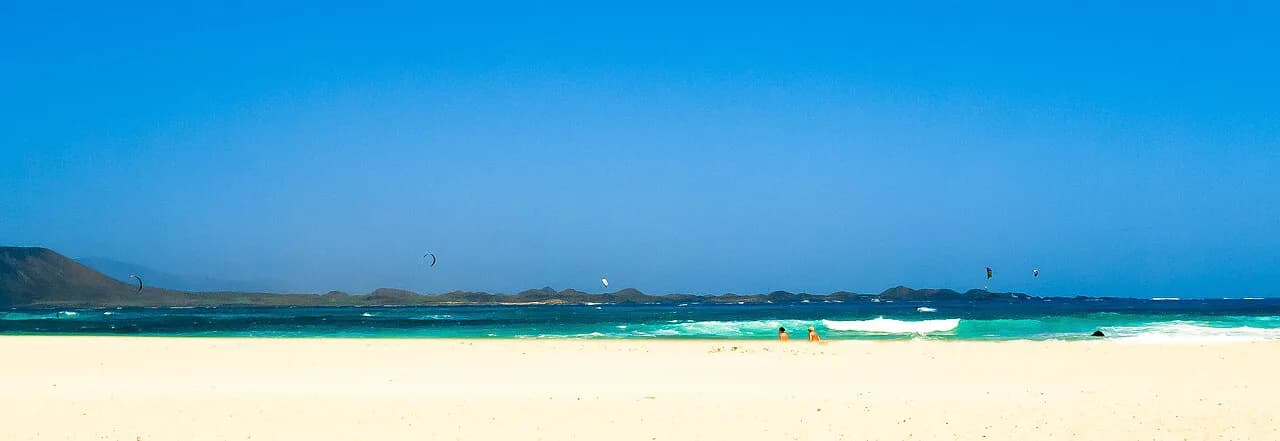
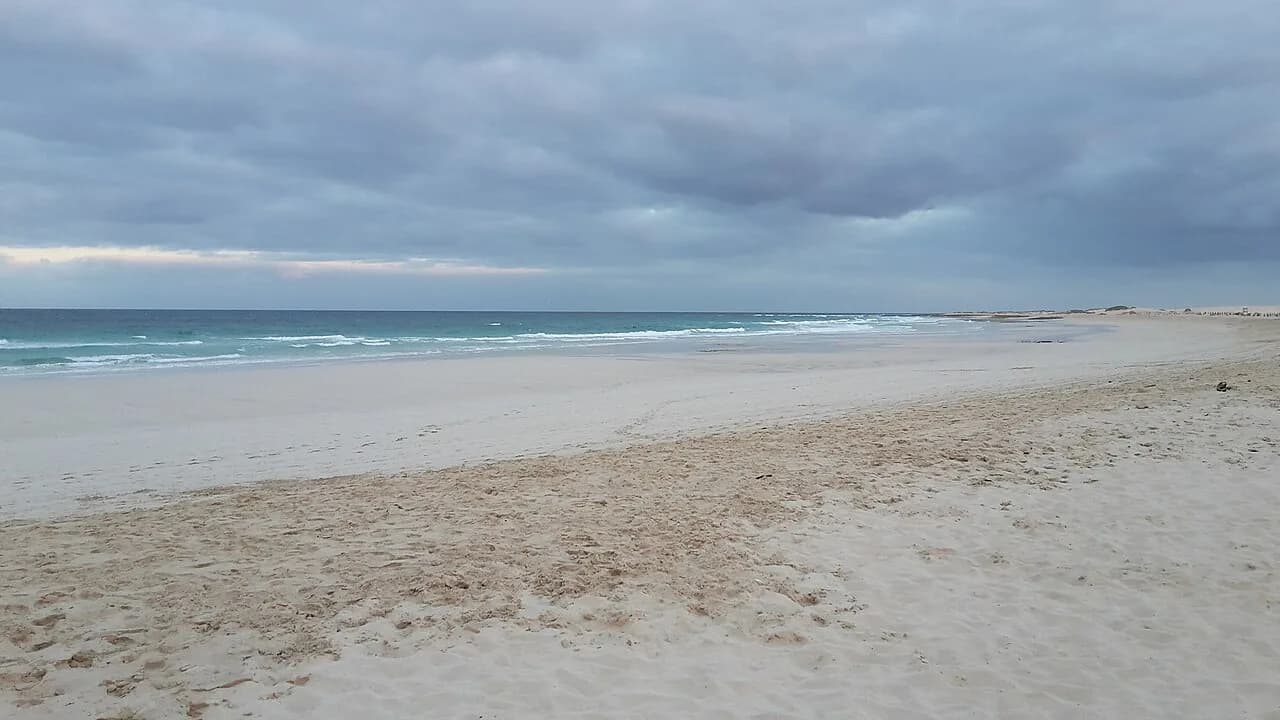
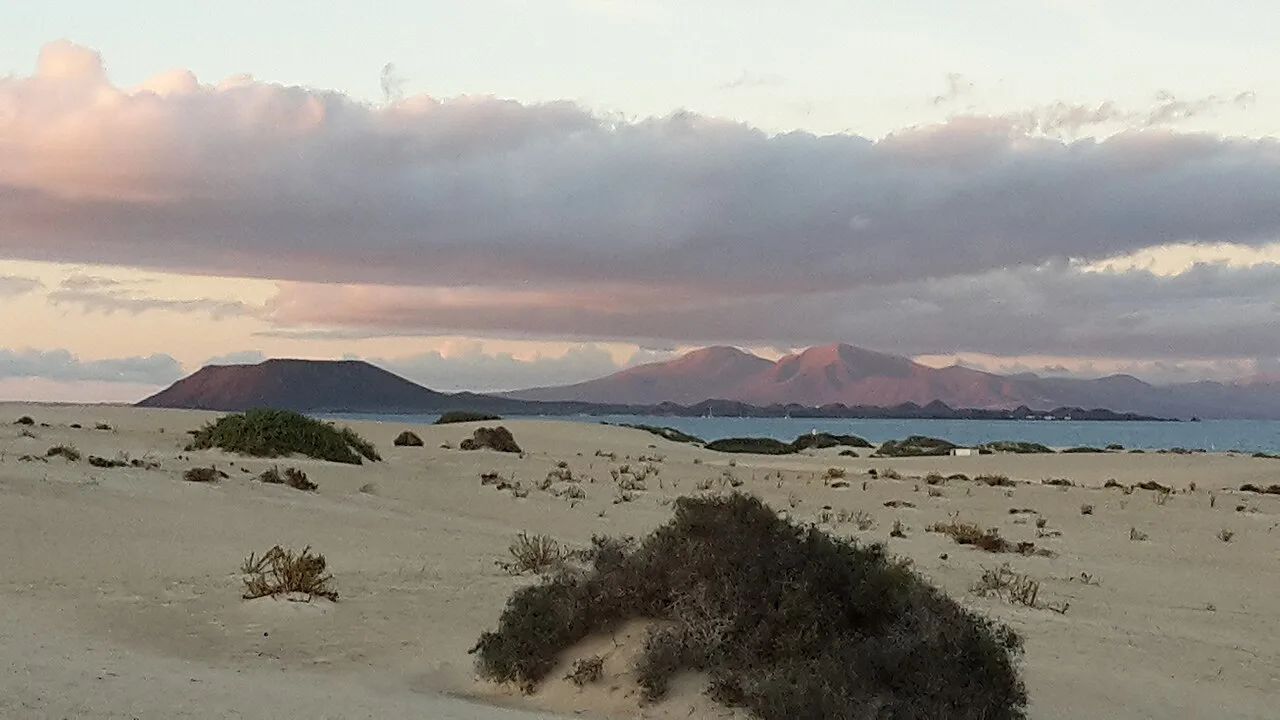
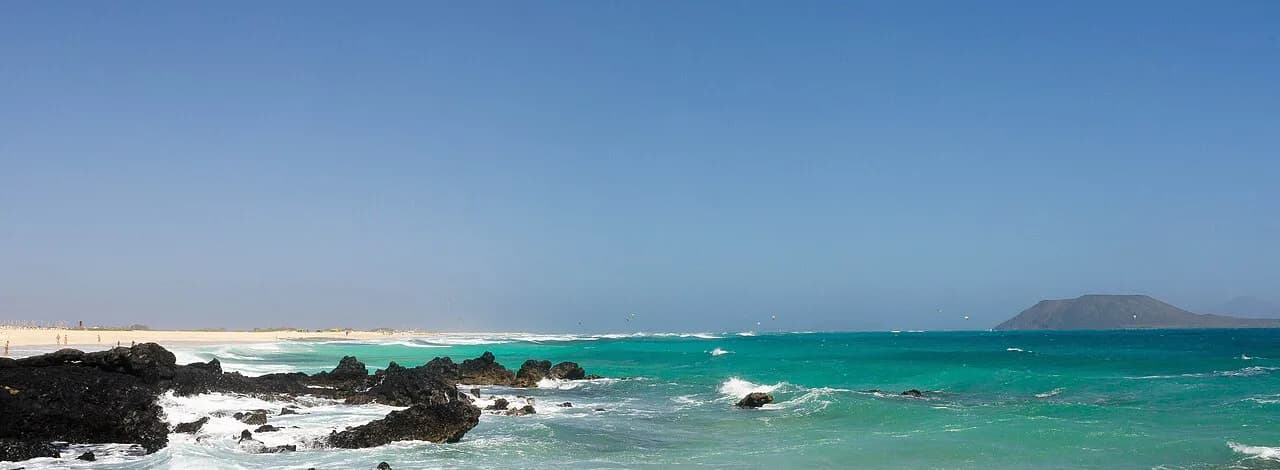
The Grandes Playas de Corralejo are the beaches of the Corralejo dune park: a roughly ten-kilometre chain of pale, near-white sand and clear turquoise water on the north-east coast of Fuerteventura. They suit travellers who want space and a wild backdrop rather than a resort promenade, and they reward anyone willing to walk a little away from the car parks. Windsurfers and kitesurfers come for the steady breeze, while swimmers should pick their spot with care.
The coast is not one beach but several smaller ones, known locally as the Grandes Playas, all inside the protected dune landscape. That makes a difference to your day: the northern end near the hotels behaves like a busy resort beach, the middle around Flag Beach belongs to the wind sports, and the southern dunes feel emptier. Choose the stretch to match the people you are with before you set out.
Where the beach sits: Corralejo town, the dune park and the FV-1 road
The beaches run south from Corralejo town along the coast of the Corralejo Natural Park, with the FV-1 road running behind the dunes. Almost all parking is along that road, and driving on the dunes themselves is strictly forbidden. The park covers around 24 square kilometres and includes the shifting dunes and the volcanic ground to the south.
The sand is not Saharan dust: it is made of the shells of marine creatures, which gives the beaches their pale colour and fine texture. Because the whole strip is protected, the appeal is the landscape as much as the swimming, and the dunes behind the sand are part of the day out. For a wider look at the coast and its individual beaches, the Corralejo beaches guide covers the town beaches and the dune strip together.
The park was designated in 1982 and also takes in the small island of Lobos just offshore. Two large hotels were built before protection came in and now sit within the dune landscape, which is why the northern end feels more developed than the rest. Birdlife includes the Houbara bustard, the park's emblem, so keep to marked paths where they are signed.
Getting there: walking from town, bus line 6, parking on the FV-1
On foot from the centre of Corralejo, the dunes are roughly 1½ to 2 hours away, which makes a pleasant one-way walk if you plan to return by bus or taxi. Cycling is quicker and some hotels run shuttle services to the beaches. Taxis are available in town if you would rather save your legs for the sand.
Local bus line 6 serves the dunes from Corralejo, stopping along the route near the beach areas. Timetables and frequencies are published by the island bus operator Tiadhe, so look up the current line 6 schedule before you rely on a particular departure. The bus is the simplest option if you do not want to drive.
By car, access is via the FV-1, with kilometres of roadside parking along the dunes. The spaces nearest the most popular areas, especially around Flag Beach, fill first, so arriving earlier or walking a few minutes further gives you more choice. Take care on the road itself: pedestrians cross and sand drifts onto the surface.
The sand and the water: shell sand, wind, currents and where to enter
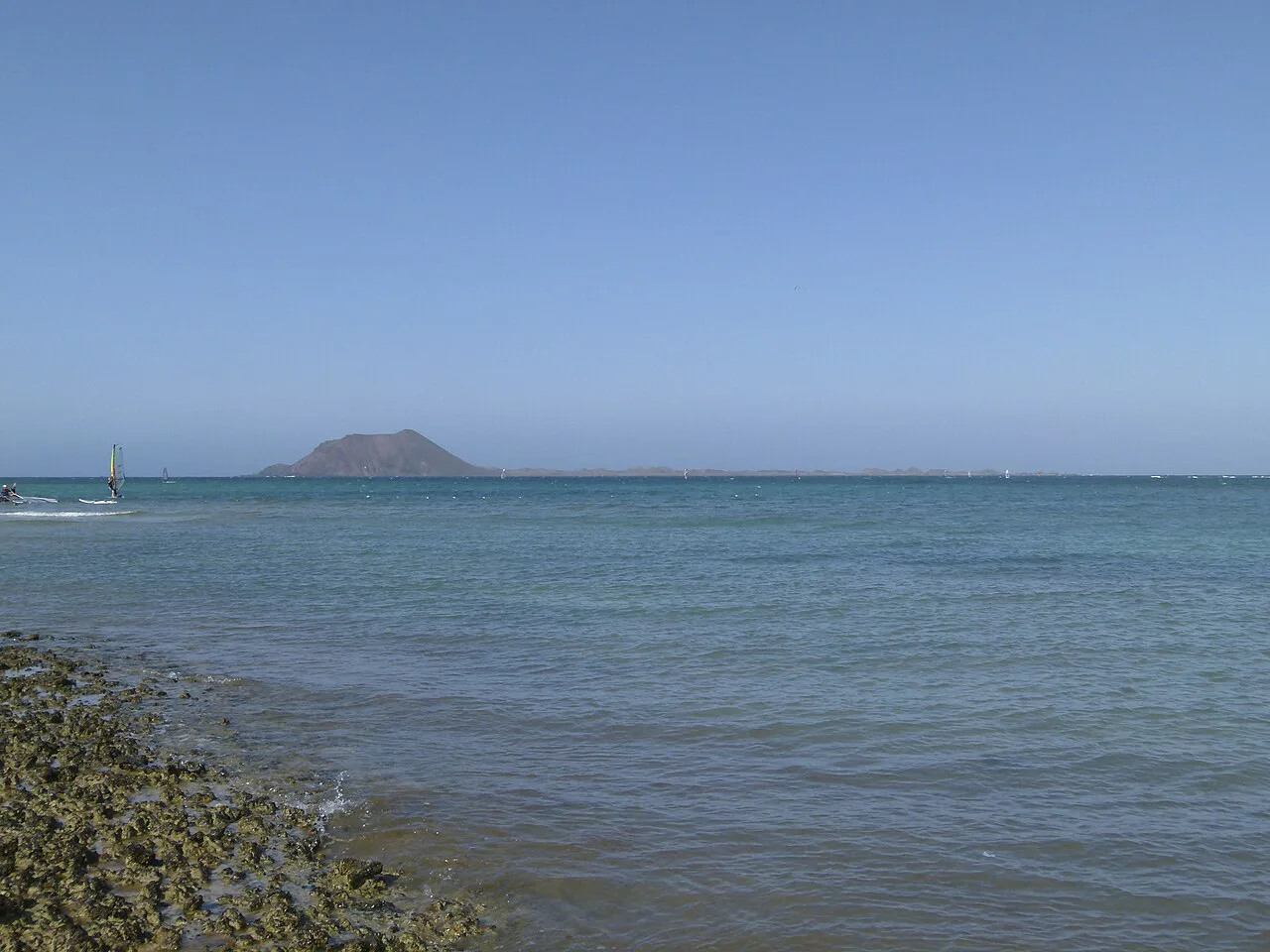
The beaches are pale, fine and largely rock-free, with clear turquoise water and a gradual entry in places for a paddle, but the open Atlantic here is exposed. The dune coast is not a good swimming beach along its whole length: there are strong currents and rip tides, and the ratio of lifeguards to beach-goers is small. Treat the water with respect and watch for flags and local advice.
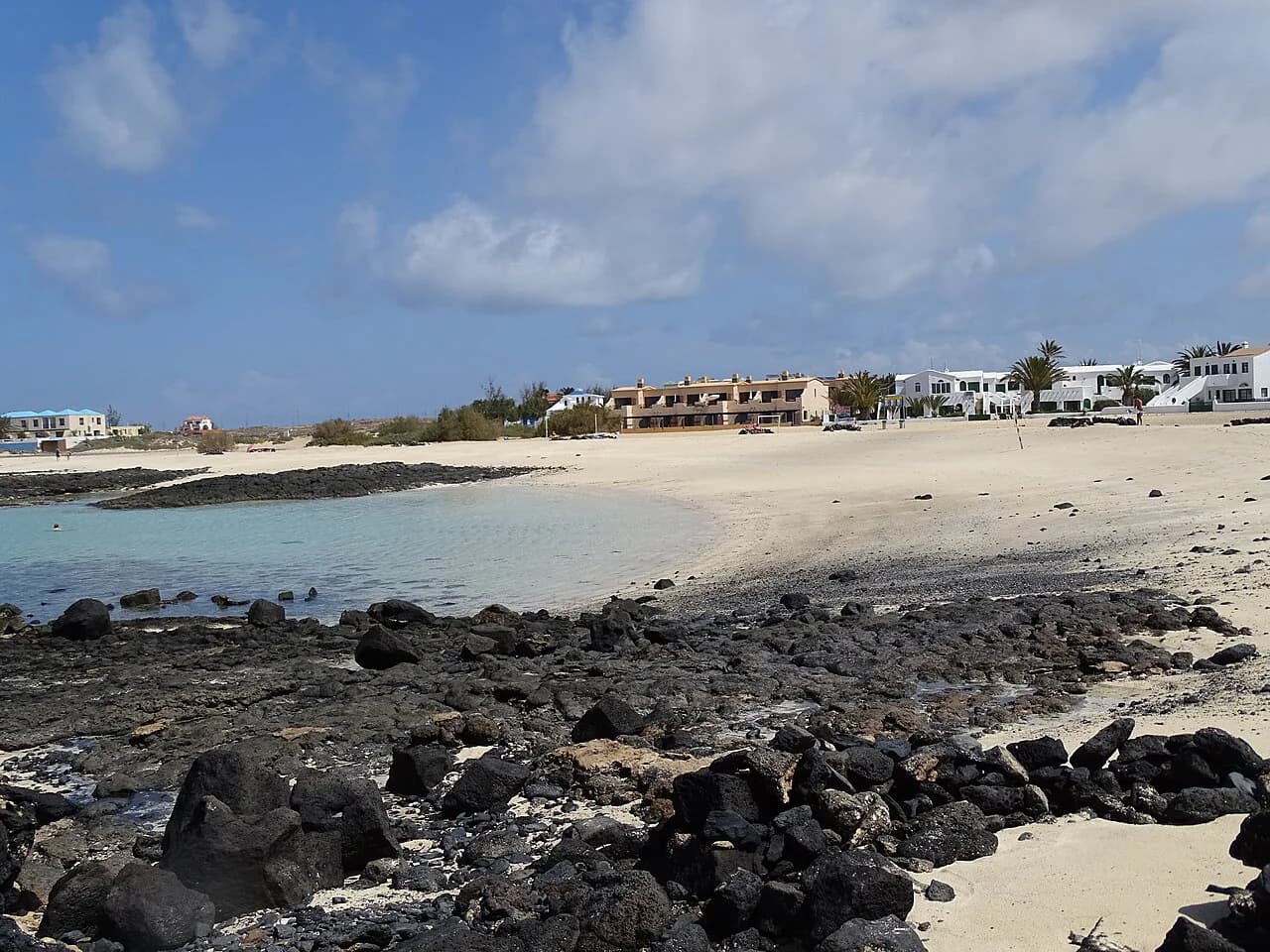
If a calm swim is the priority, the south-east coast offers more sheltered options. Mal Nombre, Playa Esmeralda and the bay at Caleta de Fuste are among the beaches described as more protected from wind and swell, and La Concha at El Cotillo sits behind a natural reef. Build those in as alternatives rather than expecting the dunes to deliver a pool-like sea. If you are weighing a different island for a swimming-focused trip, the Gran Canaria beaches guide covers similar sheltered bays and resort strips.
The wind is part of the experience. It shapes the dunes, keeps the air fresh and draws the wind sports crowd, but it also means sand in your sandwiches and a chill when you are wet. A windbreak, a sarong and a light layer for the trip home make the difference between a good day and a gritty one.
Shelter from the wind: stone zuccos, the southern dunes and Flag Beach
Scattered through the dunes are zuccos, semi-circular stone shelters that give some respite from the wind and a little privacy. They are often occupied by nudists, particularly towards the southern end of the dunes, so treat them as shared space and do not settle into one that is clearly in use. Building your own shelter from loose stone is not appropriate in a protected park.
Flag Beach, in the middle of the strip, is the meeting point for surfers and kitesurfers and one of the busiest areas for parking. Walk a little further along the shore and the crowd thins quickly, even in peak season. The southern dunes are the quietest stretch, with more walking between you and the road.
For a sheltered swim rather than a windswept picnic, head to the south-east coast beaches or El Cotillo's lagoon side. Within the dunes, the areas close to the two hotels offer a little more cover and easier access to facilities. The trade-off is simple: shelter and services at the northern end, space and quiet at the southern end.
Facilities: chiringuitos, toilets and showers, sunbeds and umbrellas
Facilities in the park have changed with concession arrangements in recent years, so plan on bringing your own water and food rather than counting on a bar or rental point. Because facilities in a protected park change with concession arrangements, check what is open on the day before you rely on a particular bar or sun-lounger operator.
The park has very little natural shade, so bring sunscreen, water and a shade layer even if you plan to rent an umbrella. The nearest reliable alternatives for a full set of services are the town beaches of Corralejo and the resort beaches further south. For a broader comparison of what each part of the coast offers, see the beaches of the Corralejo area.
How busy it gets, and where to find space along 10 km of coast
The busy pockets are the car parks near Flag Beach and the northern end by the hotels; the southern dunes stay quiet because they are further from the road. Walking ten or fifteen minutes from the car is the simplest way to lose the crowd.
The beach is made up of several smaller beaches rather than one continuous strip, so the character changes as you move along. The Grandes Playas stretch is backed by the protected dunes of the Dunas de Corralejo Natural Park, and the sand and water stay similar throughout. Pick your stretch by how much walking you want and how close you want to be to a bar.
The Kite Festival and the kite-surfing scene
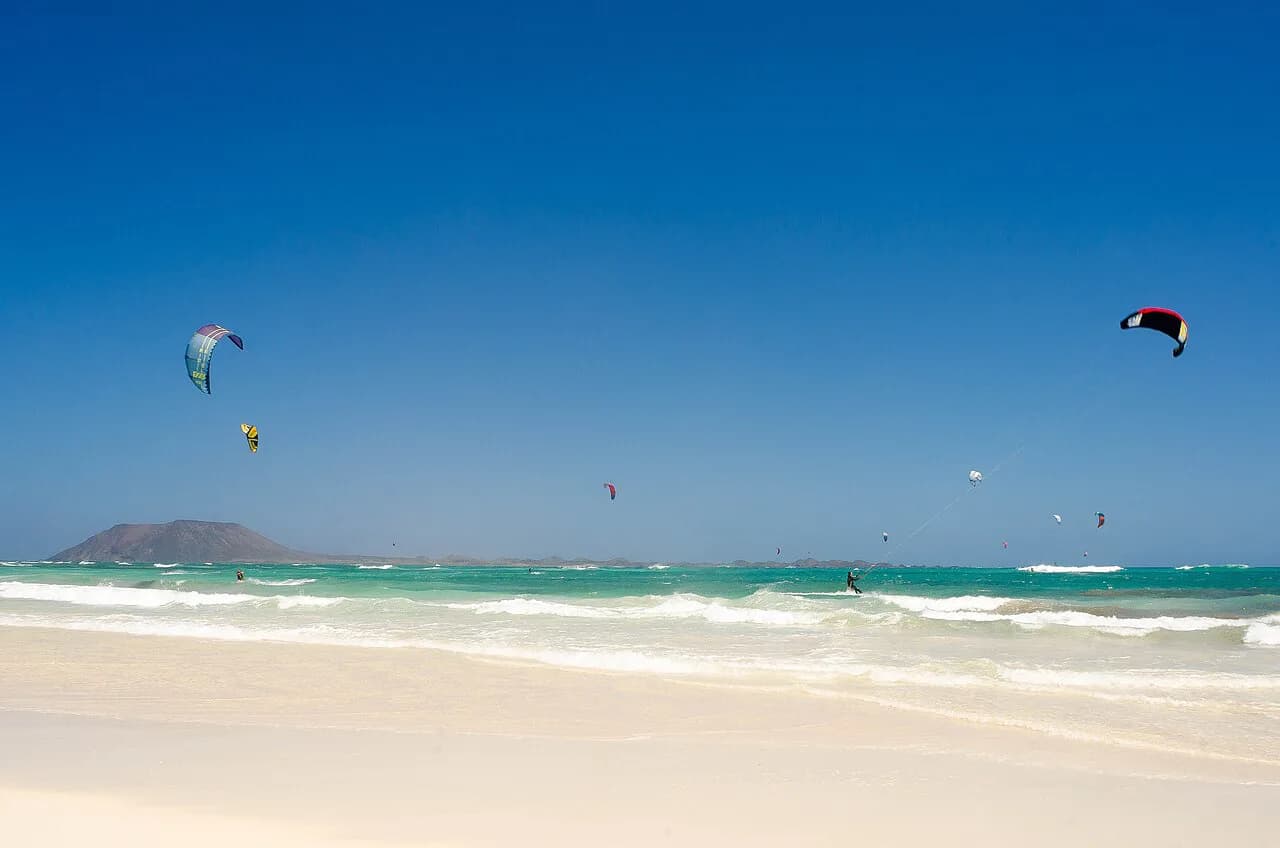
Every November, kite flyers from around the world come to the Corralejo Natural Park for a weekend-long Kite Festival, held since 1987. Giant kites fly over the dunes and the event draws spectators as well as competitors. If you are in the area at the start of November, it is worth planning a beach day around it.
Outside festival time, the wind sports scene centres on Flag Beach and the El Medano area, where surfers, windsurfers and kitesurfers gather. Schools and equipment hire operate in the area, and the steady trade winds make it one of the island's best-known wind sports coasts. Watch from the sand if you are not taking part, and keep clear of lines and launching zones.
Naturist areas in the dunes and how to read the etiquette
Naturism is long established on parts of the dune coast, especially towards the southern end and around the stone zuccos. Spanish law allows public nudity in natural places, and naturists and clothed beach-goers generally share the beach without friction. Choose your spot with awareness of who is already there rather than expecting a signed boundary.
Basic etiquette keeps it comfortable for everyone: give other people space, ask before taking photographs that include anyone, and carry a cover-up for the walk back to the road or a beach bar. Naturist beaches are family spaces, not exhibition grounds. If you are new to it, start at the quieter southern end where there is room to settle in.
Best time to go: months, wind and water temperatures
The island's climate makes the beaches usable year-round, but late spring to early autumn, roughly May to October, brings the warmest air and the most sunshine hours. July and August are the windiest months, which is ideal for water sports and less ideal for a still, sunbathing day. Check a local sea-temperature forecast in the week before you go to decide how much swimming you will want.
Wind is the variable that most affects a dune beach day: a breezy day is glorious for kitesurfing and bracing for a picnic. If you want still conditions, favour the sheltered south-east coast beaches and save the dunes for a day when the wind suits you. The Kite Festival in November is the busiest single period on this coast.
Nearby beaches to combine: El Cotillo lagoons, Lobos Island, town beaches
The lagoon beaches at El Cotillo, on the north-west coast, offer calmer water behind natural rock barriers and are a good contrast to the open dunes. La Concha, with its horseshoe reef, is the family favourite, and Los Charcos near the Tostón lighthouse has shallow turquoise pools over white sand. Both make a sensible second beach day if the wind picks up on the east coast.
A boat trip to Lobos island from Corralejo takes about 15 minutes and lands you on a small island with clear water and a quiet cove. Visitor numbers are limited and a free visitor permit is required, so book ahead through the official island reservation system. It is the closest thing to a desert-island day on this coast.
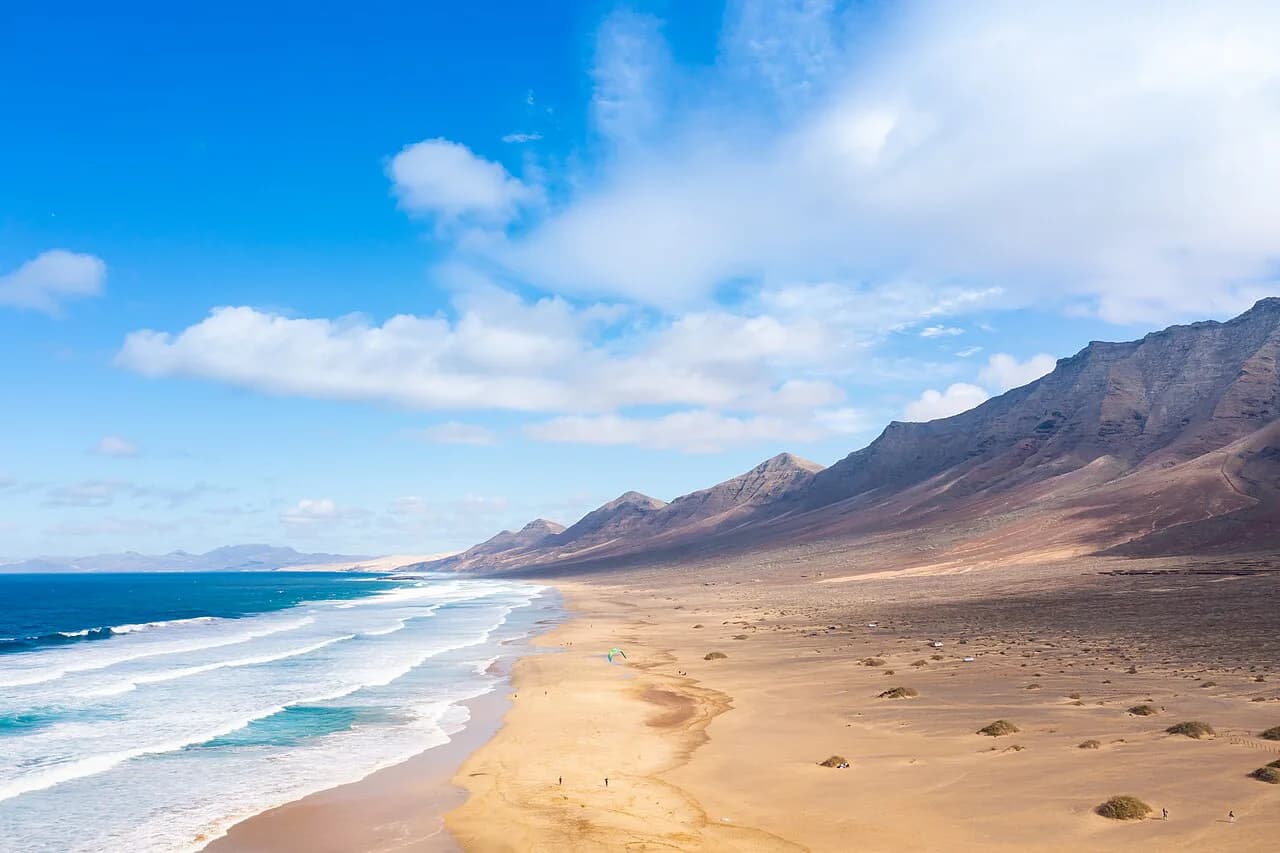
Further south, the long beaches of the Jandía peninsula offer a different scale, from the wind-sports lagoon at Playa de Sotavento de Jandía to the wild, current-heavy sands of Cofete beach, the island's most dramatic stretch. Both are a drive from Corralejo and better suited to a full day out than an afternoon add-on.
Practicalities: what to pack, footwear for Montaña Roja, sun exposure
Pack water, high-factor sunscreen, a hat, a windbreak and something to sit on, because shade is scarce and the wind dehydrates you as much as the sun. Bring footwear with a bit of grip if you plan to climb Montaña Roja, the 314-metre volcano at the southern end of the park, which gives 360-degree views on a clear day. The climb is exposed, so go early or late.
Keep to marked paths in the more remote parts of the park to protect the dune flora and fauna, and carry your rubbish out with you. Card payments are widely accepted on the island, but a little cash is useful for small beach bars. A light layer for the evening breeze and a bag for sandy shoes round off the kit list.
Plan Your Visit
The Grandes Playas de Corralejo reward a little planning: pick your stretch by whether you want wind sports, a quiet walk or easy access to a bar, and decide between bus, taxi and car before you set out. Walk away from the main car parks for space, watch the water carefully, and keep the sheltered south-east beaches in reserve for a calm swim.
Check the Tiadhe bus line 6 timetable and the Lobos island permit system before you travel, and look at sea conditions in the days before your beach day. With the right stretch and the right wind, this is one of the most striking stretches of coast in the Canary Islands.
Frequently Asked Questions
Where are the Grandes Playas in Corralejo?
They run south from Corralejo town along the coast of the Corralejo Natural Park, a ten-kilometre chain of pale sand beaches backed by dunes and reached by the FV-1 road. The northern end near the hotels is the most developed; the southern dunes are the quietest.
Can you reach the Corralejo dunes by bus from the town?
Yes. Local bus line 6 serves the dunes from Corralejo and stops near the beach areas. Timetables are published by the island operator Tiadhe, so check the current schedule before relying on a particular departure.
Is it safe to swim at the Grandes Playas de Corralejo?
The dune coast is exposed to the Atlantic, with strong currents and rip tides along parts of it and a small ratio of lifeguards to beach-goers. Watch for flags and local advice, and consider the more sheltered south-east coast beaches for a calm swim.
Are there sunbeds and beach bars on the Corralejo dunes beaches?
Chiringuitos, toilets and showers are dotted along the beaches, and a few areas offer sun loungers and umbrellas for hire. Facilities in a protected park change with concession arrangements, so check what is open on the day.
Which part of the Corralejo dunes is best for wind shelter?
The stone zuccos, semi-circular shelters scattered through the dunes, give some respite from the wind, and the areas near the two hotels offer a little more cover. The southern dunes are quieter but more exposed.
When is the Corralejo kite festival held?
The Kite Festival has been held every November since 1987, as a weekend-long event in the Corralejo Natural Park. Giant kites fly over the dunes and spectators are welcome; check the organiser's programme for the current year's details.
What is there to see in the Corralejo dunes besides the beach?
The park covers around 24 square kilometres of shifting dunes and volcanic ground, with birdlife including the Houbara bustard. Montaña Roja, the 314-metre volcano at the southern end, gives 360-degree views on a clear day, and the island of Lobos lies just offshore.
Sources
Beach notes for your next trip
Optional updates when we add or revise beach guides.
You might also like

Continue reading
More guides you'll find useful