Almería Beaches: The Best Sands in Cabo de Gata and Beyond
Plan an Almería beach day with our guide to Cabo de Gata's best sands, from Los Muertos to Los Genoveses, plus access, facilities and when to go.
On this page
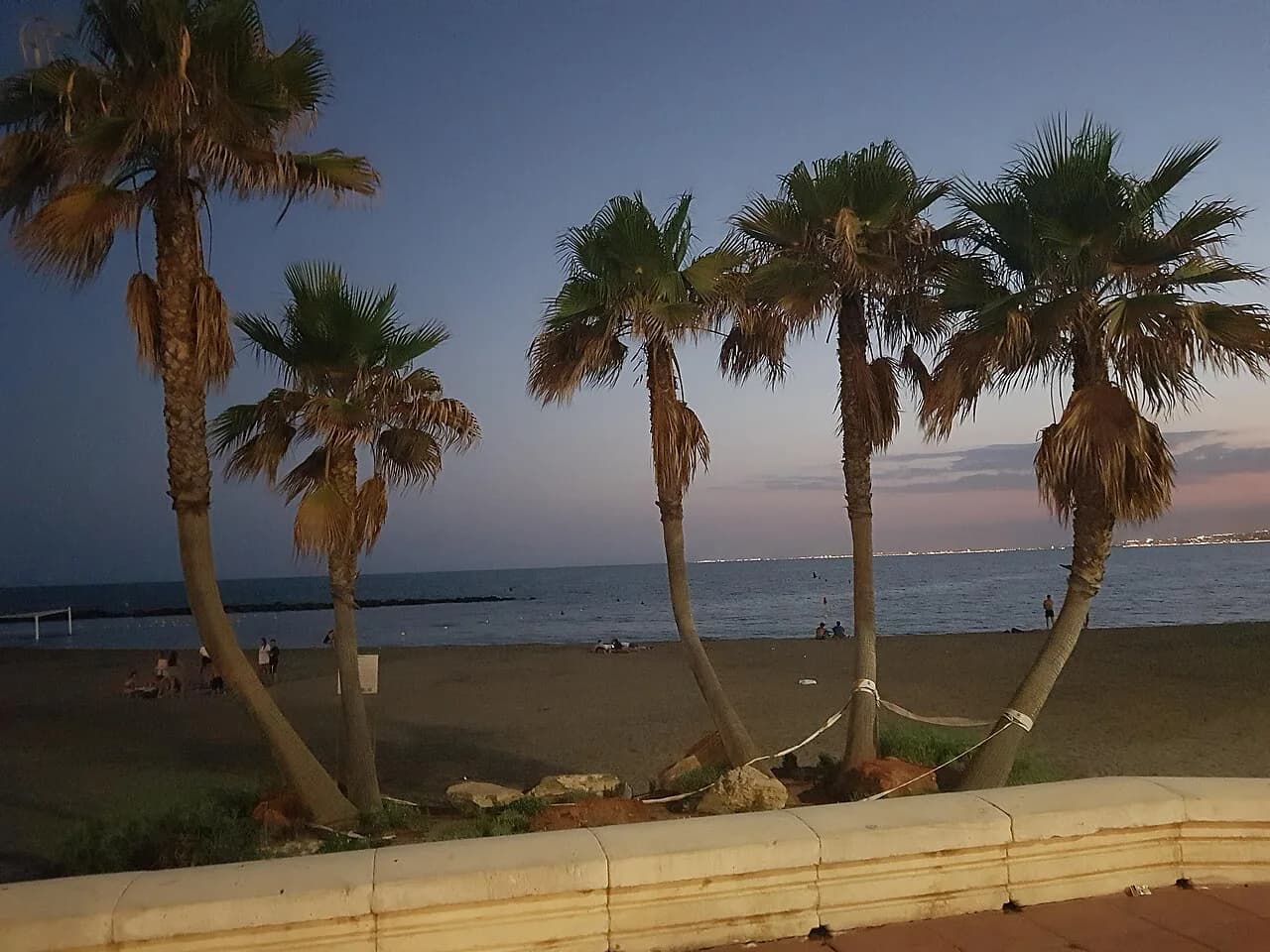
Almería rewards travellers who plan a beach day around a single stretch of coast rather than hoping to tick off several. The province's standout sands sit inside the Cabo de Gata-Níjar Natural Park, an area of volcanic headlands, fossil dunes and long wild bays roughly half an hour to forty minutes from Almería city, while the resorts towards Roquetas de Mar and Mojácar offer shallow water and full facilities.
The practical divide is facilities. Virgin beaches such as Los Muertos, Las Salinas and Corralete have no beach services, so you carry in water, food and shade, whereas San José is an urban beach with toilets, showers, sunbeds and lifeguards. Choose accordingly: families with small children generally do better on serviced sand, while snorkellers and quiet-seekers head for the rocky, unserviced coves.
Distances are short but the road is winding, and summer parking at the popular bays fills early. A car gives you the freedom to move between beaches and to reach the remote stretches of the park, while buses from Almería bus station reach the villages but leave you tied to a timetable.
How the coast divides: natural park versus urban resorts
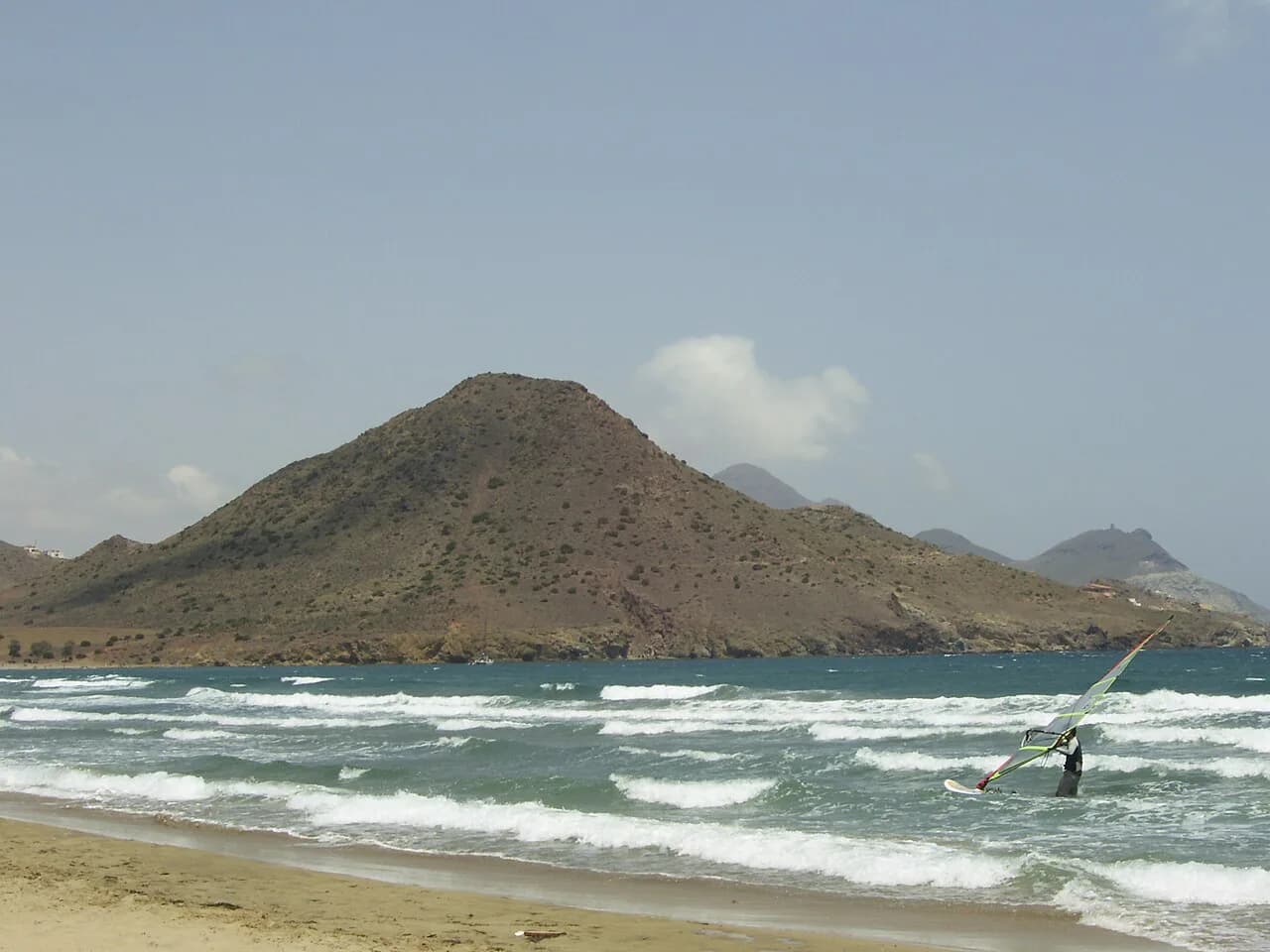
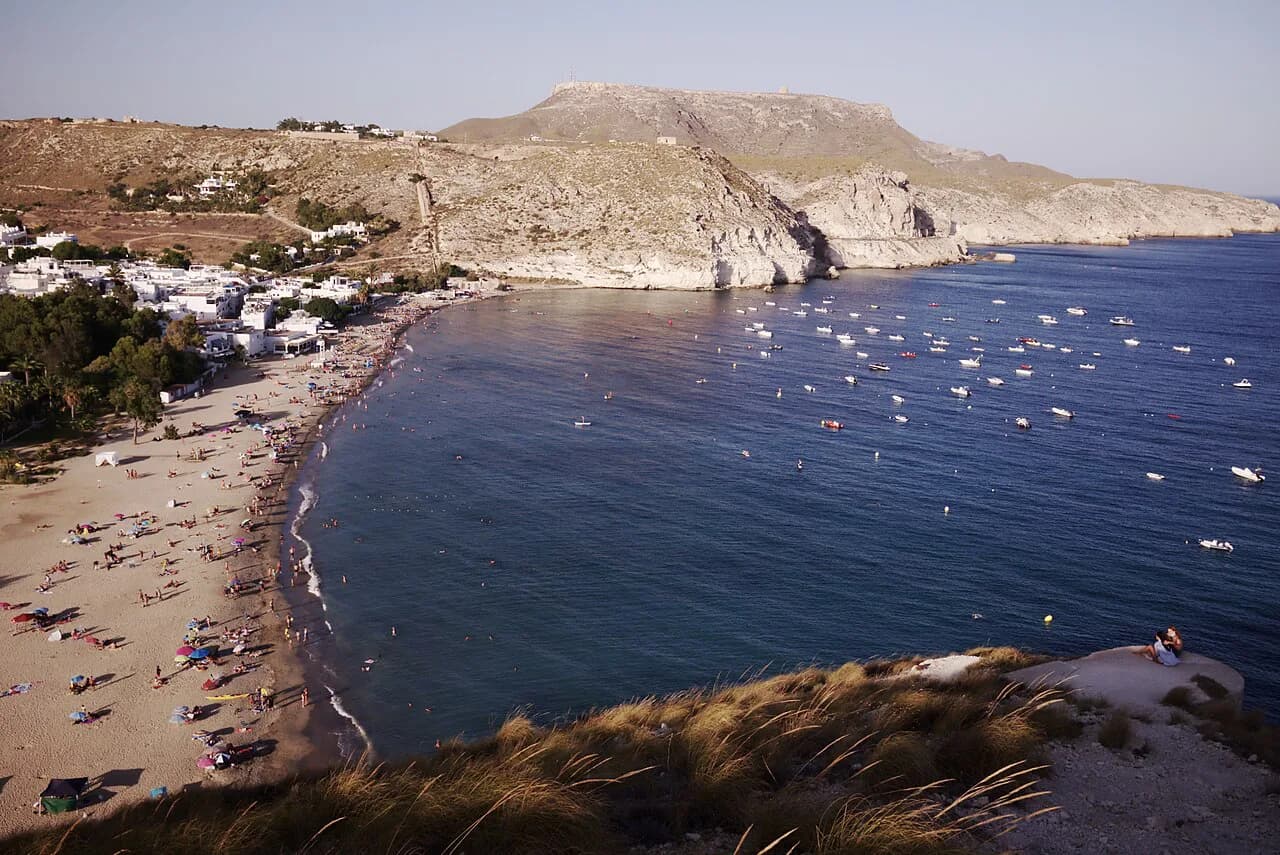
Cabo de Gata-Níjar Natural Park protects a stretch of southeastern Andalusia known for volcanic rock formations, wildlife and a landscape unlike the rest of Spain. Its beaches fall into two groups: long open bays such as Los Genoveses and Las Salinas, and small rocky coves such as Cala de las Sirenas and Corralete.
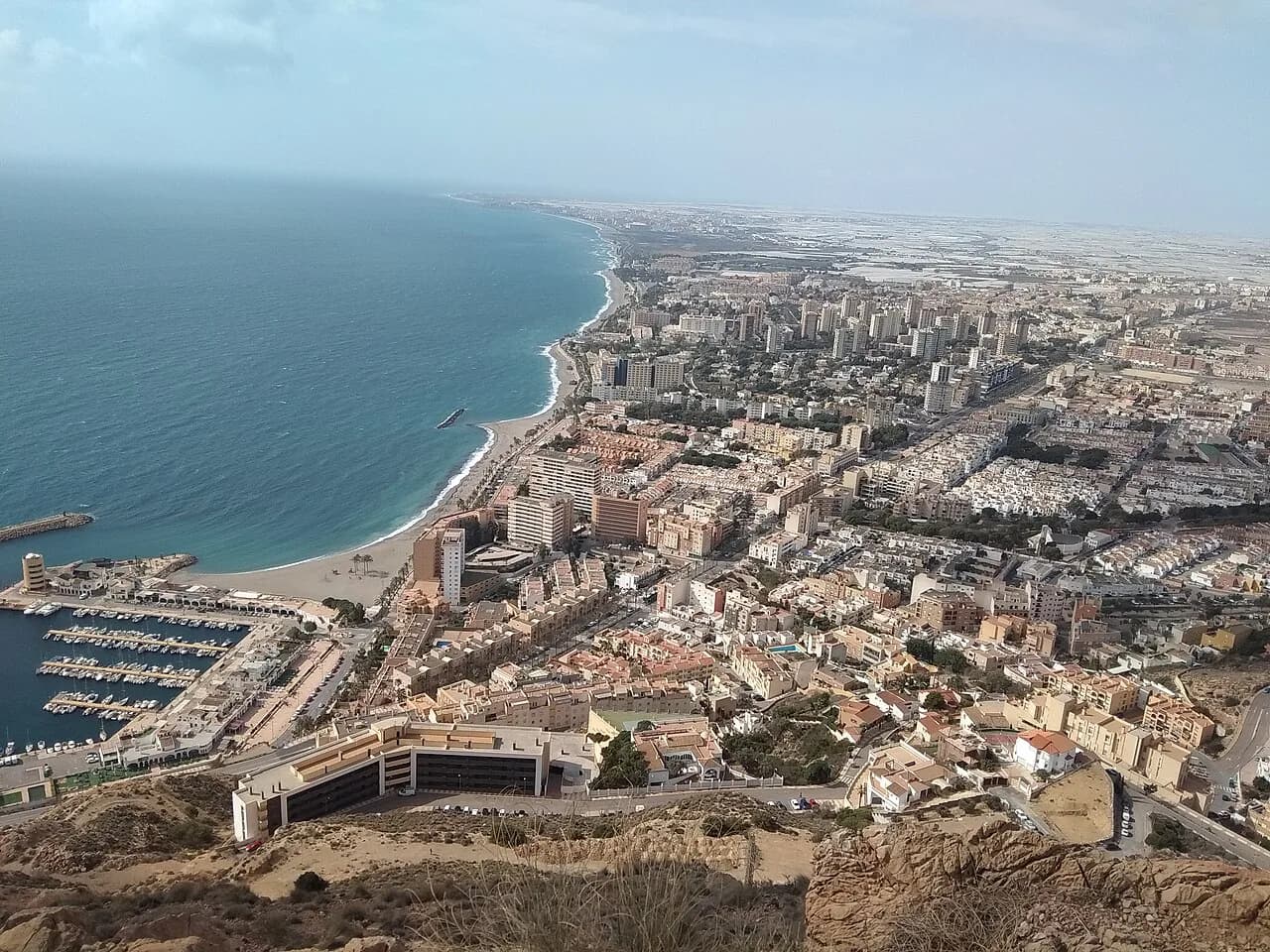
Outside the park, the Costa de Almería runs through resort towns with wide, shallow beaches and a full complement of services. Aguadulce is the clearest example, a lively resort beach with shallow water and a broad range of facilities that suits families, while Cala Cristal near the park offers a smaller, quieter alternative.
Weather shapes the season here. Almería has a Mediterranean climate with long, hot summers and mild winters, with summer temperatures reaching around 30°C and winter averages of around 15°C, so beach days stretch well beyond July and August.
Playa de los Muertos: the long swim and the two paths down
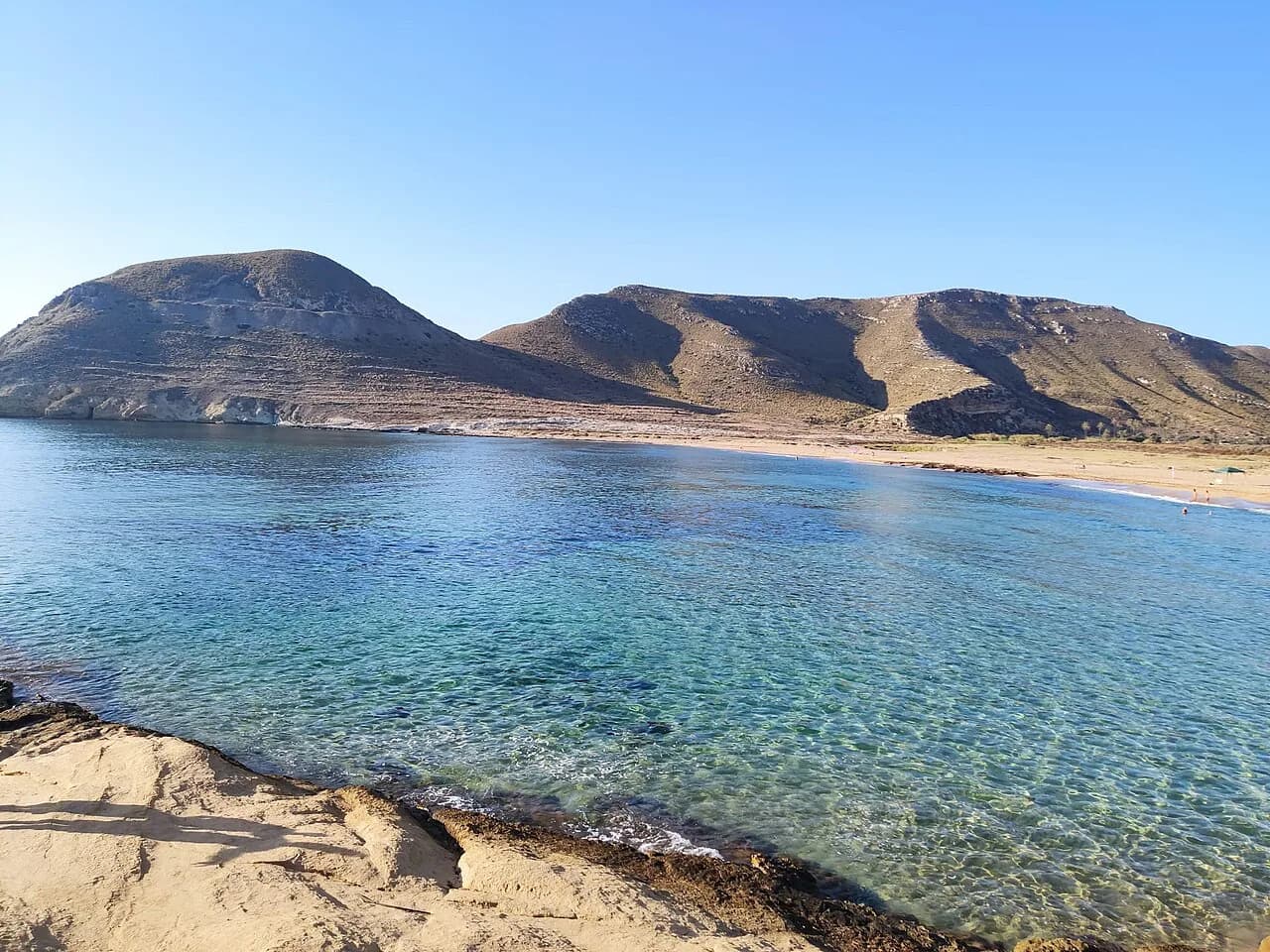
Playa de los Muertos, the Beach of the Dead, lies close to the village of Carboneras and runs for more than a kilometre of golden sand. The water is clear enough to see the bottom, which makes the beach a favourite for snorkelling and for swimmers who like a long, unobstructed line of coast.
Access is the trade-off. Two paths lead down: the first is easier but longer, the second shorter but steeper, and neither is comfortable for small children or people with limited mobility. There are no beach facilities, so bring water, snacks, food and a parasol, and expect the beach to fill in summer.
If you are based in San José, plan Los Muertos as a half-day outing rather than a quick dip, since the drive eats into beach time. Its cliff-backed setting and clear water make it the one beach in the park most people put at the top of their list.
Playa de los Genoveses: the wide bay near San José
Los Genoveses sits about ten minutes from San José, a broad bay of fine golden sand and clear water framed by low headlands and dunes. The combination has made it a regular filming location, and its scale means you can usually walk away from the busiest section near the access path.
Nudism is common here, though it is not an officially designated nudist beach, so expect to share the sand with people using the bay in that way. The bay is unserviced, and the walk in from where you leave the car forms a natural filter on crowds.
Nearby, Playa Monsul, framed by volcanic rock and the striking formation known as La Peineta, is the park's most famous beach and appeared in Indiana Jones and the Last Crusade. Combining Genoveses and Monsul in one trip makes sense because both sit close to San José.
Playa de San José: the urban beach with full facilities
San José is the park's main resort town, with holiday houses, restaurants and bars, and its beach is the one place in Cabo de Gata where everything sits within a short walk of the sand. Toilets, showers, lifeguards and sunbeds are all part of the offer, which makes it the obvious choice for families with young children or anyone staying without a car.
The payoff is atmosphere: in summer the beach can be lively and busy, with locals, expats and international visitors sharing the sand, and it is not the place to come for solitude in July or August. Out of season the same beach feels very different, and it works well as a base for exploring the rest of the park.
Kayak tours run from the town, giving a different view of the headlands and coves that line this stretch of coast. Staying here also puts you close to Los Genoveses and Monsul for short excursions.
La Isleta del Moro: whitewashed village, rocky shore, snorkelling
La Isleta del Moro is a small whitewashed fishing village near Los Escullos, with clear water and a backdrop that combines sea and mountain. The beach itself is compact and popular for snorkelling, which means it can feel crowded in high summer.
The shore is rocky, so sturdy water shoes make the difference between a comfortable entry and a stubbed toe. Coming outside the peak season gives you the tranquillity the village is known for, and the harbour setting makes it a natural lunch stop between beaches.
Playa de las Salinas: sand, the Almadraba church and birdwatching
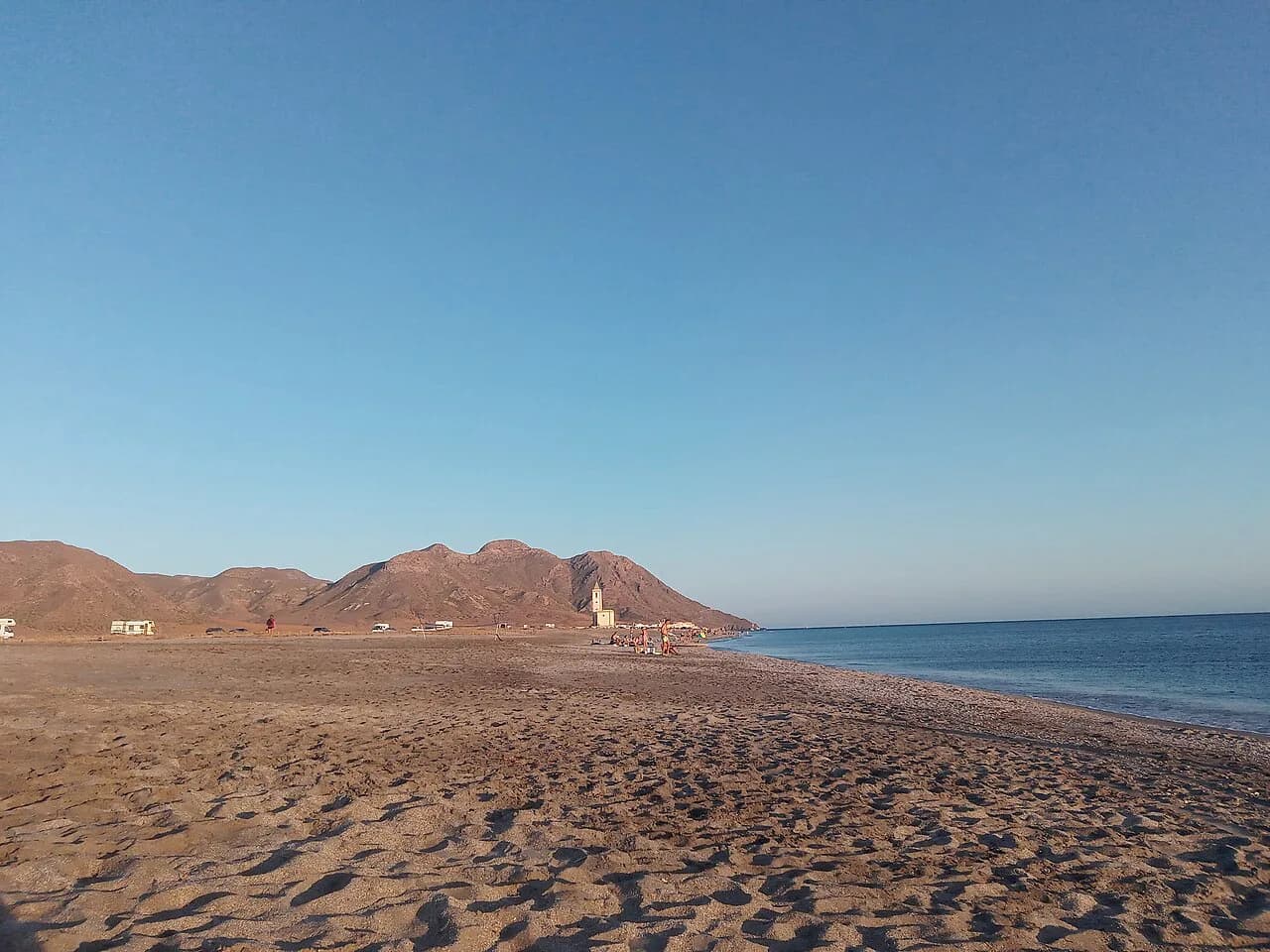
Las Salinas is a long, narrow beach of golden sand, with plenty of space to park beside it except at weekends when most visitors arrive. It is a virgin beach without facilities, so pack snacks and water, and accept that you will be carrying everything you need.
The surroundings are the real draw. The Iglesia de la Almadraba, also known as the Iglesia de las Salinas, stands nearby, and this part of the park is known for birdwatching, with flamingos among the species seen in the salt flats.
Playa del Corralete by the Cabo de Gata lighthouse: sea urchins and water shoes
On the right-hand side of the Cabo de Gata lighthouse lies Playa del Corralete, a 400-metre virgin beach of sand and rock. There are no facilities, so this is a beach for a self-sufficient half-day rather than a resort stop.
Sea urchins are present in some areas of this beach, so water shoes are worth packing if you plan to swim. Pair the visit with the viewpoint at Arrecife de las Sirenas, where former volcanic chimneys rise from the water in dark pinnacles.
Cala de las Sirenas itself is very small and better suited to snorkelling or kayaking than to a long day on the sand. The view from the nearby viewpoint, with rock formations and water shifting between turquoise, blue and green, is the reason most people come.
Playa Los Escullos: fossil dunes and San Felipe Castle
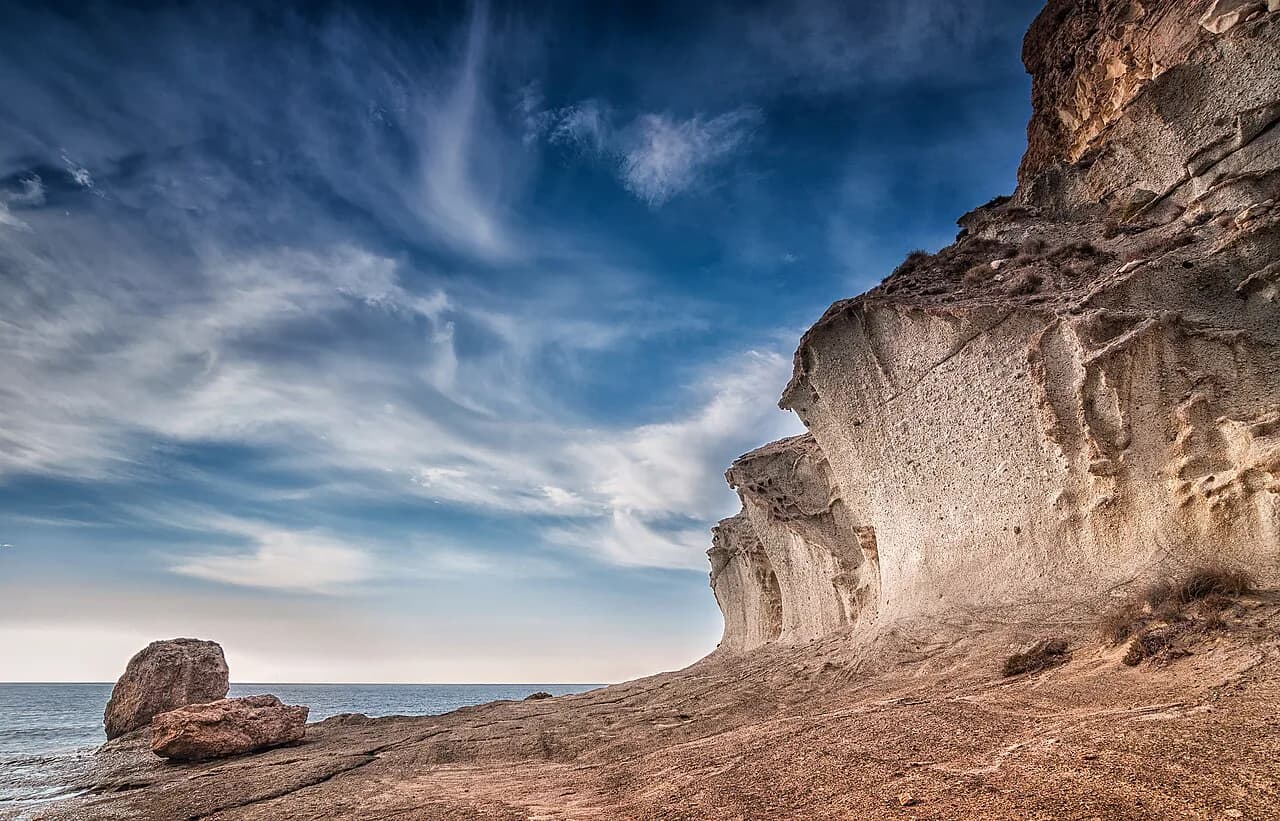
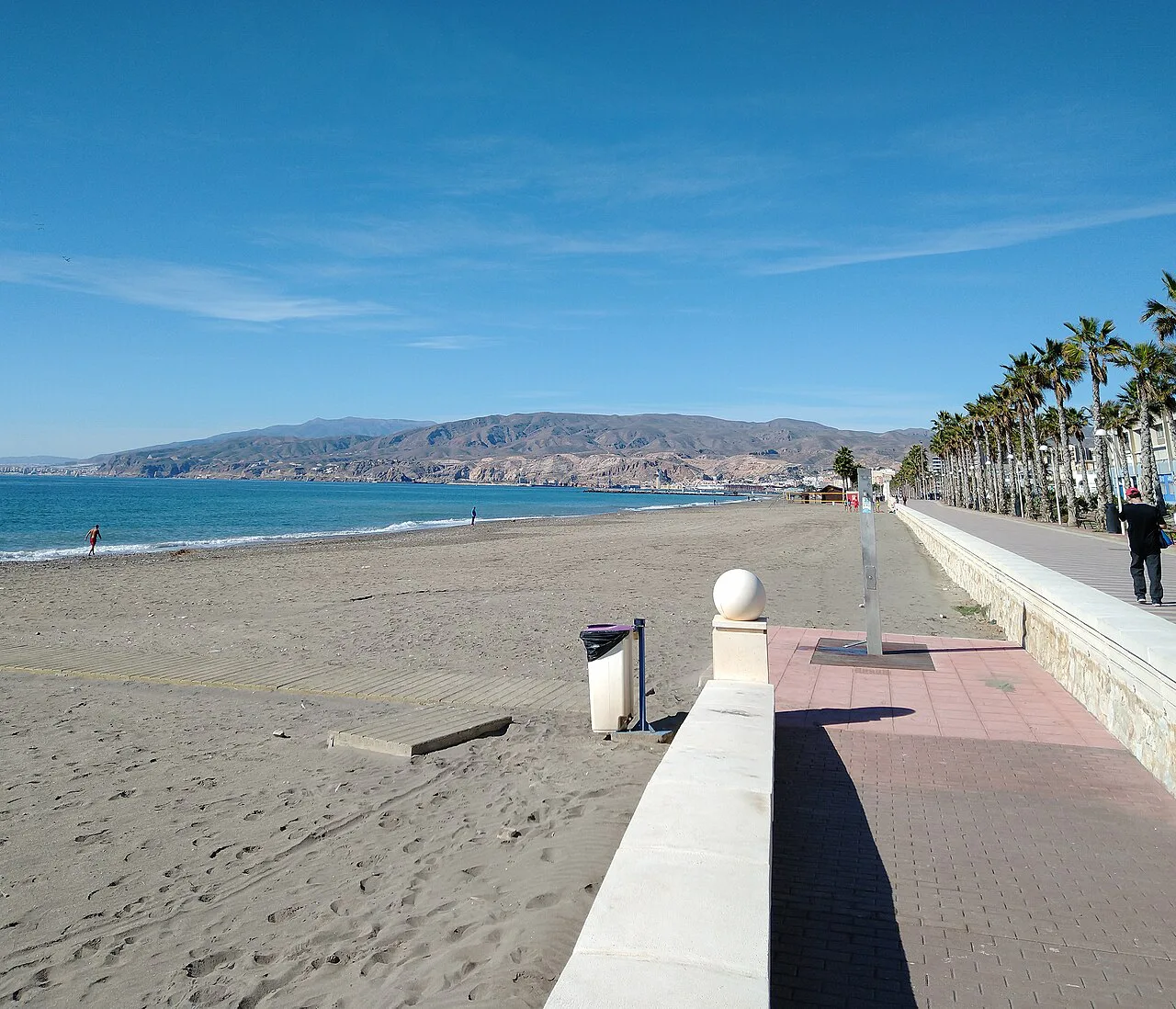
Los Escullos combines fine golden sand with fossil dunes you can walk across for views along the coast. The rock and sand formations are the reason this beach stands out from the long flat bays nearby.
On one side of the beach stands San Felipe Castle, built in the eighteenth century to defend the Almería coast against pirate attacks. It is a natural add-on to a beach day and pairs well with a stop at La Isleta del Moro, a short drive away.
Cala de Enmedio near Agua Amarga: the walk-in cove
Cala de Enmedio is reached on foot, about an hour and a half from the village of Agua Amarga, and rewards the walk with turquoise and emerald water, pale sand and volcanic rock formations. The effort required keeps numbers down compared with the drive-up beaches in the park.
Because there is no vehicle access, treat it as a proper outing: carry water, food and sun protection, and wear footwear suitable for a rough coastal path. Agua Amarga itself makes a good base for the walk, and the beach at Playa de los Muertos lies within reach for a second day.
Playa de Aguadulce: shallow water and family facilities
Aguadulce, in the Roqueta de Mar area, is a wide resort beach with shallow water and a broad range of services, aimed squarely at families. The town is lively, with bars and clubs drawing crowds late into the night, so it suits travellers who want company rather than seclusion.
For a quieter alternative on the same stretch of coast, look at the smaller beaches towards Almería city, or head into the natural park where the bays are longer and the services thinner.
Playa Castillo de Macenas near Mojácar: grey rock and the eighteenth-century tower
Playa Castillo de Macenas combines grey rock and pale sand with the Macenas Castle, a defence tower dating from the eighteenth century. The neighbouring town of Mojácar, with its white houses below the Sierra de Cabrera, makes a natural add-on to a beach day here.
This stretch of coast sits well east of Cabo de Gata, so it works best as part of a Mojácar-based itinerary rather than a day trip from San José. If you are touring the province, the Mojacar beaches give you a different landscape from the volcanic park.
Cala Cristal: the small, quiet alternative
Cala Cristal is a small, quiet beach with transparent water and fine sand, and it is not usually busy. That makes it a good choice for travellers who want a natural setting without the walk-in effort of Cala de Enmedio.
Getting around: car, bus from Almería and guided day trips
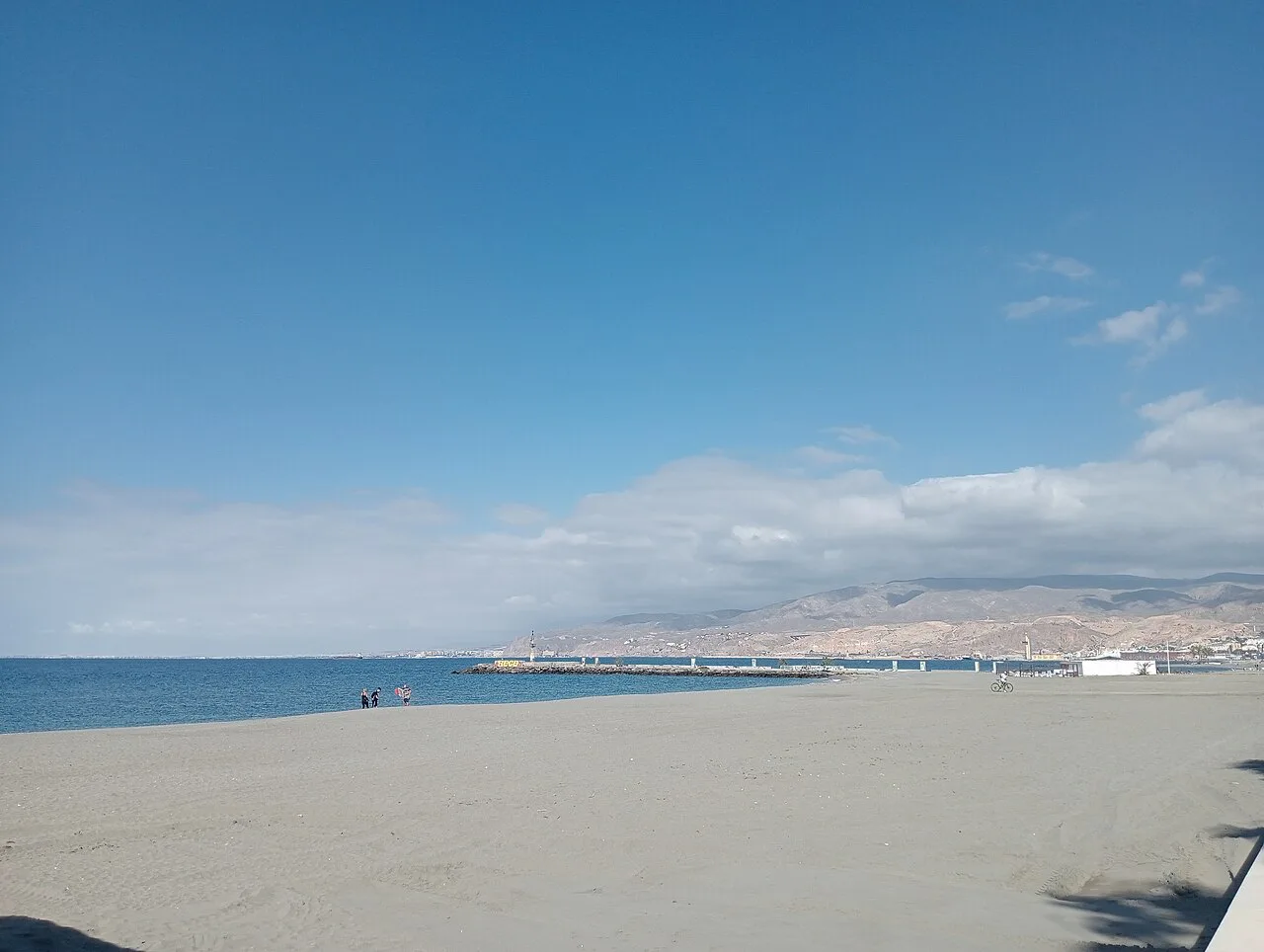
A car is the most practical way to reach the park's beaches, giving you freedom to move between bays and reach remote stretches. The trade-off is narrow, winding roads and summer parking pressure, so an experienced driver helps.
Without a car, buses leave Almería bus station for the villages inside the park, which works for a single base but not for hopping between beaches. Guided day trips from Almería cover the main highlights in one go, though time at each stop is limited.
Facilities, lifeguards and Blue Flag status
Facilities vary sharply between beaches. San José has toilets, showers, lifeguards and sunbeds, while Los Muertos, Las Salinas and Corralete are virgin beaches without services, so you carry in everything you need.
Lifeguards are stationed at many of the popular beaches along the Almería coast, but coverage is not universal, and it pays to read safety signage and follow instructions where it is posted.
When to go: sea temperatures, peak months and weekend crowds
Summer, from June to September, brings long sunny days and the warmest sea, and it is also the busiest period. Spring and autumn offer pleasant weather with thinner crowds, while winter remains mild enough for coastal walks and beachfront meals.
Weekends are noticeably busier at Las Salinas, when most visitors arrive and the parking beside the beach fills. If you want the quiet version of the park, aim for midweek outside July and August.
Nearby beaches to combine in a single day
San José makes the best hub for combining beaches: Los Genoveses and Monsul are a short drive away, and the town beach gives you a serviced fallback if the wind picks up. From La Isleta del Moro you can add Los Escullos and its castle without much extra driving.
Further east, Agua Amarga is the starting point for the walk to Cala de Enmedio, and the beaches around Mojácar suit a separate day. Two more options often mentioned are Cala de San Pedro, the only beach where camping overnight is permitted, and Monsul.
Who each beach suits: families, snorkellers and quiet-seekers
Families with small children should start with San José or Aguadulce, where shallow water, toilets and lifeguards reduce the logistics of a beach day. Snorkellers do better at La Isleta del Moro, Los Muertos and Corralete, where rocky entries and clear water reward water shoes and a mask.
Quiet-seekers should trade facilities for space: Las Salinas, Cala Cristal and the walk-in Cala de Enmedio offer calm over convenience. Wherever you go, carry water and shade on the virgin beaches, and treat sea urchins and rocky entries as part of the swim.
Plan Your Almería Beach Day
Match the beach to your transport and your group before you set out. With a car, base yourself in San José and work through Genoveses, Monsul and Los Escullos, then take the winding road north for the walk to Cala de Enmedio. Without one, pick a single village and use the buses from Almería bus station. The same decision shapes a day on Alcudia beaches, where a car unlocks the wilder coves beyond Port d'Alcúdia.
Pack for the specific beach: water shoes for La Isleta del Moro and Corralete, water and a parasol for the virgin sands, and a towel for the showers at San José. Check with the park's tourist office for current access arrangements before setting out.
Explore more Almería beaches
Frequently Asked Questions
Is Almería a nice part of Spain for a beach holiday?
Yes. Almería combines the protected coves and long bays of Cabo de Gata-Níjar Natural Park with resort beaches such as Aguadulce that have shallow water and full facilities. The climate is Mediterranean, with hot summers and mild winters, so the beach season runs well beyond high summer.
Which Almería beach has the clearest water?
Los Muertos is repeatedly singled out for water clear enough to see the seabed, which is why it draws snorkellers. La Isleta del Moro and Corralete also have clear water over rocky ground, and both reward water shoes.
Which Almería beaches suit families with young children?
San José is the most practical choice inside the park, with toilets, showers, sunbeds and lifeguards on an urban beach. Aguadulce, further along the Costa de Almería, offers wide sand and shallow water with a broad range of services.
Do you need a car to reach the beaches in Cabo de Gata?
A car gives you the most freedom, since you can move between bays and reach remote stretches of the park. Buses from Almería bus station serve the villages, and guided day trips from Almería cover the highlights, but both limit how many beaches you can visit in a day.
When is the sea warm enough to swim in Almería?
Summer, from June to September, brings the warmest sea and the longest sunny days. Spring and autumn are quieter and still pleasant, and winter stays mild enough for coastal walks. Sea temperatures vary year to year, so check a local forecast before planning a long swim.
Sources
Beach notes for your next trip
Optional updates when we add or revise beach guides.
You might also like
Continue reading
More guides you'll find useful