Mónsul Beach, Almería: Plan Your Visit and Swim Season
Plan a day at Mónsul beach in Cabo de Gata: the forest track from San José, parking and shuttle bus, fine sand, lava rock and the best months to swim.
On this page
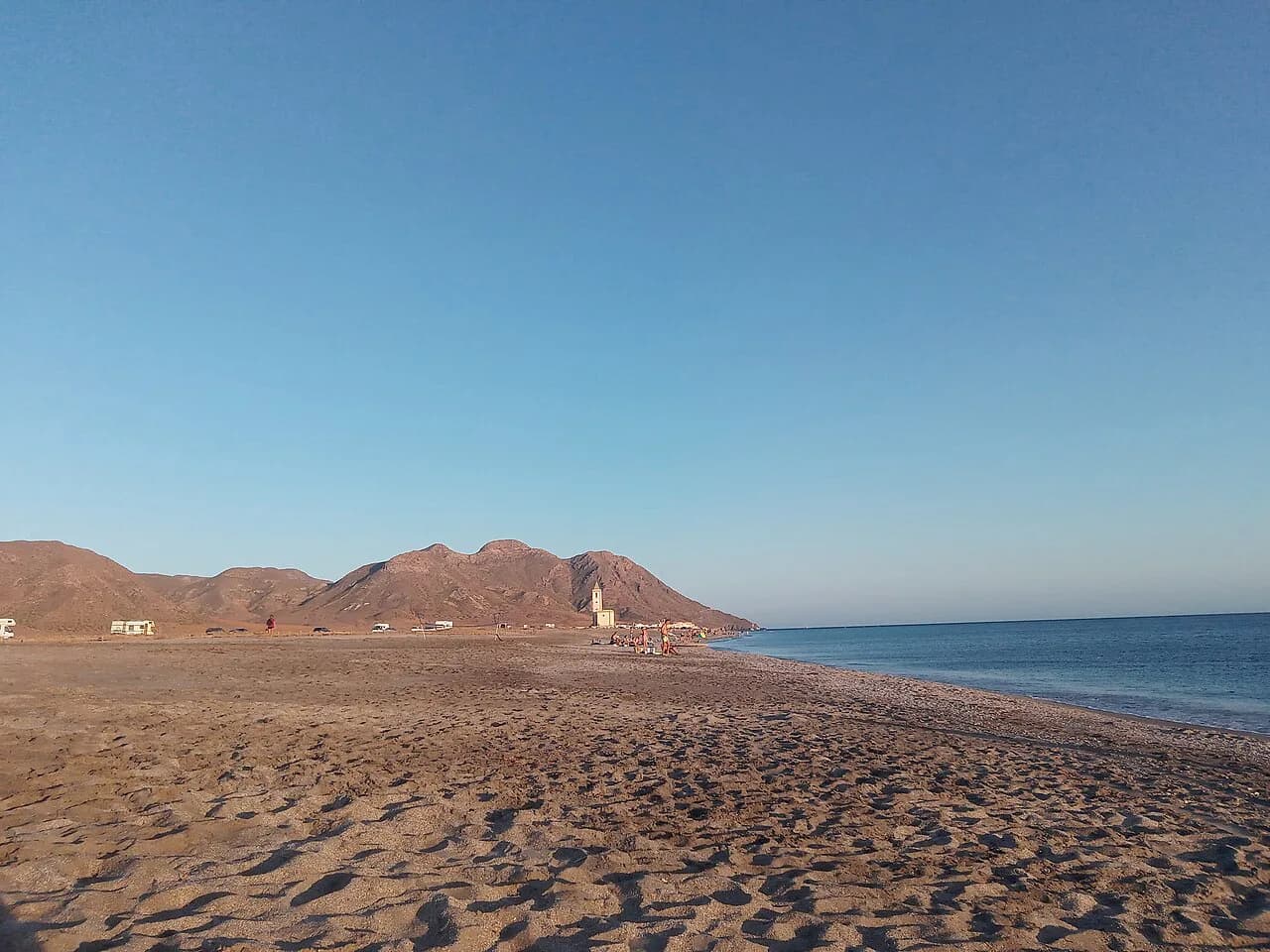
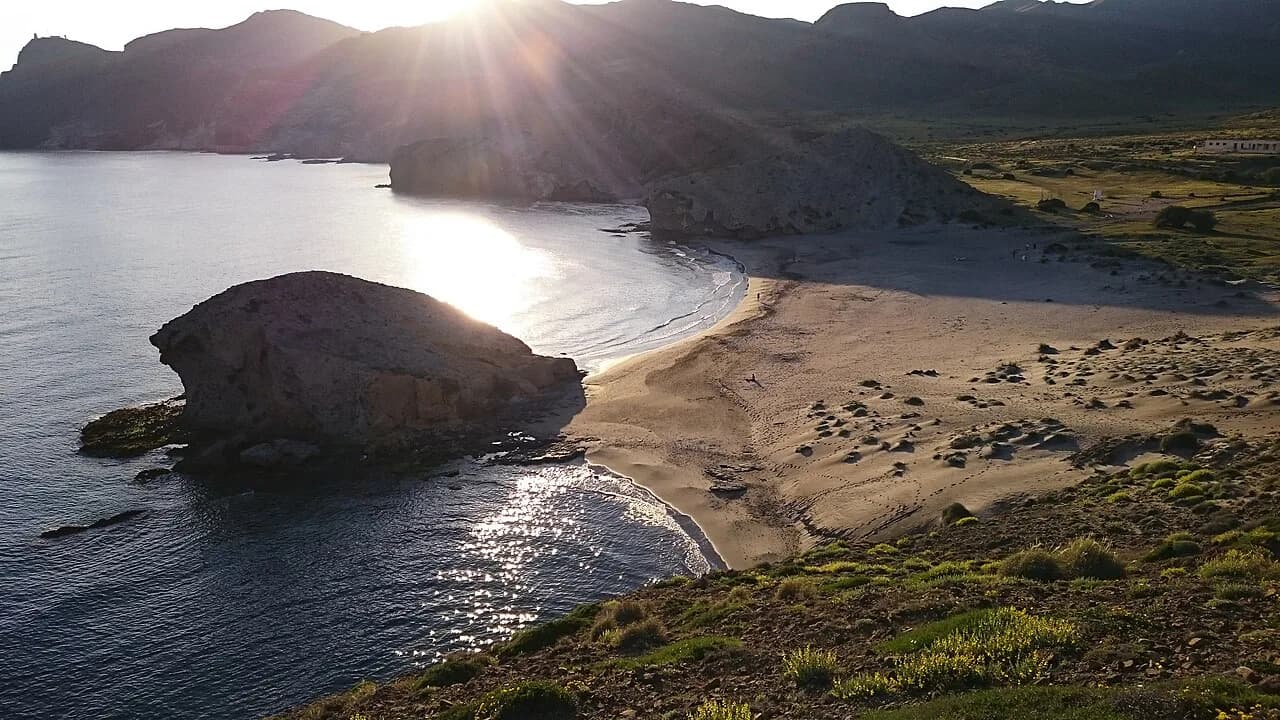
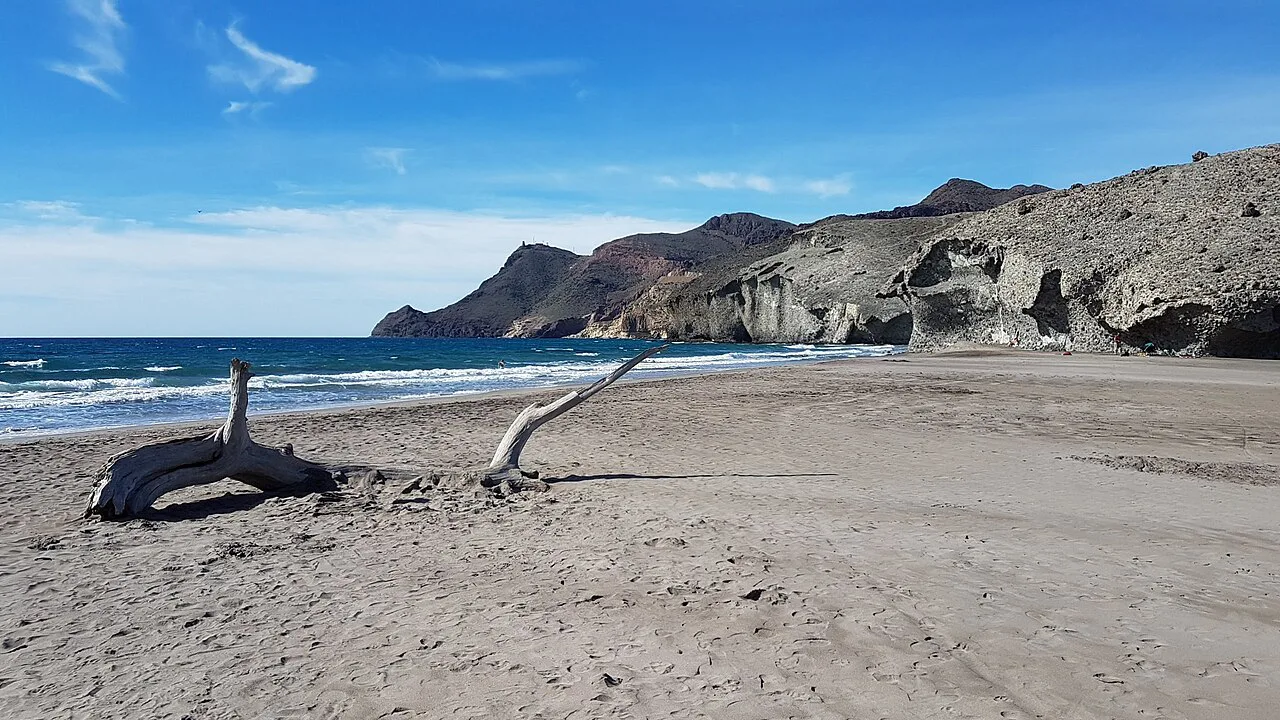
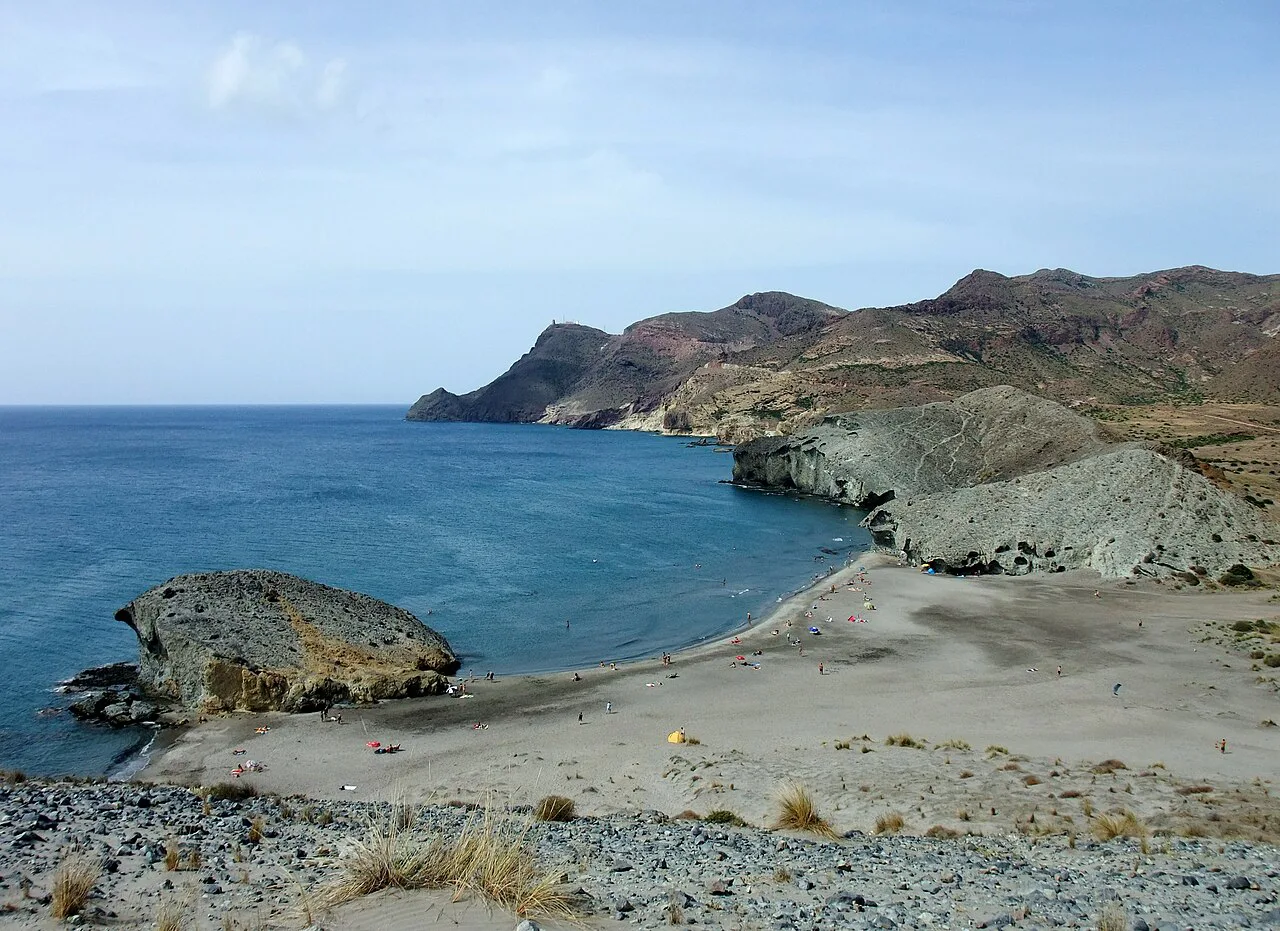
Mónsul is the beach people picture when they picture Cabo de Gata: a sweep of fine sand backed by dark volcanic hills, with huge tongues of lava pushing into the sea and a single boulder standing alone in the middle of the beach. It suits swimmers and photographers more than toddlers, and anyone willing to walk a little beyond the main sand.
The beach lies in the Cabo de Gata-Níjar Natural Park, a short drive or forest-track ride from the village of San José, itself roughly half an hour from Almería city. Because the approach runs through protected land, how you arrive matters as much as when you arrive: the summer parking is small and carries a charge, and the shuttle bus is the simpler option for most day-trippers.
Where Mónsul sits in the natural park
Mónsul sits within the Cabo de Gata-Níjar Natural Park, on the Mediterranean coast southwest of San José in the province of Almería. The surrounding hills are volcanic in origin, and the beach is where eroded lava reached the sea and was carved back into sand and rock.
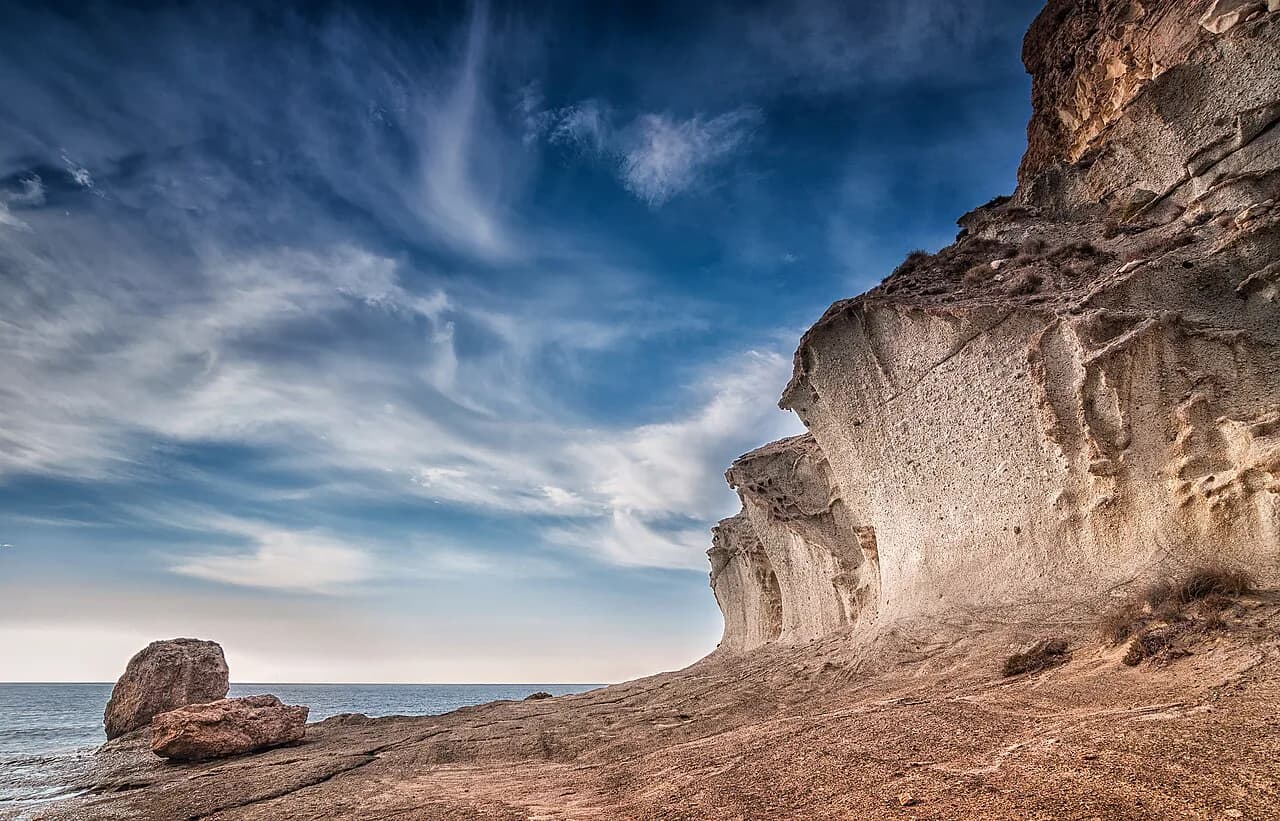
That geology is the whole appeal. The rock formations are not decorative cliffs in the distance but black lava tongues you can see up close, framing a beach that has appeared in films and commercials, including Indiana Jones and the Last Crusade.
Getting there from San José
The classic approach is a four-kilometre forest track from San José, which can be driven or covered by public transport. The parking area sits about 200 metres from the sand, so even a car-based visit ends with a short walk.
Walking or cycling the track is the low-stress option in high season, when car access is constrained by the size of the car park rather than by distance. Bring water for the track regardless of your mode of transport, because the walk-in is exposed and there is nothing to buy at the end of it.
Parking and the summer shuttle bus
In summer, parking near Mónsul costs 4 euros and spaces are very limited, so arriving early is the practical decision rather than a vague suggestion. Outside that paid summer arrangement, the same small car park is the constraint on how many cars reach the beach at all.
The shuttle bus from San José is the better choice for most visitors: it serves Mónsul along with Genoveses and Barronal, so one ticket and one departure point cover a multi-beach day. Frequencies and seasonal operating dates change, so confirm times with the San José tourist office before you set out.
The sand and the water
The beach is fine sand with clear water, framed by eroded lava rock rather than cliffs of soft stone. The water deepens away from the shoreline in the usual Mediterranean pattern, so families with small children tend to settle at the shallower edges while stronger swimmers head out towards the rock.
The big boulder in the centre of the beach acts as both landmark and shade: it is a refuge for swimmers on the hottest days, and it is also where people cluster at midday. If you want space, spread towards the ends of the beach rather than planting yourself beside the rock.
Shelter on windy days
Mónsul's exposure is part of its character: the same wind and water that carved the lava shaped an open beach with rock at either side. On a breezy day, the rock formations at the edges give more shelter than the open centre, and the boulder offers a windbreak as well as shade.
Treat the sea as open Mediterranean water and read the conditions on the day. Flags, currents and any jellyfish advisories are posted locally, and the practical move is to swim where others are swimming and to keep an eye on children near the rocks.
Facilities: come prepared
Mónsul is a pristine natural-park beach with no vendors, so you will not find anywhere to buy drinks on the sand. Carry in water, food and shade, and carry everything out again; this is the single most useful planning decision for a day here.
Assume you are self-sufficient for shade, seating and children's kit: a beach umbrella, mats and a cool bag do more for a Mónsul day than any on-site amenity. A windbreak earns its place on exposed afternoons, and reef-safe sun cream matters on sand that reflects a lot of light.
How busy it gets
Mónsul is the most famous beach in the reserve and draws accordingly, with the central boulder area busiest around midday in summer. The paid, limited summer parking and the shuttle bus both cap how many people arrive, which keeps the atmosphere calmer than its reputation might suggest.
Mónsul and Genoveses are the natural pairing from one San José base, and the same shuttle serves both, so you can compare them in a single day. Mónsul offers the lava drama and the central boulder; Genoveses is the broader, softer alternative when you want more room to spread out. If you are weighing up other stretches of this coast, the beaches in Murcia lie a little further along the same Mediterranean shoreline and make a useful comparison for sand and space.
Best time to go
Late spring and early autumn give warm sea and thinner crowds, while July and August bring the highest demand for the limited parking and the fullest shuttle buses. The sea is at its most comfortable for most swimmers from June through September, with September and early October often the sweet spot for warm water and quieter sand.
Whatever month you choose, plan around the middle of the day: arrive early for a parking space, claim shade near the boulder before it fills, and leave the exposed track walk for the cooler ends of the day.
Nearby beaches to combine
Just past the Mónsul parking area, about 500 yards on, a track leads to the Cala de la Media Luna, named for its crescent shape. Continue along the dirt track and you reach Cala Carbón; the descent is drivable but rough, so most people leave the car at the end of the track and walk down.
From the fence at the end of that track, a walk up towards Vela Blanca gives a wide view over these coves, which makes a good late-afternoon add-on to a Mónsul day. The shuttle also calls at Genoveses and Barronal, so you can string together two or three beaches without moving the car.
If you are touring the wider coast, Playa de los Muertos near Agua Amarga is the other headline beach in the province, with a very different shingle-and-cliff character. Plan it as a separate day rather than trying to fit it around Mónsul, since the drives are long and the parking at both fills early.
Inland from the coast, Rodalquilar and El Playazo make a natural second base for the eastern side of the park, with the old mining village and a long, family-friendly sweep of sand. Staying between San José and Rodalquilar lets you reach Mónsul early and still have an afternoon beach.
Practical tips for a low-impact visit
Pack out everything you bring, including picnic leftovers and fruit peel, because the reserve's appeal depends on visitors treating it as a protected landscape rather than a resort. Stick to established paths on the track and around the rocks, since the volcanic slopes erode easily under foot traffic.
Bring more water than you think you need, wear shoes for the rocky sections, and take a bag for rubbish. A wide-brimmed hat and a sarong or light towel make the walk back to the car or bus stop far more comfortable than a single beach towel.
Mónsul with a dog: access, transport and beach rules
For visitors travelling with a dog, the practical question is how the Mónsul trip works on the ground, because the beach is reached from a forest track of 4 kilometers from San José and the final approach is shared with everyone else heading for the sand. The route can be done by car or public transport, and at 200 meters from the beach there is a parking area; in summer parking there costs 4 euros and spaces are very limited. Because the best way to get there is with a shuttle bus that leaves San José and also leads to the beaches Genoveses and Barronal, a dog owner should plan around that bus rather than assume the car park will have room, especially in the height of summer.
Once past the parking, the landscape opens into a series of coves rather than a single beach. About 500 yards past the Mónsul parking you reach the parking area of the Cala de La Media Luna beach, which is named for its shape, and following the same dirt track brings you to Cala Carbón beach. The descent to Cala Carbón can be made with a car, but the road is very bad, so it is better to leave the car in the parking lot at the end of the dirt road and walk down. A fence does not allow cars to continue beyond that point; on foot you can walk around the track to climb the hill Vela Blanca, where you have a splendid view of these coves.
Mónsul itself is a pristine beach, so you will not find where to buy drinks there. You must go prepared and be respectful of the environment to preserve the beauty of the untouched beach. That absence of facilities is worth weighing when you have a dog with you: there is no kiosk to fall back on for water, shade or supplies, and the sand and the famous rock in the centre of the beach are shared with swimmers who use it as shelter on the hottest days.
Plan Your Mónsul Day
Mónsul rewards a little planning: take the shuttle from San José in summer, or drive the forest track and expect to pay for limited parking, then walk the last 200 metres to the sand. Carry water, food and shade, aim for the edges rather than the central boulder if you want space, and treat the lava rock and open water with respect.
Pair it with Genoveses or the Media Luna and Cala Carbón coves, and keep Playa de los Muertos for another day. Check the shuttle timetable with the Cabo de Gata-Níjar Natural Park tourist information service or the San José tourist office before travelling, and you have the makings of one of the best beach days in Andalusia.
Frequently Asked Questions
How do you get to Mónsul beach from San José?
The beach is reached by a four-kilometre forest track from San José, which can be driven or covered by public transport. The shuttle bus from the village serves Mónsul along with Genoveses and Barronal, and drops you close to the sand.
Is there parking at Mónsul beach?
Yes. There is a parking area about 200 metres from the beach, and in summer it is paid with very limited spaces. Arrive early or take the shuttle, and the San José tourist office can tell you the current summer rate and how the car park is run.
What is Mónsul beach like: sand or rock?
It is fine sand with clear water, framed by eroded lava tongues and volcanic rock. A large boulder stands in the middle of the beach and provides shade on hot days.
Are there bars, sunbeds or toilets at Mónsul beach?
The beach is a pristine natural-park site with no vendors, so bring your own water, food and shade. Assume you need to be self-sufficient and carry everything out with you.
When is the best time to swim at Mónsul?
The sea is at its most comfortable from June through September, with September and early October offering warm water and fewer people. July and August are the busiest months for parking and shuttle demand.
Which beaches can you combine with Mónsul?
Genoveses and Barronal are served by the same shuttle from San José. On foot from the Mónsul track you can also reach the Media Luna cove and Cala Carbón, with a viewpoint over the coves from the path towards Vela Blanca.
How busy does Mónsul get?
It is the reserve's most famous beach, and the central boulder area fills at midday in summer. The limited paid parking and the shuttle keep numbers in check, and the ends of the beach are quieter than the middle.
Sources
Beach notes for your next trip
Optional updates when we add or revise beach guides.
You might also like
Continue reading
More guides you'll find useful