Aguadulce Beach, Almería: A Practical Guide for Beach Days
Plan a day at Aguadulce beach near Roquetas de Mar: a long, sandy urban beach with a palm-lined promenade and easy access from Almería city.
On this page
Aguadulce beach suits travellers who want a straightforward beach day rather than a hike to a hidden cove: a long sandy urban beach with a palm-lined promenade, calm blue water and town amenities within a few minutes' walk. It is a good match for families with small children, for anyone based in Almería city without a car, and for people who like a stroll and a restaurant lunch between swims.
It sits in the municipality of Roquetas de Mar, a short run south-west of Almería city and clearly separated from the wild volcanic coves of the Cabo de Gata-Níjar Natural Park. That position shapes everything about it: buses, parking, promenade seating and a marina all belong to the same quarter-hour. Think of Aguadulce as the comfortable counterpoint to a Cabo de Gata day, not a replacement for it.
What Aguadulce beach is and who it suits
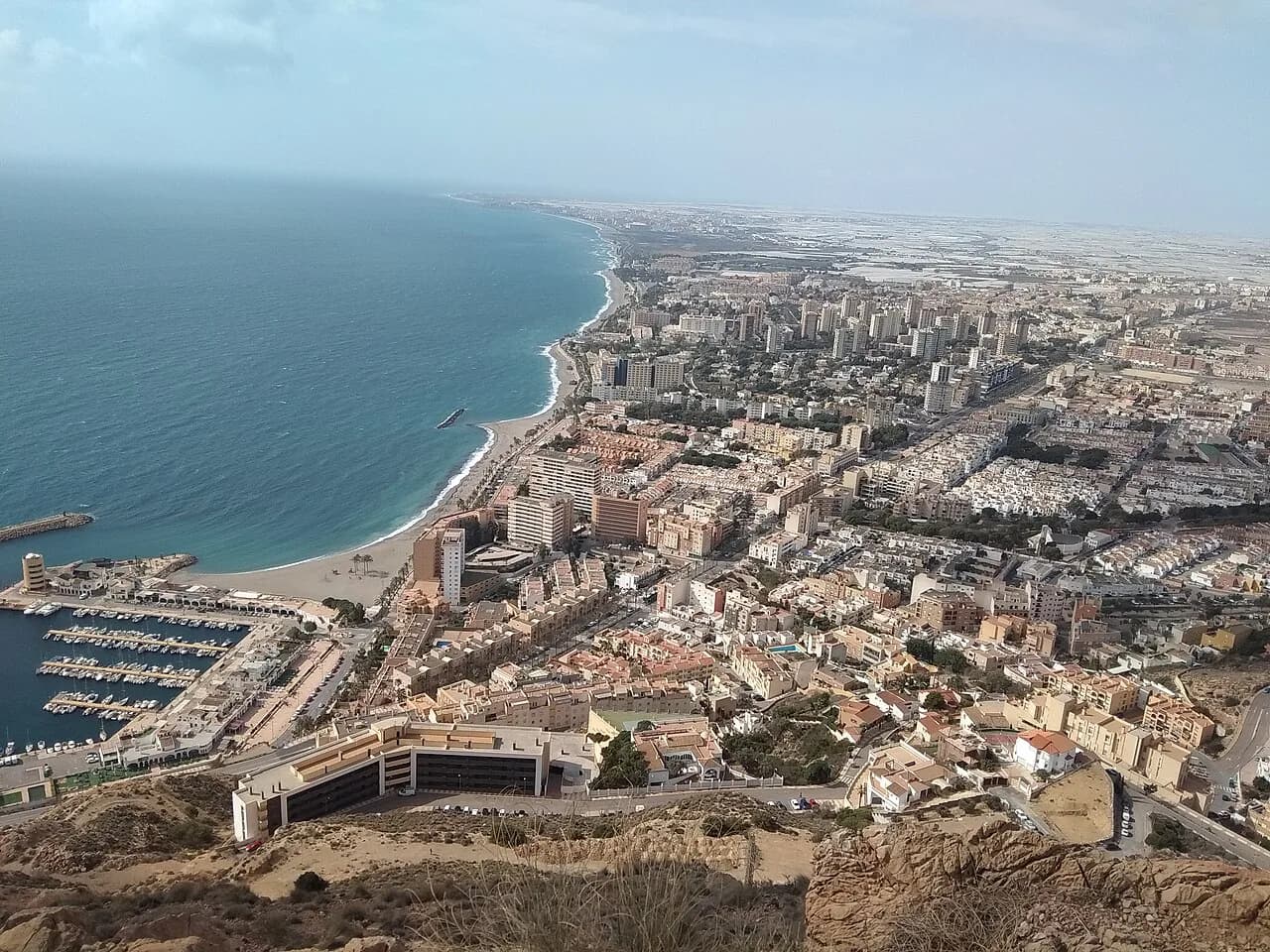
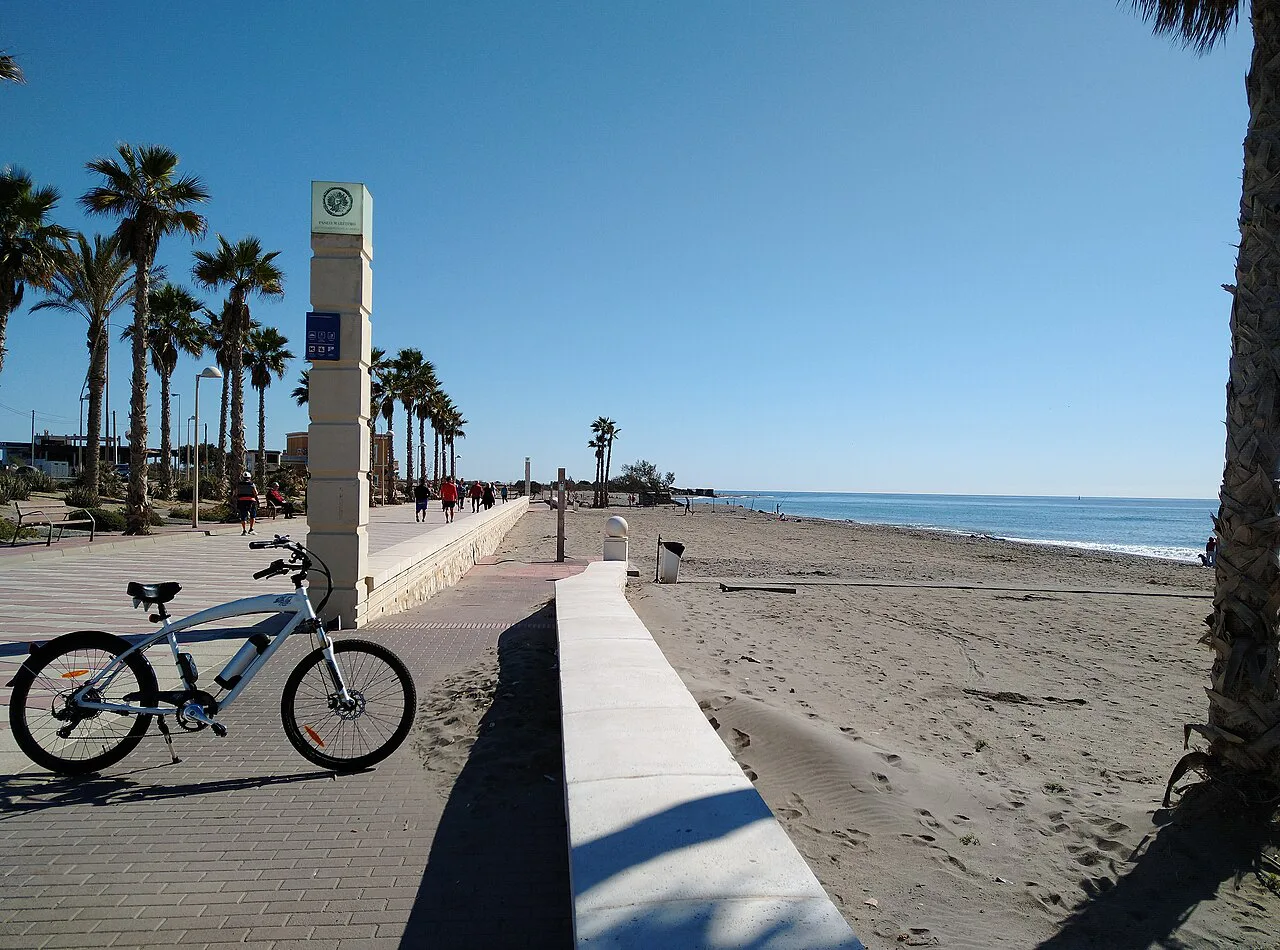
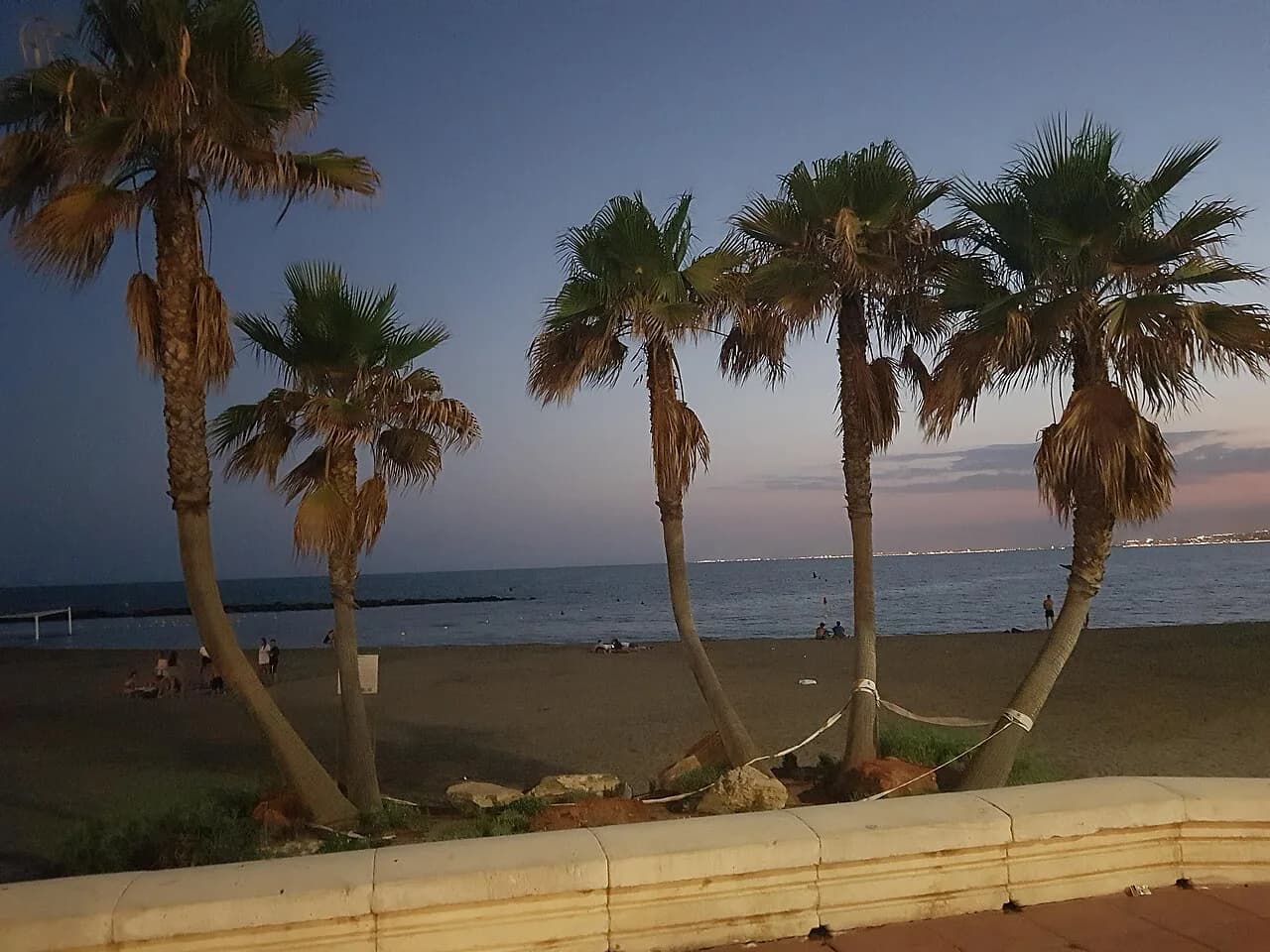
The main beach in Aguadulce is a long, fine-sand urban beach with calm blue water and a promenade lined with palms. That combination of length and facilities is what makes it useful: you can settle near the marina end for bars and shade, or walk along the promenade until you find a quieter stretch of sand.
Families with small children get the most out of it, because everything is on the doorstep: restaurants, ice cream, shops and the marina are all reachable on foot. Strong swimmers who want snorkelling over rocks or a wild shoreline will prefer the Cabo de Gata coves, where the appeal is precisely the absence of buildings and chiringuitos. Choose Aguadulce deliberately for convenience, then add a wild beach day elsewhere in the same trip.
Where Aguadulce sits within the Costa de Almería
Aguadulce is a coastal district of Roquetas de Mar, west of Almería city and east of the Roquetas resort strip. The two towns share a long stretch of developed coastline, so a base in either gives you easy access to both: Aguadulce's own beach and promenade, and the main tourist beach at Roquetas de Mar, known locally as the Urba, which becomes Playa Serena in front of the newer hotels.
The wider province runs to over 200 kilometres of coastline, with about 70 of those inside the Cabo de Gata-Níjar Natural Park, where beaches have protected status and the shoreline turns volcanic. Aguadulce gives you the opposite experience within a short drive: an urban beach you can reach by bus, with the natural park as a day out rather than the whole trip.
Getting there: bus, car and promenade access
Aguadulce is close enough to Almería to be reached by bus from the city. Services run to Roquetas de Mar and Aguadulce from the Almería bus station, and the bus is the more sustainable option, though you will be fixed to someone else's timetable. That makes it workable for a city-based beach day without a car, but less flexible if you want to hop between coves afterwards.
By car, Aguadulce sits on the coastal road between Almería and Roquetas de Mar, with the promenade and marina as the natural anchor points for parking. In summer, parking fills up in peak hours, so arriving in the morning gives you the easiest choice of spaces and the calmest water before the afternoon breeze picks up.
The sand and the water
The beach is sandy with a gentle entry into the water, which is why it draws families rather than snorkellers. The sea here is open Mediterranean rather than a closed cove, so it behaves like the rest of the Costa de Almería shoreline: mostly friendly, but with waves and swell on breezier days.
The shore runs about 1.9 kilometres along the Aguadulce district, a length that matters in practice. Walk a few minutes away from the busiest promenade entrances and the sand thins out; if you want space for a parasol and a game of paddle, head west along the promenade rather than stopping at the first open stretch.
Bring beach shoes if you plan to swim near the rocks at either end of the bay. Sea urchins turn up in rocky corners around the Cabo de Gata coast, and the same caution applies to any stone-edged section of the Aguadulce shoreline.
Shelter, wind and how the beach behaves on a breezy day
Levante, the easterly wind, is the defining weather feature of this coast. When it blows strongly, it can whip up the sea and push jellyfish towards the shore, which is exactly what beachgoers report on the Cabo de Gata beaches to the east. On levante days the sensible move is to swim early, keep to the promenade or move inland rather than committing to a full day on the sand.
The town itself gives some shelter: the promenade buildings and the marina break the wind on the landward side, so a gusty day is still pleasant for walking, coffee and a late lunch. The open water is a different matter, so pick your swim window rather than assuming the sea will stay flat through the afternoon.
Facilities: promenade, restaurants and marina
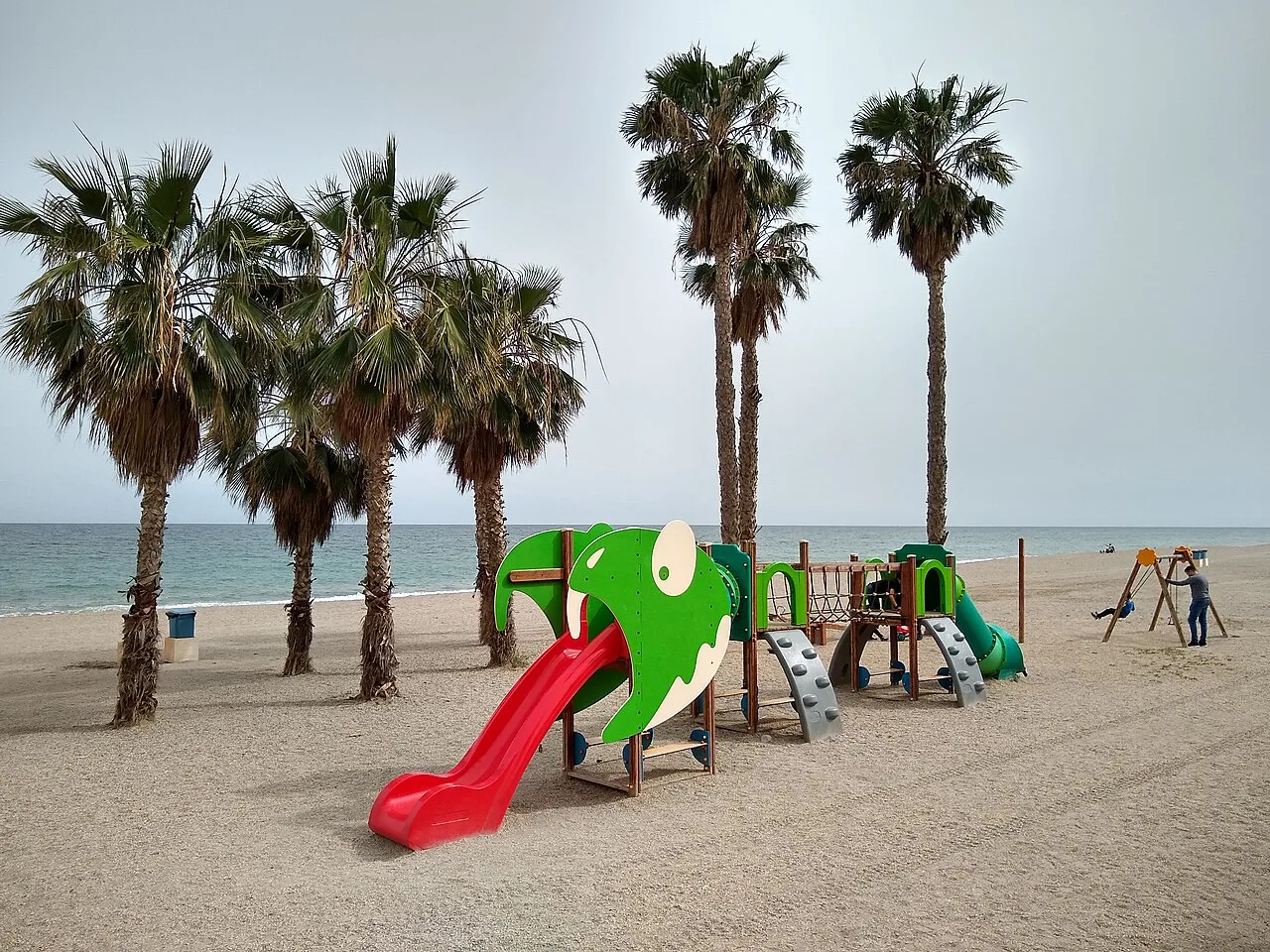
Facilities are the reason to choose Aguadulce over a wild cove. The promenade carries restaurants, bars and shops, the marina adds a second focus for an evening walk, and the town has the usual beach-town services within easy reach of the sand. Set against that, you get the crowds that come with an urban beach in August.
Book lunch rather than improvising if you are visiting at the height of summer. Restaurants in the popular Almería beach towns fill up in high season, and reserving ahead is the difference between eating at one o'clock and eating at three.
Families and swimmers: what to expect
For families, Aguadulce's main advantages are logistics: a long shallow-ish sandy shore, toilets, restaurants and ice cream within a short walk, and a promenade that takes a pushchair. Children who want to splash and build sandcastles will be happy; teenagers who want snorkelling and cliff jumps will not be.
Swimmers should treat it as an open-sea beach and read the flags on the day. Sea conditions change with the wind, and the safest habit is to swim near other people and never assume the calm morning water will still be calm at five.
Blue Flag status and water quality as listed
Aguadulce's beach is listed as a Blue Flag beach by holiday operator On the Beach, alongside the town's marina and its reputation for sunshine. Blue Flag awards are made annually, so treat the listing as a good sign rather than a permanent guarantee and look for the flag on the beach itself when you arrive.
Bathing-water quality on the Andalusian coast is monitored and published each season. If water quality is a deciding factor for you, the regional bathing-water listings are the place to look before you travel rather than relying on a single season's award.
Best time to go: sea temperatures and busiest months
Almería province has warm, bright weather for most of the year: August averages around 31°C and December around 17°C, with an annual average near 19.8°C. The best window for sunbathing and swimming is June to September, while the rest of the year still works for long beach walks and for visitors from northern Europe who find the off-season sun enough.
August is the busiest month on urban beaches like this one, when Spanish holidaymakers arrive alongside international visitors and the promenade restaurants fill early. Late June and September give you warm water with noticeably more space, which is the better trade for most travellers.
Nearby beaches to combine with Aguadulce
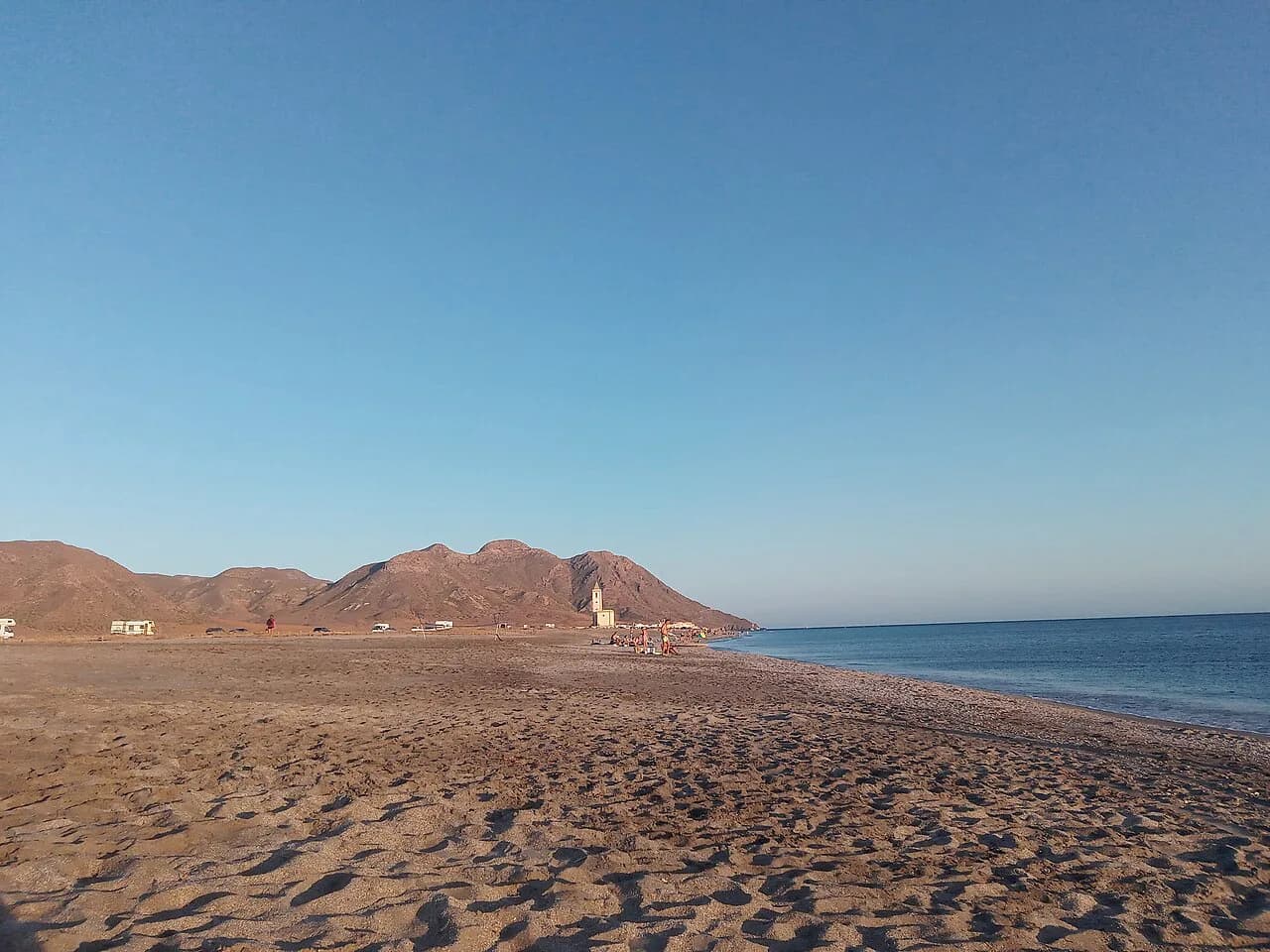
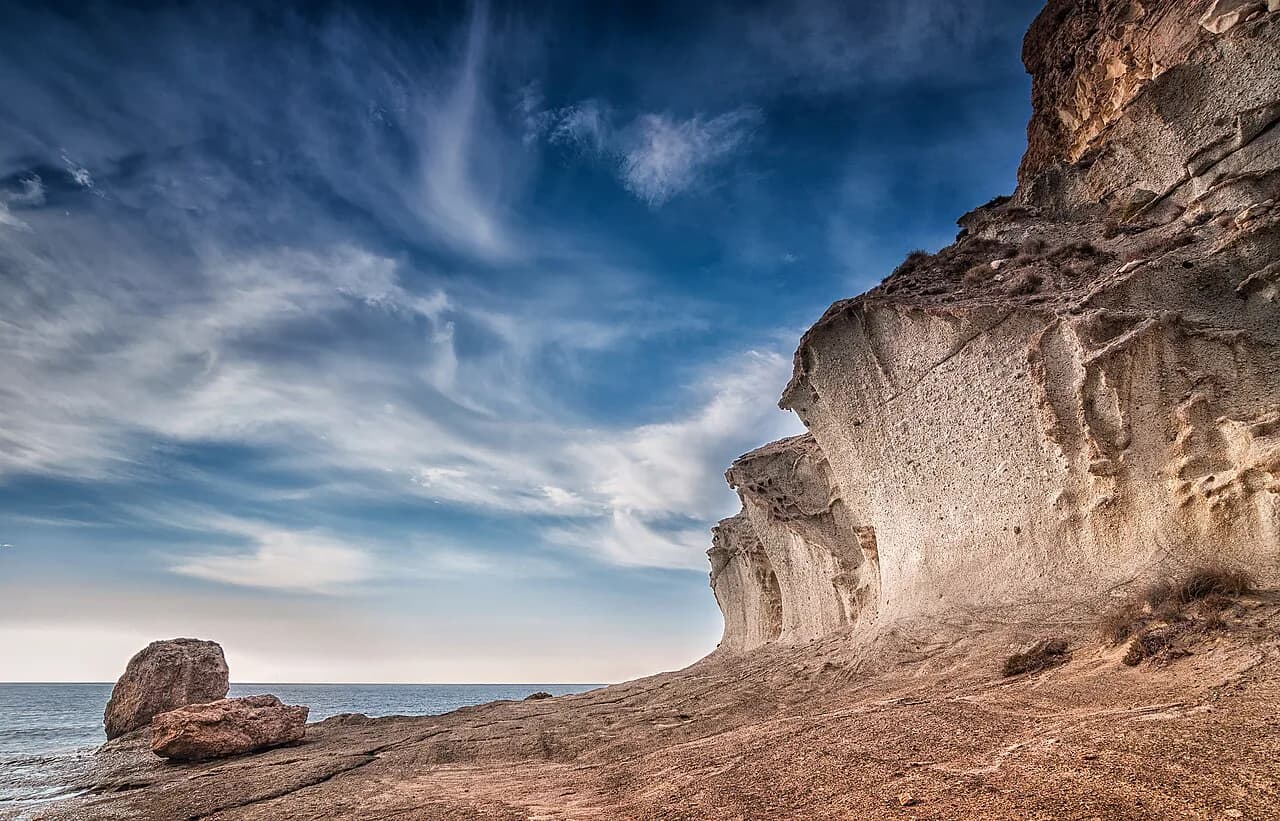
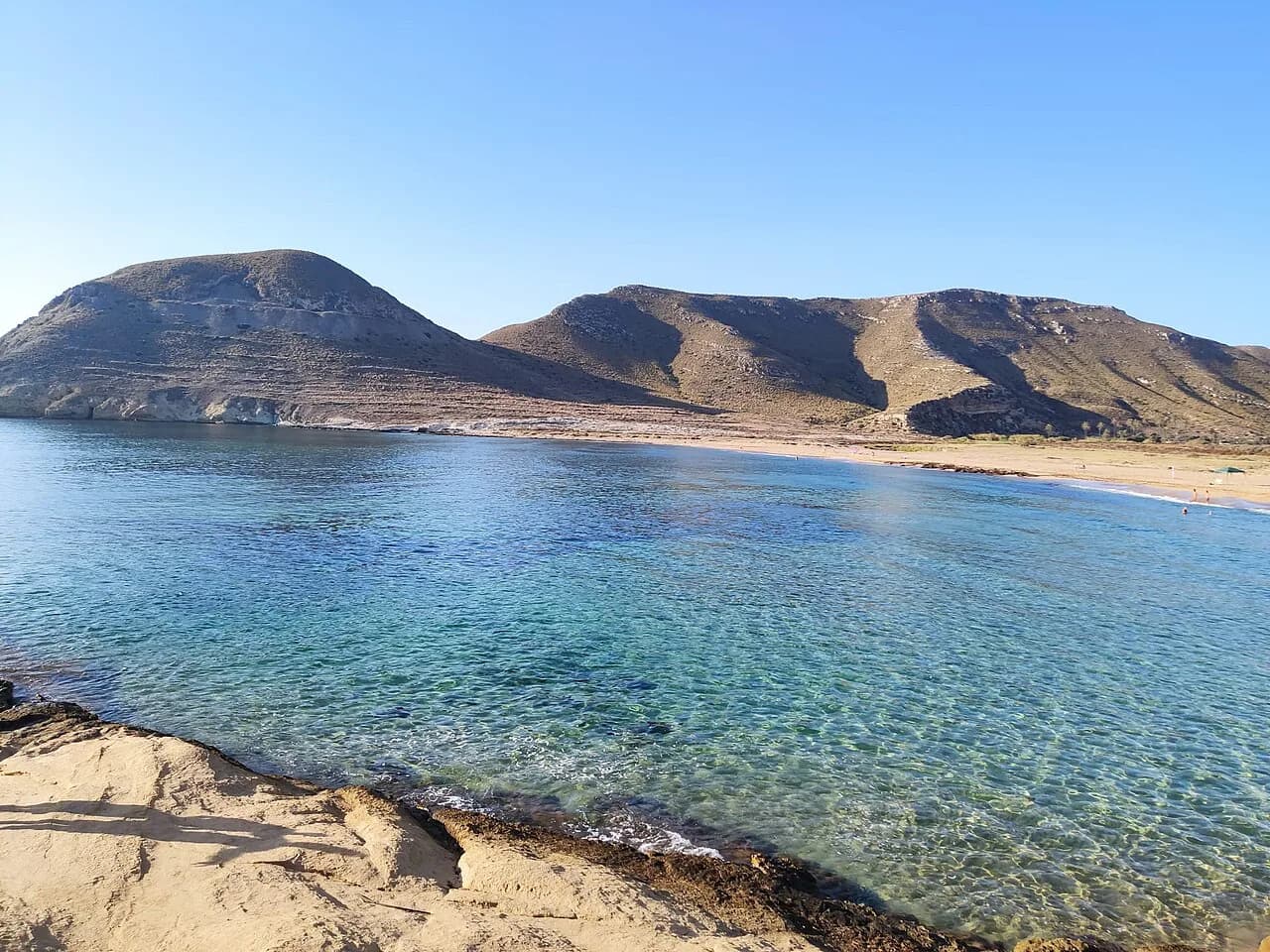
The strongest contrast is the Cabo de Gata-Níjar Natural Park, 30 to 40 minutes from Almería city, where the beaches are protected, unbuilt and reached along winding roads. Playa de los Genoveses and Playazo de Rodalquilar are the classic picks, and a day there pairs well with a lazy Aguadulce afternoon on either side.
Playa de los Muertos, near Carboneras, is a beach of small warm pebbles with famously clear water and two access paths, one longer and easier, one shorter and steeper. There are no beach facilities there, so carry water, food and shade, and treat it as a half-day expedition rather than a quick dip.
Closer to town, Roquetas de Mar's Urba beach and Playa Serena give you more of the same urban convenience, and Playa del Zapillo in Almería city is the easiest city-beach option if you are staying downtown without a car. If you are weighing up this kind of convenient, facility-heavy shoreline against alternatives further along the coast, our guide to the best beaches in Nerja covers the same trade-off in another Andalusian resort town.
Practical kit and a simple day plan
Pack for a town beach, not a wilderness one: a parasol for shade, water, reef-safe sun cream, beach shoes for the rocky ends of the bay, and cash for ice cream and parking. Leave the hiking boots at the hotel unless you are adding a Cabo de Gata day, where sturdy shoes matter for the paths down to Los Muertos and the clifftop walks.
A workable plan runs like this: arrive mid-morning, swim before the afternoon breeze, eat a long lunch on the promenade, then walk the marina in the late afternoon. If the levante is blowing, swap the order and do your swimming at the start of the day.
Plan Your Visit
Aguadulce beach is the convenient choice on the Costa de Almería: a long urban beach with a promenade, marina, restaurants and easy bus access from Almería city. It suits families and promenade strollers rather than snorkellers, and it makes the perfect comfortable base for one or two wild days in the Cabo de Gata-Níjar Natural Park.
For current bus times and any seasonal beach services, contact the Roquetas de Mar tourist office or check the local bus operator before you go, then build your day around the wind rather than against it.
Frequently Asked Questions
Is Aguadulce worth visiting for its beach?
Yes, if you want a long sandy urban beach with a promenade, restaurants and a marina within walking distance. It is less appealing if you are chasing wild, unbuilt coves, which are better found in the Cabo de Gata-Níjar Natural Park.
How do you get to Aguadulce beach from Almería?
Buses run from Almería's bus station to Aguadulce and Roquetas de Mar, which works well for a car-free beach day, though you are tied to the timetable. By car it is a short coastal drive from the city, with parking around the promenade and marina that fills early in summer.
Is Aguadulce beach good for families?
It is well suited to families: sandy shore, gentle entry into the water, promenade restaurants, toilets and shops a short walk away. Bring beach shoes for the rockier ends of the bay and watch the flags on breezy days.
When is the best time to visit Aguadulce beach?
June to September is the best window for swimming and sunbathing, with August the busiest month. Late June and September give warm water with fewer crowds, and the off-season is good for walks along the promenade.
Sources
Beach notes for your next trip
Optional updates when we add or revise beach guides.
You might also like
Continue reading
More guides you'll find useful