El Playazo, Rodalquilar: Cabo de Gata's Wild 400m Beach
Plan a day at El Playazo near Rodalquilar in Cabo de Gata: 400 m of golden sand, parking by the beach, rocky snorkelling and how the levante changes the water.
On this page
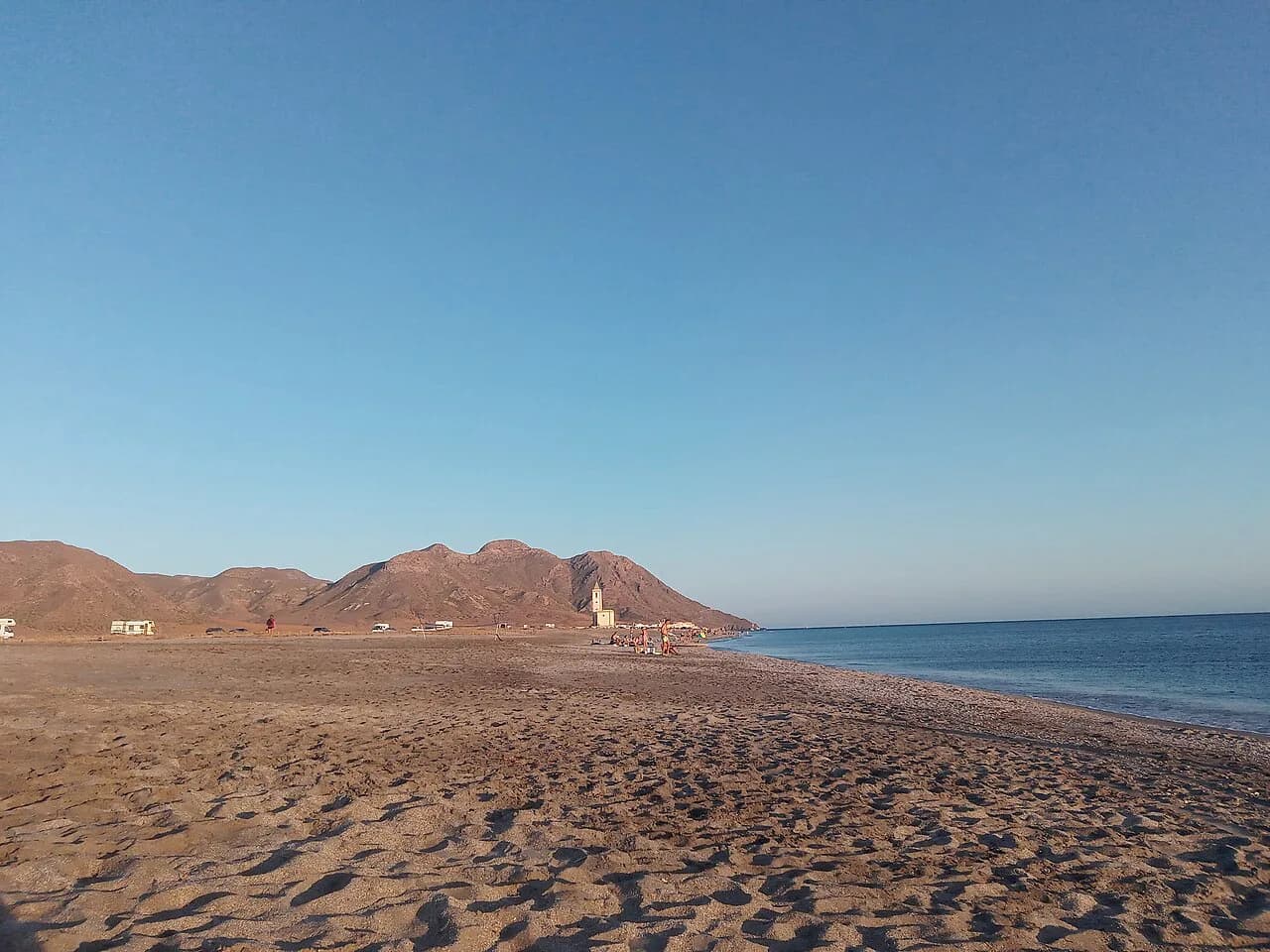
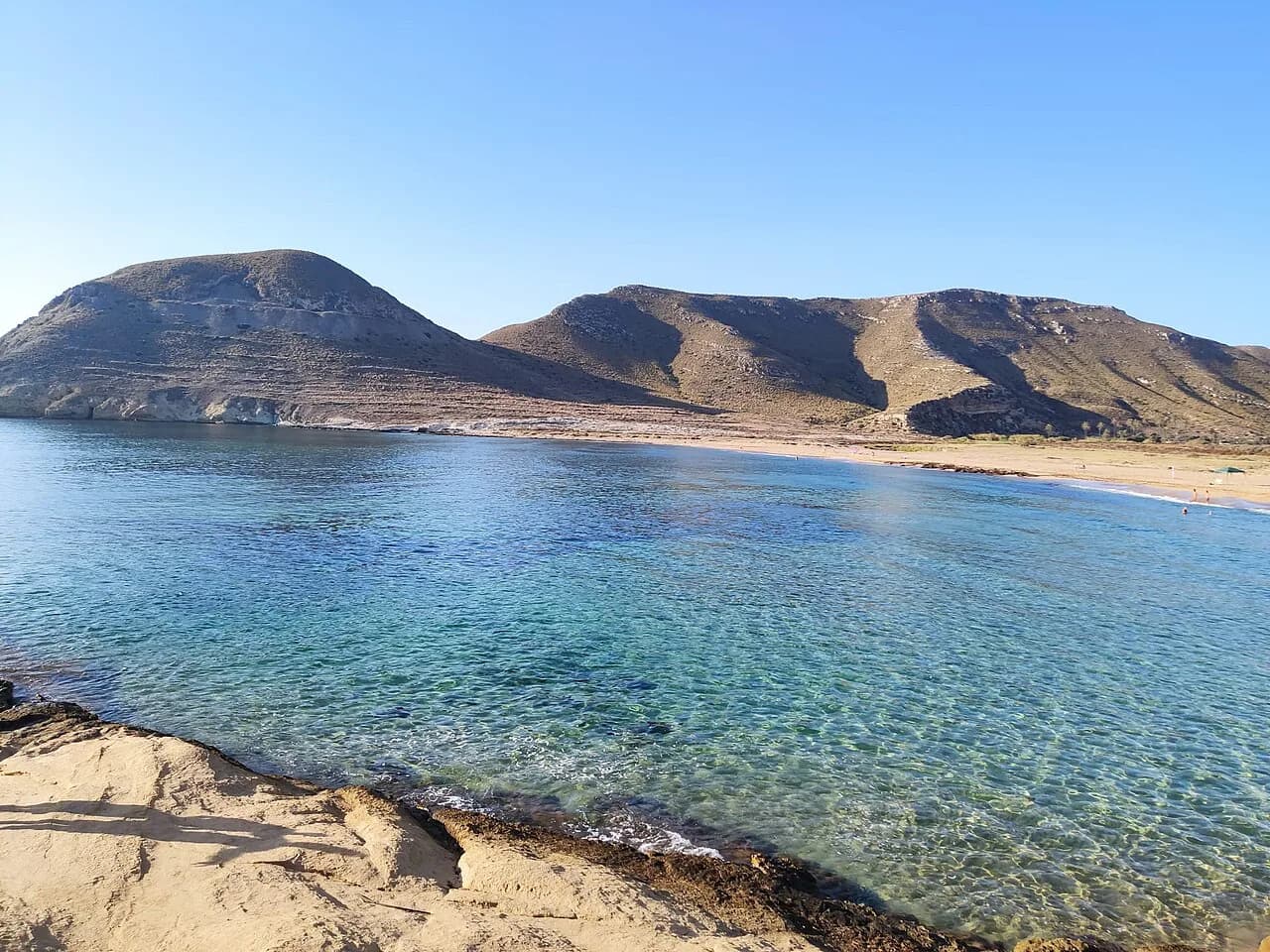
El Playazo is the wide, unbuilt sweep of golden sand at the mouth of the Rodalquilar valley, backed by volcanic hills and watched over by the Castillo de San Ramón on its dune. Its appeal is simple: 400 metres of fine sand, clear water, and almost nothing built along the shore. It suits families who want a shallow entry, swimmers who want space, and snorkellers heading for the rocks at either end.
It is also one of the easiest wild beaches to reach in the park, because you can park right beside the sand. That convenience brings crowds in high summer, so the trade-off is straightforward: come early in August, or walk in from Las Negras and leave the car behind.
Where El Playazo sits in the Rodalquilar valley
The beach lies in the valley below the old mining village of Rodalquilar, which is 3.5 km away. Las Negras is 6 km off and La Isleta del Moro 8.5 km. The turning for the beach is clearly signed on the AL-4200 road, so you navigate to the village first and follow the signs down to the coast.
Layered on top of that geography is the history: the castle on the fossil dune was one of the fortresses built in the eighteenth century to guard this coast, and the mining heritage around Rodalquilar gives the day a second act beyond the beach.
Getting there by car and parking
Arrive by road from Rodalquilar and follow the signed turning off the AL-4200; the car park sits directly next to the beach. Drivers consistently rate the access here as better than at neighbouring coves, which is precisely why the beach fills quickly on summer weekends.
For the full picture of how this bay compares with the rest of the coastline, the wider guide to Almería Beaches covers the main swimming and walking options in and around the Cabo de Gata-Níjar Natural Park. Plan around the car and arrive before mid-morning in July and August; if the car park is full, the fallback is the walk-in route from Las Negras rather than roadside improvisation on the AL-4200.
Walking in from Las Negras
A coastal path links Las Negras with El Playazo over roughly 4 km, with some sections that are awkward underfoot and not ideal with small children. The reward is arriving on foot at a beach with no buildings in sight and the water changing colour over the sand.
Treat the walk as a half-day outing rather than a stroll: carry water, food and sun protection, because there is nothing to buy along the way. The path also connects on towards Cala del Cuervo, so walkers can build a longer coast-to-coast day between Las Negras and the Rodalquilar side.
The sand and the water
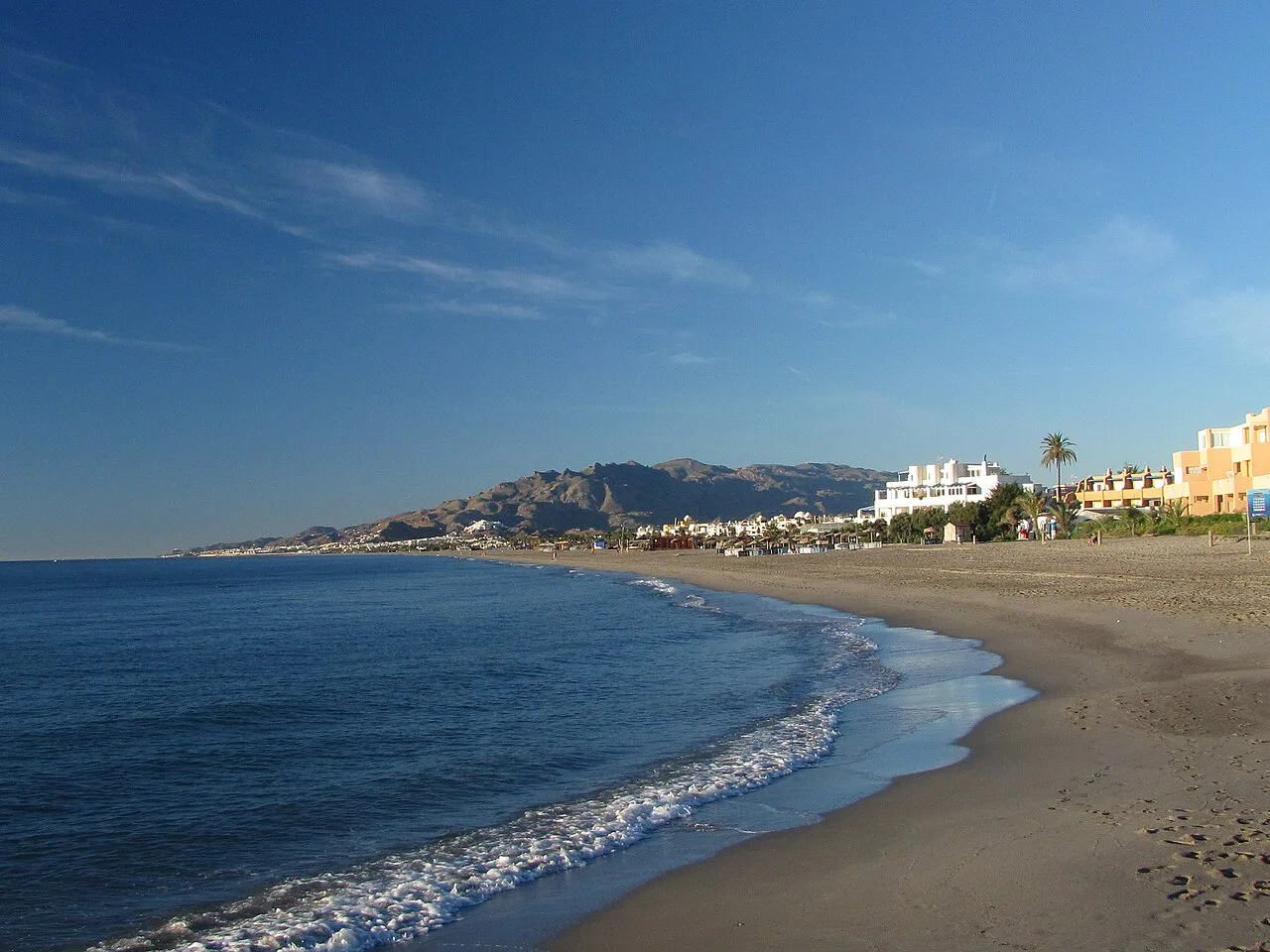
The beach runs for about 400 metres of fine golden sand, and the swell is generally calm. The water is shallow as you wade in, which is the main reason families with young children gravitate here. Even in high season the scale of the bay keeps it feeling roomy.
Shade is scarce on the open sand, so bring an umbrella and set up near the rocks at the ends if you want to combine shelter with a short walk into the water. The northern end of the bay, below the castle, is where the smaller cove of Calilla del Playazo sits.
Levante days and how to plan around them
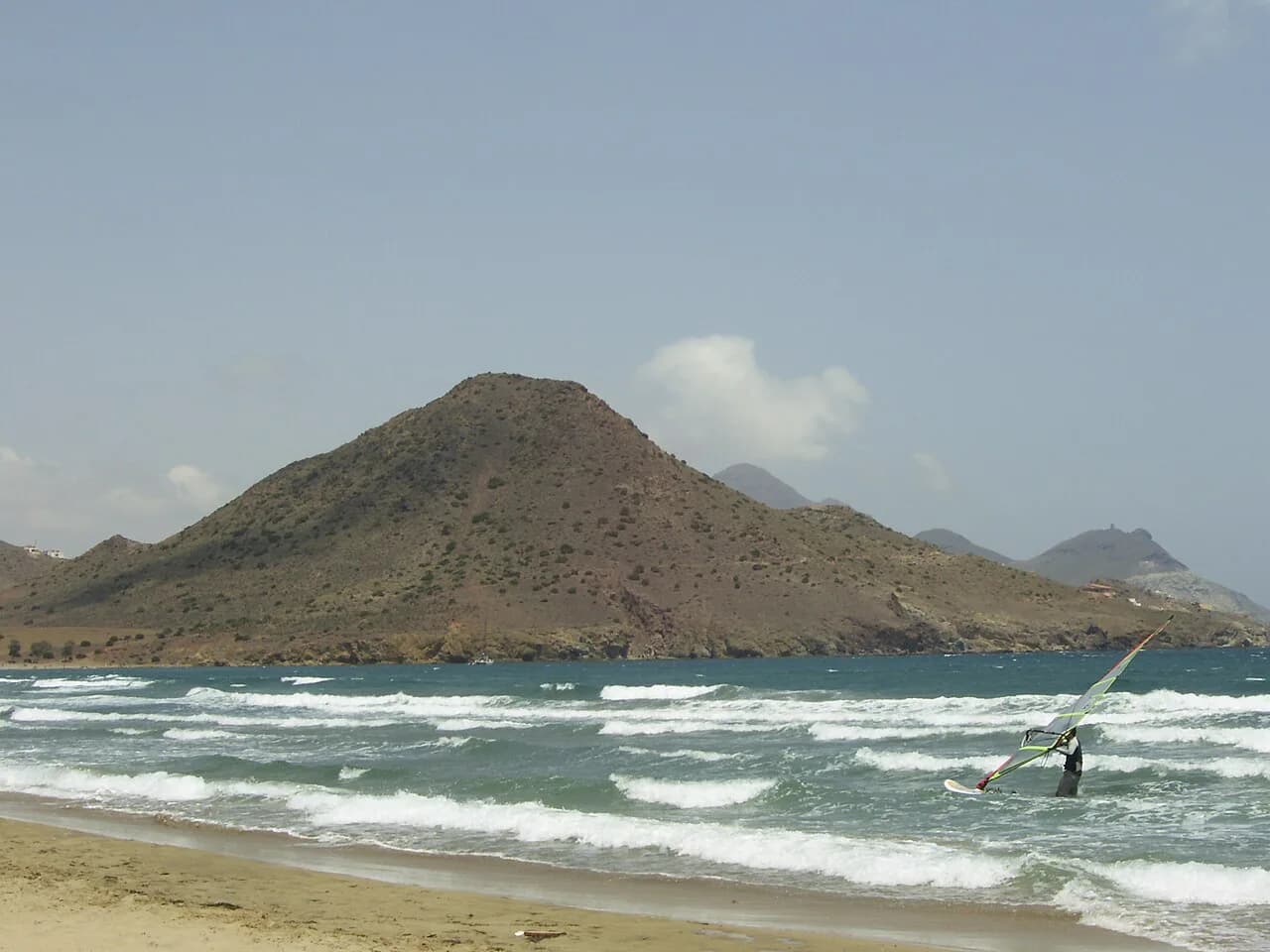
The easterly levante wind is the single biggest factor in a day here. It can fill the sea with jellyfish and spoil the swimming, and on strong days the beach effectively belongs to surfers. Check the wind forecast the night before and be ready to switch plans.
When the levante is blowing, head for the Calilla del Playazo, the 50-metre cove tucked below the castle, which is more sheltered from the wind than the main bay. On calm days the main beach is the better bet for space and a long, shallow swim.
Snorkelling and rock-hopping
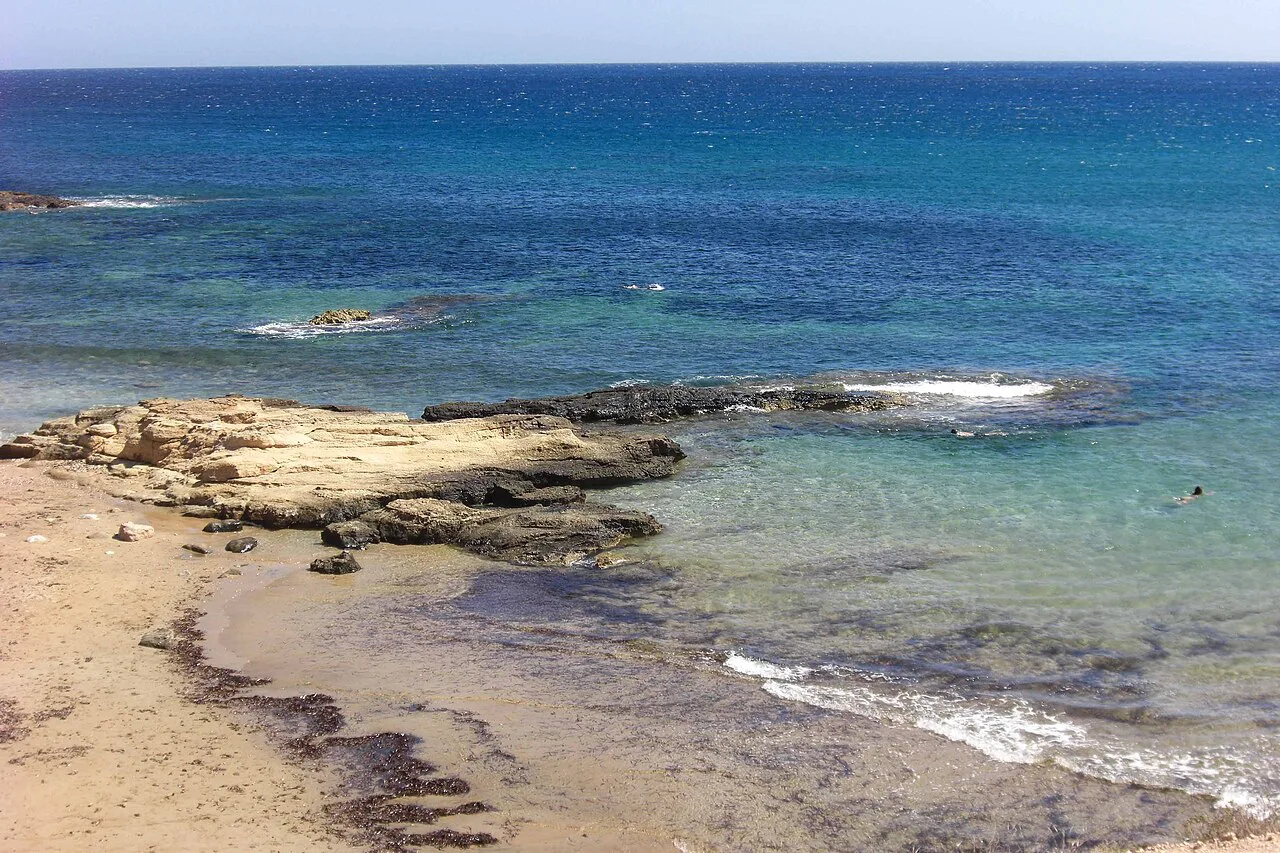
The rocky ends of the beach are the snorkelling zones, with the right-hand side singled out as a good place to get in. Fish appear close to the sand, sometimes within 15 metres of the shore, over clear and accessible bottoms.
Sea urchins and jellyfish are reported in the water at certain times of year, so wear foot protection near the rocks and keep an eye on the surface. There is also a small cave where people jump in and dive a couple of metres to surface again; if you explore it, do so with care.
Snorkellers should explore the extreme rocky edges with caution and keep clear of the busy swimming line in the middle of the bay. The park guide recommends exactly that approach for the rocky ends of the beach.
The Castillo de San Ramón and Calilla del Playazo
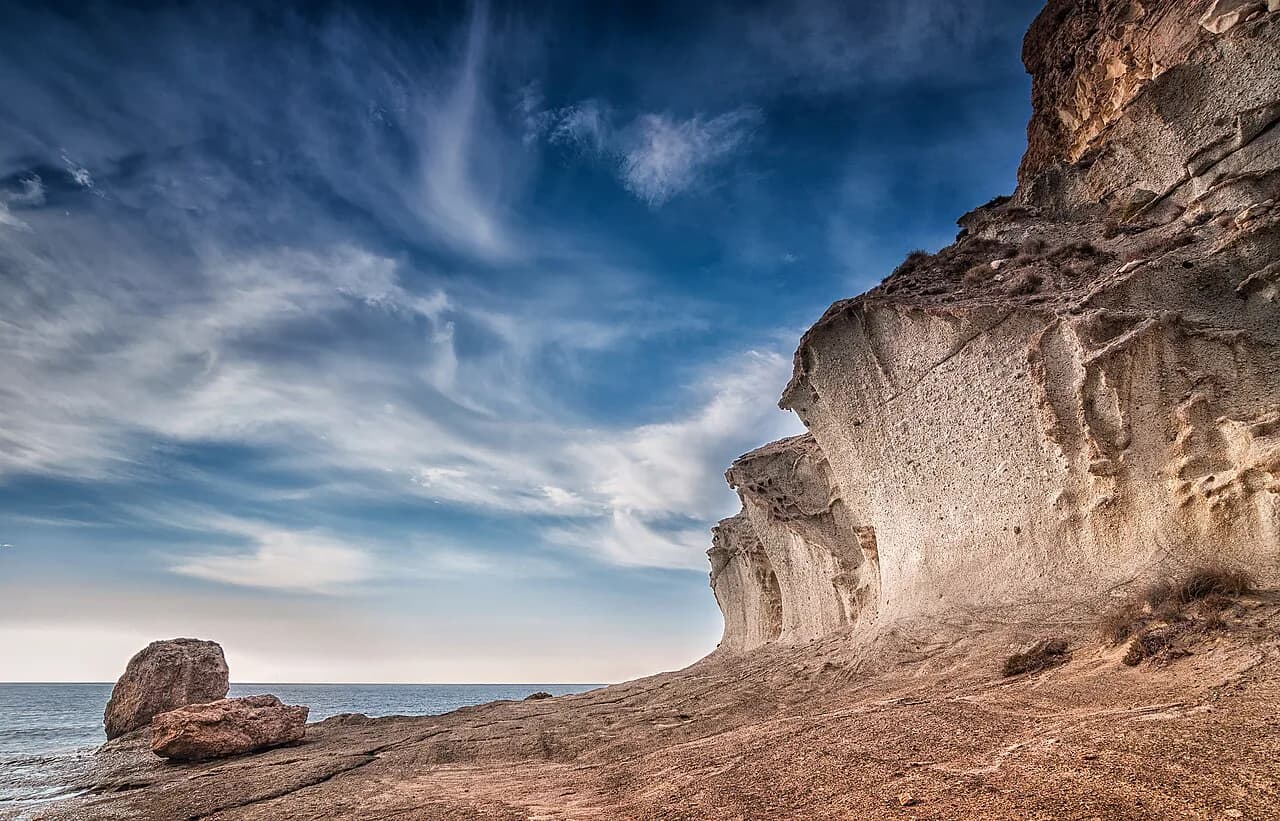
The Castillo de San Ramón stands on a fossilised dune above the northern end of the bay, and it is the landmark that makes El Playazo so recognisable. Below it, Calilla del Playazo is a narrow cove of about 50 metres with clear water and interesting rock formations.
A path runs from the castle along the coast to Cala del Cuervo in about 45 minutes, and from there you can continue on foot to Las Negras in a further 20 minutes. That makes a satisfying half-day loop for anyone staying in the village and happy to walk.
Nudism and atmosphere
El Playazo is a mixed beach, as most of the wild beaches in the park are: nudism is tolerated and respected alongside people in swimwear. The right-hand side is described as the mixed section, so you can choose your spot without awkwardness either way.
The atmosphere is relaxed and the scale of the sand means there is room to spread out. It helps to know that this is a place people come to for quiet, so keep music low and take everything away with you.
Facilities
Facilities are minimal by design. No showers are available; the park guide notes parking beside the beach. Bring your own water, food, shade and a rubbish bag, since the appeal of the place is that almost nothing else is built.
Visitors repeatedly advise arriving with provisions because there are no restaurants or bars close by. Treat food and drink as something you bring rather than something you count on finding on the sand.
Crowds and seasons
Easy roadside access means El Playazo gets busy in high summer, which is the price of not having to hike in. Spring is the sweet spot: the Cabo de Gata is in flower and the beach is nearly empty, which makes for a very different experience from August.
The downside of spring is cooler water, while late summer brings the warmest sea along with the jellyfish that the levante can push in. Early autumn gives you warm water with fewer people, and is the month to aim for if your dates are flexible.
Nearby beaches to combine
Cala del Cuervo is a 130-metre cove of cliffs and rocks about 45 minutes on foot from the castle, and a good snorkelling stop with a campsite behind it. Continue another 20 minutes and you reach Las Negras, where you can eat and pick up supplies.
If you want a second beach day after this, Playa de los Muertos near Agua Amarga is the obvious comparison for wild sand and clear water further up the Almería coast. For a change of coastline with the same easy-access, family-friendly logic, compare these picks with the beaches in Murcia.
Practical kit and a sample beach day
Start with the castle and Calilla del Playazo in the morning, when the light is good and the sand is still quiet, then move to the main beach for the long shallow swim as the day warms up. Bring shade, water, food, foot protection for the rocks and a bag for your rubbish, and set up near one of the rocky ends if you want to snorkel without crossing the whole bay.
Check the levante forecast the evening before, because it decides whether the main bay works or the sheltered cove below the castle is the better call. On foot from Las Negras, the same plan works without a car.
Plan Your Visit
Pack for a beach with almost nothing on it: shade, water, food, foot protection for the rocks and a bag for your rubbish. Aim to arrive before mid-morning in summer, and check the levante forecast the evening before, since it is the difference between a calm swim and a wasted day.
Combine the beach with the castle, Calilla del Playazo and a wander around the Rodalquilar mining village for a full day. If you are staying in Las Negras, walk in along the coast path and leave the car where it is.
Frequently Asked Questions
How do you get to El Playazo de Rodalquilar?
Drive from Rodalquilar and take the signed turning off the AL-4200, where a car park sits directly beside the beach. Alternatively, walk in from Las Negras along a coastal path of roughly 4 km, with some rougher sections underfoot.
How long is the walk from Las Negras to El Playazo?
Allow for about 4 km of coastal walking, with awkward stretches that are not well suited to small children. Carry your own water and food, because there is nothing to buy along the route.
Is El Playazo good for snorkelling?
Yes. The rocky ends, especially the right-hand side, give easy access to fish and clear bottoms close to the sand. Sea urchins and jellyfish appear at certain times of year, so wear foot protection and watch the water before you get in.
Is El Playazo a nudist beach?
It is a mixed beach, as most of the park's wild beaches are. Nudism is tolerated and respected alongside swimwear, and the right-hand side is described as the mixed section.
Is El Playazo suitable for families with children?
The shallow entry and generally calm swell make the main beach work well for families. Note that the coastal walk from Las Negras has rough sections, so drive if you have young children.
What is there to see in Rodalquilar?
The old mining village, the mining heritage sites and the botanical garden make a natural pairing with the beach. The Castillo de San Ramón above El Playazo and the small Calilla del Playazo cove below it are part of the same day out.
Sources
Beach notes for your next trip
Optional updates when we add or revise beach guides.
You might also like
Continue reading
More guides you'll find useful