Cabo de Gata Beaches: Where to Swim and Snorkel in Almería
Plan a Cabo de Gata beach day, from pebbly Los Muertos and sandy Genoveses to the long Cabo village strand, with access and facilities explained.
On this page
Cabo de Gata rewards travellers who pick a beach to suit the day rather than chasing the single 'best' one. The park's 70 km of protected coastline takes in cliff-flanked pebble coves, wide dunes and long fine-sand strands, so a family with buckets and a snorkeller with fins want different car parks.
Most beaches sit within easy reach of the fishing villages of San José, Las Negras and Agua Amarga, which double as bases with restaurants and shops. A car gives the most freedom to carry umbrellas, cool boxes and water, while bus services cover some of the coast on someone else's schedule.
What makes the Cabo de Gata beaches different
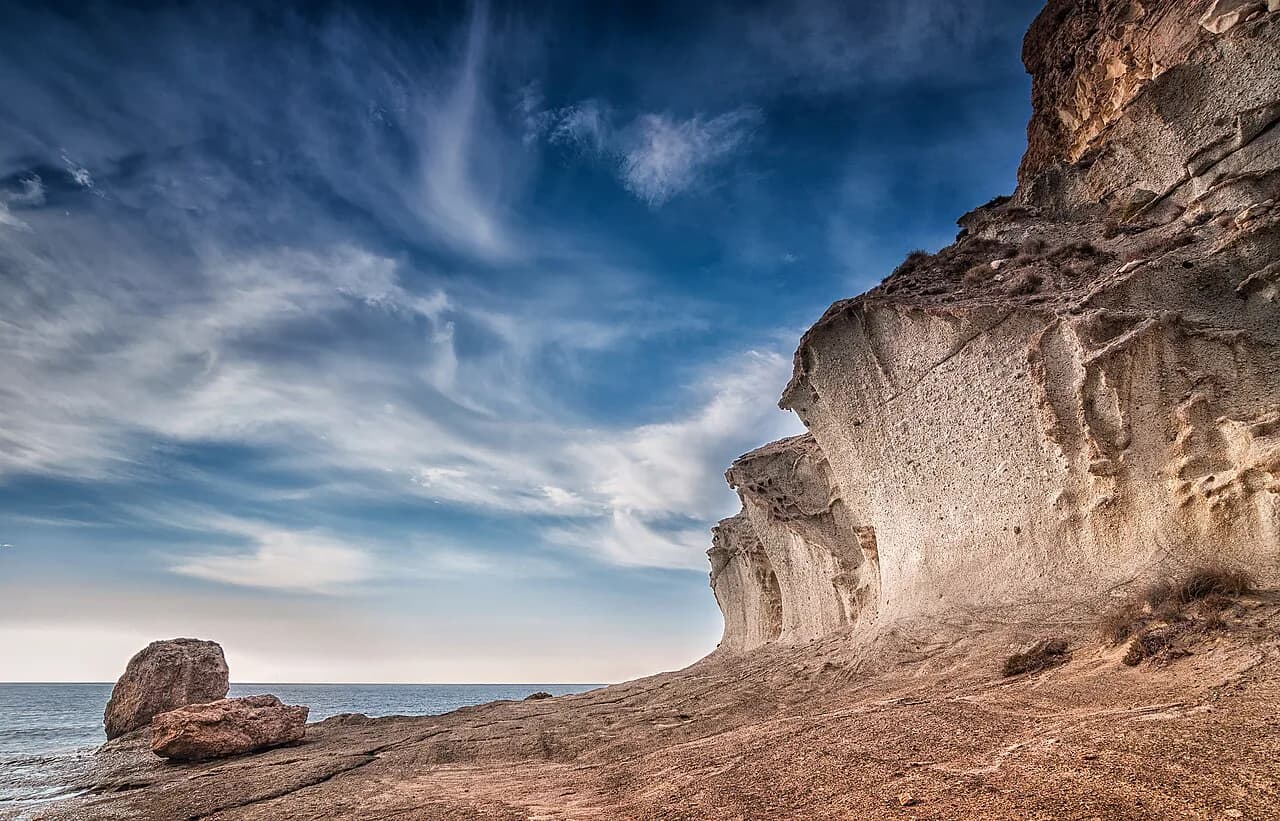
The park's volcanic rock formations fall steeply to blue Mediterranean water, and the protected status keeps the coast notably clean and peaceful. That same status is why several beaches have no cafés, toilets or showers at all, so you pack in what you need and carry it out.
Snorkellers have a strong case for making this their main stop in Almería: the seabeds here are among the best in Europe, with seagrass meadows close to shore. Even a short swim from the sand can turn up a variety of marine life, though you should still read the conditions on the day.
Playa de los Muertos: the pebble beach below the cliffs
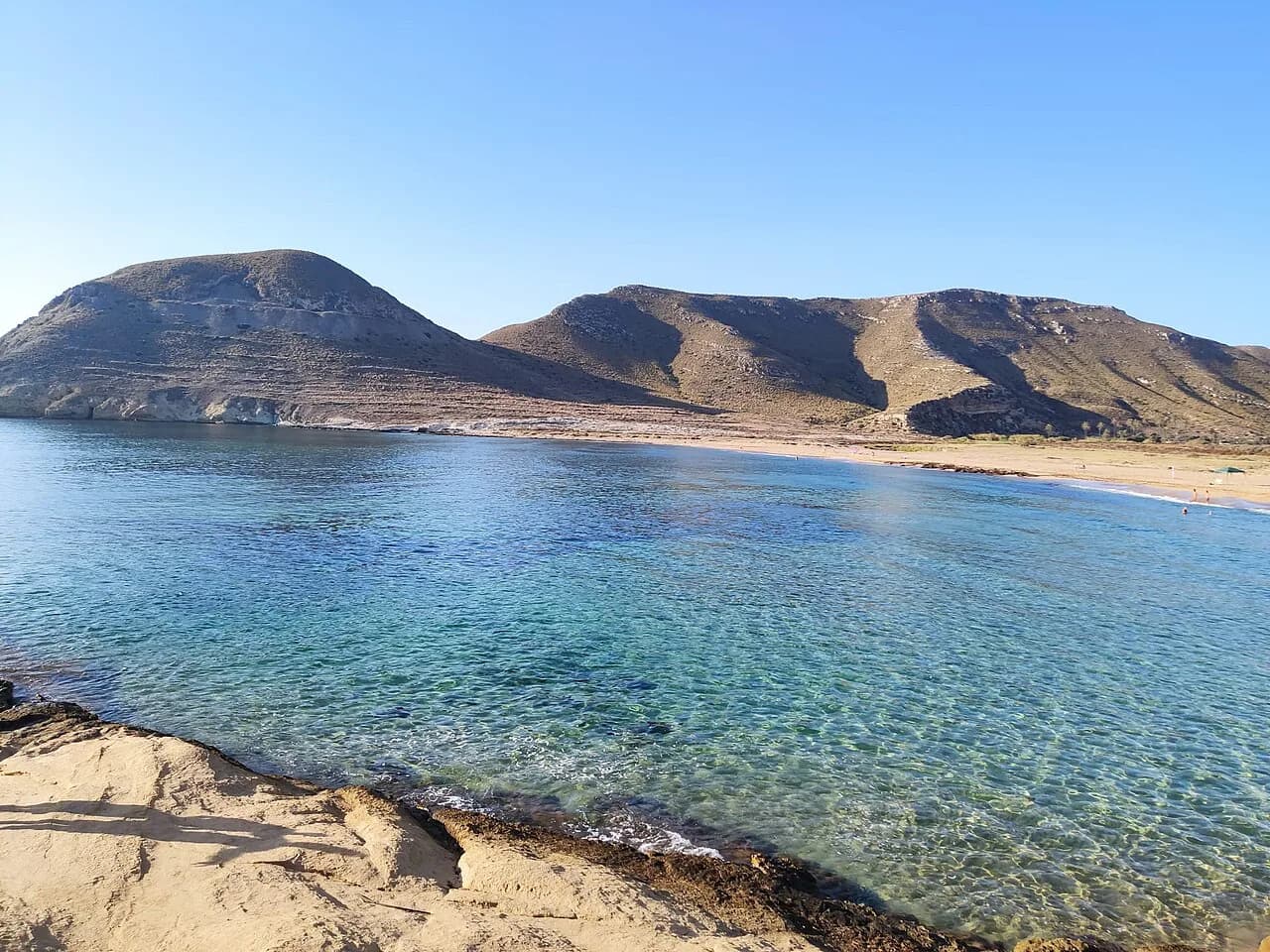
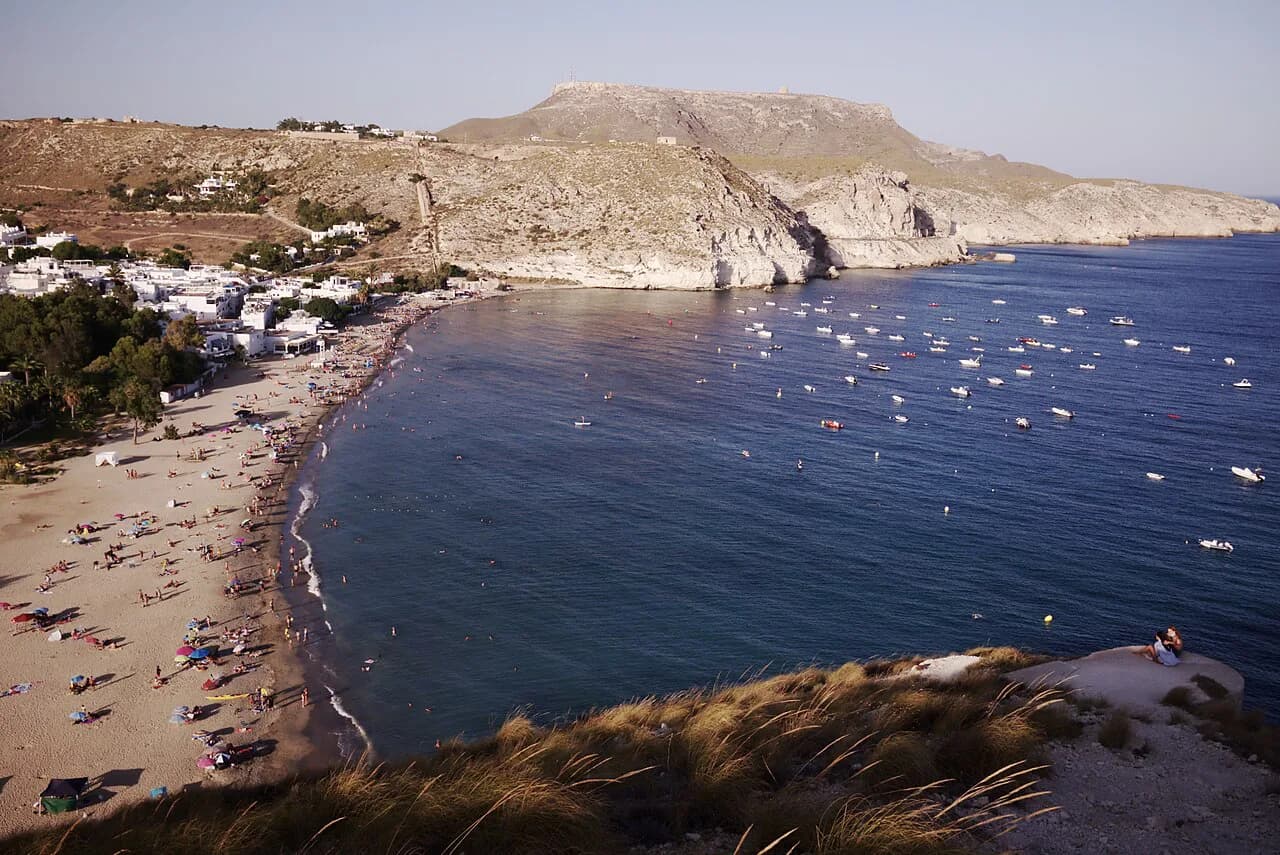
Los Muertos is the park's signature pebble beach, reached by a walk down from the car park between cliffs, with a lookout point on one flank for those who enjoy a short climb. The small, warm pebbles and crystal-clear water make it a favourite for swimmers and photographers, and it gets busy in summer.
Treat the descent as part of the outing: wear proper shoes rather than flip-flops, carry water, and travel light if you are coming back up in the heat of the day. Because the beach is service-free, there are no cafés or toilets to fall back on, so plan your food and shade before you leave the car.
Boat trips run from Carboneras to Los Muertos and the Cabo de Gata caves, with a swim and snorkel stop at Cala de San Pedro, which suits anyone who would rather see the cliffs from the water than walk down to the pebbles.
Playa de los Genoveses: soft sand near San José
Genoveses sits right next door to San José, a short drive or walk from the village, which makes it the easiest way to combine a service-free beach with a proper lunch and a shop. The sand is soft and the water shallow, so it works well for families who want space without committing to a long hike.
Walkers can follow the clifftops around the beach and visit the fossilised dune above the sand, a worthwhile detour if you have a spare hour. The hidden cove of Cala de los Amarillos is reached via Genoveses, and naturist bathing is common there, so choose it only if that suits your group.
Playazo de Rodalquilar: wide sand and easy parking
Playazo de Rodalquilar is the quiet-seeker's pick: a tranquil, wide beach with good sand and straightforward parking, reached without the cliff descent that shapes a day at Los Muertos. There are no facilities, so bring everything you need and expect a simpler, more self-sufficient outing.
There is another fossilised dune to explore here, which gives children something to climb besides the sand. Base yourself at Las Negras or the glamping and small hotels nearby if Rodalquilar is your priority for the trip.
The long beach from Retamar to Cabo de Gata village
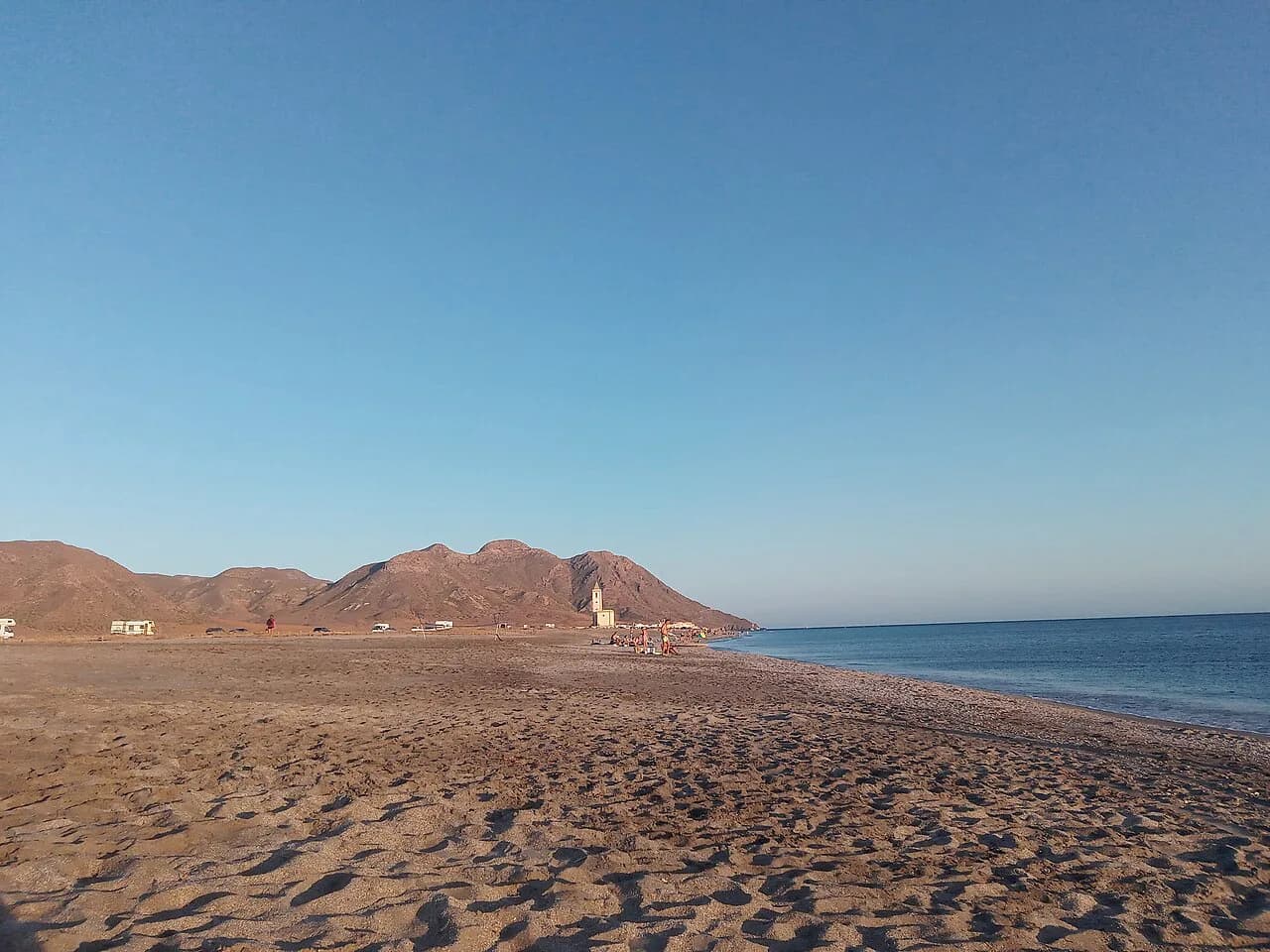
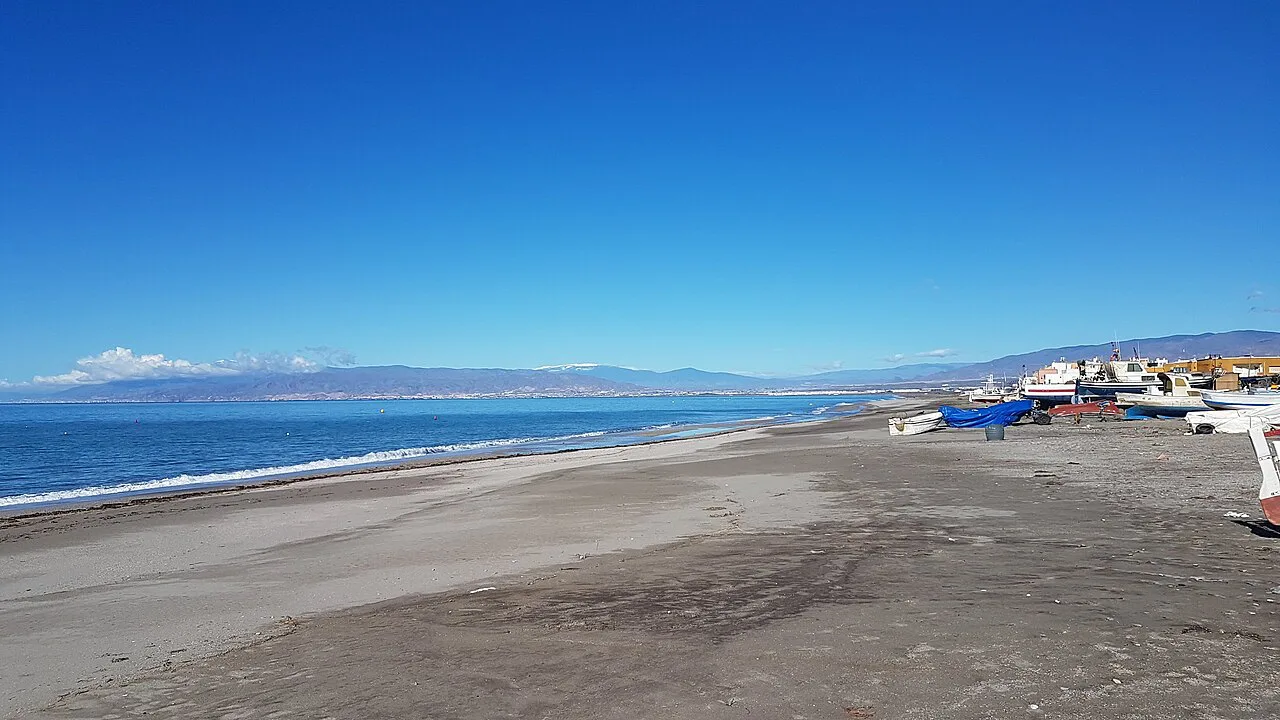
Between Retamar and Cabo de Gata village the coast is one long, seemingly endless stretch of fine sand and turquoise water, with the odd chiringuito but a wild, empty feel. You drive the small road between the coast and the Salinas de Cabo de Gata and pull in wherever you fancy, unloading straight onto the beach.
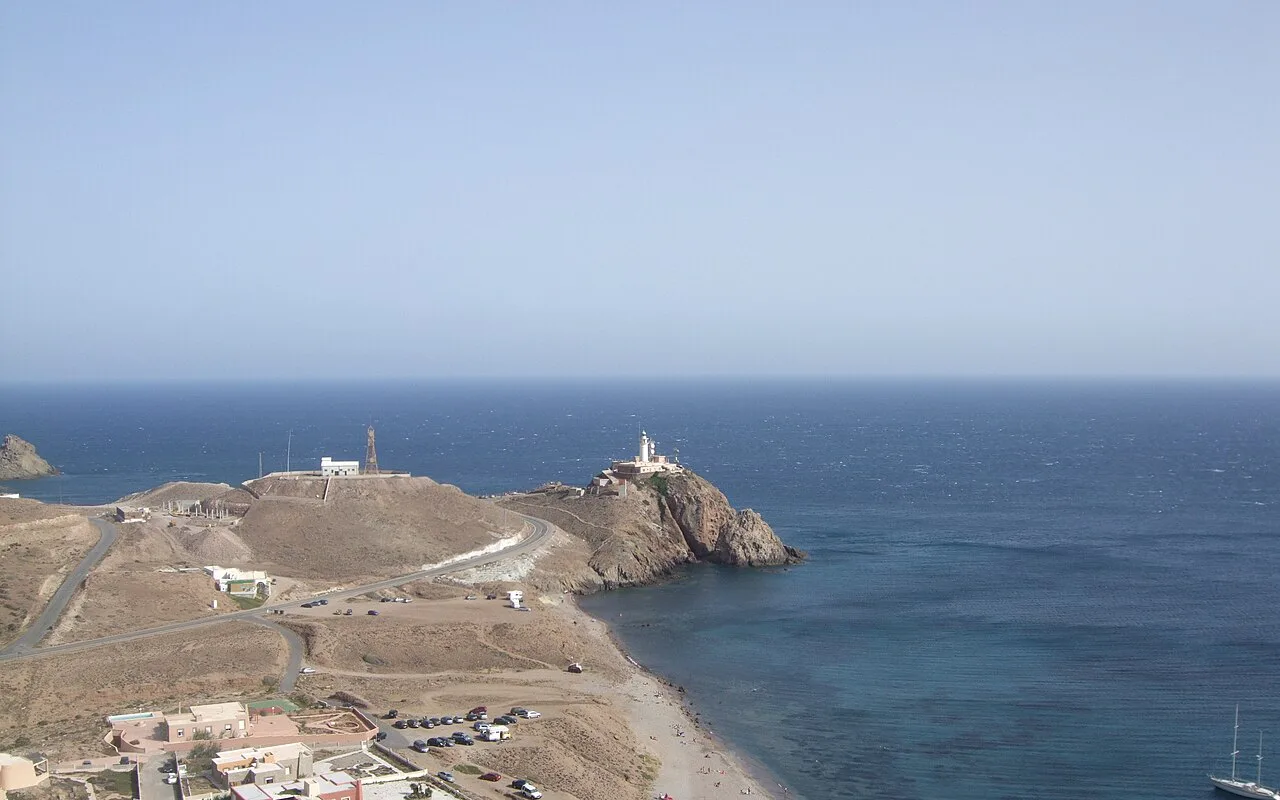
Playa de la Salinas, Playa Cabo de Gata and Playa de la Fabriquilla are three named sections along this run, and the area is a fine sunset spot. Finish at the Mirador del Arrecife de las Sirenas for the view back over the volcanic headland.
San José and Playa de la Calilla: the fishing-village option
San José is really one long beach that changes name along its length, and the Playa de la Calilla section has lifeguard services and showers. That combination makes it the practical choice for families or anyone who wants a swim without carrying the whole day on your back.
The village has good restaurants, though tables fill quickly in high season, so book ahead if you want a proper lunch after the beach. From San José it is an easy run to Genoveses, which gives you the option of a sandy beach in the morning and a served one in the afternoon.
Las Negras and its neighbouring coves
Las Negras has grown popular and the village beach is rockier than others in the park, so treat it as a base with atmosphere rather than the best swim of the trip. Sunset on the sand with an ice cream is the local ritual.
Cala del Cuervo is drivable and makes an easy alternative, while Cala de San Pedro is about an hour's walk from Las Negras along a coastal path. The walk is the point as much as the destination; carry water and go early in summer.
Agua Amarga and the Enmedio cove walk
Agua Amarga gives you a village beach with amenities and a walking route to Enmedio Cove, a combination that suits travellers who want options without moving the car. The walk to Enmedio is the best way to reach a quieter cove while keeping the village as your fallback for food and shade.
Around Mojácar, further north, Playa el Sombrerico and Playa Granatilla accept nudity, which makes them a natural add-on if you are touring the coast by car; the Mojacar beaches make an easy second base, with village sand and a short run down to the Cabo de Gata-Níjar Natural Park.
Snorkelling and the seabeds of the natural park
The park's protected waters hold some of the best seabeds in Europe, with seagrass meadows close to shore and impressive marine life even on a short swim. Bring your own mask and fins, since the service-free beaches have no rental outlets to fall back on.
A guided snorkel tour from one of the villages is a sensible first outing if you want to learn where the good ground is before going independently. Boat and kayak trips around the Arrecife de las Sirenas are the other way to see the volcanic cliffs from the water.
Naturist beaches in the park
Almería has 25 officially designated naturist beaches, more than any other Spanish province, and the Cabo de Gata park holds more of them than anywhere else in the province. Within the park these include Cala Media Luna, Barronal, Cala Chica and Cala del Plomo.
Going topless is normal on any Spanish beach, and designated naturist areas are long established, so the etiquette is straightforward: undress only where others are doing the same and keep your distance from groups who have not chosen that section. Further north, Playa el Playazo at Vera Playa runs for roughly 4 km, with about 1.4 km dedicated to naturism.
Getting around: car, bus and tours
A rental car gives the most freedom to explore the park's beaches and lets you carry an umbrella, cool box, chairs and water. Bus services reach some of the beaches but leave you on a fixed schedule and with limited luggage, so check timetables for the day you plan to travel.
Organised tours are the third option, useful if you would rather not drive the coast road or want a boat element built into the day. Plan around one main beach plus one nearby cove rather than trying to tick off the whole park in a single day.
Facilities and accessible beaches
Facilities vary sharply across the park: the Cabo de Gata village strand has the occasional chiringuito, San José's Calilla section has lifeguard services and showers, and Carboneras town beaches have lifeguard stations, umbrellas and bars, with kayak rental from Cocones. Genoveses, Los Muertos and Playazo de Rodalquilar have none of this, so pack accordingly.
Across the province, 36 beaches have been adapted for visitors with disabilities, and Roquetas de Mar alone has six accessible beaches including Aguadulce, La Bajadilla, Las Salinas, Playa Serena and La Romanilla. In Almería city, Playa de Zapillo has an accessible bathing section, and amphibious chairs can be requested from lifeguard stations at Almerimar and San Miguel.
Best time to go
June to September is when the sea is comfortably warm for sunbathing and swimming, and August is the busiest month, with average temperatures around 31°C. July and August fill the village beaches and the Los Muertos car park, so arrive early or pick a service-free beach to spread out.
Outside summer the beaches stay beautiful for long walks, and the weather remains mild, with December averaging about 17°C and modest rainfall. If you mainly want to walk the cliffs and photograph the coves, late spring and early autumn give you the park without the August crowds.
Nearby beaches to combine
Carboneras is a natural pairing with the northern end of the park, with three sandy town beaches and a busier summer feel. From there, boat trips head to Los Muertos and the caves, so you can combine a town beach morning with a cliff swim in the afternoon.
West of the park, the urban beaches of Almería city and the resort stretches at Roquetas de Mar and Aguadulce offer a complete contrast, with playgrounds, showers, shops and restaurants. They suit families who want a town base and a beach within walking distance. The Almeria beaches guide runs through the rest of the province's coast if you want to extend the trip.
Where to base yourself
San José puts you between Genoveses and the village beach, with restaurants and a lifeguarded section on hand. Las Negras and Agua Amarga suit travellers who want a smaller village feel and easy access to coastal walks, while Carboneras works for the northern beaches.
Almería city makes sense if you want culture and restaurants alongside beach time, with three city beaches and easy parking. Wherever you stay, book high-season tables and accommodation early, since the park's villages are small.
Plan Your Visit
Pick one anchor beach for each day: Genoveses for soft sand near a village, Los Muertos for a pebble cove with a cliff walk, Rodalquilar for wide sand and easy parking, or the Cabo village strand for a long, wild swim. Match the facilities to your group, since the best beaches here are the ones with nothing on them. If you are weighing a different stretch of coast for the same kind of day, the beaches in Murcia offer a similar mix of wild sand and served village strands.
Carry water, shade and food for the service-free beaches, arrive early in July and August, and leave the boat trips and snorkel tours for the days you want the cliffs from the water. The park rewards planning rather than improvisation.
Frequently Asked Questions
What are the best beaches in Cabo de Gata?
Playa de los Muertos stands out for its pebble cove and cliff setting, Playa de los Genoveses for soft sand close to San José, and Playazo de Rodalquilar for wide sand and easy parking. The long strand between Retamar and Cabo de Gata village suits anyone who wants space and a wild feel.
Is Playa de los Muertos sand or pebbles?
It is a pebble beach, made up of small, warm pebbles, reached by a walk down from the car park between cliffs. Wear proper shoes for the descent and carry water, since there are no cafés or toilets on the beach.
Can you walk from San José to Playa de los Genoveses?
Yes, the beach sits right next to San José and is a short drive or walk from the village. That makes it the easiest way to enjoy a sandy beach while keeping the village's restaurants and shops within reach.
Are there nudist beaches in Cabo de Gata?
Almería has 25 officially designated naturist beaches and the park contains more of them than any other part of the province, including Cala Media Luna, Barronal, Cala Chica and Cala del Plomo. Naturism is long established in these areas, so undress only where others are doing the same.
Do you need a car to visit Cabo de Gata beaches?
A car gives the most freedom and lets you carry umbrellas, cool boxes and water to the service-free beaches. Bus services reach some of the coast on a fixed schedule, and organised tours are an option if you would rather not drive.
Is Cabo de Gata good for snorkelling?
The park's protected waters hold some of the best seabeds in Europe, with seagrass meadows close to shore and varied marine life on a short swim. Bring your own mask and fins, since the quieter beaches have nothing to rent; the Agua Amarga tourist office can point you to guided options.
Sources
Beach notes for your next trip
Optional updates when we add or revise beach guides.
You might also like
Continue reading
More guides you'll find useful