Agua Amarga Beach, Almería: Sand, Access and Facilities
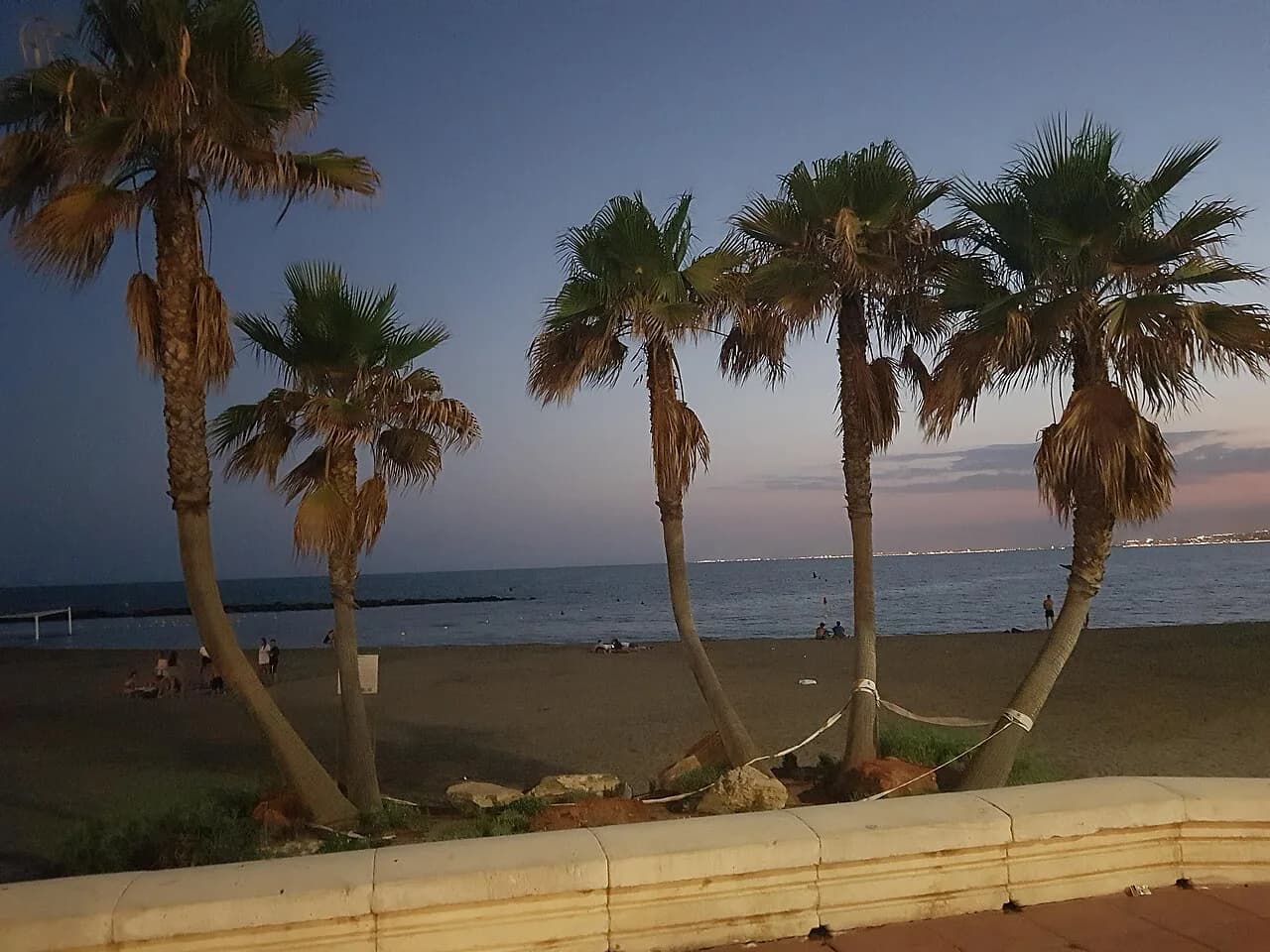
Agua Amarga beach runs the length of its whitewashed Almería village, with golden sand, clear water, Blue Flag status and step-free access to the shore.
On this page
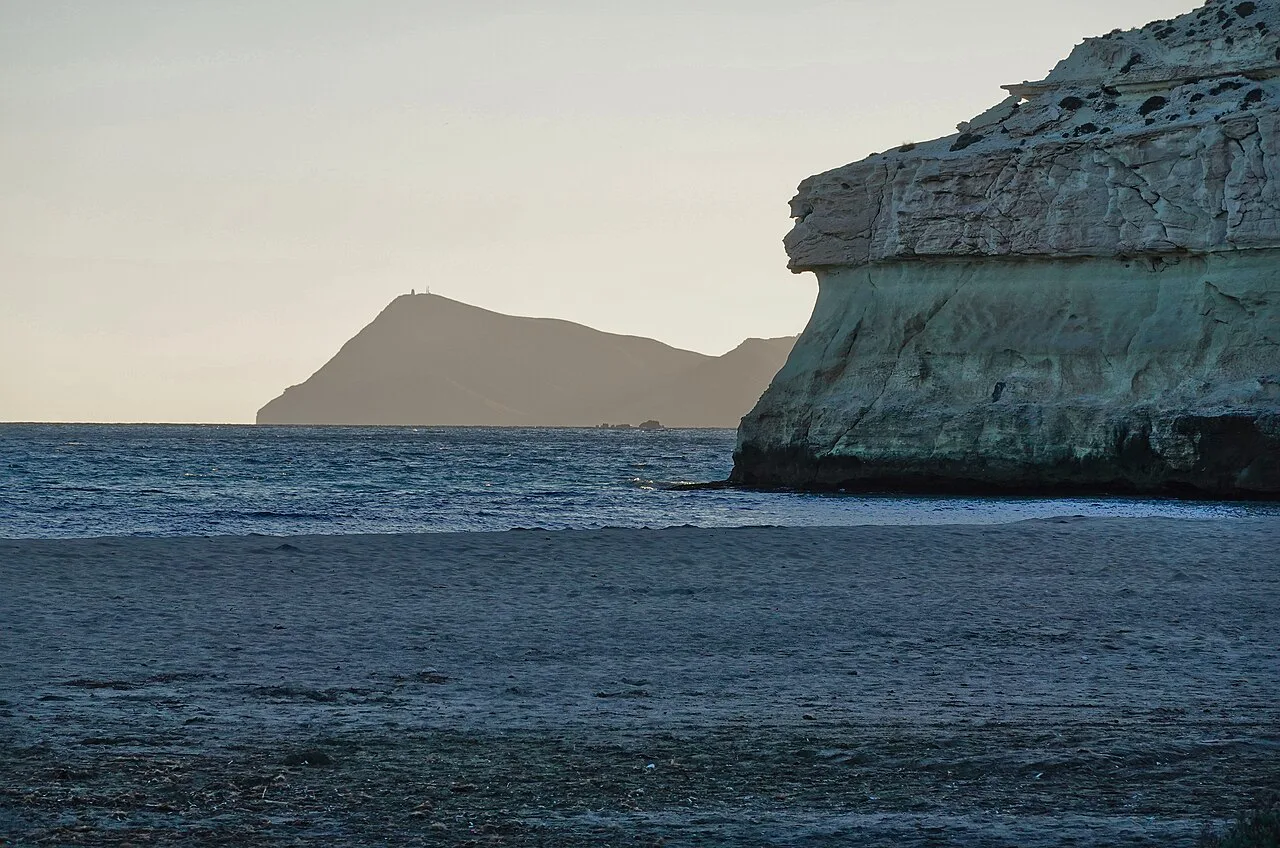
Agua Amarga beach is the rare Spanish beach where you step straight from a village street onto the sand, a wide band of fine golden sand running the length of a whitewashed hamlet in the Cabo de Gata-Níjar Natural Park. It suits families with small children, older swimmers and anyone who prefers a beach bar and a short walk back to the room over a wild cove reached by a long track.
You get over half a kilometre of beach, clear water and a proper infrastructure of lifeguard support and adapted access, all in a place small enough to cross in ten minutes. This guide covers how to reach it, where to settle, what the facilities actually are and when to time a visit.
Where Agua Amarga Beach Is
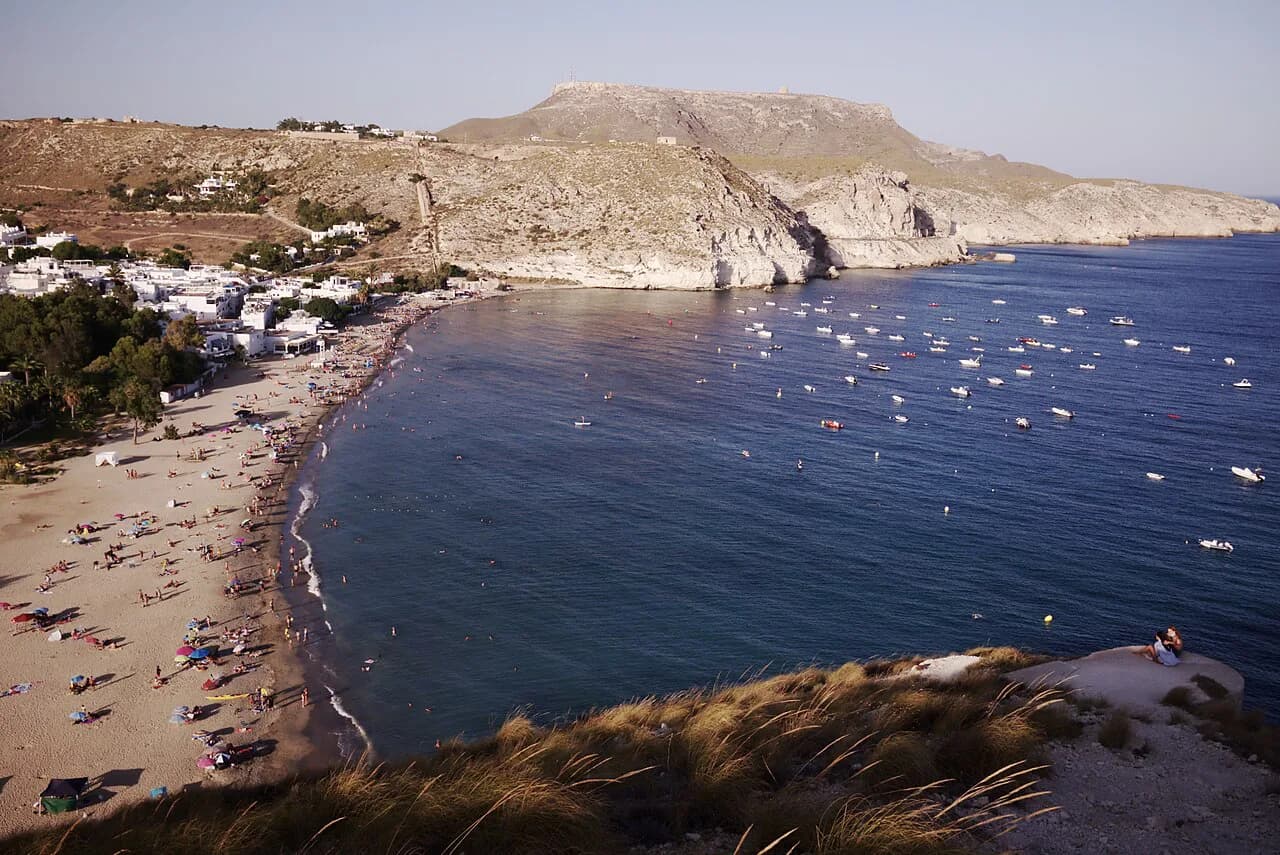
The beach is an urban one: it occupies the entire seafront of the village, just over 0.5 km long and of considerable width, so there is no headland path or car park walk between town and sand. The village sits within the Cabo de Gata-Níjar Natural Park in the municipality of Níjar, in Almería province.
That setting is the whole appeal. You get the natural park's dry hills and clear light around you, but the beach itself is a town beach with houses and streets directly behind it, not an isolated cove. For a wider look at the coast, the Almeria beaches guide covers the rest of the park.
Getting There
Agua Amarga sits on the coast road serving the eastern side of the Cabo de Gata-Níjar Natural Park, and the beach begins where the village streets end, so arrival is a matter of parking and walking a few minutes at most. Reserved parking spaces for drivers with reduced mobility are located beside the beach, with a sloping surface, marked bays of suitable dimensions and clear signage.
No bus line, timetable or parking charge for the village is set out in the published accessibility or tourism information, so build your journey around your own transport or ask the Níjar tourist office in advance. The village is compact enough that once you have found a space, everything on this beach is on foot.
The Sand and the Water
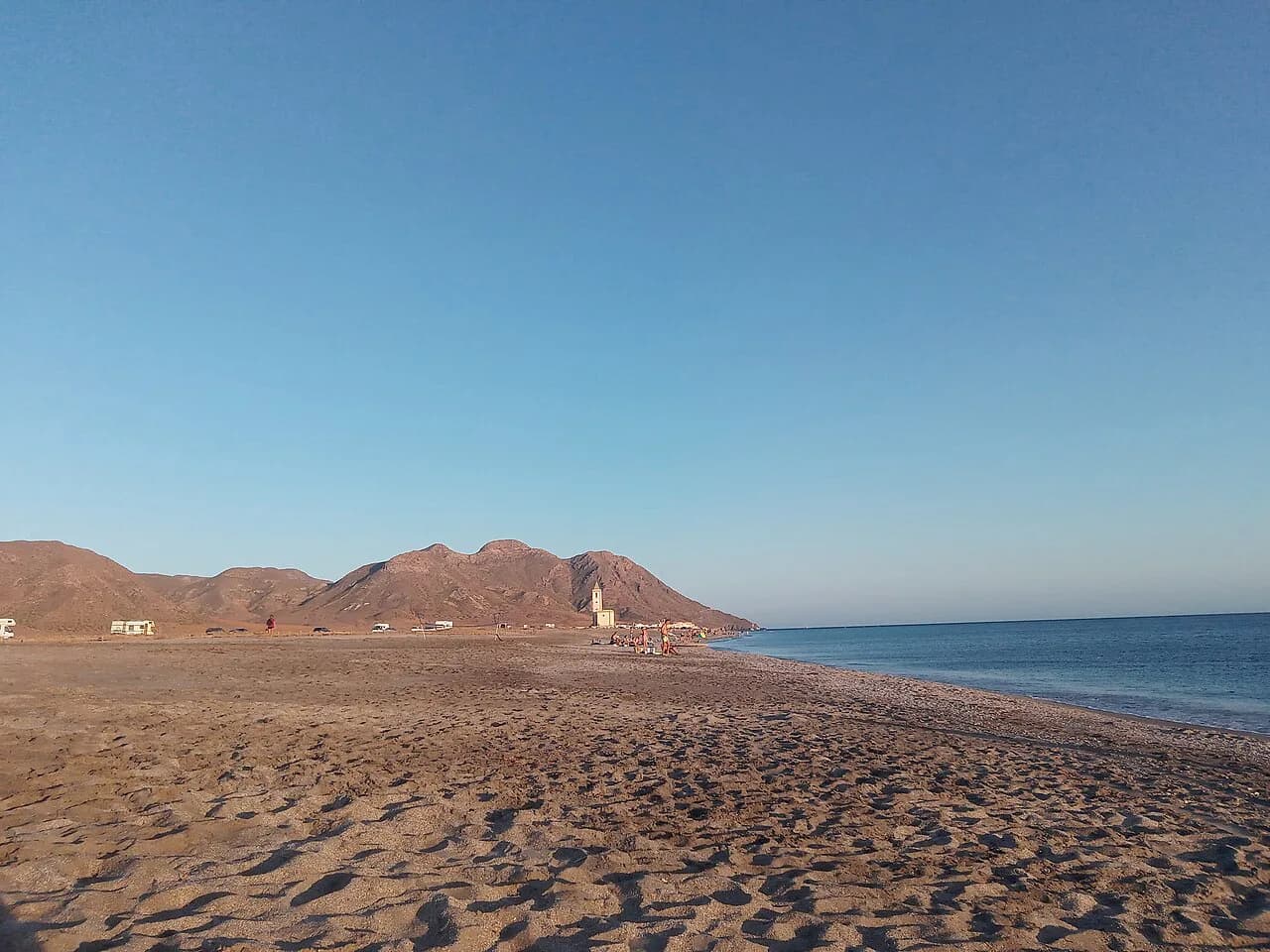
The sand is fine-grained and golden, the water here is described as crystal clear and calm, and the beach runs just over 0.5 km along the village front with a generous width behind it. That width matters: even in a busy week there is room to lay a towel well back from the waterline and leave a clear corridor for walkers.
The bowl of the bay and the village behind it shelter the beach on its inland side, and the natural curve of the shoreline means the far ends feel quieter than the middle, where most people come off the main streets. Children play comfortably in the shallows near the shore, while adults wanting a proper swim head for the deeper water off the beach's open side.
For snorkelling, the rocky margins at either end of the bay are the places to aim for. Boat trips from the village also run along this stretch of coast, with swimming stops and snorkelling over the rocks of the coves, which is a useful way to see the cliffs without walking them.
Flags, Lifeguards and Swimming
The beach holds both the Blue Flag and the Q for Quality flag, awarded statuses that reflect the standards the beach has met rather than a guarantee of conditions on the day you visit. Read the flags flying on the sand and follow the lifeguards' advice about the water.
Lifeguards provide bathing support on a set schedule and can be reached on 950 612 229, and they hold the amphibious chair and the crutches for beach use. Ask the lifeguards on arrival to check the equipment is available at the moment you want it.
Facilities
Facilities on the beach include accessible toilets and a shower with a level basin, an approach space of at least 80 cm and a fixed shower seat, plus a changing room with a key code. The toilet is adapted for wheelchair users and the key is held by the lifeguards, so ask them when you arrive and collect the ramp at the same time.
There is a plan of the beach beside the entrance with colour contrast and large print, and staff on site have training in supporting visitors with specific needs. The pavement around the beach is uniform and non-slip with no obstacles, though wheelchair circulation is only partial in places.
Accessibility in Detail
Step-free entry leads to folding walkways laid across the sand to the shore, an amphibious chair for getting into the water, two sets of amphibious crutches available from the lifeguards, and a reserved shaded area adapted for visitors with reduced mobility. Together these make the beach genuinely usable for wheelchair users and people with limited mobility, which is unusual for a beach of this quality.
The one weak point is the adapted toilet ramp, which has an excessive slope as reported, so plan for someone to help push or steady a wheelchair on the way up. Bear that in mind when choosing where to base yourself on the sand, and position near the accessible facilities rather than at the quiet far end.
Best Time to Go
The sea warms through June and stays comfortable into September, with July and August the busiest weeks when Spanish school holidays fill the village. Late June and early September give you warm water and a much calmer beach, and the town's compact size means it never feels as crowded as a resort strip.
Summer afternoons bring strong sun with little natural shade on the open sand, so the morning and late afternoon are the best hours for anyone with young children or sensitive skin. Bring an umbrella, plenty of water and shoes for the hot sand, and use the shaded rest area if you need accessible shade.
Nearby Beaches
The wilder beaches of the Cabo de Gata-Níjar Natural Park are within easy reach of Agua Amarga, and Playa de los Muertos, Almería, is the best-known of them for its steep pebble bank and clear water. Rodalquilar and El Playazo, Rodalquilar make a good second stop if you want a longer sweep of sand and a mining village to wander afterwards. If you are weighing this coast against others further north, the best beaches in Murcia offer a similar mix of town beaches and wilder sand.
Visiting with a Dog
The sources compiled for this guide do not describe a dedicated canine zone, designated dog hours or any specific rule permitting dogs on the sand at Agua Amarga. What they do record is the infrastructure that governs the beach itself: two parking spaces reserved for vehicles used by people with reduced mobility, folding walkways leading down to the shore area, a reserved shaded area adapted for those visitors, and one amphibious chair with two sets of crutches available on request to the lifeguard or by calling 950612229. The beach has obtained both the "Q" of quality flag and the Blue Flag, and the lifeguards provide a support-to-bathing service during an established schedule.
The accessibility report provided for the resource notes that the adapted toilet in the common areas is opened by asking the lifeguard for the key, and that the ramp leading to it has an excessive slope. The shower basin is level with the floor and has a fixed shower seat, but no support bars, no mixer tap and no adjustable-height shower head. The walkway onto the sand is described as appropriate for people with reduced mobility, and the reserved parking next to the establishment has a sloping surface, is well indicated and is of appropriate dimensions. Anyone managing a dog alongside a member of the group who uses these facilities will find the reserved parking and the walkway the practical points of contact with the beach.
Agua Amarga beach itself is an urban beach occupying the entire length of the population centre, just over 0.5 km, with considerable width, fine-grained golden sand and crystal clear, calm waters. It sits on Calle Cavala, 29, 04149 Níjar, Almería, in the province of Almería, and the contact for the resource is telephone 950360012 and secretariaturismo@nijar.es. A beach of this length and width within the town means that walking a dog along the edge of the sand and the adjacent streets keeps you within a short distance of the reserved parking, the walkway and the lifeguard post where the amphibious chair and crutches are held.
Walks and Beaches Near Agua Amarga for Dog Owners
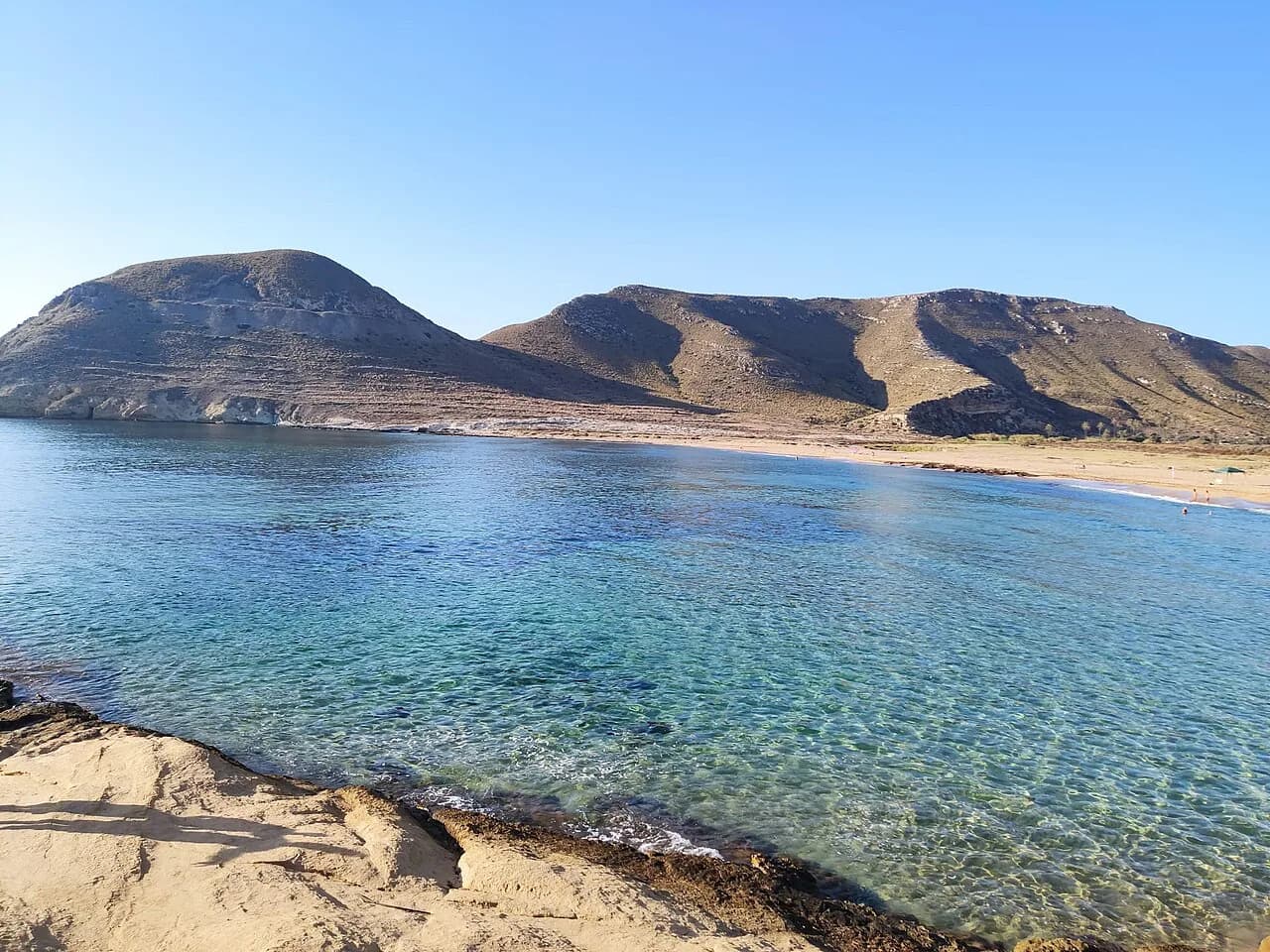
Beyond the beach itself, the coastline around Agua Amarga offers walking routes that suit visitors travelling with a dog. Cala de Enmedio is an isolated cove surrounded by arid hills and volcanic formations within the Parque Natural de Cabo de Gata-Níjar. It cannot be reached by car; access is on foot or by kayak. One trail leaves from the Cala del Plomo car park, which is controlled in summer and closed to vehicles when full, and reaches the cove in about 30 to 40 minutes over an easy path with little elevation change. The route from Agua Amarga is about 30 to 40 minutes as well, climbing gently through the Sierra de Gata among esparto grass, palmito and retama. It forms part of a longer sendero continuing to Cala del Plomo, San Pedro and Las Negras, with a total duration of some 4 to 5 hours. In calm weather the cove can also be reached by kayak from Agua Amarga in 20 to 30 minutes, which makes it possible to discover other coves and hidden caves along the way. Walking with a dog here means carrying water, food and sun protection, because Cala de Enmedio has no services and no shade, and wearing comfortable footwear for the routes.
Cala de Enmedio is a protected natural area, so the environment should be respected. There are no lifeguards and no services, and safety depends on each visitor's own responsibility. On calm days the crystalline, turquoise water and fine, clear sand make it a good place to swim, relax or snorkel, but when the strong levante wind blows, dangerous currents can form; bathers should take this into account before entering the water. Because the cove is reached only on foot or by kayak, planning the walk around the wind and the sea conditions is part of the outing.
Playa de los Muertos, lying between Carboneras and Agua Amarga, is another option for a coastal excursion in the same protected Cabo de Gata-Níjar Natural Park. The beach is at the foot of a cliff and can only be reached on foot. From the pay-and-display car park off the AL-5106, where parking charges apply only in summer, three paths lead down to the sands: one of 700 metres that is quite steep and starts from the Tourist Information Point, a much shorter but much steeper path beginning at the edge of the car park, and a far more accessible route with recently built stone steps starting from the Mirador Playa de los Muertos. A boat trip from Carboneras to the beach is another option, with times and prices available from the town's tourist information office. The beach is a pristine kilometre of fine white gravel and, as it falls within the natural park, has a high level of conservation protection, so there are no public facilities: visitors should bring a beach umbrella, sun cream and enough food and drink. The water is crystal clear and good for snorkelling, though the shoreline hides a sharp drop and children should always be accompanied by an adult; on windy days swimming becomes dangerous. When facing the sea, the nudist area lies to the left.
Visiting either of these wild beaches with a dog means a long walk from the car park or the kayak landing point, with no facilities to fall back on, so the water, food and shade carried on the way matter. The routes themselves are simple paths through dry Mediterranean vegetation, with little elevation change on the Cala de Enmedio trail and steep sections on the Playa de los Muertos paths, and the hours spent walking are part of the day's plan rather than a quick stop.
Plan Your Beach Day
Treat Agua Amarga as a town beach with a natural park on its doorstep: park once, settle near the middle for facilities or at the ends for quiet, and use the lifeguard service for the amphibious chair and crutches if you need them. Build the day around a morning or late-afternoon swim, and keep a second beach in reserve for the afternoon.
Frequently Asked Questions
Is Agua Amarga beach sandy?
Yes. The beach is made of fine-grained golden sand and runs the full length of the village, just over 0.5 km, with a generous width behind the waterline. The sand is backed by the village streets rather than cliffs or dunes.
How long is Agua Amarga beach?
The beach is just over 0.5 km long according to the published accessibility report, and occupies the entire seafront of the village. That makes it short enough to walk end to end in ten minutes, with the middle the busiest part.
Is Agua Amarga beach accessible for wheelchair users?
Yes, with caveats. There are reserved parking bays beside the beach, step-free entry, folding walkways across the sand to the shore, an amphibious chair and crutches from the lifeguards, an adapted toilet and shower, and a reserved shaded area. The adapted toilet ramp has an excessive slope as reported, so plan for help.
What facilities are on Agua Amarga beach?
Facilities include lifeguard bathing support to a published schedule, an amphibious chair and two sets of amphibious crutches held by the lifeguards, adapted toilets and a shower with a fixed seat, a changing room with a key code, and a beach plan in large print at the entrance.
When is the warmest sea at Agua Amarga?
The sea warms through June and stays comfortable into September, with July and August the warmest and busiest weeks. Late June and early September give warm water with far fewer people on the sand.
Which beaches are near Agua Amarga?
The beaches of the Cabo de Gata-Níjar Natural Park are within easy reach, including Playa de los Muertos with its steep pebble bank and clear water, and the long sweep at El Playazo near Rodalquilar. Both work as an afternoon add-on to a morning at Agua Amarga.
Sources
Beach notes for your next trip
Optional updates when we add or revise beach guides.
You might also like
Continue reading
More guides you'll find useful