Sóller Beaches: Port de Sóller, Platja des Través and the North Coast
Plan a beach day from Sóller: the pebble-and-sand bay at Port de Sóller, the tram from town, and boat trips to Sa Calobra and Cala Tuent on the north coast.
On this page
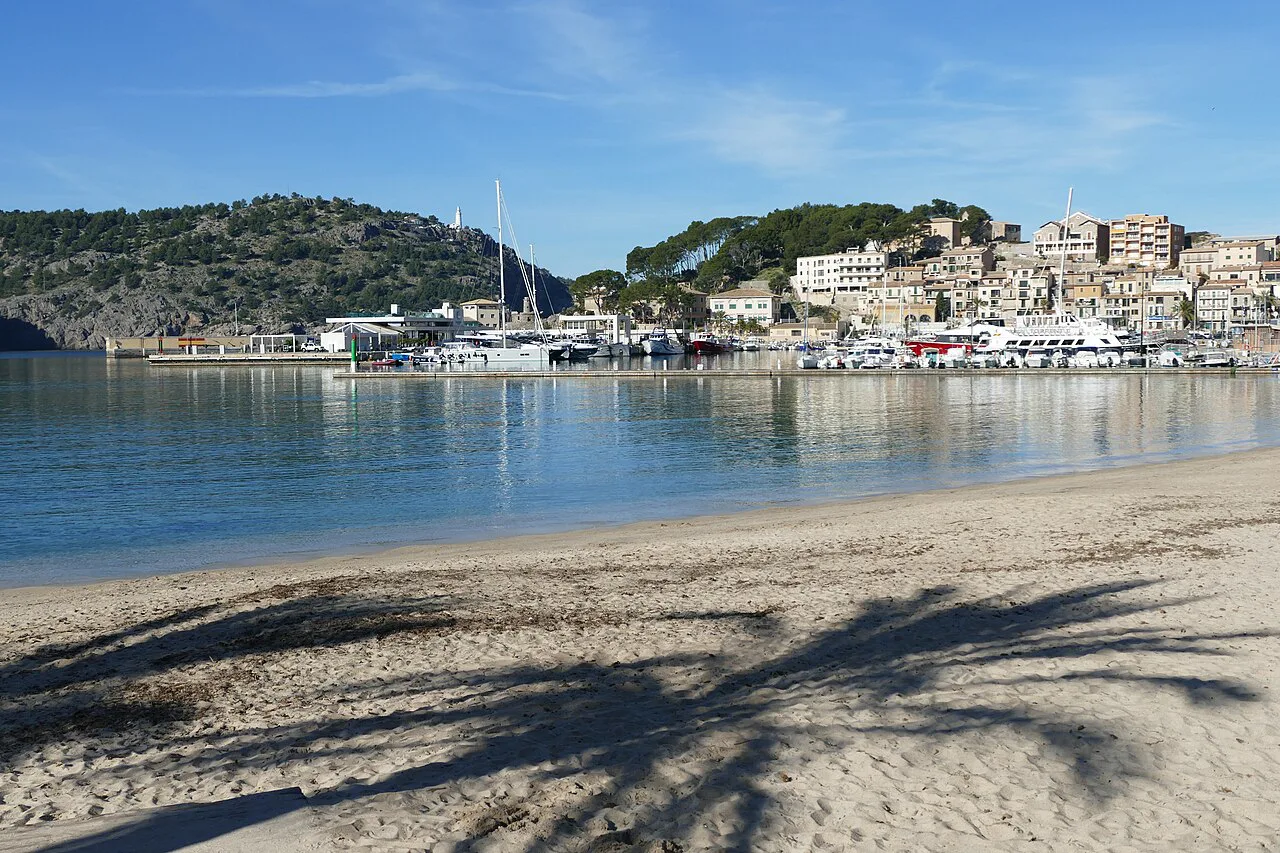
Sóller works as a beach base because the swimming happens a short hop downhill from the town, in the Bay of Sóller. The port's main beach, Platja des Través, runs as a long curve of pebble and sand rather than powder sand, so it suits travellers who want clear water and mountain scenery over soft footing.
Why base yourself in Sóller for beach days
The town sits at the foot of the Serra de Tramuntana, and Port de Sóller lies in the bay of the same name on the north coast. A road and a tramway link the two, which means you can sleep among the stone streets of Sóller and still be on the promenade within a short ride.
The port itself has grown from a fishing district into the main tourist centre of this stretch of coast, with renovated hotels, restaurants and a working marina. That mix gives you a swim, a seafood lunch and an evening walk in one compact area without needing a car.
Platja des Través in Port de Sóller
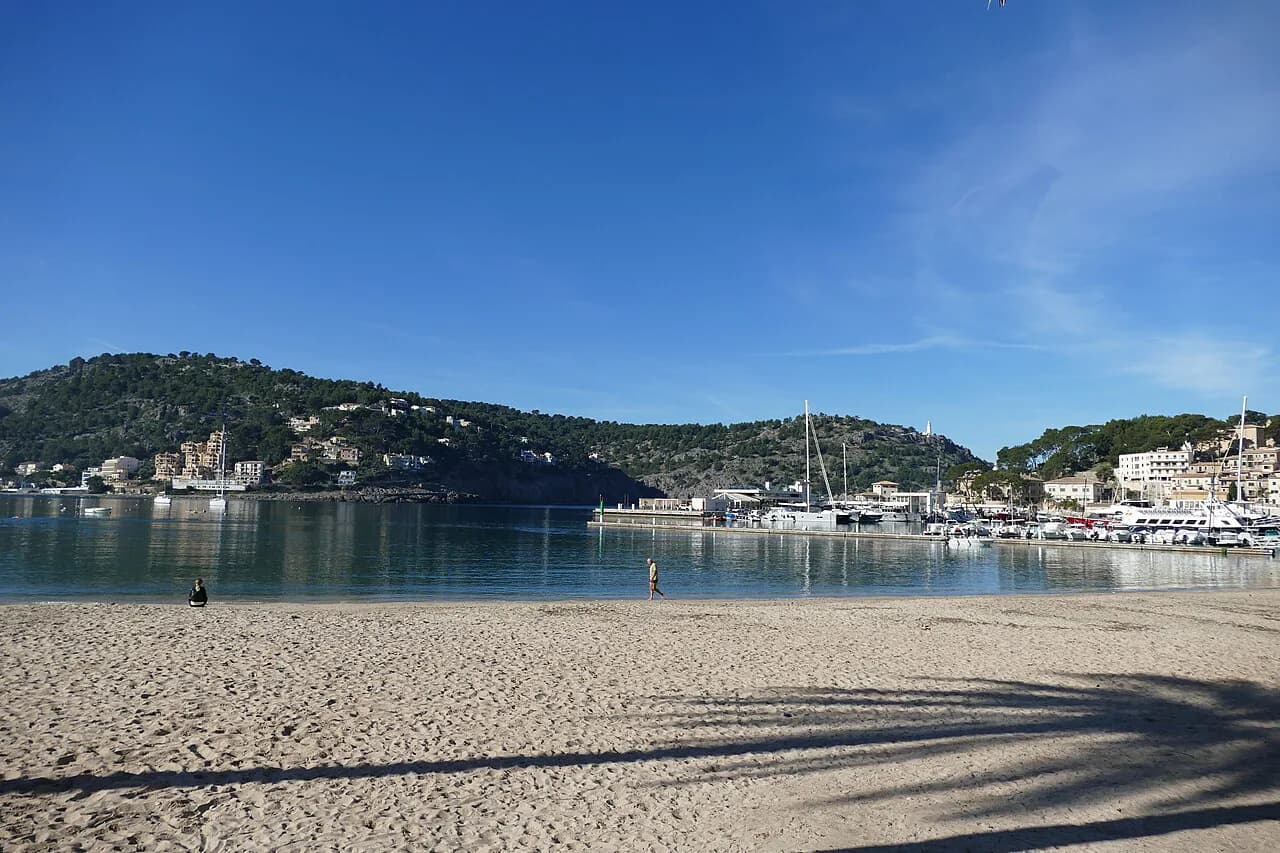
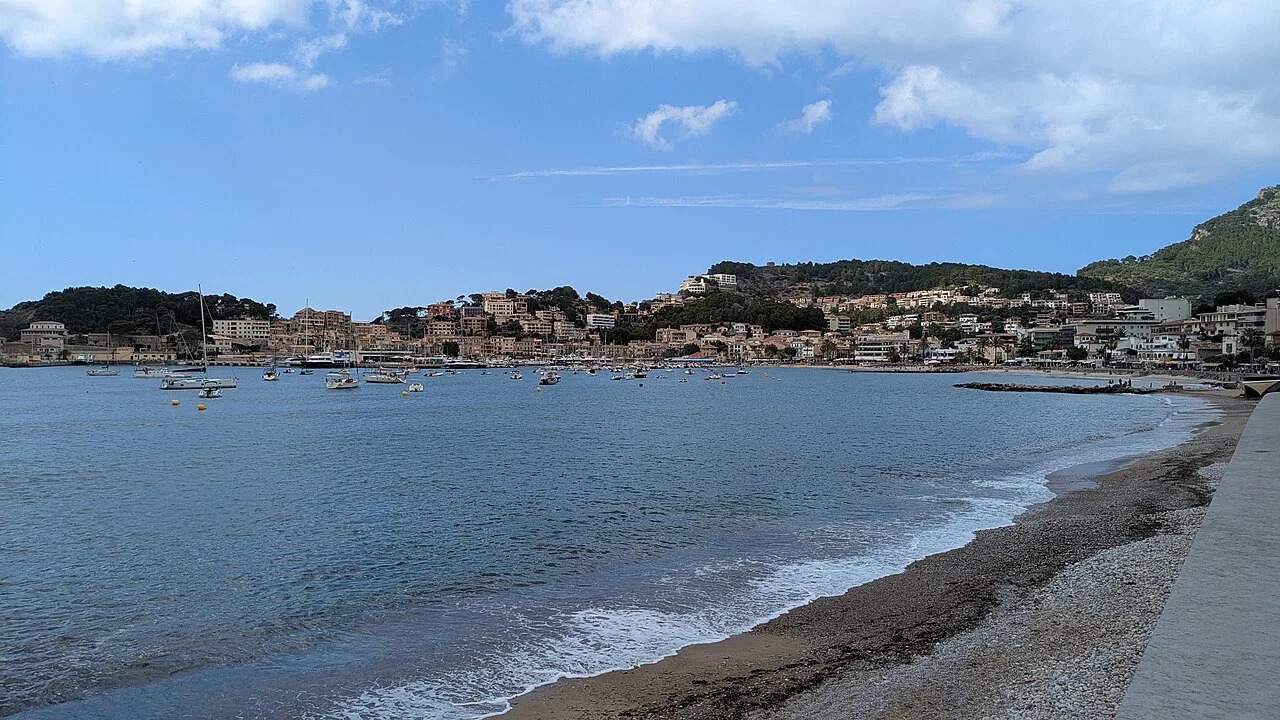
Platja des Través is a 610-metre beach of pebble and sand set directly in Port de Sóller, on Mallorca's northwest coast. Its length means you can walk away from the busiest patch near the tram stop and find more room towards the ends of the bay.
Pebble beaches shelve more steeply than sand in many cases, so expect the water to gain depth within a few steps rather than a long shallow paddle. Families with small children should settle near the waterline and stay close, while stronger swimmers get the benefit of clear, deep water close to shore.
Getting there
The tram connects Sóller town with the port, and the last stop sits in front of the Marisol restaurant at the tramway station. From there you walk straight onto the docks and promenade, so the beach, the marina and the boat departure points form one walkable circuit.
By road, Port de Sóller is reached from Sóller through the Tramuntana foothills, and the seafront is laid out for strolling rather than driving. Park once and walk the bay rather than moving the car between ends of the beach. Confirm tram departure times with the Sóller railway and tram operator before you set out.
You can also reach the bay on foot from the port itself: the promenade runs along the water, and a walk towards Cap Gros takes about 25 minutes each way on a route that stays beside the sea. That path starts either from the port or from the tram stop at the Plaza de Sa Torre.
The sand and the water
The Bay of Sóller is enclosed by the Serra de Tramuntana, with the Cap Gros headland closing its western side. The beach faces open water on the northwest coast, so bring a windbreak or a light layer for breezier afternoons, and choose your spot according to which way the wind is blowing on the day.
Shade on the promenade comes and goes with the sun's angle and the buildings behind the beach, so the most reliable plan is to carry your own umbrella and water. Peak summer weeks fill the strip closest to the tram stop first, while the far ends of the 610 metres stay calmer.
Facilities around the port
Bars and restaurant terraces line the docks and the walkways beside the marina, where traditional Mallorcan llaüts moor alongside motorboats and yachts. Menus lean on Mediterranean and seafood cooking, from paellas and rice dishes to grilled fish, which makes the port an easy place to eat after a swim.
The seafront neighbourhood of Santa Catalina climbs the slope behind the fishing pier in a maze of narrow streets and steep steps, with terraces at the top looking over the bay. Walking up there gives you a view of the whole beach and helps you pick your spot for the next day.
Boat trips from Port de Sóller
The shipping company Barcos Azules runs excursions from the port to Sa Foradada, Tuent and Sa Calobra, following a north coast of cliffs, coves, caves and clear water. Sailings follow the Barcos Azules timetable, so book directly with the company and match your day to the departure you are given.
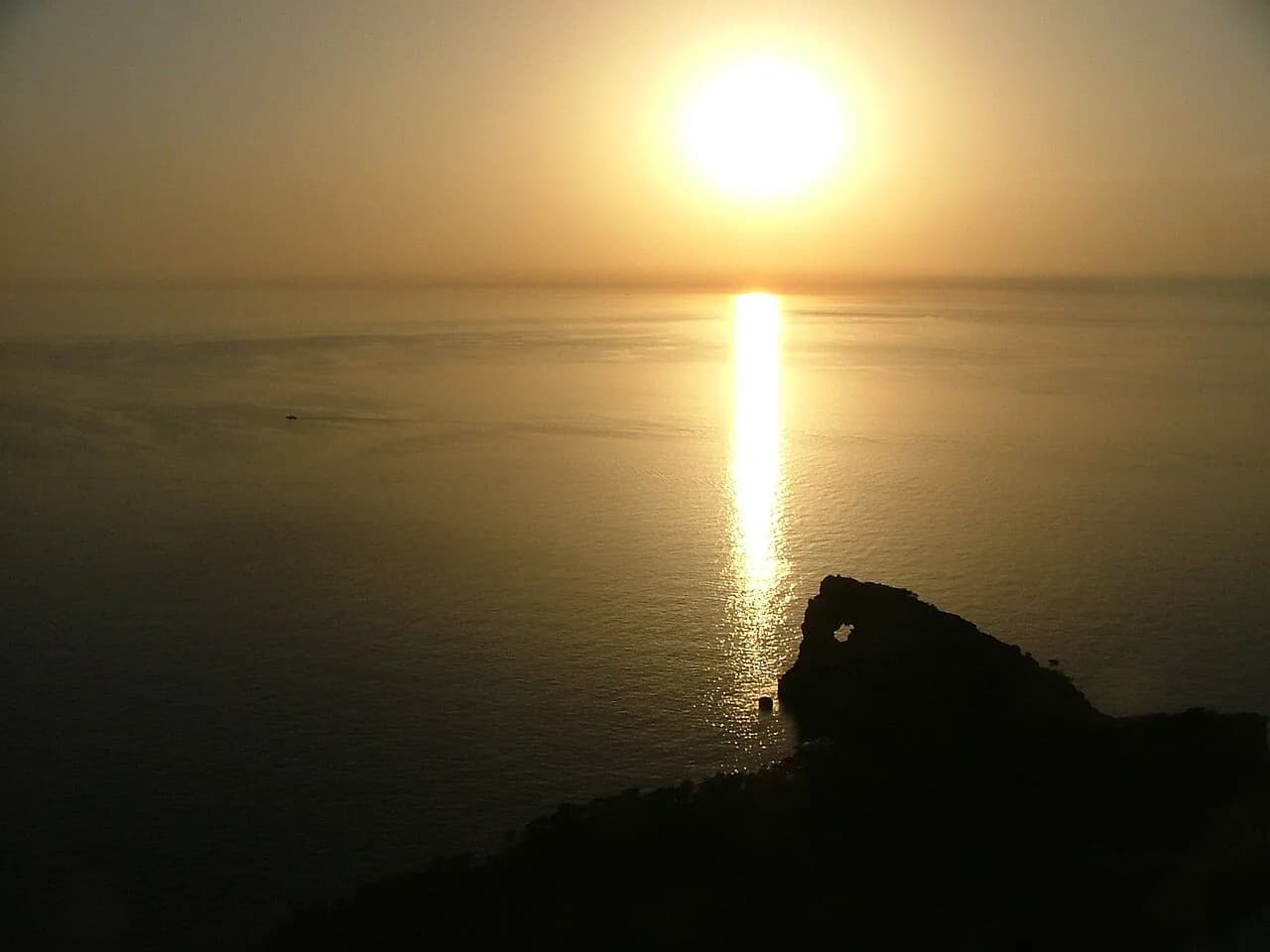
The run to Sa Foradada passes the coast of Deià and ends at a perforated rock jutting into the sea between Deià and Valldemossa. If you would rather make a land-based day of it, Sa Foradada from Sóller is a rewarding half-day in its own right, and the boat gives you the same landmark from the water.
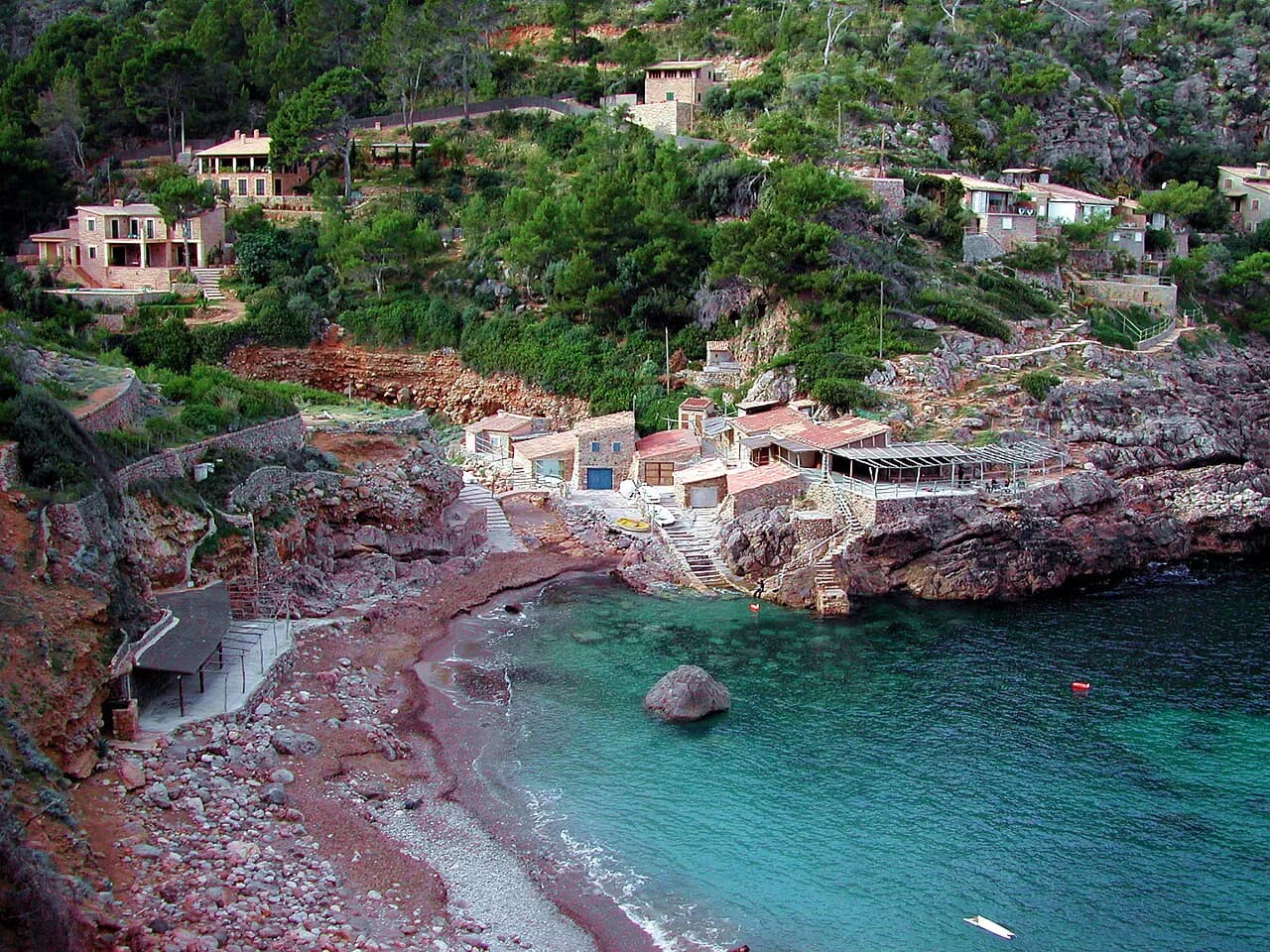
On the same coastline, Cala Deià combines a small pebble cove with a hamlet of terraces and is the obvious companion when you want a swim plus a long lunch.
Cala Tuent: the widest undeveloped cove on the north coast
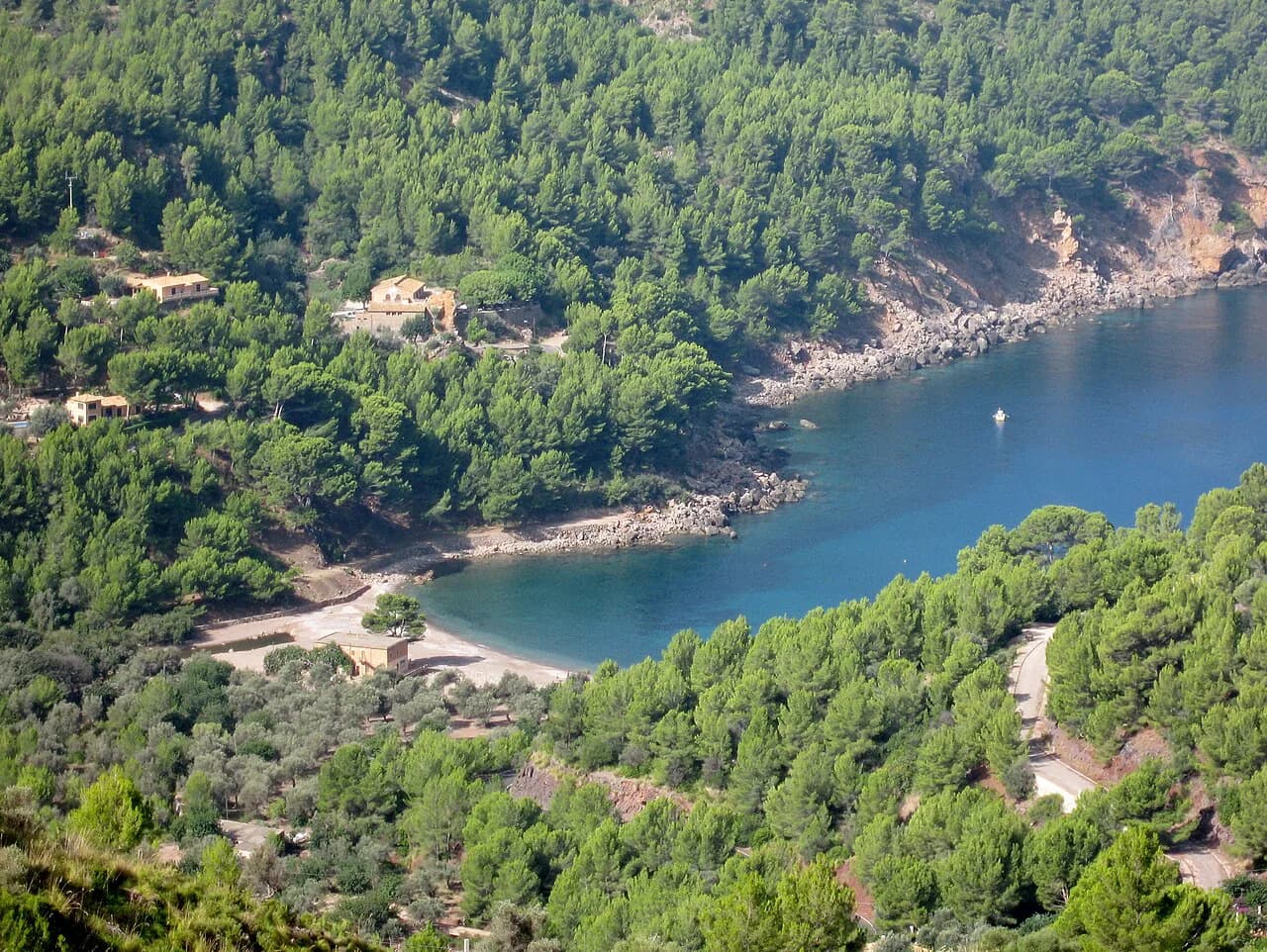
Cala Tuent is the widest undeveloped beach on the north coast, a cove backed by pinewoods beneath the highest peaks of the Serra de Tramuntana. It sees comparatively little traffic, so it rewards travellers who want quiet over convenience.
Because it is remote, the boat from Port de Sóller is the least demanding way to get there, and you should plan your whole day around that single sailing. Bring everything you need for a few hours of shade and swimming, since the cove offers solitude rather than a resort strip.
Sa Calobra and the Torrent de Pareis
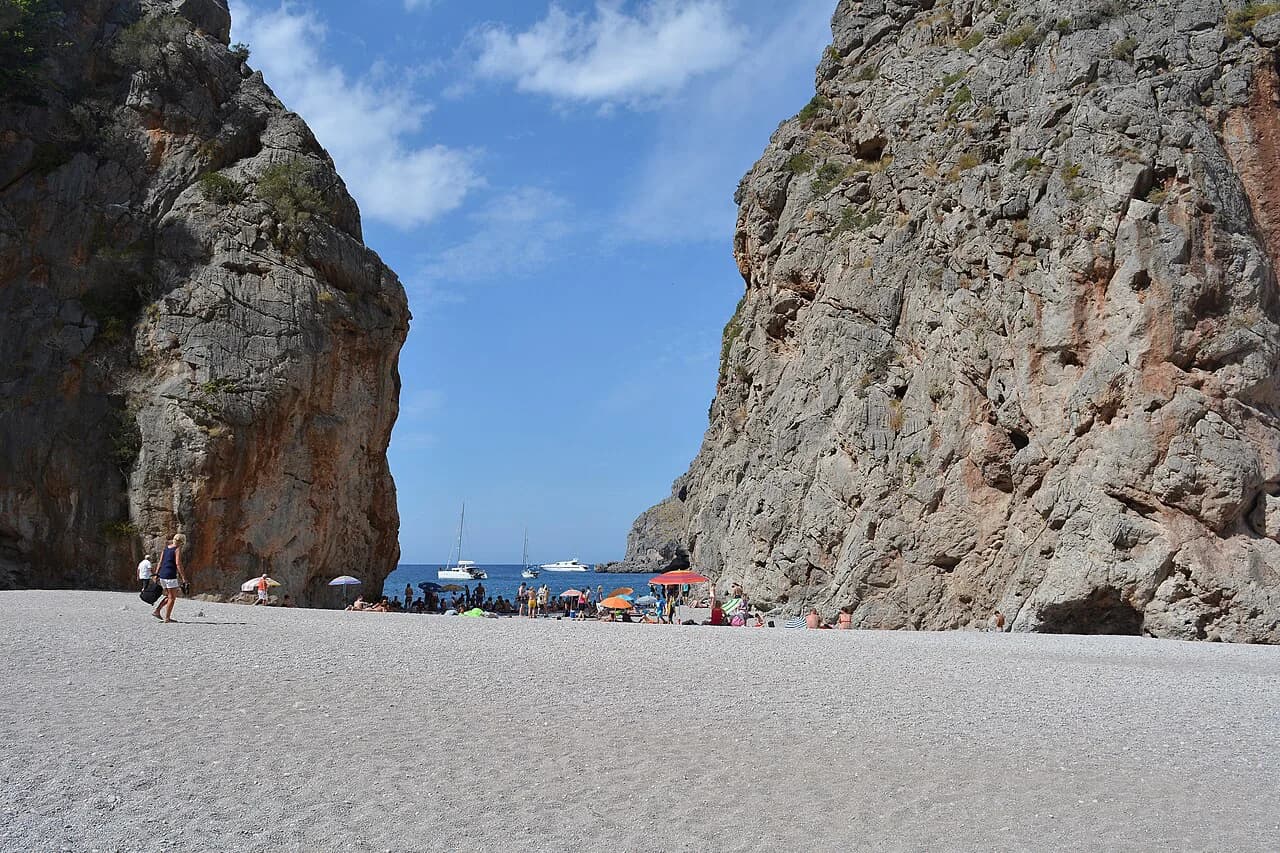
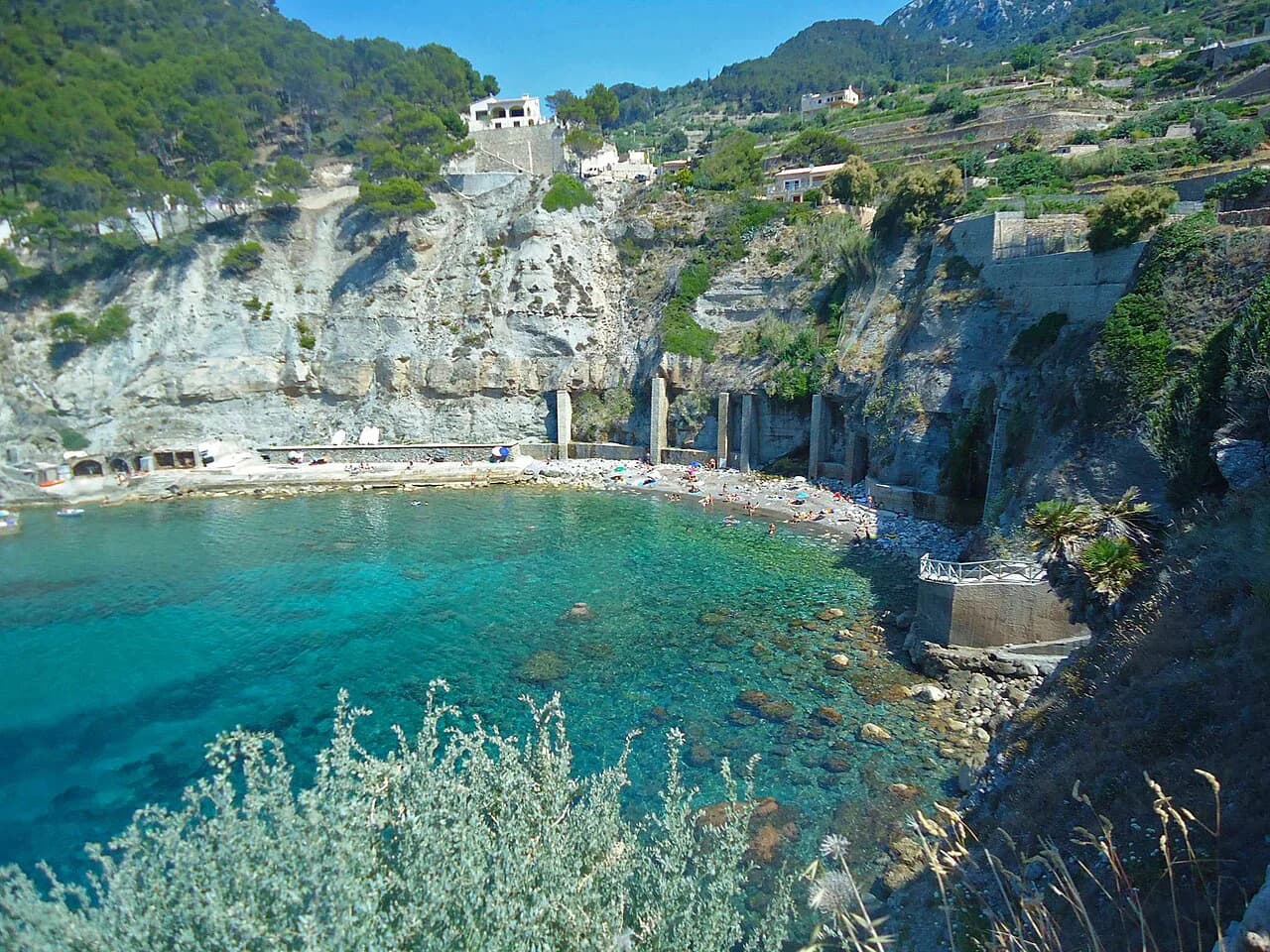
Sa Calobra pairs a small fishermen's harbour with a pebble beach and turquoise water, reached by boat from the port or by road. From the beach, a cobbled path through tunnels cut in the rock leads to the mouth of the Torrent de Pareis, a canyon of high stone walls that meets the sea as a tongue of white pebbles.
The Torrent de Pareis is a declared Natural Monument, and the walk from the harbour to its mouth is the point of the trip as much as the swim. Wear shoes with grip for the cobbles and tunnels, and treat the boat timetable as the fixed part of your day.
Who each beach suits
Platja des Través suits mixed groups best: swimmers get deep water close to shore, non-swimmers get a long promenade and easy food, and anyone who tires of the pebbles can retreat to a terrace. Families with very small children should weigh the pebble footing and quick shelving against the convenience of stepping off the tram almost onto the sand.
Quiet-seekers should give the port beach a miss in high summer and take a boat instead, choosing Cala Tuent for solitude or Sa Calobra for drama. Walkers get the best of both by combining a morning swim with the Cap Gros lighthouse path or the climb to Torre Picada.
The Torre Picada walk starts from Port de Sóller and reaches the foot of the tower in under half an hour, passing olive terraces and pine forest. The tower's interior is closed, but the outlook over the bay and the rugged north coast justifies the climb.
Best time to go
Mallorca's north coast swims comfortably from late spring into early autumn, with July and August the busiest weeks for both the port and the boats. Shifting your beach day to June or September gives you warmer water than spring and far more room on the promenade than midsummer.
On boat days, the timetable rather than the weather sets your schedule, so pick a sailing that leaves you a proper window ashore at Tuent or Sa Calobra. Check crossing times with Barcos Azules and book ahead in peak weeks.
Nearby beaches and coves to combine with a Sóller stay
Beyond the bay, the north coast's cliffs and coves give Sóller its range of beach days, and the Mallorca beach round-up places the island's headline sands in distinct coastal groups from the north down to the southwest. Use it to see how the Sóller coves sit alongside the bigger resort beaches, then plan one boat day and one tram day rather than trying to tick off several coasts in a single trip.
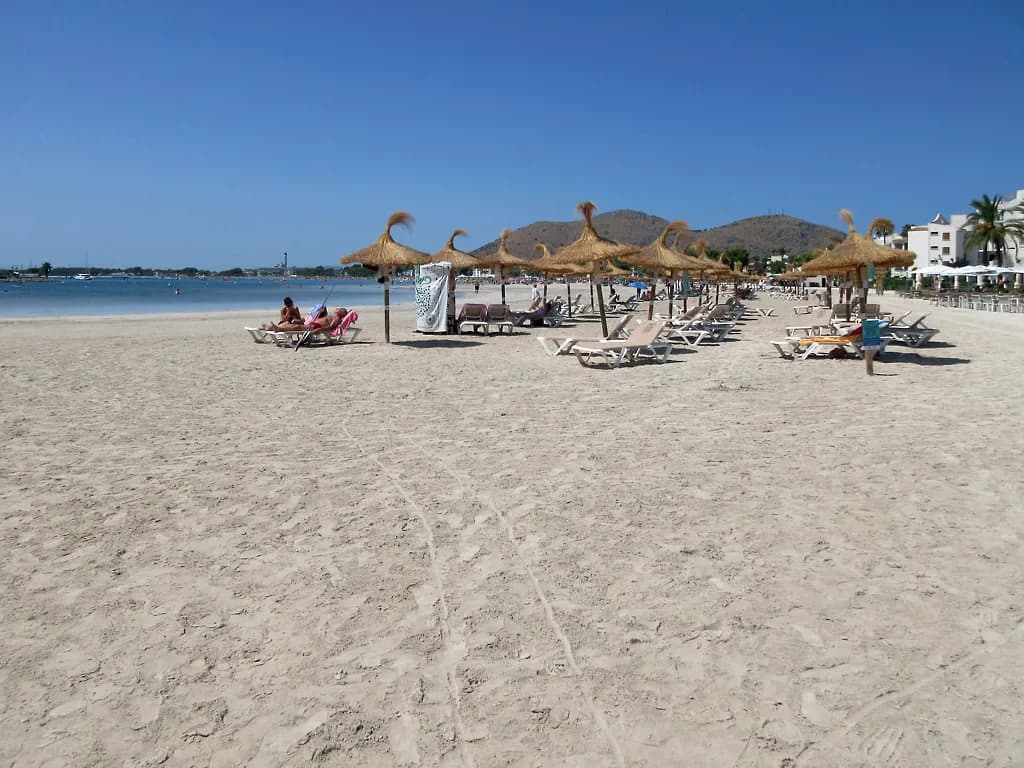
If you are touring the island more widely, Alcudia beaches in the north offer long sand and shallow water as a contrast to Sóller's pebbles, and make a sensible pairing with a Palma arrival or departure.
Walking trails around Port de Sóller with a dog
The paths that leave from Port de Sóller are the answer for dog owners who want to combine beach time with a walk away from the promenade. Because the bay is enclosed by the Serra de Tramuntana, several short routes start right at the port itself, so you can set out on foot without needing to drive anywhere first. The route to the Cap Gros lighthouse begins either from the port, following the promenade, or from the tramway stop at the Plaza de Sa Torre. If you walk it, the route runs by the sea the whole way and takes about 25 minutes, climbing a narrow road with some curves, though the climb is affordable. At the top, the north-facing viewpoint gives one of the best views of the Bay of Sóller, the harbour and the mountains, and on the other side of the lighthouse an esplanade facing west is the place to watch the sunset.
A second option climbs to the Torre Picada, a watchtower that stands on top of a cliff above the port. Starting from Port de Sóller, a walk of less than half an hour between terraces of olive trees and pine forest brings you to the foot of the tower. The interior is not accessible, but the views over the bay, the mountains and the rugged north coast make the walk worth the effort. Built after the sixteenth-century raids on Sóller, the tower is magnificently preserved and gives a sense of why this stretch of the Mallorcan coastline was once guarded by a whole line of watchtowers. On both routes the ground is uneven and there is little shade from pine and olive, so carry water.
Remember what these walks lead to: Platja des Través, the 610-metre pebble and sand beach directly in Port de Sóller. A dog that has walked up to the lighthouse or the tower in the heat will want to cool off, and the beach and the water sports of the port sit right at the end of the promenade, so you can finish the loop where you started.
Plan Your Visit
Build your Sóller beach days around two anchors: the tram down to Platja des Través for an easy swim and lunch on the promenade, and one Barcos Azules sailing for the coves you cannot reach comfortably on foot. Pack shoes that cope with pebbles and a path through tunnels, plus your own shade for the open beach.
Check current tram and boat times before you commit to a day, especially in July and August when both fill up. Everything else, from where to eat to which end of the bay to swim, you can settle once you are standing on the promenade.
Explore more Sóller beaches
Frequently Asked Questions
Can you swim at Port de Sóller?
Yes. Platja des Través runs for 610 metres along the bay in Port de Sóller, with pebble and sand underfoot and water that deepens close to shore. Weak swimmers and small children should stay near the waterline.
How do you get from Sóller town to the beach at Port de Sóller?
Take the tram from Sóller down to the port; the last stop is in front of the Marisol restaurant, a few steps from the promenade. You can also drive, park once and walk the bay. Times come from the tram operator's timetable.
Is the beach at Port de Sóller sand or pebble?
It is a mix. Platja des Través is described as a 610-metre pebble and sand beach, so bring shoes you can wear into the water and a mat rather than relying on soft dry sand.
Which beaches can you reach by boat from Port de Sóller?
Barcos Azules runs excursions from the port to Sa Foradada, Cala Tuent and Sa Calobra, passing the Deià coast along the way. Sailing days and times vary, so plan your day around a specific departure.
Is Cala Tuent quieter than Port de Sóller?
Yes. Cala Tuent is the widest undeveloped cove on the north coast, backed by pinewoods beneath the Tramuntana peaks, and it draws far fewer people than the promenade at Port de Sóller.
Sources
Beach notes for your next trip
Optional updates when we add or revise beach guides.
You might also like
Continue reading
More guides you'll find useful