Sitges Gay Beaches: Bassa Rodona, Balmins and El Muerto
Plan a beach day on Sitges' gay beaches: busy Platja de la Bassa Rodona on the promenade, semi-nude Platja Balmins and the nudist walk to Platja del Muerto.
On this page
Sitges earns its reputation as one of the Mediterranean's most welcoming towns for gay travellers, and the beaches are part of that story: gay sunbathers spread along the whole promenade, with Platja de la Bassa Rodona the busiest and most sociable stretch. The reward for a little walking is variety, because a short stroll from the church headland or a longer coastal path brings you to two long-established clothing-optional beaches.
This guide sorts the three by role rather than ranking them: a central scene beach you reach on foot from any hotel in town, a semi-nude cove tucked behind the church, and a nudist beach out beyond the wooded slope. Each suits a different kind of day, and the choice comes down to how far you want to walk and how much company you want.
Why Sitges Works as a Beach Base
Sitges sits on the Costa del Garraf about 35 km west of Barcelona, close enough for a day trip and far enough to feel like a resort town in its own right. The old centre is a knot of narrow streets full of bars, restaurants and shops, and it has kept its character rather than being swallowed by high-rise development.
The town's gay scene has been established for decades, and the beach side of it is refreshingly uncomplicated: you do not need a specific bar, club or membership to join the crowd on the sand. Sunbathers gather openly along the promenade, and the atmosphere on the main beach is mixed rather than segregated, so couples, friends and solo travellers all fit in.
Because everything sits within walking distance of the seafront, you can plan a morning swim, an afternoon on a quieter cove and an evening in town without touching a bus. The catch is that the most secluded beaches are the ones that demand the most legwork, which is exactly what keeps them quieter.
Platja de la Bassa Rodona: The Promenade Beach
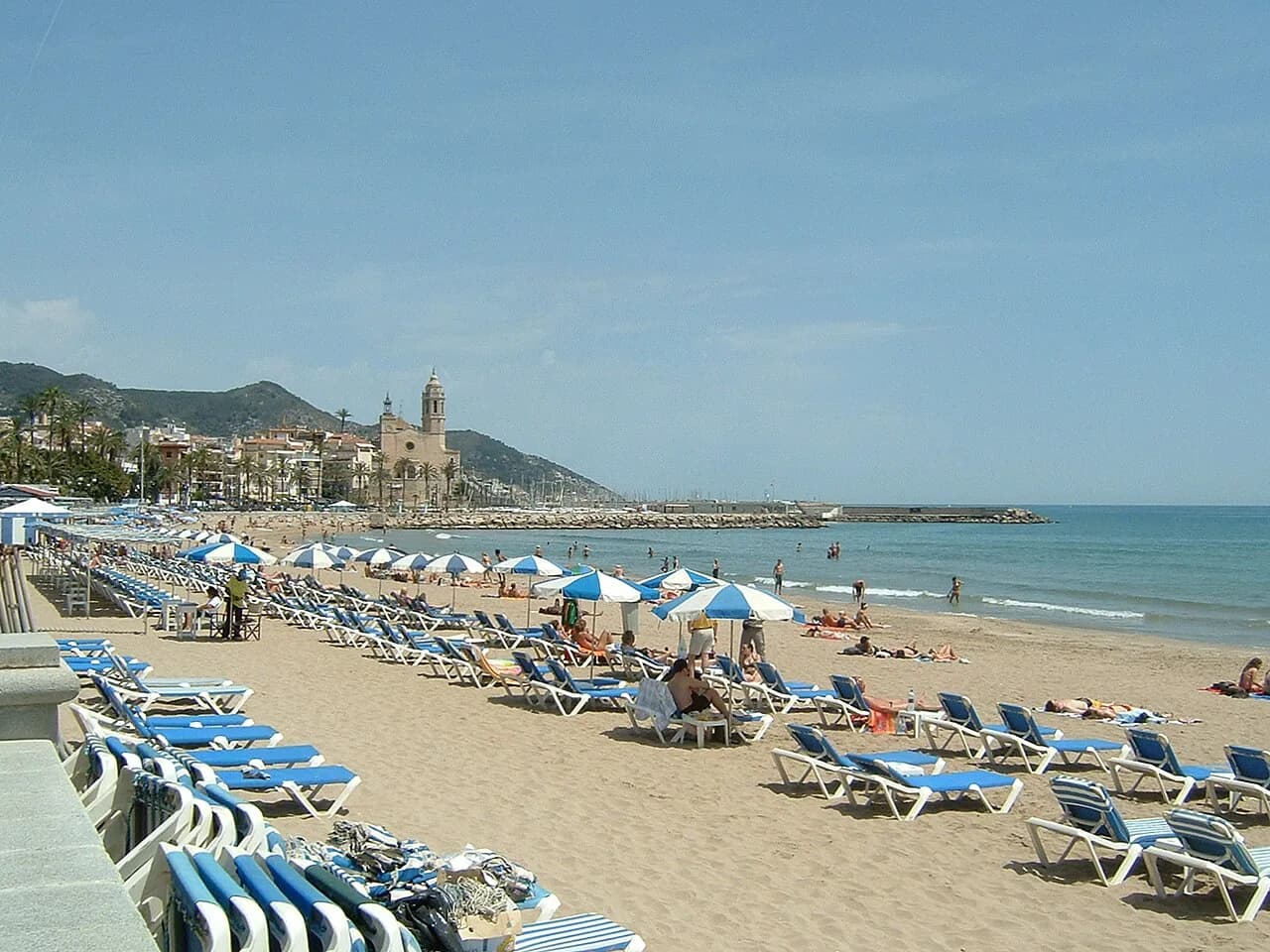
Platja de la Bassa Rodona is the beach to choose if you want the social side of Sitges without leaving town. It fronts the Passeig Marítim, the seafront promenade, and in peak season the gay crowd concentrates here more than anywhere else on the waterfront.
Gay sunbathers are visible on every beach along the promenade, so Bassa Rodona is best understood as the busiest and most popular of a series rather than an exclusive zone. If you want a little more breathing room while staying central, walk a few minutes along the promenade in either direction and settle wherever the spacing suits you.
Its position makes it the easiest choice for a short break or a first day: you can swim, eat and return to your hotel on foot, and you are never far from a bar or a shop. The trade-off is company — in July and August this is a crowded, lively stretch of sand rather than a quiet one.
Getting There
From Barcelona, Sitges is straightforward as a day trip by train or road, and once you arrive the beaches need no further transport: the promenade beaches are a short walk from the station and the old town. Coming from the airport or the city, allow for a full day if you want to combine the main beach with the walk to Balmins or El Muerto.
For Platja de la Bassa Rodona, simply head for the Passeig Marítim and pick your spot; there are no paths, steps or gates involved. Balmins and El Muerto are the ones that require a plan, since both sit away from the main seafront and are reached on foot.
The Sand and the Water at Bassa Rodona
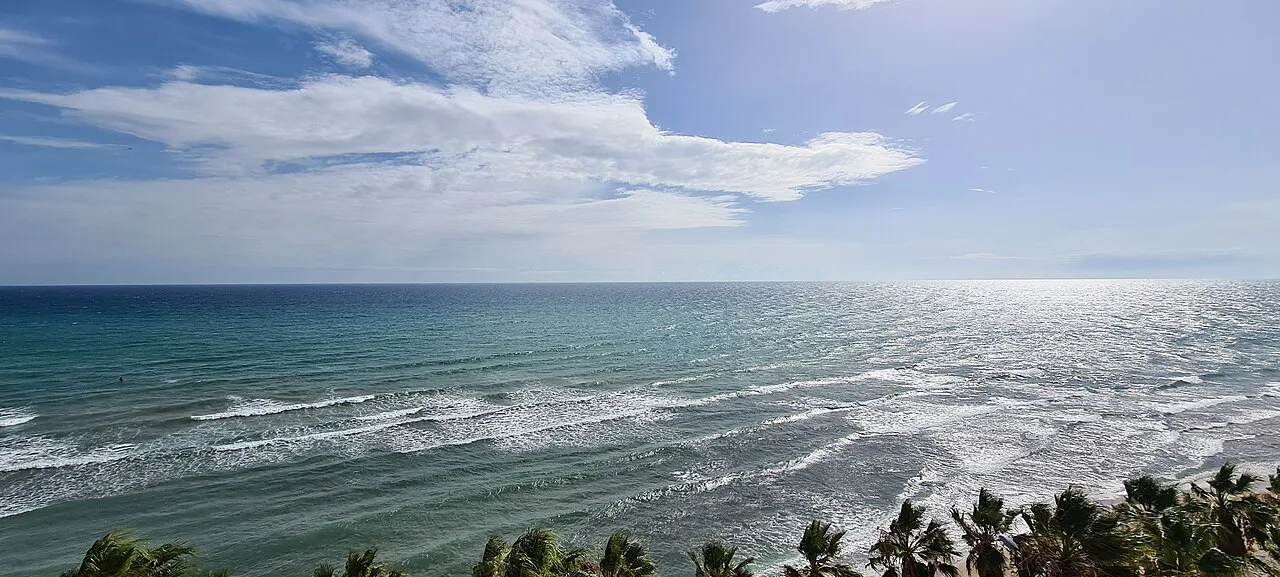
The promenade beach is broad and gently shelving, which makes it comfortable for swimming and for standing about in the shallows. Because it faces the open Mediterranean, it takes whatever swell the day brings, so pick your spot with an eye on the wind and where other people are swimming, and check the conditions on the day rather than counting on flat water.
Space is generous along the promenade as a whole, but the section in front of the busiest bars fills early in high summer. Arriving before mid-morning buys you room to spread out, and the later afternoon empties again as day-trippers head back to Barcelona.
Facilities along this stretch are those of a town beach: bars and restaurants line the promenade behind the sand, so food, drink and shade are a few steps away rather than a hike. Bring your own towel and water as a baseline, then top up from the seafront as you go.
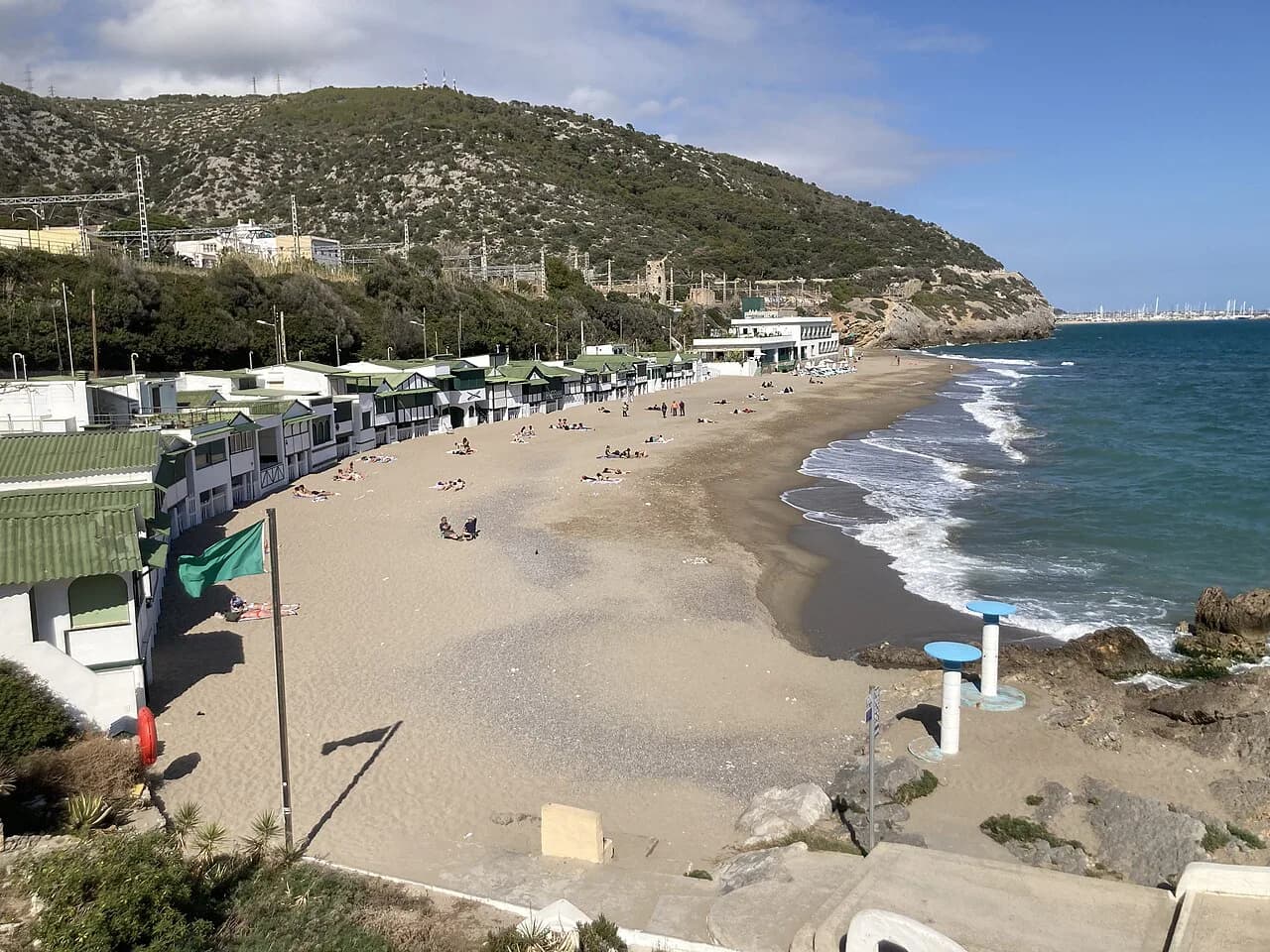
Platja Balmins: The Semi-Nude Cove
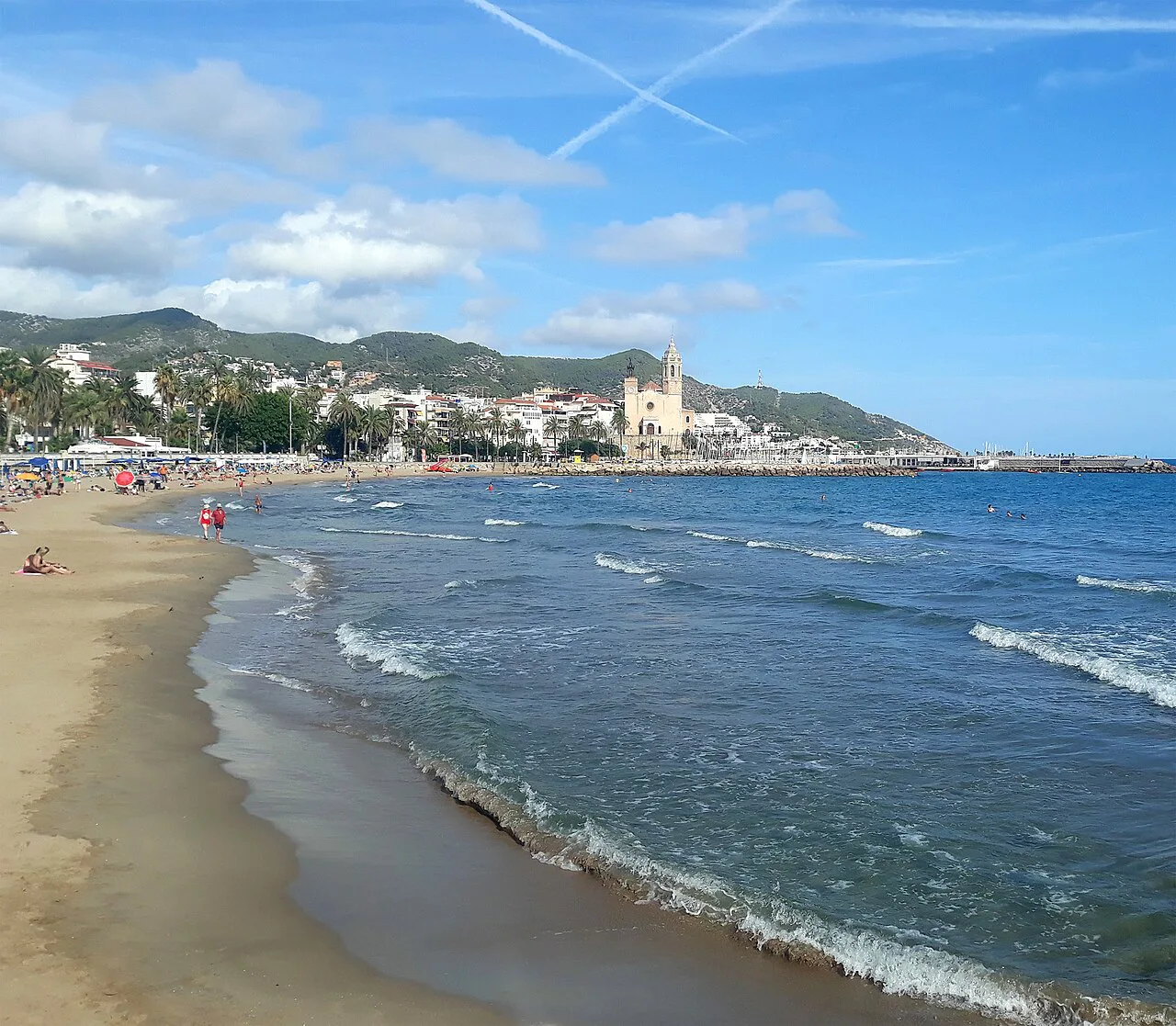
Platja Balmins is the middle option between the busy promenade and the long walk to El Muerto: a semi-nude beach in a secluded cove where people wear as much or as little as they like. Clothing-optional rather than exclusively naturist, it draws a mixed crowd of gay and straight sunbathers, some in swimwear and some without.
A small beach bar serves cold drinks and snacks, which means you can settle in for a few hours without carrying a full picnic. That combination of shelter, mixed company and a bar makes Balmins the easiest introduction to nude and semi-nude sunbathing for anyone curious but not ready for a long walk.
Walking to Balmins
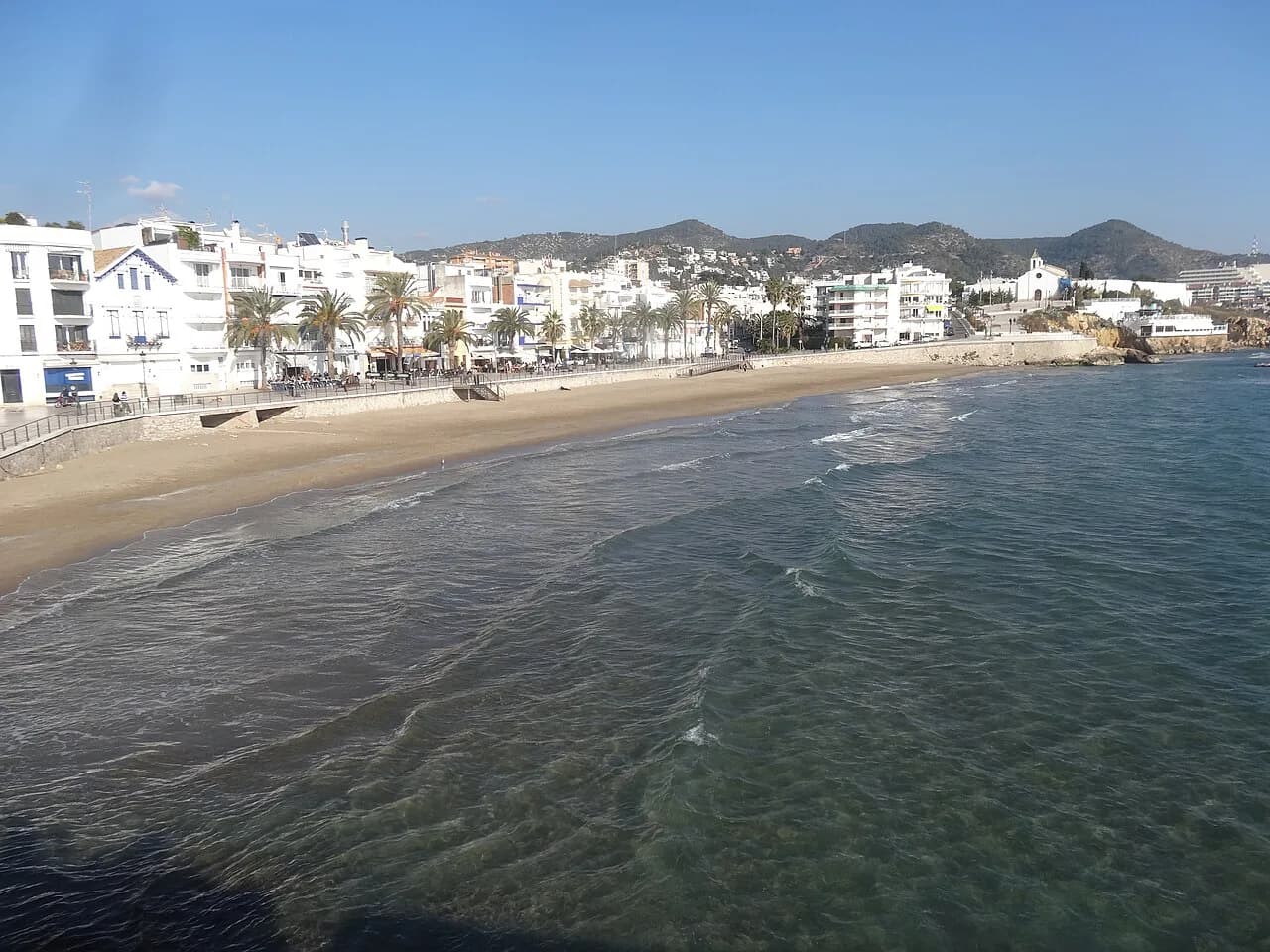
Balmins lies beyond the headland that carries the Església de Sant Bartomeu i Santa Tecla, the church that marks the eastern end of the old town. From the church side of town it is a short walk rather than an expedition, which is why it stays busy with people who want seclusion without a trek.
The path is on foot only, so travel light: a towel, water, sun cream and something to wear over your swimwear for the walk back through town. If you are staying in the centre, Balmins is realistic as a half-day outing that leaves the afternoon free for the promenade.
Platja del Muerto: The Nudist Beach Beyond the Slope
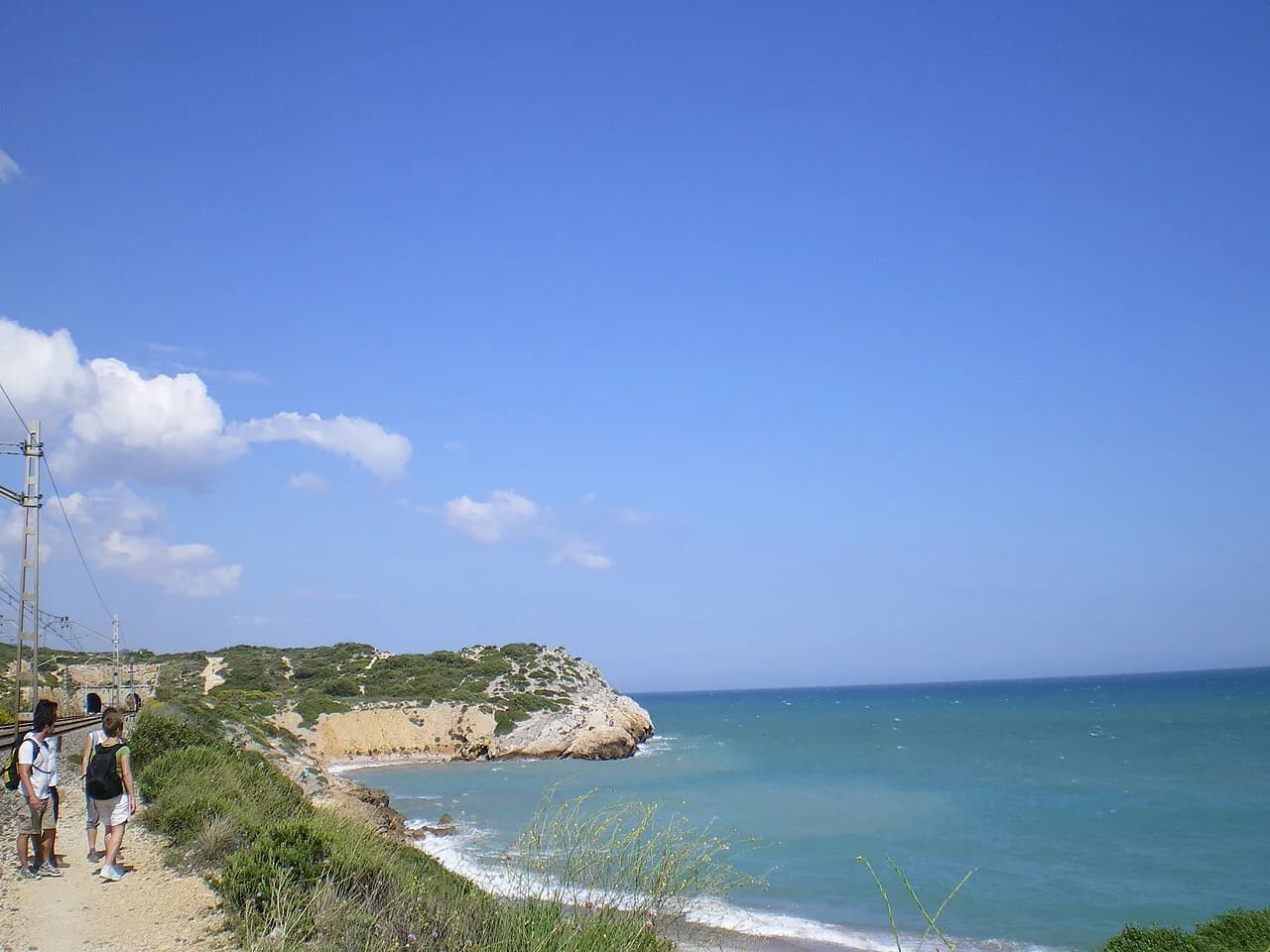
Platja del Muerto, also written as Platja dels Muertos, is Sitges' long-established nudist beach and lies roughly a 45-minute walk from town. The walk puts most people off, which is precisely why it appeals to anyone who wants space, quiet and a more traditional naturist atmosphere.
Behind the beach rises a wooded slope, reached across the track, and that wooded area is part of the draw for regulars. The setting feels removed from the resort even though you are still on the same coastline, so the day has more of a walking-and-swimming rhythm than a bar-and-lounger one.
The walk back is the real consideration, particularly in the heat of the afternoon, so start earlier than you would for Bassa Rodona and carry more water than you think you need. For a fuller picture of the clothing-optional stretches along this coast, see the nude beach guide.
What to Bring to the Nude and Semi-Nude Sections
Expect the ordinary etiquette of a clothing-optional beach: settle well away from other people's towels, keep photography to your own group, and treat the sand as shared public space. Taking your swimwear off is a choice rather than a requirement at Balmins, and people on both sides of that decision share the cove comfortably.
Practical kit matters more than at a serviced town beach: a large towel, a hat, drinking water, sun cream and footwear for the walk, plus a cover-up for the return through town. On the longer walk to El Muerto, a light bag with snacks makes the day far easier, since the nearest bar is back in Sitges.
Best Time to Go
The season in Sitges runs warm from June through to the end of October, and gay nightlife runs alongside it: bars get going from around 10pm, most stay open until at least 3am, and clubs carry on until sunrise. That late-night rhythm shapes beach timing, since many people swim in the afternoon and eat late.
Sitges Gay Pride falls in early July and is the busiest week of the summer for the town as a whole, with the promenade beach at its most packed. If you want the social buzz, that is the time for it; if you want space on the sand, aim for late June or September, when the sea is still comfortably warm but the crowds thin.
The town sees around 300 days of sunshine a year, which makes a washout unlikely but does not guarantee calm water or gentle heat. Build your day so the beach is one part of it rather than the whole plan, with the old town and the seafront bars as a fallback when the wind picks up.
Nearby Beaches to Combine
If you have more than a weekend, the coastline either side of Sitges rewards a day out. Platja de Sant Sebastià sits at the western end of the seafront and is easy to fold into a promenade walk, while the long sweep at Castelldefels beach towards Barcelona offers a change of scale and a wider, more open shoreline.
Further south, the small cove at Garraf village sits between the hills and the sea, with shallow water and a setting that feels nothing like the resort strip. Staying in Sitges and treating these as day trips keeps your base simple while still giving you four or five genuinely different beaches.
Plan Your Beach Day
Choose Bassa Rodona for a sociable, low-effort day with bars within reach, Balmins for a semi-nude cove a short walk behind the church, and El Muerto if you are happy to walk 45 minutes for quiet and open nudist sunbathing. Most visitors do all three over a few days, pairing the central beach with one of the outlying ones each morning.
Book your accommodation in the old town so the promenade is on your doorstep, keep a light beach bag ready for the walks, and use the overnight train or road link from Barcelona to make Sitges a day trip rather than a base. If your trip stretches along the coast, the same point-and-walk logic works on the Girona beaches further north and the Tarragona beaches to the south. For the wider seafront picture before you go, start with the Sitges beaches overview and work outwards from there.
Frequently Asked Questions
Which Sitges beach is best for gay travellers?
Platja de la Bassa Rodona on the Passeig Marítim is the most popular, with gay sunbathers concentrated there in peak season. Gay sunbathers also spread along the other promenade beaches, so you can walk a few minutes further if you want more space.
Is Platja Balmins clothing-optional?
Yes. Balmins is a semi-nude beach in a cove beyond the church headland, where people wear as much or as little as they choose, and the crowd is a mix of gay and straight sunbathers. A small beach bar serves cold drinks and snacks.
How long is the walk to Platja del Muerto?
Platja del Muerto is roughly a 45-minute walk from Sitges town, which is what keeps it quiet. It is a long-established nudist beach with a wooded slope behind it, so carry water and start earlier than you would for the promenade.
Can you visit Sitges' gay beaches as a day trip from Barcelona?
Sitges is about 35 km west of Barcelona, so a day trip is realistic, but the walk to El Muerto makes it tight. If you want both the promenade and the nude beach, an overnight stay in the old town works better.
When is Sitges busiest in summer?
Sitges Gay Pride in early July brings the biggest crowds of the season, and August stays busy with peak-summer visitors. June, September and October give warm sea and a calmer promenade.
Do you need to pay to use Sitges' beaches?
No entrance fee applies to the sand itself at any of these beaches. Sunbed and bar charges are set on the seafront, so ask at the venue on the day.
Sources
Beach notes for your next trip
Optional updates when we add or revise beach guides.
You might also like
Continue reading
More guides you'll find useful