Platja de la Ribera, Sitges: Beach Guide for a Day in Town
Platja de la Ribera is Sitges' broad golden town beach, with calm water, sunbed rental and a palm-lined promenade. What to expect and who it suits.
On this page
Platja de la Ribera is the beach that makes Sitges work as a no-car day out: a broad sweep of golden sand on the town's own shoreline, with the church-and-seafront core a short walk away. It suits families who want easy, gradual entry to the water, swimmers who prefer a long shoreline to a cramped cove, and anyone arriving by train who would rather not add a bus ride to the journey.
What you get is a working town beach rather than a secluded one, so the trade-off is straightforward: you win convenience, facilities and a promenade, and you share the sand with a lot of other people in high season. Plan around that and Ribera makes an easy, low-friction base for a day in Sitges.
Where Platja de la Ribera sits in Sitges
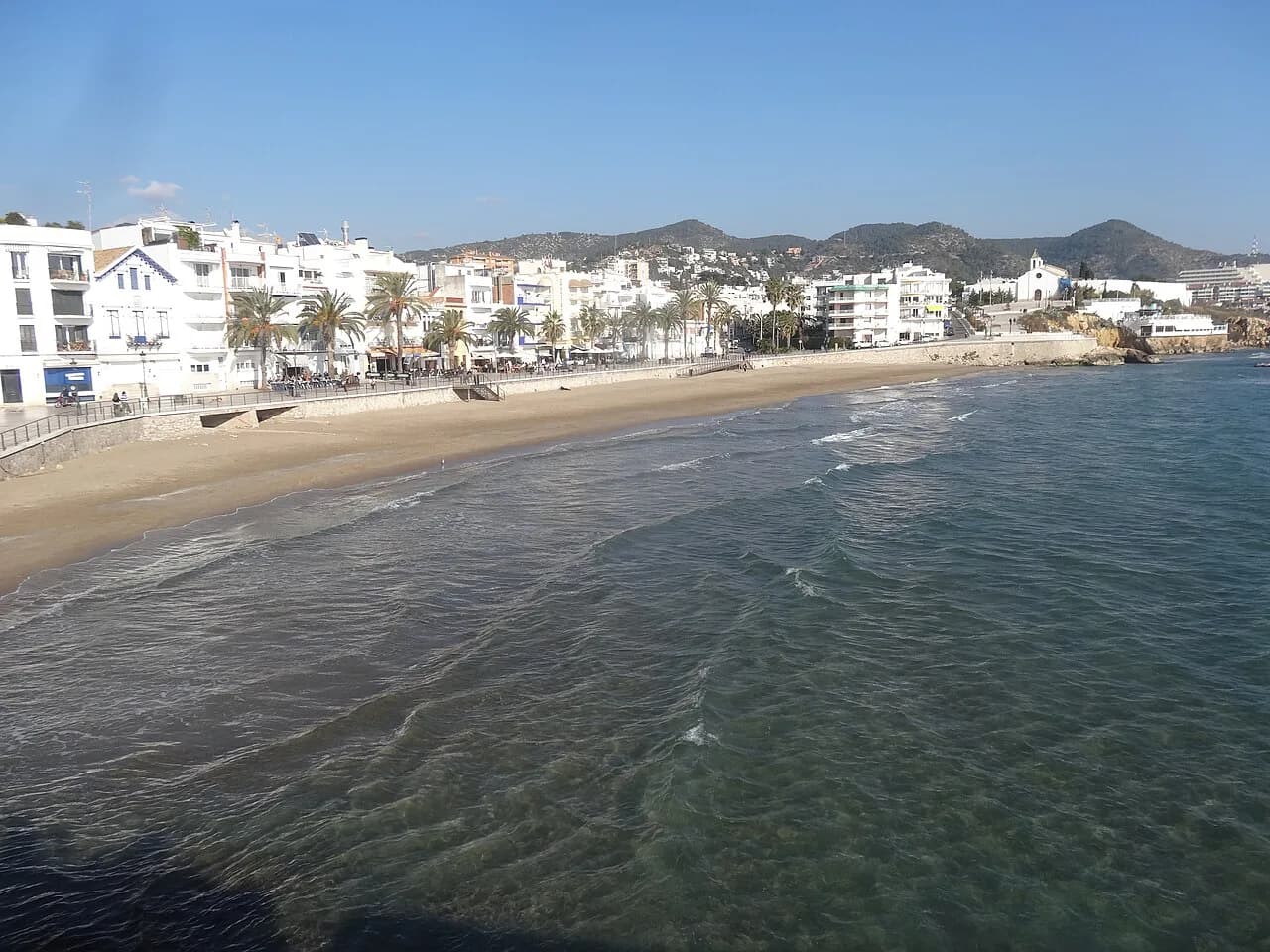
Ribera runs along the town-centre shoreline, backed by houses and a palm-lined promenade that continues until Les Anquines beach further along the front. Because it sits within the built-up town rather than out on a headland, you can step off the promenade and onto the sand without a walk or a shuttle.
Its position makes it the natural first stop for anyone exploring the Sitges beaches on foot. Use the promenade as your spine: walk one way to find your spot on Ribera, then continue along the front towards the smaller beaches and the old town, so the day strings together sand, seafront and the historic core without any transport at all.
Getting there
Spain's tourism site lists access on foot as easy and also records car access, naming the C-246, A-16 and BV-2111 as the nearest roads. In practice that means Ribera is a walking beach for anyone staying in Sitges or arriving by train, and a drive-in beach for those coming along the coast from Barcelona or further down the Costa del Garraf.
If you drive, treat parking as part of the plan rather than an afterthought: a town-centre beach in a busy resort fills its spaces early in summer, and the sensible move is to arrive before the middle of the morning and walk the last stretch to the promenade. The published road numbers above are the ones to follow rather than trying to thread through the old-town lanes.
Coming by train, you walk from the station down through town to the seafront and the promenade, which puts you at the back of Ribera without any connection. Bring a light bag you can carry, since the walk back at the end of the day is uphill through the streets.
The sand and the water
Ribera is a sand beach with golden grains, 260 metres long and 36 metres wide, and Spain's tourism site describes the swimming conditions as calm. Those dimensions matter more than they look on paper: a 36-metre width gives you room to sit back from the waterline even when the beach is crowded, and 260 metres means you can walk clear of the busiest patch by the main access points.
The official listing gives the composition as sand with no shingle or rock noted, which makes it comfortable underfoot for children and for anyone who dislikes picking their way over pebbles. Combined with the calm conditions recorded, it is a beach where you can wade in and swim parallel to the shore rather than dive off rocks.
That said, a town beach facing open water responds to the day's weather, so read the flags and the sea state when you arrive instead of relying on conditions described in a guide. If the water is stirred up or the wind is pushing waves in, the promenade and the town's museums make a decent fallback while you wait for it to settle.
Shelter and wind
Spain's tourism site records the wind at 20 km/h from the north for Ribera, which is the detail to plan your spot around. A northerly blows offshore from behind the town, so you feel it most on the promenade and at the back of the beach, while the sand nearest the water is the more sheltered band.
When it picks up, set up low and close to the waterline, weight everything down, and use a windbreak or a well-anchored umbrella rather than a light parasol that will take off. A north wind also tends to flatten the sea rather than build it, so it is often the wind that makes the swimming pleasant but the sitting less so; a towel and a long-sleeved layer solve most of that.
Facilities
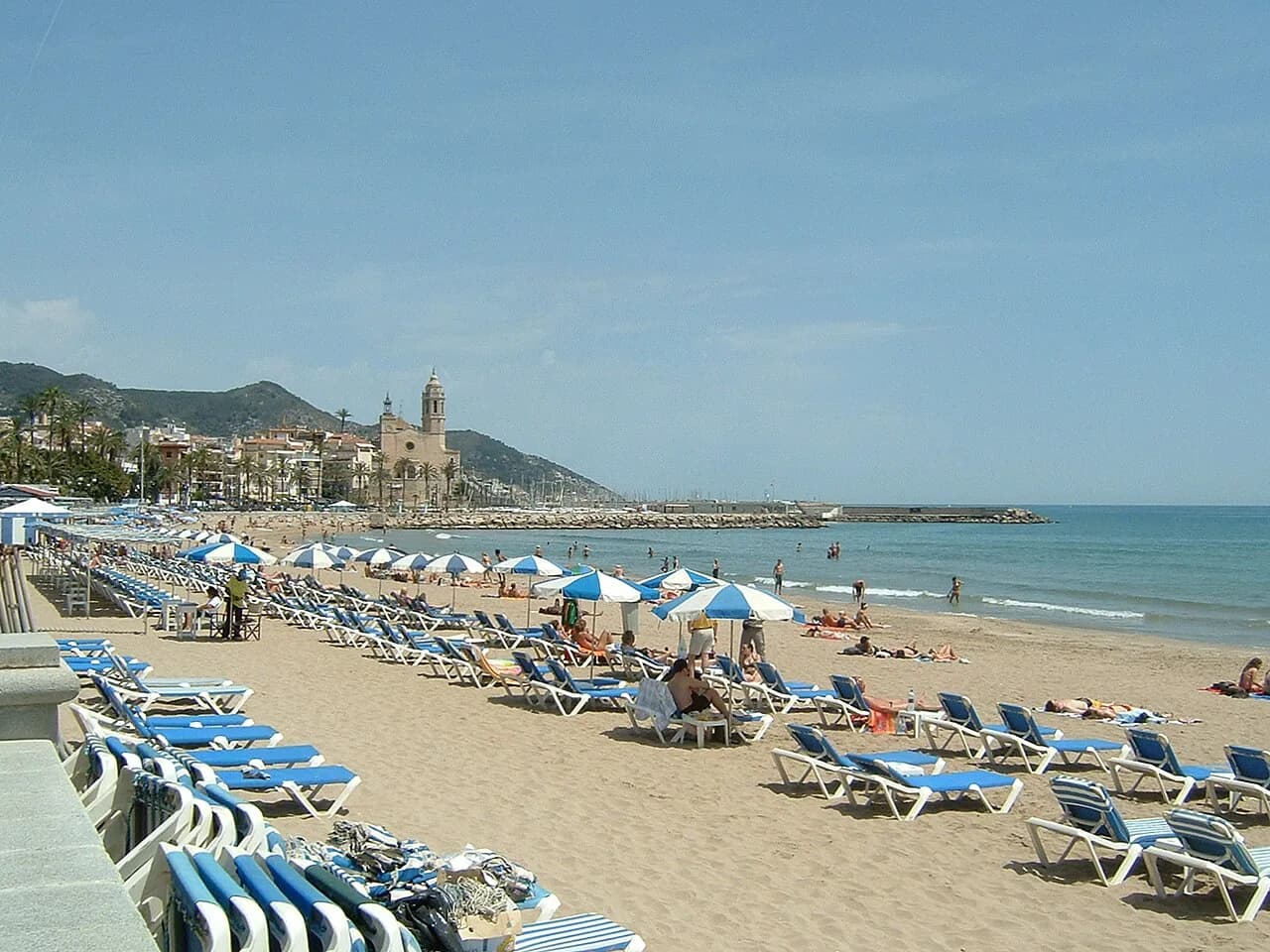
The published facility list for Ribera covers sunshade rental, sun lounger rental, water-craft rental, toilets, showers, a tourist office, litter bins, a cleaning service, a sports area and a children's play area. That combination is why the beach works for mixed groups: non-swimmers have shade and a play area, swimmers have the water, and anyone who wants to be active has the sports area instead of sitting still.
Sunshade and sun lounger rental are listed as available, but rates and the season are set by the concession itself, so ask on the sand when you arrive. The tourist office on the seafront is the place to sort out a question about the beach or the town in one stop.
If you would rather not rent, bring your own shade and a mat, and plan on buying drinks and snacks in town or at the beach bars along the front. The cleaning service and bins listed make it easy to leave the sand as you found it, which matters on a beach this heavily used.
How busy it gets
Spain's tourism site records a high occupancy rate for Ribera, which is the honest headline: this is a popular town beach in high season, not a quiet cove. The upside is that everything you need is within a few minutes' walk; the downside is that the stretch closest to the main access points and the promenade fills first.
To get elbow room, walk further along the 260 metres before you settle, or head for the Les Anquines end where the promenade continues and the crowd thins. Arriving in the morning and leaving in the late afternoon also dodges the middle-of-the-day crush that a town beach gets when day-trippers arrive from Barcelona.
Best time to go
The sea here is at its most comfortable for long swims from late June through September, with July and August the busiest months and the ones when the high occupancy rate is most felt. June and September give you warm water with noticeably more space on the sand, and the promenade is pleasant for walking in the shoulder seasons even when swimming is off the table.
On a hot day, aim to be on the sand by mid-morning: you get the pick of the shaded spots, a shorter queue for the sunbed concession and a calmer walk down through town. Carry water, wear footwear for the hot sand in the middle of the day, and keep an eye on children near the waterline as the beach fills.
Nearby beaches to combine
Platja de la Barra is the obvious pairing if you want an urban beach with bars, restaurants and showers close at hand. Visitors describe it as a town beach with all the services and note the showers, which makes it a simple swap when Ribera is at its fullest or when you want lunch within a minute of your towel.
If you want to stay within Sitges and add a second, smaller beach to the day, Platja de Sant Sebastià sits at the far side of the old town and makes a natural bookend to a walk along the front. Pair it with the church-and-seafront core and you have a full day on foot, with Ribera as the swimming stop.
Travellers with a car can look further along the Costa del Garraf for a different day: Castelldefels beach is a long, broad option towards Barcelona, and Garraf beach sits in a small cove village with a very different feel from Sitges' town front. Both reward an early start if you are driving in summer. Drive a little further up the coast and the beaches in Girona offer another set of sands and coves worth planning a day around.
Practical kit and beach etiquette
Pack for a town beach: shade you can anchor, plenty of water, footwear for hot sand, and a bag you can carry on the walk back through town. The shower and toilet facilities listed mean you can rinse off and change before heading into Sitges for the evening, so a change of clothes earns its space in the bag.
Keep to the paths on and off the promenade, take your litter to the bins, and leave the sand clear when you go. On a beach this busy, small courtesies go a long way: don't pitch your shade in front of someone's line of sight to the water, and keep music to headphones.
Plan Your Visit
Platja de la Ribera earns its day because it removes the logistics: you walk to it, you swim in calm golden-sand water, and everything you need is on the promenade behind you. Choose it for convenience and facilities, and accept that high season brings a crowd.
To make the most of it, come early, walk past the busiest access points before you settle, and check the Spanish tourism board's current information for Platja de la Ribera on the day. Then combine it with a second Sitges beach or a walk through the old town to turn a beach stop into a full day.
Frequently Asked Questions
Is Platja de la Ribera good for families with small children?
It suits families well. Spain's tourism site records golden sand, calm swimming conditions and a children's play area, and the beach is 36 metres wide, so there is room to sit back from the waterline. Shade rental is available if you would rather not carry your own.
How do you get to Platja de la Ribera without a car?
Walk. The beach sits on Sitges' town-centre shoreline with a palm-lined promenade behind it, and Spain's tourism site lists access on foot as easy. From the station, walk down through town to the seafront and you arrive at the back of the beach.
Do you need to book sunbeds on Platja de la Ribera?
Sunshade and sun lounger rental are listed among the beach's services, but no booking system is described. Turn up and ask at the concession on the sand; arriving in the morning gives you the best choice in high season.
How busy is Platja de la Ribera in summer?
Spain's tourism site records a high occupancy rate. July and August are the fullest months, so walk further along the 260 metres before you settle, and consider June or September for warm water with more space.
Which nearby beach should you combine with Platja de la Ribera?
Platja de la Barra is a straightforward pairing: an urban beach with bars, restaurants and showers close at hand. Within Sitges, Platja de Sant Sebastià at the far side of the old town works well as a second stop on a walk along the front.
Sources
Beach notes for your next trip
Optional updates when we add or revise beach guides.
You might also like
Continue reading
More guides you'll find useful