Santander Beaches: Which Sands and Coves to Choose
Plan a beach day in Santander, from the sheltered swim area at Los Peligros to the surf at El Sardinero, with access, facilities and nearby coves.
On this page
Santander suits travellers who want a proper city with beaches attached rather than a resort built around a strip of sand. The coastline runs from the sheltered bay near the centre out to the open Bay of Biscay, so the character of the water changes markedly over a few kilometres. A short walk or bus ride separates a paddle in near-flat water from a bodyboard session in proper Atlantic swell.
Use this guide to choose by how you swim and how far you are willing to walk, not by a ranking. The promenade beaches give you sunbeds, showers and bars; the small coves reward anyone prepared to descend steps with a quieter afternoon. Everything sits within reach of the centre, with the Ribamontan al Mar beaches east of the bay as a full day out.
Why Santander works as a beach base
Few Spanish cities put sand this close to the old town. From the Puertochico area you can follow the maritime walkway past Centro Botín toward the nearest beaches, and the seafront promenade continues out to the main Sardinero sands. That means a beach morning needs no car, no ferry and no early start.
The trade-off is that this is an urban coast, not a wilderness. Expect high occupancy on the central sands in peak season and a backdrop of belle-époque buildings, gardens and cafés rather than dunes. In return you get cafés, ice-cream kiosks and bars within a couple of minutes of the water, which matters more to most families than solitude.
Distances are short enough to combine two or three beaches in a day. Walk the promenade between Los Peligros and the Sardinero sands, or pick one beach for the morning and a cliff path for the afternoon. The city bus network covers the same stretch if the walk back uphill feels like too much after a long swim.
Los Peligros: the closest swim to the centre
Los Peligros is the first beach you meet walking out of the city, reachable on foot from Puertochico's bars and restaurants along the maritime walkway beside Centro Botín, past the Gamazo viewing platform. That proximity makes it the obvious choice for a quick dip before lunch or an evening swim.
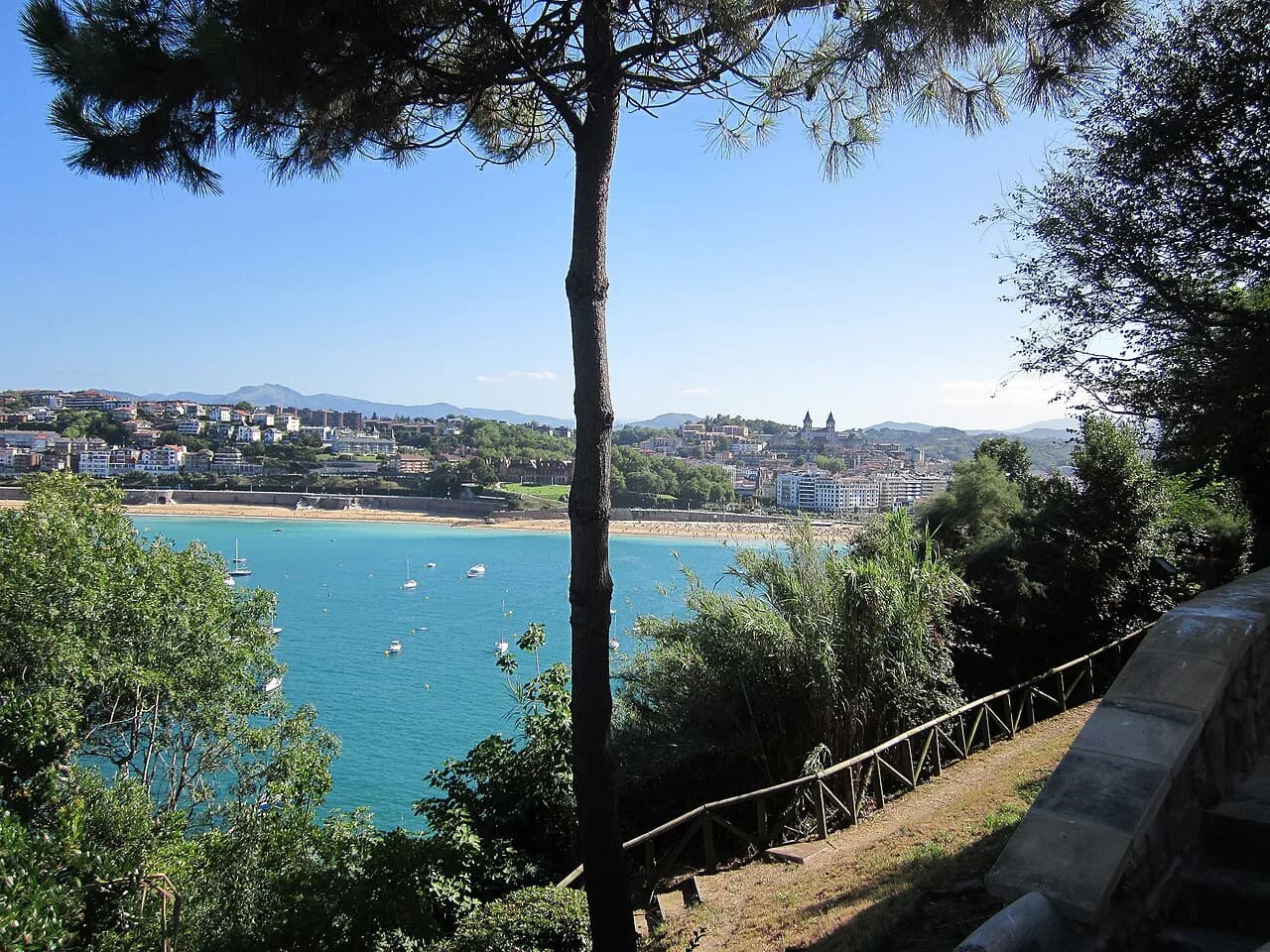
The bathing here is unusually gentle for this coast: a floating platform and barrier enclose a swim area, and the water in this stretch stays largely wave-free. For parents with young swimmers, or anyone who prefers to swim without working against a current, this is the most reassuring entry point on the city coastline. Views take in the bay and the Puntal sandbank opposite.
Facilities are modest but useful. A stand-up paddle centre operates nearby, and the Caseta de Bombas bar and restaurant at Gamazo gives you a post-swim drink or a full meal a short walk from the sand. Parking is available in the area, which helps if you are driving in from outside the city.
Magdalena and Los Bikinis: the palace peninsula beaches
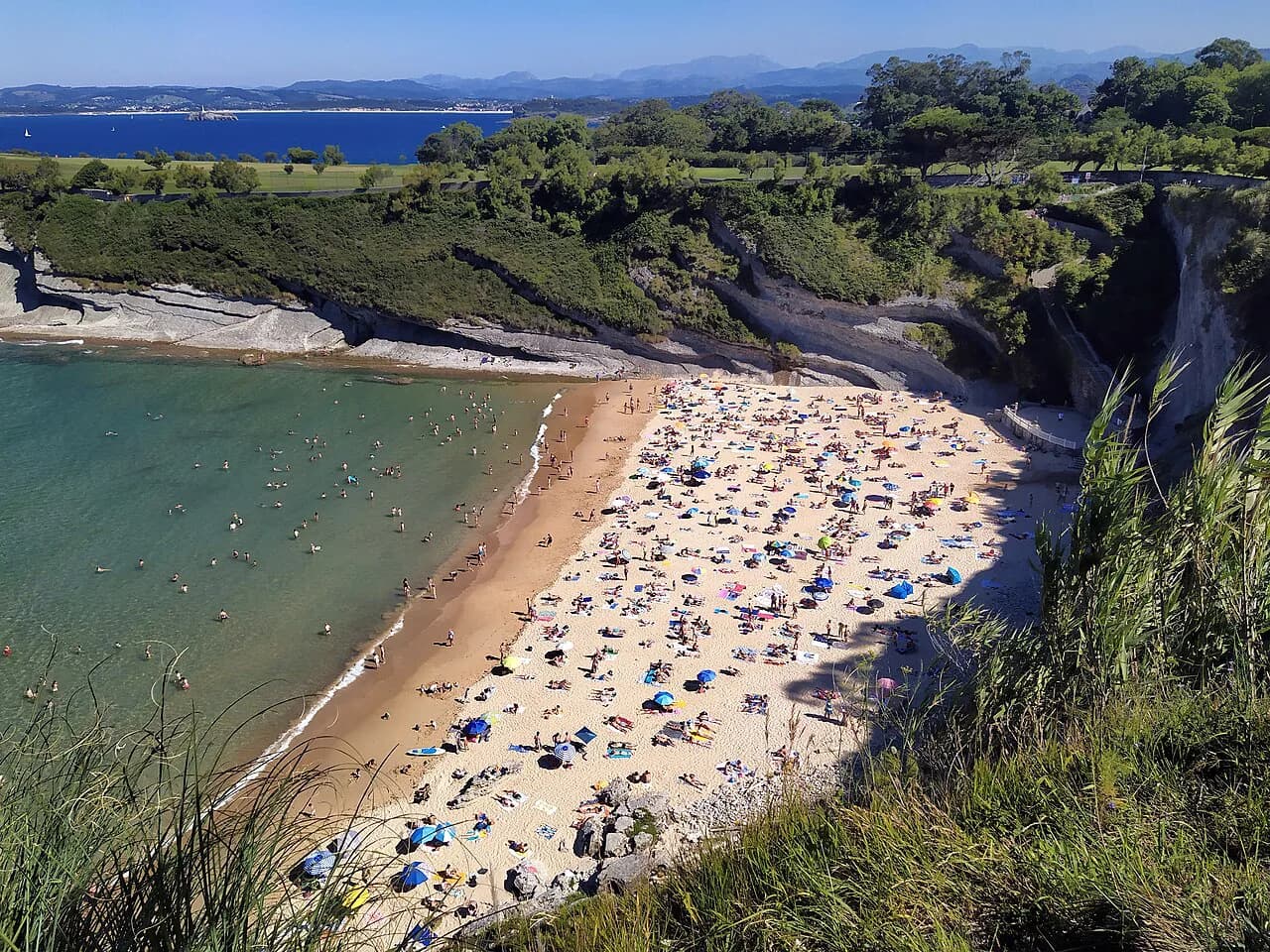
The La Magdalena peninsula holds two contrasting beaches within its parkland. Magdalena beach is white sand, reached either along the shore from Los Peligros or by the slip-road near the Royal Tennis Club, with views across the bay to the modernist sailing school on Isla de la Torre. Parking sits close by.
Los Bikinis sits inside the palace grounds themselves, the former royal summer residence, and comes with extensive parkland for picnics and strolls. A playground with a slide leads straight down onto the sand, and the Caballerizas café in the old royal stables serves snacks and drinks. Parking is available at the palace entrance.
These two work best as a half-day with children or as a walking destination rather than a pure swimming stop. Bring a picnic blanket and give yourself time on the lawns and paths. The peninsula also puts you next to Mouro Island and its lighthouse, a landmark visible from much of the city coast.
El Camello and La Concha: rock pools and family swimming
El Camello takes its name from a camel-shaped rock formation, partly eroded, that marks this stretch of coast. It is popular with families because of the rock pools along the shore, which keep children occupied when the sea is livelier. Views run out to open water and back toward the Magdalena mini-zoo, and parking sits by the beach.
Neighbouring La Concha joins the Sardinero sands and is used by swimmers year-round. Its position gives views over the Sardinero beaches and the open sea, and the BNS bar keeps a year-round outdoor terrace for tapas, with the Balneario restaurant offering more substantial meals behind glass with panoramic views. The car park by Playa del Camello serves both beaches.
Choose this pair if you want rock pooling and a choice of places to eat within a few minutes' walk. At low tide the connections between La Concha, Segunda de El Sardinero and the surrounding sands open up, so timing your visit around the tide gives you more ground to explore.
Primera de El Sardinero: the full-service promenade beach
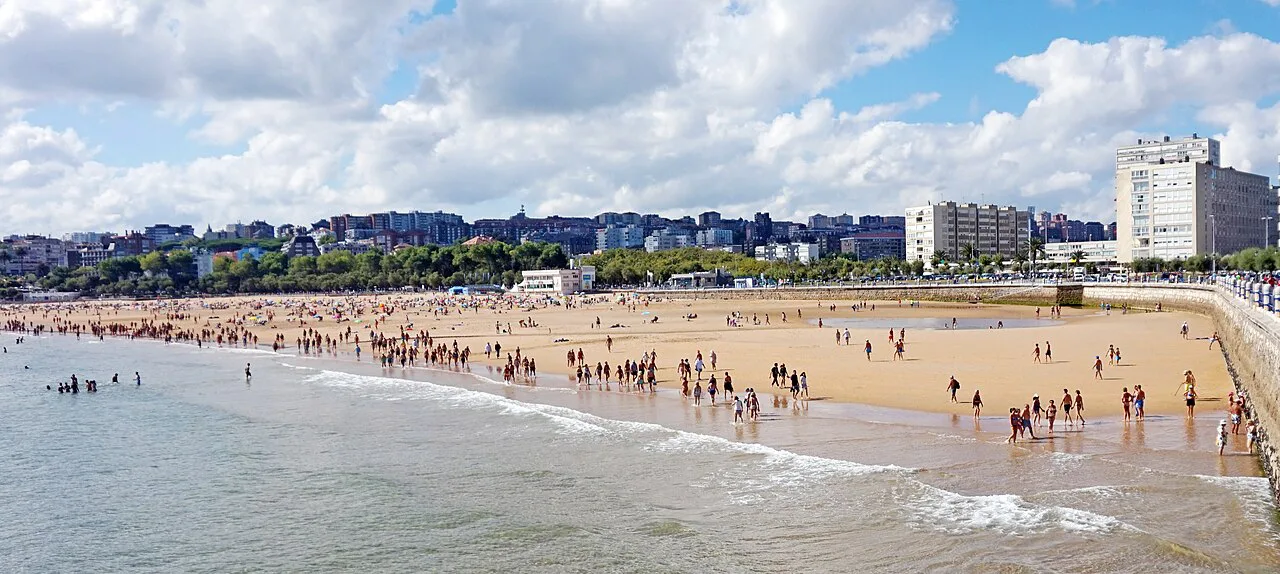
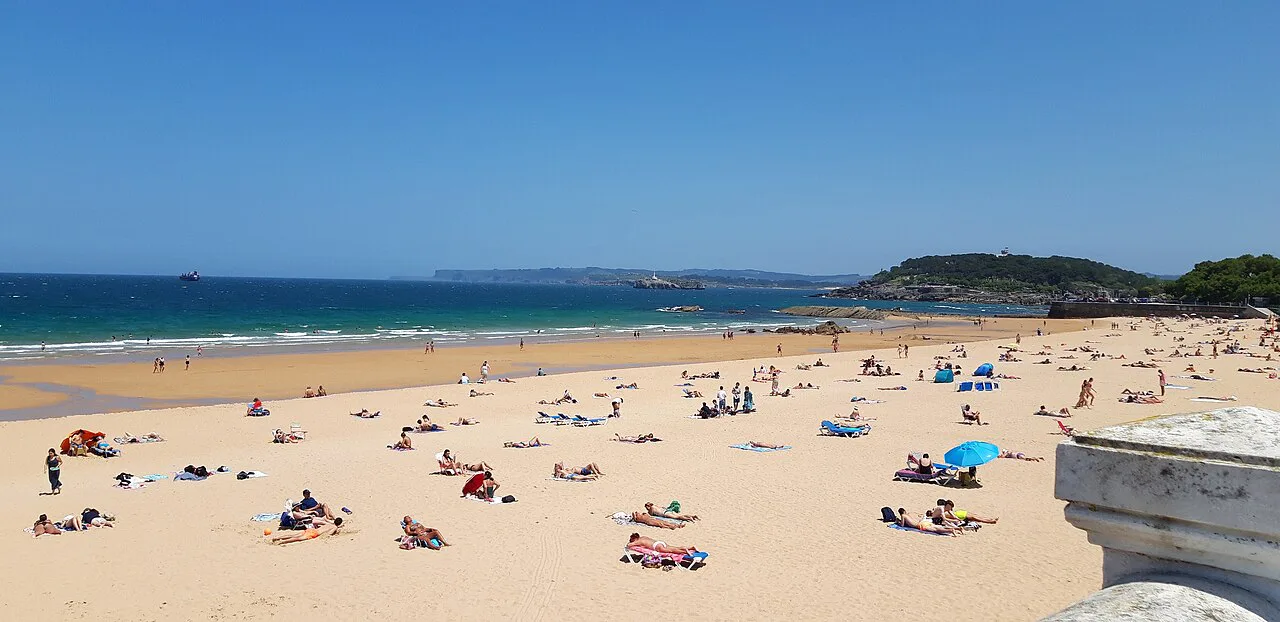
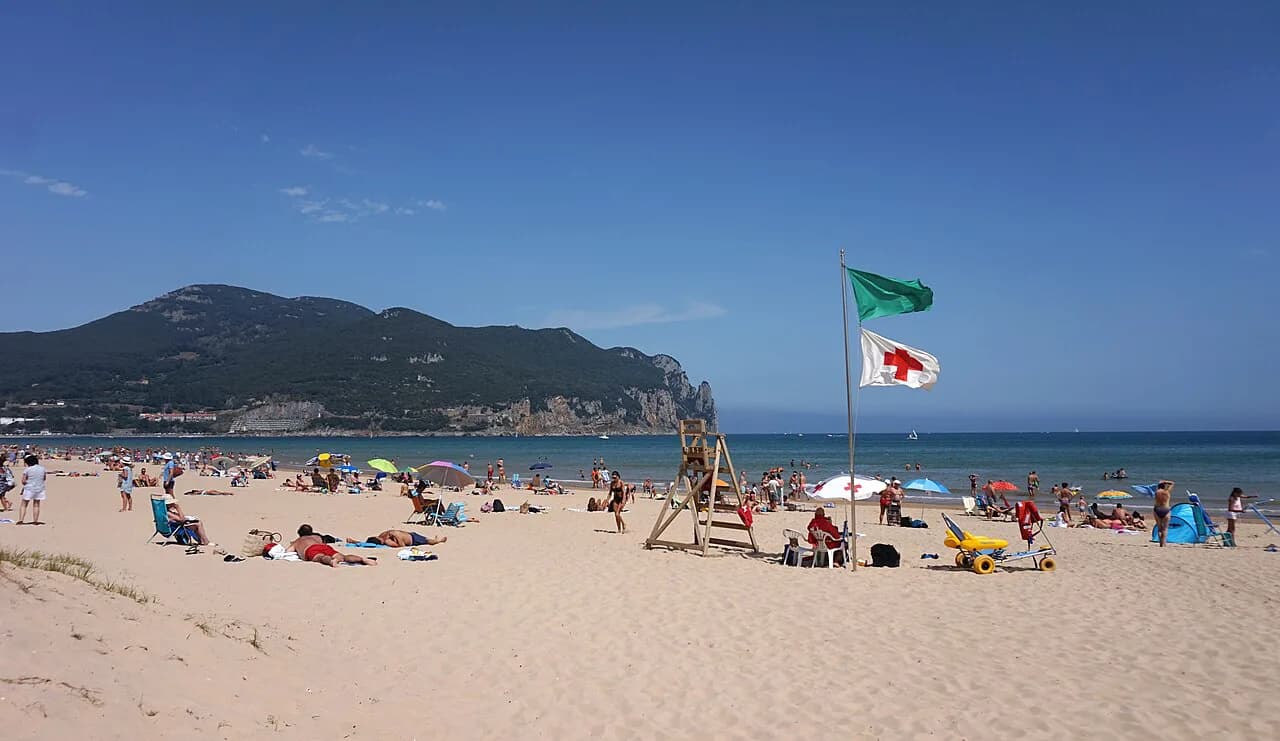
Primera de El Sardinero, known locally as the first Sardinero beach, is the city's flagship strand: 350 m long and 80 m wide, with golden sand and a setting right in the urban heart of Santander. Spain's official tourism site records moderate waves and windy conditions, high occupancy and a seafront promenade along its edge. It sits 2.5 km from Puerto Chico marina, reachable on foot or by car.
Facilities are the most complete on this coast. Sunshade and sun lounger rental, toilets, showers and a footwash are all listed, along with a tourist office, litter bins and a cleaning service. There is a sports area and a children's play area, and access is rated easy even for people with limited mobility, which makes this the simplest beach to bring three generations to.
At low tide the sand links through to Segunda de El Sardinero and La Concha, so you can walk the length of the seafront without leaving the beach. Behind the sand are the Piquio Gardens, the casino and the belle-époque buildings that made this the fashionable address in the nineteenth and twentieth centuries, plus dozens of bars and cafés. Lockers, deck chairs, parasols and surf gear can be hired in the area.
Segunda de El Sardinero: surf, volleyball and the cliff steps
Segunda de El Sardinero is the choppier of the two main beaches, which is exactly why surfers and bodyboarders gravitate here. On quieter days kite-surfers join them. The beach has a playground and plenty of beach volleyball, with views out to Mouro lighthouse.
If you want to swim rather than watch, treat this as the second choice after Primera and pick your moment. Informal restaurants sit right on the edge of the sand for seafood platters and a beer afterwards, and bars and cafés line the streets behind. The cliff walk around the peninsula starts from steps behind Cafetería Coronna on Calle Gregorio Marañón, giving views back down over the beach.
Pair the two Sardinero beaches for a full day: swim and hire a lounger on Primera, then walk across at low tide to watch the surfers on Segunda. That gives you the city's most complete beach day without moving the car.
Molinucos and Mataleñas: small coves down steps
Molinucos is a tiny cove with some of the best views of Mouro Island and its lighthouse. Reach it by parking or walking to Mataleñas Park and taking the steps down. Because it is so small, arriving early is the difference between having space and squeezing in.
Mataleñas is many Santander residents' favourite, a secluded cove of clear water reached by steep steps, so it suits confident walkers rather than anyone with a pushchair or mobility difficulty. Drivers should follow signs for Forestal Park and park where the ice-cream van sits, then descend. A few restaurants are nearby, and the lighthouse café has views that are at their best toward sunset.
These coves reward travellers who trade facilities for scenery. Bring water, snacks and shade, wear shoes with grip for the steps, and plan the climb back while you still have energy. For a fuller picture of the cove and its approach, see this guide to Playa de Mataleñas.
El Puntal: the sandbank across the bay
El Puntal is the long sandbank curving across the Bay of Santander, and it is a trip in its own right rather than a stroll from the centre. It gives you views back to the city, the Magdalena Palace and the whole bay, with far thinner crowds than the city beaches. You also get a close view of the Brittany Ferries ship navigating the narrow channel beside the sand.
There are two ways to arrive. Drive into Santander and park at the Alfonso XIII car park by Centro Botín, then take the passenger ferry across. Alternatively drive to Somo, park at the beach or by the pier, and walk the 2 km out along El Puntal itself. The walk is the more flexible option if you want to set your own timetable.
Two open-air beach bars serve snacks, seafood, salads and lunches through the summer months, with El Puntal Tricio the one nearest the jetty. Check sailing times with the ferry operator before you commit to a late return, and take everything you need for a long stretch on the sand.
Ribamontan al Mar day trips: Somo, Loredo, Langre and Galizano
East across the bay, the Ribamontan al Mar coast offers bigger surf and a more outdoorsy day out. Somo is a huge strand with high waves, a genuine surfing culture and plenty of surf shops, bars and restaurants behind the sand. Loredo has surf schools for board hire and lessons, mountain and city views, and a horse-racing derby held on the sand every July since 1957.
Langre is the quiet option: cliff walks, benches above the beach and few facilities by the water, so you drive into Somo or Loredo for supplies. Walk to the viewing point on the western side, and park at the top early in high season because the spaces fill. Galizano is more rustic still, with a summer beach bar, choppy open-sea water and rock pools for children, reached over wooden platform bridges from the nearby car park.
These beaches suit surfers, walkers and families who want rock pools over promenade cafés. Pick Somo or Loredo for a first surf lesson and Langre or Galizano for cliff scenery and a picnic. For more on the surf side of the bay, this Somo beach guide covers the sand and the water.
Getting around and parking
On foot is the best way to link the city beaches. The maritime walkway connects Puertochico with Los Peligros, and from there paths continue around the Magdalena peninsula to the Sardinero sands. The seafront promenade then runs the length of Primera and Segunda, so a full day on foot needs no transport at all.
Driving works if you are combining the city with the coves or crossing to Somo. Spain's official tourism site records car access to Primera de El Sardinero and a distance of 2.5 km from Puerto Chico marina, and parking areas sit by Los Peligros, Magdalena, Los Bikinis, El Camello and the palace entrance.
For the coves, park at Mataleñas Park or follow signs for Forestal Park and descend the steps. For El Puntal, park at the Alfonso XIII car park by Centro Botín for the ferry, or at Somo beach or pier for the 2 km walk. Allow more time than you think on summer weekends, when the cliff-top car parks at Langre fill early.
The swim season and when the beaches are busiest
Santander sits on the Bay of Biscay, so the sea takes time to warm and the Atlantic keeps the water bracing outside high summer. Spain's official tourism site lists a water temperature of 19°C and a maximum air temperature of 16°C as a current snapshot, useful as an indication of conditions rather than a seasonal average you can plan a fortnight around.
Late July and August bring the warmest water and the largest crowds. Spain's official tourism site rates occupancy on Primera de El Sardinero as high, so expect the central promenade to be busy at the height of the season.
For quieter sand, shift your day to early morning or late afternoon, or head for the coves at Molinucos and Mataleñas and the Ribamontan al Mar beaches. La Concha is used by swimmers year-round, so shoulder-season visitors will find company in the water even when the promenade is quiet. Check sea temperature with the port authority or the regional weather service before you commit to long swims outside summer.
Facilities, access and accessibility on the city beaches
Primera de El Sardinero has the fullest facilities: sunshade and sun lounger rental, toilets, showers, footwash, a tourist office, litter bins, a cleaning service, a telephone, a sports area and a children's play area. Access on foot and by car is rated easy, including for people with limited mobility, so it is the safest bet for anyone who needs level ground and a short walk from transport.
The coves are a different proposition. Molinucos and Mataleñas are both reached by steps, Mataleñas via a steep flight, and there is no level approach from the road. Bring what you need for the hours you plan to stay, wear shoes with grip, and treat the climb back as part of the outing rather than an afterthought.
For an accessible day out, base yourself on Primera and use the promenade to reach La Concha and the bars behind Segunda. The city centre's flat streets and seafront paths make it easy to combine a swim with lunch, and the tourist office by the beach is a useful stop for local information on the day.
Nearby beaches to combine with a Santander day out
The city beaches fill a day on their own, but the wider Cantabrian coast adds variety. Somo and Loredo across the bay give you surf and lessons, while Langre and Galizano give you cliffs, rock pools and a quiet cove. All are a drive from the city, with Somo also reachable by the passenger ferry from Santander.
West of Santander, Comillas combines a sandy beach with the town's modernist architecture and the Oyambre Natural Park nearby, making a good full-day trip when the city forecast turns grey. If you are heading east along the coast, Playa de Mataleñas fits a quieter afternoon before you leave the city.
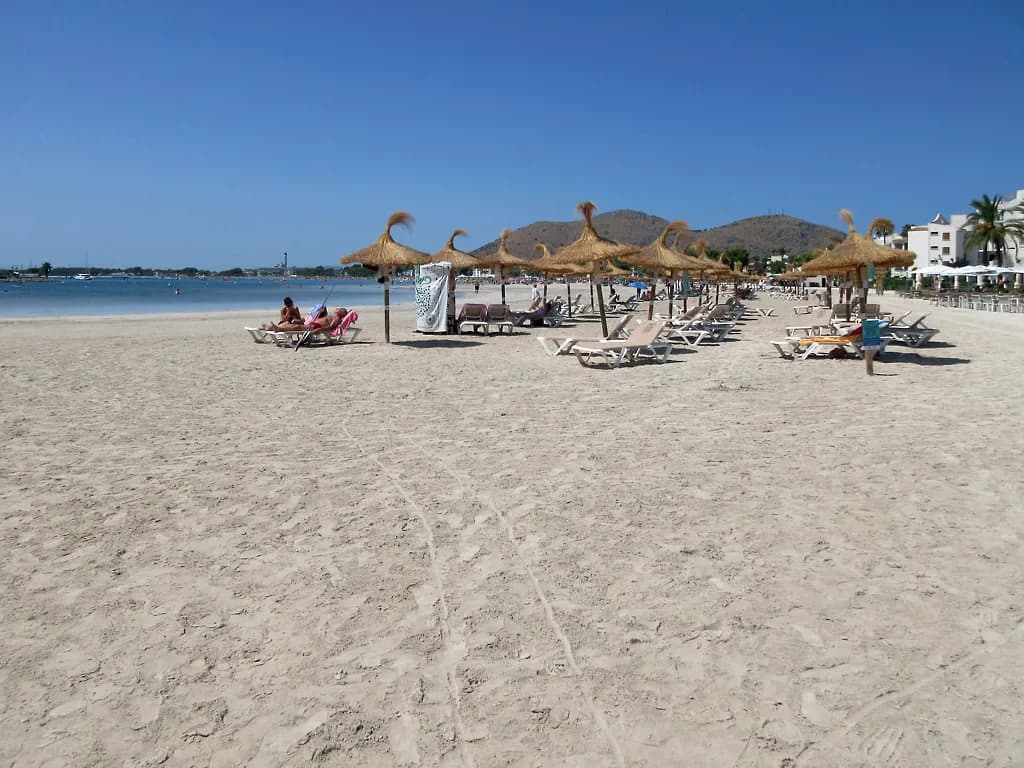
Readers extending a Spanish beach trip beyond Cantabria will find the sheltered bays of the Balearics and the long city sands of the Costa Blanca a different proposition altogether, with warmer water and longer seasons. Closer to that Mediterranean model are the Alcudia beaches in Mallorca, where shallow sheltered water and resort facilities replace Atlantic swell. Use Santander for Atlantic scenery and green hills, and save the Mediterranean for a separate trip.
Practical kit and beach-day trade-offs
Pack for changeable Atlantic weather. A windproof layer, a warm towel and a change of clothes earn their place even in August, and the wind recorded on the main beach means a parasol needs weighing down. Reef-safe sunscreen, water and snacks cover the coves where facilities are limited.
Choose Primera de El Sardinero for facilities, level access and a promenade full of cafés. Choose Segunda for surf, volleyball and the cliff walk, and pick Los Peligros if you want a protected swim area close to town. Take the steps to Molinucos or Mataleñas when scenery matters more than convenience, and cross to El Puntal or drive to Ribamontan al Mar for a day that feels further from the city.
Hire equipment where you find it rather than carrying it across town, since loungers, sunshades, deck chairs, parasols, lockers and surf gear can be hired around the Sardinero beaches. That frees you to walk the promenade and use the buses instead of circling for parking.
Water quality, lifeguards and dogs on Santander's city beaches
For readers whose Santander day out includes a dog, the practical reality is that the city beaches described above are urban beaches with the full service infrastructure that implies. Primera de El Sardinero, for example, lists toilets, showers, footwash, litter bins, a cleaning service and a children's play area among its services, and its occupancy rate is rated high; Segunda de El Sardinero and La Concha share the same promenade frontage, and La Magdalena and Los Bikinis sit inside the grounds of the Magdalena Palace peninsula. None of these municipal fronts appears among the sources as a designated dog beach, so a dog-friendly plan in Santander is better built around the walking and promenade sections of the day than around a swim at the first Sardinero beach.
Water and swimming conditions vary noticeably between the beaches, which matters if you are choosing where to spend time with a dog on the sand rather than in the water. Primera de El Sardinero has golden sand and moderate waves in windy conditions, with a water temperature given as 19º and maximum temperature of 16º. Los Peligros, the closest beach to the city centre and reached by the Maritime Walkway beside Centro Botín past Gamazo's viewing platform, is described as wave-free with a safe swim area protected by a floating platform and barrier, which makes it the calmest of the central options for a shoreline stroll. Mataleñas, a cove between cliffs, is a quieter spot that is a little off the beaten track, though it is reached by steep steps.
Timing your walk avoids the crush. Parking in the El Sardinero area is very limited in summer because of the influx of tourists, and the recommendation in that season is to opt for public transport, bicycles or walking along the maintained paths; the centre to El Sardinero is about 2–3 kilometres, or 20–30 minutes on foot, with city buses running regularly to stops close to the beach areas. A taxi from the airport, 20 km away, or from the railway station takes about 15–20 minutes. Out of season, the city beaches remain walkable frontages rather than swimming destinations, and the quieter coves such as Mataleñas and Molinucos reward an early start.
Plan Your Santander Beach Day
Start with how you want to swim. A family with small children should head to Los Peligros for the protected swim area, or to Primera de El Sardinero for level access, toilets, showers and sunbed rental. A surfer or bodyboarder should go straight to Segunda de El Sardinero or across the bay to Somo.
Then decide how far you will walk. The promenade beaches ask almost nothing of you; Molinucos and Mataleñas ask for a steep descent and a climb back. Build the day around the tide, because low water opens the link between the Sardinero beaches and La Concha, and gives you more sand to explore.
Check today's sea conditions and ferry times to El Puntal with the Santander tourist office before a long swim or a crossing. Otherwise the city's beaches need little planning: pick your end of the bay, pack a windproof layer and go.
Explore more Santander beaches
Frequently Asked Questions
Can you walk to the beach from Santander city centre?
Yes. Los Peligros is the nearest beach to the centre, reached on foot along the maritime walkway from Puertochico past Centro Botín and the Gamazo viewing platform. From there paths continue around the Magdalena peninsula to the Sardinero beaches and the seafront promenade.
Which Santander beach is best for families with small children?
Los Peligros has a protected swim area enclosed by a floating platform and barrier, with largely wave-free water, which makes it the most reassuring option for young swimmers. Primera de El Sardinero is the alternative when you want level access, toilets, showers and a children's play area close to the sand.
Where can you surf in Santander?
Segunda de El Sardinero is the choppier of the two main city beaches and draws surfers, bodyboarders and kite-surfers, with surf gear available to hire around the Sardinero area. Across the bay, Somo has high waves and a full surfing scene with shops and schools.
How do you get to El Puntal beach?
Take the passenger ferry from Santander, parking at the Alfonso XIII car park by Centro Botín, or drive to Somo, park at the beach or pier and walk the 2 km out along the sandbank. The walk gives you more control over your return time than the ferry.
When is the sea warm enough to swim in Santander?
Late July and August bring the warmest water and the biggest crowds on the Bay of Biscay coast. Outside high summer the Atlantic keeps the water bracing, so check the current sea temperature with the port authority or regional weather service before planning a long swim.
Is Primera de El Sardinero accessible for people with limited mobility?
Spain's official tourism site rates access to Primera de El Sardinero as easy on foot and by car, including for people with limited mobility, and the beach sits directly on the seafront promenade. It also lists toilets, showers, a footwash and a tourist office by the sand.
Which Santander beach is quietest?
The small coves at Molinucos and Mataleñas are quieter than the central promenade beaches, though both are reached by steps. Across the bay, El Puntal and the Ribamontan al Mar beaches at Langre and Galizano offer more space away from the city crowds.
What should you take to the coves at Mataleñas and Molinucos?
Take water, snacks, shade and shoes with grip for the steps, since both coves are reached on foot down steep flights. A few restaurants sit near Mataleñas, but the coves themselves have little on the sand, so carry what you need for the hours you plan to stay.
Sources
Beach notes for your next trip
Optional updates when we add or revise beach guides.
You might also like
Continue reading
More guides you'll find useful