Garraf Beach, Sitges: Sand, Trains and What to Expect
Garraf beach is a golden-sand cove below the cliffs south of Barcelona, reached by train from Sitges and Barcelona. Here is how to plan a beach day there.
On this page
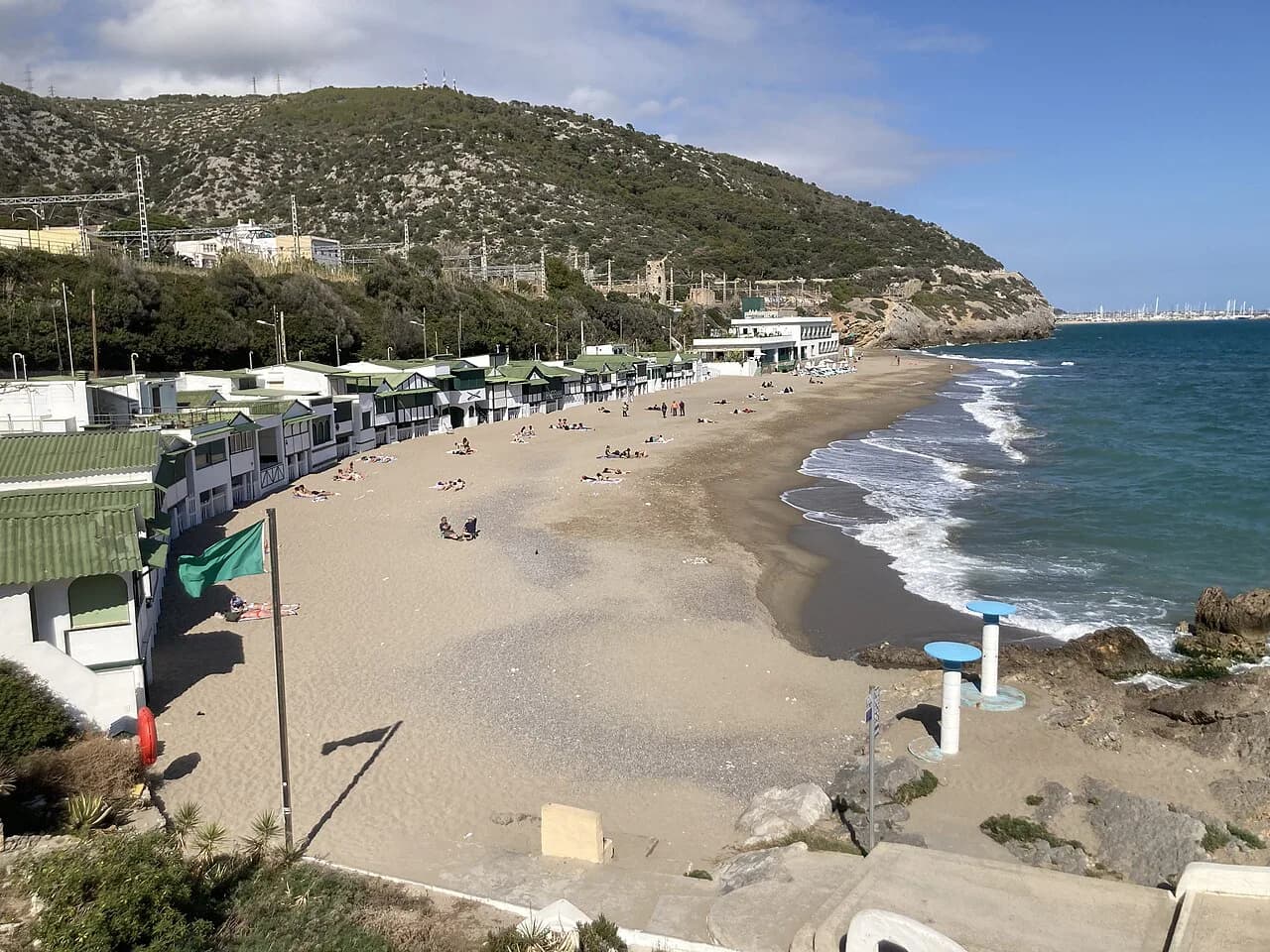
Garraf beach gives you the rare combination of a sheltered sandy cove and a railway station almost on the sand, which makes it one of the simplest beach days on the coast south of Barcelona. The bay sits below cliffs at the foot of a protected green massif, with a long curve of fine golden sand and shallow water at the shoreline. It suits swimmers, families with younger children and travellers who would rather ride the train than hunt for parking.
Garraf is a small fishing village on the Sitges coast, roughly 20 kilometres south of Barcelona and one village south of Castelldefels, separated from it by a rocky hill. Because the beach is compact and the village is small, the trip is best planned around the rail timetable rather than a full day of driving between stops. If you are touring the area, it slots neatly into a wider look at the beaches around Sitges.
Getting there by train
The obvious approach is rail. Rodalies R2 Sud services run from Barcelona Sants, Passeig de Gràcia and Estació de França toward Sant Vicenç de Calders and stop at Garraf, with trains roughly every 30 to 40 minutes on the route. The ride from Barcelona takes around 30 minutes, and the station sits directly behind the beach, so you step off the platform and walk to the sand.
Buy a return ticket before you travel, because Garraf station has no ticket machine or counter. A return bought at Sants or Passeig de Gràcia saves you a scramble at the end of the day. The last train back to Barcelona is at 9.45 pm, so note the time on arrival and set your beach hours around it rather than the other way round.
From Sitges, the same line makes Garraf a short hop north, and the station-to-sand walk is a matter of metres. You do not need a car for a day here. If you are staying in Sitges, treat Garraf as a change of scene from the town beaches: fewer streets behind you, cliffs instead, and a bay that feels enclosed.
The sand and the water
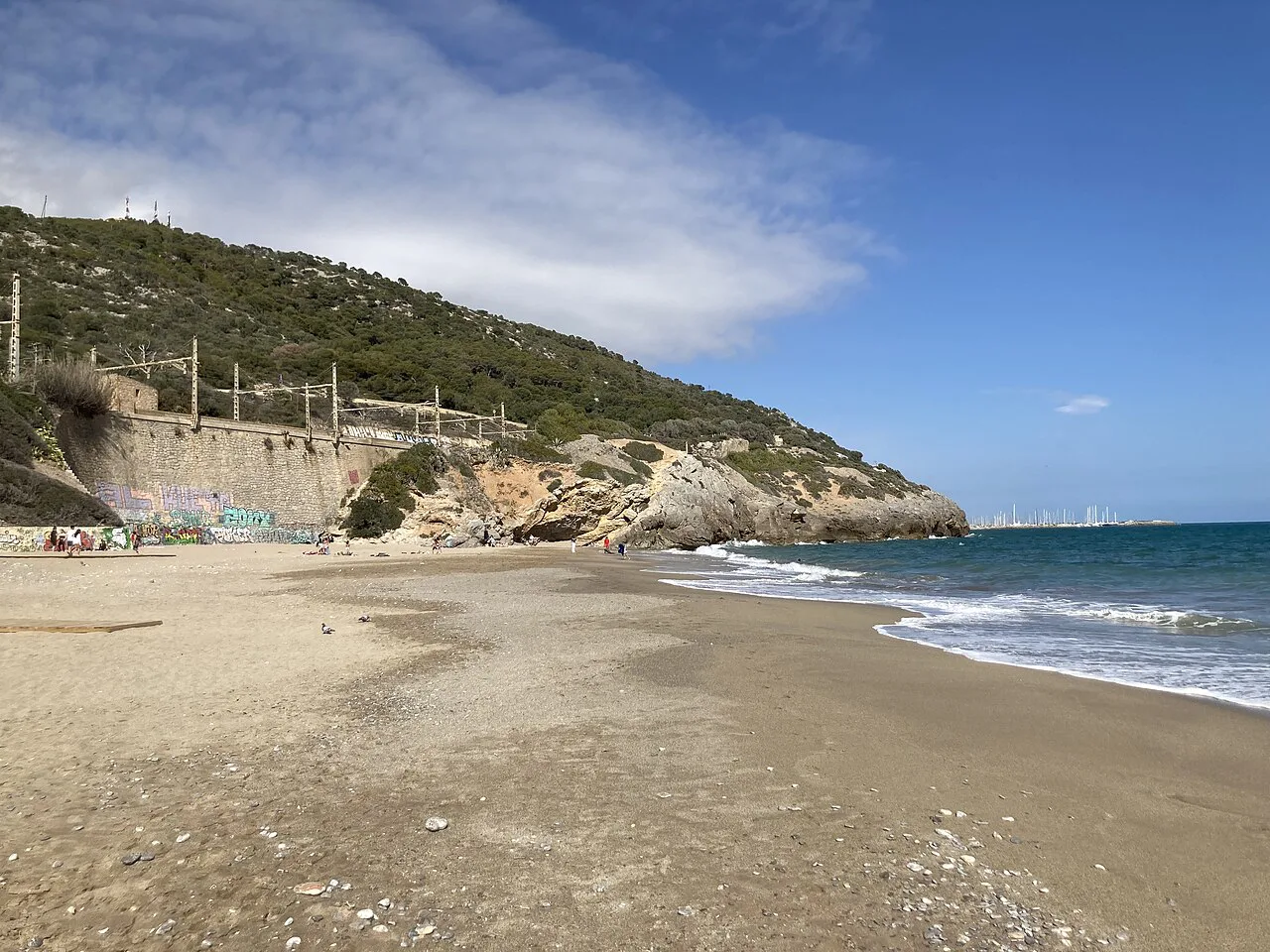
The beach is a long stretch of fine golden sand, reported at around 1,250 feet, backed by cliffs on both sides. The water is shallow at the shoreline, which is what makes it work for children and for adults who prefer to wade rather than plunge. Moss-covered stones and shells turn up in the shallows and at the coves at either end, so water shoes are a sensible addition to the bag.
The bay is sheltered and secluded by its headlands, which takes the edge off breezy days, though the shape of the cove means the water stays gentlest close to the shoreline. Occasional jellyfish are reported in these waters, so read the flags and any notices posted on the day before committing to a long swim. The sand shelves gently, so children can stay in the shallows while stronger swimmers head further out.
Facilities
Garraf beach has showers, toilets, lifeguard cover and accessible ramps, which puts it well ahead of many coves of this size. Arrive with your own shade and water, since the sand is open and the cliffs give little cover in the middle of the day. The ramps make the beach reachable with a pushchair or wheelchair, though the sand itself is still sand.
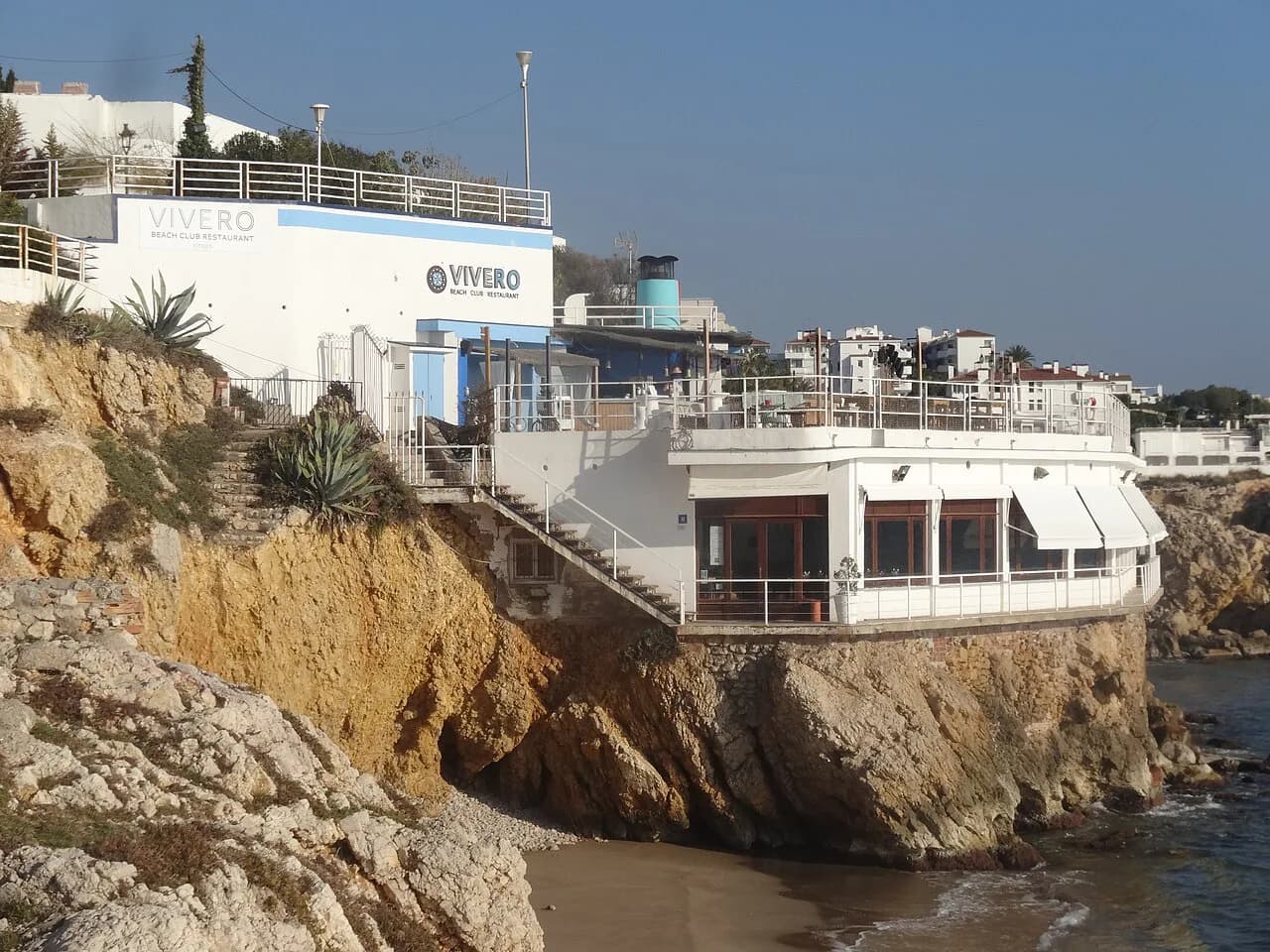
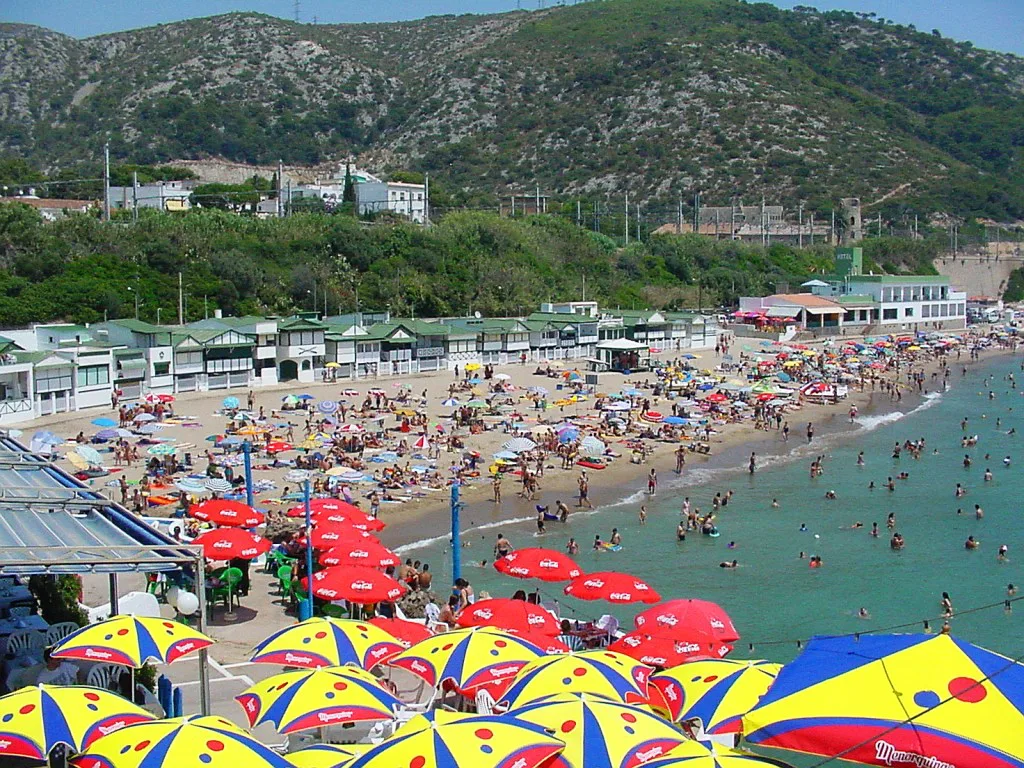
The row of white huts with green roofs and shutters curves along the beach, once used by fishermen and now a photogenic landmark in their own right. Little Beach House Barcelona, the Soho House outpost in the bay, has private sun-loungers for members, while non-members can use the beachside bar, La Caseta, for salads and seafood. For something more substantial, La Cúpula Garraf sits up in the cliffs and serves paella and wine with a view over the bay.
Beyond the beach, the village has a small port a few minutes' walk away where fishing boats and yachts moor, and the Gaudí-designed Bodegas Güell stands on the other side of Garraf. Those two stops make a decent late-afternoon wander once the sun loses its edge, and they keep the day from being only about sand.
How busy it gets, and when to go
Spring and early autumn are when Garraf is at its best: warm enough for a long beach day, quieter on the sand, and comfortable on the train. High summer brings the summer throngs, and visitor numbers have risen as the bay's reputation has grown, so a summer visit means arriving earlier in the day if you want space near the water.
If you are based in Sitges for a week, use Garraf as the calm-day option and keep the town beaches for evenings. The train makes that swap easy, and you avoid committing a whole day to a bay that fills up by mid-morning in August. A weekday in June or September gives you the best balance of warm water and breathing room.
Nearby beaches to combine
Castelldefels sits one stop north, separated from Garraf by the rocky hill, and its broad sweep of sand makes a natural pairing with the cove. Ride one stop, walk the seafront and come back for the evening train. The two beaches give you very different days from the same rail line.
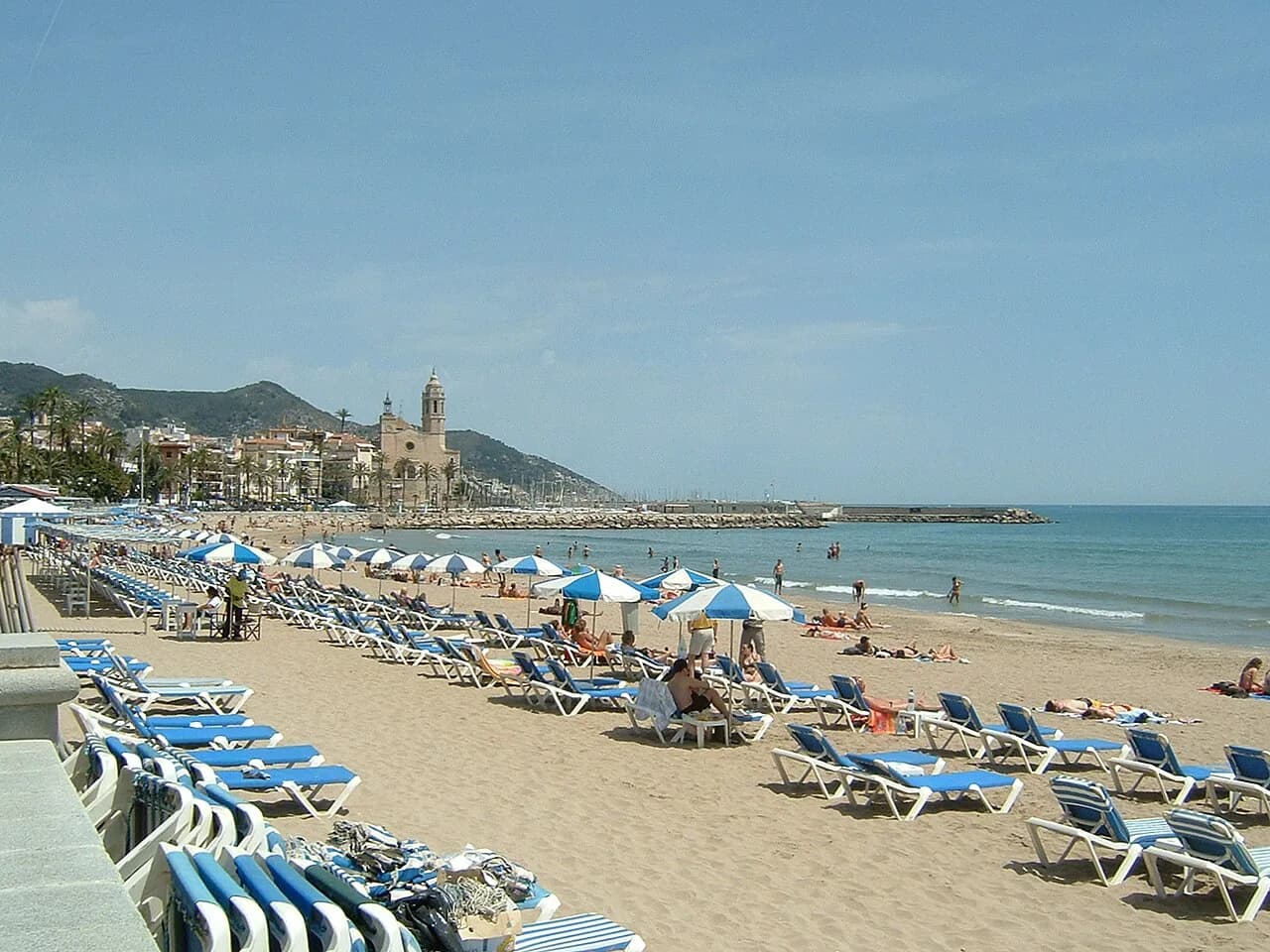
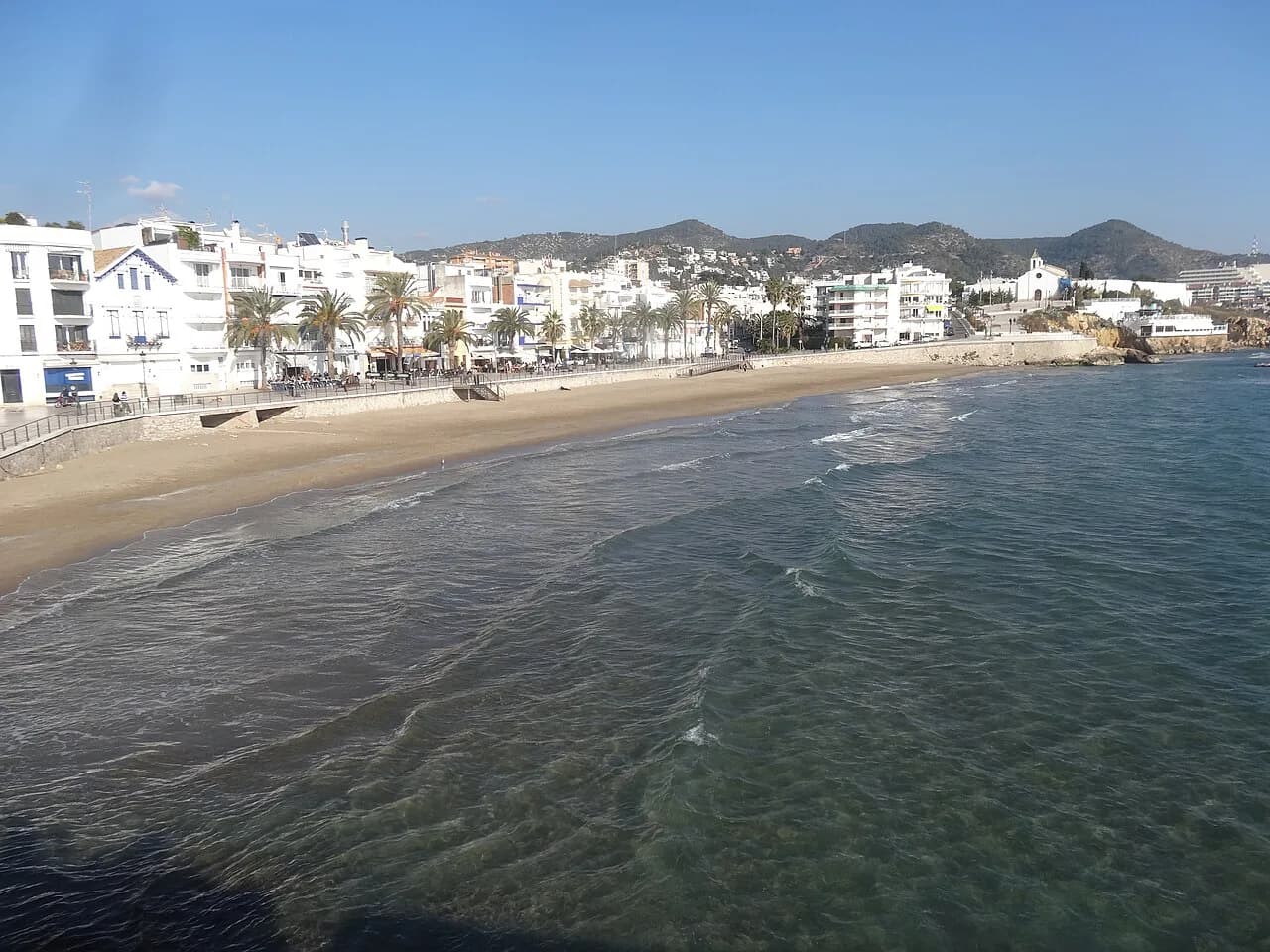
South of Garraf, Sitges has a cluster of town beaches within walking distance of the station, including Platja de Sant Sebastià, which sits at the far end of the seafront below the church. Platja de la Ribera and Platja de la Fragata fill out the central stretch, so you can beach-hop without moving your bags far.
The wider stretch of coast here is often called the Costa del Garraf, and it rewards a rail-based itinerary rather than a single fixed base. Pick two beaches a stop or two apart, check the return trains before you settle in, and you get variety without a car. If you want to extend the idea further up the coast, the best beaches in Girona offer a Costa Brava counterpart to this rail-and-cove rhythm.
Plan Your Visit
Garraf beach rewards the traveller who treats the train as the plan rather than an afterthought. Buy a return in Barcelona, ride the R2 Sud south, and spend the day on a golden cove with shallow water, cliffs on both sides and a bar within steps of the sand. Families with young children, swimmers and quiet-seekers all get something from the bay; summer crowds simply mean arriving earlier.
For current train times, check the Renfe Rodalies timetable before you set out. Beach-bar and restaurant hours change by season: La Caseta, La Cúpula Garraf and the Gaudi Garraf restaurant set their own opening days, so look them up before you travel. Pair the day with Castelldefels or a Sitges beach if you want a second stop.
Frequently Asked Questions
How do you get to Garraf beach from Barcelona?
Take a Rodalies R2 Sud train from Barcelona Sants, Passeig de Gràcia or Estació de França toward Sant Vicenç de Calders and get off at Garraf. The ride takes around 30 minutes and the station is directly behind the beach. Buy a return ticket in Barcelona, as Garraf station has no ticket machine or counter.
How far is Garraf beach from Sitges?
Garraf is a short train ride north of Sitges on the same R2 Sud line, and the station is a few steps from the sand. Many travellers base themselves in Sitges and use Garraf as a quieter alternative for a day.
Is Garraf beach sandy?
Yes. Garraf is a long stretch of fine golden sand, reported at around 1,250 feet, backed by cliffs on both sides. There are stones and shells in the shallows, so water shoes help.
Is Garraf beach good for children?
The water is shallow at the shoreline, which suits younger children and non-swimmers, and the beach has lifeguard cover, toilets, showers and accessible ramps. Occasional jellyfish are reported, so read the flags on the day.
Are there toilets and lifeguards at Garraf beach?
Garraf beach has toilets, showers, lifeguard cover and accessible ramps. Lifeguard cover is seasonal, so look for the flags when you arrive.
When is the best time to visit Garraf beach?
Spring and early autumn are the calmest and most comfortable months, before the summer crowds arrive. The sea is at its warmest from late June through September, but expect more visitors in high summer.
Can you reach Garraf beach by train?
Yes. The R2 Sud line stops at Garraf station directly behind the beach, with services from Barcelona and Sitges roughly every 30 to 40 minutes. Return trains run into the evening.
Sources
Beach notes for your next trip
Optional updates when we add or revise beach guides.
You might also like
Continue reading
More guides you'll find useful