Castelldefels Beach: Barcelona's Big Sandy Escape by Train
Castelldefels beach is a broad, sandy stretch 25 minutes by train from Barcelona, with room even in peak season and shallow water for families.
On this page
Castelldefels beach is the big, open escape that Barcelona day-trippers reach for when the city beaches feel cramped. It is a broad ribbon of pale sand with shallow water for swimming, room for families to spread out, and a coastline open enough that sunset becomes the main event. Anyone staying in Sitges or Barcelona and wanting a full beach day without a car will find it the easiest long beach to reach by rail.
Where Castelldefels Beach sits
The beach belongs to the town of Castelldefels, on the Costa del Garraf south of Barcelona, and it wraps around the coastline in a long pale-yellow sweep rather than sitting in a single cove. One review describes it as roughly 11 miles south of the city, while a listing puts it at about 18 km; the rail journey is the detail that matters when you are planning a day. It is a natural companion to the Sitges beaches if you are basing yourself in that part of Catalonia, just as the best beaches in Tarragona reward a longer trip down the coast.
Because the sand runs along open coastline rather than a sheltered bay, the beach has a different feel from the compact town beaches further up the coast. It stays wide enough that even in peak season it never seems to fill completely, which is exactly why locals and Barcelona visitors keep coming back.
Getting there by train
The train is the straightforward way in. Catch the R2 or R2S line from Barcelona Sants or Passeig de Gràcia and stay on until Platja de Castelldefels, heading in the direction of Vilanova or Sant Vicenç de Calders. The journey takes about 25 minutes, which puts the sand within easy reach of a morning start from the city.
Once you leave the station, walk towards the sea and then choose your spot deliberately. The stretch close to the station exit is the busiest; walking a few minutes further along the sand buys you more space, particularly at weekends when Barcelona day-trippers arrive in numbers. Bring footwear for the walk across the sand in high summer, when it becomes genuinely hot underfoot.
Arriving by road
Driving gives you flexibility to combine the beach with a stop in Sitges or the Garraf village, but the seafront is laid out along the coast road rather than around a single car park, so plan to park and walk. The train remains the lower-stress option for a pure beach day, and it drops you closer to the sand than most roadside parking does.
The sand and the water
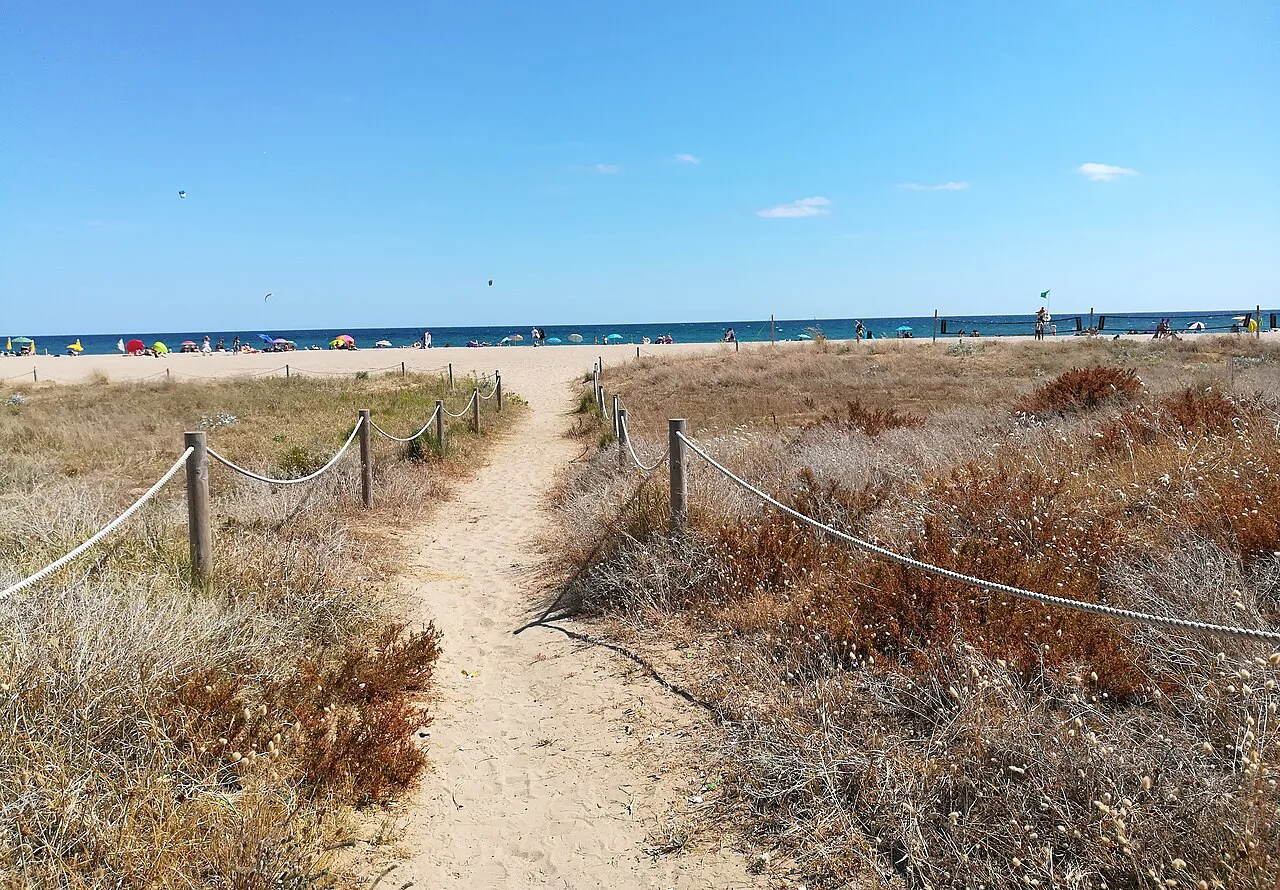
The sand here is broad, pale and generously wide, which is what makes the beach work for families, groups and anyone who wants to set up a base for the day. The water is generally shallow as you enter, which is why it suits children and less confident swimmers. The open coastline also makes it popular with surfers, and you should read the flags on the day rather than assume conditions.
Length is one of the beach's defining features. A listing describes it as running for about 3 miles, so there is room to walk away from the busiest sections. The trade-off is that the walk back to the station at the end of the day is longer if you have wandered far, so pick your pitch with that in mind.
Winds and conditions
The open nature of the coastline shapes the day here. April and May bring kite-surfers, drawn by the conditions that the exposed position creates, and the same exposure means the beach can feel breezy when smaller coves feel still. If you want shelter, position yourself further from the water's edge and use the wider sand to your advantage.
Facilities
The beach has bathrooms, showers and water-sports operators, along with a spread of relaxed places to eat and drink just off the sand. Sunbed and parasol rental, lifeguard cover and accessibility arrangements are not set out in the published reviews, so ask the tourist office in Castelldefels or your accommodation before you rely on them. Bringing your own shade and water is the safe approach.
Eating and drinking
The southern end near the port is the eating hub. Django Surf House brings a beach-bar feel with burgers, quesadillas and live music, Taberna Tibu-Ron serves tapas in a lively atmosphere, and Marevento has a roomy terrace with a daily three-course menu. For a casual afternoon, head for the beach bar; for a sit-down evening, book the terrace.
If you are staying in Sitges, the town's own dining scene makes a good contrast, and the beaches there are worth a separate day. Platja de Sant Sebastià, Sitges is the compact town beach for a swim before dinner, while Platja de la Ribera is the longer family stretch.
How busy it gets
Castelldefels draws locals after work, families at weekends and Barcelona visitors who have heard about its reputation. Despite that mix, the beach's width means it rarely feels packed, and there is usually space to spread out. The busiest zone is the stretch nearest the station and the port; walk ten minutes in either direction and the crowd thins noticeably.
Best time to go
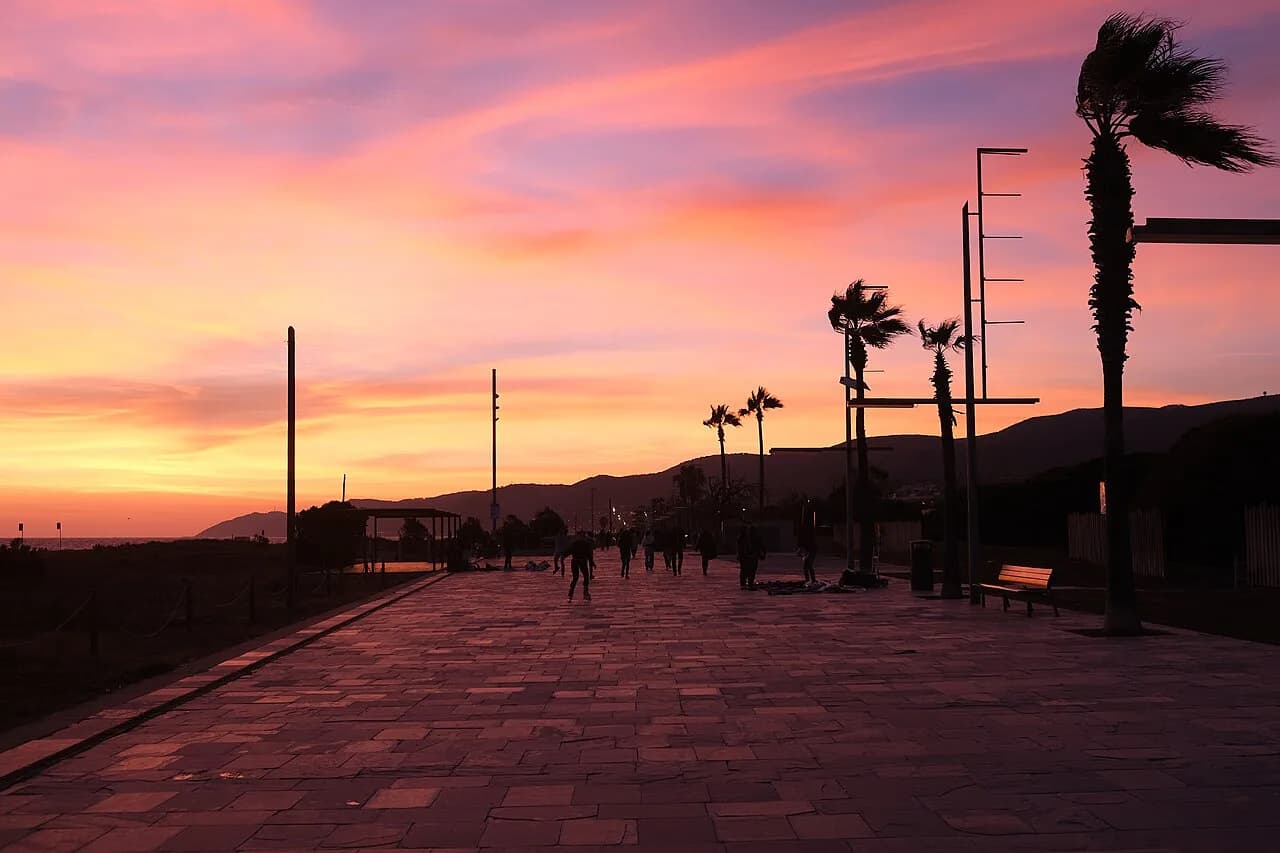
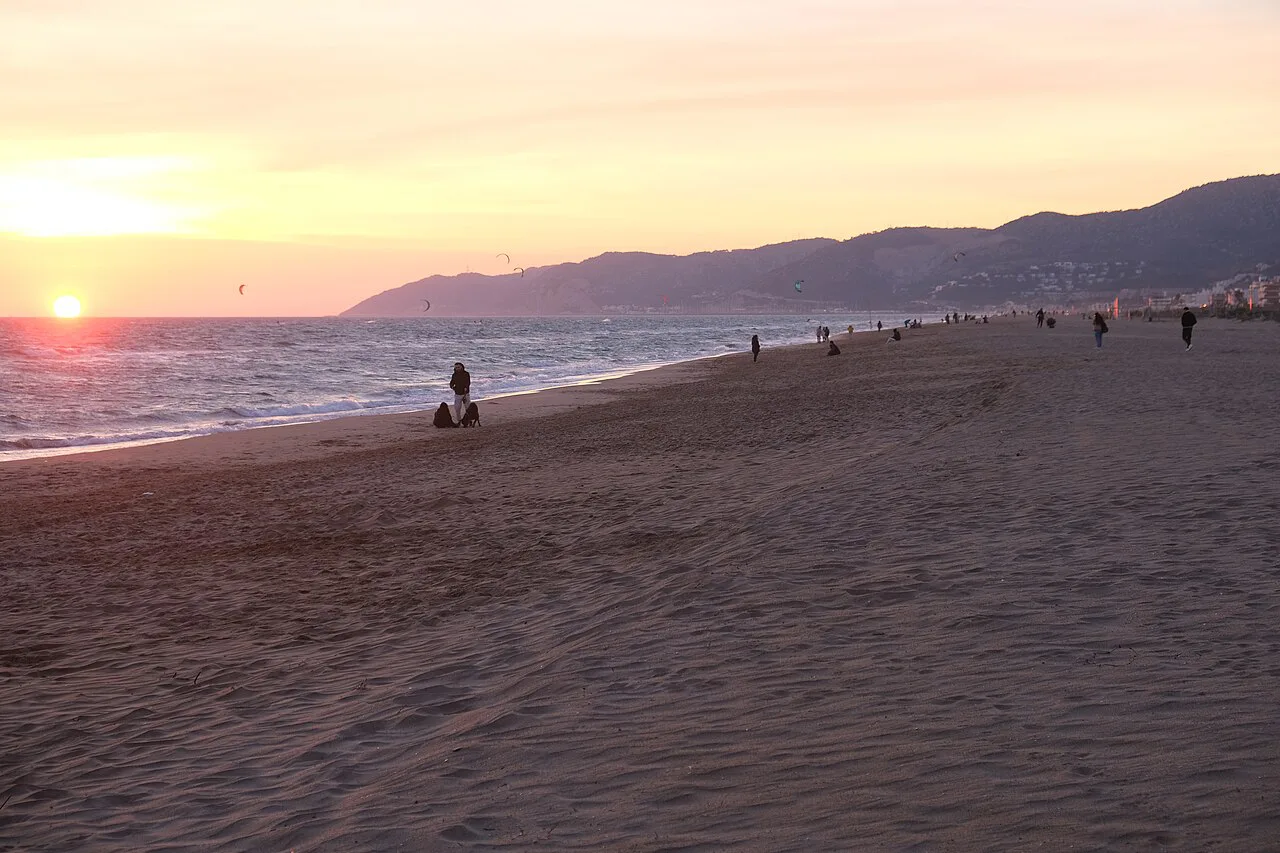
Late spring and early autumn give you warm sea and smaller crowds, while April and May bring the kite-surfers and a livelier shoreline. High summer is the busiest period and the sand gets hot enough to need footwear. Whatever the month, stay for sunset: with no city buildings blocking the view west, the sky turns through pinks, yellows and dusty greys over the water.
Nearby beaches to combine
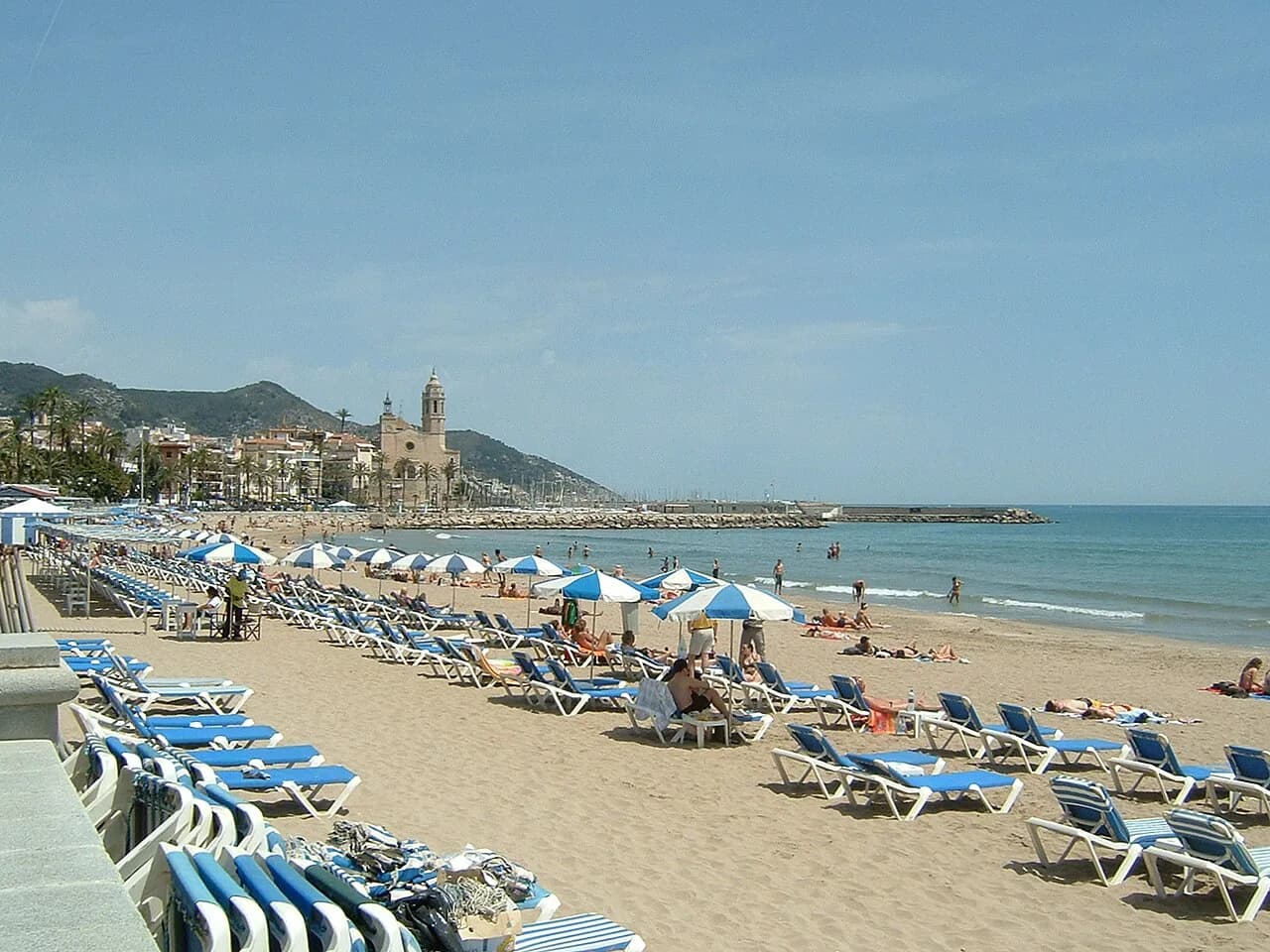
Sitges is the obvious pairing, with a run of town beaches that suit different moods. Platja de la Fragata sits below the church and works for a short swim, and Garraf beach is the small cove stop for a quieter hour. If you are planning several beach days in the area, the Sitges beaches guide sets out which stretch suits which kind of day.
Taking a dog to Castelldefels Beach
Owners travelling with a dog often ask whether the sand at Platja de Castelldefels is a place to let an animal run, and the reviews that describe this coast give them something to picture in advance. Condé Nast Traveler's review of the beach says the broad, dreamy stretch of sand is the sort of place that makes visitors vow to adopt a dog and spend every evening strolling by the water with it, so the walk itself, at sunset especially, is part of the appeal for anyone with a pet in tow.
What those descriptions do not add up to is a set of rules. The beach review mentions no dog-specific regulation, no designated animal area and no seasonal restriction on the sand, and the other overviews of Platja de Castelldefels say nothing about dogs either. Treat the picture of evening walks with a dog as an image the writer uses rather than a licence to let a dog loose on the beach, and plan the outing on the assumption that you will need to keep the animal under control and on a lead unless you learn otherwise on the ground.
Practical shape of the day matters more than most people expect. Platja de Castelldefels runs for about 3 miles, according to Hotels.com's guide to the beach, which is a long way to walk an animal in the sun, and the same guide describes the water as generally shallow and clean. Condé Nast Traveler notes that there are bathrooms and showers among the facilities, useful after a sandy walk, and that the beach never seems to fill up completely even in peak season, which leaves room to keep a dog away from the packed middle of the sand. It also records that the beach is well-loved by locals after work; those evening hours are exactly when a dog walker will find company.
The dogs that already appear on this beach are not the four-legged kind. The inflatable pool floats sold in the shops just off the sand include a lobster that doubles as a sunbathing mattress, and the reviewer singles it out as the best beach toy from a childhood. If a dog is joining the trip, that is one purchase it will probably try to claim, so a favourite toy carried from home is the safer option for a relaxed walk along the water.
Dog bans on the neighbouring Sitges beaches
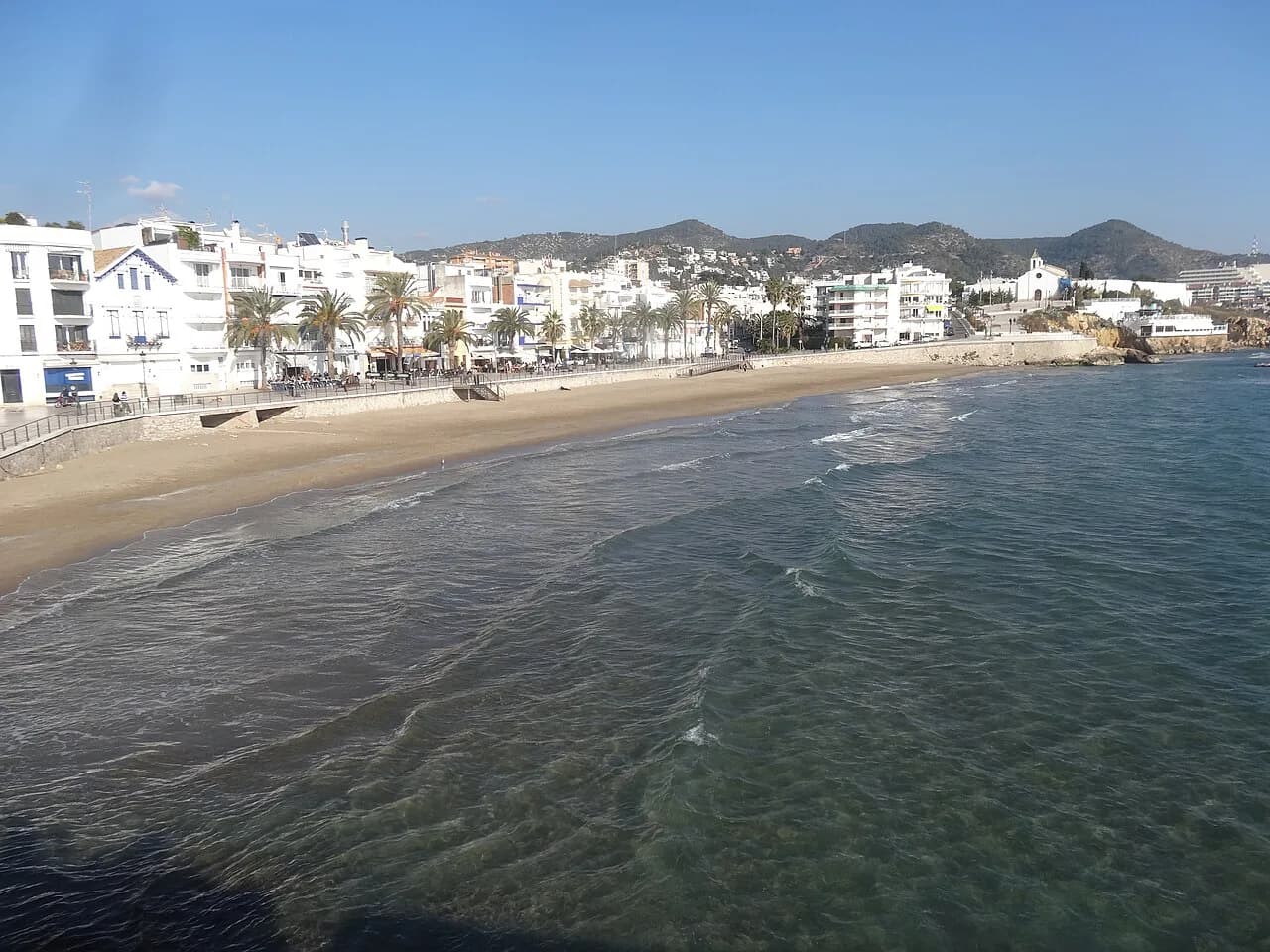
If you are staying in Sitges with a dog, the rules tighten considerably once you leave Castelldefels. The Platja de Sant Sebastià, a family beach with a maritime tradition in the barri of the same name, measures 3615 m² and 205 m long, with its eastern limit at the Parc infantil and Av. dels Balmins and its western limit at Baluard Vidal i Quadras. Among the signage listed for the beach are senyals de prohibició de gossos — dog-prohibition signs — so this is not a stretch where a dog can be walked on the sand.
Access to Sant Sebastià is straightforward if you are based in town: it is reached from the C-32 at the Sitges Centre exit, from the C-31 autovia de Castelldefels and from the C-211 connecting with Vilafranca del Penedès, with BusGarraf running the Barcelona–Sitges line on the C-32 with a stop at Parc de Can Robert, an urban bus stop 25 metres from the beach, and the train station 400 m away. Parking is in the zona blava. The beach has 3 WCs, 3 showers, a rentapeus, boardwalks for people with reduced mobility plus an amphibious chair, first-aid cover from a single “torre sitgetana” intervention point, and it is a smoke-free beach carrying ISO 14001, Blue Flag and Biosphere certification and the EMAS distinction.
For contrast, the beach the rest of this guide covers is a different proposition for a dog walk: Castelldefels is a broad, sandy Mediterranean beach roughly 18 km south of Barcelona, about 11 miles, and a long, wide beach that runs for about 3 miles with generally shallow and clean water suitable for swimming. It stretches far enough that a stroll along it is a proper outing, which is the practical reason to bring the dog here rather than to a small town beach with prohibition signs.
Plan Your Day
Take the R2 or R2S from Barcelona Sants or Passeig de Gràcia towards Vilanova or Sant Vicenç de Calders, get off at Platja de Castelldefels, and walk a few minutes away from the station before you settle. Bring shade, water and footwear for hot sand, and keep your evening free for the southern end near the port.
Frequently Asked Questions
How far is Castelldefels beach from Barcelona?
The beach is south of Barcelona on the Costa del Garraf, and the train from Barcelona Sants or Passeig de Gràcia takes about 25 minutes to Platja de Castelldefels on the R2 or R2S line. That makes it one of the easiest full beach days from the city without a car.
Is Castelldefels beach good for families?
Yes. The sand is broad and the water is shallow as you enter, which suits children and less confident swimmers. The beach is wide enough for families to spread out, and the southern end near the port has relaxed places to eat. Check the flags on the day.
How do you get to Castelldefels beach by train?
Take the R2 or R2S from Barcelona Sants or Passeig de Gràcia, heading towards Vilanova or Sant Vicenç de Calders, and get off at Platja de Castelldefels. The journey takes around 25 minutes, and the beach is a short walk from the station.
When is the best time to visit Castelldefels beach?
Late spring and early autumn give you warm sea with smaller crowds, while April and May bring kite-surfers to the open coastline. High summer is the busiest period and the sand gets hot, so bring footwear. Sunset is worth staying for at any time of year.
Are there restaurants and bars on Castelldefels beach?
Yes. The southern end near the port has Django Surf House for burgers, quesadillas and live music, Taberna Tibu-Ron for tapas, and Marevento for a daily three-course menu on a roomy terrace. There are also relaxed places to eat and drink spread along the beach.
Is Castelldefels beach busy in peak season?
It draws locals after work, families at weekends and Barcelona day-trippers, but the beach is wide enough that it rarely feels full. The stretch nearest the station and port is busiest; walk a few minutes along the sand for more space.
Sources
Beach notes for your next trip
Optional updates when we add or revise beach guides.
You might also like
Continue reading
More guides you'll find useful