Nerja Beaches: Which Beach Guide for Your Trip to Nerja
Plan a beach day in Nerja with this practical guide to Burriana, Calahonda, Carabeo and La Caletilla, covering access, facilities and nearby coves.
On this page
Nerja rewards a beach-led holiday because you can swim in a sheltered cove in the morning and walk to a two-kilometre sweep of sand in the afternoon without touching a car. The town sits below the Sierra de Almijara, and its coastline runs from broad western sands to small rock-walled coves tucked under the Balcón de Europa and the cliffs towards Maro. Families with small children, swimmers who like a gentle entry and snorkellers willing to scramble over rocks all find a beach here that fits.
The useful way to read the coast is by side of town. West of the Balcón de Europa you get the roomier sands of Torrecilla and El Playazo; immediately around the Balcón are the iconic, busy coves of Calahonda, La Caletilla and Salón; east towards Maro lie Carabeo, Carabeillo and Burriana. Pick a side first, then a beach, and the walking and bus logistics fall into place.
Why Nerja suits a beach-led holiday
Nerja grew from a fishing village into a summer resort without high-rise development, so the beaches sit below whitewashed streets and cliff paths rather than a wall of hotels. The coastline runs for more than nine kilometres, mixing small secluded coves with larger sandy stretches, and the shape of the coves shelters them from harsh wind, according to Thomas Cook's beach pages. That combination means you can choose a beach by mood: a full-service family day, a quiet swim, or a rocky bay to explore.
The town itself is compact and walkable, which matters more than any single beach. Most of the central coves are reached on foot from the Balcón de Europa, and the bus station links the town to Málaga and to Frigiliana for a non-beach afternoon. Base yourself near the old town if you want to beach-hop without a car, or near Burriana if you would rather have the long sandy beach and its restaurants on your doorstep.
How the beaches divide up
West of the Balcón de Europa, Playa de la Torrecilla curves in a horseshoe shape close to the centre, with larger hotels such as the Riu nearby, while Playa El Playazo is the first beach you meet from the west and draws windsurfers as well as bathers. These western sands are the roomier alternative when the central coves fill up in high summer.
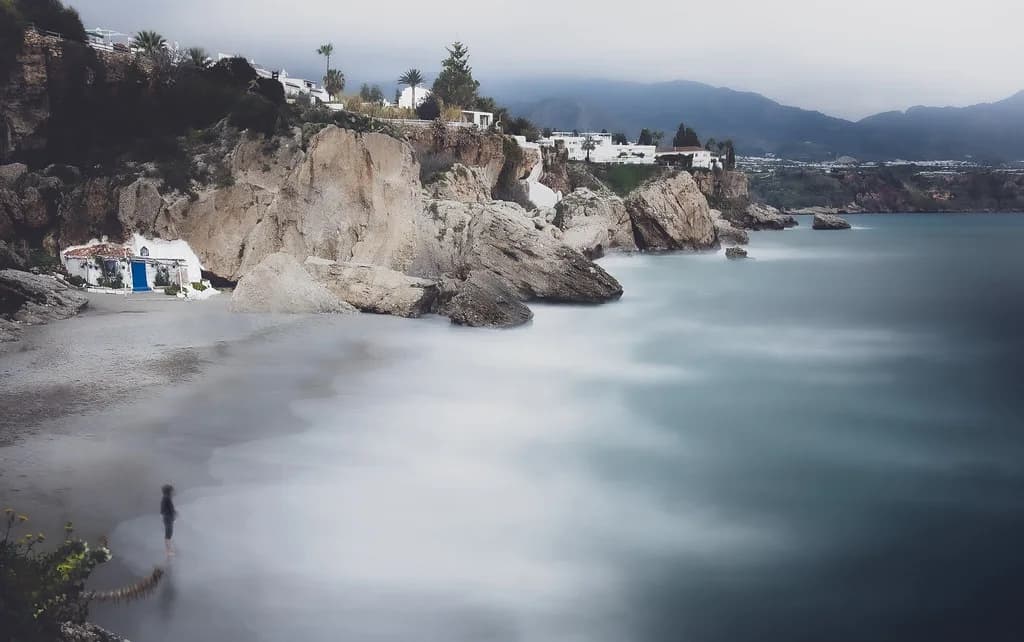
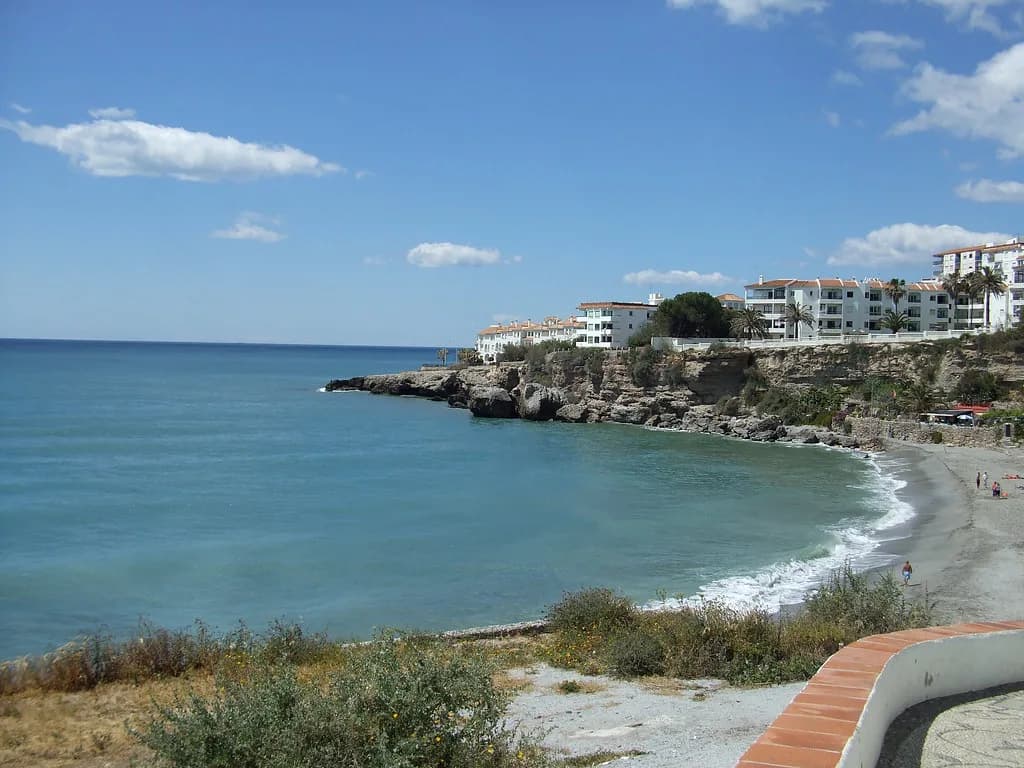
Around the Balcón de Europa, Playa de la Calahonda sits directly left of the plaza and Playa de la Caletilla hides in front of the Balcón de Europa hotel, with Playa del Salón reached by a pathway off the Balcón. East of the town centre come Carabeo, Carabeillo and the long sweep of Burriana, with the small coves below the Maro cliffs beyond. Grouping them this way turns a long list into three walkable clusters.
Playa de Burriana: the long sandy default
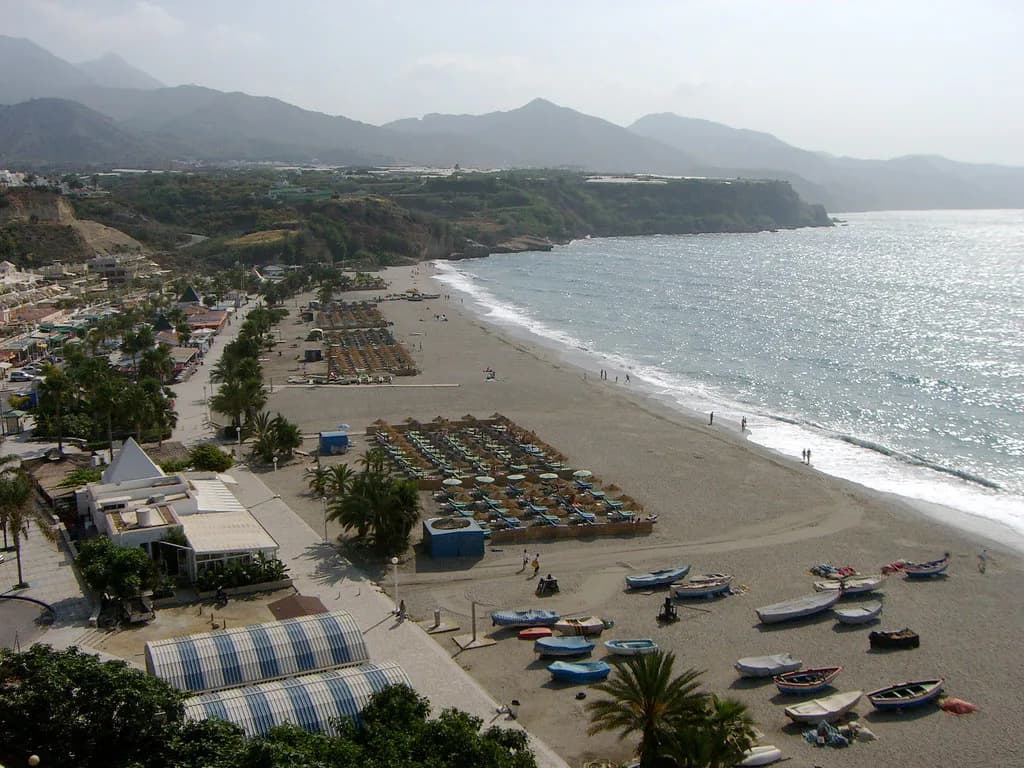
Burriana is Nerja's largest beach, an 800-metre stretch of sand that carries the biggest concentration of restaurants, bars, shops and watersports on the coast. Thomas Cook calls it a favourite with families, with a children's play area, a volleyball net and pedaloe hire, plus sun loungers and parasols for hire. If you want one beach to settle on for a whole day with children, this is the obvious choice.
Watersports operators work from the beach, with kayak tours running from Burriana to Maro past caves, cliffs and small coves, and kayaks available to hire by the hour. The tour operator is based at the far end of the beach, in front of Ayo's restaurant, under white tents. For a fuller picture of the beach itself, the dedicated guide to Burriana Beach, Nerja covers the layout, the sand and the eating options along the promenade.
Getting to Burriana and the walk back up
Burriana is roughly a 15-minute walk from the centre of Nerja, downhill on the way and uphill on the way home. That return climb is the trade-off for a beach with this much space and this many facilities, and it is worth planning your day so you walk back in the cooler evening rather than at midday. Wear shoes you can walk in rather than relying on flip-flops for the ascent.
Coming from further afield, Málaga's airport is about 65 kilometres away. A private taxi takes around 50 minutes, while the cheapest route is a bus or the short train ride into Málaga's María Zambrano station and then an ALSA coach direct to Nerja, which takes roughly an hour and a half and drops you a 10-minute walk from the centre; tickets can be bought on the day. From the Nerja bus station, direct coaches also run back to Málaga airport.
Playa de la Calahonda: the busy beach below the Balcón
Calahonda is the beach most visitors see first, because it sits directly below the Balcón de Europa and is reached by steps down from the plaza. That convenience makes it the busiest of the central coves in summer. It has showers, lifeguards and sunbeds to rent, and the restaurants of the old town are a short walk away, so it works well for a swim slotted into a day of sightseeing.
When the crowd becomes too much, a short scramble around the rocks brings you to smaller swimming spots such as Playa del Chorrillo, tucked into the cliffs to the east. Fishermen still set off from Calahonda, so an early visit gives you the working side of the beach before the towels arrive. Plan Calahonda for convenience and Chorrillo for a quieter hour.
Playa de la Caletilla and Playa del Salón: the small coves
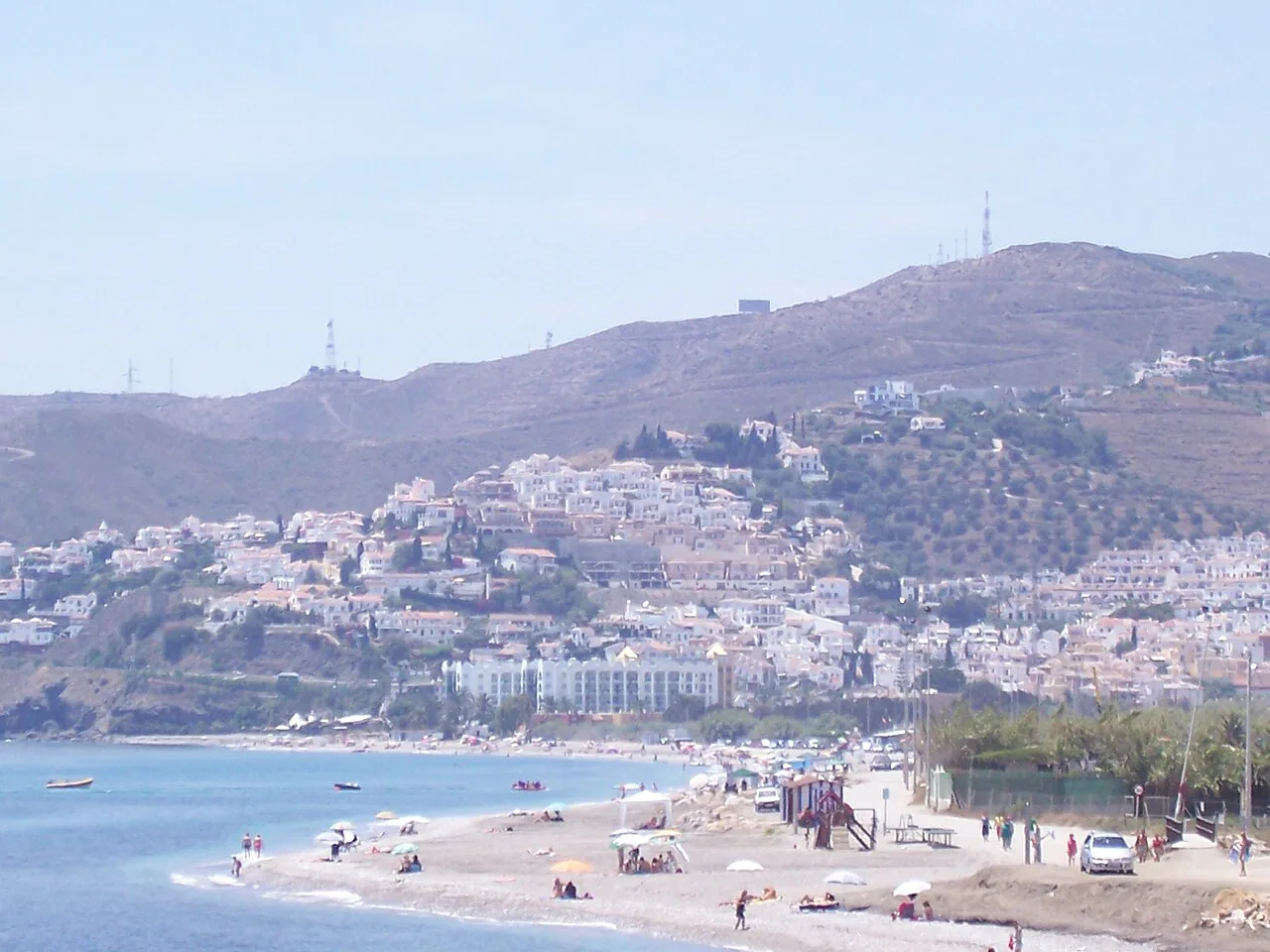
La Caletilla sits in front of the Balcón de Europa hotel and is often mistaken for a private beach, but it is open to the public and quieter than its neighbours. It has toilets, showers and a restaurant on site, and walking left or right along the shore brings you to small alcoves and rocky caves to explore. For a short, easy swim with a civilised lunch afterwards, this is the most rewarding central cove.
Next door, Playa del Salón is reached through a pathway directly off the Balcón de Europa and has beach bars and cafés for refreshments. Its position below the viewpoint means it shares the cliff scenery of the central coves. Between the two, you can swim in Playa del Salón and eat in Calahonda without moving the car.
Playa de Carabeo and Playa Carabeillo: cliff-wrapped coves
Carabeo is one of the smallest beaches in Nerja, wedged between two towering cliffs and reached by a steep staircase from Calle Carabeo. The steps make it difficult with a pushchair or for anyone unsteady on their feet, and you have to climb back up afterwards. What you get in return is a sheltered, well-maintained cove with showers and restaurants a short walk away.
Carabeillo lies between Carabeo and Burriana and mixes sand with shingle, reached down a staircase from street level, with restaurants including Bakus within walking distance and a few free parking spaces alongside street parking. Its central position makes it a good half-way stop if you are walking the coast. The Carabeillo Beach, Nerja page sets out the cove in more detail if you want to plan around it.
Playa de la Torrecilla and Playa El Playazo: the western sands
Torrecilla is a small horseshoe of sand closer to the centre, popular with tourists staying at the larger hotels on its edge. It is patrolled by lifeguards and has showers, toilets, sunbeds and plenty of restaurants and shops nearby. Children have banana rides, pedal boats, canoes and windsurfing craft available for hire, which makes it a practical family base on the western side of town.
El Playazo, the first beach from the west, is shared by windsurfers and bathers and feels more open than the central coves. When Calahonda and La Caletilla are packed, the western sands give you space to lay out a towel. Pick Torrecilla for facilities and El Playazo for elbow room.
The water: sand, depth, rocks and snorkelling
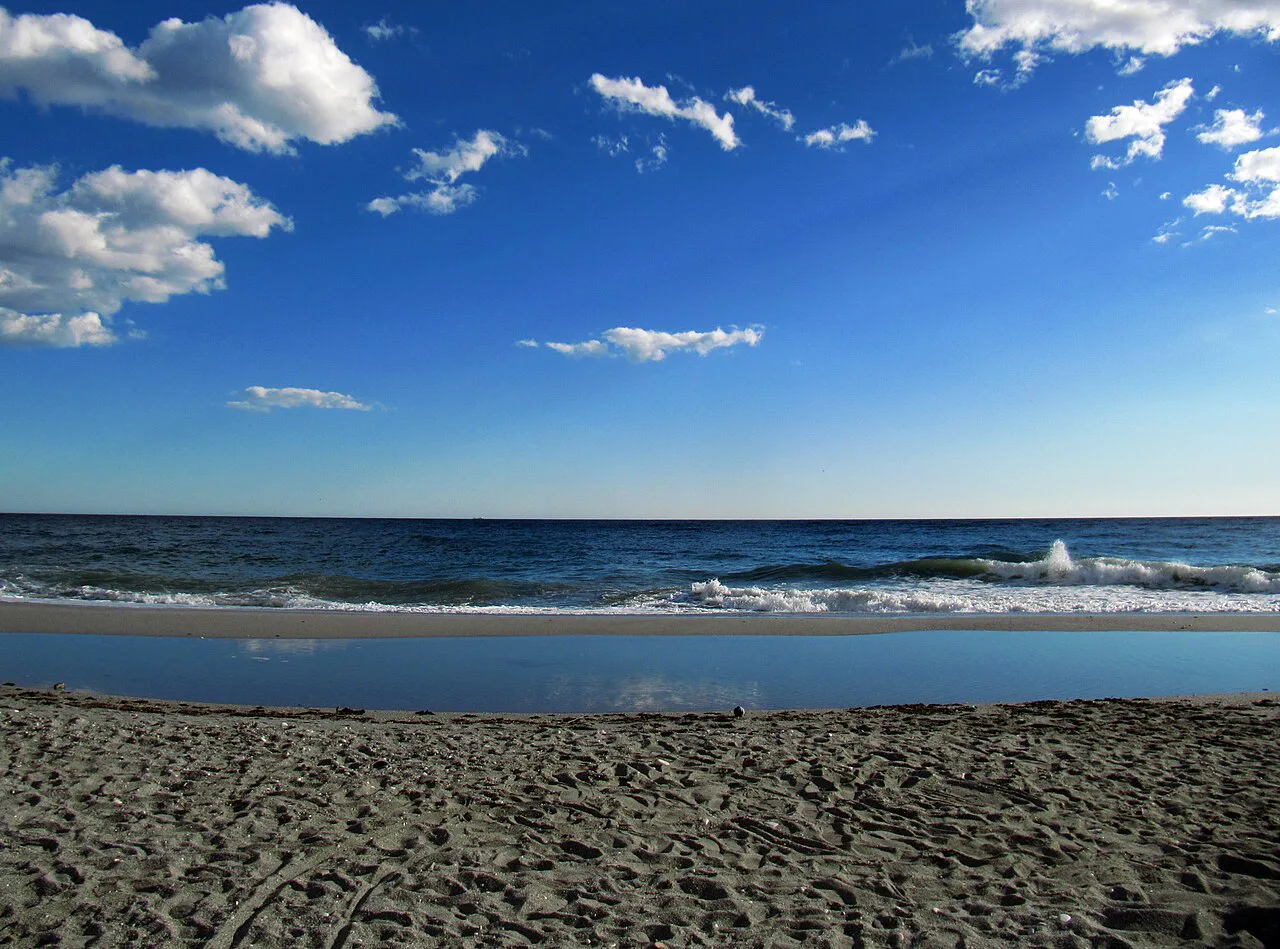
Nerja's beaches range from long sandy stretches at Burriana and Torrecilla to sand-and-shingle at Carabeillo and rock-walled coves at Carabeo. The cove shape that shelters these beaches from wind also means the water stays relatively still close to shore, which helps families with small children. The rocky bays and cliffs around Carabeo, Caletilla and towards Maro are where snorkellers find most to look at.
Sea temperatures run from about 18°C in winter to 24°C in summer, so the comfortable swimming season centres on the warmer months rather than the whole year. Bring water shoes if you plan to explore the rocks and caves around the smaller coves, and check the flags on the day, since conditions can differ from one cove to the next. Lifeguards are reported on Calahonda and Torrecilla; elsewhere you swim on your own judgement, and it is worth checking current conditions before you set out.
Facilities as published
Facilities vary sharply between beaches, so match the beach to your needs. Calahonda has showers, lifeguards and sunbeds; Torrecilla adds toilets and shops; La Caletilla has toilets, showers and a restaurant; Carabeo has showers; and Burriana carries the biggest concentration of sunbeds, parasols, restaurants and watersports. Sunbed prices are set on the beach, so ask at the kiosk when you arrive rather than budgeting in advance.
The beaches have changed status over the years: Burriana previously held a European Blue Flag award for safe swimming, and the wider coastline has carried Blue Flag awards in the past. Treat any award as history rather than a current guarantee, and judge conditions on the day from the flags and the lifeguards on duty.
Getting around Nerja without a car
Most of Nerja's beaches are within walking distance of one another, which is the town's great advantage for car-free travellers. The central coves around the Balcón de Europa are minutes apart on foot, Burriana is a 15-minute walk from the centre, and the western sands are a slightly longer stroll. A taxi is worth considering for the return leg from Burriana if you have young children or a lot of kit.
For a change from the beach, Frigiliana is a 15-minute direct bus ride from Nerja's bus station, with tickets bought on the bus, or a short taxi ride. The village's whitewashed alleys and flower pots make a good half-day out when the afternoon heat flattens. Buses also connect Nerja with Málaga for airport transfers and city days.
Best time to go
High summer brings the warmest sea and the biggest crowds, especially on Calahonda and around the Balcón de Europa. If you want the long sandy beaches to yourself, aim for the shoulder months when the water is still swimmable but the towel-to-towel pressure eases. Whatever the month, start early: the cliffs shade some coves in the afternoon and the central beaches fill up by mid-morning.
The last week of June brings the Festival of San Juan, a midsummer celebration with bonfires and camping on the beach, and fresh sardines cooked on the sand. If you want a quiet beach day, plan around it; if you want atmosphere, it is the liveliest week of the year on the sand.
Nearby beaches and coves to combine
East of Burriana, the small coves below the Maro cliffs have inspired artists and photographers and make a natural extension of a Burriana day. The cliffs, caves and clear water between the two beaches are the reason kayak tours run this stretch. The Playa de Maro, Nerja guide covers the cove and how to reach it.
Within Nerja itself, the obvious combinations are Calahonda with Chorrillo, La Caletilla with Salón, and Carabeo with Carabeillo on the walk towards Burriana. Each pairing gives you one busy beach and one quiet one within a few minutes of each other, which is the simplest way to build a varied day without transport.
Plan Your Visit
Choose your side of town first: the western sands of Torrecilla and El Playazo for space and family facilities, the central coves for convenience and cliff scenery, or Burriana for a full day with watersports and restaurants. It is the same side-of-town logic that shapes a day on the Alicante beaches, where the choice between Postiguet and San Juan decides the mood of the trip. Build the day around the walk back up from the cliff-foot beaches, and carry water shoes if you plan to explore the rocks.
Book accommodation near the old town if you want to beach-hop on foot, or near Burriana if the long sandy beach is the point of the trip. Confirm sunbed prices and any seasonal arrangements with the beach kiosks or the Nerja tourist office when you arrive, then let the flags and lifeguards guide the swim.
Explore more Nerja beaches
Frequently Asked Questions
What is the best beach in Nerja for families?
Burriana is the strongest choice for families, with a long sandy beach, a children's play area, a volleyball net, pedaloe hire and plenty of restaurants and sunbeds. Torrecilla on the western side is a good alternative, with lifeguards, showers and toilets plus banana rides and pedal boats for children.
Can you walk to Burriana Beach from Nerja town?
Yes. Burriana is roughly a 15-minute walk from the centre of Nerja. The walk down is easy, but the return is uphill, so plan to walk back in the cooler evening or take a taxi if you have young children or a lot of beach kit.
Which Nerja beaches are quietest?
La Caletilla is quieter than its neighbours despite sitting in front of the Balcón de Europa hotel, and Playa del Chorrillo, a short scramble around the rocks from Calahonda, feels tucked away in the cliffs. Carabeo is small and secluded, though you pay for it with a steep staircase.
Are there lifeguards on Nerja beaches?
Lifeguards are reported on Playa de la Calahonda and Playa de la Torrecilla. On other beaches, swim on your own judgement and follow the flags posted on the day.
How warm is the sea in Nerja?
Sea temperatures range from about 18°C in winter to around 24°C in summer, so the comfortable swimming season falls in the warmer months. Water shoes help on the rocky beaches around Carabeo and towards Maro.
Which Nerja beach is best for snorkelling?
The rocky bays and cliffs around Carabeo, La Caletilla and the coves towards Maro give snorkellers the most to look at, with caves and rock formations close to shore. The kayak route from Burriana to Maro passes caves, cliffs and small coves in clear water.
Do you need a car to reach Nerja's beaches?
No. Most of Nerja's beaches are within walking distance of one another, and Burriana is a 15-minute walk from the centre. Buses connect Nerja with Málaga and Frigiliana if you want to explore beyond the town.
Sources
Beach notes for your next trip
Optional updates when we add or revise beach guides.
You might also like
Continue reading
More guides you'll find useful