Frigiliana Beach: The Best Beaches Near This White Village
Frigiliana has no beach of its own, so a beach day means Nerja or Maro below. Here is how to reach Burriana, Maro and the town coves.
On this page
Frigiliana rewards anyone who wants whitewashed lanes, mountain views and a slower pace, but the nearest sand is a descent away in Nerja and Maro. The village sits above the coast, so a beach day here is really a choice between three very different stretches of shoreline. Decide whether you want convenience, scenery or a quick dip before you set off.
Where Frigiliana sits and how far the coast is
Frigiliana is an inland village in the hills of the Axarquía, with Nerja on the coast directly below and the small village of Maro just beyond it towards Almería. The road down to Nerja is short enough for a morning trip, so you can combine village lanes with an afternoon on the sand. Treat the coast as your beach destination and the village as your base.
The closest beaches to Frigiliana are therefore Nerja's own: Burriana, the town coves around the Balcón de Europa, and the cliffs and cove at Maro. Nerja's beach scene is diverse enough to fill a week, with everything from broad family sands to small rocky bays. If you want a fuller comparison before committing, the guide to Nerja beaches sets out the options by character and access.
Getting there without a car
A local bus links Nerja and Frigiliana on a short run of about 15 minutes, with the fare published at around €1 and tickets bought on the bus. That connects you to Nerja's bus station, from which the beaches are walkable or a short taxi ride away. For Burriana, the walk down from the centre takes roughly 15 minutes.
Burriana Beach, Nerja is the easiest sand to reach from the village on public transport, because the bus drops you in Nerja and the beach is a downhill walk from the centre. Note that the return leg is uphill, so allow time and water for the climb back. Taxis are the alternative for anyone carrying beach kit or travelling with small children.
If you are coming from Málaga, the coast is reached by coach from the city's main bus station rather than directly from the airport, and the journey takes around 90 minutes. Fares and timetables change by season, so buy on the day or consult ALSA, the bus company that runs the route.
Burriana: Nerja's biggest beach
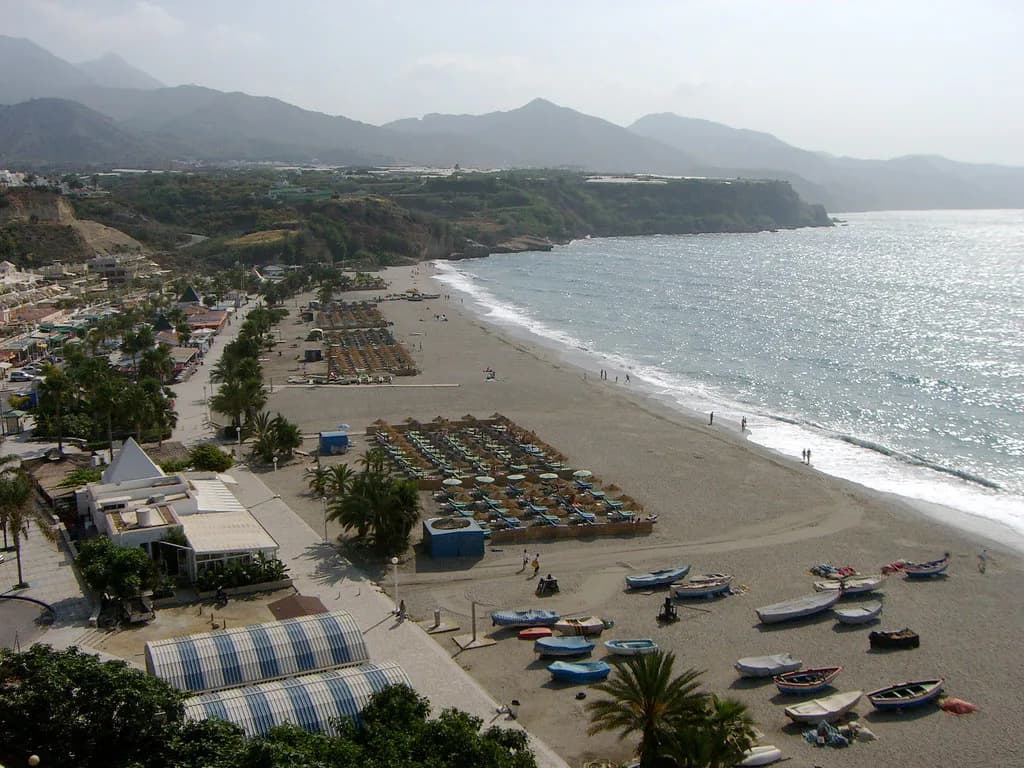
Burriana Beach is Nerja's largest and busiest stretch, a broad sweep with the biggest concentration of shops, restaurants, bars and watersports on this part of the coast. In summer it fills with sunbeds, umbrellas and families, and it stays lively into the evening. For a first beach day from Frigiliana, it is the obvious choice.
Burriana Beach, Nerja suits swimmers, families who want facilities on hand, and anyone keen to try kayaking, paddleboarding, parasailing or jet skiing. The beach also has a reputation for accessible dining, with chiringuitos along the sand. It is less appealing if you want solitude, so go early if quiet is the point.
The walk back up to Nerja town is steep, which is the main trade-off for staying late. Budget for a taxi if legs are tired or you have a pushchair. Parking near the beach is limited in high season, so the bus-and-walk combination often works better than driving down.
Playa de Maro: the cove under the cliffs
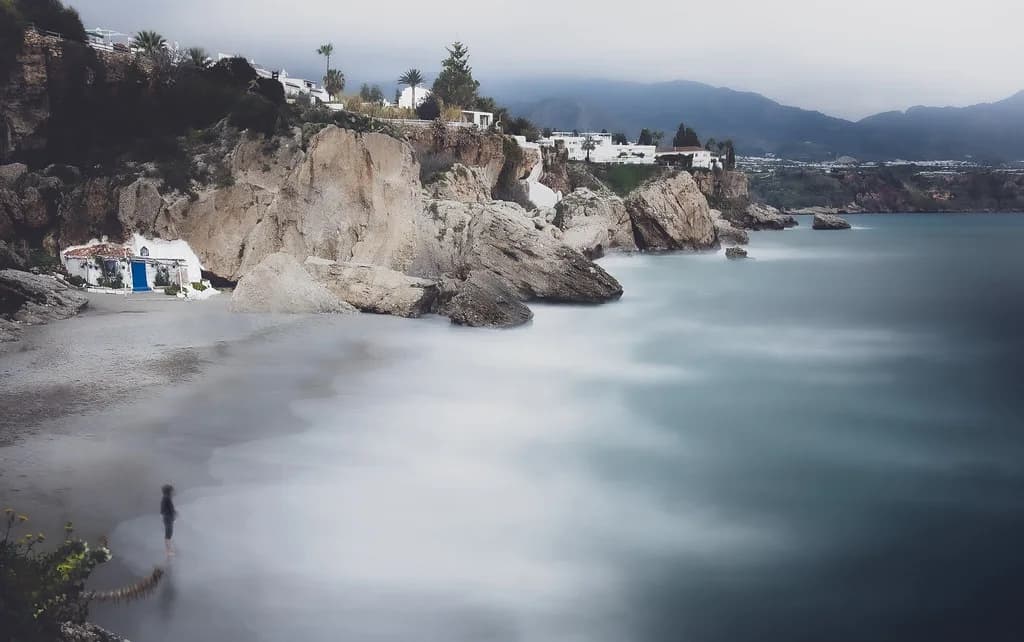
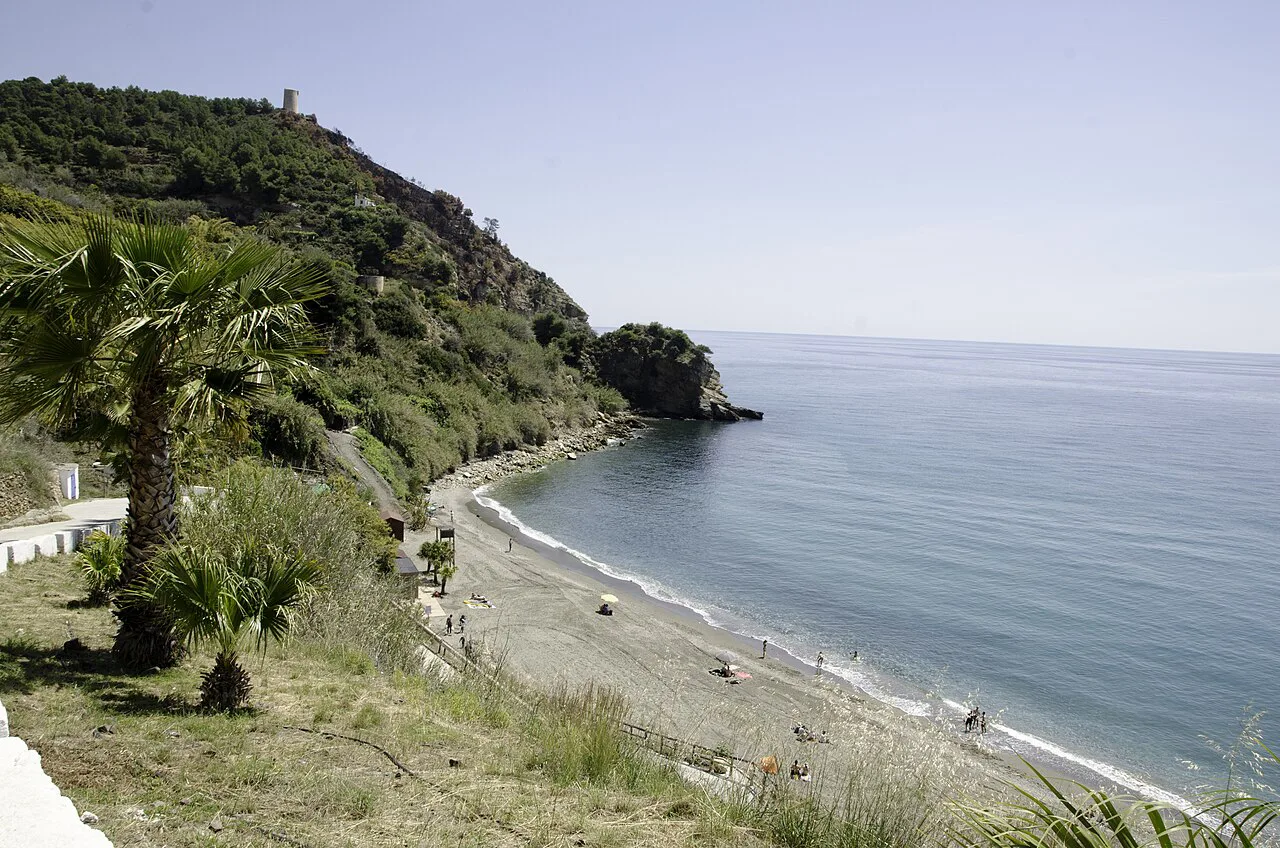
Playa de Maro lies in a sheltered cove beneath the cliffs of the Sierra de Tejeda, just beyond Nerja towards Maro village. The beach runs for about 500 metres of coarse sand, backed by vegetation, cane and small cultivated plots, with green-blue water and rocks at the edges. It is the scenery beach of the area.
The rocks make Playa de Maro, Nerja a snorkelling destination: the clear water and rocky bottom hold corals, sponges, anemones and fish, and fishing is prohibited here, which helps the marine life. Kayak trips run from the beach along the cliffs, and you can also hire a kayak or paddleboard to explore at your own pace. The beach has a kiosk, toilets, showers, sunbeds and a chiringuito restaurant, with lifeguards on duty in summer according to the local tourism page.
Maro suits confident swimmers and snorkellers more than toddlers, because the appeal is the rocky edges rather than a long shallow shelf. The setting is a natural area, so bring what you need and take it away with you. It is also the beach to pick if you want a dose of drama with your swim.
Driving down to Maro
To reach Maro from Nerja, take the N-340 towards Almería, turn off at the Nerja cave roundabout and drive straight through Maro village. After the Hotel Playa Maro, take the first right at the small roundabout and follow the road down between the greenhouses. In high summer, cars start parking on the verge before you reach the beach.
At the bottom there is a small square with space for several cars and a sign and barrier marking the beach entrance. Parking beyond the barrier is prohibited even when the barrier is raised, as the Nerja tourism page states. Arrive early in summer, because the car park is small and the verges fill quickly.
The final approach is narrow and busy in peak weeks, so a smaller car and patience help. If you are staying in Frigiliana without a car, the simplest route to Maro is a taxi from Nerja, or a kayak trip along the cliffs from Burriana. Walking down from the village is not realistic for a beach day with kit.
Calahonda, Carabeo and Caletilla: the town beaches
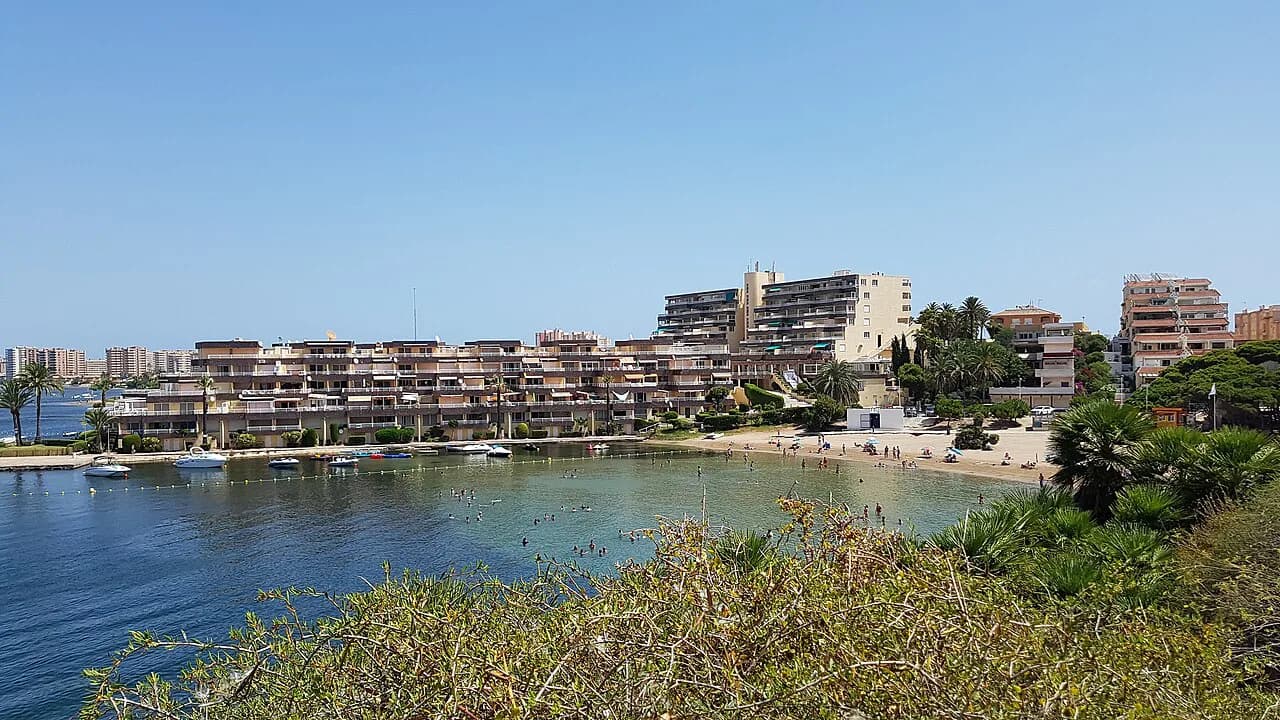
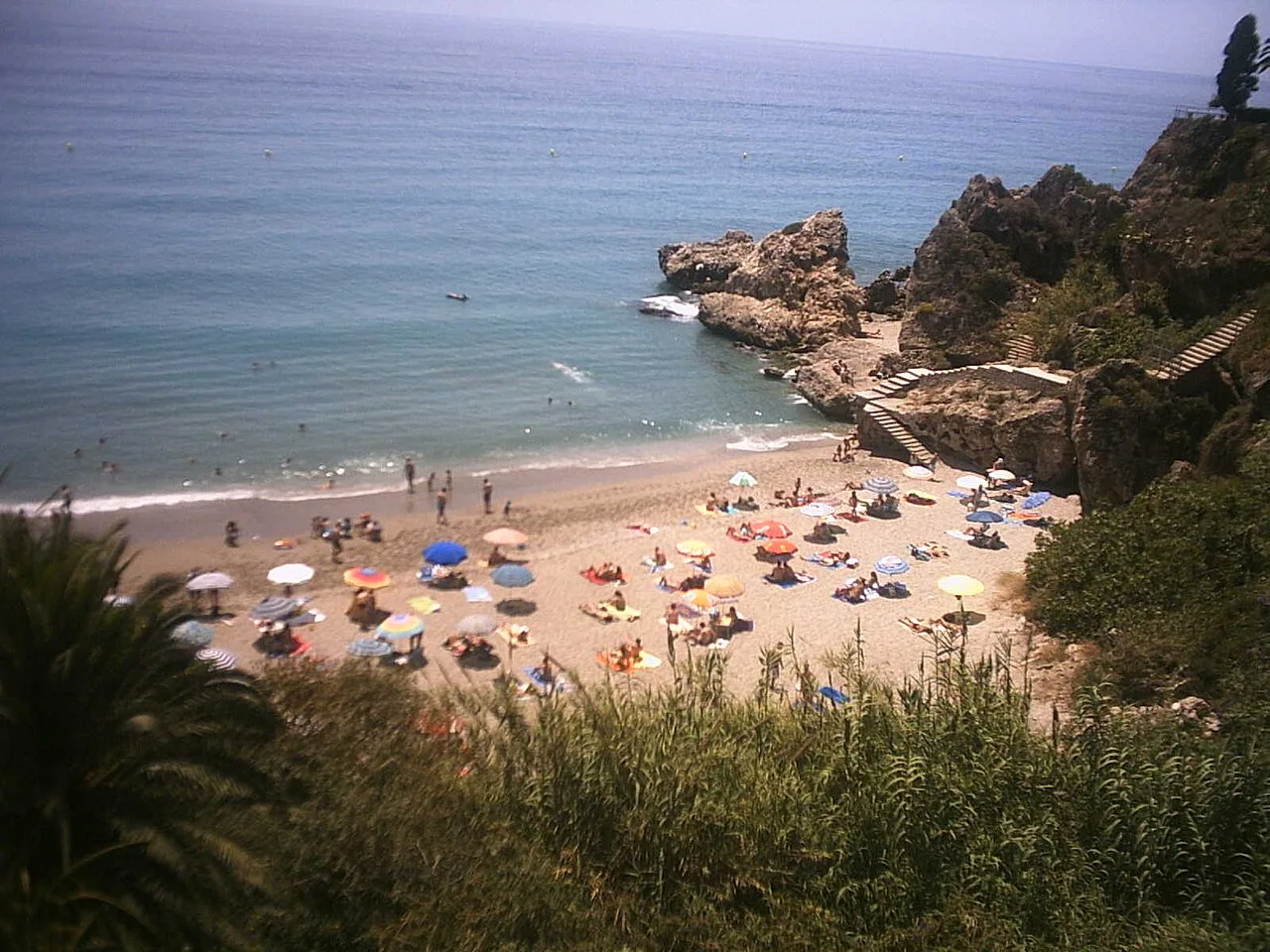
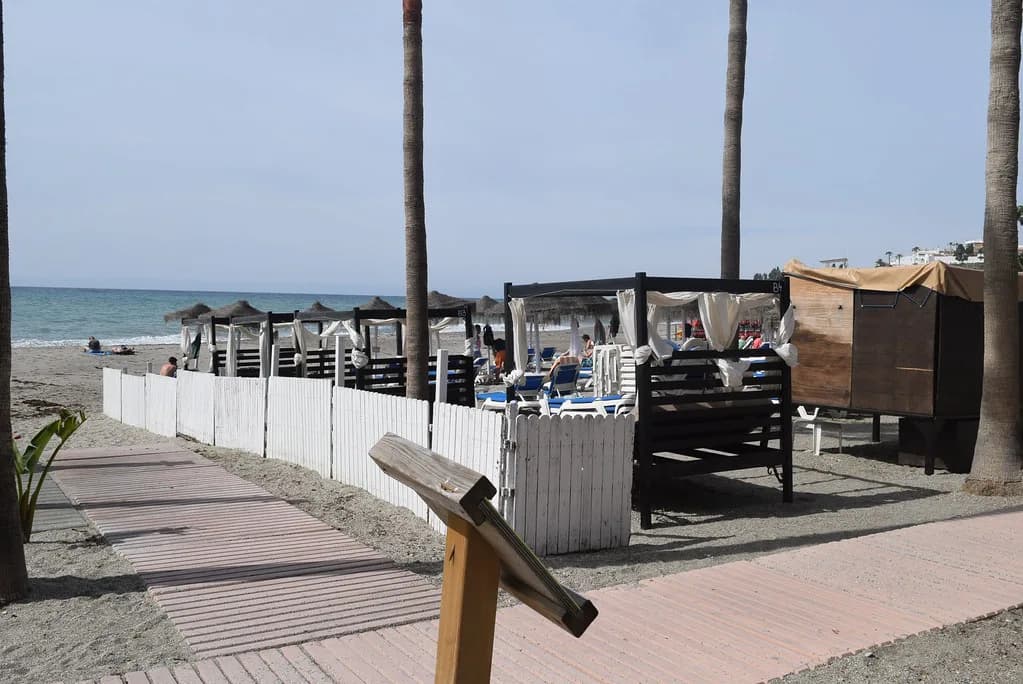
Nerja's town beaches sit below the Balcón de Europa, reached on foot from the centre. Playa de la Calahonda is the most visible, directly beside the Balcón, with showers, lifeguards and sunbeds for hire. It gets crowded because of that convenience, and a short walk around the rocks brings you to quieter swimming spots such as El Chorrillo.
Playa del Carabeo is a small, well-kept beach wedged between cliffs, reached by a steep staircase. That staircase is the deciding factor: it is awkward with a pushchair and hard work for anyone with bad knees, but it rewards those who make the descent with seclusion. Showers are available, and restaurants are a short walk away.
Playa de la Caletilla, in front of the Balcón de Europa hotel, is often mistaken for a private beach but is open to the public. It is quieter than its neighbours, with toilets, showers and a restaurant on site, and rocky alcoves to explore at either end. For a low-effort swim close to town, it is the pick.
Facilities and what to expect
Facilities vary sharply between these beaches, so match the beach to your group. Burriana has the fullest range of restaurants, bars, sunbeds and watersports, while Calahonda and Caletilla offer showers, toilets and seasonal lifeguards close to town. Maro has a kiosk, toilets, showers, sunbeds and a chiringuito, plus lifeguards in summer, according to the local tourism page.
Sunbed prices, parking charges and kayak hire rates are not fixed by any single published list, so check current rates at the beach when you arrive. Carry cash for small kiosks and chiringuitos. If you need step-free access, Maro is described as accessible for older visitors, children and people with disabilities, but the other coves involve stairs or slopes.
Who each beach suits
Families with small children should head for Burriana, where the facilities, food and watersports are concentrated and the walk from town is manageable. Calahonda and Caletilla also work for a short town swim, though Calahonda is busy. Anyone with a pushchair should avoid Carabeo's staircase altogether.
Snorkellers and confident swimmers belong at Maro, where the rocks and clear water deliver the best underwater viewing. Quiet-seekers should go early to Maro or try the smaller town coves around the Balcón rather than Burriana in August. Couples wanting a scenic day out will find the cliffs at Maro the most memorable setting.
Best time to go
Summer brings heat and crowds, so start early for Maro to secure parking and a spot on the sand, and use the morning for the climb down and the snorkel. Burriana is liveliest in July and August, with the beach busy through the day and into the evening. Spring and autumn give comfortable walking weather for the village and easier access to the coast.
The sea is at its warmest in late summer, when swimming is most comfortable, but that is also when the coast is busiest. For a calmer visit, aim for June or September and check the local tourist office for any seasonal changes to beach services. Seasonal lifeguard cover is a summer arrangement, so plan accordingly outside those months.
Nearby beaches to combine
Beyond Maro, a string of small coves runs east towards the Granada coast, including El Cañuelo, Las Alberquillas and the Calas del Pino. These are wilder and less serviced than Maro, and some are reached only on foot or by track. El Cañuelo is known for its sunsets, and Las Alberquillas is described as semi-naturist with a natural shower.
If you want to extend the trip along the coast, Almuñécar Beaches and the Costa Tropical lie a short drive east, with La Herradura's sheltered bay known for scuba diving and the wreck sites of Spanish galleons. That bay sits between two mountains and is well protected from the wind, making it a good alternative when conditions on the Málaga side are less settled. Heading the other way, the province's own coastline is worth comparing too, and the best beaches in Almería offer a contrasting stretch of coves and open sand beyond Maro.
For a closer combination, pair Maro with the town beaches: snorkel in the morning at Maro, then swim at Caletilla in the afternoon with a shower and restaurant on hand. Carabeillo Beach, Nerja sits between Carabeo and Burriana and is another small option reached by steps. Two beaches in a day is realistic here because the distances are short.
What to bring
Water shoes make a real difference at Maro and the rocky town coves, where the entry is stony and the seabed uneven. Bring shade, since the cliffs and buildings cast only limited shadow, and carry water for the climbs back up from Burriana and Carabeo. Cash is useful for kiosks and chiringuitos.
If you plan to kayak or snorkel from Maro, book the guided trip ahead in peak season, because places fill on good-weather days. A dry bag and a rash vest help on the water, and a light layer is worth packing for the breezier cliff-top evenings in Frigiliana.
Plan Your Beach Day from Frigiliana
Frigiliana gives you a hill village base with three distinct beach days within reach: Burriana for facilities and family ease, Maro for cliffs and snorkelling, and the town coves for a quick swim under the Balcón. Choose by group and by mood rather than by distance, because the closest sand is not always the right sand.
Take the bus or a taxi down to Nerja if you are car-free, drive early to Maro if you want the cove, and remember that parking beyond the barrier is prohibited even when it is raised. For the wider picture of what is on offer along this coast, browse the Costa del Sol beaches guide before you set out.
Frequently Asked Questions
Is there a beach in Frigiliana itself?
No. Frigiliana is an inland whitewashed village in the hills, and the sand belongs to the coast below. The nearest beaches are in Nerja, with Burriana and the town coves around the Balcón de Europa, plus the cove at Maro just beyond the Nerja cave turn-off.
How do you get from Frigiliana to the beach without a car?
Take the local bus down to Nerja, which runs the short hop in about 15 minutes, then walk or take a taxi to the beach. Burriana is roughly a 15-minute downhill walk from Nerja centre, while Maro needs a taxi from Nerja or a kayak trip along the cliffs.
Which beach is closest to Frigiliana?
Nerja's beaches are the closest, and Burriana is the most straightforward for a first visit because the bus drops you in town and the sand is a short walk down. The town coves below the Balcón de Europa are a similar distance but involve steps.
Is Maro beach better than Burriana?
They serve different days. Maro has cliffs, coarse sand and rocky water that rewards snorkellers, but its car park is small and parking beyond the barrier is prohibited. Burriana has the widest choice of restaurants, bars, sunbeds and watersports, and is easier without a car.
Do you need to book kayaking at Burriana?
Guided kayak trips along the cliffs fill quickly on good-weather days in summer, so reserving ahead is sensible. Self-hire kayaks and paddleboards are usually available at the beach, and operators publish their own rates and departure times.
What is the most beautiful village near Nerja?
Frigiliana is the classic answer, with its steep whitewashed lanes and mountain setting above the coast. It pairs naturally with a beach day in Nerja, since the bus connects the two in about 15 minutes.
Sources
Beach notes for your next trip
Optional updates when we add or revise beach guides.
You might also like
Continue reading
More guides you'll find useful