Burriana Beach, Nerja: Sand, Access and Facilities Guide
Burriana Beach is Nerja's biggest beach: 800 metres of golden sand, a 15-minute walk from the centre, with restaurants and sunbeds along the promenade.
On this page
Burriana is the beach to choose when you want a full day by the sea without giving up lunch, a shower or a cafetière of proper coffee. Its long sweep of fine golden sand gives you room to spread out, and the promenade behind it keeps everyone fed and watered at the same time.
It is a practical pick for families and mixed groups, and for anyone based in Nerja who would rather walk to the sand than drive to a cove. If you want a quieter, smaller inlet, plan Burriana as your main day and save a morning for one of the town's smaller beaches.
Where Burriana sits in Nerja
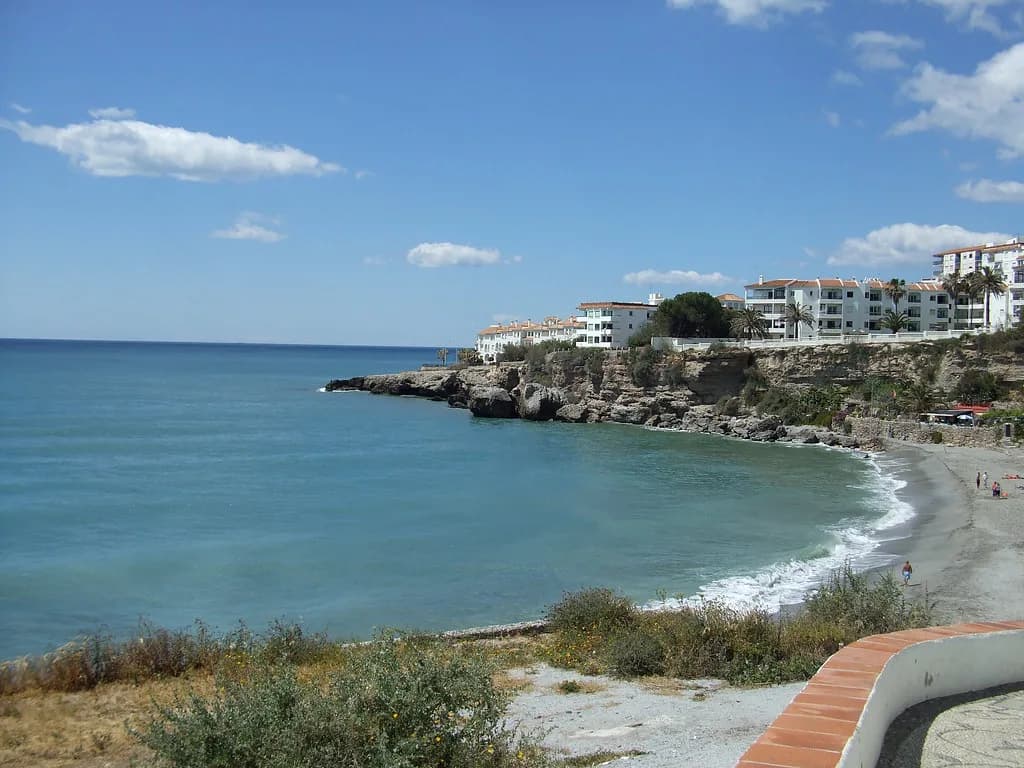
Burriana runs along the western edge of Nerja, on the Costa del Sol, with the tall white Parador hotel marking its western end. From the centre of town it is roughly a 15-minute walk downhill, which puts it within easy reach of most hotels and apartments in the old town.
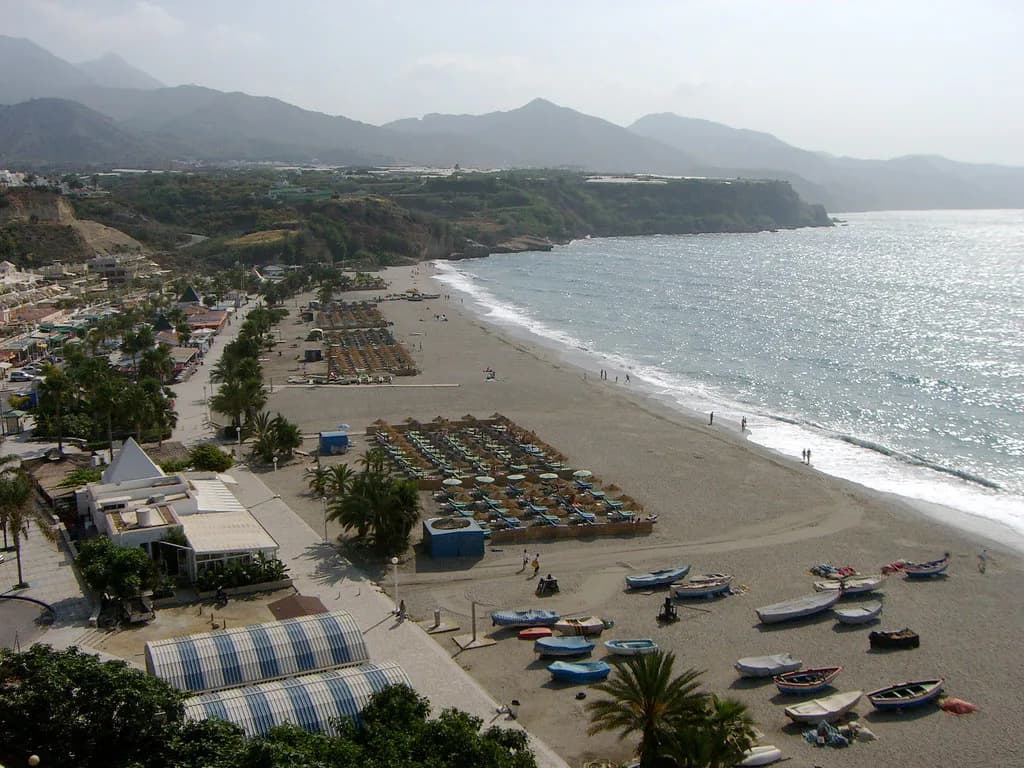
The beach is the largest in Nerja, stretching for about 800 metres of fine, golden sand. That length is what makes it feel different from the tiny central coves: even when the middle is busy, you can walk a few minutes along the shore and find more space. If you are weighing up a longer stay on this coast, compare it with the beaches in Málaga before deciding where to base yourself.
In a town of small rocky inlets, that scale and the promenade behind it are what separate Burriana from the rest of the Nerja beaches. It is the one place in town where a family can spend six hours without moving.
Getting there on foot
The walk down from the town centre is straightforward and mostly downhill, so it works well for a morning start with children, towels and a cool bag. The trade-off is the climb back up at the end of the day, when the sun is at its strongest and everyone is tired.
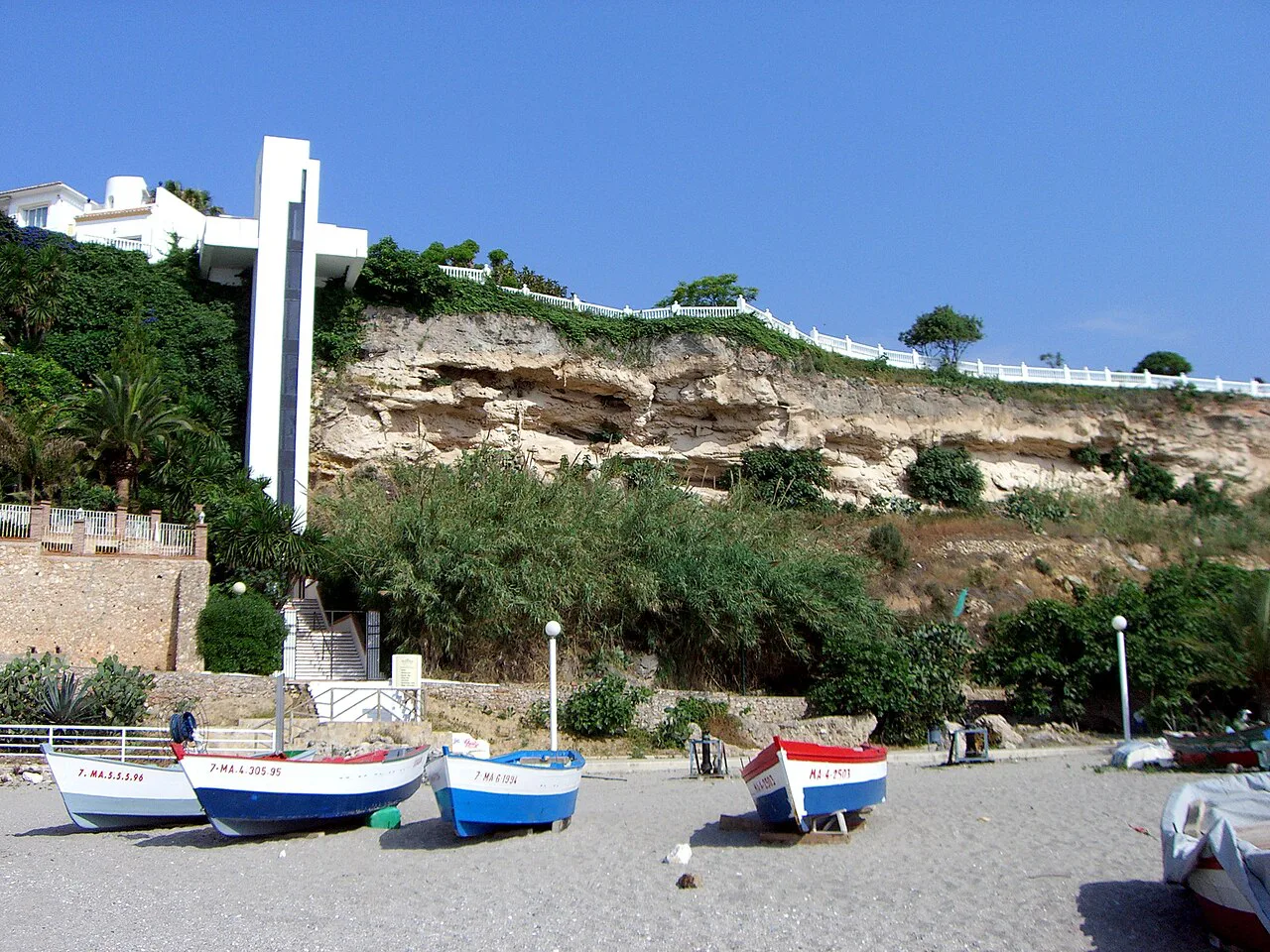
The downhill leg from the centre takes around 15 minutes on foot. A shortcut mentioned by regular visitors is the lift at the west end of the beach, in the Parador hotel, but it is a hotel facility rather than public beach access, so treat the uphill walk as the default and take it slowly.
Arriving by car
There is a car park at the beach end of the access road, and street parking fills up in the surrounding streets during the summer. Arrive before mid-morning in July and August if you want to park close to the sand, or park higher up and walk down.
One practical note from regulars: if you are parked near the roundabout at the top of the access road, check the path down to the beach before you set off with all your gear. It saves a second trip back up to the car.
The sand and the water
The beach is a broad band of fine golden sand, backed by a promenade of restaurants and bars. It faces south across the Mediterranean, and the bay curves enough to give some shelter from the prevailing winds, though it is an open beach rather than a hidden cove.
The shore shelves gradually in the middle, which is the easiest place for small children and nervous swimmers to paddle, while the water deepens further out. Look for the flags and follow the lifeguards' advice on the day, as conditions change with the wind and swell.
How busy it gets
July and August are the busiest months, and the central section beside the main access points fills first. If you want a quieter spot, walk east or west along the sand rather than settling at the bottom of the main path.
June and September are the sweet spot for many visitors: the sea is warm enough for comfortable swimming, the beach is less crowded, and the promenade restaurants are still in full swing. In May and October, the beach is quieter still but the sea can feel fresh.
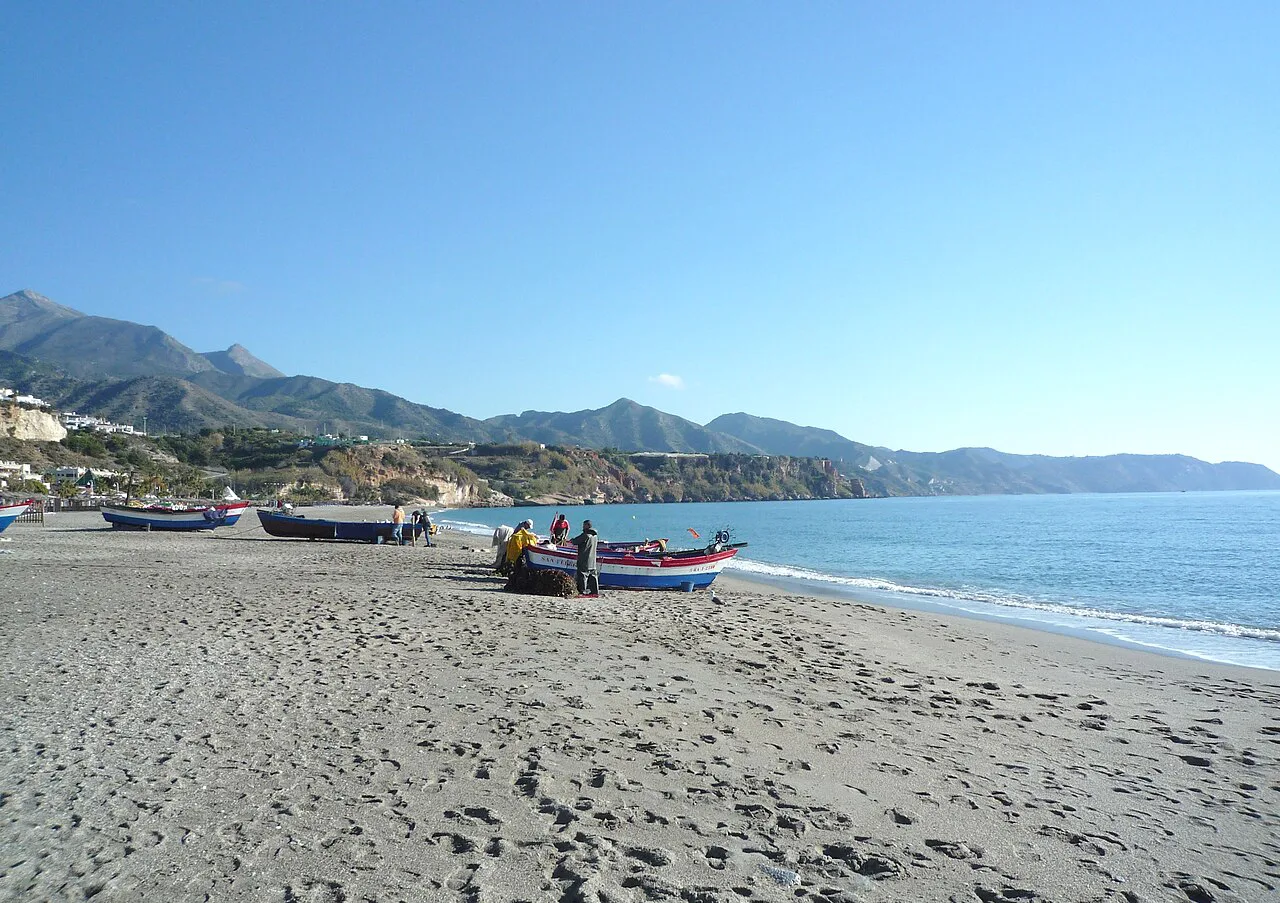
Restaurants and bars along the promenade
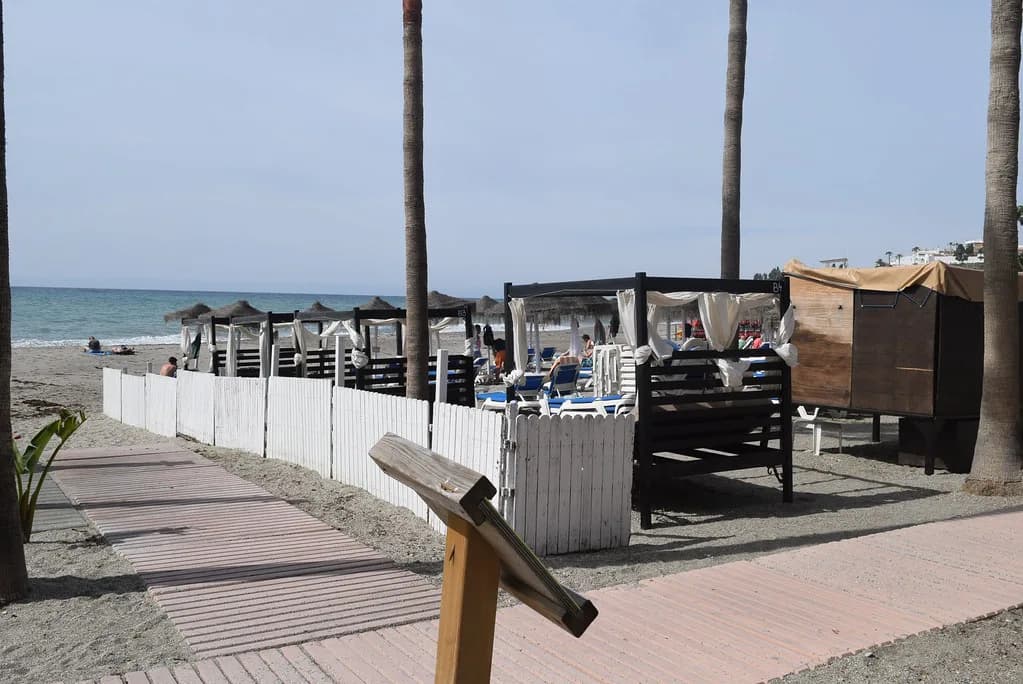
The promenade runs the length of the beach and is lined with restaurants, chiringuitos and bars. That means you can eat a proper lunch, grab a snack or simply refill water bottles without leaving the sand for long.
For a long beach day, pick a restaurant with a sea-facing terrace at the start of the day, then use the bars for drinks and ice creams later. Spanish lunch hours are later than British ones, so a 2pm table is normal and the kitchens stay open into the afternoon.
Sunbeds, umbrellas and showers
In season, sunbeds and umbrellas are set out along sections of the beach, and there are showers and toilets near the main access points. The exact layout changes from year to year, so ask at the tourist office in Nerja if you need a particular spot.
If you prefer to bring your own shade, arrive early to claim a pitch near the promenade wall, where you can tuck in before the main crowd arrives. The middle of the beach is the most exposed; the edges tend to be calmer for families.
Watersports from the beach
Kayaks and paddleboards can be hired from concession stands at the far end of Burriana, and guided kayak trips run from the beach along the cliffs to Maro. The same operator offers a two-hour guided trip and hourly rental, which suits confident paddlers who want to explore the coastline rather than stay in the bay.
Book ahead in high season, especially for the guided trip, as places fill quickly. Bring a dry bag for your phone and wear shoes you do not mind getting wet if you plan to land on rocky beaches.
Who it suits
Burriana is at its best for families with children, groups of friends and anyone who wants facilities within easy reach. The long sand gives children room to play, and the promenade means you are never far from a toilet, a drink or a shaded table.
It is less suited to travellers who want a wild, secluded cove or a quiet swim away from crowds. If that is your priority, use Burriana for a meal and a stroll, and swim at one of the smaller beaches instead.
Quieter alternatives nearby
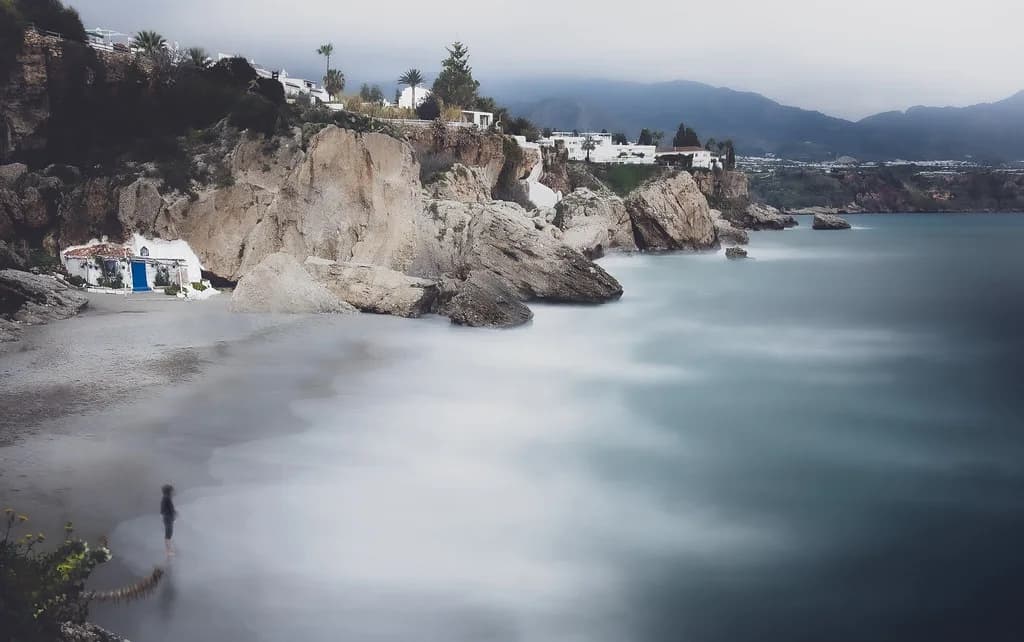
Carabeillo beach sits between Burriana and the town centre, reached by a staircase down from street level. It is small and sheltered, with restaurants close by, and makes a good alternative when the main beach is crowded.
Carabeo is a smaller cove wedged between cliffs, also reached by a steep staircase, so it is not the place for a pushchair or anyone unsteady on their feet. Caletilla, below the Balcón de Europa, is another compact option with toilets, showers and a restaurant.
Combining Burriana with the caves and Maro
The Nerja Caves are a short drive or bus ride from the centre and make a good morning outing before an afternoon on the sand. Tickets are timed, so book a slot online and plan to arrive a little before your entry time.
The cliffs and clear water of Playa de Maro lie a few kilometres east, and guided kayak trips from Burriana paddle along that coastline. Maro itself stretches for about 500 metres of coarse sand, with a chiringuito and a seasonal lifeguard, and it suits snorkellers who want rocks and fish rather than a long sandy shore.
Best time to go
The sea is comfortably warm from late June through September, with August the busiest and hottest month. If you want warm water without peak crowds, aim for the second half of June or the first half of September.
Spring and autumn are pleasant for walking and sightseeing, but the sea is cooler and the beach services are reduced. Check the forecast and the flag before you commit to a long swim, as the weather can change quickly on this coast.
Practicalities for a beach day
Bring water, high-factor sun cream and a hat, and carry cash for small purchases in case a card machine is out of action. A light mat or towel is enough for the sand, and a dry bag is useful if you plan to hire a kayak.
If you are basing yourself in Nerja, staying within walking distance of the centre means you can reach Burriana on foot and save the car for day trips. The walk back up is the main consideration; plan it for the cooler evening rather than the middle of the afternoon.
Plan Your Visit
Burriana rewards a little planning: walk down early, claim a spot towards one end of the sand, and use the promenade for lunch and drinks. It is the most practical beach in Nerja for a full day with family or friends.
If you want a quieter swim, combine a morning at Burriana with an afternoon at Carabeillo or Caletilla. Either way, check the flag and the sea conditions on the day before you swim.
Frequently Asked Questions
How far is Burriana beach from Nerja town centre?
It is about a 15-minute walk downhill from the centre. The climb back up takes longer, especially in the heat.
Is Burriana beach good for families?
Yes. It has a long sandy beach, restaurants and bars along the promenade, and sections with sunbeds and showers. The middle of the beach shelves gradually, which suits children, but always check the flags and lifeguard advice.
Where do you park for Burriana beach?
There is a car park at the beach end of the access road, and street parking fills up in summer. Arrive before mid-morning in July and August.
Can you rent kayaks on Burriana beach?
Yes. Kayaks and paddleboards can be hired on the beach, and guided kayak trips run from Burriana to Maro. Book ahead in high season.
Sources
Beach notes for your next trip
Optional updates when we add or revise beach guides.
You might also like
Continue reading
More guides you'll find useful