Calahonda Beach, Nerja: Sand, Access and What to Expect
Calahonda beach in Nerja is a short dark-sand cove below the Balcón de Europa, with lifeguards, showers and sunbed hire in summer. Here is how to plan a day.
On this page
Calahonda is the beach to choose when you want sea and sand inside Nerja itself, five minutes from the Balcón de Europa and a short stroll from the old centre. It is small, dark-sanded and framed by the town, which makes it a natural half-day rather than a full expedition.
At about 120 metres long and 20 metres wide, it suits couples, older swimmers and families with children old enough to enjoy a lifeguarded town beach, and anyone who values walking to the water over parking beside it. If you want space, watersports and a long line of chiringuitos, cross town to Burriana instead.
Where Calahonda sits in Nerja
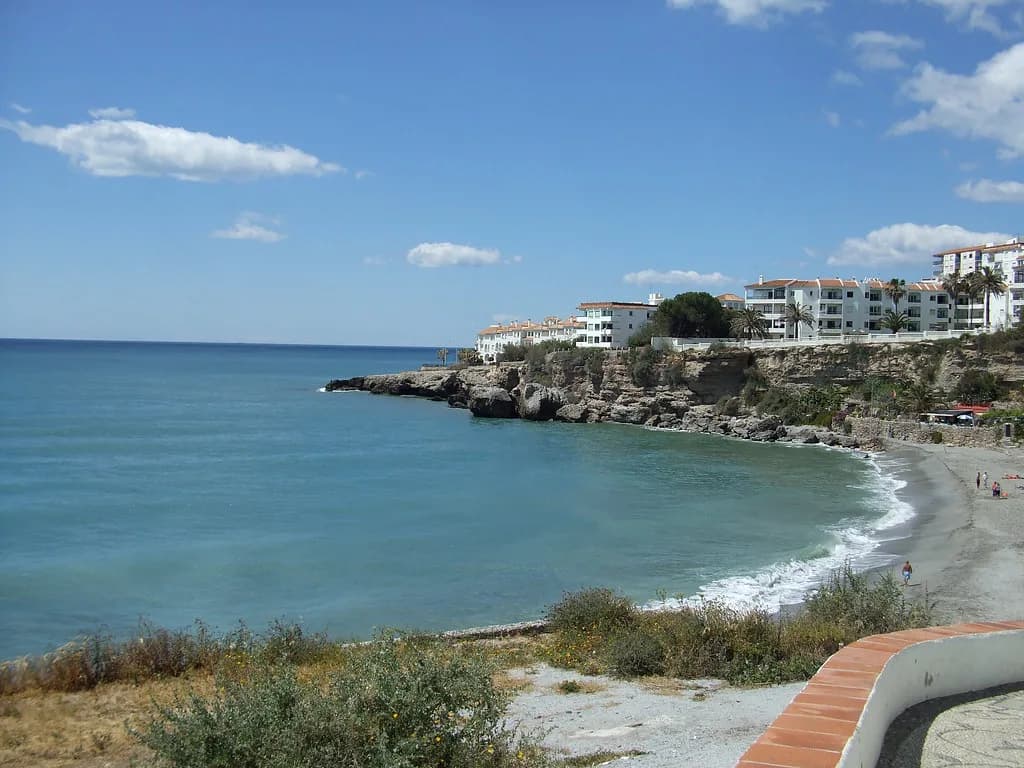
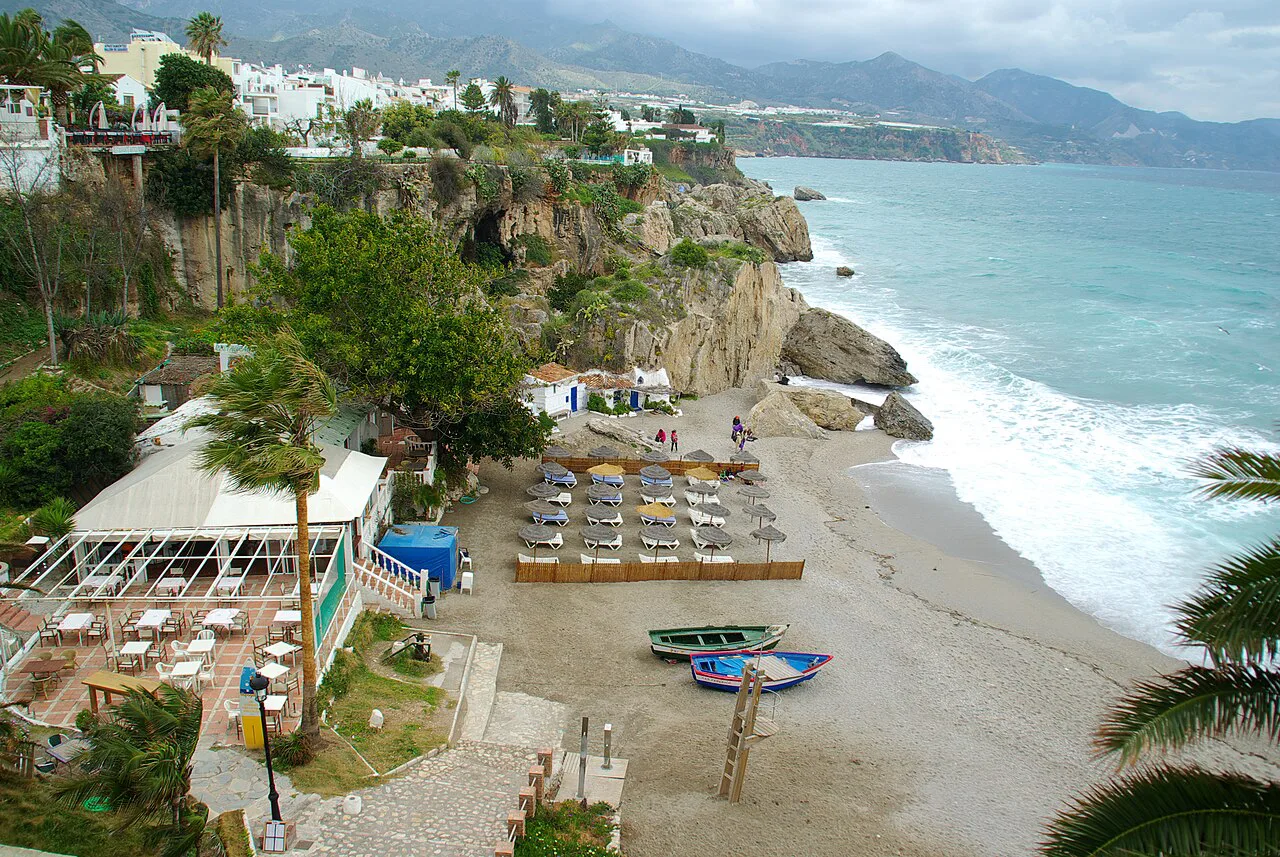
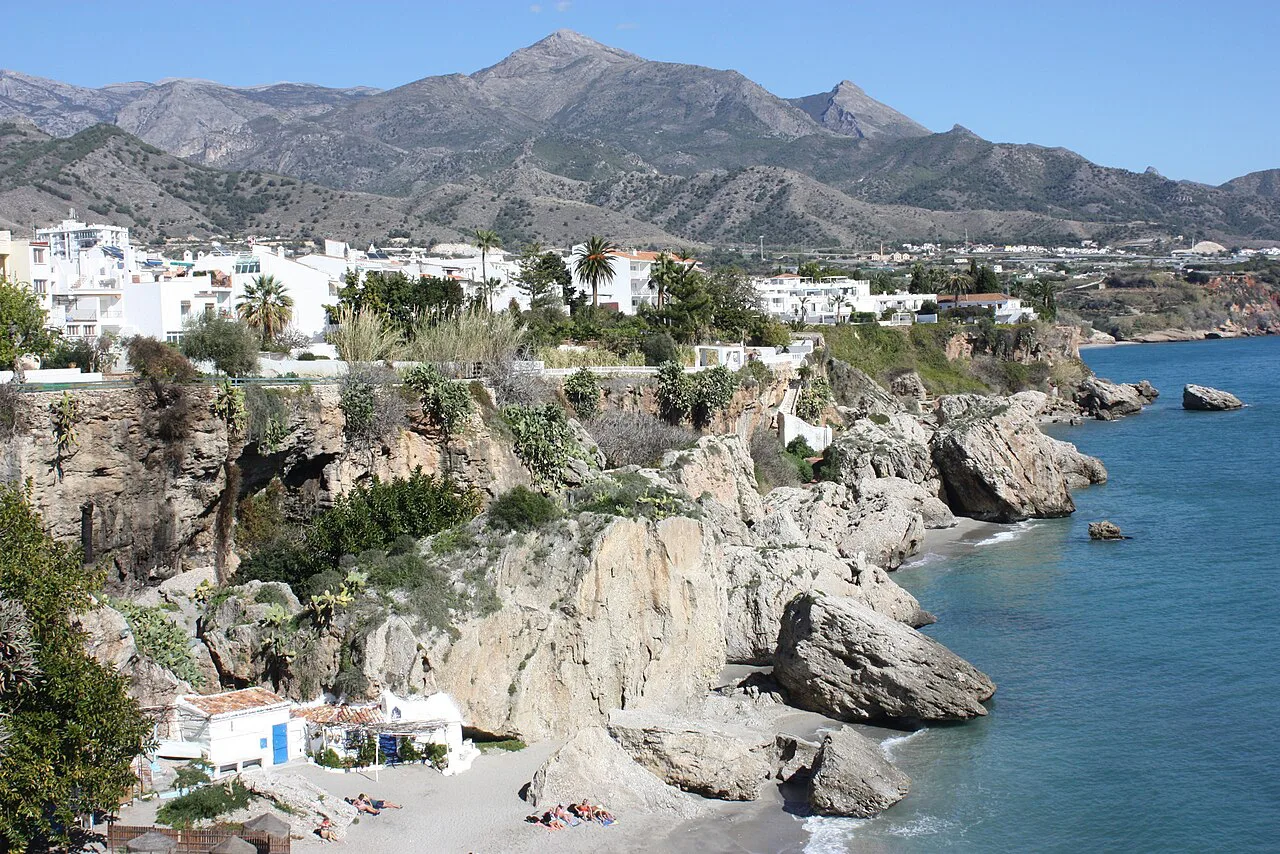
The cove lies directly beneath the Balcón de Europa, the clifftop viewpoint at the heart of Nerja, and is entered through the gap known as the Boquete de Calahonda. Because the beach is set against the town rather than along an open coast, everything you need for a beach day — a bed, a shower, a late lunch — sits within a few minutes' walk.
That position defines the beach's character: 120 metres long and 20 metres wide, with dark sand and moderate waves. It is a compact strip where you can see from one end to the other, which makes it easy to keep an eye on older children and easy to find your spot again after a swim.
Getting there on foot
From the Balcón de Europa, walk towards the Boquete de Calahonda and follow the short path down; the descent takes about five minutes from the viewpoint to the sand. Wear proper shoes rather than smooth flip-flops for the slope, and carry your bag rather than dragging a wheeled trolley.
The second approach starts from El Salón and follows the promenade along the lower slopes of the Balcón. It is the gentler, more scenic route, with sea views most of the way, and makes a good choice if you are coming from the eastern side of the centre or simply want the walk to be part of the outing.
The sand and the water
Expect dark sand rather than the pale, powdery stuff of postcards, and a shore that shelved into moderate waves on the day the beach was described. The bay is short, so the water in front of you is shared with everyone else on the sand; swimmers who like a long, quiet traverse should pick a calmer hour rather than a far corner.
Bring footwear for the walk down and for crossing hot sand in the middle of the day, plus a mat if you are not hiring a lounger. For a broader look at how this cove fits with the rest of the resort, see the full guide to Nerja beaches.
Shelter and how the beach sits against the town
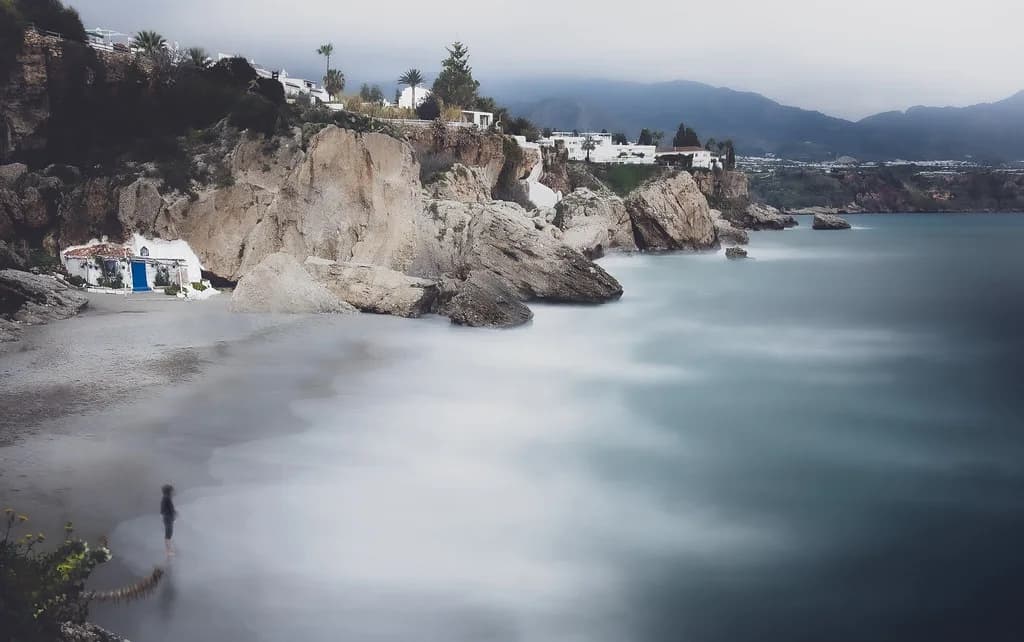
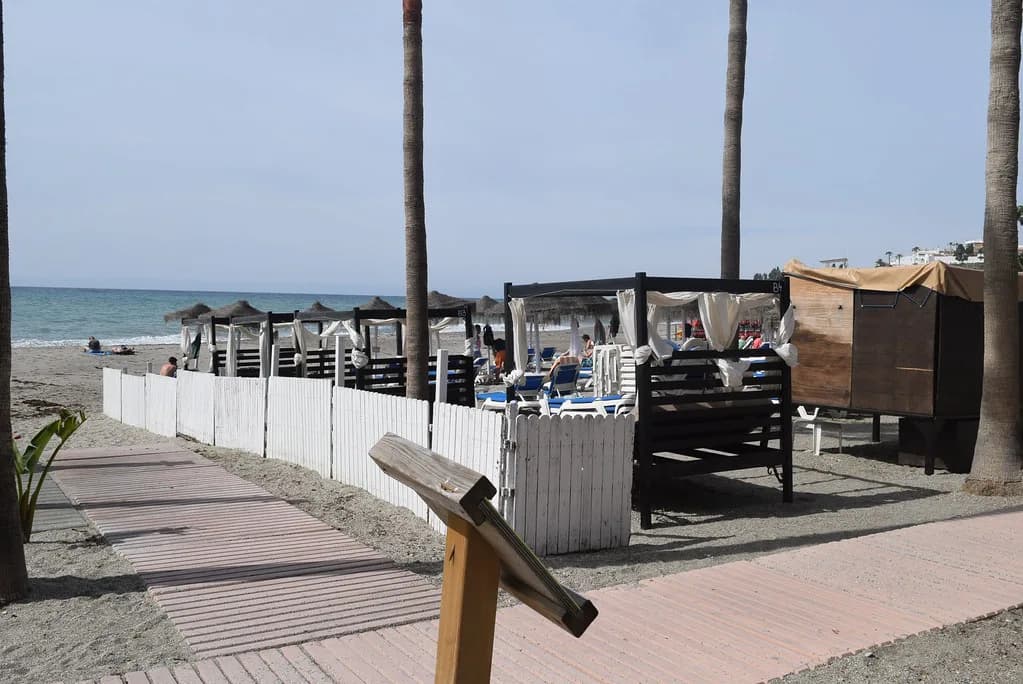
Calahonda sits in a notch of the town, with the Balcón de Europa rising immediately behind it, so the beach reads as a pocket between the water and the buildings above. In practice, the cliffs and town behind you give some late-afternoon shade at the back of the sand, while the front of the beach stays exposed.
Take wind seriously when planning: an onshore breeze pushes straight onto a 120-metre strip with little room to retreat, so a windbreak or a high-backed chair earns its place. If conditions look unsettled, the sheltered streets above the beach are a better place to wait than the open sand.
Facilities
Sunbeds are available for hire on the beach, and public showers let you rinse off before climbing back into town. Lifeguards patrol during the summer months, so the beach is at its most organised in high season rather than in the shoulder months.
The beach is not adapted for visitors with disabilities, so anyone with limited mobility should plan around the steps and slope down from the Boquete rather than expect level access. Ask at the Nerja tourist office about current access arrangements before you set out if this matters to your group.
How busy it gets
This is a town beach at the foot of Nerja's busiest viewpoint, so it fills quickly on summer mornings and empties as the afternoon cools. Arrive before mid-morning in July and August if you want a lounger near the front, or come late in the day for a swim and a walk back up to the Balcón for sunset.
It is less lively and more intimate than Burriana Beach, which is longer and busier and has a wider spread of bars and watersports. If you want a big resort beach with plenty of choice, read the guide to Burriana Beach, Nerja before deciding.
Verano Azul and the look of the cove
Calahonda was one of the filming locations for the television series Verano Azul, and the white sheds and small fishing boats that appear in the series remain part of the cove's landscape. That association gives the beach a recognisable, slightly nostalgic character that distinguishes it from Nerja's larger strands.
Walk the shoreline at the quieter ends of the day to see the boats and sheds properly, and keep to the sand rather than climbing on moored craft. It is the kind of detail that rewards a slow hour with a camera rather than a quick dip.
Best time to go
Summer is when the beach operates at full strength: lifeguards are on duty and sunbeds are out for hire. Outside those months, treat Calahonda as a walking and picnicking beach and ask at the Nerja tourist office which services are running before you commit to a whole day.
For warm sea and manageable crowds, aim for early morning or late afternoon in July and August, and favour June and September if you want the water still pleasant with fewer people on the sand. Sea temperatures on this stretch of the Costa del Sol stay warm into September, so a late-season swim is often the most comfortable of the year.
Nearby beaches to combine
Maro beach, a few kilometres east, sits in the protected Maro-Cerro Gordo cliffs and offers clear water and a wilder, more natural setting than Calahonda's town-centre sand. Pairing the two gives you a compact town beach in the morning and a cove beneath cliffs in the afternoon, with the cliffs and cave country of the Sierra de Tejeda further inland for a cooler day. If you are weighing up a longer run along the coast, the beaches in Málaga make a natural next stop for city sands and sheltered coves.
Closer still, Carabeillo beach is a small cove between Calahonda and Burriana, reached by steps near the Mirador del Bendito, and makes a short add-on if you are walking the coast path. Further afield, the Almuñécar beaches across the provincial border offer a change of scene for a day trip along the Costa Tropical.
Food and drink around the centre
Because Calahonda sits under the Balcón de Europa, the bars and restaurants of the old centre are a short climb away, and a late lunch after a morning swim is part of the appeal. The streets around the Balcón and towards El Salón give you the widest choice within a few minutes' walk.
Carry water down with you: the climb back up is short but steep in the heat, and the beach itself is a place to swim and doze rather than to shop. A refillable bottle and a light bag are more useful here than a full beach kit.
Practical kit for a town beach day
Pack for a small beach with limited shade: a mat, a windbreak, high-factor sun cream, a hat and shoes suitable for steps. A dry bag for phones and keys is worth the small weight, since the walk down passes close to the water and the sand is dark and hot by midday.
Plan your return before you settle in. The walk back up to the Balcón takes minutes, but the steps and slope are busy at the end of the afternoon, so allow a little extra time if you have a dinner booking in the centre.
Plan Your Day at Calahonda
Calahonda rewards planning by the half-day rather than the full day: walk down from the Balcón de Europa, swim in the morning, hire a lounger in summer and climb back into town for lunch. It is small, dark-sanded and central, and that is exactly the point.
If you want a bigger, busier beach with more bars and watersports, head to Burriana; if you want cliffs and clear water, take the coast road to Maro. For everything else in the resort, start with the Nerja beaches guide and build your days from there.
Frequently Asked Questions
Is Calahonda beach touristy?
It is central and popular because it sits directly under the Balcón de Europa, so it draws steady foot traffic through the day in summer. Its small size, at roughly 120 metres by 20 metres, keeps it feeling like a local town beach rather than a large resort strip, and it quiets down noticeably in the late afternoon.
How do you get to Calahonda beach from the Balcón de Europa?
Walk from the Balcón towards the Boquete de Calahonda and follow the short path down to the sand, which takes about five minutes. A second, gentler approach follows the promenade from El Salón along the lower slopes of the Balcón and is the better choice if you prefer an easier gradient with sea views.
Is Calahonda beach good for families?
Families with children old enough to swim in moderate waves will find it convenient, with sunbed hire, public showers and summer lifeguards on the sand. The beach is not adapted for visitors with disabilities, and the walk down involves steps and a slope, so it suits sturdy walkers better than pushchairs.
How does Calahonda compare with Burriana beach in Nerja?
Calahonda is much smaller and cosier, tucked under the Balcón de Europa, and suits a short swim and a walk back into the old centre. Burriana is longer and livelier, with a wider choice of bars and watersports, so pick Burriana for a full resort day and Calahonda for a compact town beach.
When is the best time to swim at Calahonda beach?
Lifeguards are on duty in summer, and that is when the beach is fully set up with sunbeds and showers in use. Aim for early morning or late afternoon in July and August to avoid the busiest hours, and consider June or September for warmer water with fewer people on the sand.
Sources
Beach notes for your next trip
Optional updates when we add or revise beach guides.
You might also like
Continue reading
More guides you'll find useful