Playa de Maro, Nerja: Cove, Cliffs and Getting There
Playa de Maro is a 500-metre cove of coarse sand below the Sierra de Tejeda cliffs near Nerja, with a chiringuito, sunbeds and kayak trips along the cliffs.
On this page
Playa de Maro earns its reputation on two things: a broad sweep of coarse sand tucked under the Sierra de Tejeda cliffs, and water clear enough over the rocks to make snorkelling the main event. It suits swimmers who like a rocky edge, kayakers heading out beneath the cliffs, and families who arrive early and base themselves near the facilities. Anyone wanting a long, sandy, town-style beach with a promenade will be happier elsewhere on the Nerja coast.
Where Playa de Maro sits
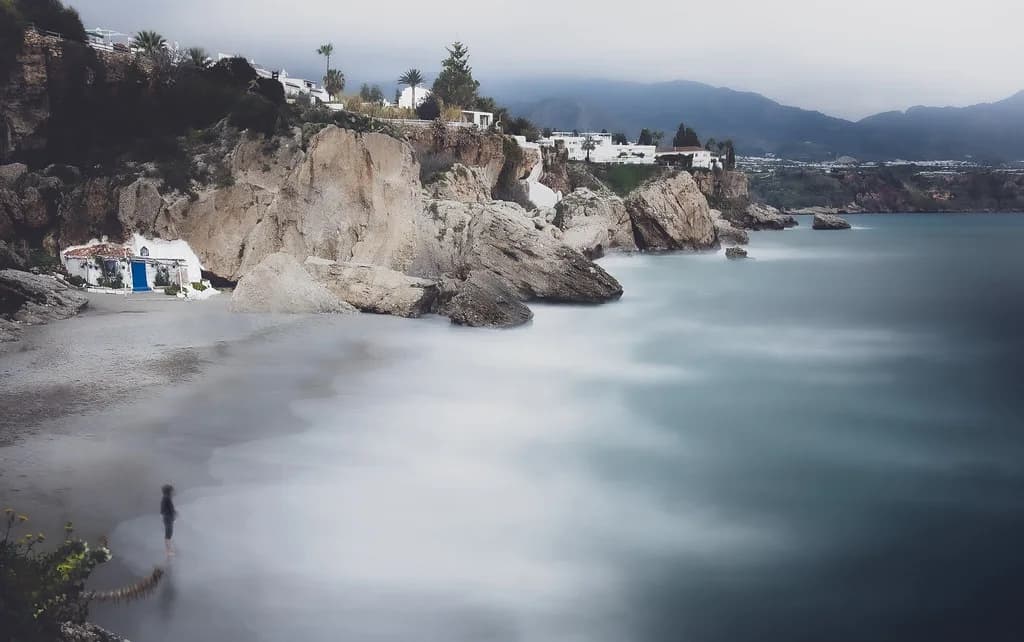
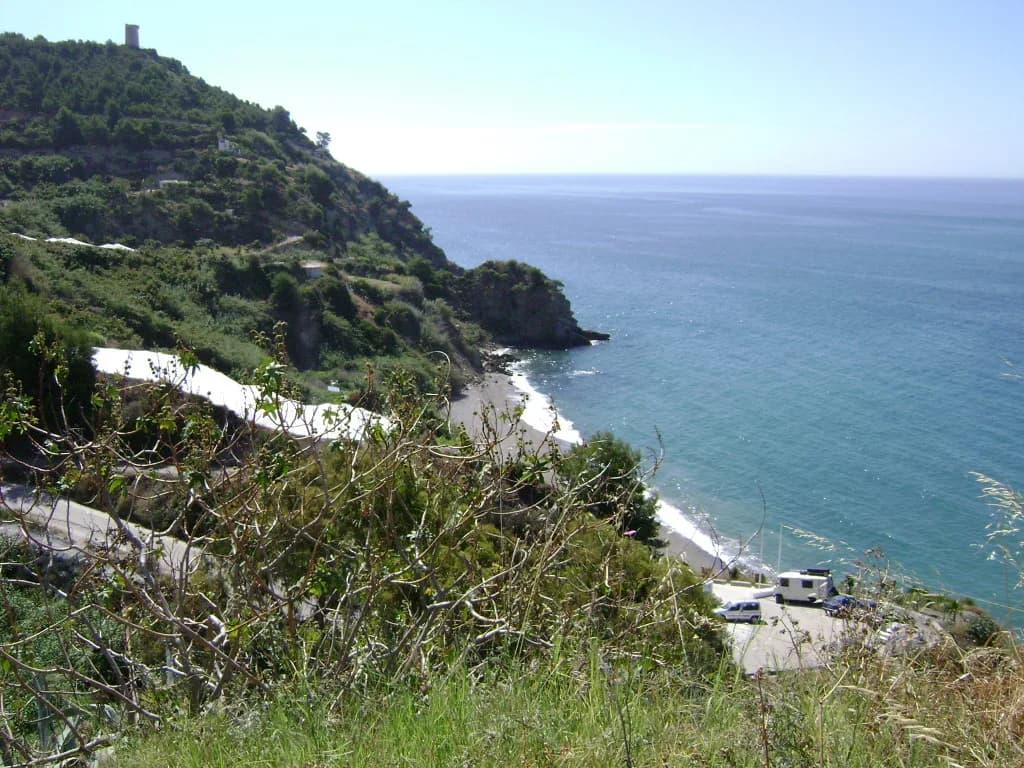
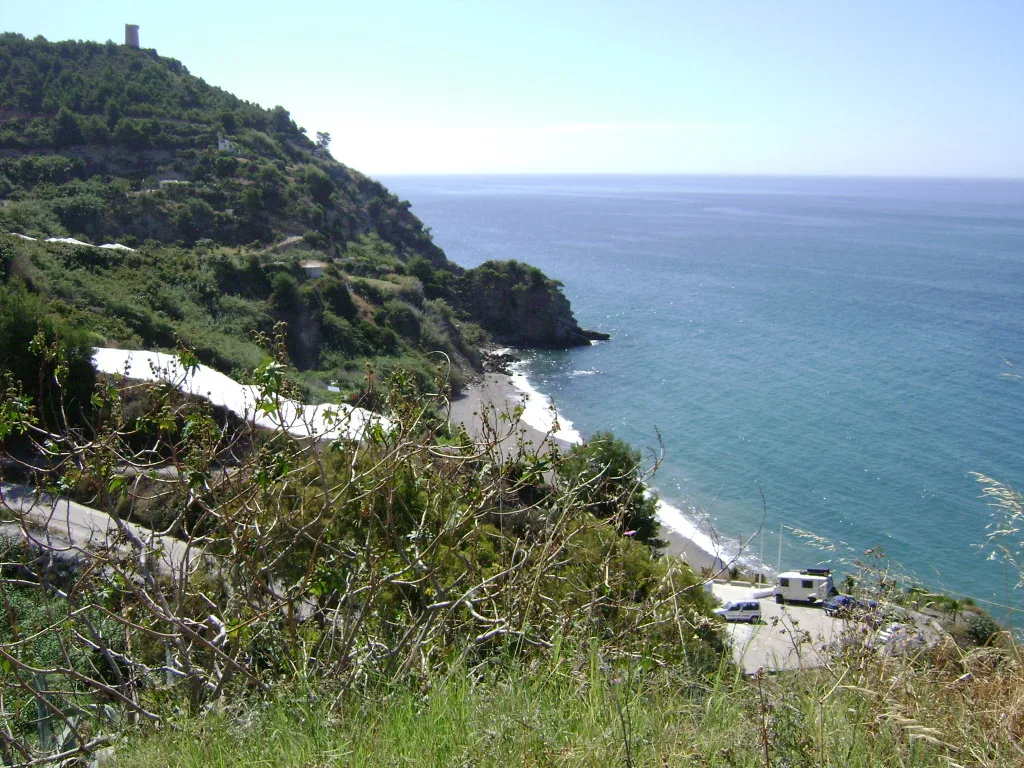
The beach lies in the Maro district, a short drive east of Nerja itself, in a cove below the cliffs of the Sierra de Tejeda. The setting is green rather than built-up: vegetation, smallholdings and cane brakes run down towards a green-blue sea. Because it sits outside the town centre, it feels noticeably less crowded than the central Nerja beaches such as Calahonda or El Salón.
The cove runs for roughly 500 metres of coarse sand, backed by the cliffs and open to the sea along its whole length, as the Nerja tourist board describes it. That length matters in practice: the far ends are quieter and give you more room to lay out towels, while the middle concentrates everyone arriving by car.
Getting there
By car from Nerja, take the N-340 towards Almería and leave at the roundabout for the Cueva de Nerja, taking the first exit into Maro village. Drive straight through the village, and after the Hotel Playa Maro take the first right at the small roundabout. The road then drops between greenhouses towards the cove, ending at a small square with space for several cars and a barrier-marked sign confirming you have arrived.
Parking beyond the barrier is prohibited, even when the barrier is raised, so treat the square as the end of the drive and walk the last stretch. In high summer, cars begin parking along the roadside and verge on the approach, which is the realistic fallback once the square fills. Arriving early is the simplest way to avoid that walk.
Parking and summer crowding
The parking area holds only a limited number of cars, and it is the first thing to fill on a hot July or August morning. If you arrive mid-morning in peak season, expect to join the line of cars on the approach road rather than find a space at the bottom. The trade-off is straightforward: an early start buys you a short walk and a quiet pitch; a late one buys you a longer walk in the heat.
The sand and the water
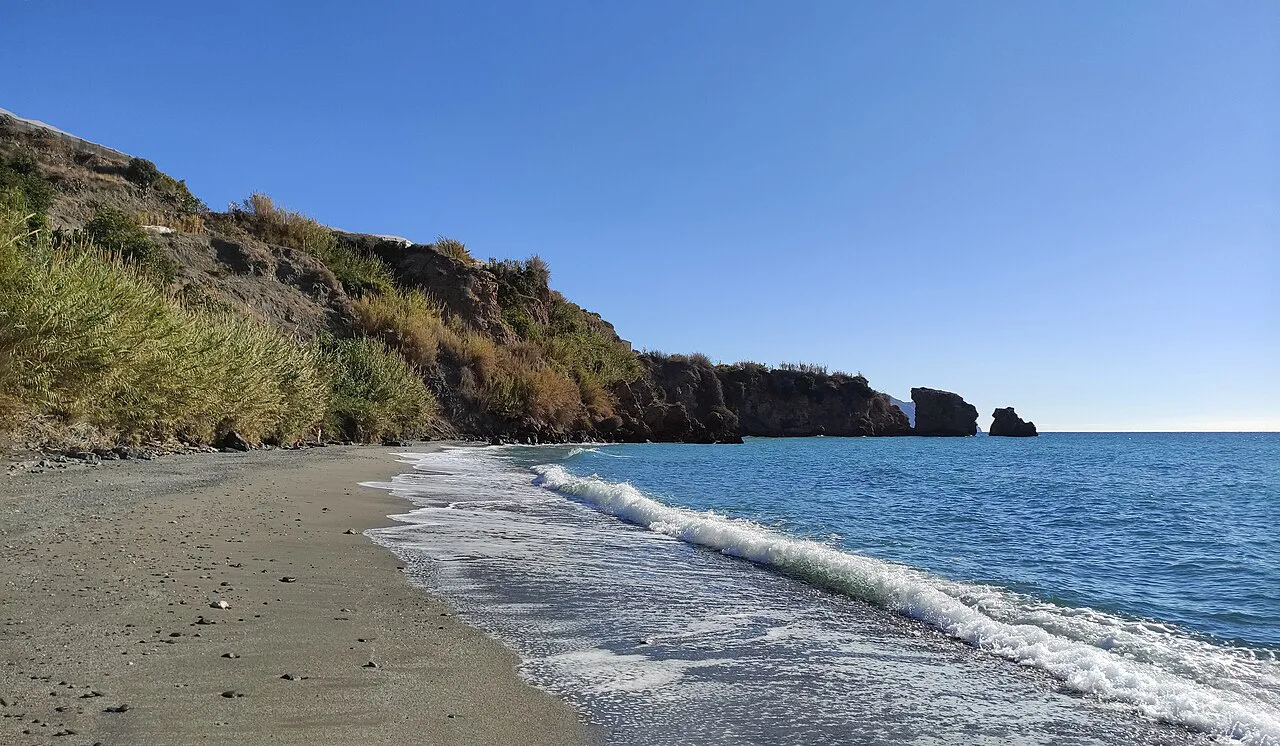
The beach is coarse sand rather than fine powder, so it drains quickly and brushes off easily, but it is rougher underfoot than the town beaches. The water is described as clean and crystalline, running green-blue over stones and rock, which is exactly why the swimming and snorkelling draw a crowd. Bring thin-soled shoes for the water's edge if you have sensitive feet.
The water is calm and shelving, with little swell, but the rocky margins mean the depth still varies along the shoreline. Pick your entry point rather than wading in blind: patches of open sand between the rocks give the cleanest line in. Families with small children do best at the gentler, sandier stretches near the facilities rather than over the rock shelves at the ends.
Snorkelling and marine life
The rocks below the surface hold corals, sponges, anemones and fish including grouper, and the beach sits within a natural area where fishing is prohibited. That protection is why marine life sits within easy reach of the shoreline rather than shyly offshore. Stronger swimmers and confident snorkellers can find small sea caves and grottoes further along the rock line.
Snorkelling and diving are the standout activities here, with visibility helped by the typically low swell on this stretch, which the tourist board links to the water's transparent blue colour. Go in with a buddy, keep an eye on the horizon for passing boat traffic on the cliff side, and stay off the fragile rock surfaces when you push off. The appeal is the underwater scenery rather than the beach itself, so pack a mask that fits properly.
Kayak and paddleboard trips
Guided kayak routes run from the beach along the cliffs, taking in hidden corners of the coastline, and the guides operate from the sand itself. Advance booking is advised for the guided trips, particularly in summer. You can also hire a kayak or paddleboard independently and explore at your own pace, which suits confident paddlers who want to set their own route.
A waterfall sometimes falls from the cliff into the sea below, though water is at times diverted inland for irrigating the surrounding fields, so seeing it is a bonus rather than a certainty. Ask the kayak operators on the beach on the day whether it is running. Paddling beneath the cliffs gives you the best view of the geology that makes this cove distinctive.
Facilities
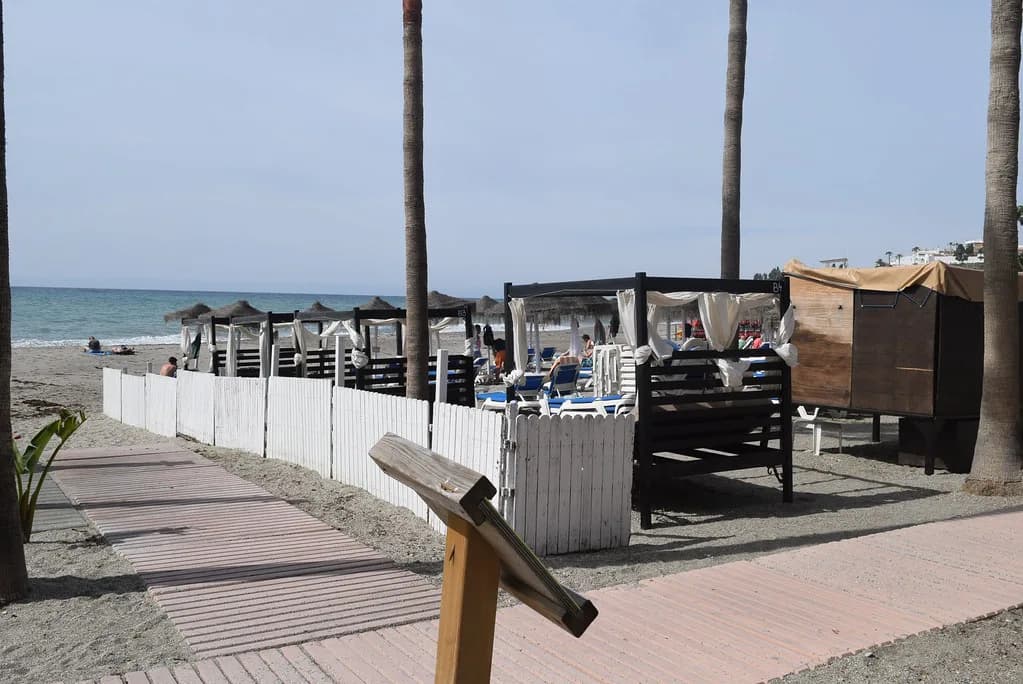
A kiosk, toilets, showers, sunbeds and a restaurant-chiringuito operate at the beach, with lifeguards on duty in summer. Access is described as suitable for older visitors, children and people with disabilities, and the parking sits a few metres from the sand. Sunbed availability and any charges are set by the beach operators and are best confirmed with them on arrival.
Because services are concentrated in one part of the cove, the quieter ends are a genuine step away from the chiringuito chatter and the sunbed rows. Bring your own water and a mat if you plan to settle far from the bar.
Best time to go
Early morning is the beach's best hour: the sun rises over the cliffs, the sand is empty and the water is at its clearest before the day's swimmers arrive. The Nerja tourist board recommends arriving early to see the cove at its most atmospheric. Summer weekends and August are the busiest periods, and the car park and approach road reflect that.
The Mediterranean off Nerja is at its warmest from July through September, when long swims and snorkelling sessions are comfortable without a wetsuit. June and October are quieter and still swimmable for many, but the water is fresher and the lifeguard presence is seasonal rather than year-round. Check the flags posted at the beach on the day rather than assuming conditions.
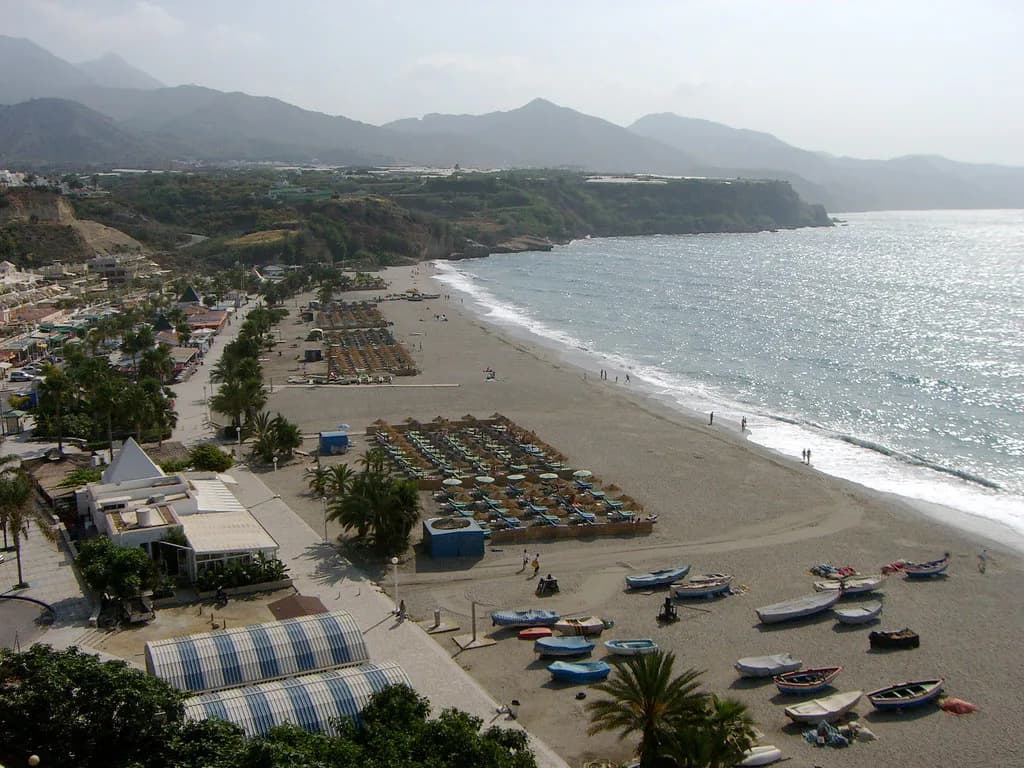
For contrast, Burriana Beach, Nerja offers a longer, sandier town beach with a full promenade of restaurants and shops within walking distance of the centre. It is the easier choice with young children or without a car, while Maro rewards those willing to drive and walk for a wilder setting. If you want to weigh the wider region's coastline, our round-up of Málaga beaches makes a useful comparison.
Nearby coves to combine
Several smaller coves sit along the same stretch of cliffs and can be combined with a day at Maro. Cala Barranco de Maro is reached by a footpath and is difficult of access; La Caleta, known as Cala Chica, is the cove made famous by the television series Verano azul. Both reward a walk rather than a drive.
Molino de Papel is a wild beach without any services, while Las Alberquillas is semi-naturist and has a natural shower, and Calas del Pino is described as naturist or semi-naturist and suits nature lovers. El Cañuelo is a fine spot for a summer sunset. Treat the naturist stretches with the usual etiquette: no staring, no photography, and keep to the designated area.
What to bring
Pack reef-safe sunscreen, water, a hat and a mat, since the coarse sand is comfortable but the sun on the cliffs is relentless by midday. Water shoes or sandals help on the rocky entry points and on the walk down from the parking square. A dry bag keeps valuables safe if you plan to paddle or snorkel away from your pitch.
Respect the no-fishing rule that protects the marine life, take your litter back up the hill with you, and leave the rocks as you found them. The beach sits in a natural setting, and the wildlife that makes the snorkelling worthwhile depends on visitors keeping it that way.
Plan Your Day at Playa de Maro
Treat Playa de Maro as an early-morning beach: drive through Maro village, park in the square before the barrier, and walk the last stretch before the sun gets high. Bring water shoes for the rocky entry, a mask for the reef, and a plan to move to one of the neighbouring coves if the car park is full. For a sandier, more serviced alternative, compare with Burriana Beach, Nerja, or browse the full Nerja beaches guide for the rest of the coastline.
Frequently Asked Questions
How far is Playa de Maro from Nerja?
The beach sits in the Maro district just east of Nerja, reached by taking the N-340 towards Almería and turning off at the roundabout for the Cueva de Nerja, then driving through Maro village. The final approach drops between greenhouses to a small parking square above the cove.
Can you park at Playa de Maro?
There is a small parking square a few metres from the sand, but it holds only a limited number of cars and fills early in summer. Parking beyond the barrier is prohibited even when the barrier is raised, so once the square is full you will be joining cars parked along the approach road.
Is Playa de Maro good for snorkelling?
Yes. The rocks and stones in the water hold corals, sponges, anemones and fish including grouper, and fishing is prohibited in this natural area, which keeps marine life close to shore. Small sea caves and grottoes further along the rocks suit confident snorkellers.
Does Playa de Maro have sunbeds and a beach bar?
A kiosk, restaurant-chiringuito, sunbeds, toilets and showers operate at the beach, with lifeguards on duty in summer. Sunbed charges are set by the beach operators, so ask at the chiringuito when you arrive.
Is Playa de Maro suitable for young children?
Families do well on the sandier stretches near the facilities, where the entry is gentler than over the rock shelves at the ends of the cove. Access is described as suitable for children and people with disabilities, and there is lifeguard cover in summer, though the mixed sand and rock underfoot calls for water shoes.
Which other coves near Maro are worth visiting?
La Caleta, known as Cala Chica, is the cove made famous by Verano azul, while Molino de Papel is a wild beach with no services. Las Alberquillas is semi-naturist with a natural shower, Calas del Pino is naturist or semi-naturist, and El Cañuelo is a good sunset spot.
When is the best time to visit Playa de Maro?
Early morning gives you the emptiest sand and the clearest water, and the sunrise over the cliffs is the beach's signature moment. July through September brings the warmest sea, while June, early July and October are quieter.
How do you get to Playa de Maro without a car?
The published directions describe the drive through Maro village and the drop between greenhouses, so a car is the most straightforward option. Ask the Nerja tourist office about current local transport links if you are travelling without one.
Sources
Beach notes for your next trip
Optional updates when we add or revise beach guides.
You might also like
Continue reading
More guides you'll find useful