Torrecilla Beach, Nerja: Sand, Shelter and Getting There
Plan a day at Torrecilla beach in Nerja: walking and bus routes, the sandy curve between two headlands, facilities, lifeguards and Blue Flag status.
On this page
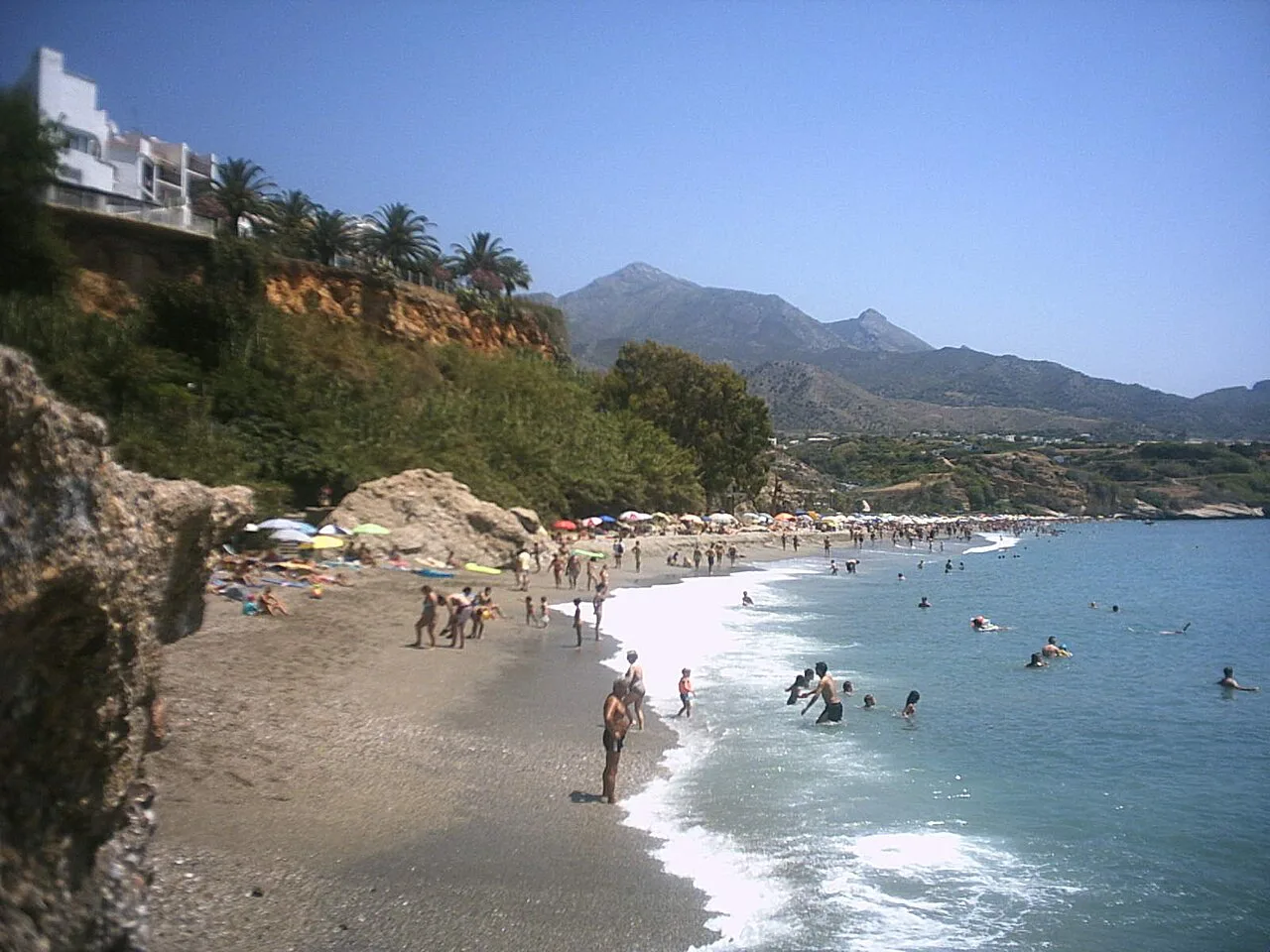
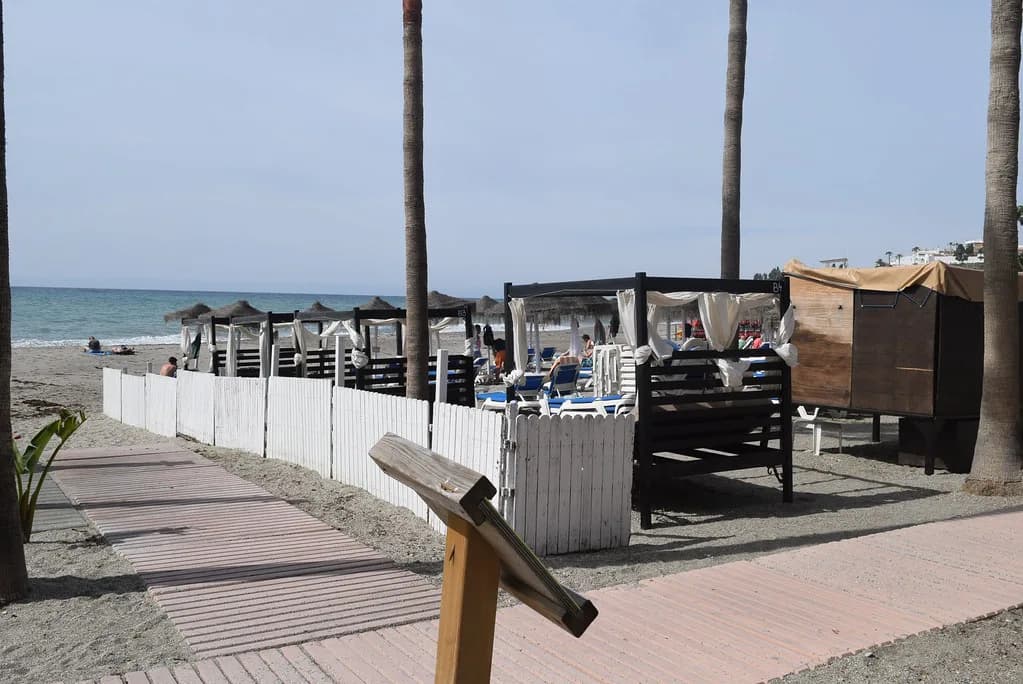
Torrecilla is the beach to choose when you want sand, a promenade and a town behind you rather than a wild cove at the end of a track. Its short curve sits between two headlands on the western edge of Nerja, close enough to the centre to reach on foot and sheltered enough to feel calmer than its popularity suggests. It suits mixed groups: families who want easy access and facilities, swimmers who prefer a gentle town beach, and anyone staying in western Nerja who wants a swim before lunch.
Where Torrecilla sits in Nerja
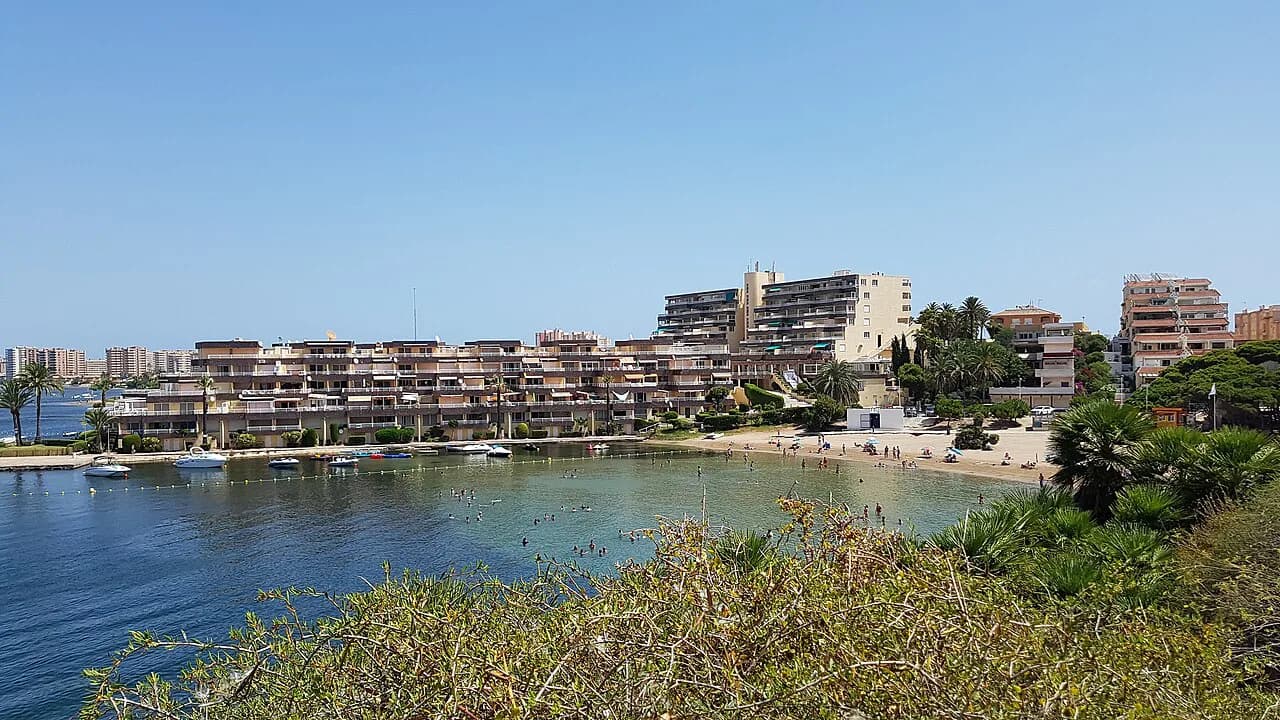
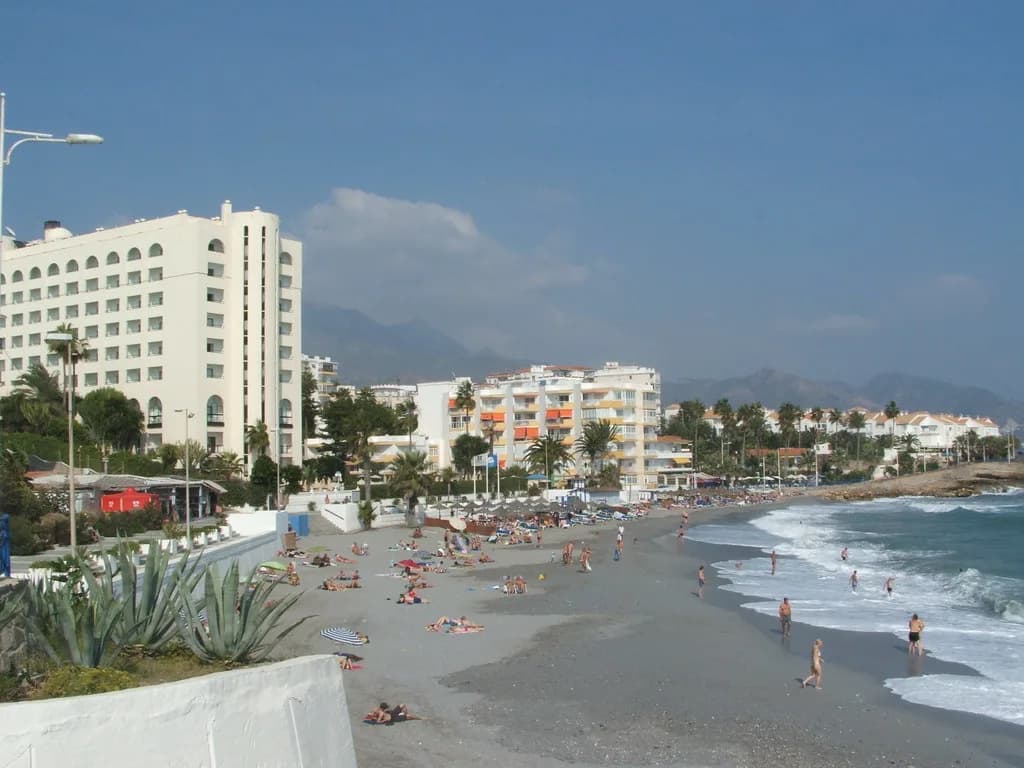
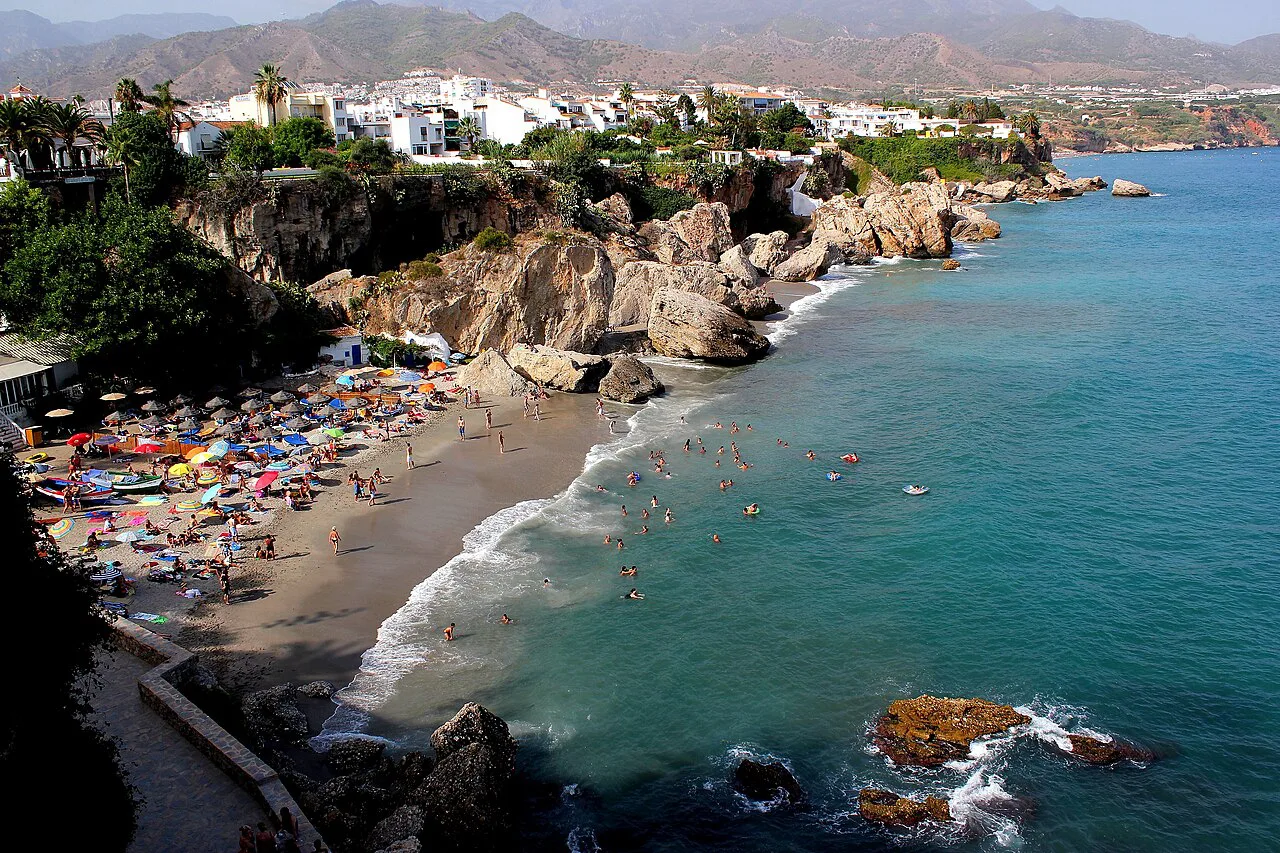
Torrecilla occupies the far-western section of Nerja, a short walk from the Balcón de Europa according to Visit Costa del Sol, with a promenade running its full length and apartment buildings behind it. The beach is a compact curve rather than a long open strand: it measures about 300 metres long and 40 metres wide, so it reads as intimate even in high summer.
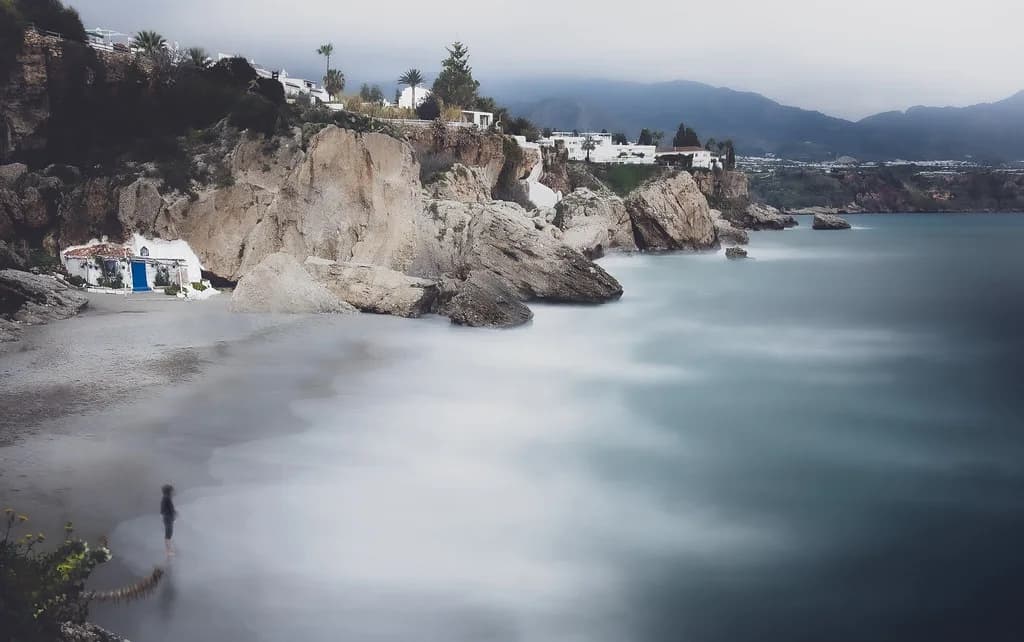
Two headlands enclose the bay, one at each end of the curve, and that geometry is the reason to pick Torrecilla over a more exposed beach on a breezy day. The trade-off is scale: with the town immediately behind, this is an urban beach with high popularity, not a quiet escape. If you want a longer, broader strand with more room to spread out, compare Burriana Beach, Nerja instead.
Getting there on foot from the centre
From the bus terminal, walk towards the roundabout by the bus kiosk and take the first right into Calle San Miguel, passing the Guardia Civil barracks on your left and the taxi rank on your right. Continue to the turning on your left with a paint shop beside it and a small island in the middle of the road, then turn into Calle Castilla Perez and follow it downhill to the square opposite, Plaza Fabrica de los Cangrejos. From that square the beach is visible to your right, which makes the final approach straightforward.
From the Balcón de Europa the walk is shorter, following the western edge of town towards the Riu Monica hotel. Allow more time than a map suggests if you are carrying beach kit, because the last stretch runs downhill and the return climb is the effort of the day.
Bus and parking around the western streets
Nerja's local bus service runs from the bus terminal to Torrecilla, which is the simplest option if you are staying on the eastern side of town or arriving with bags. The service is described simply as a local route to the beach, so ask at the terminal kiosk for the current times rather than relying on a fixed frequency.
There is no beach car park at Torrecilla; parking is in the nearby streets of the town, which fill quickly in summer. If you are driving, aim to arrive earlier in the day and accept a short walk from wherever you find a space. The alternative is to park once and treat the seafront as a walking day, linking Torrecilla with the town centre on foot.
The sand and the water
Expect sand underfoot across the 300-metre curve, with the bay shelving in the usual way for a sheltered Mediterranean town beach: shallow close to the shoreline and deepening as you walk out. The headlands at either end frame the swim and give the bay its protected feel. Because the beach is only about 40 metres deep, the dry sand fills up fast and the water's edge becomes the natural place to sit in the afternoon.
For swimmers, the appeal is convenience rather than adventure: you can swim, dry off and be back on the promenade in minutes. Snorkellers wanting rocks and clearer structure should look further along the coast, where the coves around Carabeillo beach offer a different kind of day.
Shelter from the wind and how busy it gets
The two enclosing headlands give Torrecilla noticeable shelter, which is what makes it a sensible fallback when the wind picks up on more open stretches of the Costa del Sol. Popularity is listed as high, and its position beside the town and the Riu Monica hotel means it draws a steady crowd of visitors staying nearby. In high season, plan on arriving in the morning for a good spot, and expect the promenade to stay busy into the evening.
If crowds are the deciding factor, the shape of the bay helps: the ends near the headlands tend to feel more enclosed, while the middle is the busiest stretch because it is closest to the main access points. Set up towards one end for a little more breathing room.
Facilities on and behind the beach
Torrecilla carries a full set of town-beach services: toilets, showers, disabled access, sunbed rental, bars and restaurants, telephones, kiosks, bins and a promenade along the seafront. A café sits directly behind the sand, and a wider choice of places to eat is a short walk inland at Plaza Fabrica de los Cangrejos. The beach is cleaned regularly, which matters on a beach this busy.
Because the facilities sit close together behind a short beach, everything is within a couple of minutes of your towel. That convenience is exactly why families with small children gravitate here, though the compact size also means the sunbeds and the café fill early. Bring a mat if you plan to sit on the sand rather than rent.
Blue Flag status and the Q for Quality award
Torrecilla holds Blue Flag status and the Q for Quality distinction, and Visit Costa del Sol notes the Q for Quality award. Both labels reflect the managed, serviced character of the beach rather than any promise about conditions on the day you visit.
Lifeguards and swimming
Lifeguards cover the beach, and the standard flag system applies, so swim between the flags and follow any instruction given on the day. The sheltered bay is the reason many people choose Torrecilla, but shelter does not remove currents or change the sea state, and conditions can shift through the afternoon. Keep an eye on children at the water's edge, where the busy middle section makes it easy to lose sight of them.
Best time to go
The Mediterranean swim season around Nerja runs from late spring into early autumn, with the warmest sea generally from July through September and the busiest weeks falling in August. Torrecilla's high popularity means those peak weeks feel crowded, particularly in the middle of the beach and around the sunbed area. June and September give you most of the warmth with noticeably more room on the sand.
Mornings are the best window in high summer: cooler, quieter, and easier for parking in the surrounding streets. Afternoon shade is limited on a 40-metre-deep beach backed by buildings, so bring your own cover if you plan to stay through the hottest hours.
Food and drink behind the beach
The café directly behind the sand covers the basics, but the better plan is a short walk to Plaza Fabrica de los Cangrejos, where a cluster of bars and restaurants gives you more choice for lunch or an early dinner. That square is also the landmark for the final approach on foot from the town centre, so it doubles as a meeting point if your group splits up.
Nearby beaches to combine
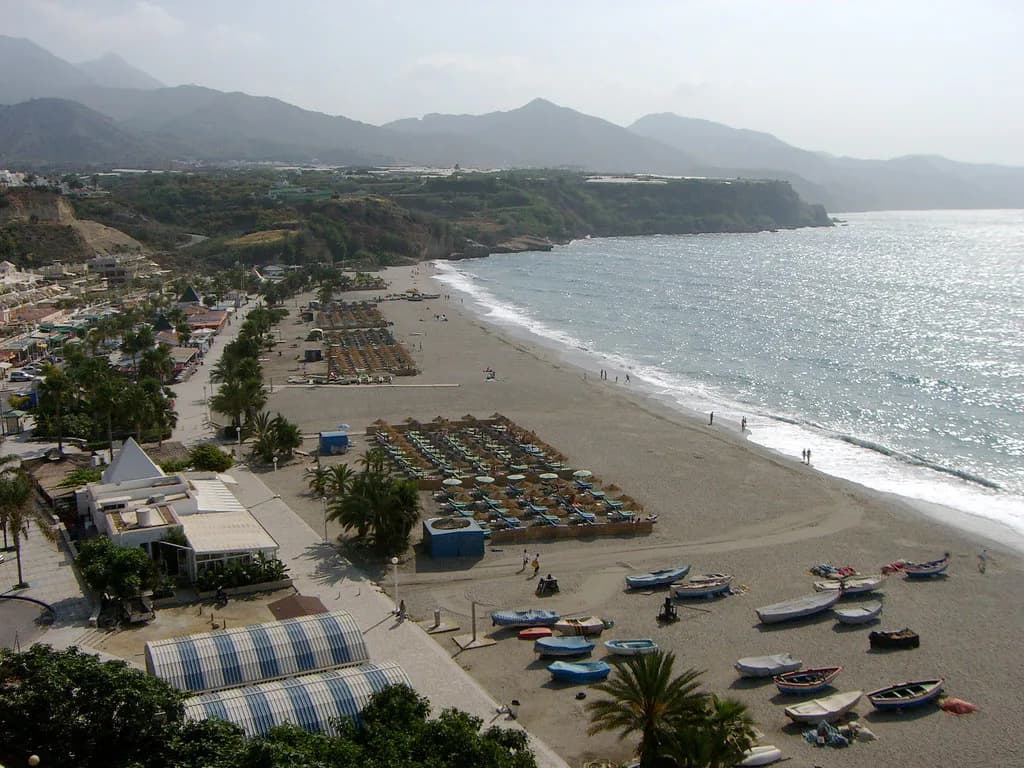
Torrecilla works well as one half of a beach day rather than the whole of it. Walk east along the town seafront to reach the centre and the coves below the Balcón de Europa, or head west to Burriana Beach, Nerja for a longer strand and a different atmosphere. Further afield, Playa de Maro, Nerja sits in a more dramatic setting below the cliffs and rewards a half-day trip.
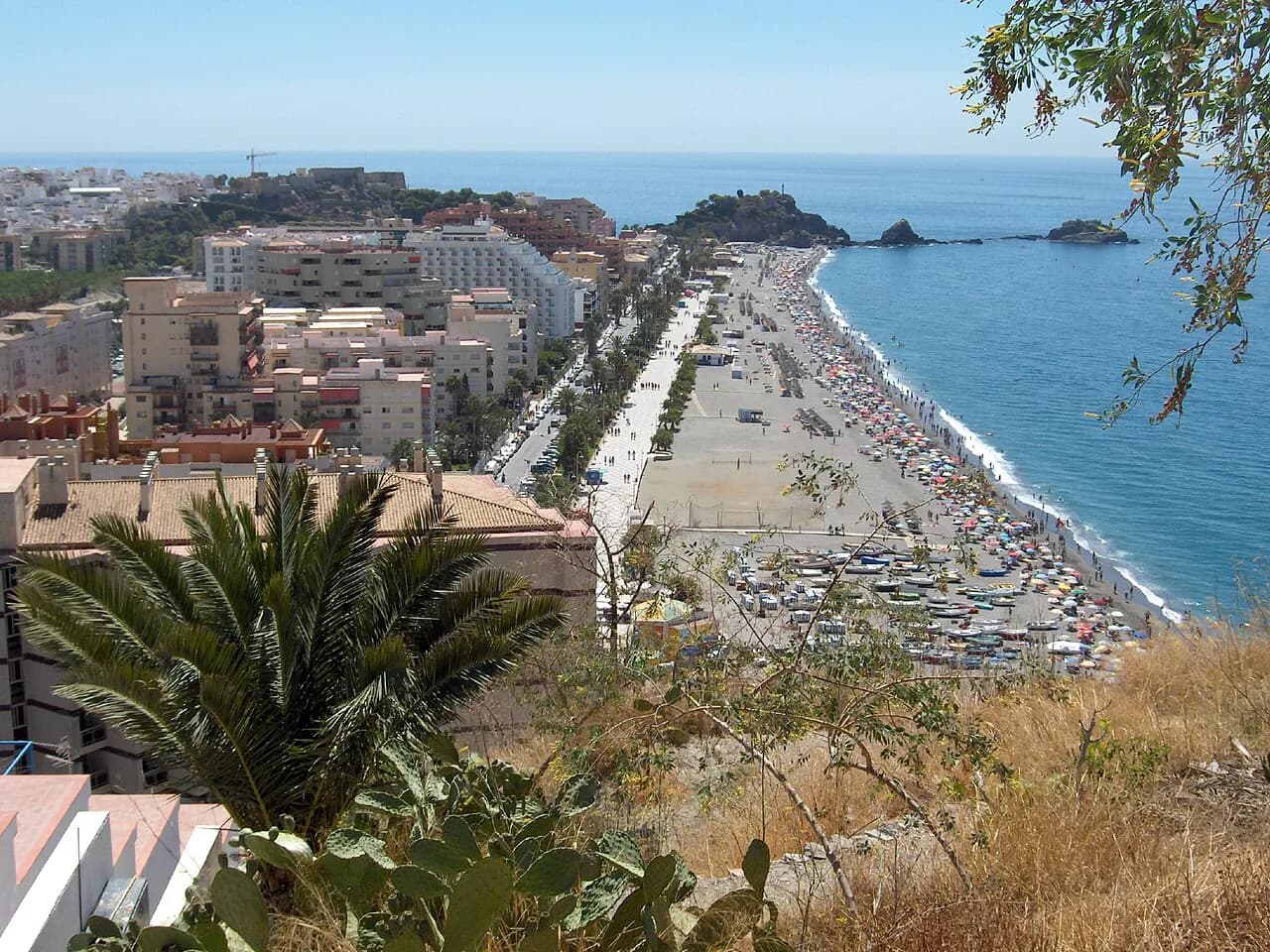
If you are touring the coast, Almuñécar Beaches across the provincial border in the Costa Tropical make a natural next stop, with a very different shoreline from Nerja's small bays. Closer to hand, Carabeillo Beach, Nerja offers a smaller cove for a change of scene. Further east along the same coast, the Almería beaches trade the small-bay pattern for the long sands of Cabo de Gata and beyond.
Plan Your Day at Torrecilla
Torrecilla is the easy choice in Nerja: sandy, sheltered between two headlands, walkable from the centre and served by a local bus from the terminal. It is at its best for families and mixed groups who value facilities and a promenade over solitude, and it is at its worst in August, when the compact curve fills quickly.
Arrive in the morning, park in the western streets if you are driving, and plan lunch at Plaza Fabrica de los Cangrejos. Pair the beach with a walk to Burriana or a cove below the Balcón de Europa, and confirm bus times with the terminal kiosk or the Nerja tourist office before you set out.
Frequently Asked Questions
How do you get to Torrecilla beach from Nerja town centre?
Walk west from the Balcón de Europa along the edge of town towards the Riu Monica hotel, which brings you to the beach in a short time. From the bus terminal, follow Calle San Miguel and then Calle Castilla Perez downhill to Plaza Fabrica de los Cangrejos, from where the sand is visible to your right. A local bus also runs from the terminal to Torrecilla; ask at the kiosk for current times.
Is there parking at Torrecilla beach?
There is no dedicated beach car park. Drivers use the nearby town streets, which fill quickly in summer, so arriving earlier in the day gives you a better chance of a space close by and a shorter walk with your kit. Parking once and exploring the seafront on foot is the simplest approach.
Is Torrecilla beach sandy and good for families?
Yes: it is a sandy curve of about 300 metres by 40 metres, sheltered by a headland at each end. Toilets, showers, disabled access, sunbed rental, a café and lifeguards in season make it practical for families with small children, though the compact size means it gets busy and the middle section is the most crowded part.
Does Torrecilla beach have sunbeds and lifeguards?
Sunbed rental is available on the beach, alongside a café and bars nearby, and lifeguards cover the beach. The usual flag system applies, so swim between the flags and follow any instructions given on the day, since shelter in the bay does not rule out currents or a changing sea state.
When is the best time to visit Torrecilla beach?
June and September give you warm sea with more room on the sand, while July and August are the busiest weeks. Whatever the month, mornings are quieter and cooler, and they make parking in the surrounding streets easier. Shade is limited on the beach itself, so bring your own if you plan to stay through the afternoon.
Sources
Beach notes for your next trip
Optional updates when we add or revise beach guides.
You might also like
Continue reading
More guides you'll find useful