Orkos Beach, Naxos: A Quiet, Sheltered South Coast Beach
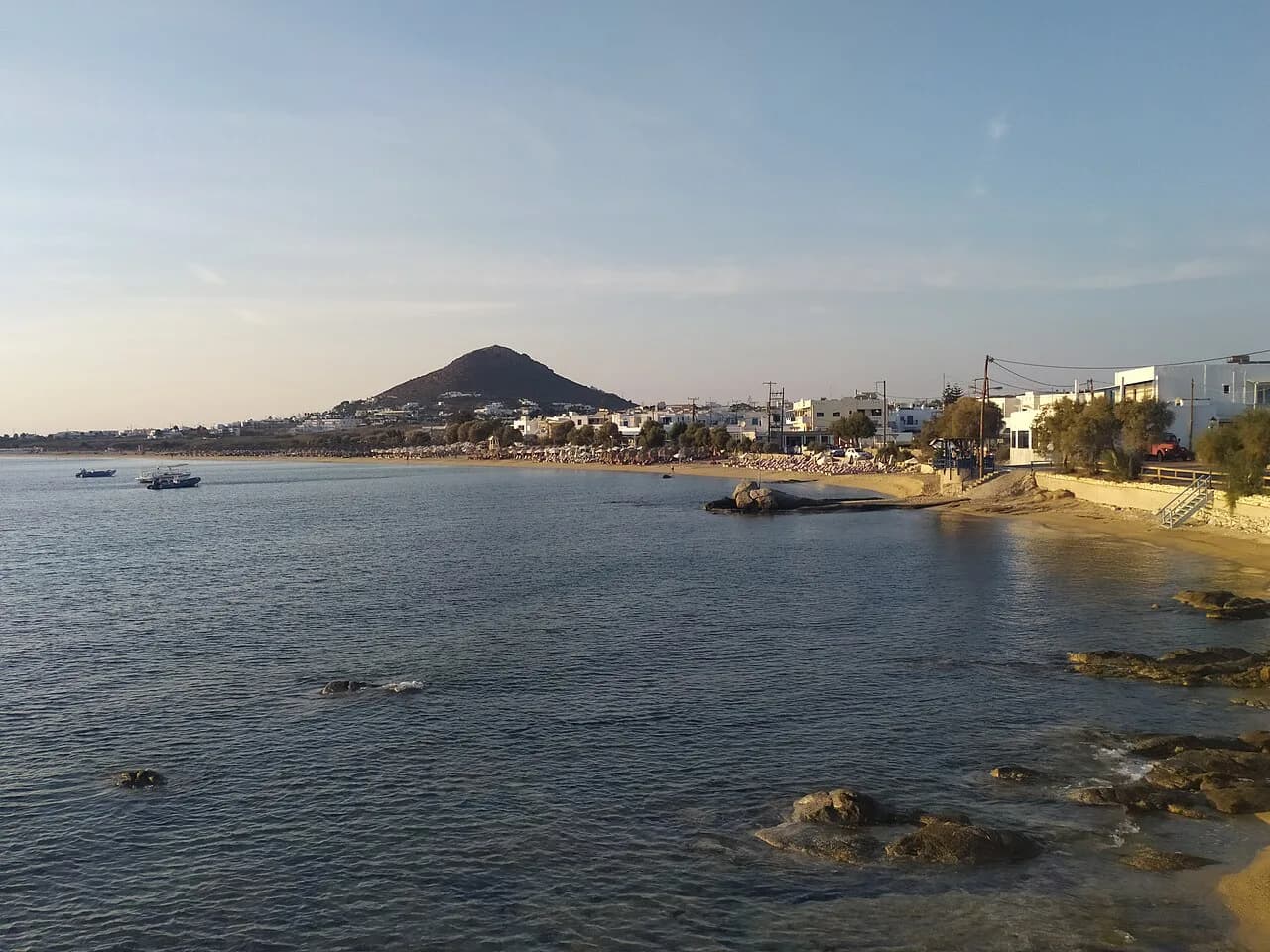
Orkos Beach on Naxos sits near Mikri Vigla, away from the busy resort strip, with sand, space and a shorter journey from Chora than the far south coast.
On this page
Orkos Beach is the low-key answer to Naxos's famous western strip: a stretch of coast near Mikri Vigla where the emphasis is on sand, space and a short drive out of Chora rather than a row of beach bars. It suits swimmers who want room to move, quiet-seekers, and anyone whose plans fell apart the last time the meltemi got up on the open beaches.
The trade-off is straightforward. You come here for a simpler beach day, and that means bringing your own shade, water and lunch; don't count on a sunbed and a taverna being there. Plan it as half a day combined with a neighbouring beach, and the modest effort pays back in space.
Where Orkos sits on Naxos
Orkos lies on the southwestern coast of Naxos, in the same run of sand as Mikri Vigla, south of Plaka and Agia Anna and considerably further from Chora than the busy Agios Prokopios strip. The useful way to think about it is as the quieter neighbour of Mikri Vigla, which travel guides place roughly twenty minutes by road from Naxos Town. Treat Orkos and Mikri Vigla as a pair and you can switch between them as the wind dictates.
This part of the coast faces the open Aegean, so it takes the meltemi more directly than the sheltered corners further north. That is exactly why the neighbouring beaches here divide into a windward side for kitesurfing and a leeward side for swimming, a split documented on Mikri Vigla itself. Choose your patch of Orkos with the day's wind in mind rather than assuming the whole bay behaves the same way.
Getting there
Driving from Chora is the simplest approach: head south along the coast road past Agios Prokopios and Plaka, then follow signs for Mikri Vigla and Orkos. The beach sits off the main road with informal parking near the sand, and the earlier you arrive in July and August the better your chance of a space close to the water. Rental cars are easy to arrange in Chora, and a car also lets you move on to Kastraki or Plaka if the wind turns uncomfortable.
Local buses run along the western coastal road towards Mikri Vigla, but services thin out the further south you go, so check the current timetable with the island bus operator before relying on one for the return leg. If you are staying in Agios Prokopios or Plaka, the bus is a realistic option; from Chora, a car or taxi saves a long day of waiting.
The sand and the water
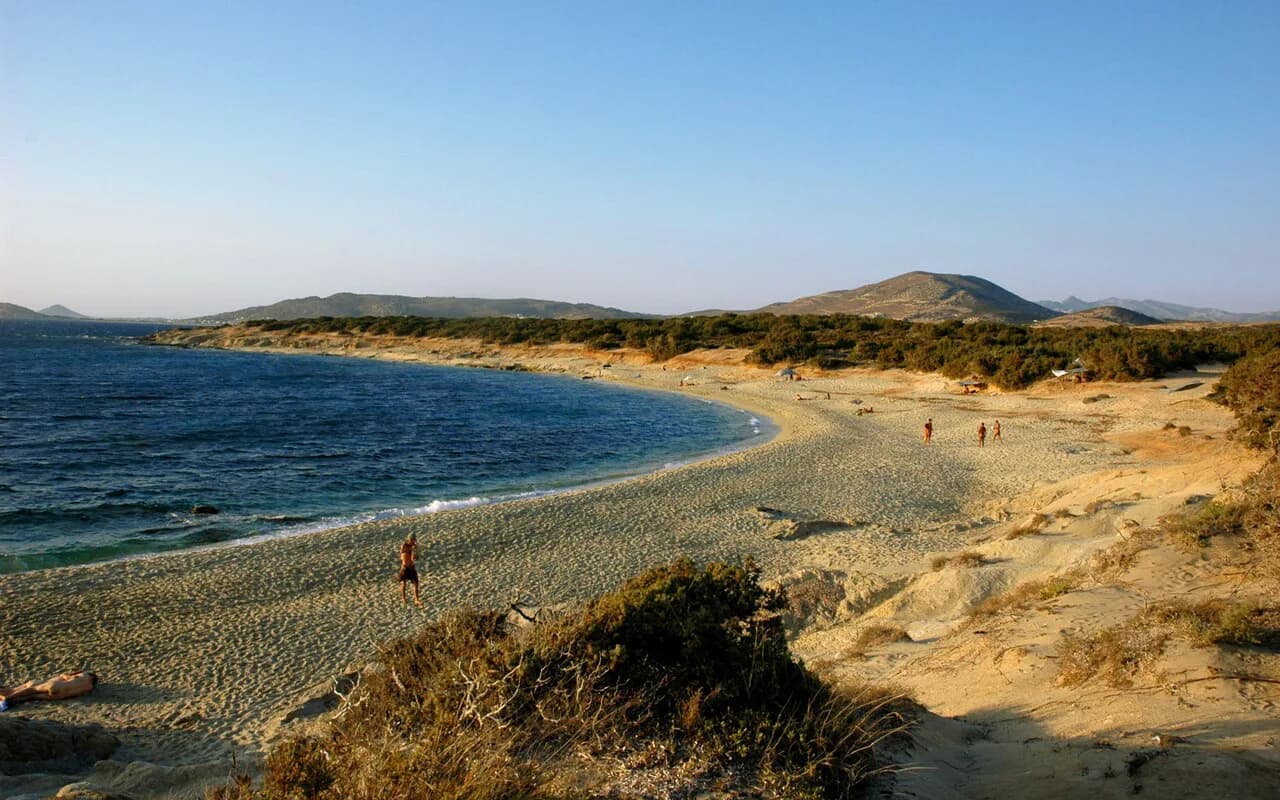
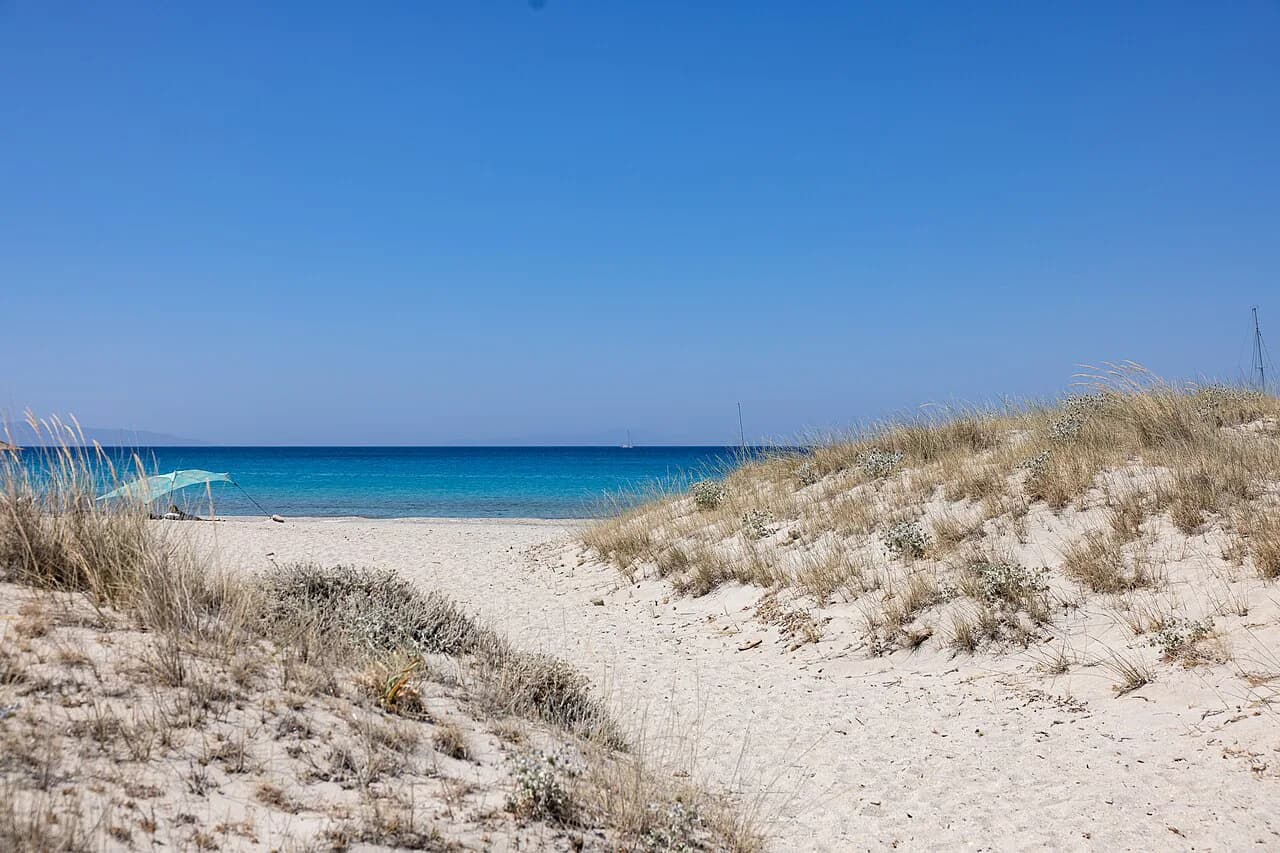
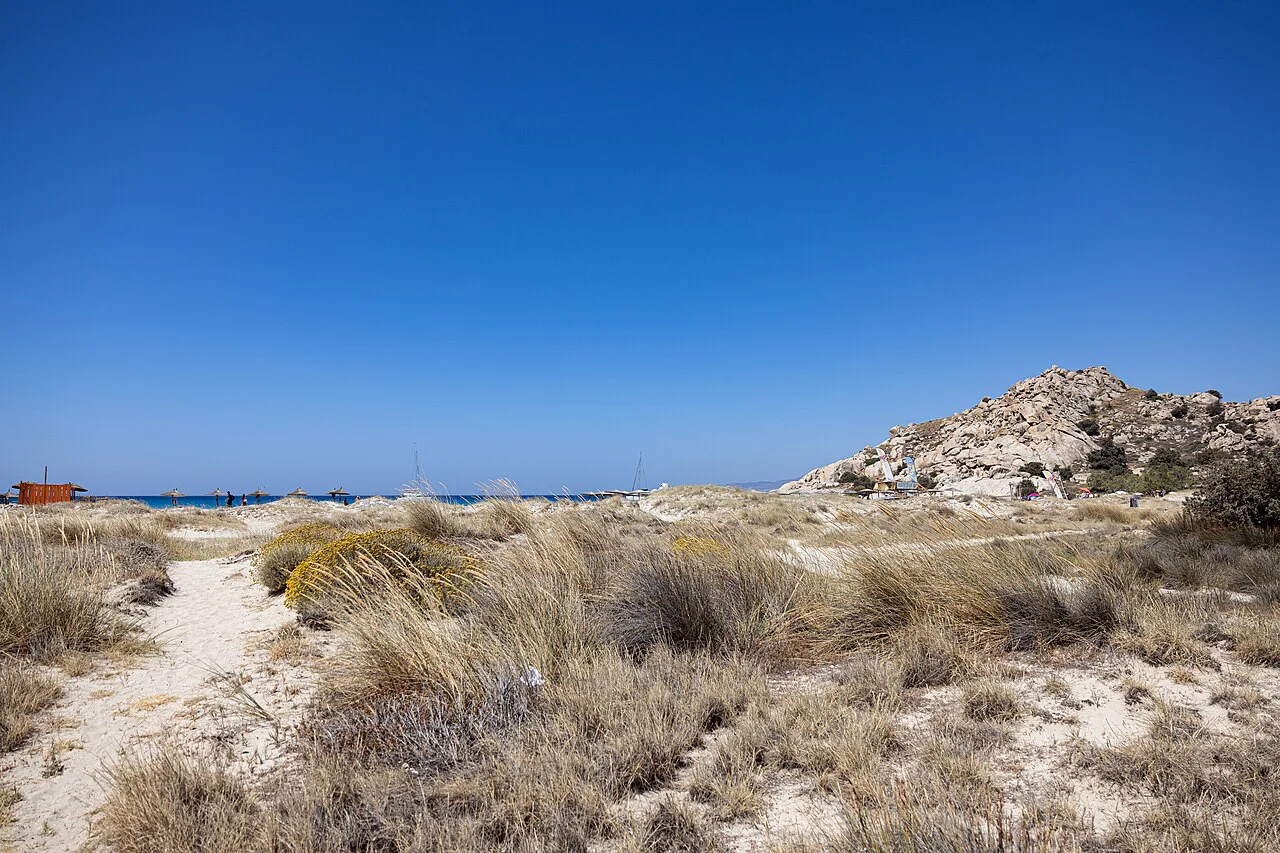
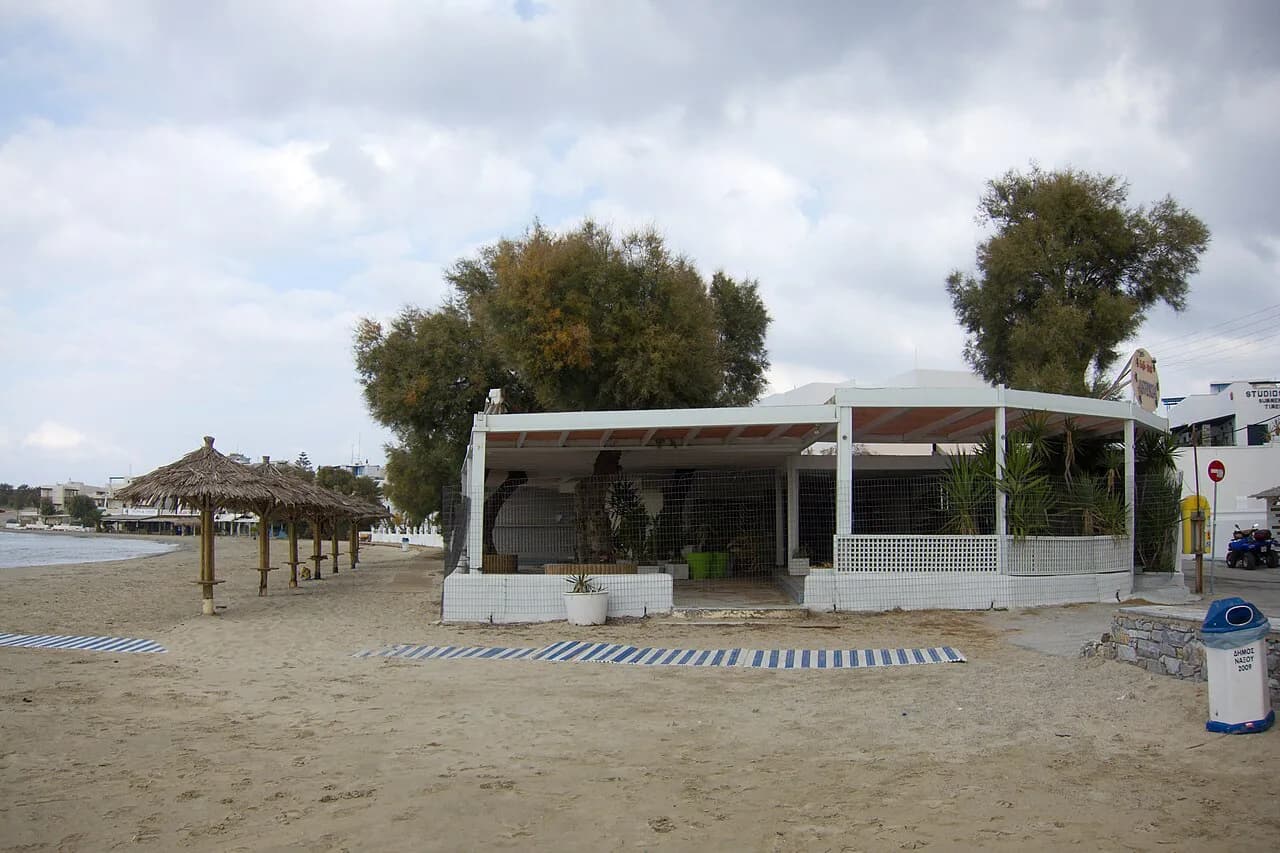
Orkos is sandy, wide and backed by low dunes and scrub rather than a built-up promenade, which is what gives it the roomy feel. The water shelves gently at the shoreline before deepening, so you can wade a fair way out before it is properly over your head. Guides to this stretch describe clear water that shifts from turquoise in the shallows to deeper blue further out, and the northern section of Mikri Vigla, often called Parthena Bay, attracts windsurfers and kitesurfers when the meltemi blows.
On a calm day, Orkos is a straightforward swimming and floating beach with plenty of space to lay out a towel. When the northerly meltemi is running, expect blowing sand and choppier water on the exposed sections; the protected southern side of Mikri Vigla is the usual fallback for calm water. There is no patrolled swimming zone to rely on here, so judge conditions from the shore and stay within your comfort.
Crowds and character
Compared with Agios Prokopios, which fills with sunbeds, beach clubs and watersports operators in high summer, Orkos stays noticeably emptier even in August. That is its whole appeal, and it makes a good choice for travellers who find the organised strips exhausting. The wider area does get busy in peak season, with parking at a premium along the coast road, so an early start still matters. If you are weighing up other Greek islands for a similar sand-and-swim trip, the beaches in Rhodes offer a useful comparison.
The flip side of the calm is that Orkos is a bring-your-own day. Sunbeds, shade and food are not something to count on here, and the tavernas and beach bars cluster at Mikri Vigla rather than along Orkos itself. Pack an umbrella, a cool bag and plenty of water, and you get a stretch of sand that feels almost private in the shoulder months.
Facilities and what to bring
Facilities on Orkos are limited, and the practical base for lunch, drinks and any sunbed rental is Mikri Vigla, where a handful of tavernas and beach bars serve the two beaches. That means a five-minute drive or a short walk between your spot on the sand and a proper meal. Small shops in Mikri Vigla cover water, snacks and basic beach gear; for a bigger stock-up, do it in Chora or Plaka on the way south.
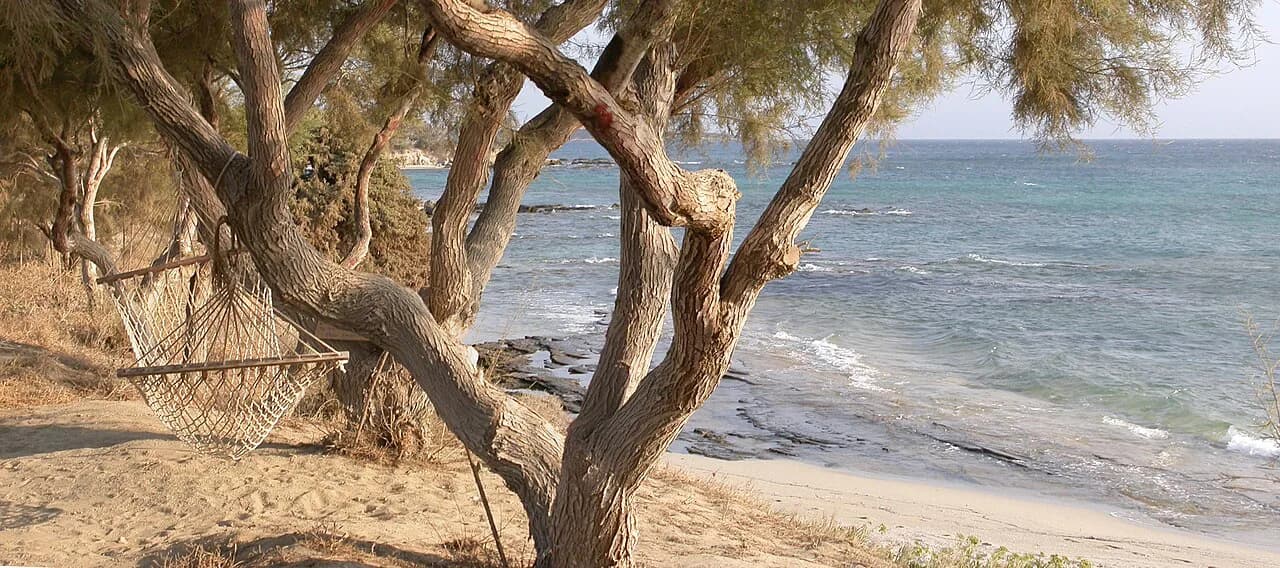
Bring a windbreak or a sturdy umbrella, reef-safe sun cream and footwear for the hot sand in the middle of the day. There are no public showers or toilets on this stretch, so plan around the tavernas at Mikri Vigla. A rash vest and goggles make the most of the clear water, and a dry bag keeps valuables safe when the breeze picks up.
Best time to go
Late May, June and September give you the best combination of warm sea, manageable wind and space on the sand; the sea is at its warmest after a long summer of sun. July and August bring the strongest and most persistent meltemi, which can make the exposed parts of Orkos unpleasant for a full day. During those weeks, plan a morning swim and keep a sheltered alternative in reserve for the afternoon.
The beach is at its busiest in the first half of August, when Greek families take their holidays alongside international visitors. If you want Orkos at its best, aim for the second half of June or the first half of September, when the water is still warm and the coast road is quiet. Spring mornings can be breezy but the light is superb for photography.
Nearby beaches to combine
Mikri Vigla is the obvious pairing, offering a windward side for watching kitesurfers and a sheltered southern section for a calm swim. Kastraki, a few minutes further south, is a long, dune-backed stretch of pale sand with good snorkelling on calm days and a handful of tavernas at its north end. Either makes a natural afternoon move if the wind picks up on Orkos.
If you want a serviced beach day after the quiet, drive north to Plaka for its beach clubs, cabanas and a 2.5-mile sweep of soft sand. Agia Anna, just beyond, has a lively taverna strip and a shallow, family-friendly cove. For a full resort-style day with every facility on hand, head back to the organised end of Agios Prokopios. All three are within a short drive of Orkos.
For something closer to town, Agios Georgios beach Naxos is the nearest sandy beach to Chora, with lifeguards, beach bars and a shallow northern end that suits small children. It makes a sensible final-day option when you need to be near the ferry port. The island's beach guide covers the full range if you want to plan a wider tour.
A practical day plan
Start early at Orkos with a swim and a walk along the sand before the sun gets high, then drive to Mikri Vigla for lunch at one of the tavernas. Spend the afternoon on Mikri Vigla's sheltered southern side if the wind is up, or push on to Kastraki for snorkelling if conditions are calm. That sequence gives you the quiet morning you came for without gambling the whole day on the weather.
Keep the plan flexible: the meltemi tends to build through the afternoon, so front-load the swimming and save the walking and eating for later. If you have a car, you can hop between Orkos, Mikri Vigla and Kastraki in a few minutes each. Without one, base yourself in Mikri Vigla and walk between the two beaches.
Bringing a dog to Orkos and the south coast
The published guides to Naxos's south-coast beaches say nothing about dogs, so there is no citable rule on whether a dog may be taken onto the sand at Orkos or at neighbouring Agios Prokopios. What the sources do describe is the shape of the coast, and that is useful for planning a day out with an animal. At Agios Prokopios the beach divides into a southern end with five or more beach bars with sunbeds, food and cocktails, and a north-western end that is mostly public, quieter and better suited to families or those who want the sand without the scene. On windy days the north-western public stretch is the more sheltered part, while the meltemi winds can make the northern end uncomfortable in peak season, with blowing sand and choppy water the main issues.
The practical details matter more than usual when a dog is along. There are no public toilets or showers on Agios Prokopios beach itself, so facilities have to come from a beach bar or from your accommodation; several small supermarkets sit just off the beach. The bus that serves the coast is KTEL Line 1 from Chora, which costs €2.10 and takes around 15 minutes, with the stop close to the beach. By car it is 15 minutes from Chora and 5 minutes from Plaka, and parking is at the large open area near the salt flats between the beach and the road, which fills fast in peak season. Agios Prokopios is also connected to Agia Anna and Plaka by a coastal path, a 20-30 minute walk south along the beach.
For timing, May and September are described as the best months at Agios Prokopios, when it is considerably quieter than peak season and noticeably cheaper across accommodation, sunbeds and food, while July and August are the busiest and most expensive. Anyone planning an evening out should note that nightlife is concentrated in Naxos Town (Chora), around the seafront promenade near the Portara, the Old Market backstreets and rooftop terraces overlooking the harbour, with beach bars at Agia Anna and Plaka operating all day and night in high season, and that the scene is liveliest from July to mid-September.
Plan Your Visit
Orkos Beach rewards travellers who want Naxos without the resort strip: broad sand, clear water and space to breathe, provided you come prepared with shade, food and water. Pair it with Mikri Vigla's sheltered side or Kastraki, and you have a flexible south-coast day that works whatever the meltemi decides to do.
Check the day's wind forecast and the current bus timetable with the local operator before you set out, and aim to arrive before mid-morning in high summer. Come in June or September for the sweet spot between warm water and elbow room.
Frequently Asked Questions
Where is Orkos Beach on Naxos?
Orkos sits on the southwestern coast of Naxos, next to Mikri Vigla and south of Plaka and Agia Anna. It is roughly twenty minutes by road from Chora, in the same run of sand as Mikri Vigla.
Is Orkos Beach good for swimming?
Yes on calm days, when the sandy shelf gives a gentle entry and the water is clear. When the northerly meltemi blows, the exposed sections get choppy, so move to the sheltered southern side of Mikri Vigla instead.
How do you get to Orkos Beach from Naxos Town?
Drive south along the coast road past Agios Prokopios and Plaka, then follow signs for Mikri Vigla and Orkos. Buses run along the western coast road, but services thin out the further south you go, so confirm the return time with the island bus operator.
Is Orkos Beach sheltered from the wind?
Parts of it are, but the coast faces the open Aegean and takes the meltemi more directly than beaches further north. The southern side of neighbouring Mikri Vigla is the usual calm-water fallback when the wind is up.
Which beaches are near Orkos Beach?
Mikri Vigla is immediately next door, Kastraki is a few minutes further south, and Plaka, Agia Anna and Agios Prokopios are within a short drive to the north.
When is the best time to visit Orkos Beach?
Late May, June and September offer warm sea, lighter winds and plenty of space. July and August bring the strongest meltemi and the biggest crowds, so plan an early start and keep a sheltered alternative in reserve.
Sources
Beach notes for your next trip
Optional updates when we add or revise beach guides.
You might also like
Continue reading
More guides you'll find useful