Denia Beaches: The Best Sands and Coves on the Costa Blanca
Plan a beach day in Dénia with our guide to the sandy northern beaches, the rocky coves of Les Rotes and the family-friendly sands closest to town.
On this page
Dénia works as a beach base because you can choose your coast by mood: soft sand and shallow water within walking distance of the port, or rocky coves with clear water below Cabo de San Antonio. More than 20 kilometres of coastline runs through the municipality, so a family with toddlers and a snorkeller can each find their spot without leaving town.
The town sits between two very different shorelines. North of the harbour the Les Marines road runs behind kilometres of fine sand, while south of the marina the Les Rotes road follows a rockier coast toward the marine reserve. Plan your day by direction first, then pick the beach that matches it.
How the Dénia coastline divides
Think of Dénia as three beach zones. The northern Les Marines strip holds the long sandy beaches and most of the bars and restaurants, the town beaches sit either side of the centre and marina, and Les Rotes to the south is a run of rocky coves facing the Cabo de San Antonio reserve. Choosing a zone before you set out saves a lot of driving on the Les Marines road in August.
The northern beaches are where you go for sand between your toes and a full day out. Les Rotes is for snorkelling, rock platforms and a more pared-back atmosphere, with restaurants specialising in rice and fish close to the water. If you want a sunbed and a menu within a few steps, stay north; if you want to be in the water with a mask, go south.
Punta del Raset: the closest beach to the centre
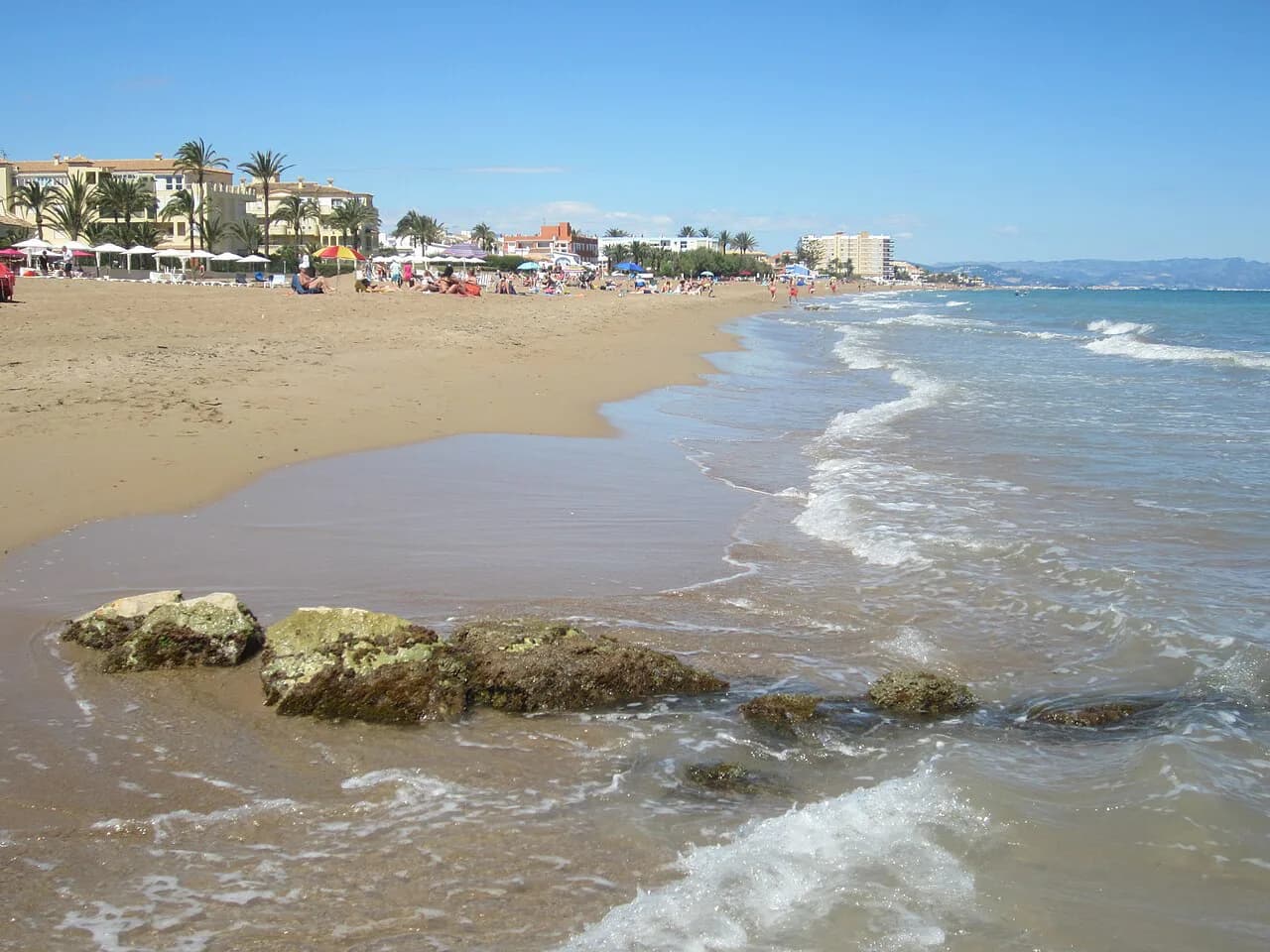
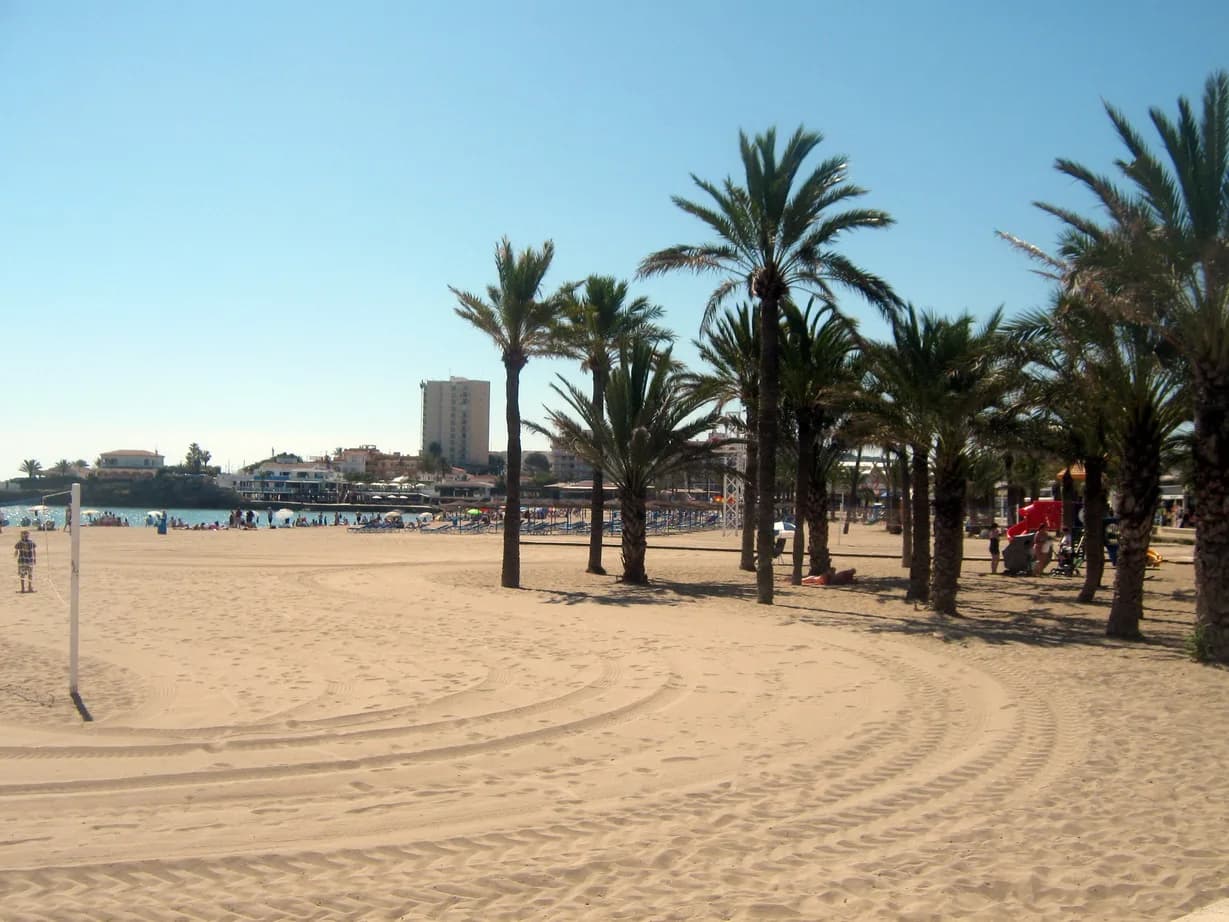
Punta del Raset, known locally as El Cagarritar, begins just past the port area, making it the easiest beach to reach on foot from the town centre. It is one of Dénia's widest beaches at around 600 metres and is backed by protected dunes, which give it more natural character than its urban setting suggests.
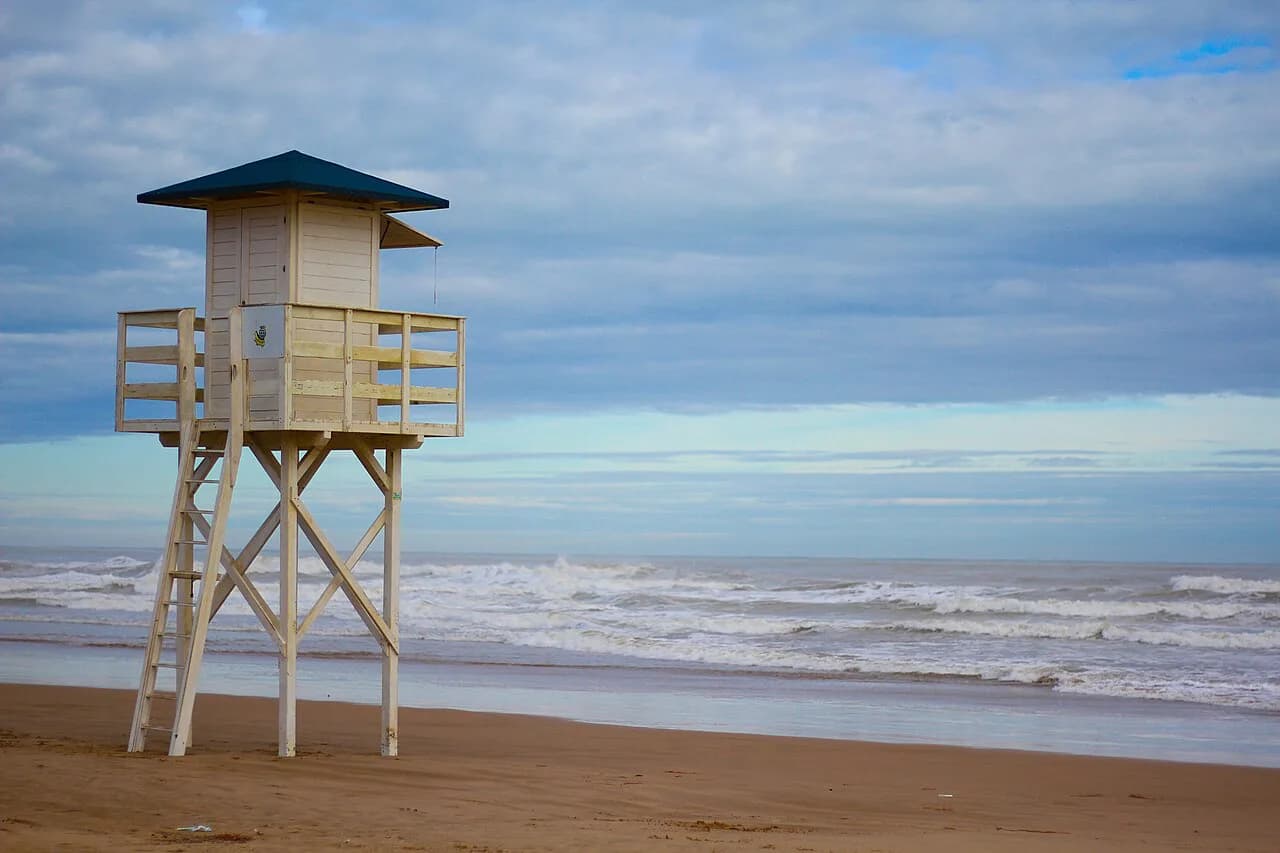
Facilities are aimed squarely at families: beach bars, children's play equipment, volleyball nets and a lifeguard service, plus an adapted bathing point for people with reduced mobility. It holds Blue Flag status and has both public and private parking close by, which matters if you are driving in for the day.
Because it is the first beach on the northern coast, it fills up quickly with people walking from town. Arrive earlier in the morning if you want space near the water, or treat it as an evening beach after a day elsewhere.
Les Albaranes: family sand and the summer beach library
Les Albaranes sits next to Punta del Raset and runs for roughly 500 metres of sand, with a family atmosphere and palm trees behind the dune system. Its draw is the biblioplatja, a free book-lending service by the sea that runs through the summer and is popular with locals.
It holds Blue Flag status and offers volleyball facilities and an active lifeguard service in peak season. Access is straightforward from the Les Marines road entrances closest to the city, so it suits anyone staying in town who wants sand without a drive up the coast.
Les Marines: the long stretch for a full day
Les Marines is the umbrella name for several kilometres of sand past El Raset, with signposted access points and a high concentration of beach bars and restaurants. It includes popular spots such as Blay Beach and Les Brises, and it is the beach to pick when you want to settle in from morning until dinner.
The beach holds Blue Flag status, has an area adapted for bathing and offers easy parking in zones such as Les Bassetes. Because the strip is so long, the experience varies: walk a few minutes away from a main access point and the crowd thins considerably.
Les Bovetes and Els Molins: sands for families and quiet-seekers
Les Bovetes stretches 1,800 metres and is one of the most popular beaches in Dénia, largely because the Les Fonts shopping centre sits right by its main access. Sunbed and marine scooter hire are available, there is a lifeguard and safety station, and an adapted bathing point with an amphibious chair serves visitors with reduced mobility.
Further up the Les Marines road at kilometre 5.4, Els Molins is noticeably quieter. It is a Blue Flag sandy beach with lifeguards in summer and relatively easy parking in the adjacent streets, but there is no adapted bathing point, so families needing that facility should head to Les Bovetes instead.
Les Deveses and l'Almadrava: the northern end
Les Deveses is the northernmost beach in the municipality, close to three kilometres long and backed by new breakwaters after regeneration work. It has recovered Blue Flag status and is the place to watch windsurfers and kitesurfers when the wind picks up.
L'Almadrava, between roughly kilometres 7.8 and 10.8 of the Les Marines area, mixes small stones and sand with notably clear water. It is very quiet, has lifeguard cover and an adapted bathing point, but it does not hold a Blue Flag.
Both sit at the far end of the Les Marines road, so they reward anyone with a car who wants to escape the town crowds. Bring cash for a beach bar lunch and footwear that copes with pebbles at l'Almadrava.
Marineta Cassiana: the shallow, calm choice south of the marina
Marineta Cassiana is the closest southern beach to the centre, a short walk along the seafront promenade from the marina. It is sandy and shallow with very calm water, which makes it the obvious choice for young children.
It holds Blue Flag status, has a well-equipped adapted bathing point, a summer biblioplatja and lifeguard cover. Staying here rather than driving north also puts you within easy reach of the Les Rotes coves for an afternoon snorkel.
The coves of Les Rotes: rock platforms and marine-reserve water
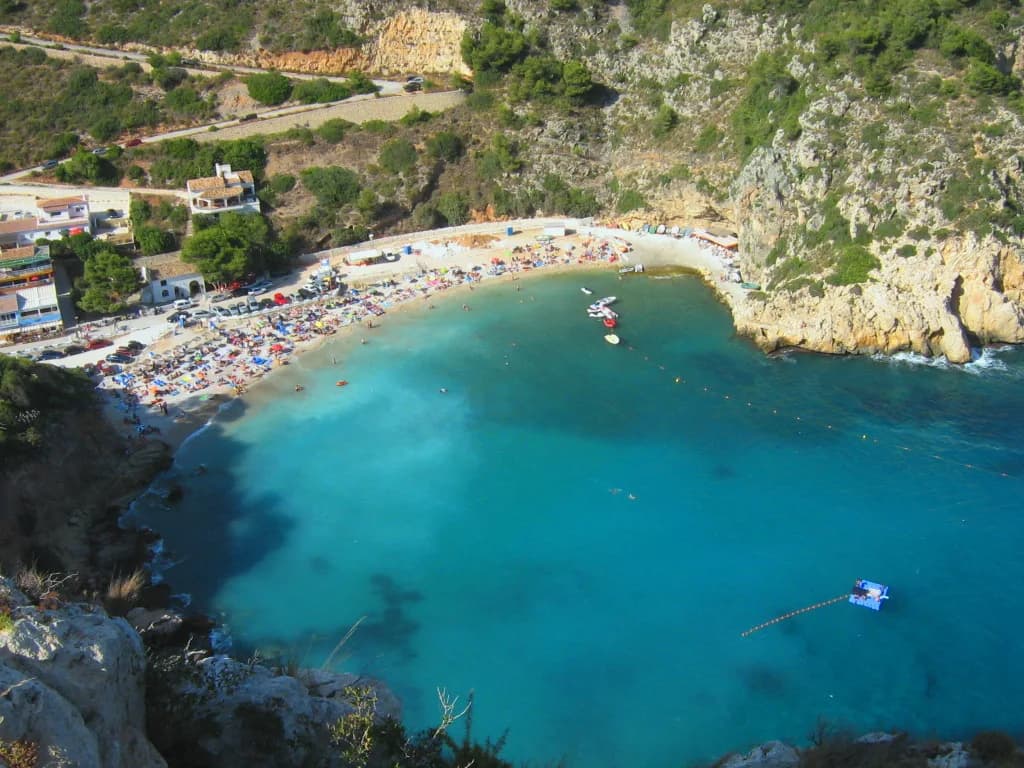
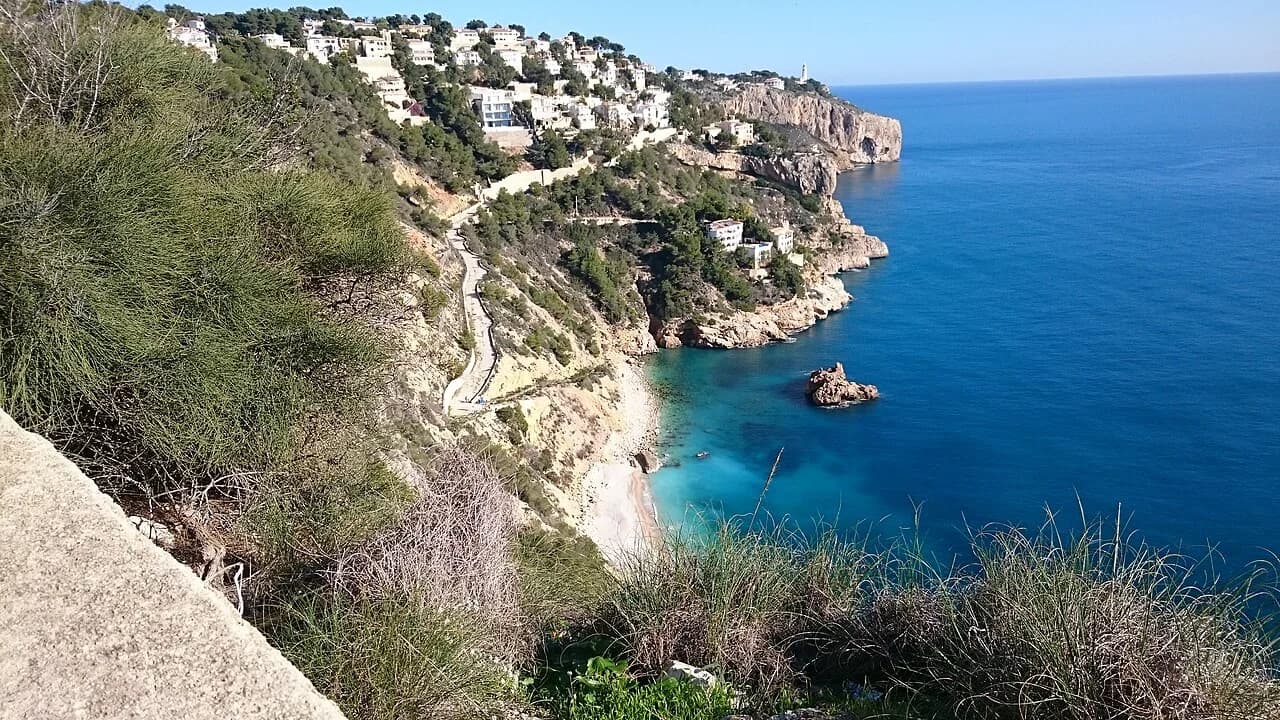
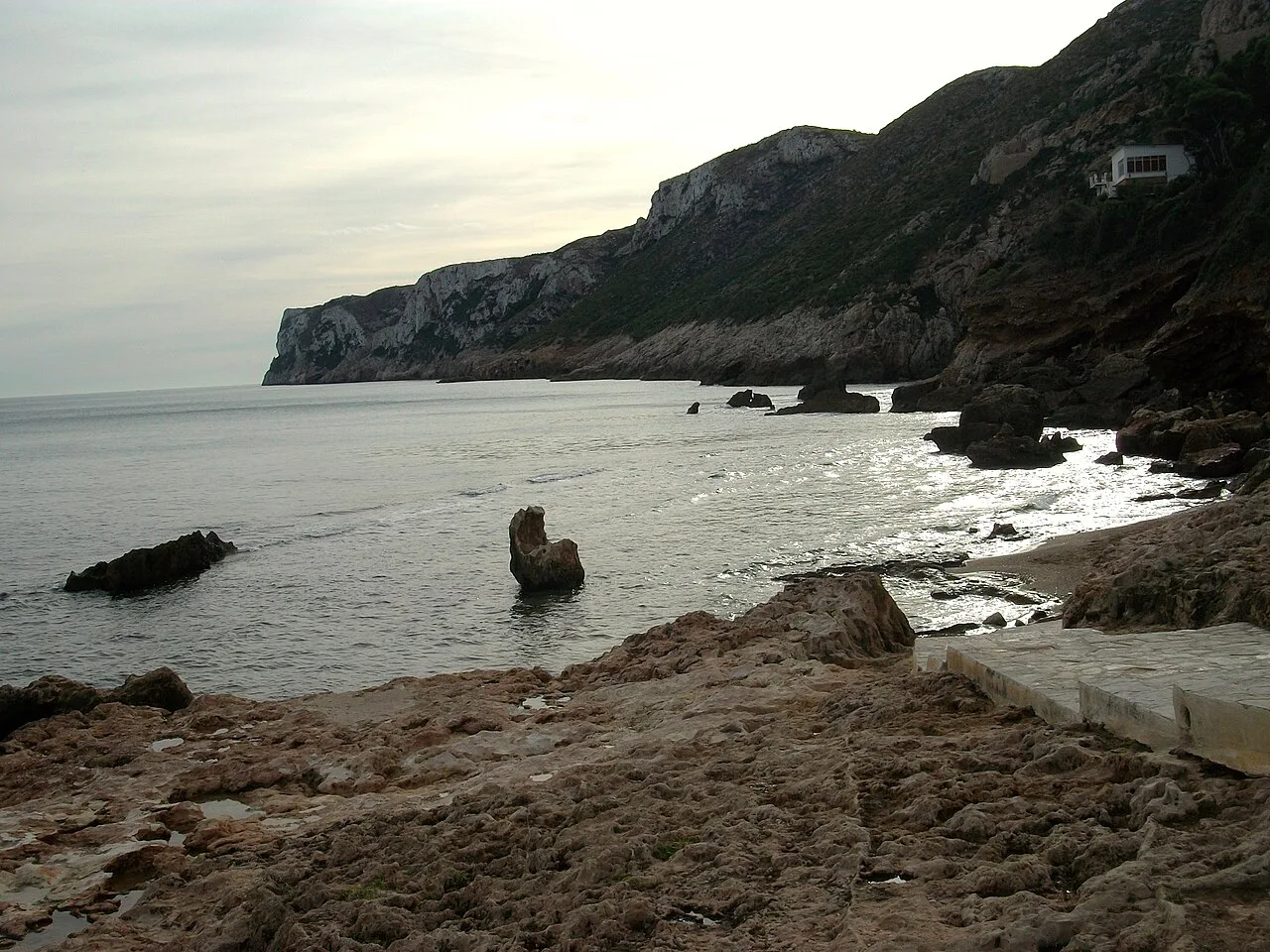
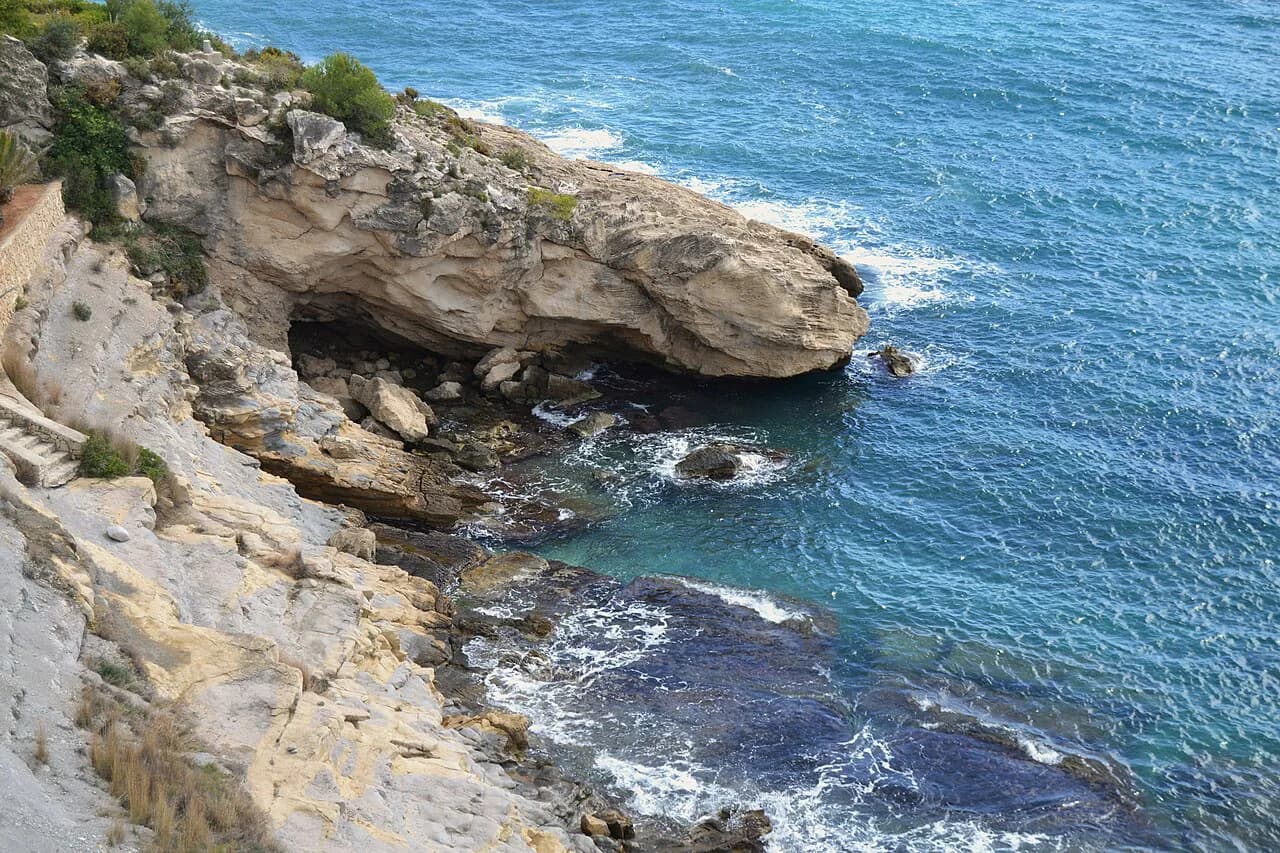
South of town the coast turns rocky, and the coves of Les Rotes open onto the Cabo de San Antonio Marine Reserve, with seabeds that make the area a draw for snorkellers. This is not a sandcastle coast: expect rock platforms, pebbles and clear water, plus restaurants known for rice and fish close to the shore.
Access is along the Les Rotes road, which becomes the Barranc del Monyo road as it heads south. Parking is limited in places, and the last stretch is best done on foot or by shuttle in high summer.
El Trampolí and Punta Negra
El Trampolí is a rocky beach with a wooden platform that lets bathers step straight into clear water, and it is an excellent spot to see marine life with a mask. Lifeguards are on duty, and well-regarded rice and fish restaurants sit just behind the beach.
Punta Negra, at kilometre 2.1 of Les Rotes opposite the main public car park, is a rocky cove that now holds Blue Flag status, an unusual recognition for a rock beach. It has a lifeguard station and is a key dive site, so expect company from divers as well as swimmers.
Rock platforms demand care: wear shoes in the water, watch for swell before jumping, and keep an eye on children near the edges. Conditions change through the day, so judge the water when you arrive rather than planning a jump in advance.
Les Arenetes and La Cala
Les Arenetes sits at the end of the Les Rotes road, with views back to Cape San Antonio. Because of its protected status, car access is limited in summer, and a free tourist train runs from the public car park in summer to cover the final stretch.
Beyond it, La Cala is a hidden nudist cove beneath the cliffs, reached only on foot down natural stairs. It has no permanent lifeguard and no commercial services, so bring water and shade and treat it as a wild, quiet spot.
Getting around Dénia's beaches
Walking works best for the town beaches: Punta del Raset is a few minutes from the port, and Marineta Cassiana is a promenade stroll from the marina. For the rest, the Les Marines road has multiple signposted access points heading north, while the Les Rotes road heads south past the coves.
Driving gives you the most flexibility, and parking is easiest at Punta del Raset, Les Bovetes' shopping centre access and the public car park at Punta Negra. In summer, use the free tourist train from the public car park to reach Les Arenetes rather than driving to the end of the road.
Best time to go
July and August are the busiest weeks, when Les Bovetes, Les Marines and Les Albaranes fill with Spanish and international visitors and lifeguard services run at full strength. If you want space and warm sea, aim for late June or early September, when the water holds its heat after the summer but the beaches empty out.
Spring and autumn suit walkers and snorkellers, though lifeguard cover and beach bars are more limited outside peak season. Check sea temperatures before you commit to long swims, and plan rocky-cove visits around calmer days.
Facilities and Blue Flag beaches
Blue Flag status across Dénia covers Punta del Raset, Les Albaranes, Les Marines, Les Bovetes, Els Molins, Les Deveses, Marineta Cassiana and Punta Negra, with l'Almadrava, El Trampolí, Les Arenetes and La Cala not on the list. Adapted bathing points exist at Punta del Raset, Les Marines, Les Bovetes, l'Almadrava and Marineta Cassiana.
Beach bars appear on much of the northern sand and around the rocks of Les Rotes, but rocky coves such as La Cala have no commercial services at all. Pack water, shade and sun cream for those, and carry cash in case card readers are down at smaller kiosks.
Which beach suits whom
Families with small children should head to Marineta Cassiana for shallow calm water, or Les Bovetes for its shopping centre access and amphibious chair. Swimmers and snorkellers get the most from Les Rotes, especially El Trampolí and Punta Negra, while windsurfers and kitesurfers favour Les Deveses.
Quiet-seekers should look at Els Molins, l'Almadrava or La Cala, though the last comes with a steep walk. For a full day out with lunch and a book, Les Marines and Les Albaranes offer the easiest combination of sand, food and shade.
Nearby beaches to combine
Dénia sits within easy reach of the northern Costa Blanca's other beach towns. Jávea, a short drive south, has its own mix of sand and coves, and the Javea beaches range from the family-friendly Playa del Arenal to the rocky Granadella beach, so the town pairs well with a morning at Les Rotes. If you are weighing a longer stay further south, the Alicante beaches make a useful comparison for city sand and long resort strands.
Further south, Moraira beaches offer a gentler alternative, with El Portet and Playa de l'Ampolla giving you sandy family swimming close to town. Beyond that, the coves and long sands toward Calpe make a natural extension of a Costa Blanca beach week.
Dog-friendly beaches and coves in Dénia
For visitors with a dog, Dénia’s coastline includes at least one beach where pets are officially permitted: La Cala, which is also a nudist beach. This cove appears in the local beach guide alongside the town’s other sands, so it is the only named option in the sources for a dog-friendly swim. La Cala sits within the southern rocky stretch of Les Rotes, the area that opens onto the Cabo de San Antonio Marine Reserve. The full beach guide outlines services and locations for La Cala and the other coves, which can help you plan a visit that suits both you and your dog.
The rest of Dénia’s main beaches are described in the sources without any mention of dog access, and several have rules or facilities that make them unsuitable for pets. Punta del Raset, Les Albaranes, Les Marines, Les Bovetes and Els Molins are all sandy Blue Flag beaches with lifeguard services in peak season, and some have adapted bathing points, beach bars, children’s games or volleyball nets. Les Deveses and l’Almadrava, at the northern end, are also listed as swimming beaches with their own services. None of these entries state that dogs are allowed, so La Cala remains the clearest option in the guide for a beach day with a dog.
If you are staying near the centre, La Cala is reached via the Les Rotes road that runs south from the marina past Marineta Cassiana and the rocky coves. The sources describe Les Rotes as a series of rocky coves and platforms rather than long sands, so expect a different setup from the northern beaches. The beach guide provides access details for each cove, including La Cala, and the tourist information pages for Dénia’s beaches can help you match a cove to your needs. Because La Cala is a nudist beach, visitors with dogs should be aware of that character before setting out.
Plan Your Dénia Beach Day
Pick your coast first: Les Marines for sand, facilities and a long day out, Les Rotes for rocks, clear water and snorkelling. Within Les Marines, move up or down the road to trade crowds for quiet; within Les Rotes, decide whether you want the car park at Punta Negra or the walk to Les Arenetes.
Build your day around when the beach empties rather than when it fills. A morning at Marineta Cassiana followed by an afternoon at El Trampolí, or a full day at Les Bovetes with a sunset walk at Punta del Raset, covers both sides of Dénia without long drives.
Explore more Dénia beaches
Frequently Asked Questions
What is the best beach in Dénia for families?
Marineta Cassiana is the easiest choice for small children, with shallow sand and very calm water a short promenade walk from the marina. Les Bovetes is the better option if you need an adapted bathing point with an amphibious chair, while Punta del Raset adds children's play equipment and volleyball nets close to the centre.
Are Dénia's beaches sandy?
The northern Les Marines coast is almost entirely fine sand, running from Punta del Raset past Les Albaranes, Les Bovetes, Els Molins and Les Deveses. South of the marina the character changes: Les Rotes is a rocky coast of platforms and small coves, and l'Almadrava mixes small stones with sand.
Which Dénia beach is best for snorkelling?
The coves of Les Rotes open onto the Cabo de San Antonio Marine Reserve, and El Trampolí and Punta Negra are the standout spots for clear water and marine life. El Trampolí has a wooden platform for entering the water, and Punta Negra draws divers as well as swimmers.
How do you get to Les Rotes from Dénia town?
Follow the Les Rotes road south from the marina; it becomes the Barranc del Monyo road as it continues along the coast. In summer, car access to Les Arenetes at the far end is limited, and a free tourist train covers the final stretch from the public car park.
When is the sea warm enough to swim in Dénia?
The water is at its warmest from late June through early September, which is also when lifeguard services run at full strength and the beaches are busiest. Late June and early September give you warm sea with fewer people on the sand. Outside peak season, lifeguard cover and beach bars are more limited.
Are there nudist beaches in Dénia?
La Cala is a nudist cove beneath the cliffs past Les Arenetes, reached only on foot down natural stairs. It has no permanent lifeguard and no commercial services, so bring your own water and shade and expect a quiet, undeveloped setting.
Which Dénia beaches hold a Blue Flag?
Blue Flag status covers Punta del Raset, Les Albaranes, Les Marines, Les Bovetes, Els Molins, Les Deveses, Marineta Cassiana and Punta Negra. L'Almadrava, El Trampolí, Les Arenetes and La Cala are not on the list, though several still have lifeguard cover in summer.
Sources
Beach notes for your next trip
Optional updates when we add or revise beach guides.
You might also like
Continue reading
More guides you'll find useful