Arenal Beach, Javea: Sand, Swimming and Getting There
Plan a day at Arenal beach in Javea, from the soft sand and shallow water to parking, buses and the seafront promenade of bars and restaurants.
On this page
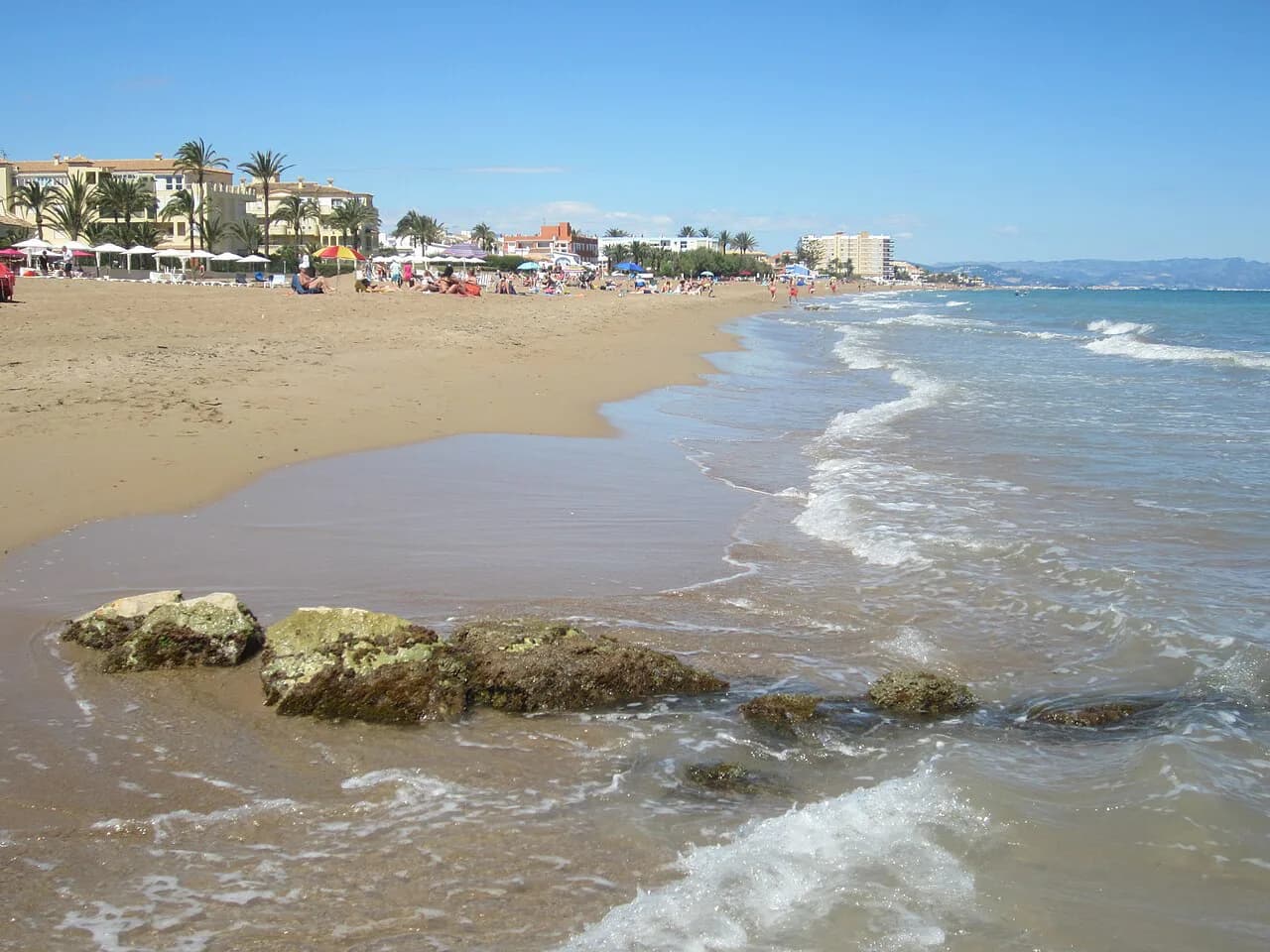
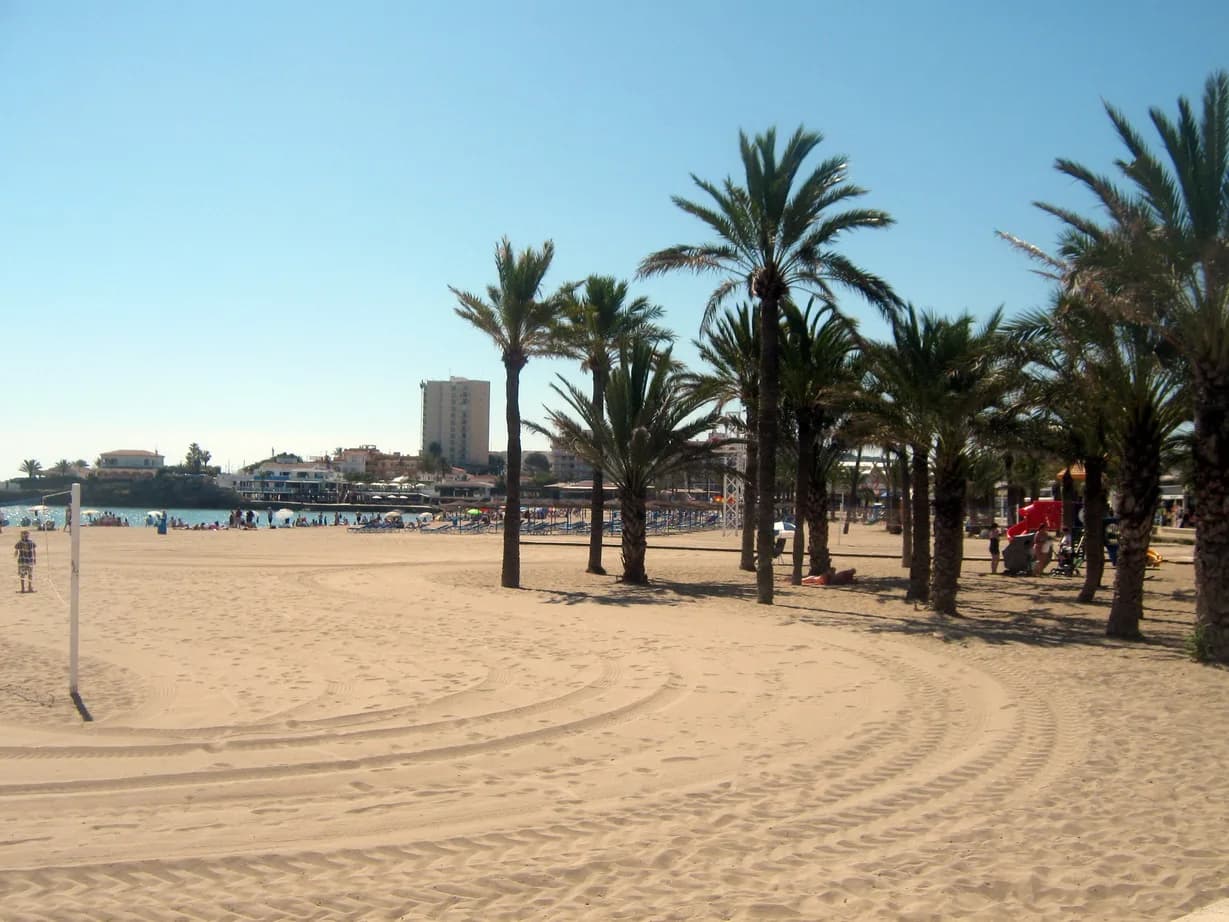
Arenal beach is the one stretch of sand in Javea where everything sits within a few minutes of your towel: a wide horseshoe of soft sand, shallow water at the edge, lifeguards in high season and a promenade of restaurants and bars directly behind. It is the natural choice for families with small children, for older swimmers who want an easy entry into the sea and for anyone who would rather not drive to a cove and walk down steps with a cool bag.
The trade-off is company. Arenal is the busiest beach in town in July and August, and the central stretch fills first. Come early, or settle at the southern end near the assisted bathing area, and plan the day around the promenade rather than treating the beach as a quick stop.
Where Arenal beach sits in the Bay of Javea
Arenal lies in the centre of the Bay of Javea, on the Costa Blanca coast north of Dénia and south of Cap de la Nau. It is an urban beach: the town's main sandy frontage, wrapped around by a seafront promenade, with the beach itself curving in a horseshoe. Estimates of its size vary between published guides, so treat it as roughly half a kilometre of sand, around 480 to 500 metres long, and up to 80 metres deep.
That central position is the point. Unlike the small calas further along the coast, Arenal is built for a long, unhurried day: you can move between sand, shade, a bar and a restaurant without getting back in the car. The bay setting also means the beach faces open water, so the far ends tend to feel a little quieter than the middle.
Getting there
A bus stop and a taxi rank sit just beside the beach, which makes Arenal the easiest Javea beach to reach without a car. A tourist train also serves the area, running daily between about 10:40 and 23:40 according to the published Javea guide; timetables change with the season, so check the current times before you rely on the last run.
By car, parking is along the roads around the beach and in a paid car park on Calle Nancy. In high summer the roadside spaces go early; arriving before mid-morning is the realistic way to get one.
If you are staying in Dénia, Arenal makes an easy half-day trip by road down the coast, and it pairs naturally with the sandier, more residential Les Marines and the rockier Les Rotes. Allow for traffic on the coastal road in August, when the run back in the evening is slower than the morning. If you would rather stay put and compare, the beaches in Murcia around the Costa Cálida and Mar Menor are a useful contrast to this stretch of coast.
The sand and the water
The sand at Arenal is fine and golden, and the beach shelves gently into the sea. That shallow, gradual entry is what makes it work for small children and for anyone who prefers to wade rather than plunge; the water stays waist-deep for a good distance from the shore. Guides describe the water as clear and the setting as family-oriented, but conditions change with weather and swell, so read the flags on the day.
A floating platform offshore gives older children and confident swimmers something to aim for, and there are rental points for kayaks, pedalos, paddleboards and jet skis in summer. A canal at one side of the beach carries boats out to sea, so keep an eye on children near that edge. The swimming season runs from late spring into early autumn, with the sea at its warmest from July to September.
Shelter, shade and how busy it gets
Arenal faces the open bay, so it takes whatever breeze the day brings; on a hot afternoon the promenade side offers the most shade, from buildings, awnings and umbrellas rather than trees. Sunbeds and parasols are available to rent through the season, and the published rental rate is not listed, so ask at the kiosk. Bring your own umbrella if you want shade without hiring.
In July and August the beach can feel full, especially the central stretch nearest the main access points. The southern end, around the assisted bathing area, and the far northern curve tend to be calmer places to spread out. Outside the school holidays, the same sand is far more relaxed, with room to walk and swim without stepping over towels.
Facilities
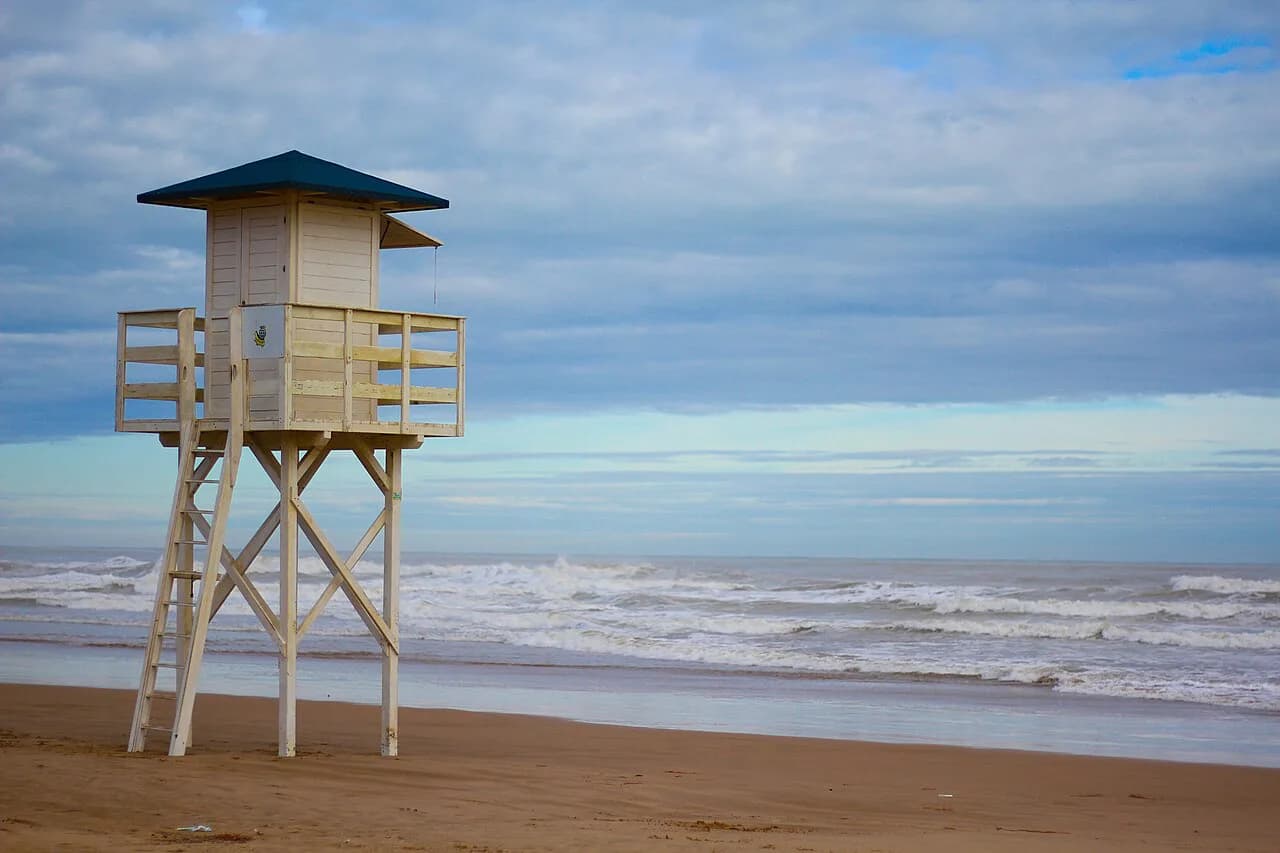
Lifeguards from the Javea Red Cross patrol in high season, with health posts on the beach, and there are assisted bathing facilities at the south end including amphibious chairs for getting into the water. For children, there are five play areas along the sand as well as football goals and handball nets. A foot wash lets you rinse off before walking back through town.
The beach has been awarded the Blue Flag for its services and water quality, as listed in the local beach guide; flags are reassessed each year, so treat it as an indicator rather than a guarantee. Sunbeds and umbrellas are available for hire, and toilets and showers are part of the promenade facilities. Lifeguard cover is seasonal, so swim within the flagged area.
Eating and drinking along the promenade
The seafront promenade behind Arenal is lined with restaurants, bars and cafes, ranging from Spanish breakfast spots and paella houses to cocktail lounges and ice-cream stops. It is the reason Arenal works as a full day rather than a morning: you can eat lunch overlooking the sand and come back for a drink in the evening without moving the car.
Booking is sensible for dinner in July and August, when the promenade fills quickly after the beach empties. For a cheaper, quicker lunch, walk a street or two back from the front, where the menu prices tend to be gentler than on the seafront itself.
Best time to go
The sea is at its most comfortable from July into September, and those are also the busiest months; June and late September give warm water with far more space on the sand. In July and August there is an outdoor cinema on Tuesdays, which makes an evening visit worthwhile if you are staying locally.
For a family day, aim to arrive by mid-morning to claim space and shade, swim before the afternoon heat, and eat late by British standards, as the Spanish do. If you visit in the shoulder months, pack a light layer for the evening and check the sea temperature before committing to a long swim.
Nearby beaches to combine
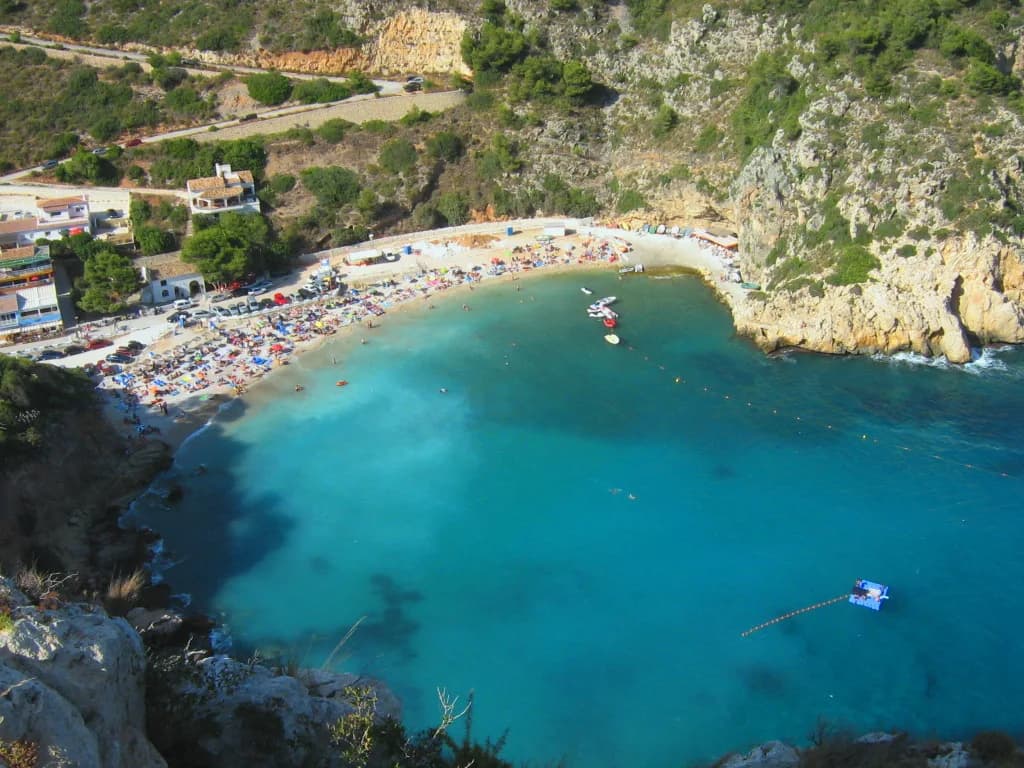
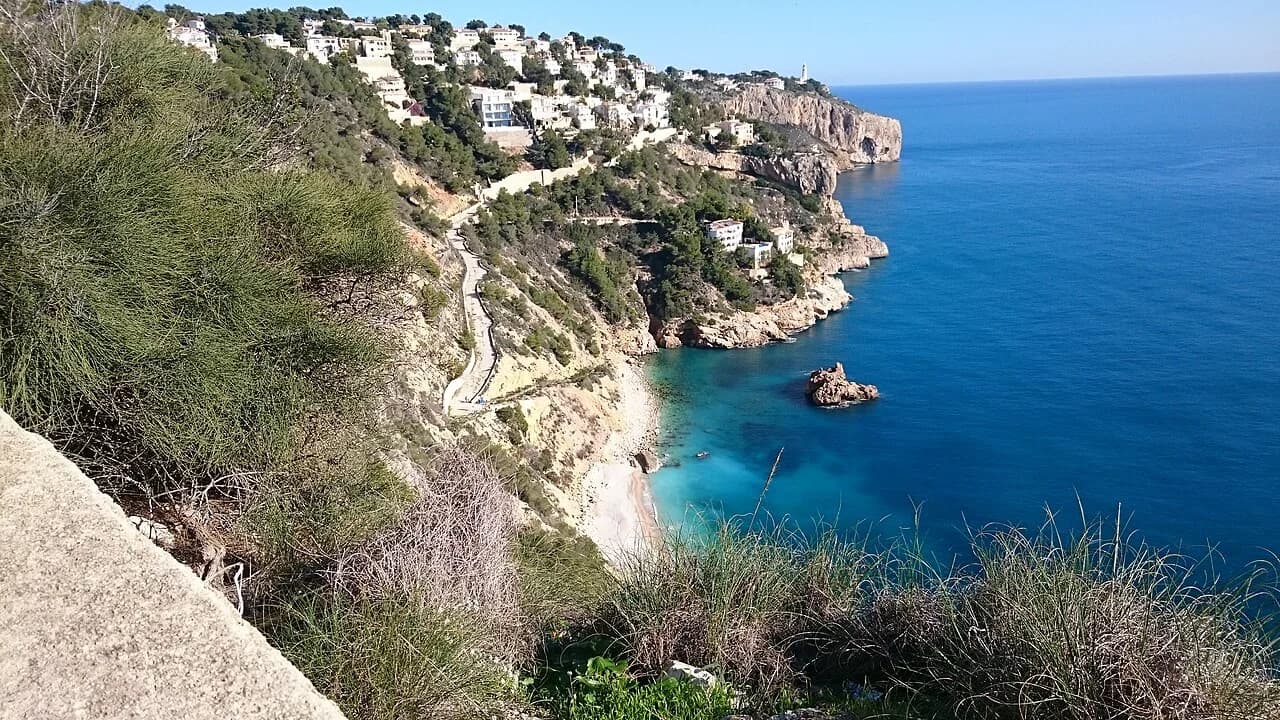
Arenal is the easy option, but the coast around Javea rewards a second stop. Granadella beach, a pebbly cove in a steep bay to the south, is the classic contrast; it is small, so go early or out of season. Cala Portitxol and Cala de La Barraca, further round the headland, offer clear water and a quieter feel.
Cala Blanca Javea, also known as La Caleta, is a smaller sandy cove nearer town, useful for a shorter swim or an evening dip. La Grava, the gravel beach, sits closer to the port. For a full list of options on this stretch, the Jávea Beaches guide sets them out by character and access.
Practical kit and a plan for the day
Bring what the beach does not supply: water, hats, high-factor sun cream, a rash vest for children and a dry bag for phones. Cash is useful for the car park and small kiosks, though most promenade bars take cards. A folding umbrella gives shade without hiring a sunbed.
For a half day, arrive mid-morning, swim before the sun gets strong, eat lunch on the promenade and leave by mid-afternoon. For a full day, add a late-afternoon walk to the far end of the bay and dinner on the front. If you are combining beaches, do Arenal in the morning and Granadella or Portitxol in the afternoon, when the coves empty out.
Water sports and activities for active dogs (and their owners) at Arenal
If you are visiting Dénia with a dog and want to combine beach time with activities, Arenal beach in Javea offers rental points for kayaks, pedalos, jetskis and paddle-surfing, as well as diving, surf, windsurfing, volleyball and football according to Abahana Villas. The beach also has a floating platform that youngsters can enjoy in its clear waters. These are all things to do in the water or on the sand, and while the sources do not state whether dogs are allowed on the beach or in these activities, the range of options means you can plan an active day around the beach.
Arenal beach is 480 metres long, according to JaveaOnline24, and 500 metres in length and 80 in width according to Abahana Villas. It is a Blue Flag beach with lifeguard services and Red Cross volunteers in high season, and there are several children's play areas. The promenade has cafes, bars and restaurants. For dog owners, the sources do not mention specific dog-friendly rules or areas at Arenal, so you should not assume dogs are permitted on the sand or in the water without checking locally.
When planning a visit with a dog, note that during the summer months the beach becomes busier and can seem a little full, as Abahana Villas points out. The beach is in the centre of Xàbia Bay and is known for its fine sand and shallow, calm water, per Tripadvisor. These conditions make it popular with families and older visitors, which may affect how comfortable a dog would be. Since the sources do not provide pet regulations, you should look for signs or ask locally about where dogs are allowed. The beach has disabled access and parking, and a bus stop and taxi rank are just beside the beach, along with a tourist train available every day between 10:40 a.m. and 23:40 p.m., according to JaveaOnline24. These transport options can help you reach the area without a car, but again, dog-friendly policies on public transport are not covered in the sources.
Plan Your Visit
Arenal beach is the straightforward choice in Javea: soft sand, a gentle entry into the sea, lifeguards and assisted bathing in season, and a promenade of bars and restaurants behind you. It is not the quietest beach on the coast, but it is the easiest to build a full day around, especially with children or without a car.
Go early in high summer, use the bus or taxi if you can, and keep a morning free for one of the smaller coves nearby. The Javea tourist office can confirm seasonal services and the current Blue Flag listing before you travel.
Frequently Asked Questions
What is Arenal beach in Javea like?
Arenal is Javea's main sandy beach, a broad horseshoe in the centre of the bay with fine sand and a gentle slope into shallow water. Behind the sand is a promenade of restaurants, bars and cafes, along with play areas, lifeguard posts in high season and assisted bathing facilities at the south end.
How do you get to Arenal beach in Javea?
A bus stop and taxi rank sit beside the beach, and a tourist train serves the area on a daily timetable published locally. By car, parking runs along nearby roads and there is a paid car park on Calle Nancy; the rate is shown at the car park. In summer, arrive early for a space.
Is Arenal beach good for families with small children?
Yes. The sand shelves gently, so children can paddle in shallow water, and there are five play areas, football goals and handball nets along the beach. Lifeguards from the Javea Red Cross patrol in high season, and amphibious chairs at the south end help bathers with limited mobility. Read the flags on the day.
When is the best time to visit Arenal beach?
July to September gives the warmest sea but the biggest crowds. June and late September offer warm water with more room on the sand. In July and August there is an outdoor cinema on Tuesdays, which makes an evening visit worthwhile.
Which nearby beaches can you combine with Arenal?
Granadella beach, Cala Portitxol, Cala de La Barraca and Cala Blanca are all within a short drive. Granadella is a small pebbly cove that fills early in summer, so pair Arenal in the morning with a cove in the afternoon, or save Arenal for a full day and explore the coves another time.
Sources
Beach notes for your next trip
Optional updates when we add or revise beach guides.
You might also like
Continue reading
More guides you'll find useful