Moraira Beaches: L'Ampolla, El Portet and the Coves Nearby
A practical guide to Moraira's beaches, from family-friendly L'Ampolla beside the castle to sheltered El Portet and the smaller coves nearby.
On this page
Moraira's appeal for a beach day is that you can choose your water without travelling far. L'Ampolla puts golden sand, a playground and the castle on the doorstep of the town centre, while El Portet trades that convenience for a sheltered bay beneath Cap d'Or that is the better bet for swimming and paddleboarding.
Families with small children tend to gravitate to the two sandy town beaches, while snorkellers and anyone wanting a quieter morning head for the bay or the coves along the Benissa Costa. Everything below is arranged so you can match a beach to the kind of day you have in mind.
What makes Moraira's beaches worth the trip
Moraira sits on the Marina Alta stretch of the Costa Blanca, a compact resort where beaches, the castle, the marina and the restaurant terraces all sit within walking distance of each other. That density is the real draw: you can swim before lunch, walk into town and come back to the water without moving the car.
The three main options each have a distinct character. L'Ampolla is the largest and busiest, the central sandy beach beside Moraira Castle. El Portet is a sheltered bay popular for swimming, snorkelling, kayaking and paddleboarding. Les Platgetes is really two smaller beaches joined by a promenade, a good compromise if you want to stay near town but avoid the crowds of the main beach.
Playa de l'Ampolla: the central sandy beach
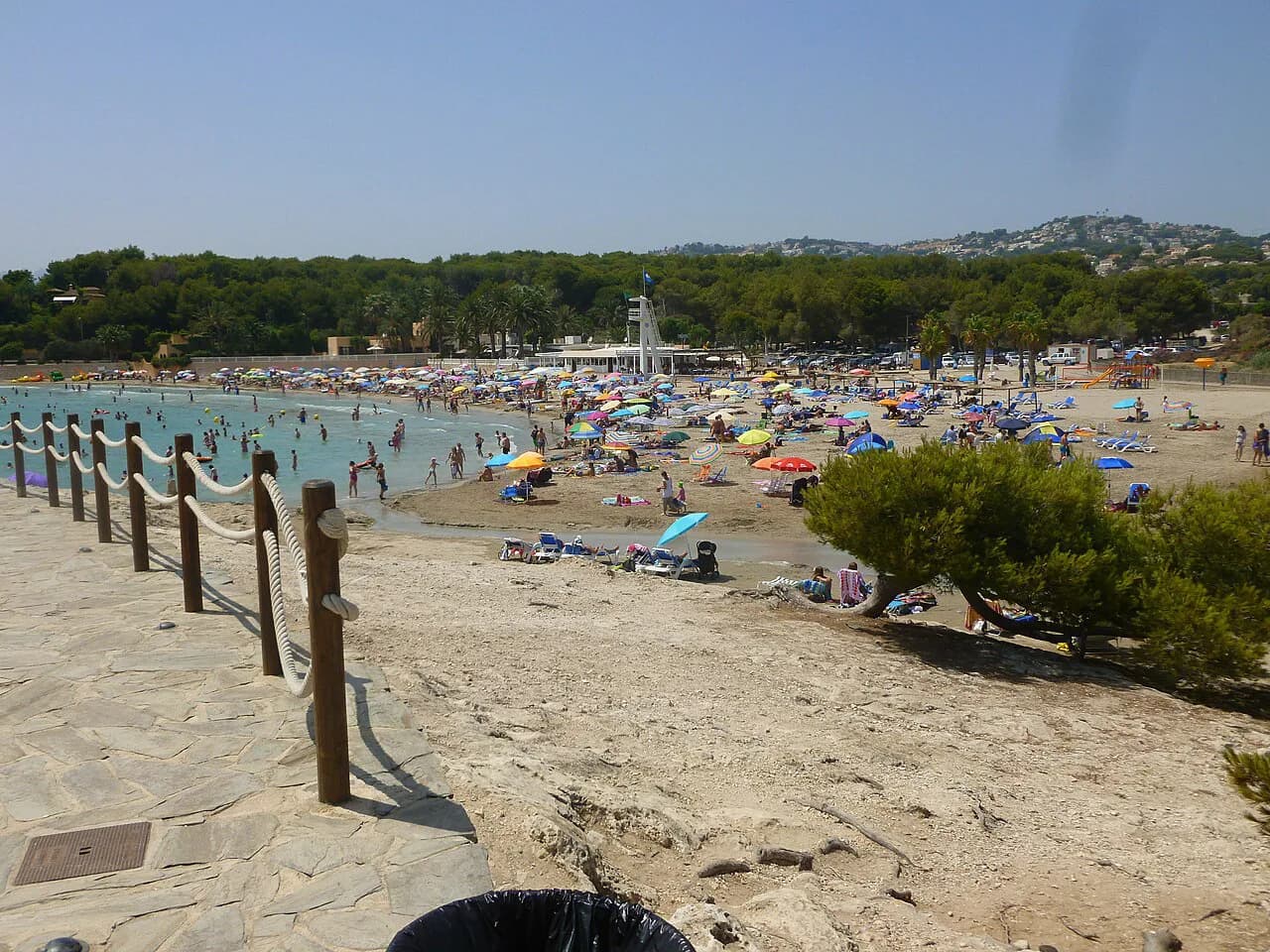
Playa de l'Ampolla, often shortened to L'Ampolla, is Moraira's main beach and sits immediately beside the town centre and the castle. It is the obvious choice if you are staying in town or want a day that mixes sand with shops, cafés and a wander along the waterfront.
The beach carries Blue Flag status, which the town's beach listings reflect. It faces the open bay rather than a deep cove, so it feels broader and more exposed than El Portet, with the castle anchoring one end and the marina a short walk away.
The sand and the water at L'Ampolla
L'Ampolla is a golden-sand beach with a gentle slope into the water, which is why it draws families rather than swimmers looking for depth close to shore. The sand is the main event here: it is the beach where you can spread a towel, build castles and let children paddle without committing to a full excursion.
Because it is the town's flagship beach, expect it to be the busiest of the three in July and August and noticeably calmer in spring and autumn. If you want room around your towel, aim for the earlier part of the morning; if you want shade and a shorter walk with beach gear, the parking area beside the beach has some shaded spots.
Facilities and lifeguards at L'Ampolla
Facilities at L'Ampolla are the most complete of Moraira's beaches: foot showers, toilets and a children's playground sit alongside the sand, and paddleboards and kayaks can be rented there. Beach bars and restaurants are within a short walk, so you can eat without leaving the seafront.
Red Cross lifeguards are on duty during the high season, which in practice means the busiest summer weeks rather than the whole year. Outside that window, treat the beach as you would any unpatrolled stretch of coast and make your own judgement about conditions before children go in.
Getting to L'Ampolla
By car from Alicante, take the AP-7 in the direction of Valencia and leave at the Teulada-Moraira exit, then follow signs for Moraira and, as you reach town, for Playa de l'Ampolla. The beach is central, so once you are in Moraira the signage does most of the work for you.
Parking beside L'Ampolla is generally free, including some shaded spaces, but the main car park fills quickly in peak season, so arriving early is the practical move. Street parking and other town car parks are the fallback, with a short walk back to the sand.
Without a car, the usual route is a bus or train to Teulada, the nearest town with a railway station, followed by a local bus or taxi for the last leg into Moraira. Local services within the town are not especially frequent, so it pays to plan the return journey before you settle on the beach.
El Portet: the sheltered bay beneath Cap d'Or
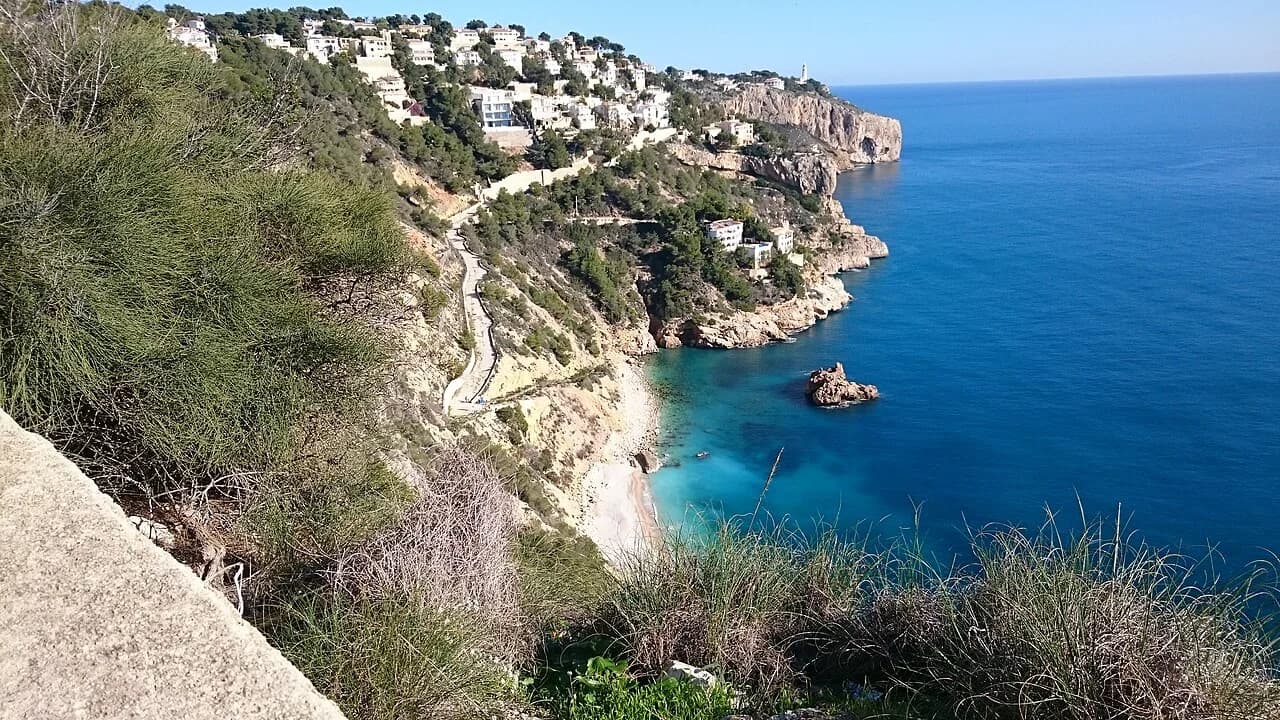
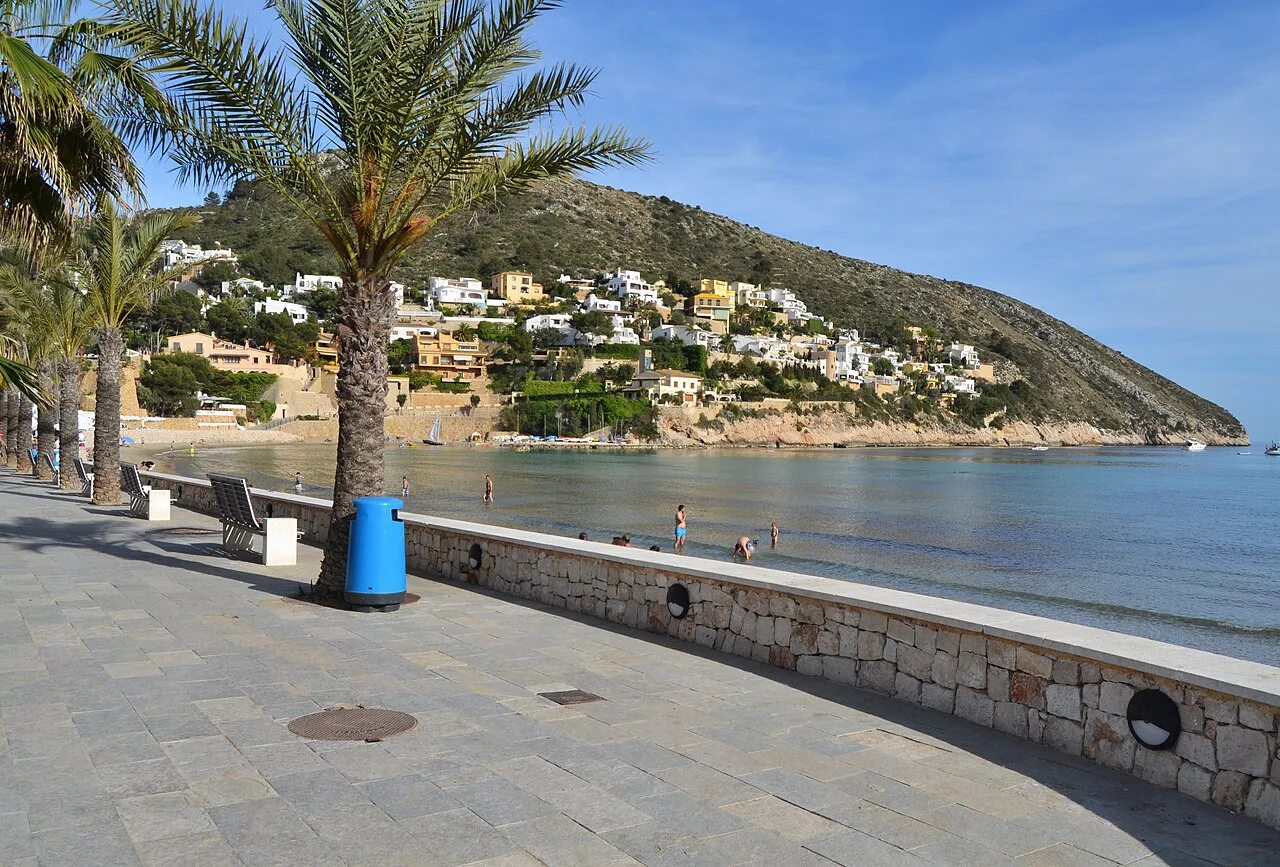
El Portet is the bay beneath Cap d'Or on the southern edge of Moraira, and it is the beach most people picture when they think of the town at its best. The shelter of the headland makes it the natural choice for a day built around being in the water rather than beside it, and it is popular for swimming, snorkelling, kayaking and paddleboarding.
The trade-off is scale: the bay is smaller and prettier than L'Ampolla, and it fills up correspondingly quickly in summer. Arriving early in the morning gives you the bay at its quietest and leaves the rest of the day free for lunch on one of the terraces that sit directly beside the water.
Swimming and watersports at El Portet
El Portet's position makes it the better base for watersports of the two main beaches, and kayak and paddleboard trips can be booked to explore the coastline from the water. Snorkellers also gravitate here, since the bay is framed by rock rather than sand alone.
Pick your activity to suit the group: paddleboarding is straightforward in the bay, while kayaking gets you to coves and stretches of coast that are awkward to reach from land. Check conditions on the day before committing, and match the activity to swimming ability rather than enthusiasm.
Where to eat at El Portet
Several restaurants sit directly beside El Portet, which makes it easy to combine a morning in the water with a long lunch overlooking the bay. That is part of the appeal for anyone who would rather not pack up and drive between the beach and a meal.
Spring and early autumn are the sweet spot for the bay: mild weather, fewer people on the sand and a better chance of a table without a wait. July and August bring the crowds, so book or arrive early if lunch beside the water is the point of the day.
Les Platgetes: two small beaches and a promenade
Les Platgetes is a pair of smaller beaches connected by a promenade, a short distance from L'Ampolla but a step down in scale and bustle. It suits anyone staying near town who wants somewhere smaller than the main beach without giving up easy access.
Think of it as the compromise option: you keep the convenience of the town and the choice of cafés nearby, but you are not competing for space on the busiest stretch of sand. It works well for a shorter swim and a walk along the front rather than a full day of beach gear.
Coves beyond the town: the Benissa Costa
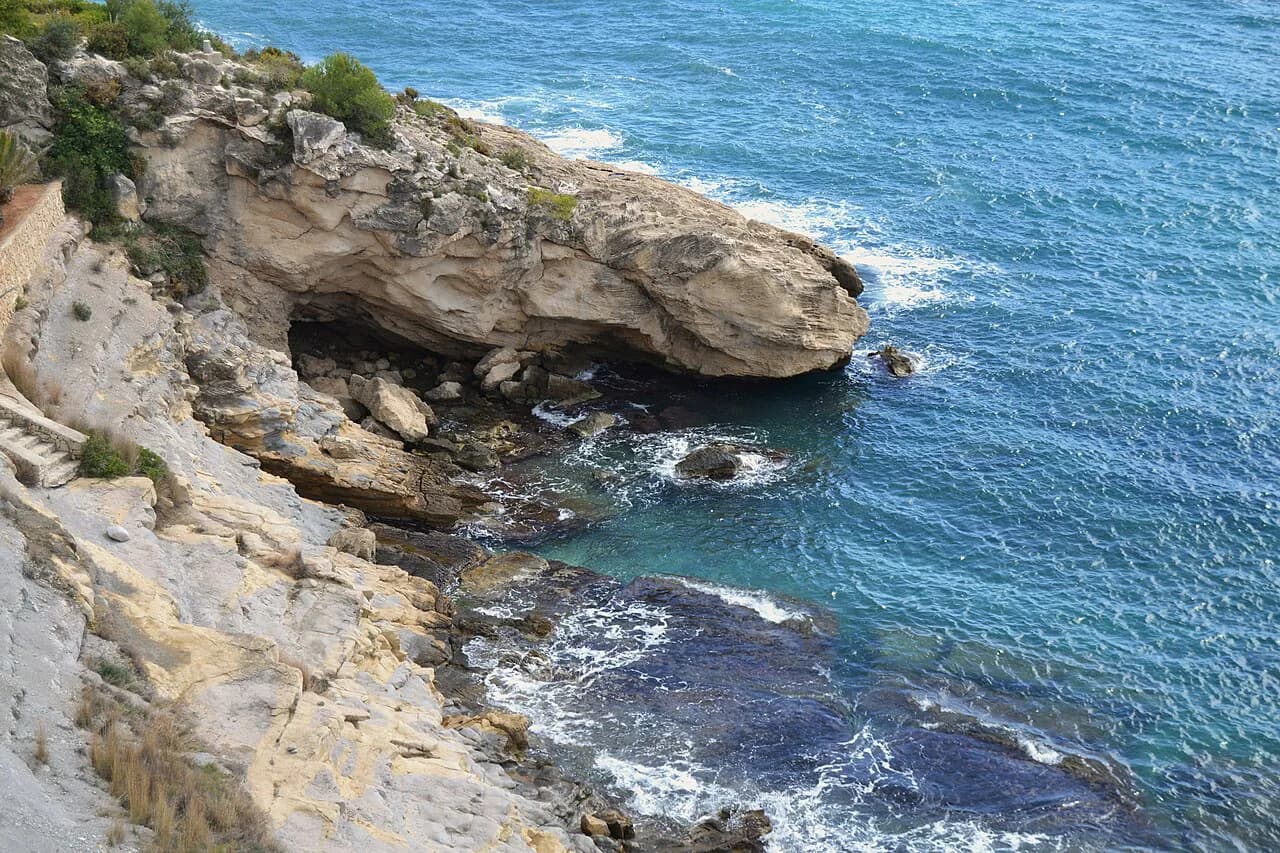
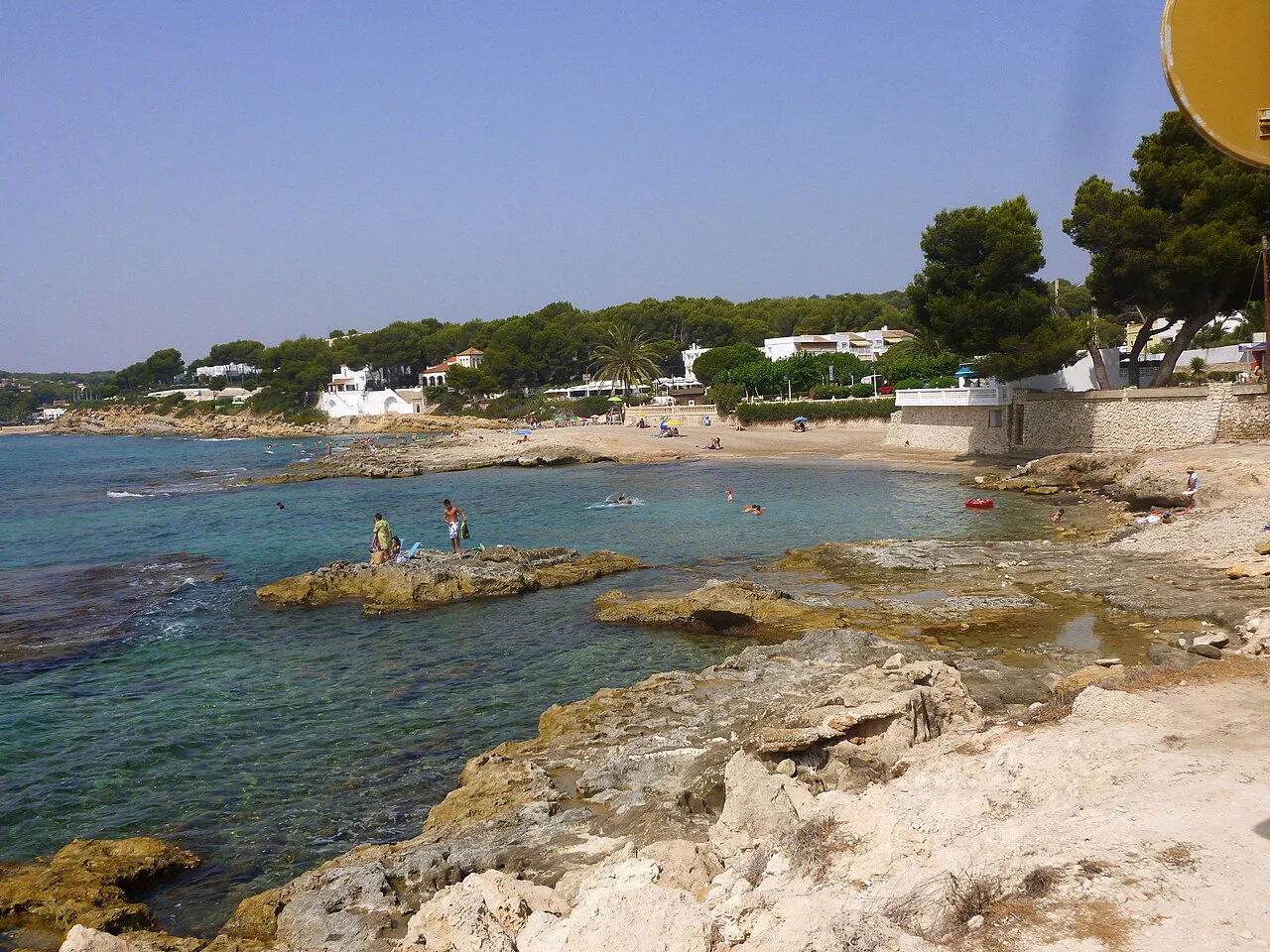
Just outside Moraira, along the Benissa Costa towards Calpe, the coastline turns into a series of smaller coves including Cala Baladrar and Cala Advocat. These are rockier and less developed than the town beaches, and they reward anyone willing to trade facilities for clearer, quieter water.
For families with young children, the town beaches remain the more practical choice because of the sand and the easier access. Keep the coves for older swimmers and snorkellers who are comfortable getting in and out over rock.
The Cap d'Or walk from El Portet
The walk to the Torre del Cap d'Or starts near El Portet and follows the official SL-CV 51 route, roughly 1.5 kilometres there and back and taking about an hour. The 16th-century watchtower was part of the coastal warning system, and from the top you get views back over the bay, the town and the surrounding coastline.
The distance is short but the final section is rocky and climbs steeply, so wear proper footwear rather than flip-flops. In summer, go early in the morning or later in the afternoon and avoid the hottest part of the day.
How to choose your beach
For families with small children, L'Ampolla is the straightforward pick: sand, a playground, showers and toilets, and the town centre a short walk away. For swimmers, snorkellers and anyone wanting a day of kayaking or paddleboarding, El Portet's sheltered bay is the better fit.
Quiet-seekers should look at Les Platgetes for a smaller, closer alternative, or head out to the Benissa coves for rockier water with fewer people. If you are combining Moraira with a wider Costa Blanca trip, the beaches around Dénia and Jávea make a natural extension, with Les Marines and Les Rotes offering long sandy and rocky stretches respectively.
Best time to go
Spring and early autumn are the most comfortable months for a beach day in Moraira, with milder weather and far fewer people than the July and August peak. The sea is at its warmest late in the summer, so swimmers who feel the cold may prefer early September to June.
Outside summer, Moraira stays open rather than shutting down: restaurants, shops and cafés generally remain trading, and walking, cycling and sightseeing become more appealing as temperatures ease. That makes spring and autumn good value if you want the beach without the crush.
Nearby beaches to combine
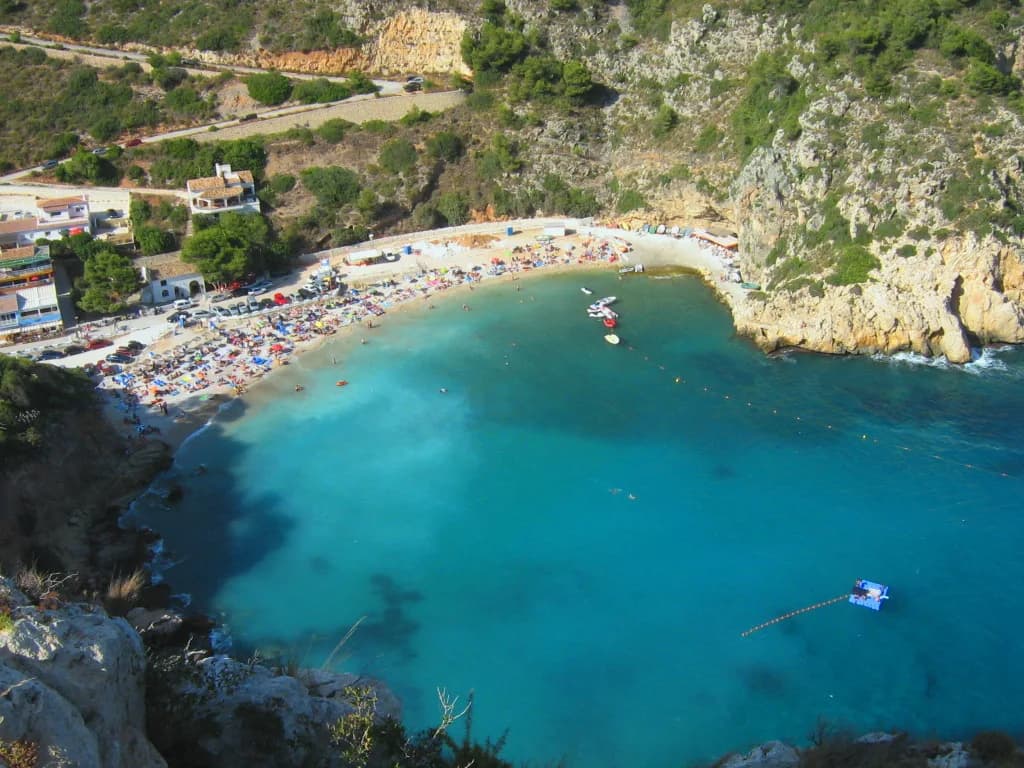
Cala Moraig, further along the coast towards Benitachell, is a pebble cove beneath limestone cliffs with the Cova dels Arcs sea cave at its edge, and it rewards a half-day trip for the scenery alone. Cala Granadella, near Jávea, is a pine-backed cove with kayak and paddleboard excursions that can be booked ahead.
If you are touring the area, it is worth pairing a Moraira beach day with the coves around Jávea, where Granadella beach and the busier Playa del Arenal offer very different days out. Both are reachable as day trips from Moraira and give you a reason to keep the car for a second beach day.
Practicalities for a beach day
Take shade with you, especially at El Portet and the coves where natural shade is limited, and bring water and reef-safe sun protection for a full day. At L'Ampolla the beachside car park has some shaded spots, which matters on hot days if you are carrying gear for children.
Moraira's Friday market runs at Parking Les Sorts from 09:00 until 14:00, and the car park cannot be used normally while it is on. Plan parking around it if your beach day falls on a Friday, and note that the earlier part of the morning is the more pleasant time to walk the stalls.
For watersports, choose according to age, swimming ability and the conditions on the day rather than booking the most ambitious option available. Sea conditions change, so check with the school or activity provider before you set out and keep an alternative beach in mind if the wind picks up.
Where to base yourself
Staying in Moraira town puts L'Ampolla, the castle, the marina and Les Platgetes within walking distance, which removes the parking question entirely on busy days. If the water is the priority, a base near El Portet gives you the bay at its quietest in the early morning.
For a wider trip, Dénia and Jávea are both within easy reach and give you a different coastline to explore on a changeable day. The Denia beaches guide covers the long sandy runs and rocky coves to the north, useful if you plan to split your stay between the two areas. If you are weighing up which stretch of coast suits you better, compare the best beaches in Alicante for a broader range of sandy town beaches and sheltered bays.
Plan Your Beach Day
Moraira works best when you match the beach to the day rather than trying to do all three: L'Ampolla for sand and family logistics, El Portet for swimming, paddling and lunch by the water, and Les Platgetes or the Benissa coves when you want fewer people.
Arrive early for the beachside car park at L'Ampolla in peak season, walk the Cap d'Or route in the cooler hours, and plan around the Friday market if your visit coincides with it.
Frequently Asked Questions
What is the nicest beach in Moraira?
El Portet is the most striking bay, sheltered beneath Cap d'Or and popular for swimming, snorkelling and paddleboarding. L'Ampolla is the better all-rounder for families because of its sand, playground, showers and central location beside the castle.
Is Moraira good for families with young children?
Yes. L'Ampolla and El Portet are the practical choices, with sand, easy access and facilities close by. The rockier coves along the Benissa Costa suit older swimmers better than small children.
Can you get to Moraira's beaches without a car?
The usual route is a bus or train to Teulada, then a local bus or taxi for the final leg into Moraira. Local services are not especially frequent, so plan your return journey before you settle on the sand.
Which Moraira beach is best for snorkelling?
El Portet is the better base, since the bay is framed by rock and is used for snorkelling as well as kayaking and paddleboarding. Conditions vary day to day, so check before you go in.
Where do you park for Playa de l'Ampolla?
There is a large car park beside the beach with some shaded spaces, and parking in the area is generally free. It fills quickly in peak season, so arrive early and use town street parking as a fallback.
When is the best time to visit Moraira's beaches?
Spring and early autumn bring milder weather and far fewer people than July and August. The sea is warmest late in the summer, which suits swimmers who prefer warmer water.
Which beaches near Moraira are worth a day trip?
Cala Moraig near Benitachell, with its pebble cove and the Cova dels Arcs, and Cala Granadella near Jávea are both worth the drive. The coves around Jávea add a different coastline to a Moraira-based trip.
Sources
Beach notes for your next trip
Optional updates when we add or revise beach guides.
You might also like
Continue reading
More guides you'll find useful