Costa Dorada Beaches Guide: Tarragona to the Ebro Delta
Pick the right Costa Dorada beach for your day out, from Tarragona's calm coves to the wide sands at Coma-ruga and the wild Ebro Delta.
On this page
The Costa Dorada rewards travellers who pick a beach for the day it delivers rather than for its position on a list. Within roughly an hour's drive you can move from cliff-backed coves near Tarragona to broad, gently shelving family sands at Coma-ruga, then on to the dunes and open-sea sandbars of the Ebro Delta. That variety is what makes a beach-focused trip here work: you can match the sand to the group, the wind and the time you have.
Use this guide to sort the coast by trip type. Families with small children will find the shallowest entries in the north, swimmers and walkers get longer strands and pine-backed paths, and quiet-seekers can push south into the delta. Each entry covers access, the character of the sand and water, published facilities and the beaches worth pairing with it.
How the coast changes from north to south
The northern stretch, from Cunit and Calafell through Torredembarra and El Vendrell, is the family belt: long, urban beaches with promenades behind them and gentle slopes into the water. Around Tarragona and Salou the coast becomes more varied, with small cliff-backed coves sitting between bigger resort beaches and the PortAventura theme park. South of l'Hospitalet de l'Infant the built-up strip thins out, and the Ebro Delta takes over with dunes, lagoons and sandbars.
That geography should shape your base. Staying in Tarragona or Altafulla puts the coves and the northern family beaches within easy reach, while a base around l'Ametlla de Mar or l'Ampolla shortens the run to the delta. If you want resort facilities and watersports on the doorstep, the Salou beaches are the practical choice, with Ponent sitting minutes from the yacht club and a promenade full of restaurants behind it. If instead you are weighing a base on the next stretch of coast north, compare the beaches in Sitges before committing.
How to choose: families, swimmers, walkers and quiet-seekers
For small children, prioritise beaches where the entry stays shallow: Capellans near Tarragona, Waikiki between Altafulla and Tarragona, La Paella at Torredembarra and the northern end of Arenal at l'Hospitalet de l'Infant all fit that brief. Swimmers who like a longer stroke should look at the bigger strands such as Coma-ruga and Tamarit, where there is room to spread out. Walkers get the best of the delta, where beach days combine with trails through dunes and wetlands.
Quiet-seekers should trade facilities for space. Waikiki sits away from the crowded centres and backs onto the Marquesa pine forest, while Fangar and Trabucador in the delta feel like a different coast altogether. The trade-off is real: fewer bars and restaurants, more planning around shade, water and the drive back.
Platja dels Capellans, Tarragona: cliffs and the gentlest entry near PortAventura
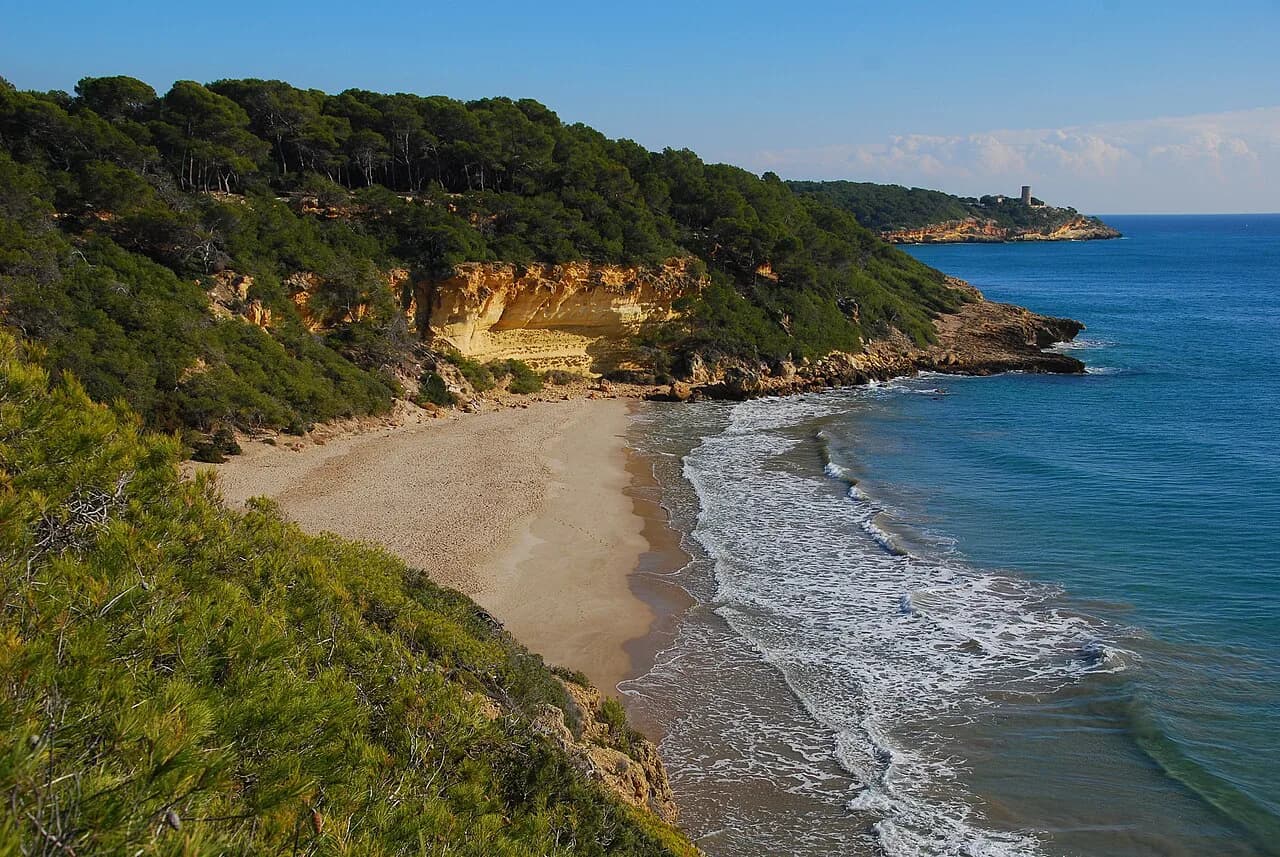
Capellans sits between Tarragona and Salou, close to PortAventura World, and is framed by natural cliffs on both sides. The sand is very fine and the entry into the sea has little slope, which makes it a strong pick for children and for people with reduced mobility who want an easy swim. The beach is about 200 metres long, so it feels intimate rather than sprawling.
Facilities are good for a beach of this size: showers, accessible access, toilets, sun lounger and kayak rental, a beach bar and restaurants close by. Because it is small and close to a major theme park, arrive early in peak season if you want space near the water. Pair it with a half-day at PortAventura or with the wider choice of beaches around Tarragona.
Waikiki beach between Altafulla and Tarragona: shallow water and pine shade
Waikiki lies between Altafulla and Tarragona and stands out for very fine sand and water that stays shallow a long way out, which lets children swim with confidence. It is well known but sits away from the busiest built-up stretches, so it feels calmer than the resort beaches. Behind the sand, the Marquesa pine forest gives you shade for a picnic and a break from the midday sun.
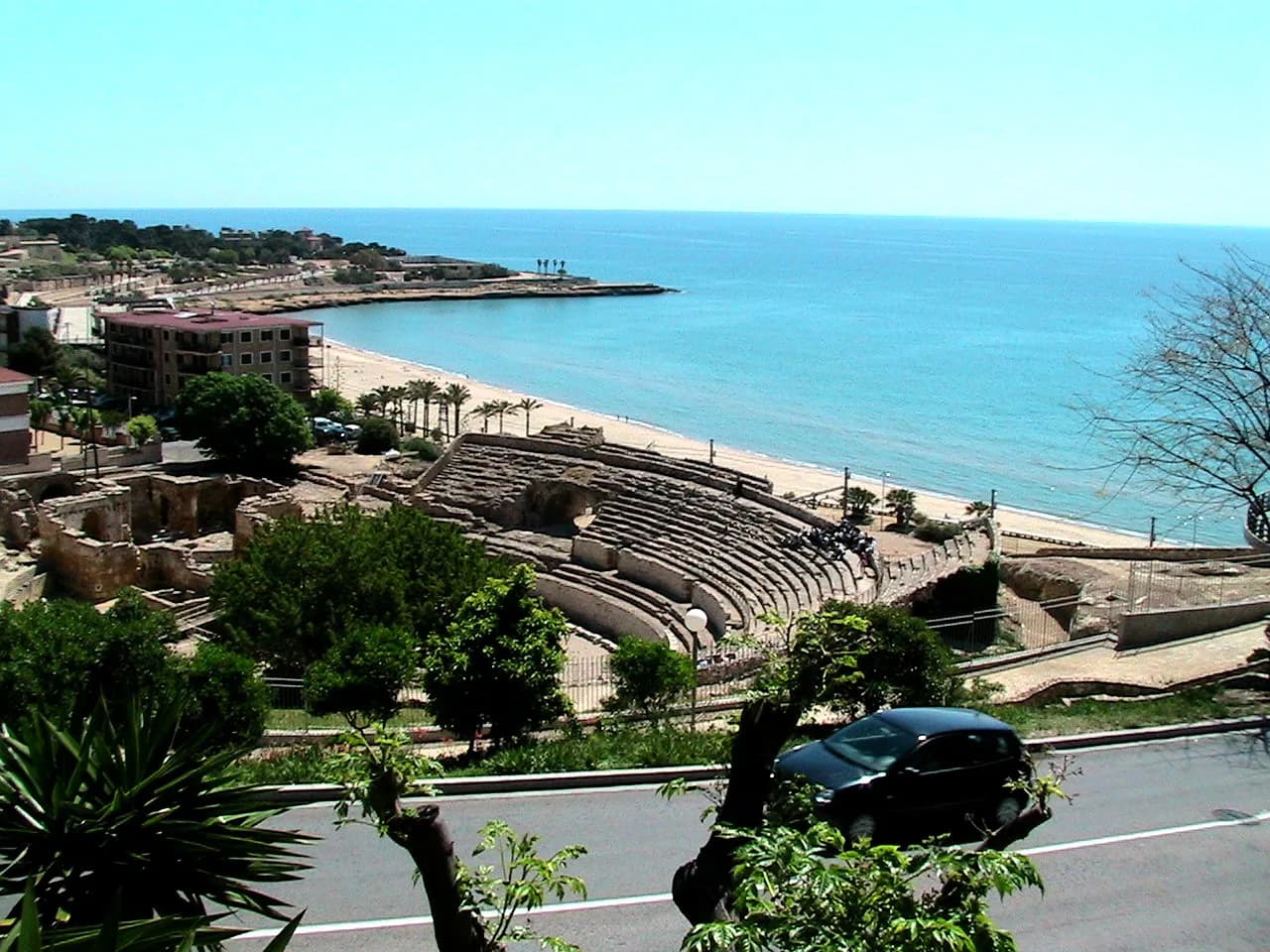
This is a beach to combine with a morning in Altafulla's old town or an afternoon exploring Tarragona's Roman remains. Bring your own shade and water if you plan to stay through the hottest hours, since the pines are the main shelter. It suits families and anyone who wants a natural setting without driving all the way to the delta.
Tamarit beach, Altafulla: a long strand below the castle
Tamarit beach belongs to the municipality of Altafulla and runs for about 1,750 metres below an 11th-century castle ringed by a 14th-century wall. The water is described as totally transparent, and in summer the sea temperature sits around 25 °C, which makes it one of the most comfortable swims on this stretch. The length means you can walk away from the busiest section near the castle.
The castle end is the obvious draw and gets busy first; head further along the sand for more room. Combine Tamarit with Waikiki and the Tarragona coves for a day that mixes history with swimming. Altafulla itself is a good base for this part of the coast.
Coma-ruga beach, El Vendrell: 2.3 km of Blue Flag sand
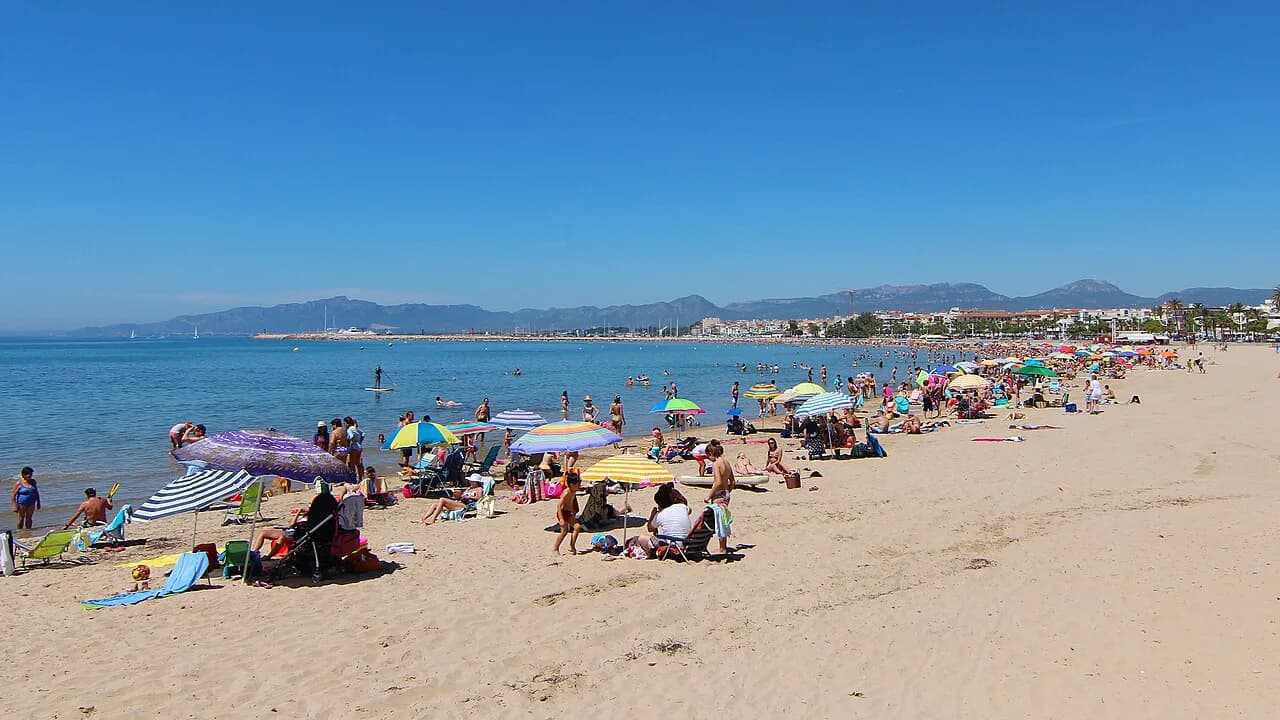
Coma-ruga is a long, wide beach, measuring 2.3 kilometres in length and more than 100 metres across, which means there is almost always room to lay out a towel in peace. It holds the Blue Flag, a label the source ties to well-equipped services and high water quality. Thermal waters spring up near the beach, and the area carries a thermal destination certification as a result.
For families, the width is the real advantage: you can set up away from the main access points and still be close to the promenade. It pairs naturally with La Paella at Torredembarra and the long beaches at Calafell and Cunit. Plan a full day here rather than a quick dip.
La Paella beach, Torredembarra: broad shallow flats and a promenade behind
La Paella is the largest beach in Torredembarra, almost a hundred metres wide, with fine sand and shallow, very flat water that suits children. A play area sits on the sand, and the promenade behind is a broad avenue where you can cycle, with plenty of restaurants along it. That combination makes it an easy family day without a long walk to the water.
Because the promenade runs right behind the beach, you can split the day between sand and a bike ride, and pick up lunch without moving the car. Pair it with Coma-ruga for a second beach day on the same stretch of coast. It is one of the most straightforward family beaches on the northern Costa Dorada.
Cunit and Calafell: long, gently sloping family beaches
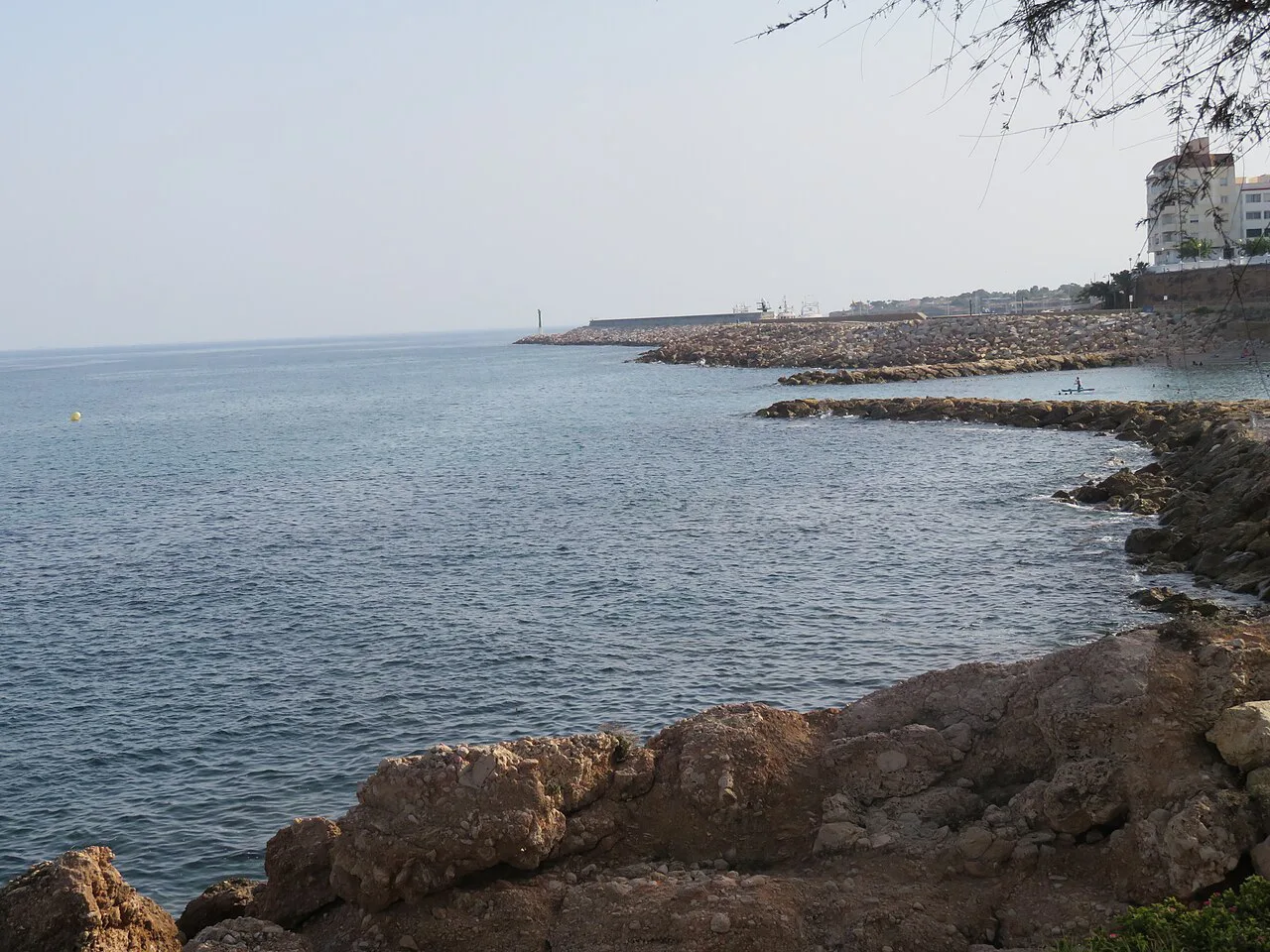
Cunit beach runs for roughly 2,450 metres at about 40 metres wide, with golden sand and moderate waves, and has again received the Blue Flag award from the European Foundation for Environmental Education. It is an urban beach with toilets, showers, lifeguard and rescue equipment, parking, sun lounger rental, water sports, a yacht club, bars and beach bars. That mix makes it a good all-rounder for families who want services close at hand.
Calafell, known locally as the biberó beach for the quality of its golden sand, stretches more than four kilometres and slopes gently into the water. Several beach bars, children's clubs and playgrounds sit along it. Both beaches work well as a base for the northern coast, with Torredembarra and El Vendrell a short drive away.
Ponent beach, Salou: facilities and watersports by the yacht club
Ponent sits very close to the Salou yacht club and is the beach to pick if you are travelling as a group and want amenities on the doorstep. It offers a wide range of facilities and water activities for all ages, and the Salou promenade behind it is packed with dining options for every budget. After a day on the sand, the promenade walk is the natural way to end the afternoon.
Salou's beaches are the busiest on this coast in high summer, so treat Ponent as a base-adjacent beach rather than a hidden one. If you want a smaller, cliff-backed alternative nearby, Capellans is a short drive away. Otherwise, settle in and use the watersports and restaurants as the day's structure.
Arenal beach, l'Hospitalet de l'Infant: two beaches in one
Arenal is the best known beach at l'Hospitalet de l'Infant and runs almost two kilometres, with easy access from the promenade and transparent, very shallow water. It splits into two distinct sections: the northern end, next to the port and reached easily from the seafront, is broad and family-friendly, while the southern end is a natural beach backed by white pine forest, dunes and a reed wetland. Treat them as two different beaches and choose according to the day you want.
During summer the beach offers a daycare service and organises children's activities, which frees adults for paddle surfing, kayaking or windsurfing on the shallow water. Aim for the port side if you want facilities close by, and the dune-backed southern stretch if you want privacy and shade. It pairs well with Cristal beach at Miami Platja further south.
Cristal beach, Miami Platja: white sand, loungers and playgrounds
Cristal beach covers about 1,700 metres at the southern end of Miami Platja, with fine white sand and a promenade close behind. It has sun loungers and parasols for rent, toilets, a nursery, showers, lifeguard posts and several playgrounds, making it one of the most family-ready beaches on this stretch. The setting is more resort than wild, but the facilities are comprehensive.
Use it as a comfortable base day when you want shade, a playground and a lifeguard post within a short walk. Pair it with Arenal for a contrast between a serviced resort beach and a dune-backed natural one. Both sit close to the AP-7 and the coastal road, so a car makes combining them easy.
Cap Roig beach, El Perelló: a pine-and-cliff cove near l'Ampolla
Cap Roig is a small cove of about 190 metres, surrounded by pine trees and cliffs and roughly two kilometres from l'Ampolla de Mar. Its water is calm and shallow, which makes it a regular destination for families. Facilities include a lifeguard, showers and hammock rental, and the l'Ampolla Nautical Club hires windsurfing equipment, canoes and jet skis nearby.
The cove's size means it fills early in peak season, so plan to arrive in the morning or use it as an afternoon stop after the delta. It works well in combination with Sant Jordi Cove at l'Ametlla de Mar, which has showers, toilets, children's areas and a pine forest for shade.
Fangar and Trabucador in the Ebro Delta: dunes and open-sea sandbars
Fangar beach sits on the Fangar peninsula, a 410-hectare spit with a semi-desert feel, well-preserved dunes and natural sands. The Fangar lighthouse, known as La Faroleta, is the one point of shade in the area, so bring an umbrella if you plan a full beach day. It is a place for walking and swimming in a protected landscape rather than for a resort-style afternoon.
Trabucador is a long sandbar that divides the open Mediterranean from the Bay of Alfacs, where the water is so shallow you can walk hundreds of metres out without it covering you. That makes it excellent for kitesurfing, windsurfing and paddle surfing, and the sunsets are the reason many people drive out here. Bring shade, food and water, because this is a wild landscape without a promenade behind it.
Getting around without a car
A car makes the Costa Dorada far more flexible, especially for the delta and the smaller coves, where public transport is thin. The AP-7 and the N-340 run the length of the coast and link the main towns, while local bus and train services connect Tarragona, Salou, Cambrils and l'Hospitalet de l'Infant. For delta beaches such as Fangar and Trabucador, plan on driving.
If you are relying on public transport, base yourself in a larger town and pick two or three beaches rather than trying to cover the whole coast. Tarragona and Salou have the best onward connections, and the northern family beaches at Torredembarra and Coma-ruga are close enough to combine. Check operator timetables for the routes you need, since services vary by season.
When to go: sea temperatures and the August peak
In summer the sea temperature on this coast sits around 25 °C, according to the source describing Tamarit, which makes July and August the most comfortable months for long swims. August is the busiest period, when Spanish holidaymakers join international visitors and the popular beaches and promenades fill up. June and September give you warm water with noticeably more room on the sand.
Outside high summer, beaches remain walkable and the delta is at its best for birdlife and quiet. Water can still be cool in spring and autumn, so plan around shorter swims and longer walks. If you want the facilities at their fullest, aim for the peak season and accept the crowds.
Nearby beaches to pair with each base
From Tarragona, pair Capellans and Waikiki with the city's own beaches, and use Altafulla for Tamarit. From Salou, Ponent and Capellans are minutes apart, and Cambrils beaches such as La Llosa are a short drive down the coast for a quieter evening swim.
From l'Hospitalet de l'Infant, combine Arenal with Cristal at Miami Platja, then push south to Cap Roig and Sant Jordi Cove. For a resort-style day with easy parking, La Pineda beach near Salou is another option on the same stretch.
Practicalities: sunbeds, beach bars, lifeguards and what to bring
Facilities vary widely along this coast. Cunit, Capellans, Cristal and Cap Roig list lifeguards, and Cunit, Capellans, Cristal, Cap Roig and Coma-ruga list loungers or sunbed rental. Coma-ruga and Cunit hold the Blue Flag, while beaches such as Waikiki and the delta sandbars offer little beyond the sand and the sea. Pack an umbrella, water and food for those, and rely on the promenade towns for everything else.
Beach bars and restaurants cluster around the resort beaches, with Salou, Torredembarra and l'Hospitalet de l'Infant offering the widest choice. Bring reef-safe sunscreen, a hat and plenty of water for the delta, where shade is scarce. A light windbreak helps on the open sandbars.
Where to Stay for the Beach You Actually Want
Choose your base by the beach you want most. Tarragona and Altafulla suit travellers who want coves, history and easy access to the northern family beaches. Salou and l'Hospitalet de l'Infant suit families who want facilities, watersports and a promenade within walking distance.
For the delta, base yourself around l'Ametlla de Mar, l'Ampolla or Sant Carles de la Ràpita and treat Fangar and Trabucador as full-day outings with your own shade, food and water. Whichever base you pick, plan two or three beaches rather than a tour of the whole coast, and the Costa Dorada will deliver exactly the day you came for.
Frequently Asked Questions
What are the best beaches on the Costa Dorada?
It depends on the day you want. Capellans, Waikiki, La Paella and the northern end of Arenal offer shallow entries for families. Coma-ruga and Tamarit give you long strands with room to spread out. Fangar and Trabucador in the Ebro Delta deliver wild dunes and sandbars for walkers and quiet-seekers.
Which Costa Dorada beaches are best for families with small children?
Capellans near Tarragona, Waikiki between Altafulla and Tarragona, La Paella at Torredembarra, the northern section of Arenal at l'Hospitalet de l'Infant and Cristal at Miami Platja all have shallow entries and family facilities. Arenal and Cristal also list children's activities and playgrounds.
Do you need a car to reach the Costa Dorada beaches?
A car makes the coast much easier, especially for the Ebro Delta and the smaller coves such as Cap Roig. Without one, base yourself in Tarragona, Salou or l'Hospitalet de l'Infant and pick two or three beaches close together, checking local bus and train timetables for the season.
When is the sea warm enough to swim on the Costa Dorada?
In summer the sea temperature sits around 25 °C, making July and August the most comfortable months for long swims. June and September are quieter and still pleasant, while spring and autumn suit shorter dips and longer walks.
Which Costa Dorada beach is closest to Tarragona?
Capellans sits between Tarragona and Salou, close to PortAventura World, and is the easiest cove to reach from the city. Waikiki, between Altafulla and Tarragona, is another short drive and offers shallow water and pine shade.
Sources
Beach notes for your next trip
Optional updates when we add or revise beach guides.
You might also like
Continue reading
More guides you'll find useful