Canos de Meca Beach Guide: Costa de la Luz for Windsurfers
Playa de los Caños de Meca on the Costa de la Luz: where the beach sits, the lighthouse at Trafalgar, wind and sand, naturist coves and the walk to Barbate.
On this page
Playa de los Caños de Meca rewards travellers who like their beach days with a bit of weather in them. This is a relaxed hamlet on the Costa de la Luz where the Atlantic breeze is the main event, drawing windsurfers and wave surfers and suiting anyone content to do very little between swims and long lunches.
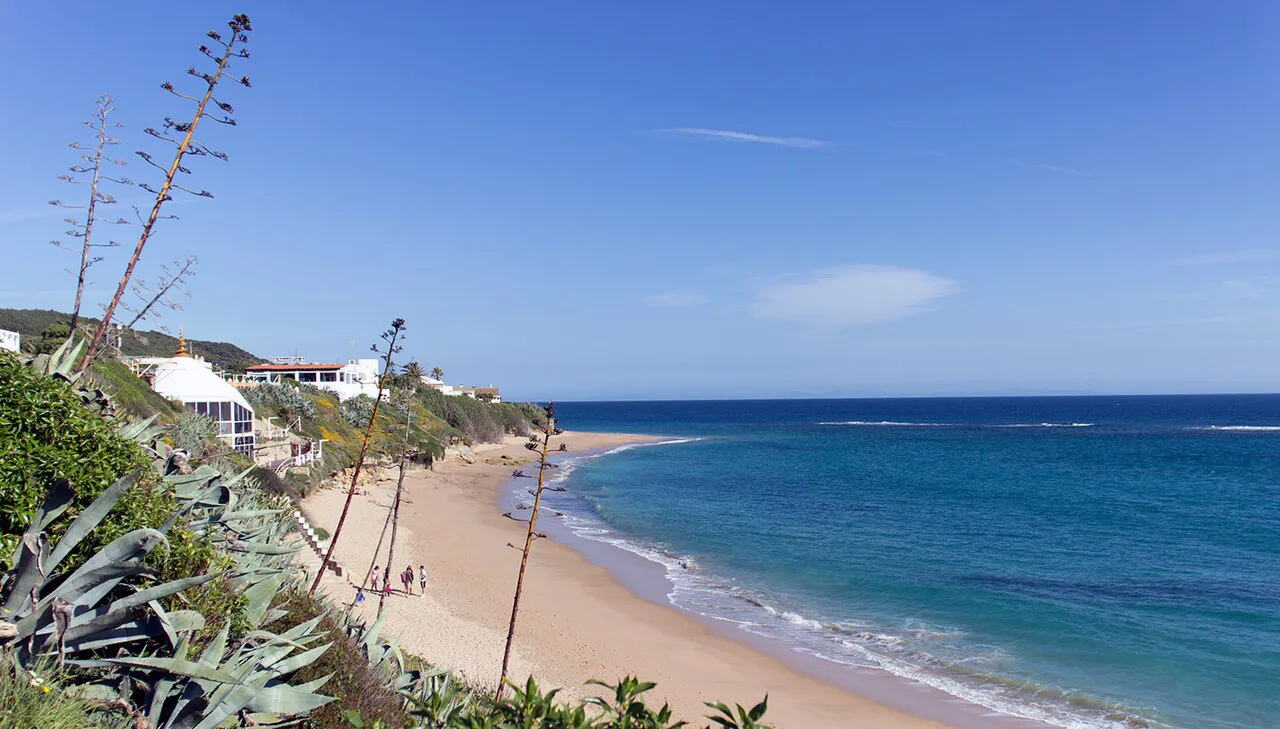
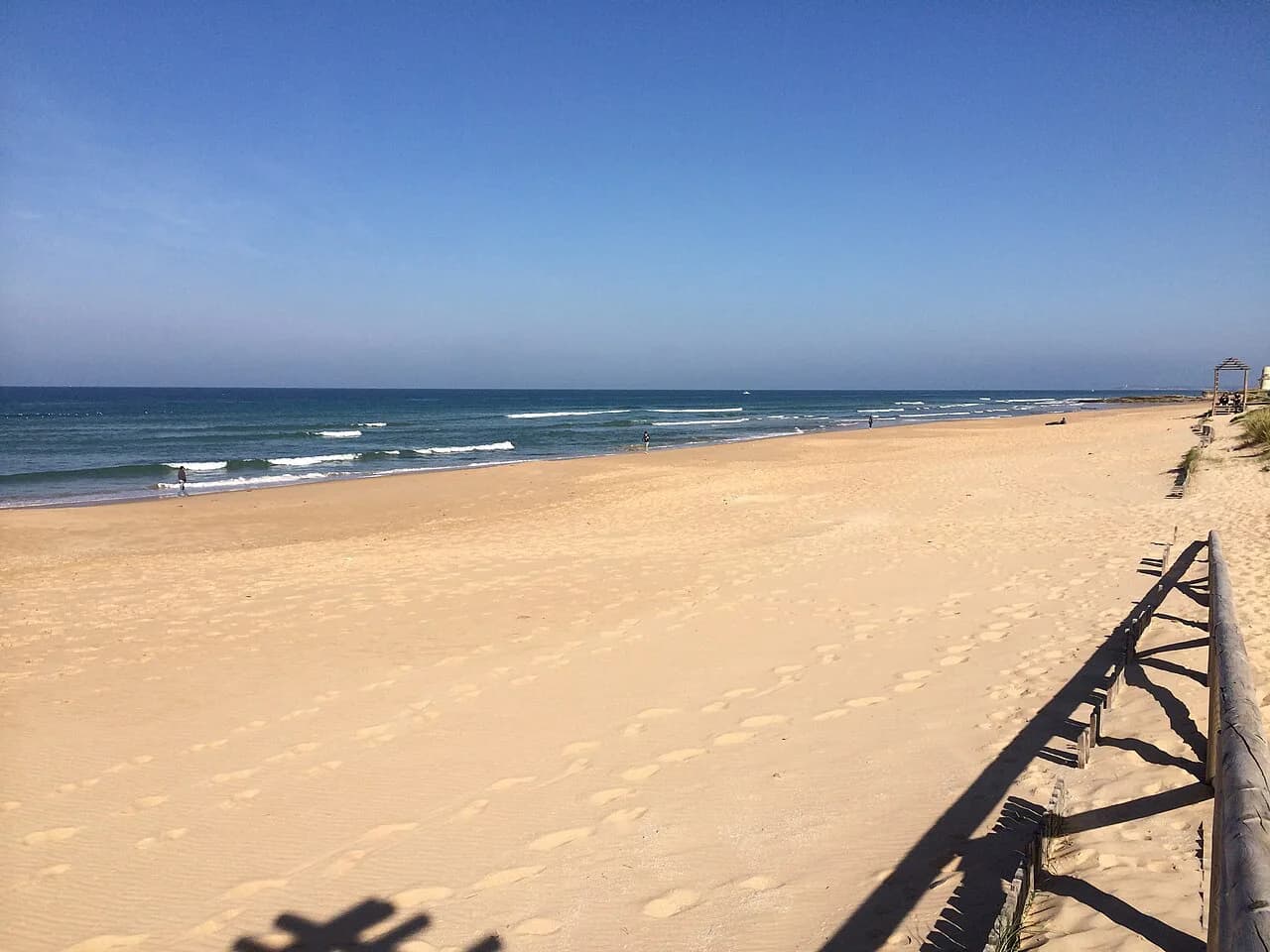
The beach sits in the province of Cádiz, in the far south of Andalusia, with the seaside town of Barbate as its nearest larger neighbour. Two stretches do most of the work: Playa de los Caños de Meca in front of the hamlet and Playa del Faro beside the Trafalgar lighthouse.
Why this beach earns the trip
Los Caños de Meca grew from a sixties hippie hangout into a summer favourite, and the atmosphere still leans relaxed rather than polished. In summer the hamlet draws Spanish celebrities and live music turns up at Camping Cameleón, so evenings can be livelier than the low-rise streets suggest.
Come expecting rocks, dunes, pine forest and sea rather than sightseeing. The one surviving wall of Roman ruins is not worth building a day around, which is precisely the point: you come here to swim, watch the windsurfers and let the afternoon run long.
Where the beach is
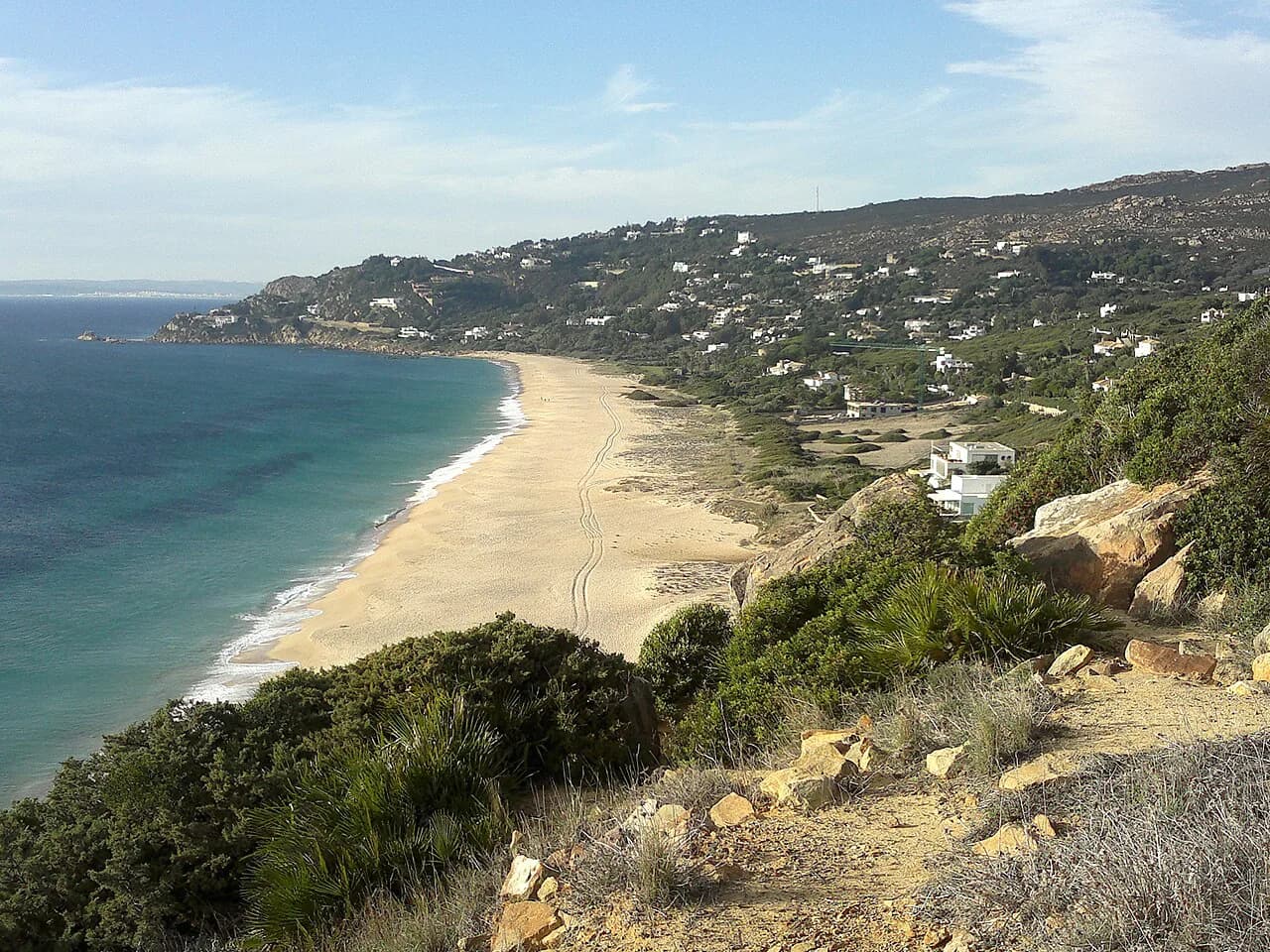
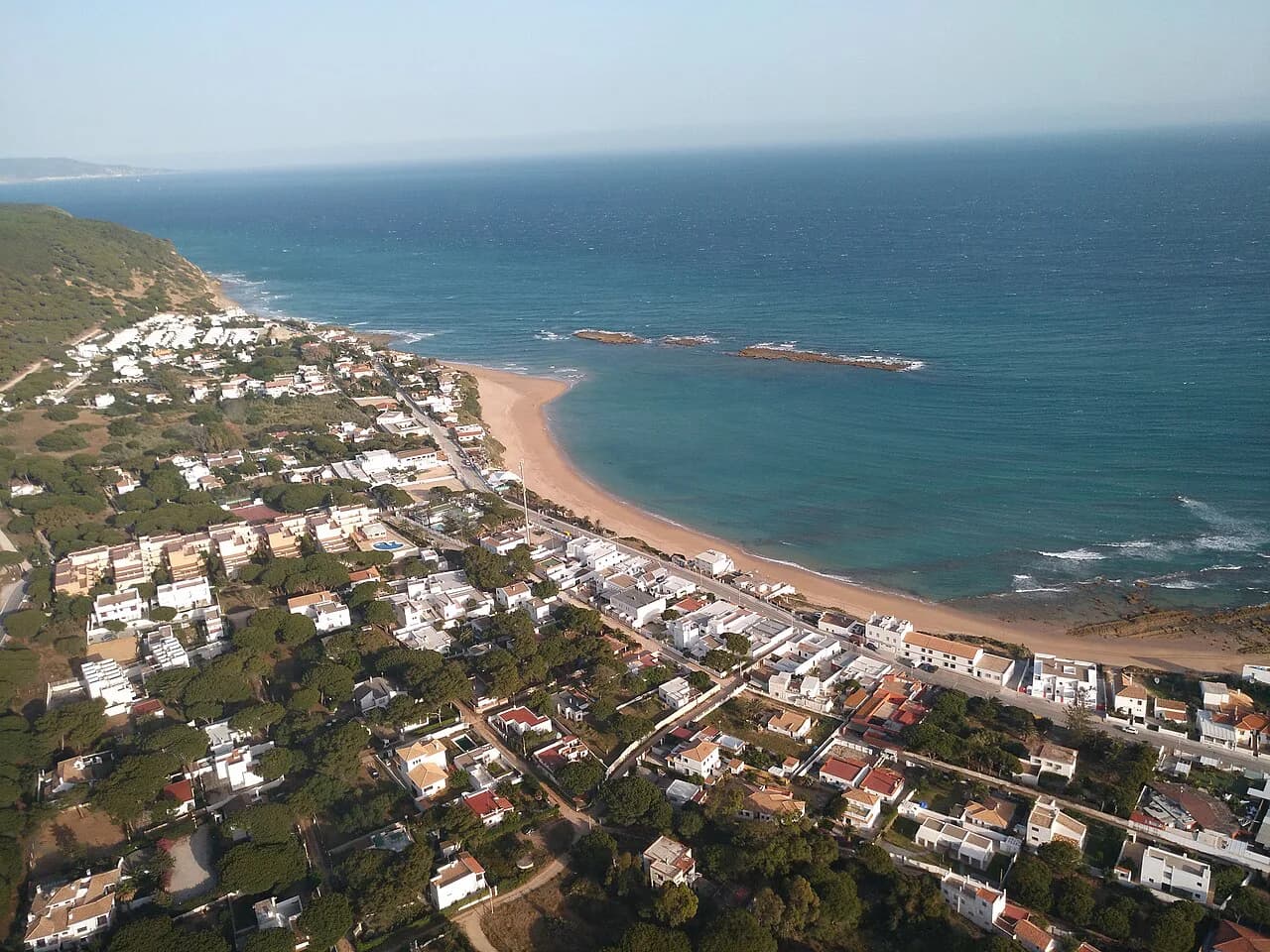
The hamlet sits on the Costa de la Luz roughly 40 km south-east of Cádiz city, strung along a cliff-top street with houses above the water. Its two main beaches are Playa de los Caños de Meca below the village and Playa del Faro, which runs beside the Trafalgar lighthouse.
Drivers approach from Barbate or Vejer de la Frontera on minor coastal roads, and the reward is a rare stretch of coast that still feels like a village rather than a resort. Walking down to the sand from the cliff-top street is part of the arrival, so pack light if you plan to move between the two beaches.
Getting there
Most visitors arrive by car, following the coast road in from Barbate or down from Vejer, and park in or near the hamlet before walking to the sand. The cliffside setting means the last stretch on foot often involves a slope or steps, so sandals with grip beat flip-flops on the way down.
Bus travellers should plan around the services that link Barbate and the surrounding towns, since the hamlet is small and spread out. The local tourist office in Barbate can point you to the current timetable and the nearest stop, and it is worth confirming times before a late return.
The sand and the water
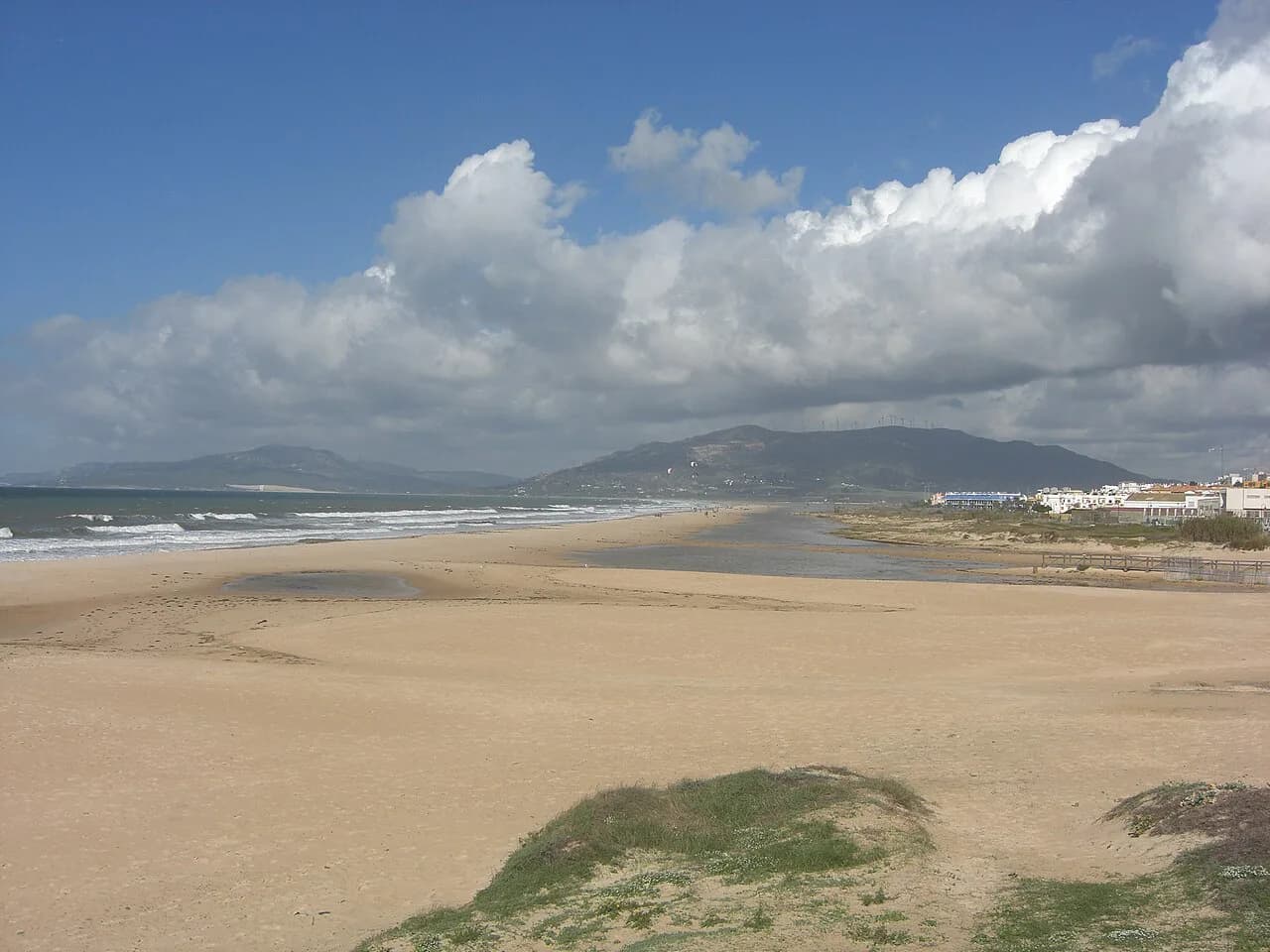
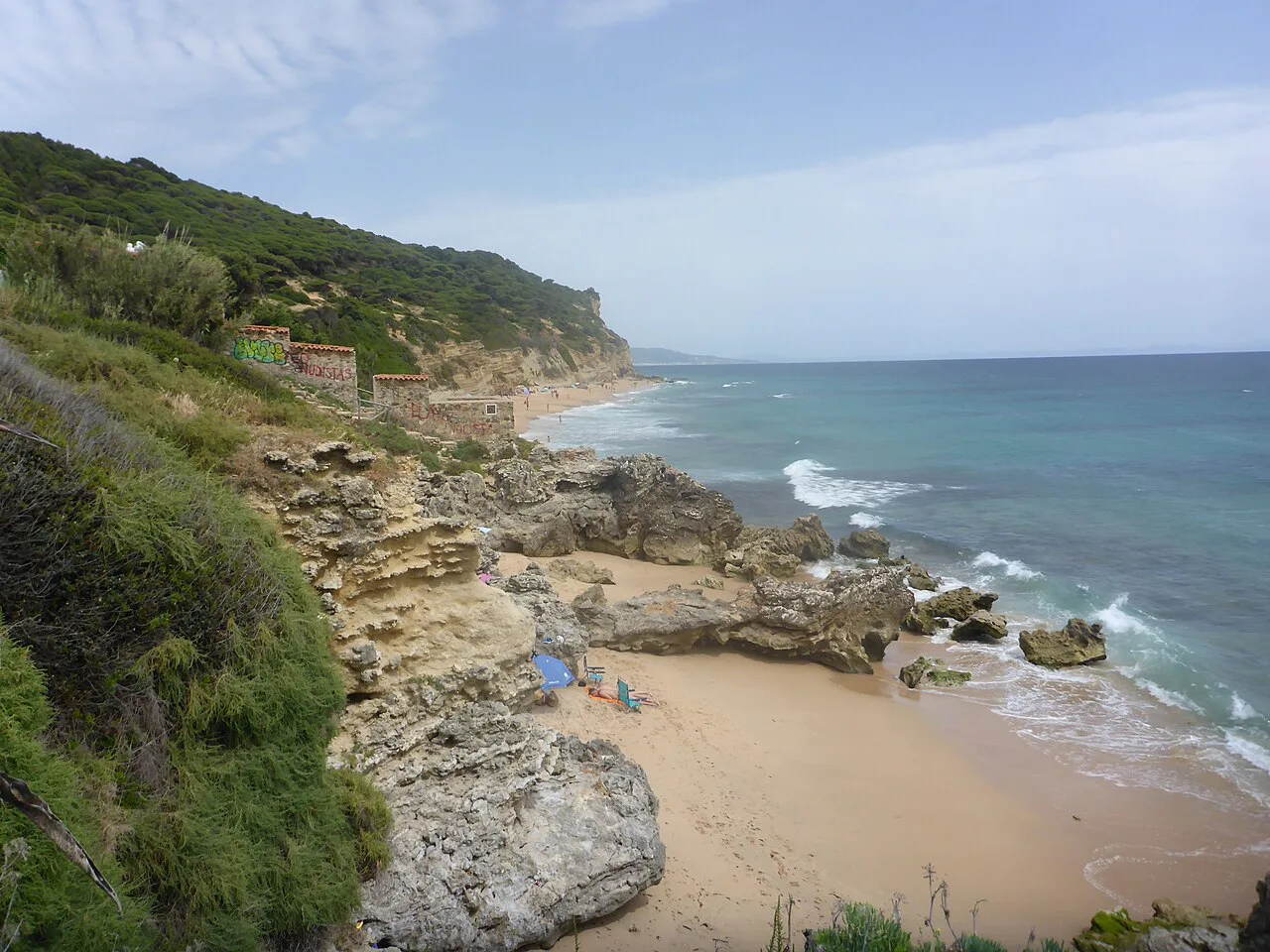
Underfoot the beach reads as a mix of sand and rock, with dunes and pine forest behind and the open Atlantic in front. The water deepens with the ocean swell rather than lapping gently, so weaker swimmers are better off close to shore and alongside other bathers.
This is a working surf coast, not a bathtub. Expect waves and moving water on most days, and treat the flags on the day as the guide rather than any promise of calm conditions.
Wind and shelter
Wind blows on the Costa de la Luz all year, and Los Caños de Meca catches plenty of it. In high summer that breeze is a gift, keeping the beach bearable when inland Andalusia is baking; in spring and autumn it can make a sunbathing plan feel optimistic.
Sandblasting is the real trade-off. Bring a windbreak or a light long-sleeve layer, weight down towels and bags, and pick your spot against the dunes or behind rocks if you want to read rather than rig a sail. Windsurfers and surfers will find the conditions the draw rather than the drawback.
Playa del Faro and the Trafalgar lighthouse
Playa del Faro is the second stretch, named for the lighthouse at Cape Trafalgar and reached by continuing along the coast from the hamlet. It is the more open of the two beaches, with the tower as a landmark for the whole day and space to spread out when the village beach fills.
The Battle of Trafalgar was fought on this beach and in the sea offshore in 1805, when the British defeated the Spanish-French fleet at the cost of 5,000 lives and 4,000 wounded. Lord Nelson was killed in the action, and the history gives a beach day here an unusually concrete sense of place.
Naturist beaches nearby
Los Caños de Meca has long-established nudist beaches, a legacy of the hippie era that still shapes the atmosphere. Pequeña Lulu, the naturist cove below the cliffs, takes its name from the natural water pipes in the rock that run down to the sand.
Treat these as you would any designated naturist area: undress only where others are doing the same, keep your distance from other people's towels and bring your own shade and water. The coves are reached on foot, so a bag you can carry down and back up matters more than a cool box.
Facilities
The hamlet itself is tiny, with small-scale accommodation and a handful of campsites rather than big hotels. Camping Cameleón and Kampaoh Los Caños both offer pre-set tents, which suits travellers who want a base within walking distance of the water.
Restaurants and bars cluster in the village and along the coast road, and beach days here are built around a long lunch rather than a lido. Bring cash for small places, your own water and shade, and a bag that closes against the sand.
Who it suits
Windsurfers and wave surfers are the natural audience, and the beach has the windsurfing reputation to match. Couples and quiet-seekers who like a breeze and a low-key village will also be happy, especially outside the peak weeks.
Families with small children should think carefully: the Atlantic swell and the sand-laden wind make this a more energetic beach than a sheltered Mediterranean cove. Strong swimmers and older children who enjoy waves will get far more out of it.
Best time to go
Summer is when Los Caños de Meca comes alive, with the warmest weather and the biggest crowds, and Expedia's destination guide names June through August as the most popular window. For fewer people and better value, it points to October through December as the quieter option.
Winter empties the hamlet almost completely, so off-season visitors should expect a ghost-town feel rather than a full-service resort. Late spring and early autumn are the compromise: warm enough for long beach days, with the wind still doing its thing.
Nearby beaches
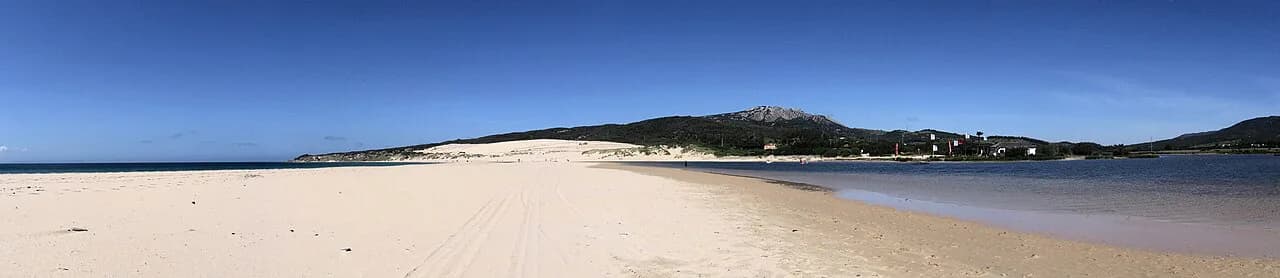
The Costa de la Luz chain continues in both directions, with El Palmar beach towards Conil de la Frontera offering a surf-friendly alternative for a second day. Bolonia, further south towards Tarifa, adds Roman ruins above the dunes for a change of scene.
Tarifa's beaches are the natural next stop if you are following the wind, with Playa de los Lances the long, open stretch closest to town. If you want a full picture of the area before choosing a base, compare the options in this Tarifa beaches guide and pick the stretch that matches your plans. If you would rather trade the Atlantic breeze for calmer Mediterranean water, the best beaches in Málaga make an easy comparison for the same kind of decision.
The La Breña walk to Barbate
The La Breña Natural Park connects Los Caños de Meca with Barbate along high cliffs, pine forest and big views. The Sendero del Acantilado runs about 7 km to Barbate, and the first section out of the hamlet is the tough part, climbing through loose sand before the path becomes mostly paved.
Halfway along, the sixteenth-century Torre del Tajo watchtower makes an obvious stopping point for a drink and a look back down the coast. Walking it one way and returning by road or bus turns a beach morning into a proper half-day out.
Plan Your Visit
Build your day around the wind rather than against it: swim in the morning before the breeze strengthens, eat a long lunch in the village, and save the cliff path or the lighthouse for the afternoon. Pair the hamlet beach with Playa del Faro so you see both sides of Los Caños de Meca in one trip.
If you are touring the coast, keep Playa de Bolonia in reserve for a day when you want dunes and ruins alongside the sand, and check with the Barbate tourist office for current bus times before relying on public transport back from the beach.
Frequently Asked Questions
Where is Playa de los Caños de Meca?
Playa de los Caños de Meca sits in the province of Cádiz, in southern Andalusia, roughly 40 km south-east of Cádiz city. The hamlet is a cliff-top street above the beach, with Barbate as its nearest larger town and Playa del Faro running beside the Trafalgar lighthouse.
Is Los Caños de Meca windy?
Yes. The Costa de la Luz catches wind all year, and Los Caños de Meca is known for it. In summer the breeze makes hot days bearable and draws windsurfers and surfers; in cooler months it can make sunbathing uncomfortable, so bring a windbreak or a light layer.
Are there naturist beaches at Los Caños de Meca?
There are long-established naturist beaches around the hamlet, a legacy of its hippie past. Pequeña Lulu, the cove below the cliffs, is the one most closely associated with the area and takes its name from the natural water pipes in the rock. Undress only where others do and bring your own shade and water.
What is there to do at Cape Trafalgar?
Playa del Faro runs beside the Trafalgar lighthouse, giving you a second, more open beach than the village stretch. The Battle of Trafalgar was fought here in 1805, so the offshore water and the tower carry a fair amount of history for a beach day.
How do you walk from Los Caños de Meca to Barbate?
Follow the Sendero del Acantilado through La Breña Natural Park, a route of about 7 km along the cliffs. The first section out of the hamlet climbs through loose sand before turning mostly paved, and the Torre del Tajo watchtower halfway makes a good place to stop.
When is the best time to visit Los Caños de Meca?
June through August brings the warmest weather and the biggest crowds, while October through December is quieter and better value. Winter empties the hamlet almost completely, so late spring and early autumn suit travellers who want beach weather without the peak-season bustle.
Sources
Beach notes for your next trip
Optional updates when we add or revise beach guides.
You might also like
Continue reading
More guides you'll find useful