Tabarca Island Guide: Beaches, Boat Crossings and Snorkelling
Plan a day on Tabarca Island from Alicante or Santa Pola: boat crossings, the sandy beach by the harbour, rocky snorkelling coves and when to go.
On this page
Tabarca is the one beach day out of Alicante that starts with a boat ride. The only inhabited island in the Valencian Community sits about eleven nautical miles offshore near the cape of Santa Pola, roughly an hour by boat from Alicante's harbour. It suits swimmers and snorkellers first, sand-seekers second: there is a broad, shallow beach beside the village, then rocky coves where the water is clear and full of fish.
Think of it as a two-part day. Swim and snorkel in the morning, walk the walled town and the coast path in the afternoon, then eat caldero before the boat back. Weekday crossings outside August are the calmest way to do it, and the shoulder months still give warm water with far lighter crowds.
Why Tabarca Suits Swimmers and Snorkellers
The island's appeal is underwater rather than underfoot. Its shoreline forms a marine reserve, protected for water clarity and biodiversity, and the rocky seabed around the coves makes for easy, shallow snorkelling straight off the rocks. Anyone who wants a long day lying on soft sand will find a decent beach by the harbour, but that is not what the crossing is for.
Families with small children get the best of it at the harbour beach, where the water is shallow and calm. Stronger swimmers and snorkellers should head for La Caleta, a rocky cove a short walk from the village where the bottom drops away and the fish life is denser. Quiet-seekers can carry on further along the coast path to smaller, unmarked coves reached on foot.
Where Tabarca Is
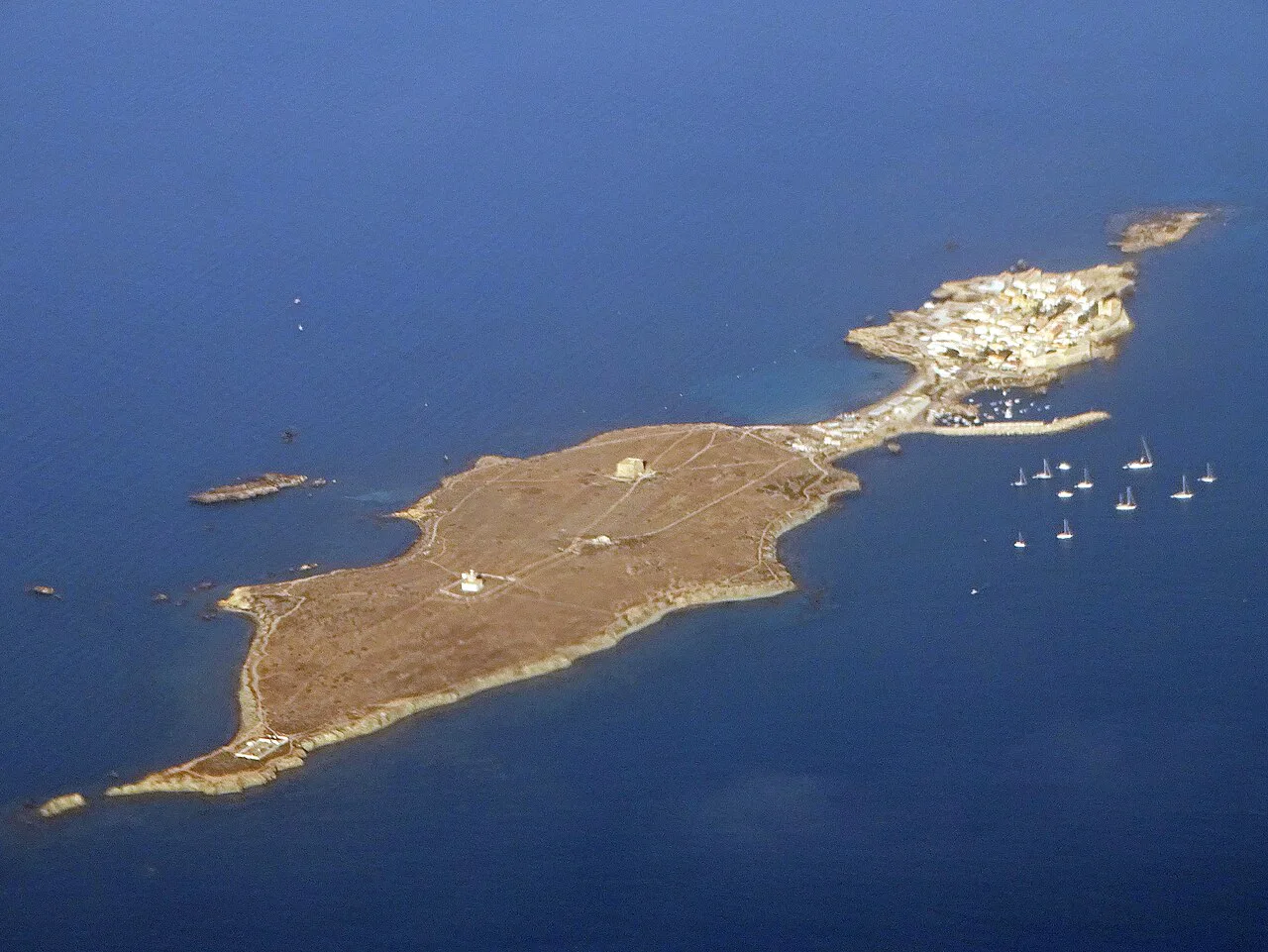
Tabarca lies off the Santa Pola cape, south of Alicante, and forms a small archipelago with the islets of La Cantera, La Galera and La Nao. The island itself runs about 1,800 metres long and up to 400 metres wide, so you can walk from the harbour to the far lighthouse end and back within a half-day at an unhurried pace.
The village sits inside 18th-century walls built under Charles III, a compact grid of whitewashed fishermen's houses that has been declared a Historic-Artistic Site. Boats tie up at the small harbour right below the walls, so you step off and are in the town within a minute or two.
Getting There by Boat from Alicante
Boats leave from Alicante's port and the crossing takes approximately one hour. Several operators run the route, including Kon Tiki Cruceros, Aquabus Tabarca, Transtabarca, Tabarkeras and Tabarca Water Taxi, all listed with contact details by the municipal tourist board. Departures are more or less frequent depending on the season rather than running to a fixed clock, so pick your operator first and then build the day around their sailings.
Typical return fares run around €23–24 from Alicante and about €10 from Santa Pola, though they vary by operator, season and vessel type. Some catamarans have glass-bottom sections, which add interest for children on the way out. Book ahead in July and August, when the popular morning sailings fill up.
Getting There from Santa Pola and Benidorm
Santa Pola gives you a shorter sea crossing, reached after roughly a 40-minute bus ride from Alicante, which can work out faster door to door than the direct boat. In practice the trade-off is departure frequency: the Alicante route has the most sailings, while the Santa Pola crossing is the better bet if you are staying south of the city or travelling out of season, when the island can be reached from Santa Pola.
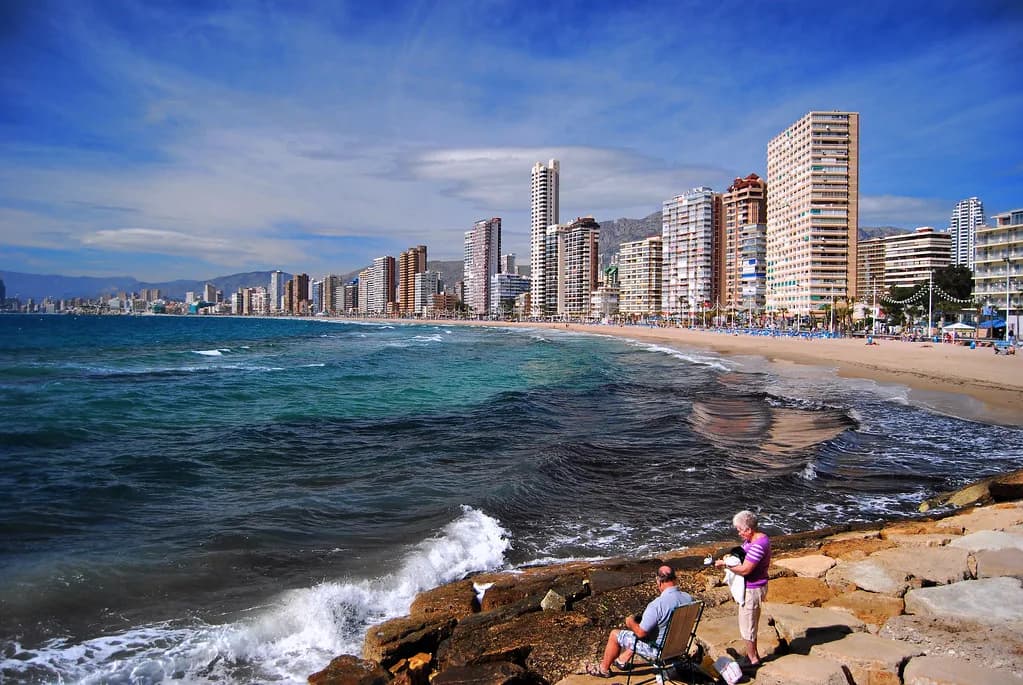
There are also crossings from Benidorm, useful if you are based on that stretch of coast rather than in Alicante. If you are weighing up bases, Levante Beach, Benidorm makes a lively alternative to a quiet island day, and the Benidorm beaches guide covers the sand and facilities there.
Arriving at the Harbour
You disembark at the small harbour below the historic walls, with the main beach immediately in front of you and the gate into the walled town a couple of minutes' walk away. Use the arrival to orientate: beach to your front, village behind, lighthouse at the far end, La Caleta along the rocky shore beyond the village. Toilets, bars and restaurants cluster in the streets closest to the harbour.
Because everything is within walking distance, there is no need for a car or a bus on the island. Wear shoes you can walk in on rough stone paths, and carry your swimming kit rather than planning to change at a beach hut.
Playa de Tabarca: Sand and Shallow Water
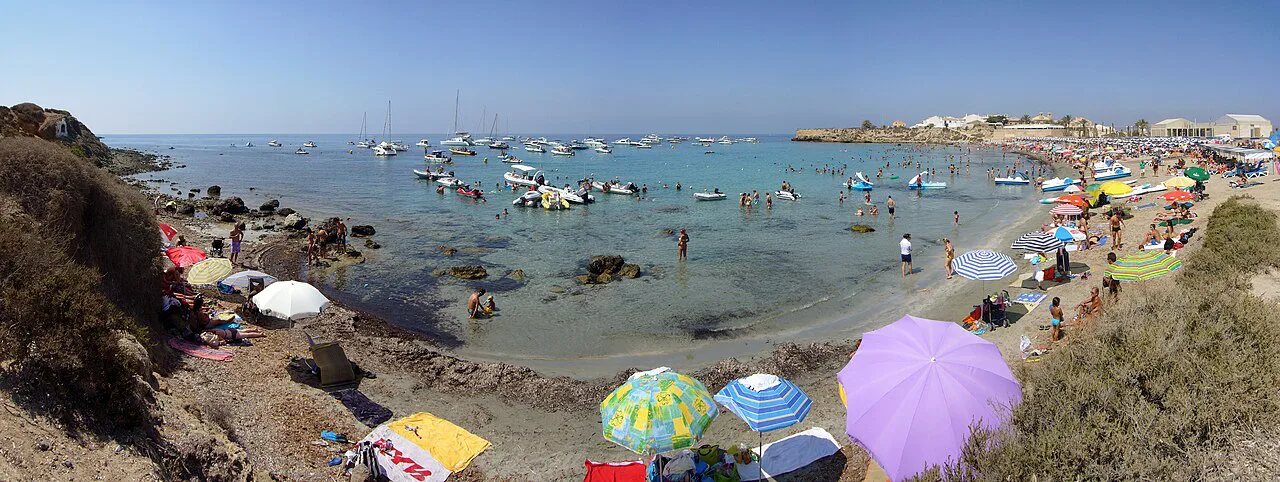
The main beach runs along the harbour front and is the island's only proper stretch of sand. The water stays shallow well out from the edge, which makes it the obvious choice for families with small children and for anyone who wants a relaxed swim rather than a snorkel over rocks. It is also the busiest part of the island, and in August the sand fills quickly after the first boats arrive.
Come off the morning boat and claim a spot early if you want the beach for the day. Otherwise treat it as a late-afternoon swim after the walking and the museum, when the day-trippers have thinned out and the light softens over the harbour.
La Caleta and the Rocky Coves
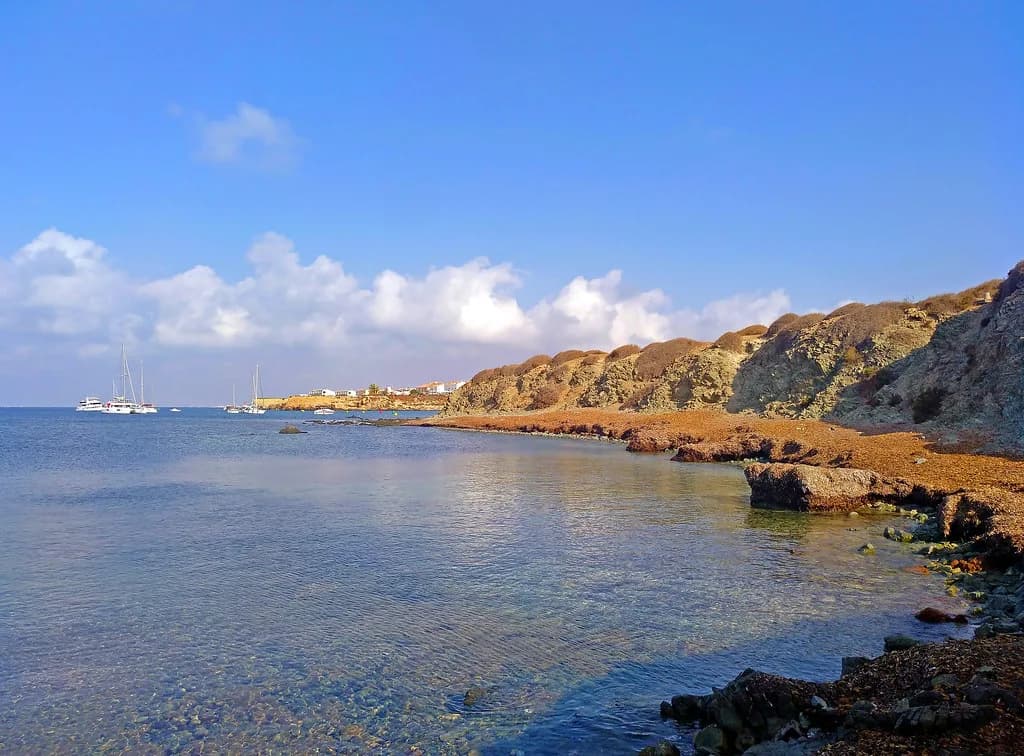
La Caleta is the snorkelling shore: a rocky cove beyond the village with no wide sandy beach, but exceptionally clear water over a rocky seabed. It is the spot most associated with Tabarca snorkelling, and the fish life is concentrated close to the rocks where the bottom shelves away. Water shoes help on the entry, and a buoy is worth carrying if you plan to swim out.
Past La Caleta, narrow paths lead to small unnamed coves that see far fewer people, at the cost of a rougher walk and no facilities. Pick one early in the day, take water, and leave the sand to the families at the harbour.
The Marine Reserve
The water around Tabarca is a Mediterranean marine reserve, protected for the quality of its water and the biodiversity of its flora and fauna. Snorkellers may see groupers, gilthead breams, sea bass, white seabreams and octopuses, along with seagrass meadows, though sightings depend on the day and no wildlife is guaranteed.
The reserve is a protection designation, not a safety guarantee. Enter the water only when it is clear and calm, avoid murky water, waves and strong currents, and always carry a buoy, which marks your position and doubles as a flotation aid. Watch for boats, especially in summer, and a life vest adds a margin of safety if you are swimming out from the rocks.
Snorkelling Etiquette in the Reserve
The rules are simple and worth following closely. Do not touch or disturb wildlife, do not lift starfish or bother octopuses, never feed the fish, and take nothing living from the seabed; photograph what you find instead. If you spot plastic waste, pick it out so animals do not ingest it.
Bring your own mask and snorkel, or hire equipment in Alicante before you sail, since the island's rental options are limited. A rash vest saves you from sunburn on long snorkels, and reef-safe sunscreen is kinder to the reserve.
Facilities, Lifeguards and Accessible Bathing
Lifeguard and first-aid cover at Tabarca beach runs from 15 June to 15 September, staffed from 11.00 to 19.00. Outside those dates, swim with the same caution you would at any unguarded beach. Family swimming plans sit most comfortably inside that window, when the sand is supervised through the middle of the day.
A bathroom assistance service for people with reduced mobility operates during the summer season, run by the city of Alicante. Restaurants, bars and small shops line the streets around the harbour, and the tourist office on the island keeps summer-season hours.
Walking the Island
Walking is the second half of a good day here. Coastal paths run from the village to the lighthouse at the eastern end, past rocky outcrops, quiet coves and viewpoints over the Mediterranean. The route is short enough for children and shaded in places by old walls, but take water and sun protection because much of it is exposed.
En route you pass the Torre de San José, a defensive tower that once guarded against pirate raids, and the 19th-century lighthouse at the island's tip. The Nueva Tabarca Museum in the village adds context on the island's Genoese settlers and its marine environment. Museum opening hours are published by the tourist board and change between winter and summer, so confirm times on the day you plan to visit.
Best Time to Go
Summer attendance can reach 10,000 visitors a day, so August is the month to plan carefully if you want space on the beach. Go early on the first or second boat of the day, leave the main beach for a cove, and book lunch ahead. Sea temperatures are warmest from late June through September, which is also when lifeguards are on duty.
June and September give you warm water with lighter crowds and easier crossings. Out of season, sailings thin out and the island becomes a quiet walking and eating destination rather than a beach day, so check departure times with your chosen operator before committing.
Eating on the Island
Caldero tabarquino is the dish to order: fish simmered into a rich broth, which then cooks the rice, with the fish served separately alongside alioli. Restaurants cluster in the walled streets and along the harbour front, from Gloria and Don Jeronimo to Amparin and Tere. In high summer, especially at weekends, tables overlooking the water go first, so arrive early or reserve.
A long seafood lunch is part of the rhythm of the island, and it fits neatly after a morning swim and before the afternoon boat. If you are on a day trip, book a table timed around your return sailing rather than risking the last boat.
Staying Overnight
Tabarca is a lived-in island, not a resort, so staying overnight means small hotels and hostels in the walled town rather than large complexes. A handful of guesthouses and boutique hotels operate inside the village, listed with contact details by the tourist board. An overnight stay lets you see the island after the day boats leave, when the beaches empty and the village returns to its own pace.
Sleeping on the beach is a different matter. Camping overnight on the sand is not allowed, and staying in the village is the way to do it properly. If you want a moonlit walk along the shore, keep it brief and leave the beach to the sea once darkness sets in.
Nearby Beaches to Combine
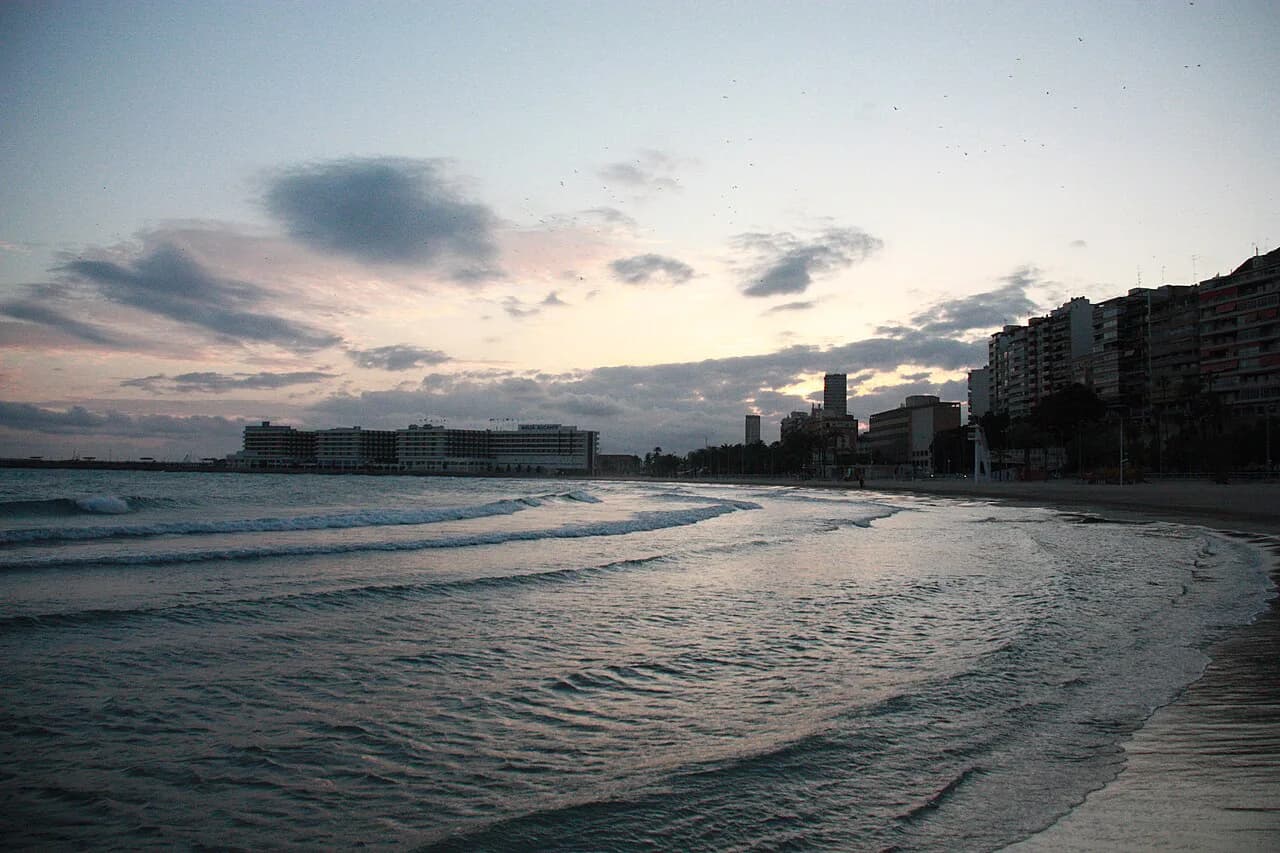
If you are staying in Alicante, the city's own beaches are the natural companion to a Tabarca day. Postiguet beach sits right under Santa Bárbara castle, minutes from the Explanada de España, and works well for an evening swim after the boat back.
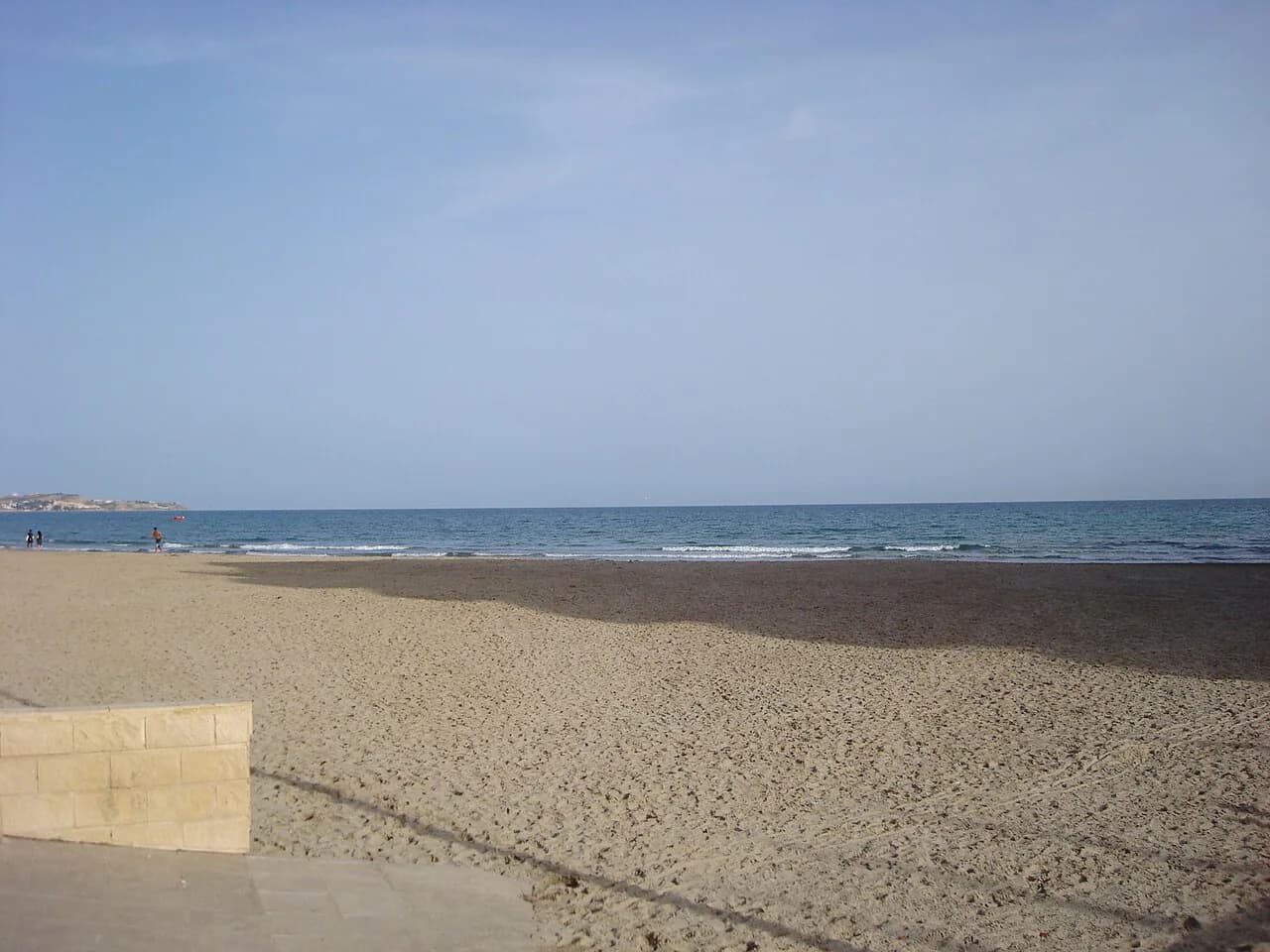
Further north, Playa de San Juan offers a long, broad sweep of sand with a very different feel from the island's coves. Beyond that, the Costa Blanca's resort beaches at Benidorm make an easy contrast on another day, combining the island's quiet with a livelier shore. If you are weighing up a quieter stretch of coast for the same kind of day, the best beaches in Dénia make a useful comparison further along the Costa Blanca.
What to Bring
Pack a mask and snorkel, water shoes for the rocky entries at La Caleta, and a buoy if you intend to swim out. Carry water and snacks, since the walk to the lighthouse end is exposed and shade is limited. Cash helps for small purchases, and a light layer is useful on the boat.
Sun protection matters more than usual, because a day split between sand and water exposes you twice. A rash vest, a hat and reef-safe sunscreen cover both halves of the day without weighing down your bag.
Plan Your Tabarca Day
Pick your shore before you book. Families and casual swimmers should base themselves at the harbour beach and time the visit inside the lifeguard season; snorkellers should head straight for La Caleta and the coves beyond the village. Either way, an early boat, a booked lunch and a late-afternoon walk to the lighthouse make the day work.
Check sailings directly with your chosen operator, since departures vary by season, and confirm museum hours with the tourist office. For the rest of the coast, the Alicante beaches guide sets Tabarca alongside the city's own sands.
Frequently Asked Questions
Is it worth visiting Tabarca Island?
Yes, if you want clear water for swimming and snorkelling plus a walled fishing village to wander. It is less compelling for anyone expecting a long sandy beach, since the sand is concentrated at the harbour and the rest of the coast is rocky.
How long is the ferry from Alicante to Tabarca?
The crossing from Alicante takes approximately one hour, depending on the vessel. Several companies run the route, and departures are more frequent in the warmer months than out of season. Check current timetables before you travel.
Can you stay on Tabarca Island?
Yes. Small hotels and guesthouses operate inside the walled town, listed with contact details by the Alicante tourist board. Staying overnight lets you experience the island after the day boats have left.
Does anyone live on Tabarca Island?
Tabarca is the only permanently inhabited island in the Valencian Community, with a village inside its 18th-century walls. It is a working settlement, not a resort, which is why it feels quiet once the day-trippers leave.
Is Tabarca beach sandy?
The main Playa de Tabarca by the harbour is sandy, with shallow water that suits families. La Caleta and the coves beyond the village are rocky, with clearer water for snorkelling.
Where can you snorkel on Tabarca?
La Caleta is the best-known spot, with a rocky seabed and dense fish life. The whole shoreline lies within a marine reserve, so carry a buoy, avoid touching wildlife and never feed the fish.
When is the best time to visit Tabarca?
June and September offer warm water with lighter crowds. Lifeguards are on duty from 15 June to 15 September, and August is the busiest month, so go early if you visit in high summer.
Sources
Beach notes for your next trip
Optional updates when we add or revise beach guides.
You might also like
Continue reading
More guides you'll find useful