Levante Beach, Benidorm: Sand, Promenade and Getting There
Plan a day on Levante Beach in Benidorm: two kilometres of fine golden sand, a flat promenade, lifeguard posts, sunbed hire and beach bars along the front.
On this page
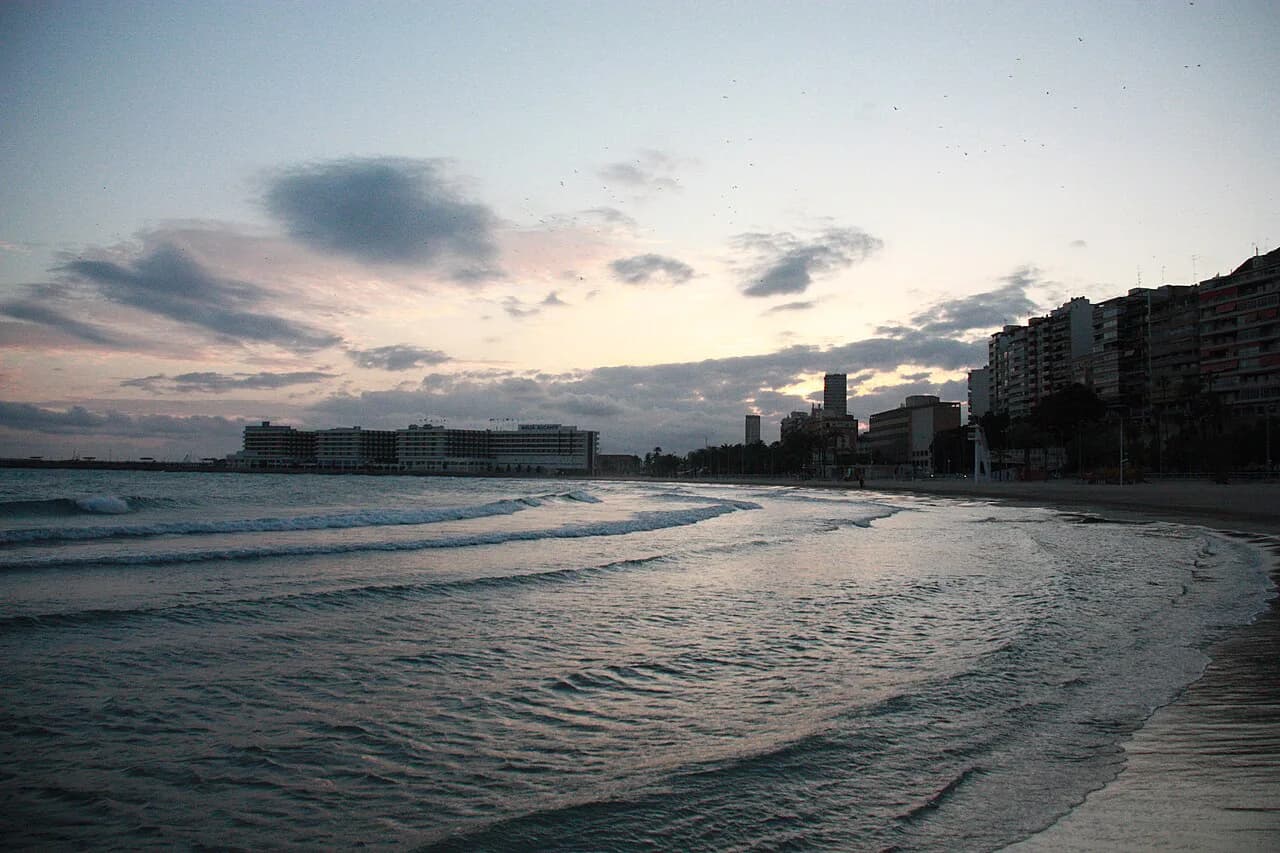
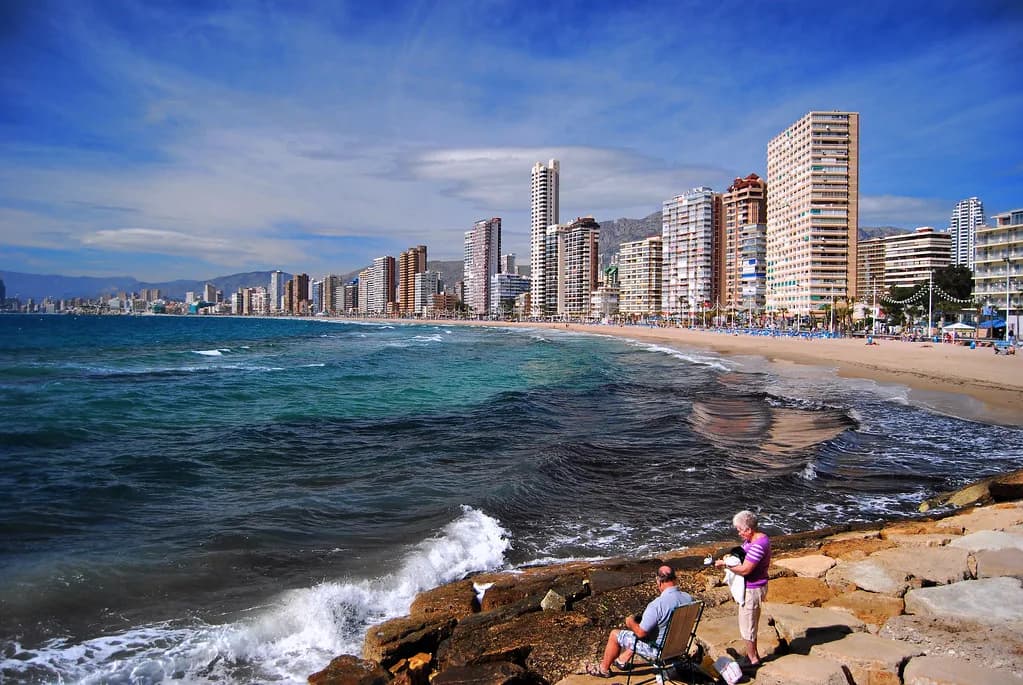
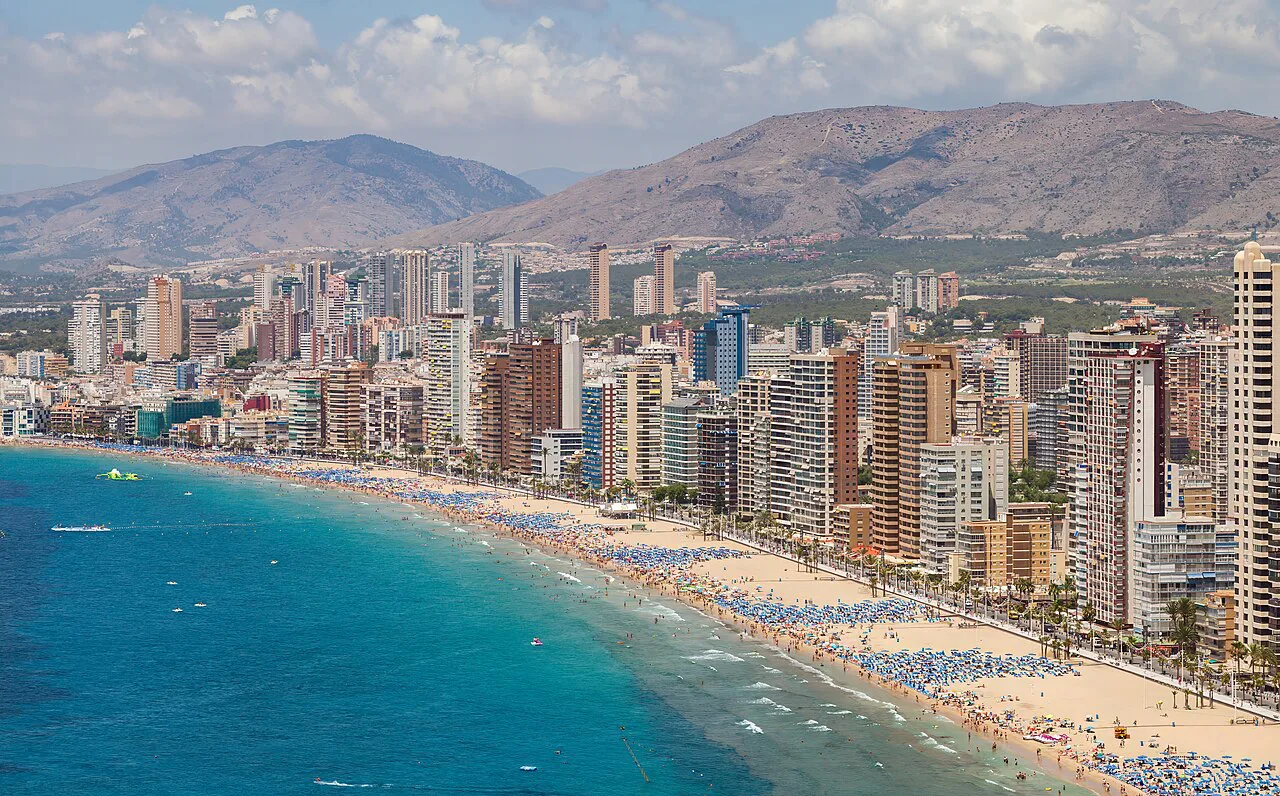
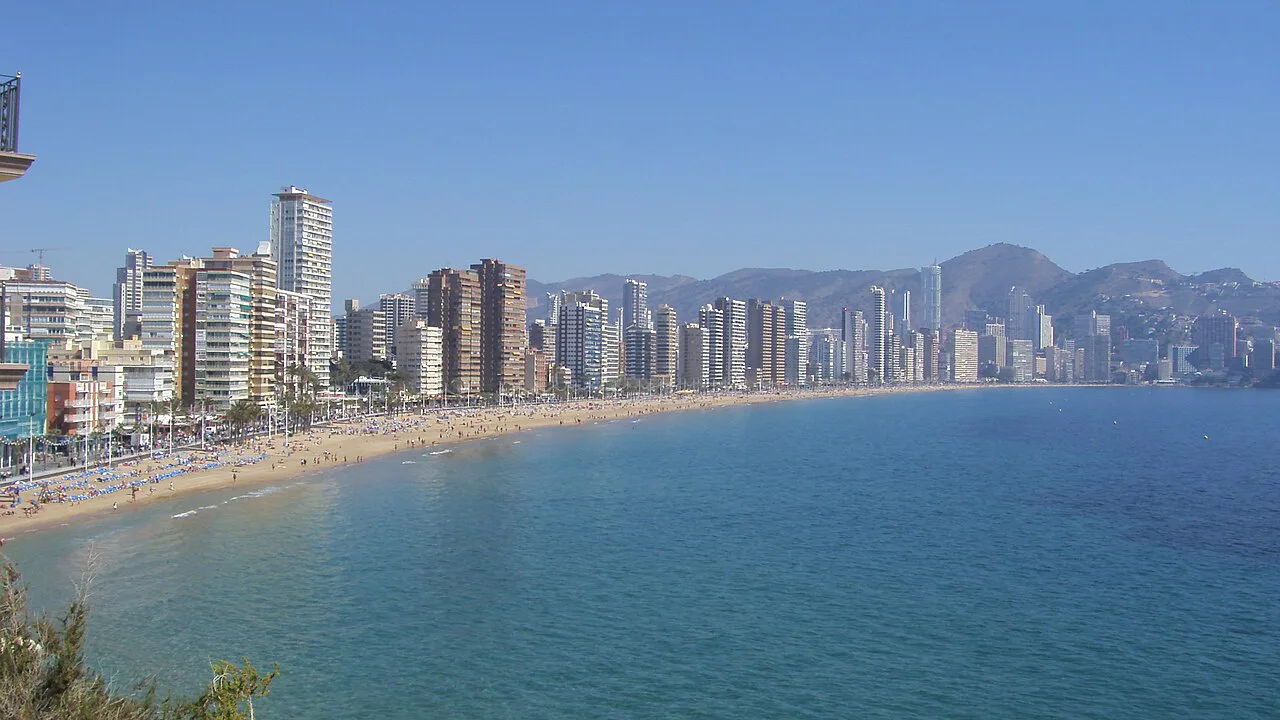
Levante is the beach that made Benidorm's reputation: a broad sweep of fine golden sand curving around the bay from the Old Town towards the Rincón de Loix headland, with a flat promenade running the whole length behind it. It suits mixed groups best, because swimmers, sunbathers, promenade strollers and watersports fans can each do their own thing within a few hundred metres of one another.
Expect company. This is an urban beach in the middle of a resort that fills up in high summer, and the stretch in front of the Levante hotel and bar district is the busiest part of all. If you want space to spread out and a quieter swim, walk towards the Old Town end or arrive early in the morning.
Where the beach sits
The bathing area runs between Punta Pinet and Punta Canfali, just over two kilometres of sand, and the beach begins at the edge of Benidorm's Old Town. That puts you within a short walk of the Mediterranean Balcony and the tapas lanes of the old quarter if you want to break up the day.
Behind the sand, Avenida de Madrid runs parallel to the promenade and is the natural place to pause for a drink with a view out over the water towards Peacock Island. Avenida de Mediterráneo sits one street back and carries the shops and cafés, including the long-standing Café París halfway along.
If you are deciding between the town's two main beaches, the sand is fine on both. The difference is atmosphere: Levante has more leisure facilities, more bars and a livelier crowd, while Poniente is the quieter option for a slow afternoon.
Getting there on foot and by bus
The easiest approach is on foot along the promenade, which is level and continuous, so you can walk from the Old Town to the far end without crossing a road or tackling steps. Hotels in the Levante area sit within a couple of streets of the sand, which makes a towel-and-flip-flops walk practical.
For longer hops across town, Benidorm's local buses run along the front and connect the Levante side with Poniente and the bus station. Fares and timetables change by season, so get the current details from the bus company or the tourist office before you set out.
Driving in means using the car parks behind the Levante front rather than expecting kerbside space, and the beach's service list includes a car park. Charges are set by each car park, so ask at your accommodation or read the tariff at the barrier on arrival.
The sand and the water
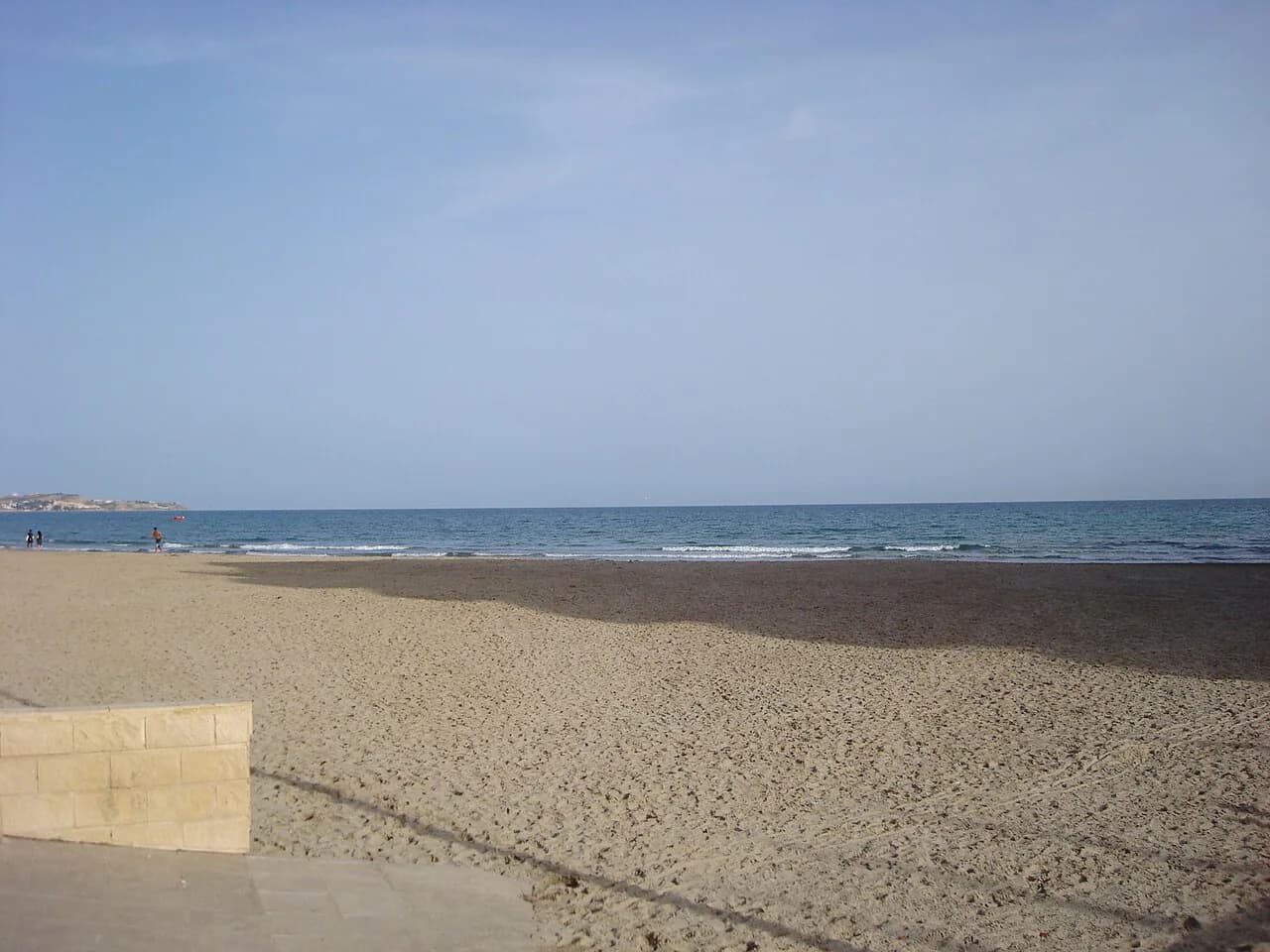
The sand is fine and golden, and the beach is classed as an urban one, which tells you what to expect: soft going underfoot but plenty of footprints. The water deepens gradually along most of the bay, and the swimming area is marked off by yellow buoys beyond which swimmers are asked not to go, keeping boats and jet skis away from the shoreline.
One feature worth knowing before you wade in is a band of rocks at the water's edge, which some swimmers find awkward underfoot and others treat as part of the fun. Enter slowly at the marked points and you will avoid the worst of it.
Benidorm's Levante Beach appears regularly on Blue Flag lists for bathing quality and services, as reported in the town's tourism material. Conditions change day to day, so read the flags posted on the sand instead of taking a flat sea for granted.
Shelter and shade
The bay faces east and south-east, so the sun comes up over the water and the far end of the afternoon is when the light softens across the sand. The promenade buildings and the raised front give some shade late in the day, and the palms and benches along the walk make a good place to sit out the fiercest hours.
When the breeze picks up from the sea, the Levante front takes the wind head-on and can feel exposed. On those days the streets one row back, such as Avenida de Mediterráneo, offer a calmer spot for a coffee until the gusts drop.
Facilities on the sand
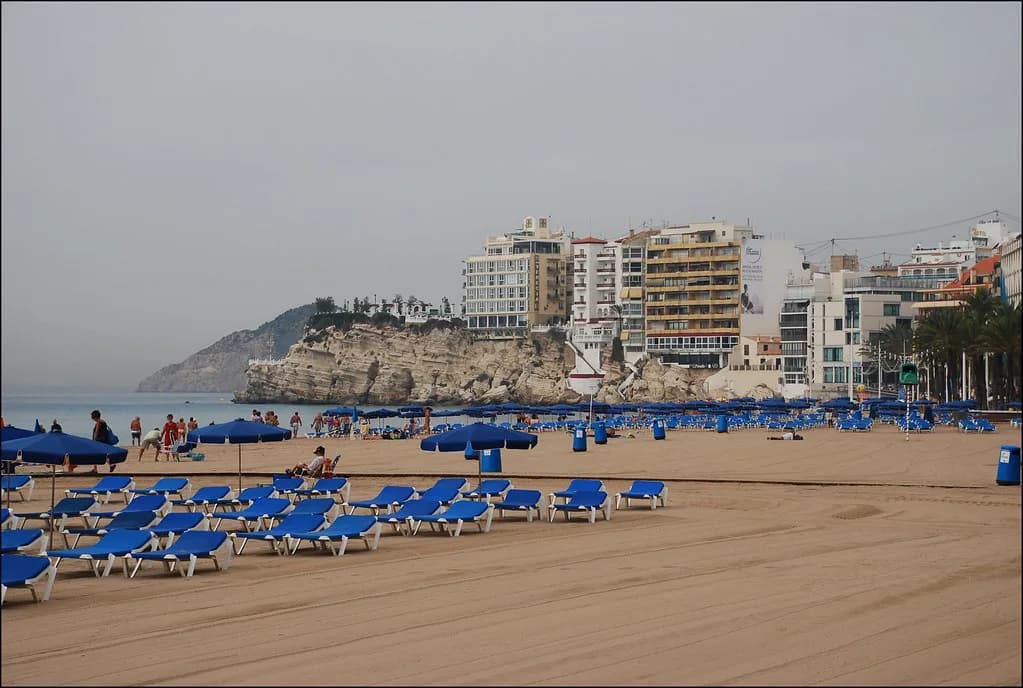
The list of services is long: lifeguards and Red Cross supervision, medical aid posts, walkways, accessible access points, public toilets, showers, foot washes and litter bins. Sunbeds and parasols are available for hire, and the brightly coloured huts along the beach serve variously as toilets, foot washes and lounger rental points.
There are play areas for children, sports areas, a seaside library for reading in the sun, and a section with pedalos and an inflatables zone. Swimming is supervised by lifeguards and Red Cross staff, so look for the flags and posts that mark the supervised stretch before you pick your spot.
Watersports and floating platforms
Levante is the watersports end of Benidorm: snorkelling, windsurfing, paddleboarding, kayaking, sailing and diving are all on offer, along with banana boats and jet skis. Floating platforms out in the bay carry slides and attractions, and cable skiing operates from the beach for anyone who wants to try something more energetic.
Hire prices and session times are set by the individual operators, so compare at the kiosks on the sand rather than assuming a standard rate. Book watersports in the morning if you can, before the afternoon breeze builds and the sea gets choppier.
Families and accessible access
Families with small children will find the gentle slope of the sand and the marked swimming zone reassuring, and the play areas give younger children something to do when they tire of the water. The accessible area with walkways and a route down to the sea makes the beach workable for wheelchair users and pushchairs.
The promenade is the key advantage for mixed groups: grandparents, non-swimmers and anyone who wants to stay dry can sit on the benches, walk the length of the bay or stop for an ice cream while the rest of the party swims.
How busy it gets and the best months
High summer is when Levante swaggers under the sun, with pavements and sand packed with visitors and a holiday buzz that runs from morning until late. If you want a patch of sand to yourself, come early in the day, and expect the stretch near the Levante bars to be the fullest.
Late spring and early autumn bring warm sea and a much thinner crowd, and the beach and promenade are at their most pleasant then. The sea is comfortably warm from June through to October, with July and August the busiest and hottest months.
Bars, beach bars and eating
The beach bars along the sand and the bars behind it stay open from morning coffee through to late evening, with everything from ice cream and aperitifs to full meals served with your feet practically in the water. Dulcinea at the end of the beach does salads, sandwiches and burgers, while La Mejillonera specialises in rice dishes and mussels.
As evening falls, the Levante area turns into the town's nightlife hub, with The Strip and The British Square drawing the crowds and Café París offering a quieter drink on Avenida de Mediterráneo. Book a table for dinner in summer if you want to eat before the bars fill up.
Nearby beaches to combine
Poniente Beach on the other side of the Old Town gives you the same fine sand with a calmer, more family-oriented feel, and the walk between the two along the headland is a good way to see both in one day. The beaches page is the place to compare which one suits your group.
Heading south out of Benidorm, the Alicante coast offers more sand at Playa de San Juan and El Campello, and a boat trip to Tabarca island makes a fine change of scene for anyone staying more than a few days. Each is a day out in its own right rather than a quick dip. If you are weighing up a longer stretch of coast, it is worth comparing these sands with the beaches in Dénia before you commit to a base.
Practical kit and etiquette
Bring water, high-factor sun cream and a hat, because shade on the open sand is limited and the midday sun is fierce in summer. Reef shoes help with the rocky band at the water's edge, and a light layer is worth packing for the evening breeze off the sea.
Keep within the yellow buoys, take your litter to the bins provided, and leave the sunbeds free when you are not using them. On the promenade, walkers and cyclists share the space, so keep to your side when the crowd is thick.
Combining the beach with the Old Town
The Old Town sits directly behind the southern end of Levante, so a morning on the sand can roll into a tapas lunch and a walk to the Mediterranean Balcony for the view out over the bay. That combination makes a relaxed day for anyone who wants more than sunbathing.
For a wider look at the Alicante coast and how Benidorm fits into it, the Alicante beaches guide covers the main stretches in the province and what each one is best for.
Plan Your Day on Levante
Levante Beach gives you a long, lively day out with everything within a short walk: fine golden sand, a flat promenade, lifeguards, toilets, sunbed hire and a full spread of bars and beach bars. Come early in high summer, aim for the Old Town end if you want a quieter swim, and mind the rocky band at the water's edge when you wade in.
If you want a slower pace, walk over to Poniente or spend an afternoon at the Old Town and Mediterranean Balcony instead. Either way, bring sun cream, water and reef shoes, and read the flags before you swim.
Frequently Asked Questions
How long is Levante Beach in Benidorm?
The beach runs just over two kilometres between Punta Pinet and Punta Canfali, with the promenade running the full length behind it. That makes it easy to walk from one end to the other without leaving the sand.
Can you swim at Levante Beach?
Yes. The swimming area is marked with yellow buoys, and there are lifeguards and Red Cross posts on the beach. Look out for the rocky band at the water's edge and enter slowly, and always read the flags before swimming.
Are there lifeguards on Levante Beach?
The beach is supervised by lifeguards and Red Cross staff, with medical aid posts on the sand. Cover follows the main season, so look for the flags and posts marking the supervised stretch before choosing your spot.
Is Levante Beach good for families?
Yes. The sand slopes gently into the water, there are play areas and a marked swimming zone, and accessible walkways make it easier with pushchairs and wheelchairs. The promenade also gives non-swimmers a place to sit and walk.
What is there to do on Levante Beach besides swimming?
You can try watersports such as kayaking, windsurfing and paddleboarding, ride the floating platforms and slides, hire pedalos, or use the cable-ski area. There are play areas, a seaside library and plenty of beach bars along the sand.
Which is better, Levante or Poniente beach in Benidorm?
Both have fine sand and good facilities. Levante is busier and better for watersports and nightlife, while Poniente is quieter and more family-oriented. Pick Levante for a lively day with everything close by.
When is the best time to visit Levante Beach?
Late spring and early autumn bring warm sea and thinner crowds, while June to October is the main swim season. July and August are the busiest and hottest months, so arrive early if you want space on the sand.
Sources
Beach notes for your next trip
Optional updates when we add or revise beach guides.
You might also like
Continue reading
More guides you'll find useful